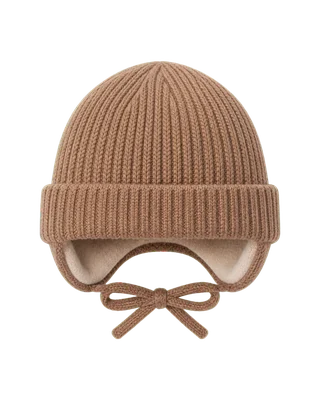
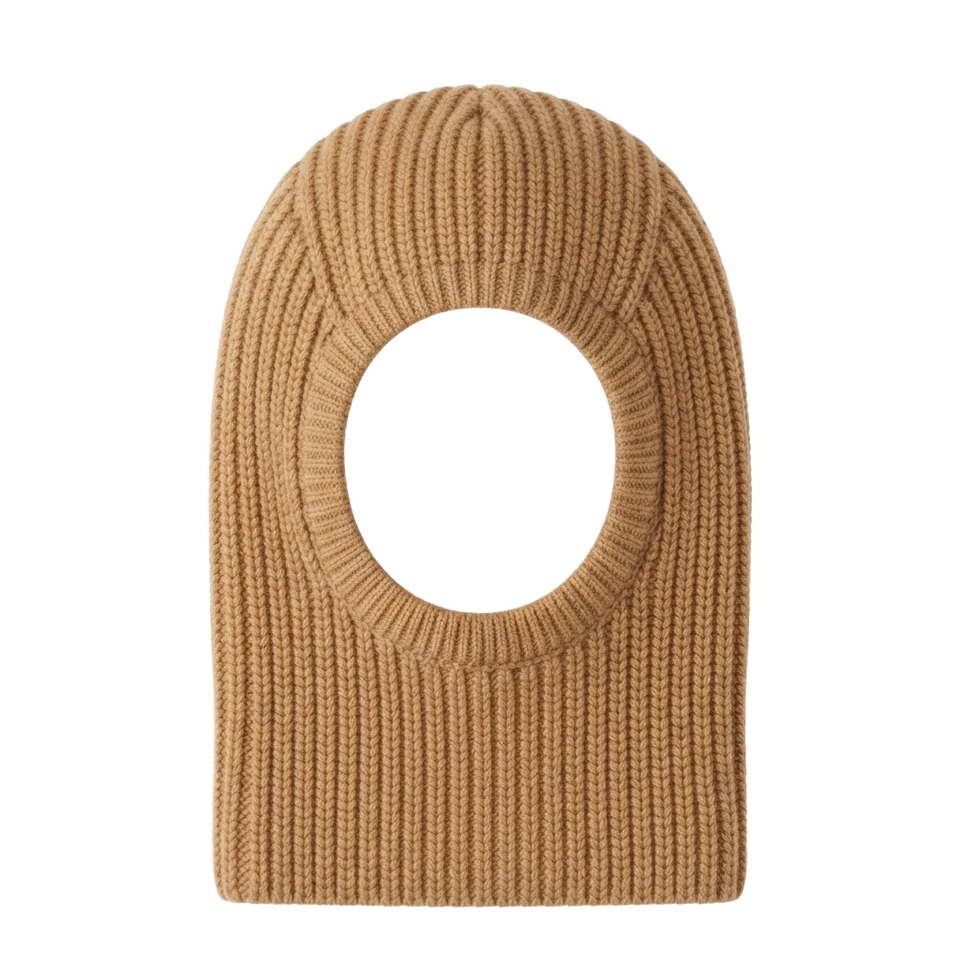
A balaclava is a warm hat that doesn't stop at the ears. One piece of knit covers the head, the ears and the neck, with one opening for the face. It pulls on over the head, and the neck part tucks into the jacket.
In the US it's often called a ski mask. Don't let the name put you off. A baby's balaclava has no eye holes, and the whole face stays open, framed by a soft, stretchy edge.
You need one for cold, windy walks when your baby's jacket leaves the neck bare. Its neck part does a scarf's job without the loose ends, like a built-in neck warmer. A pram suit that zips up to the chin already covers the neck, so then any warm hat will do.
It's also the hat that stays on. The neck part holds it, so small hands find no edge to pull up, and the wind has nothing to take.
- For ages0–3years
- You'll need1–2warm hats
- Wear it below8°C46°F
When babies wear one
Put it on when the feels-like temperature (the air temperature with the wind counted in) is below 8°C (46°F), or below 12°C (54°F) for a baby under 3 months. That's when any baby needs a warm hat.
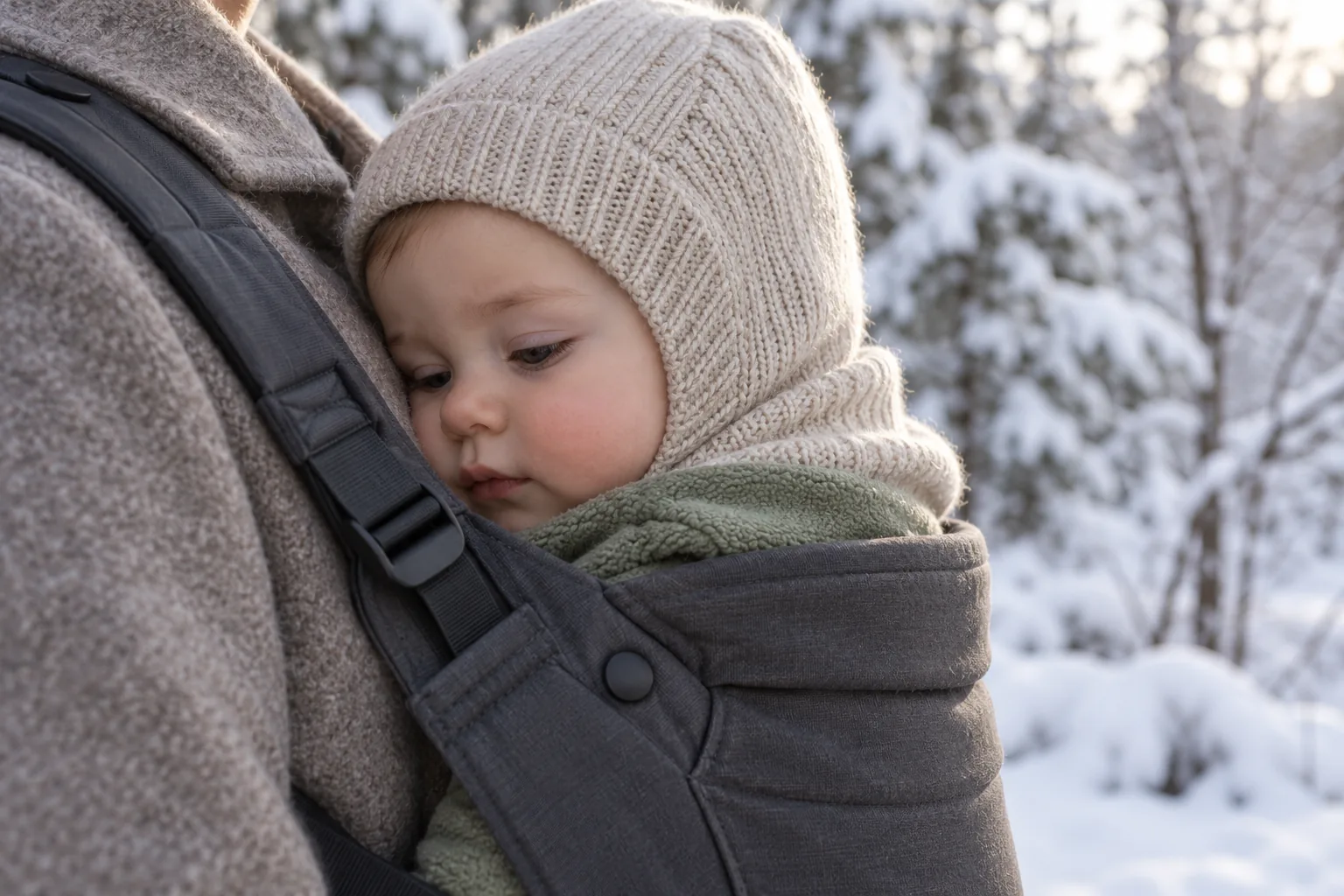
It helps most on windy days and in a carrier. There your baby's head rests above the carrier, and the back of the neck is out in the wind.
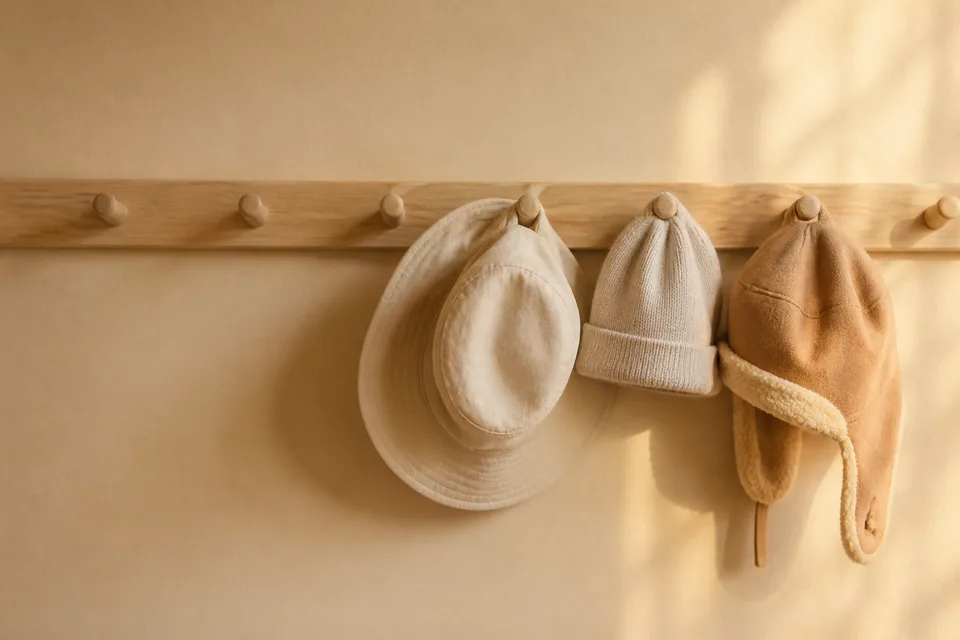
Balaclava or earflap hat?
Both keep the ears warm. The difference is the neck.
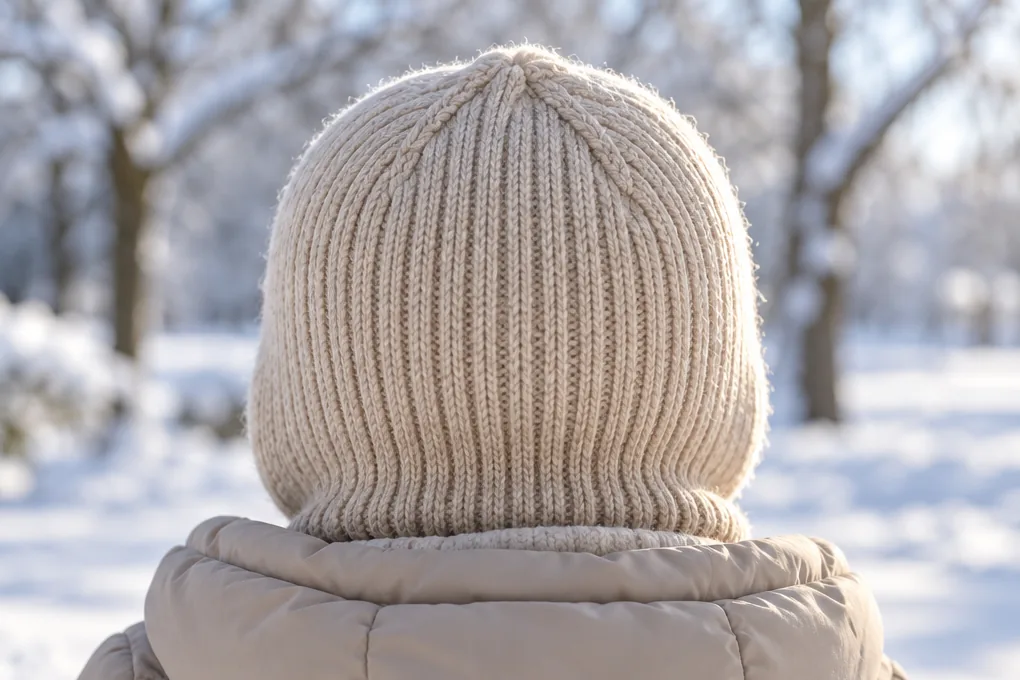
Balaclava
The one for cold, windy walks and the carrier. It's slower to slip off a sleeping baby.
- Good: Neck covered to the collar
- Good: Nothing to tie
- Not good: Takes practice to pull on
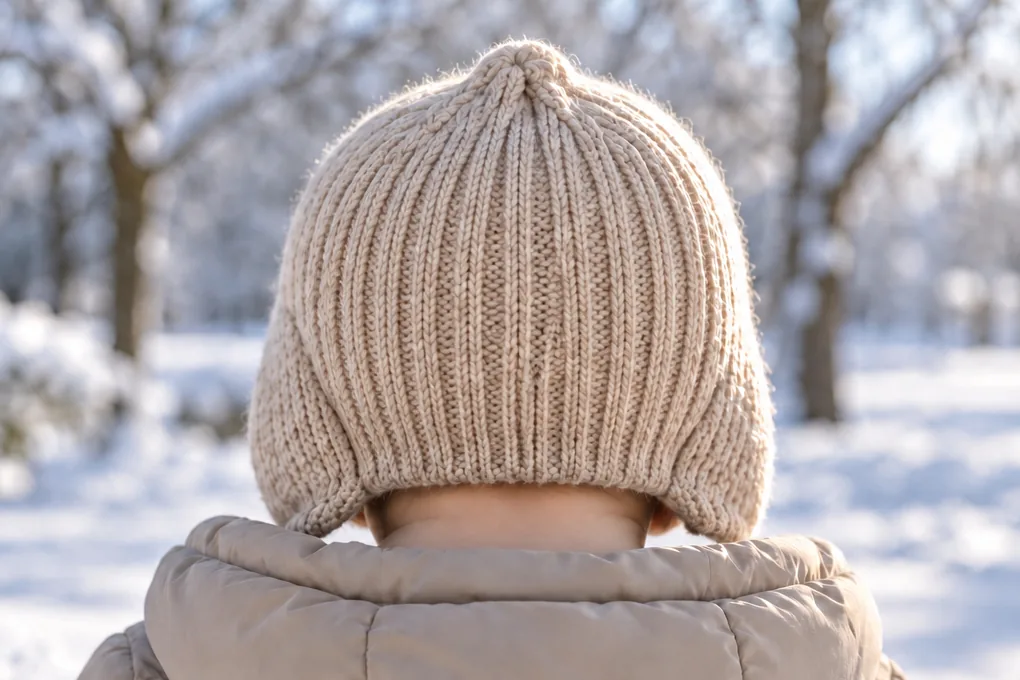
Earflap hat
Enough on a calm day, or when the jacket collar comes up high.
- Good: Quick on and off
- Not good: Bare neck above a low collar
- Not good: Ties to do up
Types of balaclava
They differ in how warm they are, and how much wind they keep out.
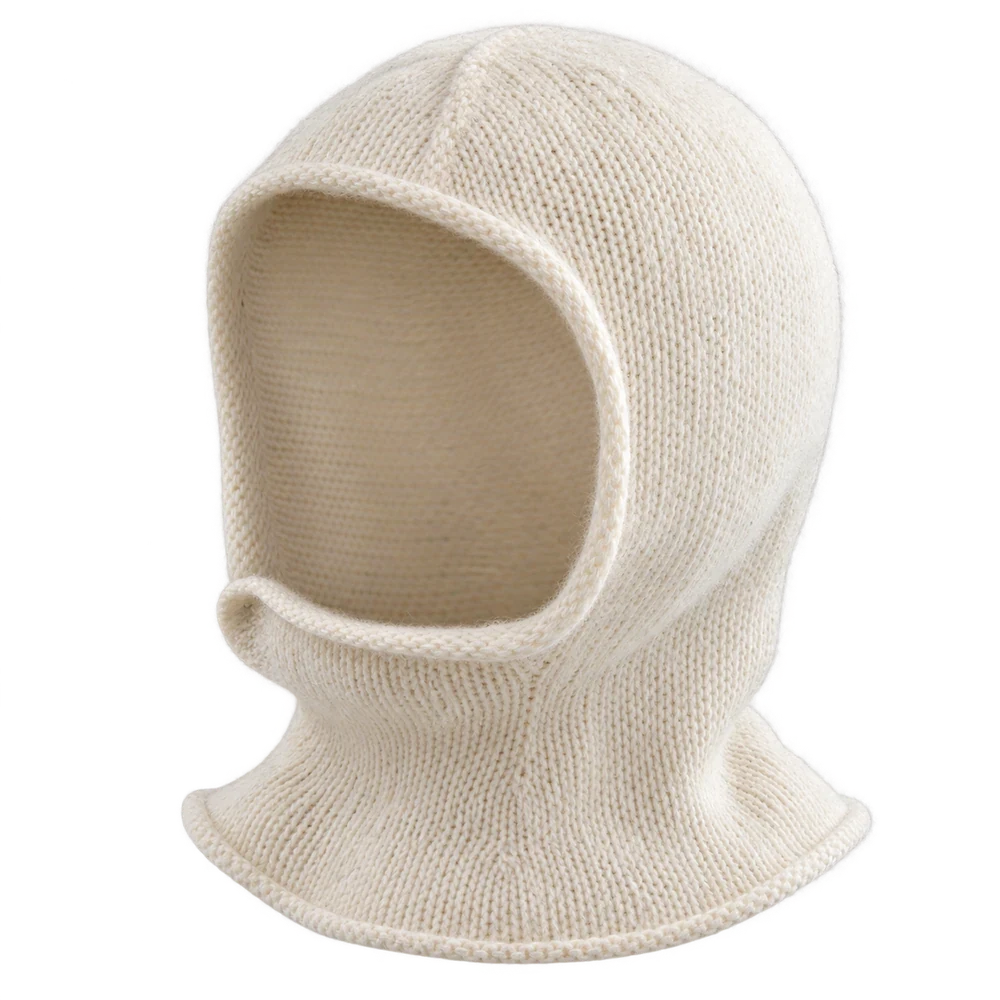
Thin knit
One layer of merino, a fine, soft wool. It's the lightest kind. Wear it on its own, or under a warm hat on the coldest days.
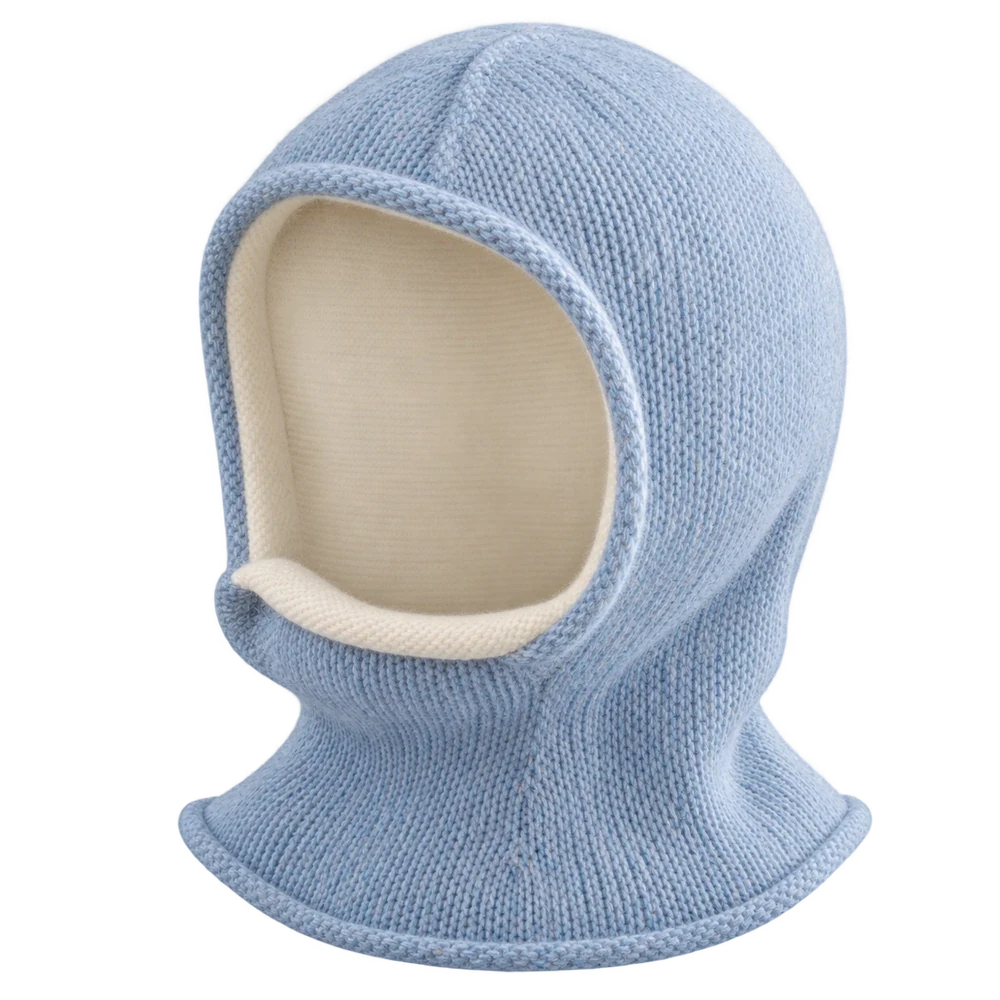
Lined
Knit outside, with soft cotton or fleece inside. Two layers hold in more warmth, and the lining keeps wool off the skin. This is the one for most cold walks.
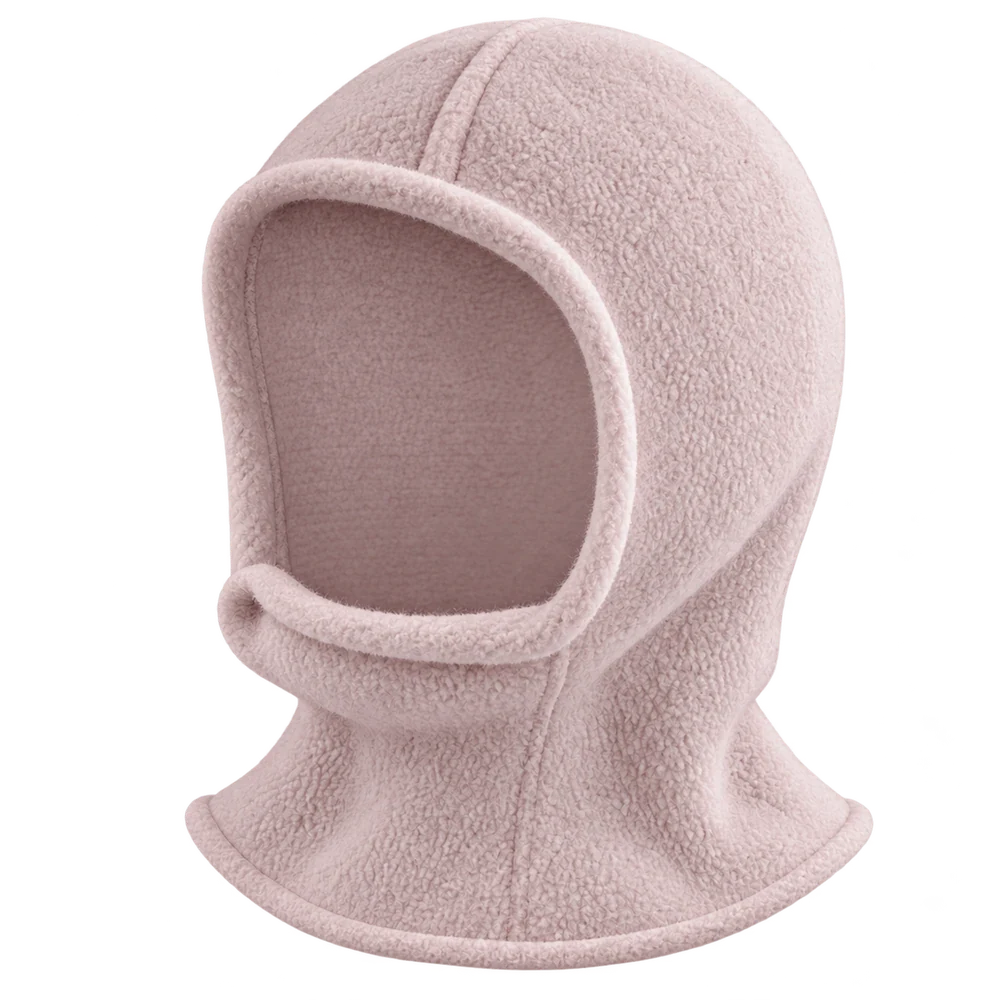
Fleece
Soft polar fleece, often with no knit at all. It's warm and quick to wash and dry, but on its own, fleece lets the wind blow through.
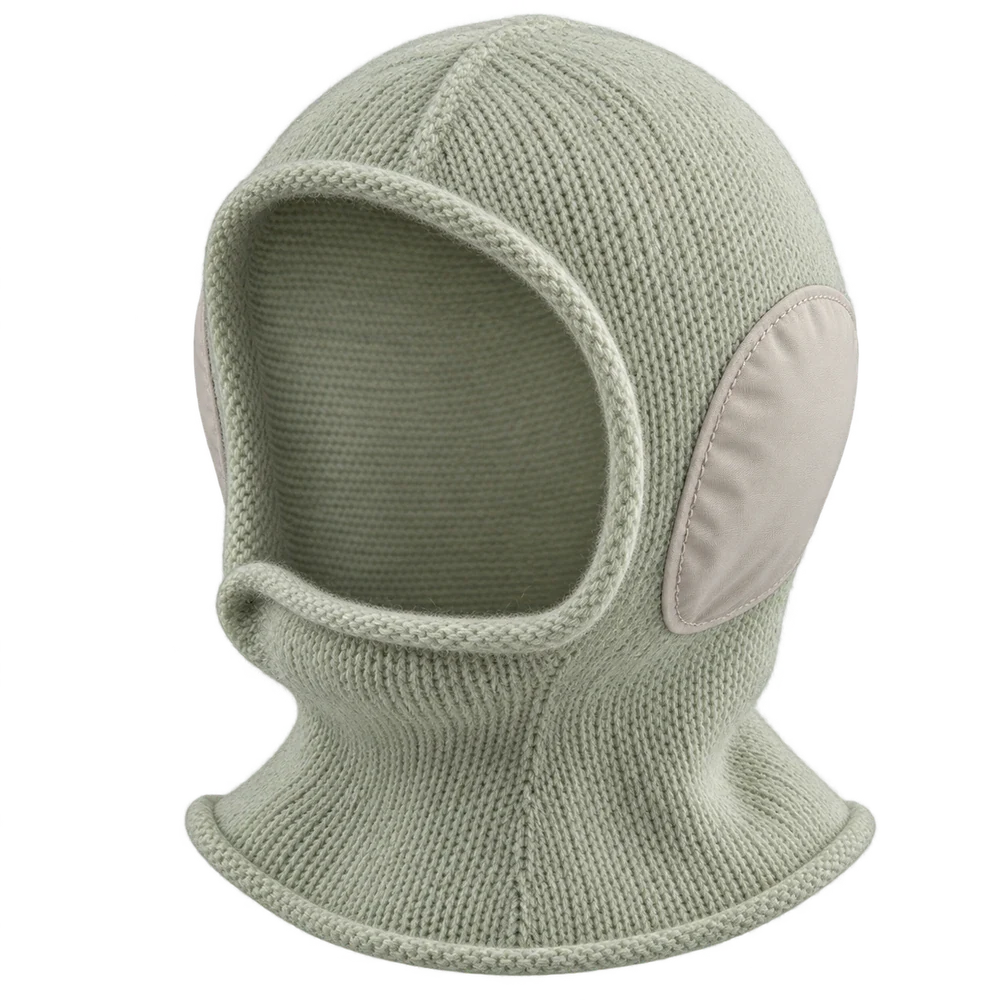
Windproof
Smooth, wind-blocking fabric over the ears. Knit lets the wind through too, so this is the one if your walks are often windy, by the sea or across open fields.
How to choose a balaclava
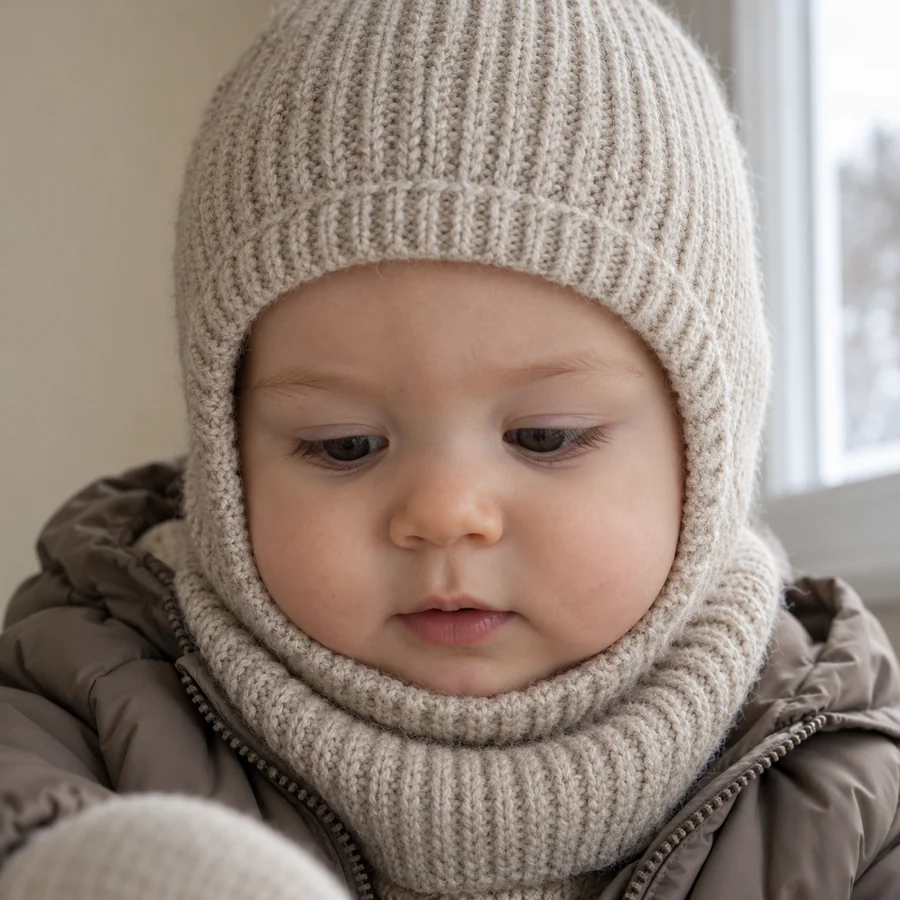
1. An opening that frames the face
The edge should rest just above the eyebrows and run under the chin, with the eyes, nose and mouth clear. Try it on and let your baby turn the head: a loose opening slides over the eyes, and a tight one presses into the cheeks. Sizes go by the measurement around the head.
- Good: Edge rests above the eyebrows
- Good: Nose and mouth fully clear
- Not good: Slips over the eyes on a turn
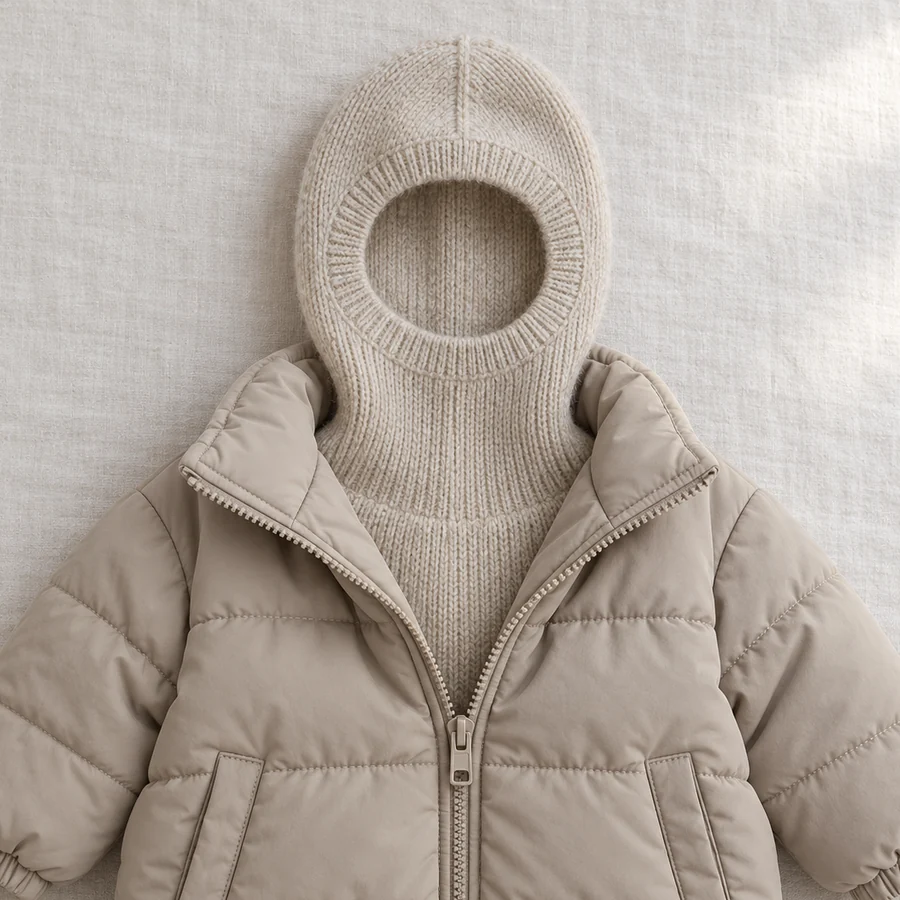
2. A neck long enough to tuck in
A long neck part stays tucked in, so no cold air gets in at the throat, even when your baby looks up.
- Good: Reaches inside the collar
- Good: Lies flat under the zip
- Not good: Gap between neck and collar
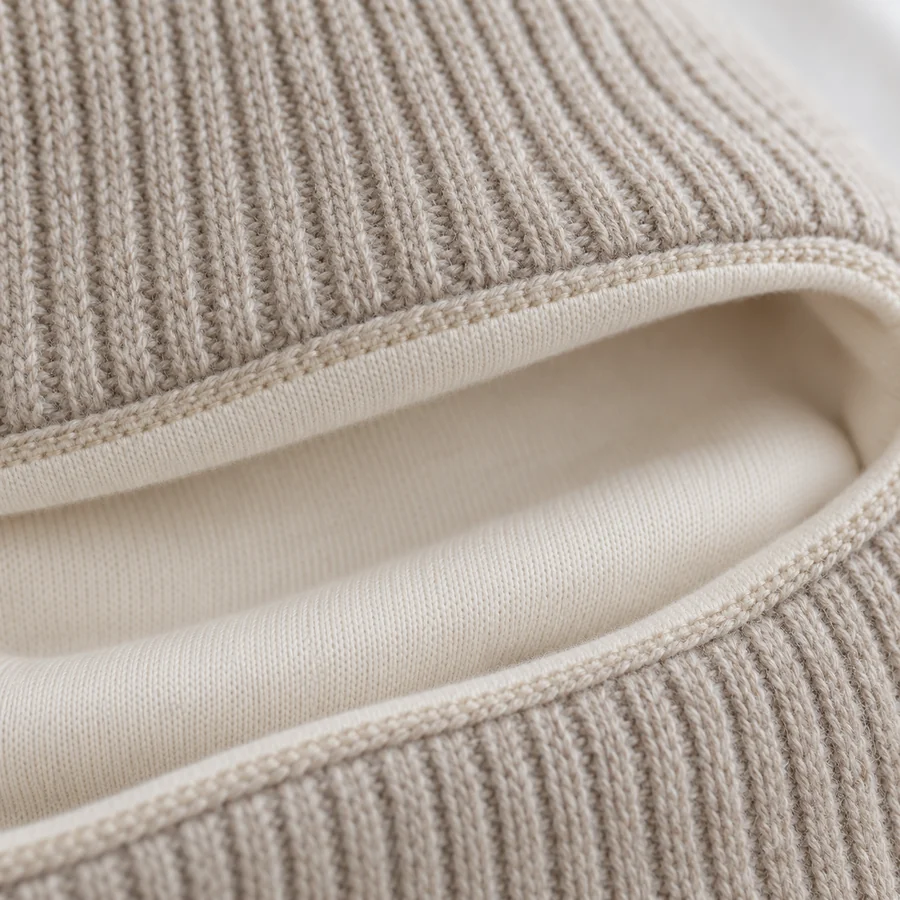
3. Soft where it touches the face
The edge rubs the cheeks for the whole walk, so run a finger along the inside before you buy. Flat seams (no ridge on the inside) and a soft edge feel best.
- Good: Soft lining or fine merino
- Good: Flat seams at the face
- Not good: Coarse wool at the edge
How to put it on
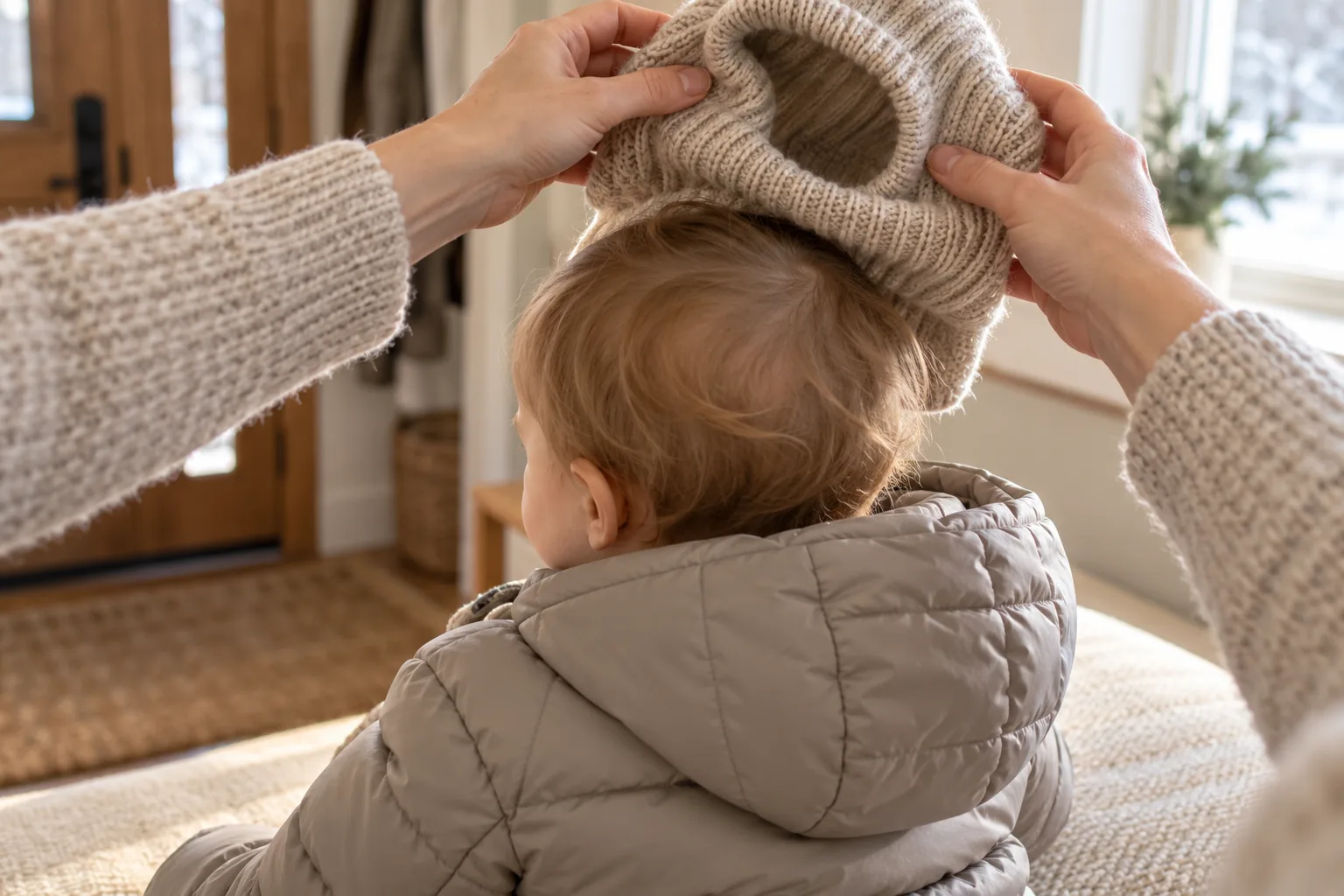
1. Gather it up
Bunch it up from the neck to the face opening, the way you'd gather a sock before a foot.
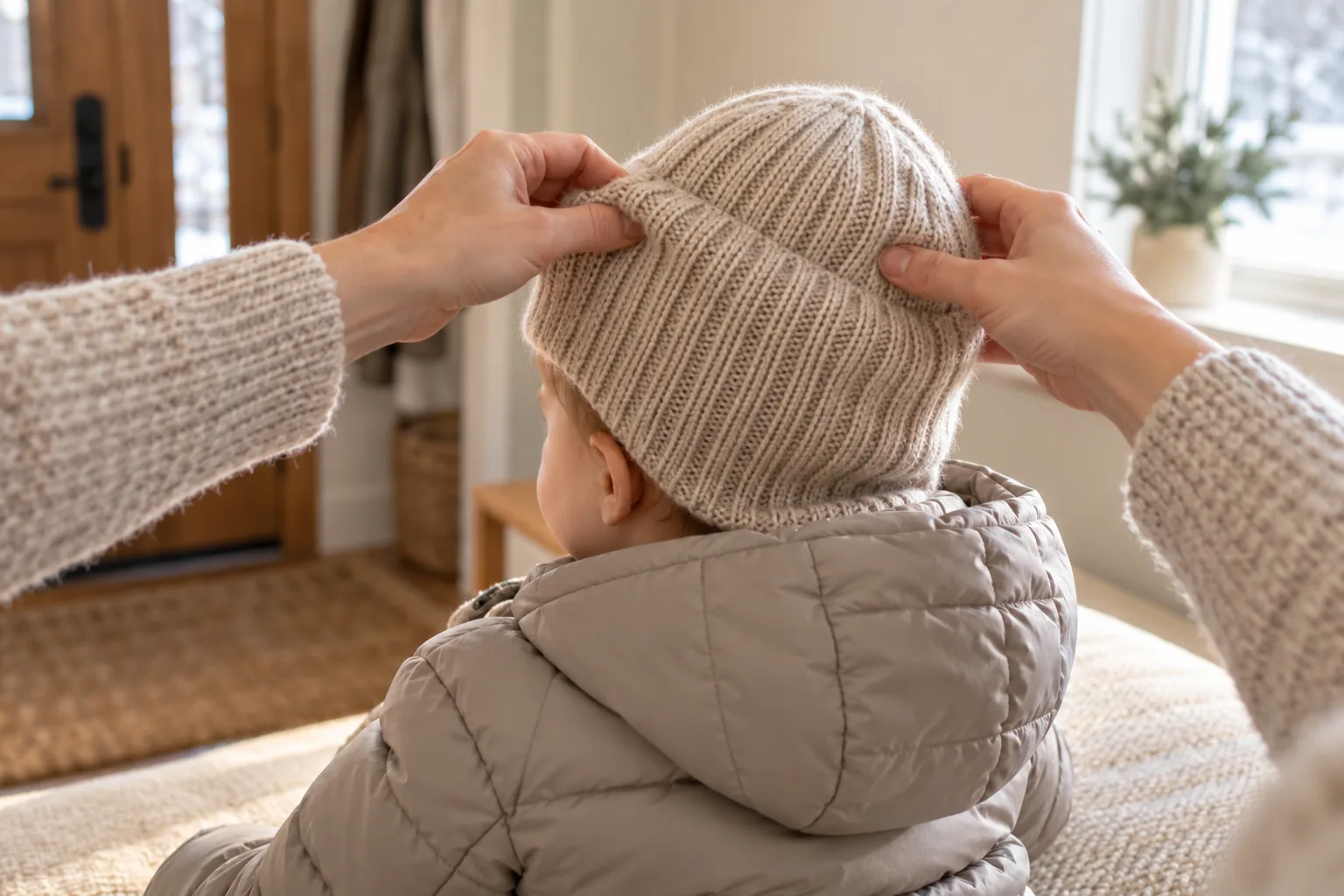
2. Back of the head first
Slip it over the back of the head, then bring the front edge down to the forehead. That way the knit never drags across the face.
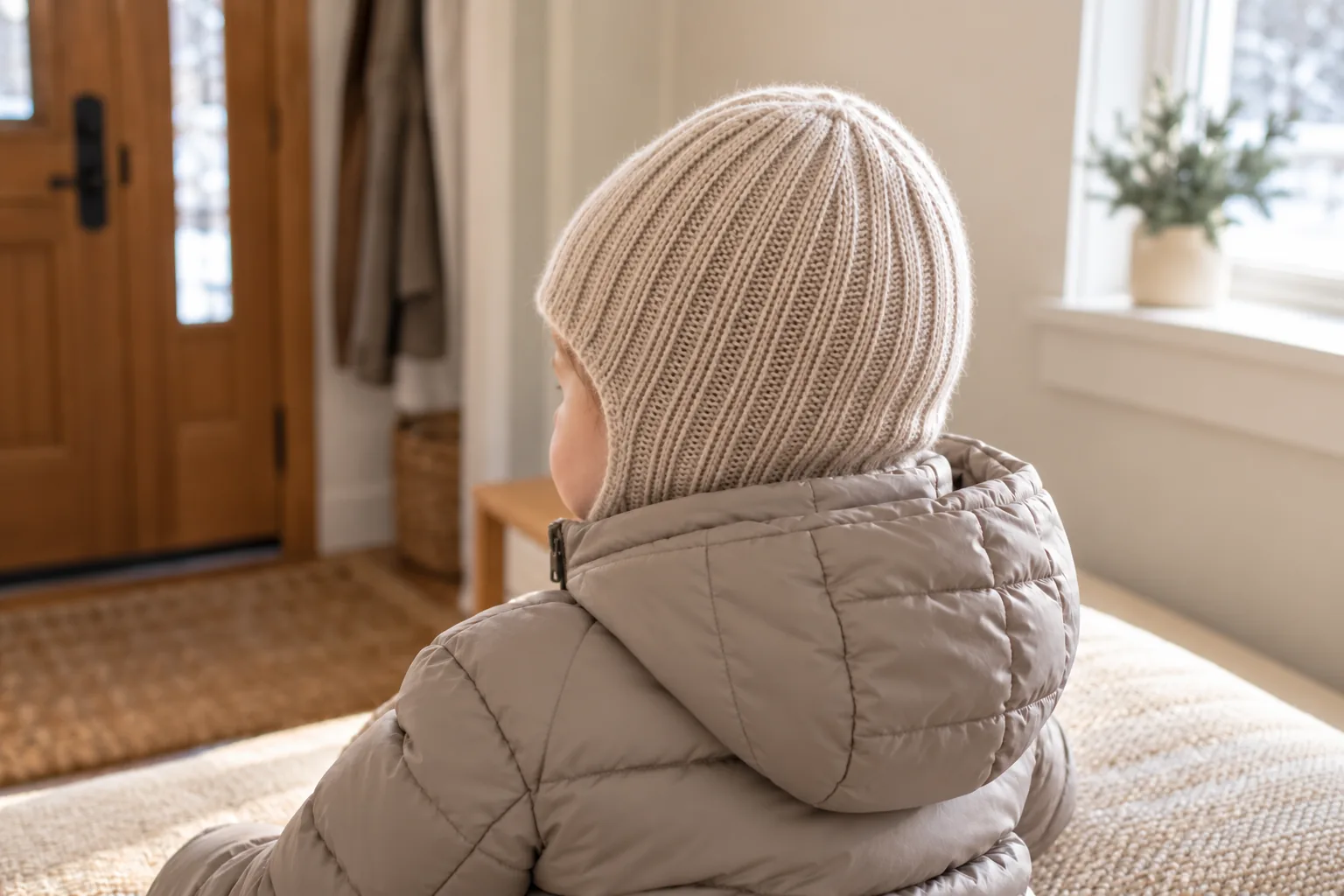
3. Neck in, then zip
Ease the opening around the face, spread the neck part flat inside the jacket, and zip up over it.
On the walk and back inside
On the walk, slide two fingers under the neck part to check the back of the neck: warm and dry is right.
Back inside, take it off straight away, like any hat, even if your baby has fallen asleep. Lift the front edge over the forehead and slide it off the back of the head.
Questions parents ask
Are balaclavas safe for babies?
Yes, on walks with you, when it fits well. Some balaclavas pull up over the nose like a ski mask, and on a baby that part stays down. Nationwide Children's Hospital says never to put a mask on a child under 2, because breathing through fabric is harder for small airways.
How do I protect my baby's face from the cold?
Keep the face uncovered, and keep the wind off it instead: pull the stroller hood forward, or turn your back to the wind when you carry your baby. If the cheeks come home red and dry, a thin layer of wind cream before the next walk helps.
Can my baby sleep in a balaclava?
No, not in a crib or bed. When you put your baby down to sleep, the head and face stay uncovered, because a covered head can overheat a baby and get in the way of breathing.
Can my baby wear a balaclava in the car seat?
No. Take it off as soon as your baby is in the car, before you do up the straps, because it only comes off over the head. Babies let out extra heat through the head, so a hat in a warm car soon makes your baby too hot.
Can a newborn wear a balaclava?
Yes, on cold walks. Small sizes are harder to find: some brands start at 0–3 months, others at 6 months.
Is a wool balaclava itchy?
Fine merino usually isn't. Wool prickles when its fibers are thick and coarse, and merino's are thin enough to bend softly against the skin.
How do you wash a balaclava?
Wool, even with a cotton lining, goes on a cool wool cycle or gets washed by hand, then dries flat. Pull it back into shape while it's damp, because wool can shrink a little in the first wash. Fleece and acrylic ones usually go in a normal machine wash.