
What this is about
You check the weather and see two numbers. The main reading says 12°. Right below it, in smaller type, it says feels like 9°. Then you glance out the window, notice the trees moving, and start doing extra mental math. If it feels like 9°, plus the wind, should you bundle up for colder? Stop there. The app already did that subtraction for you. Dress for 9° and leave it at that.
Use the adjustment once
Wind cools a body by sweeping away the thin blanket of warm air trapped next to skin and fabric. An ordinary thermometer hangs in still air and shade, so it cannot measure that draft. The feels-like reading estimates how fast moving air strips that warmth away.
When you see branches swaying, that gust is the reason the reading dropped below the air temperature. It explains why 12° feels like 9°. It is not an invitation to subtract a second time. If you dress for 6°, your baby will be sweaty and fussy ten minutes into the walk.
The difference can change the whole outfit
Three degrees may not sound like much on paper, but it often crosses a clothing line. An air temperature of 12° sits in the 12–15° stroller range, which needs only a light jacket. A feels-like reading of 9° drops you into the 8–11° bracket, where warm socks, a fleece, and a knit hat become necessary. Here is what those three degrees change:
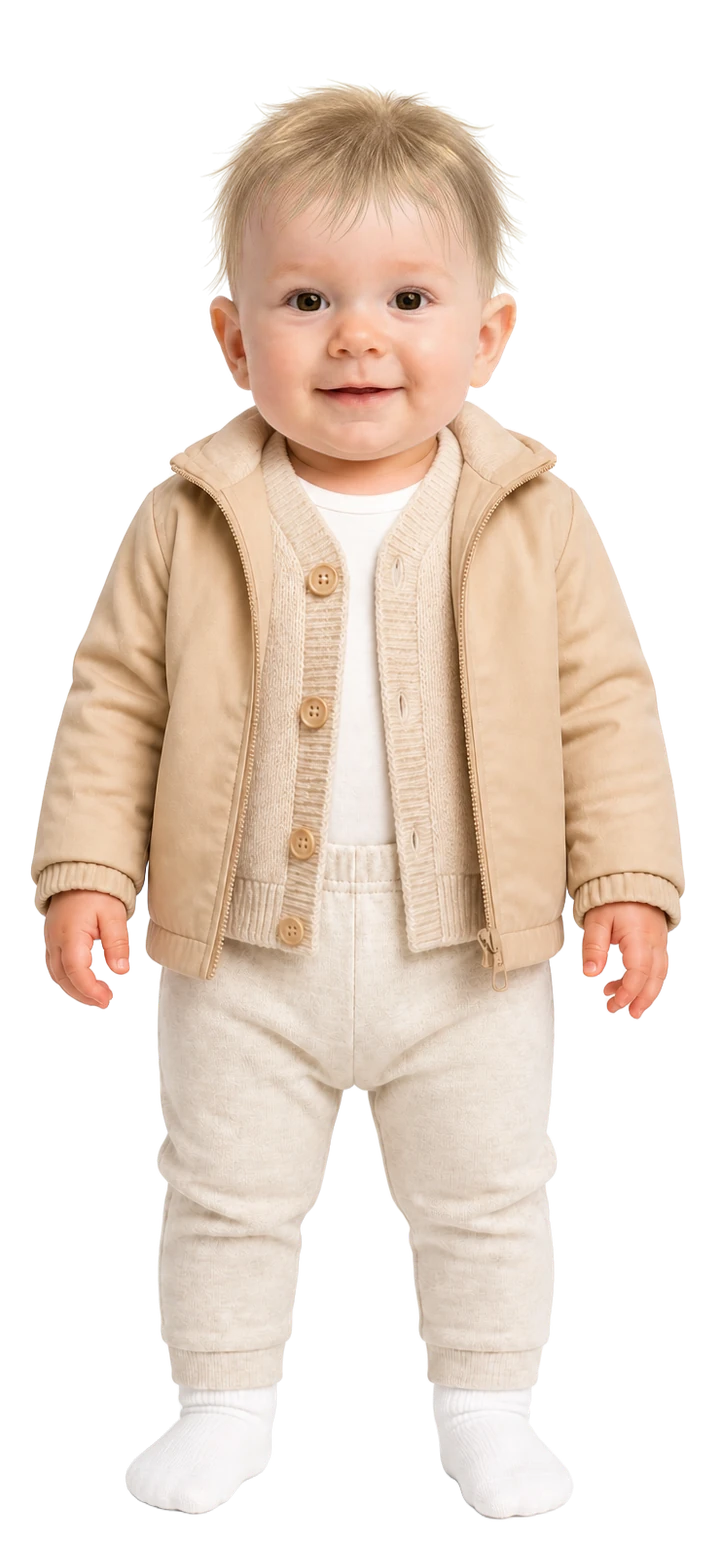
Using air temperature alone: 12°
If you ignored the wind, you would dress for mild air: a long-sleeve bodysuit, warm pants, thin socks, a cardigan, and a light jacket.
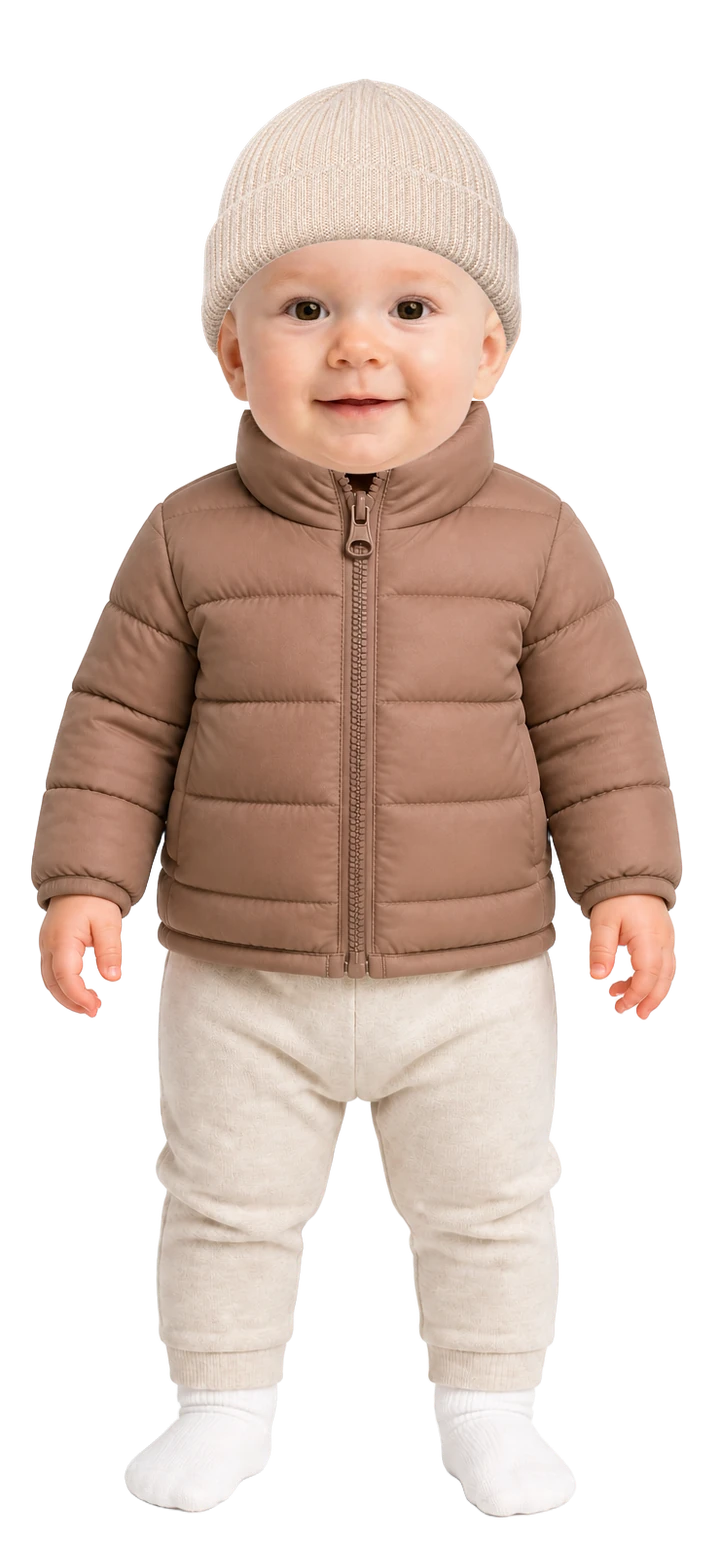
Using feels like: 9°
Accounting for the breeze shifts the outfit: warm pants, warm socks, a heavier fleece, a warm jacket, and a knit hat over the ears.
The number sets the warmth. The jacket blocks the wind
A chunky hand-knit cardigan looks cozy at breakfast, but knitted yarn is full of tiny gaps. Cold gusts blow straight through the stitches and reach your baby's chest. Adding another cardigan underneath only makes your baby stiff and uncomfortable without stopping the draft.
A light windproof jacket or nylon pram suit solves that problem at the surface. It seals the warm air inside. You dress for the feels-like temperature underneath, and let the outer shell deflect the breeze.
Indoors, switch to the room thermometer
Outdoor feels-like numbers belong on the street. The moment you step through a doorway, forget that number. A blustery 7° sidewalk and a calm 21° living room call for entirely different clothes.
The biggest trap happens during morning errands. You dress your baby for a chilly walk, then push the stroller into a heated grocery store, bus, or coffee shop. The wind stops instantly, the indoor heating takes over, and your baby is suddenly trapped in three outdoor layers.
Unzip the jacket or footmuff as soon as you step inside, and take off the hat. Outdoor layers come off at the door. At home and for sleep, your only guide is the room thermometer on the nursery wall.
Check the hour you leave, not the day's high
Check conditions for your exact hour
Never dress for the afternoon high if you are stepping out at 8:30 AM. Check the reading right now, and scan the next two hours for sudden gusts.

Pick your layers from feels like
Use the feels-like number as your warmth baseline. If the air is calm, the number will match the thermometer. If it is windy, trust the lower reading.
Slip two fingers behind the neck
Ten minutes into your walk, check the nape of the neck. Warm and dry skin means your choice was right. Clammy or damp skin means unzip a layer.
A baby's hands and feet often feel cool outdoors because small blood vessels tighten to keep the body core warm. That is normal circulation, not a sign of freezing. As long as the chest and back of the neck feel pleasantly warm, your outfit choice is working.
Questions parents ask
What if the thermometer says 12° and feels like says 9°?
Dress for 9° outside. That means the colder 8–11° stroller range, with warm socks and a fleece, rather than the light jacket you would pick for 12°. Slip a finger behind the neck ten minutes into the walk to confirm.
What if the day is sunny but feels-like is low?
Dress for the lower feels-like number. Sunshine feels warm on your cheeks, but moving air will still cool a stroller. Keep the warm layers, and pull the stroller canopy forward if the sun is shining directly in your baby's eyes.
What about humid summer heat?
Feels like works in hot weather too. High humidity stops sweat from evaporating, so the air feels hotter than the actual temperature. If 26° feels like 30°, dress for 30° with a single loose layer, plenty of shade, and frequent drinks.
Why are my baby's hands cold if I dressed for feels like?
Cool hands and feet are normal outdoors because an infant's circulation keeps heat centered in the chest and belly. Check the back of the neck or chest. If that skin is warm and dry, your baby is comfortable.