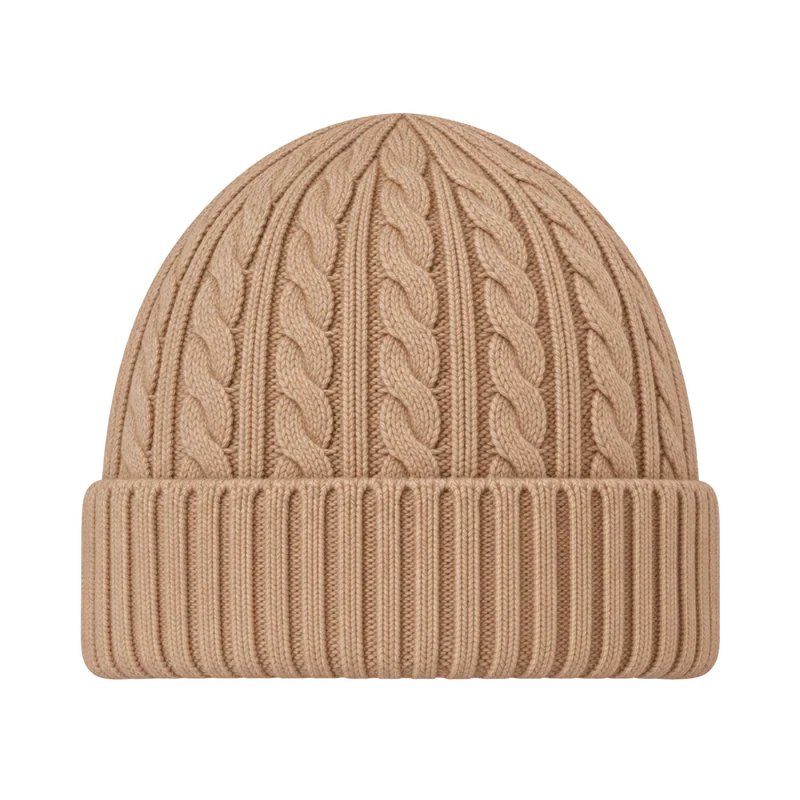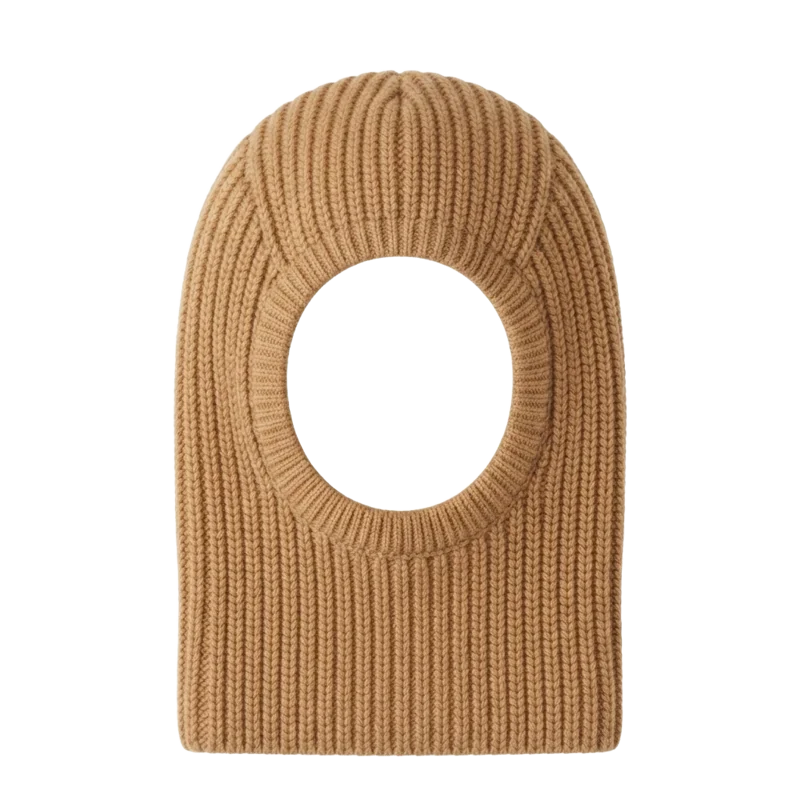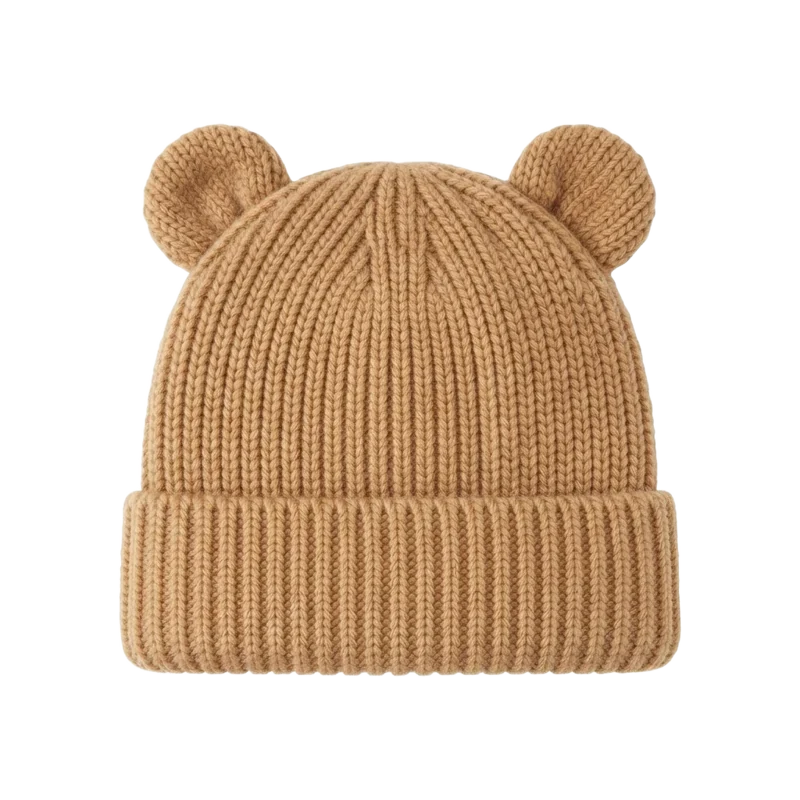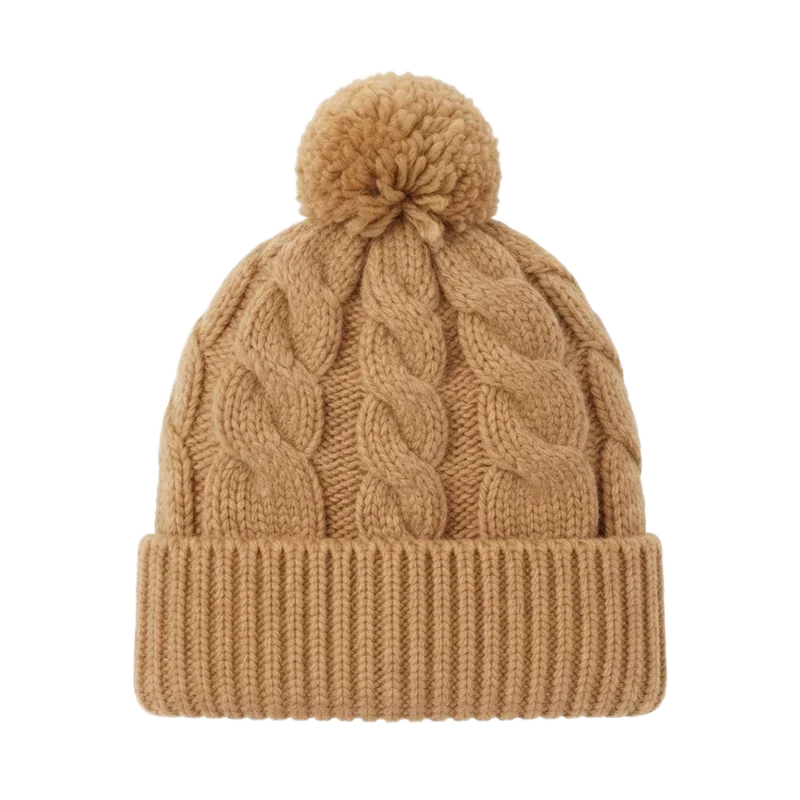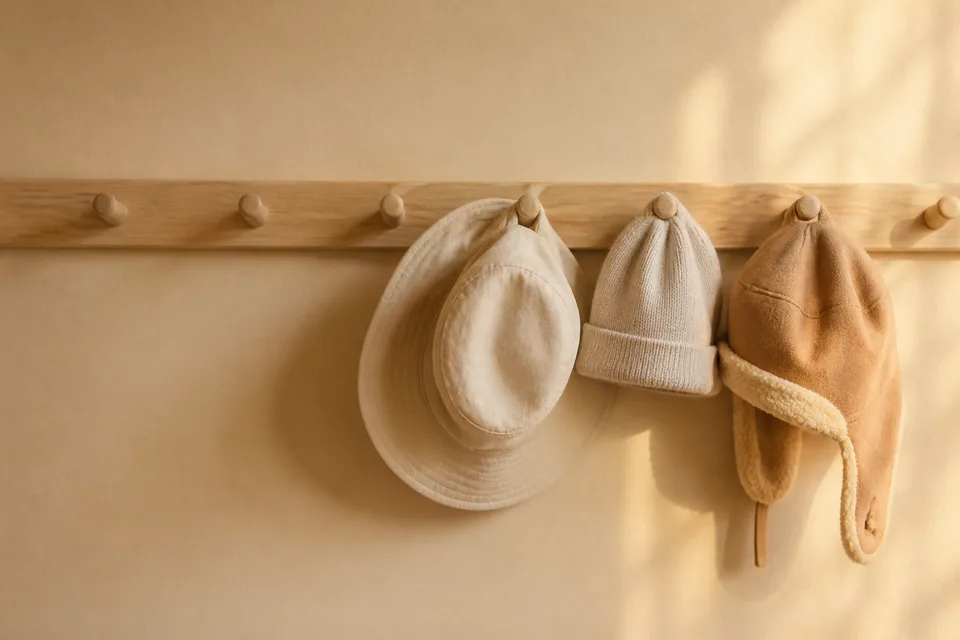
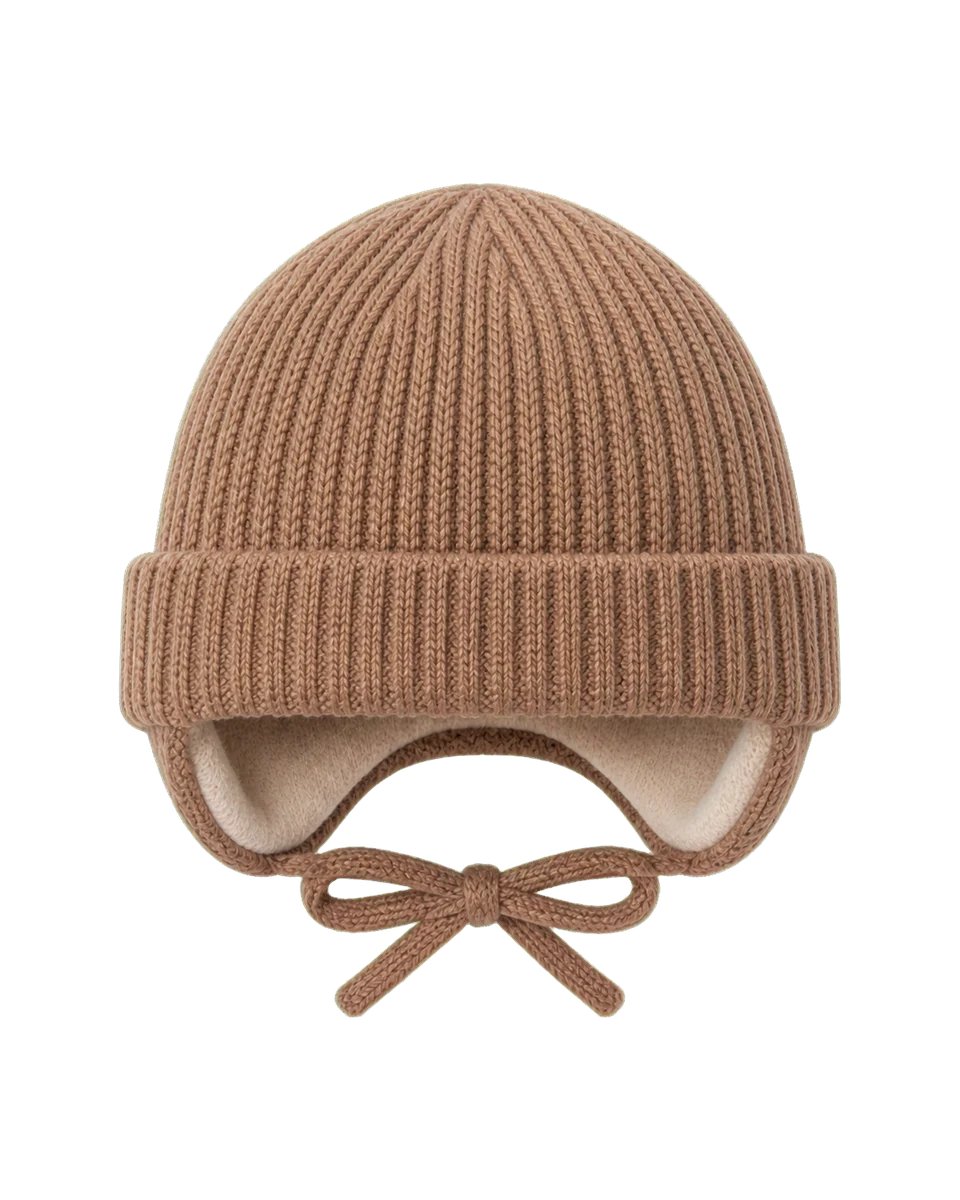
A warm winter hat looks like an ordinary knit hat, but it has two layers: a thick knit or fleece outside and a soft lining inside. Its sides come down over the ears, and many have flaps that fasten under the chin.
Your baby needs one for walks on cold days, in the stroller or the carrier. It matters most in the stroller, where your baby sits still while you keep warm by walking.
- For ages0–3years
- You'll need1–2warm hats
- Wear it below8°C46°F
At what temperature does a baby need a hat?
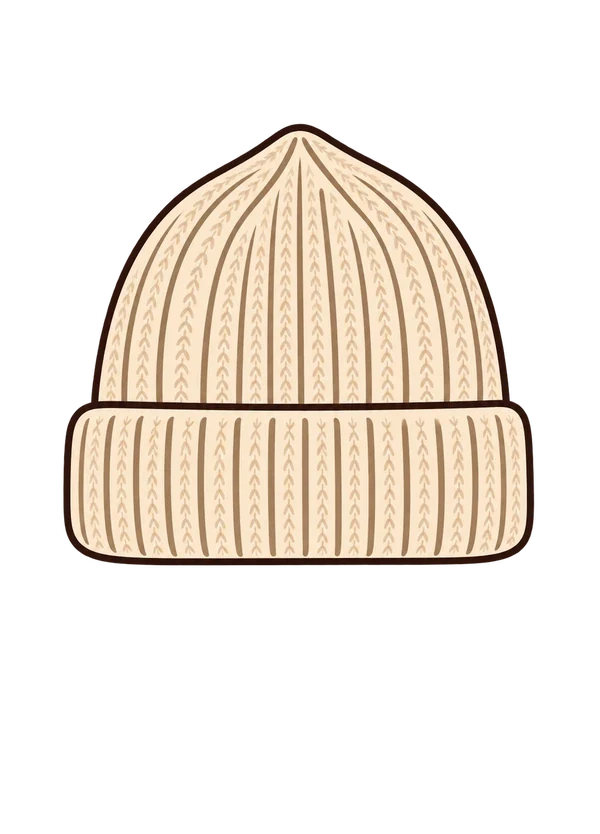
Go by the feels-like temperature, which counts the wind. Below 8°C (46°F), your baby needs a warm hat that covers the ears. At 8–11°C (46–52°F), a light knit hat is enough. From 12°C (54°F), no hat is needed, except a sun hat when the UV index is 3 or more.
Babies under 3 months need one layer more than older babies. At that age, the warm hat goes on below 12°C (54°F), and the knit hat at 12–15°C (54–59°F). The guide to dressing a newborn explains why.
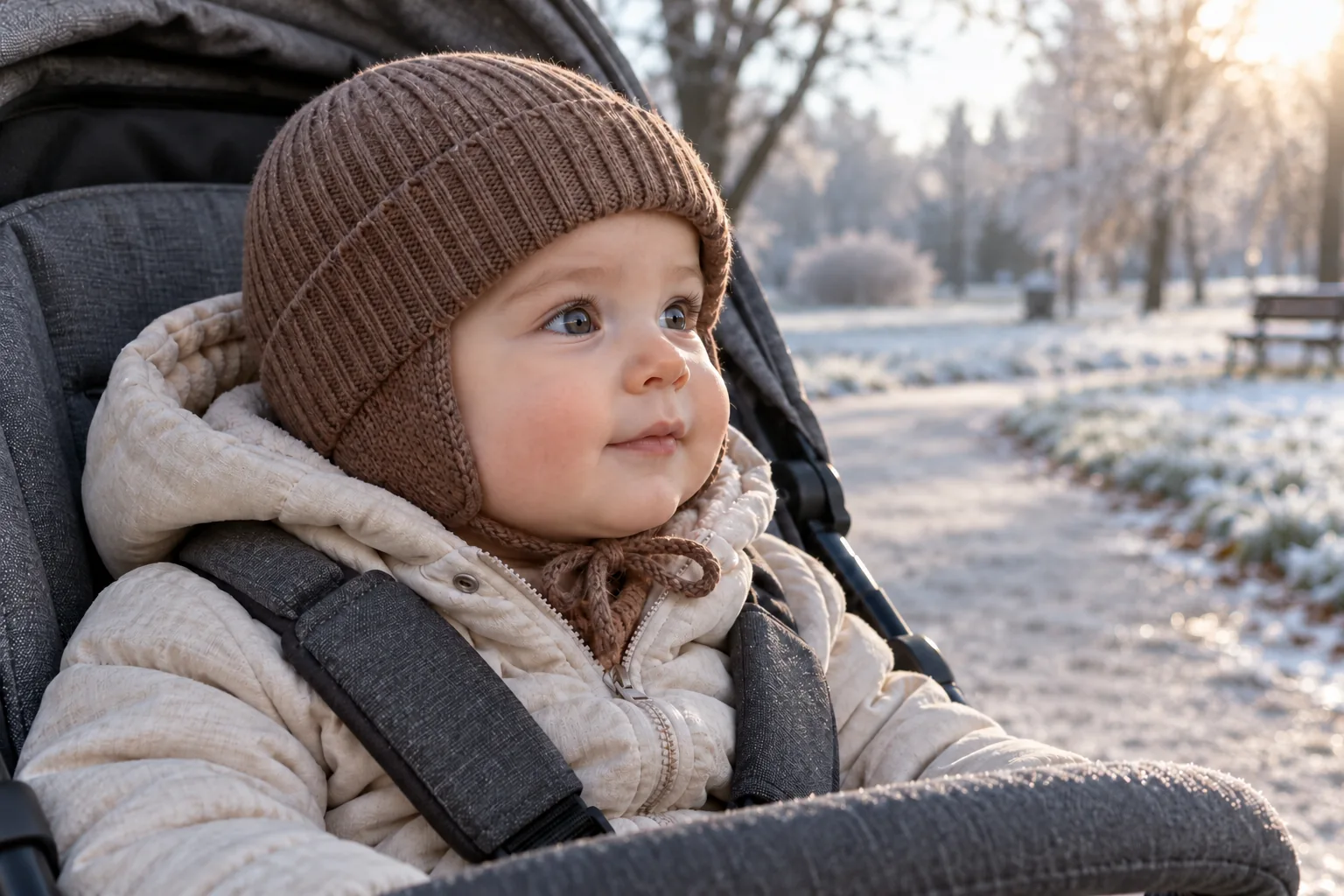
Which hat should your baby wear today?
Today's hatThe warm hat.
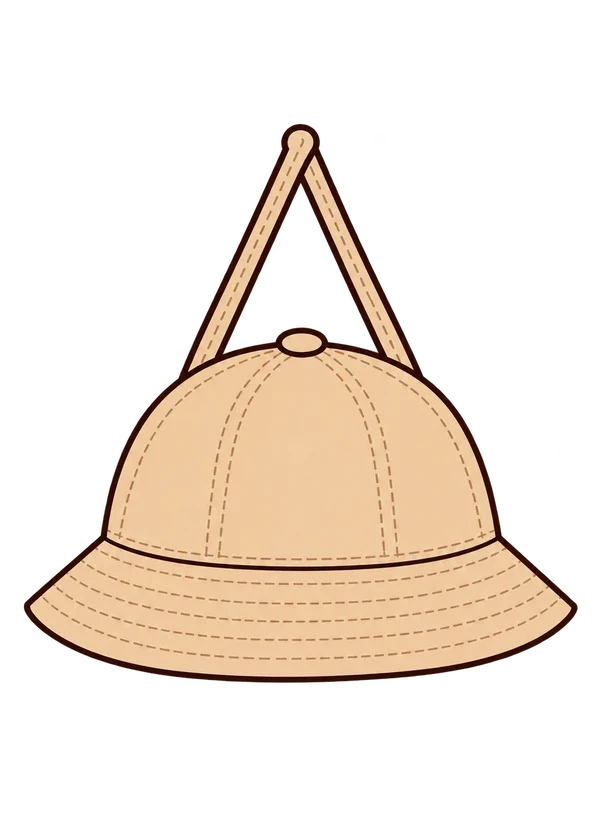

From UV 3
No hat
From 12°C
54°F
Warm hat
Below 8°C
46°F
For walks in the stroller or the carrier. Indoors and in the car, hats come off.
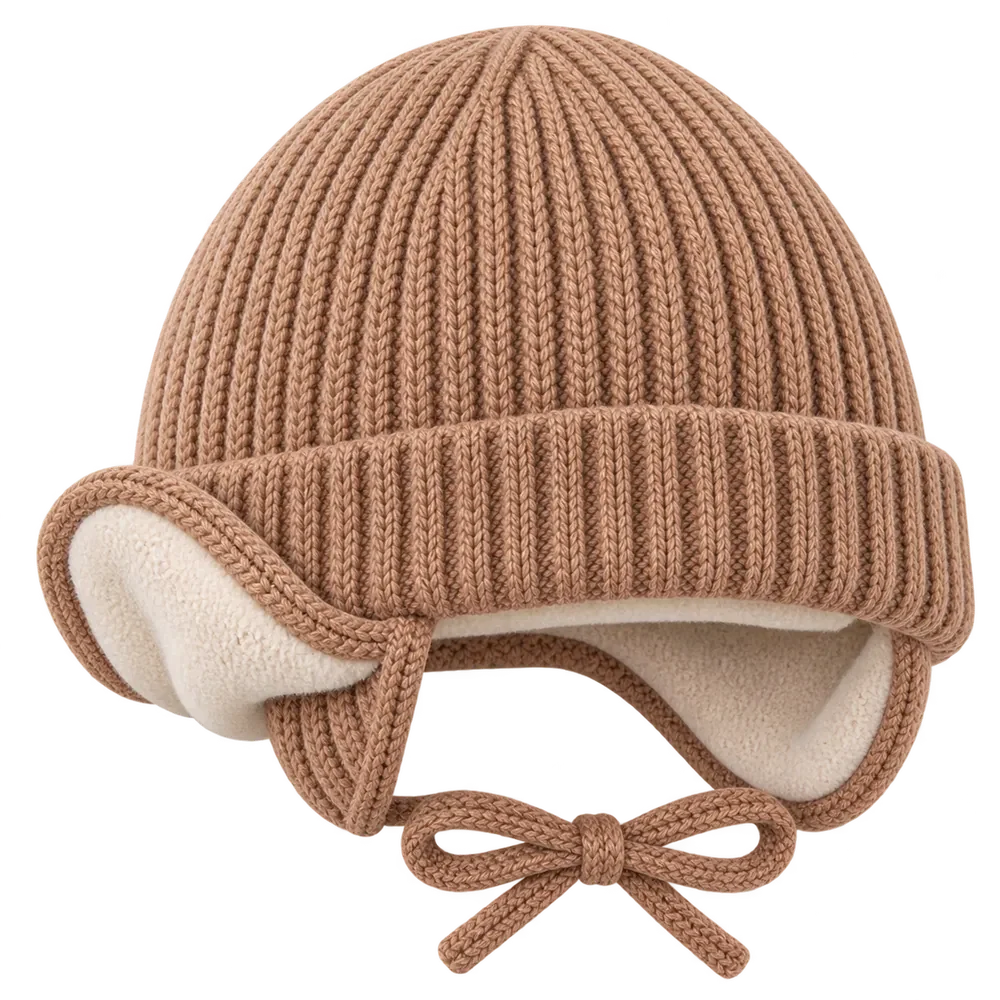
What makes it warm
Thick knit outside
Wool or another yarn, knitted thick and tight, holds warm air around the head.
Soft lining inside
Fleece or cotton jersey (soft T-shirt fabric). It is a second layer against the cold, and it keeps wool off the skin.
Ear flaps
They cover the ears. On a beanie, deep sides or a folded cuff do the same job.
Ties
They hold the flaps over the ears. Short ones are better, because long ties can catch or knot under the chin.
Types of warm hat
In a stroller or a carrier, a hat with ear flaps or a balaclava keeps the ears covered best. A beanie works when it is deep enough.
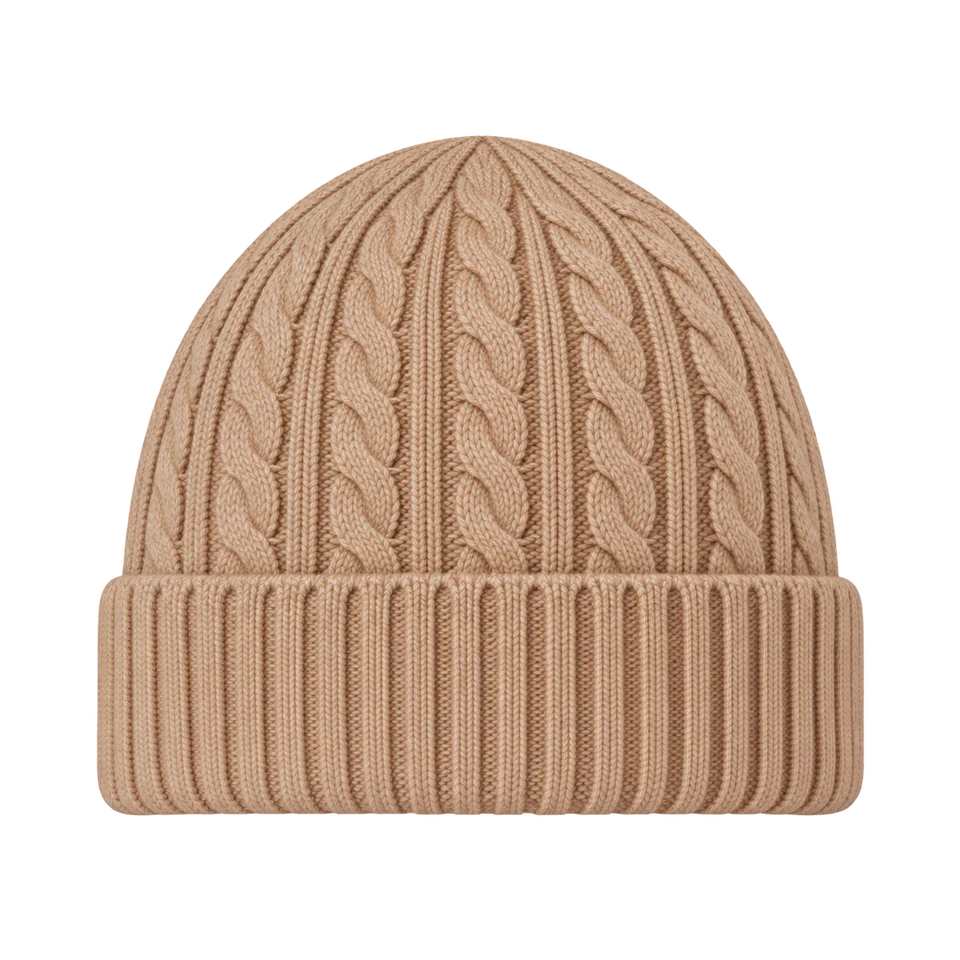
Beanie
A thick knit hat, often with a folded cuff that doubles the knit over the ears. Easy to pull on. A shallow one rides up and leaves the earlobes out.
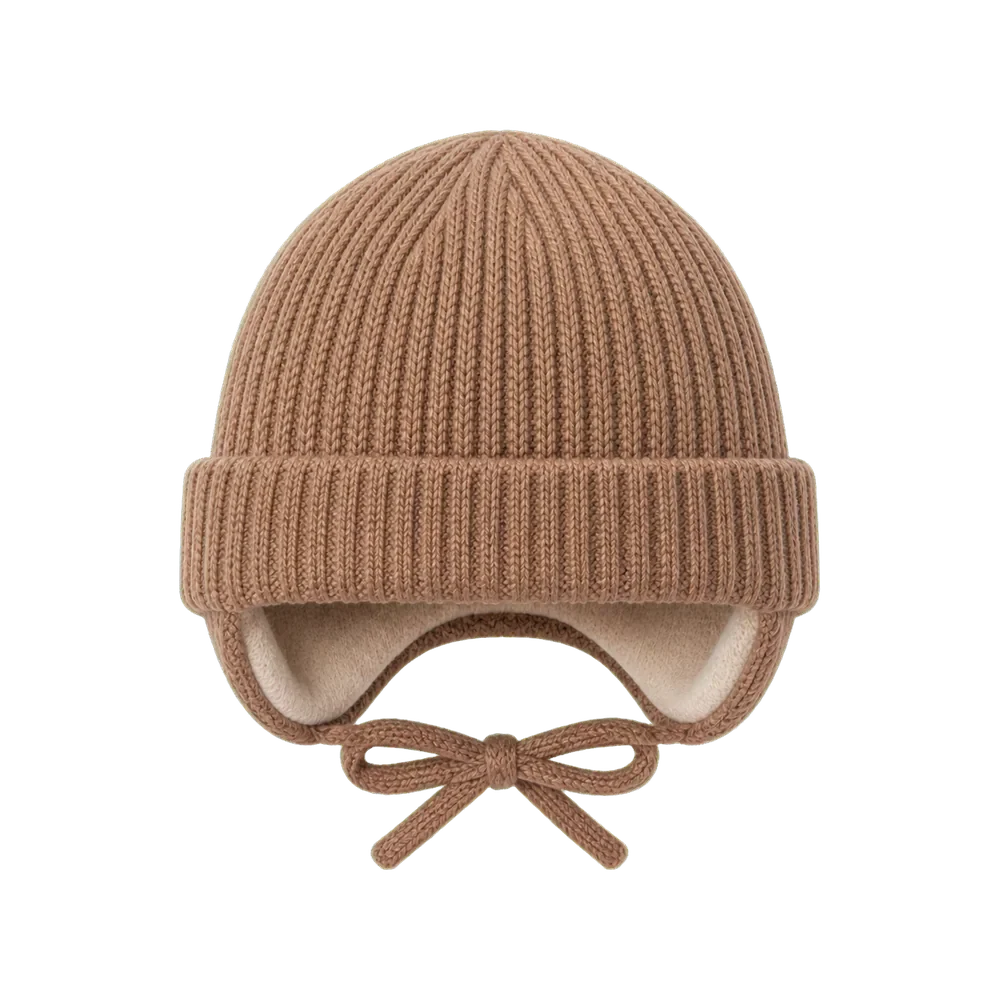
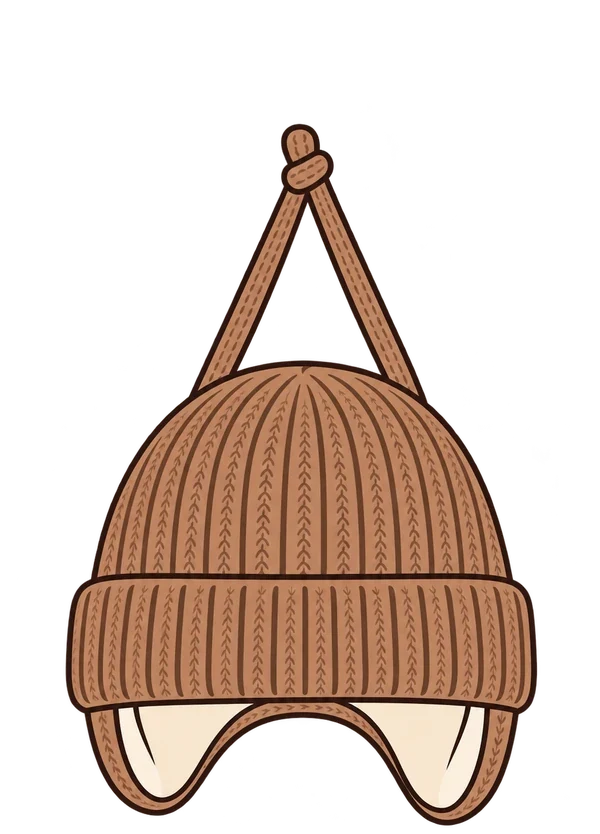
Earflap hat
A close-fitting hat with flaps that come down over the ears and fasten under the chin. The flaps stay on the ears when your baby turns.
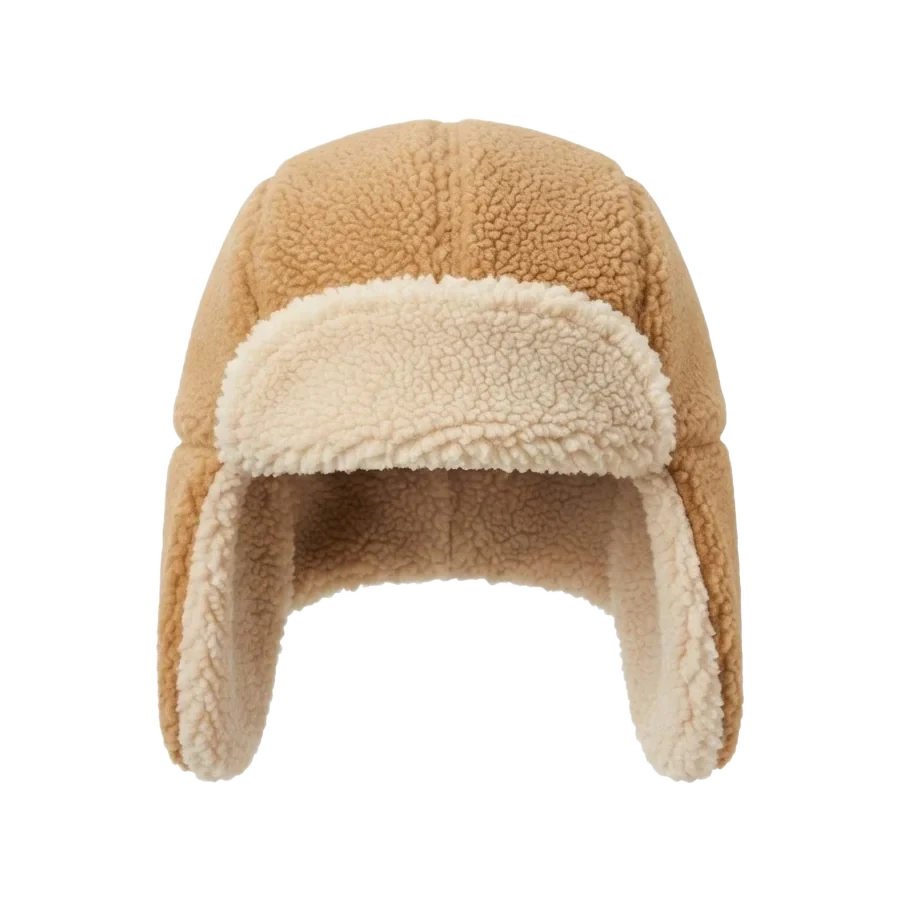
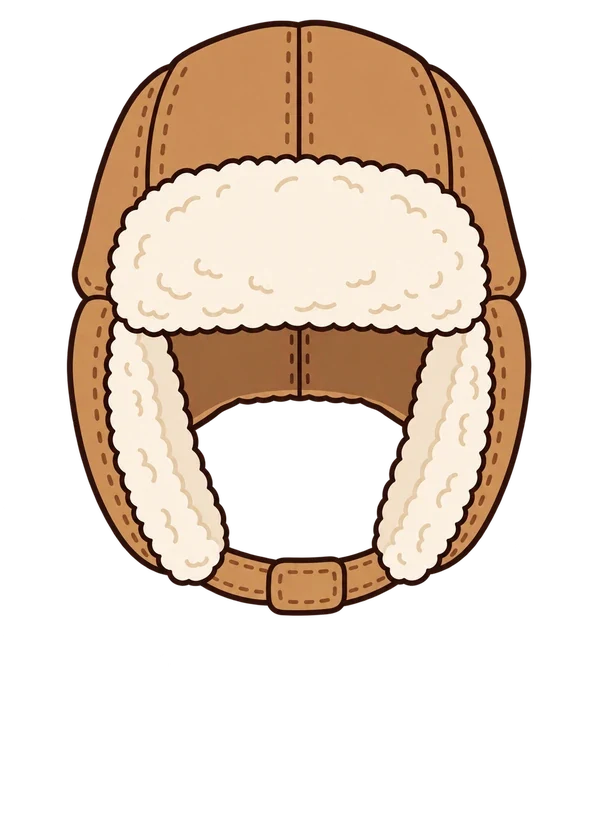
Trapper hat
A round crown with deep flaps over the ears and neck, lined with thick, fluffy fleece. Some are sherpa all over, and some have a smooth outer fabric, which lets less wind through than an open knit.
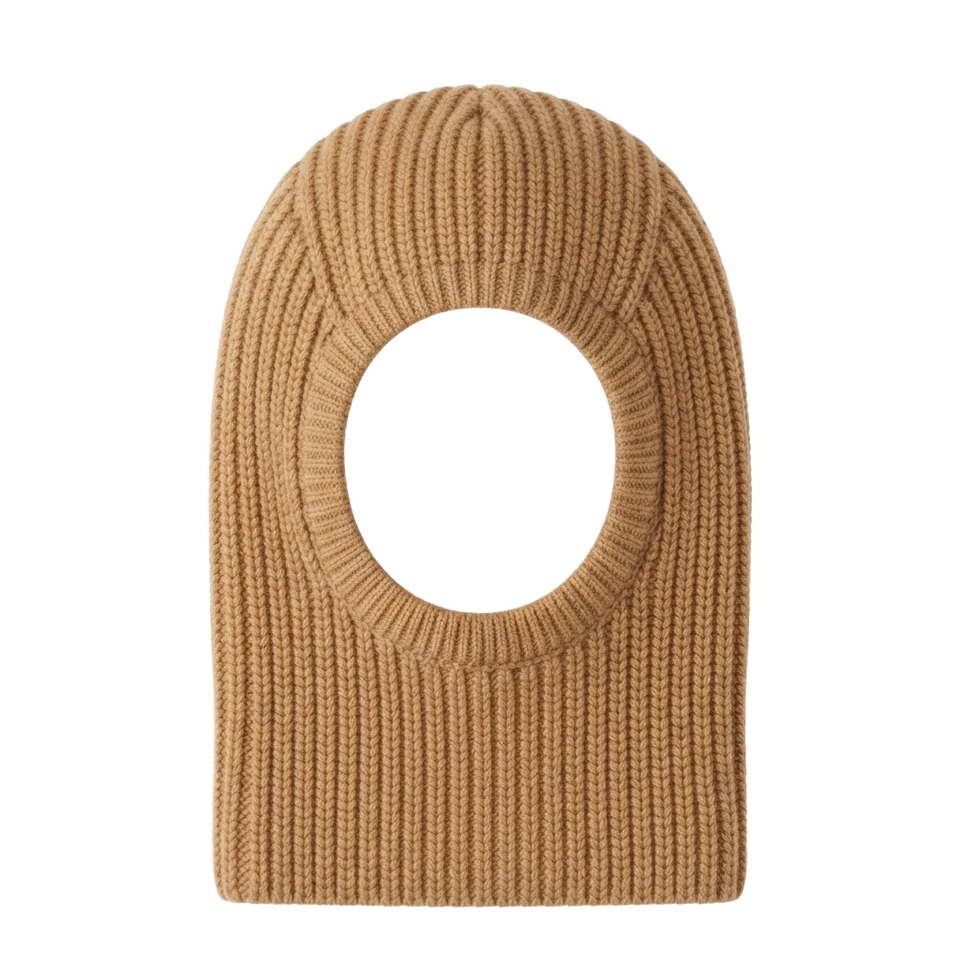
Balaclava
One piece covers the head, ears and neck, with an opening for the face. With no edge to grab, it suits a baby who pulls hats off.
Wool or fleece?
Many warm hats use both and get the best of each: wool outside for warmth, fleece inside, soft against the skin.
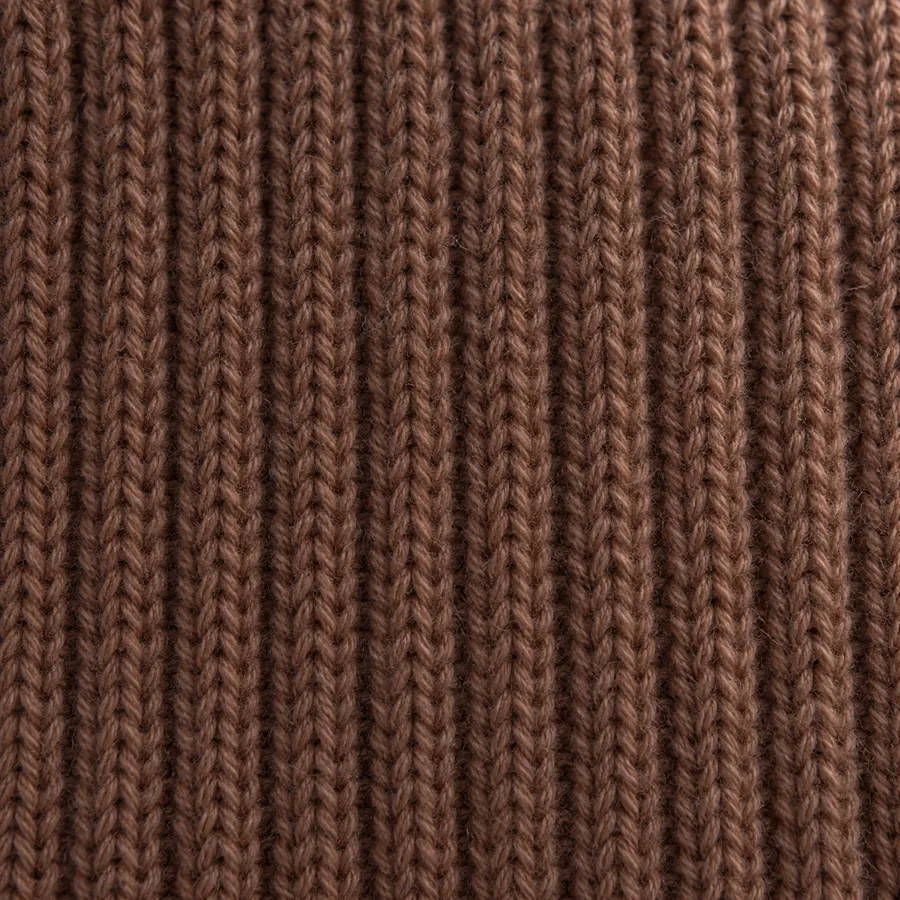
Wool
Fine merino wool stays warm even when it gets a little damp from snow or breath, and feels soft on the skin. Coarser wool can prickle. Wash it by hand or on a wool cycle.
- Good: Warm even when a little damp
- Good: Fine merino feels soft
- Not good: Coarse wool can prickle
- Not good: Needs gentle washing
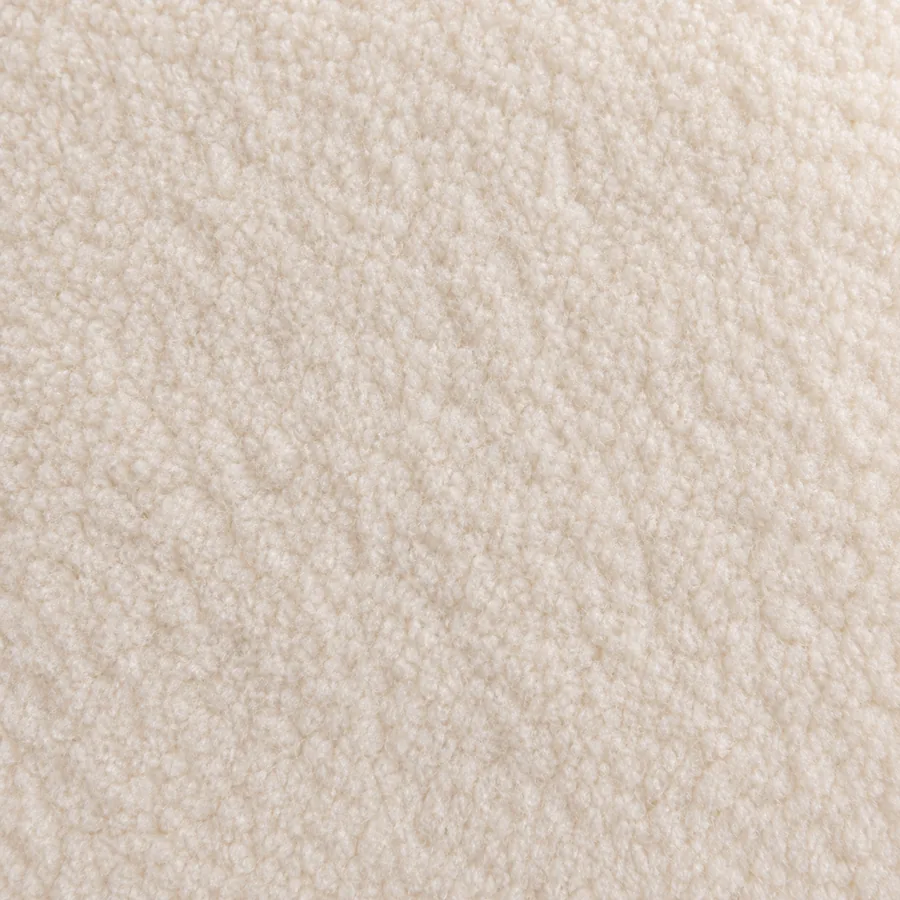
Fleece
Fleece is a soft polyester fabric with a fuzzy, brushed surface. It is gentle on bare skin, goes in the washing machine and dries fast. One layer lets the wind straight through, so fleece works best as the lining of a knit hat, or behind a windproof outer fabric.
- Good: Soft on bare skin
- Good: Machine wash, dries fast
- Not good: Wind blows through one layer
How to choose a winter hat
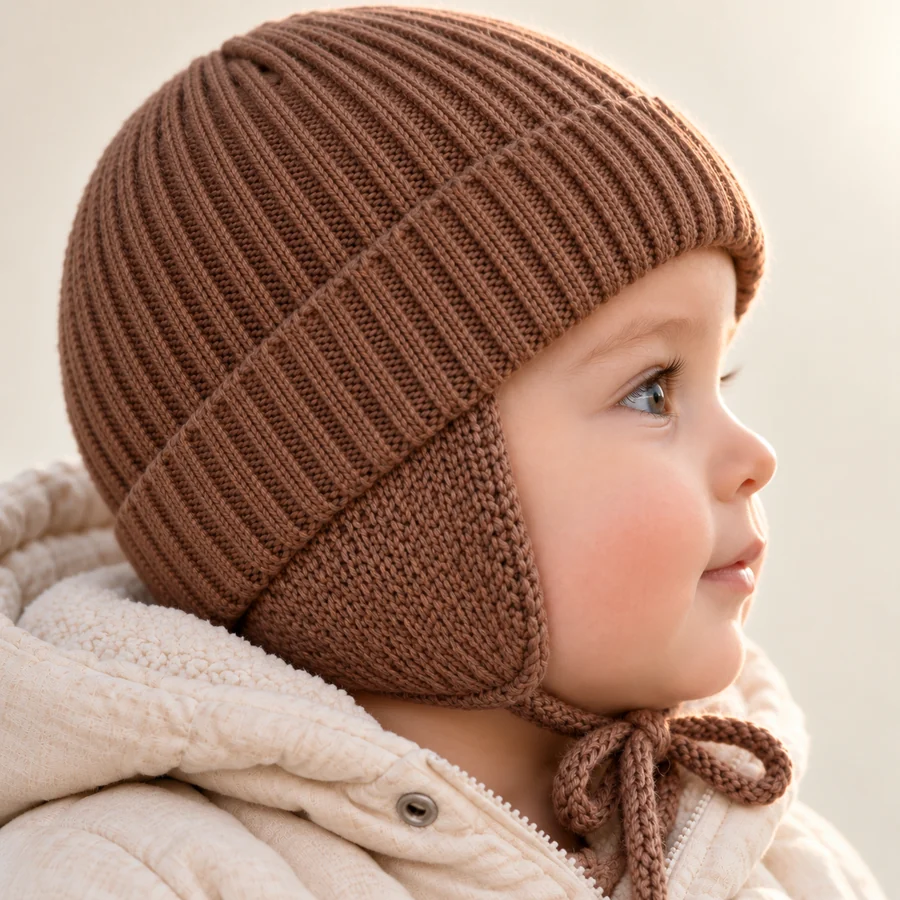
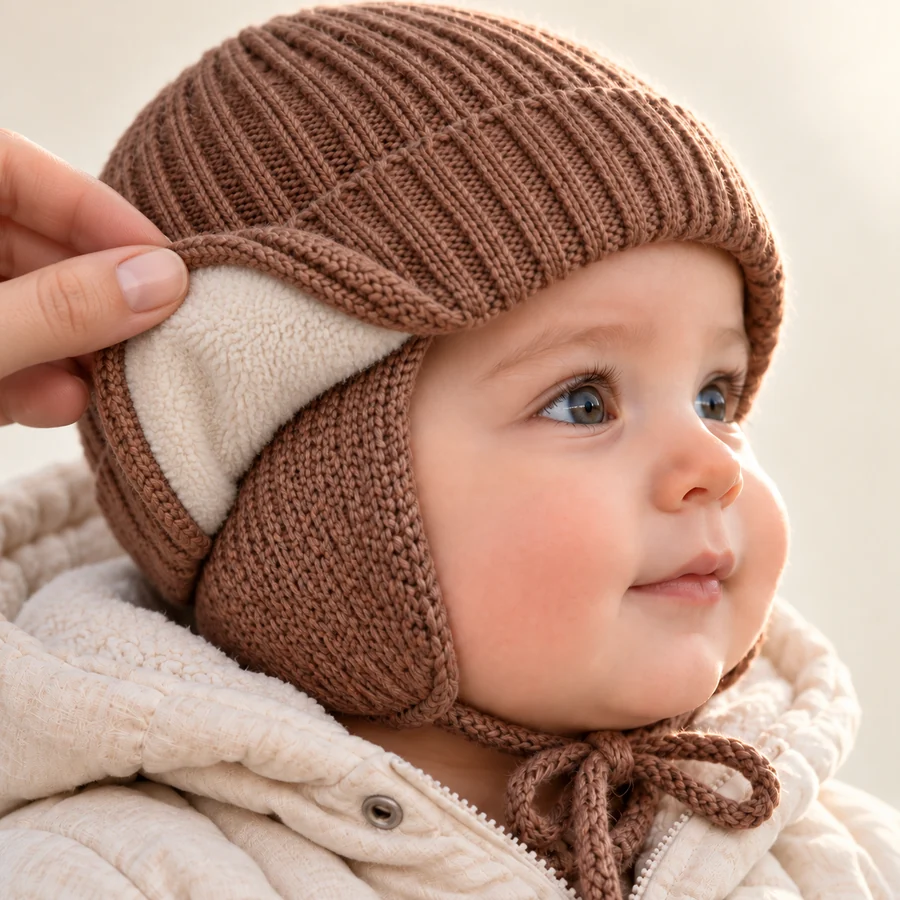
1. Sides that cover the ears
In a stroller, the ears sit right in the wind. Try the hat on your baby: the sides or flaps should cover the whole ear, earlobes included.
- Good: Sides reach below the earlobes
- Good: Ear flaps or a deep cuff
- Not good: Edge stops on top of the ears
2. Two layers, not one
A single layer of knit lets the wind through its holes. Put your hand inside the hat and blow on the outside: with a lining, you feel little air.
- Good: A soft lining inside
- Good: Little air when you blow through
- Not good: One thin layer of knit
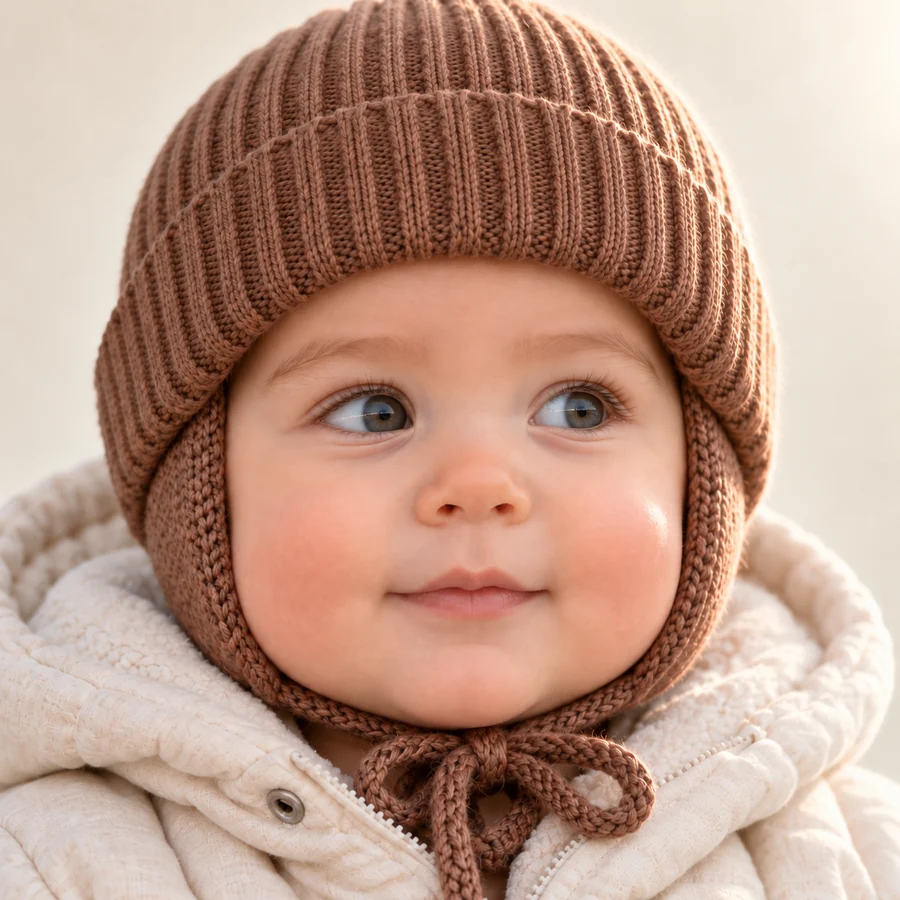
3. Snug, not tight
A loose hat twists and slides over the eyes. A tight one leaves a red line on the forehead. Choose by head size, not age: how baby hat sizes work.
- Good: Edge rests above the eyebrows
- Good: Stays still when the head turns
- Not good: Red line on the forehead after
How to use it
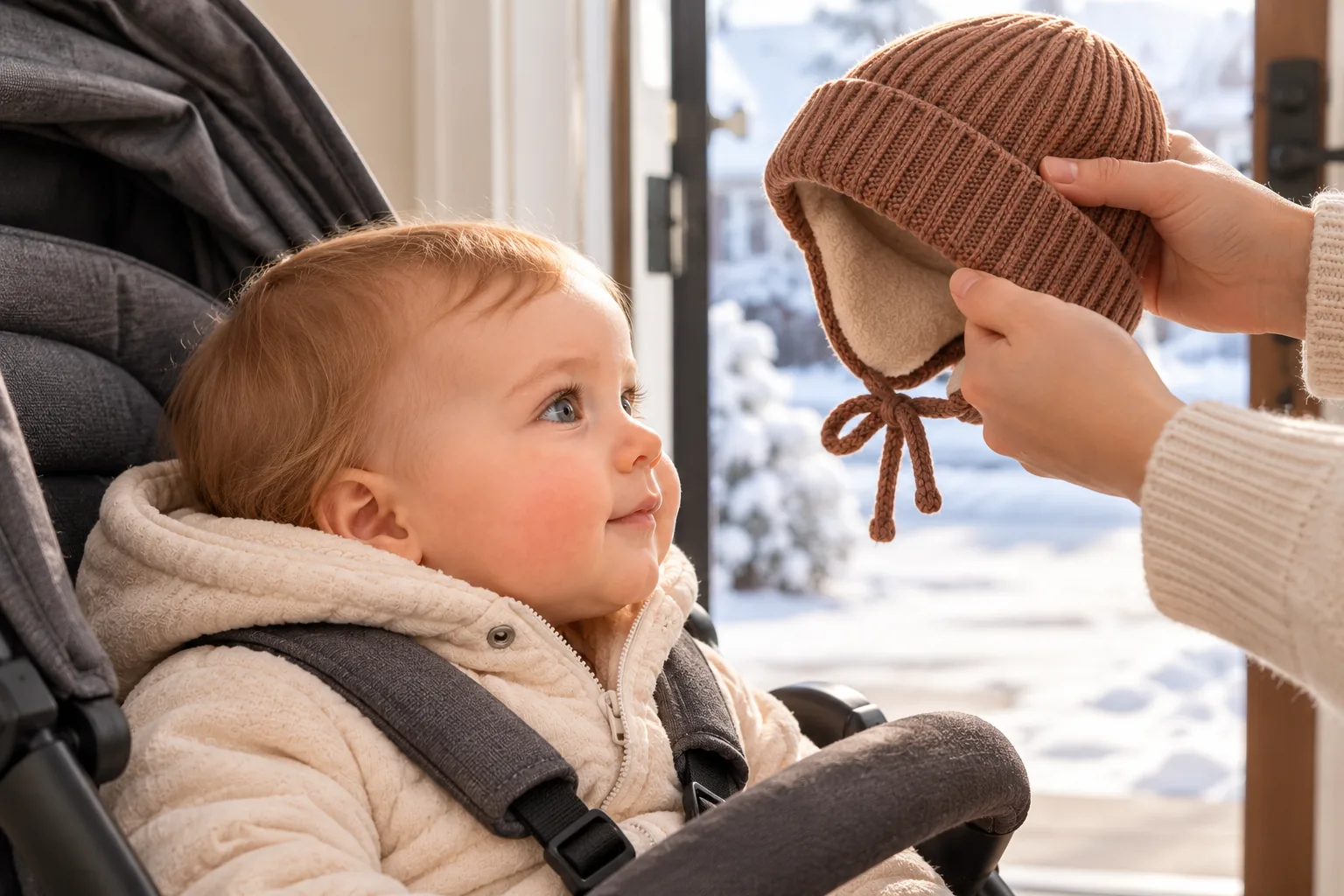
1. On at the door
Dress your baby in everything else first, and put the hat on once your own coat and shoes are on. A head that sweats in the hallway turns cold and damp outside.
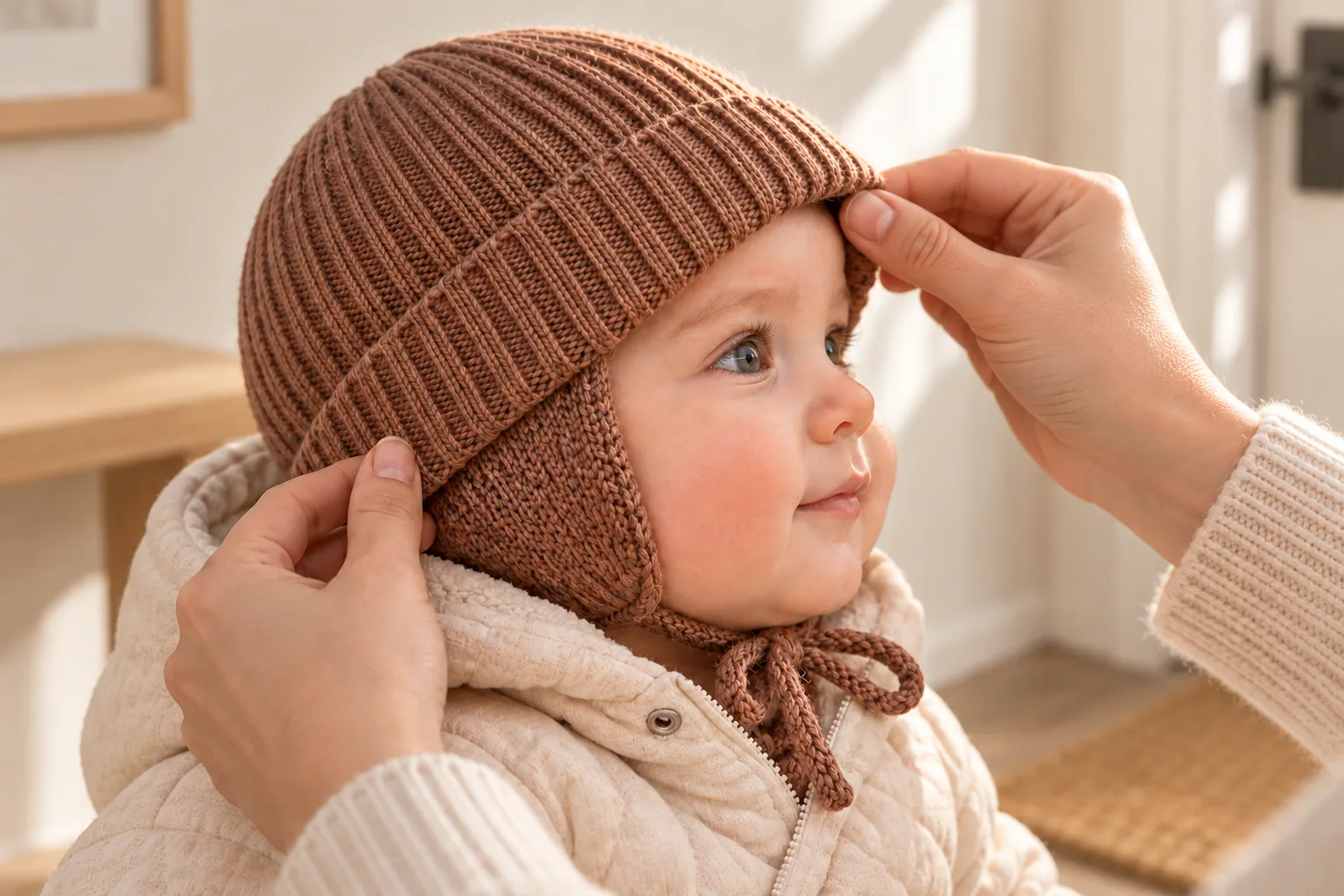
2. Over the ears, clear of the eyes
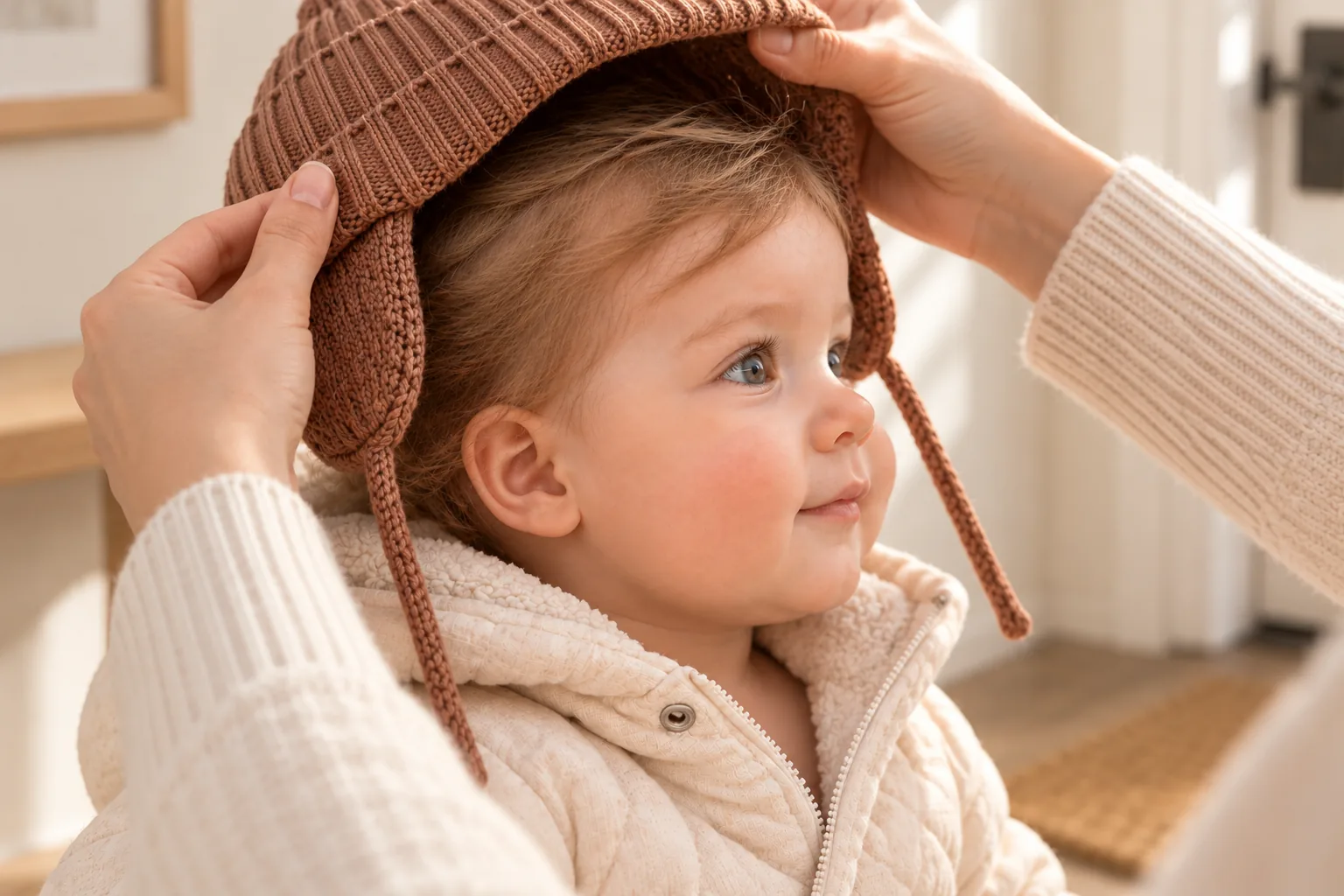
Pull it down until both ears are covered, then lift the front edge above the eyebrows. Fasten the flaps under the chin, without pulling tight.
3. Off when you come inside
Take it off as soon as you are indoors, even if it wakes your baby. A covered head can make a baby too hot.
Questions parents ask
Can my baby sleep in a winter hat?
Not in a crib or bed. Babies sleep with a bare head, because overheating raises the risk of SIDS (sudden infant death syndrome). If your baby falls asleep in the stroller on a cold walk, take the hat off when you come in.
Should a baby's hat cover the ears?
Yes. Covering the ears is a warm hat's main job. In freezing weather, ears are among the places most likely to get frostbite.
Does my baby need mittens with a winter hat?
Yes, on the same days. When it is cold enough for a warm hat, it is cold enough for mittens too. The winter dressing guide has the rest of the outfit.
What hat should a newborn wear in winter?
The same kind as an older baby, in a newborn size: lined, over the ears, and snug enough not to slide over the eyes. Age labels are only a rough guide, so measure the head and check the brand's size chart.
How do I keep a winter hat on my baby?
Choose one that fastens under the chin, or a balaclava. Then check what bothers your baby: a scratchy tag, a tight band or an edge over the eyes gets a hat pulled off fast. The tricks that keep a sun hat on work for a winter hat too.
Can my baby wear a hat under a hood?
Yes, but in a stroller, leave the hood down. When your baby turns, a hood stays where it is and leaves one ear bare, while a hat turns with the head. The hats guide has more on hats and hoods.
Can my baby wear a winter hat in the car seat?
Yes, for the cold walk to the car, since a hat doesn't sit under the straps. Once the car warms up, take it off. A baby cools down through the head, so a warm hat in a heated car is too much. The car seat guide covers the rest of the outfit.