What this is about
A diaper bag holds what a baby needs away from home: diapers and wipes, a change of clothes, the next feed and whatever the weather calls for. How much of each depends on the baby's age, how long you will be out and the day's weather, which is why the list changes from one outing to the next.
How many diapers to pack
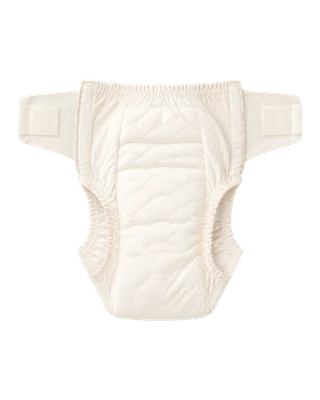
Count one diaper for every few hours you will be out, then add one spare for a diaper that leaks during the change or a second poop soon after the first. Young babies need changing most often:
- Under 3 months: one for every 2 hours
- 3 months to 2 years: one for every 3 hours
- 2 to 3 years: one for every 4 hours
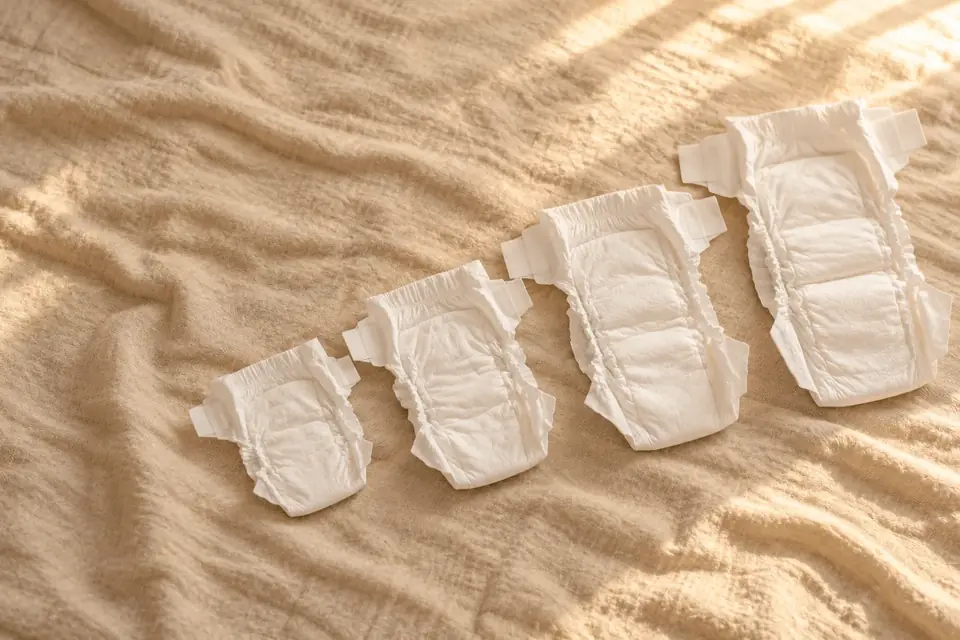
For a full day out, that comes to 5 diapers for a newborn and 4 at 1 year. The hours follow how many diapers babies use in a day, from 10 to 12 for a newborn to 5 to 7 for a toddler, which the diaper size chart shows by age.
A small changing pouch for short trips
Many parents keep a zip pouch inside the diaper bag with everything for a change or two: a few diapers, a travel pack of wipes, a folded changing pad, a small tube of diaper cream and a few bags for used diapers. At the changing table you take out the pouch instead of searching through the whole bag. For a short walk or a quick errand, the pouch on its own is enough.
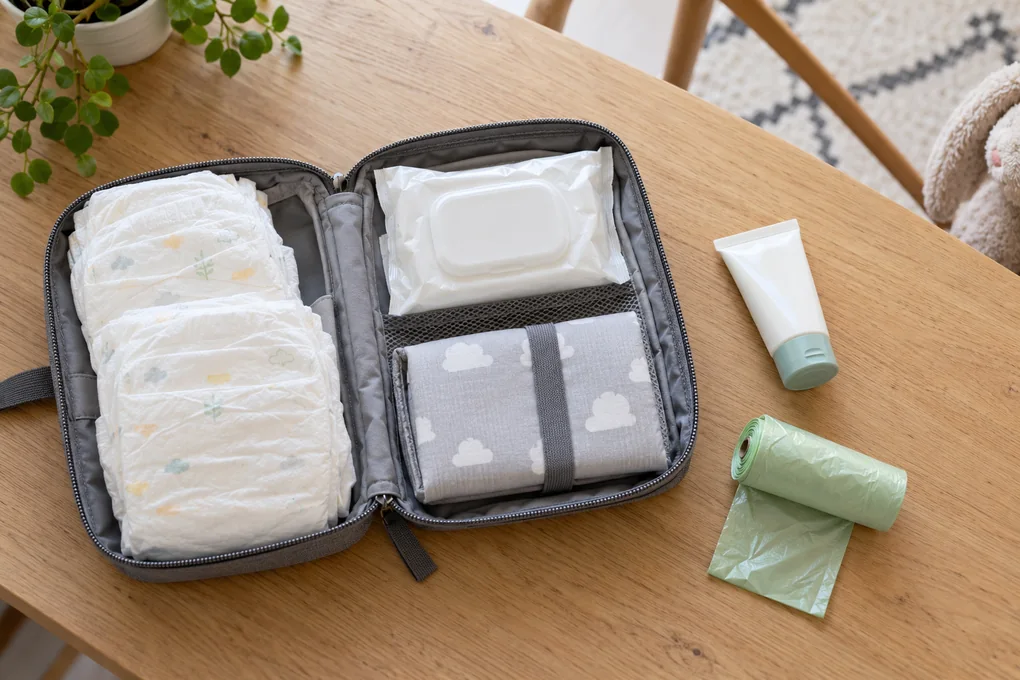
The changing pouch
Everything for one or two changes. On its own, it covers a walk of an hour or two.
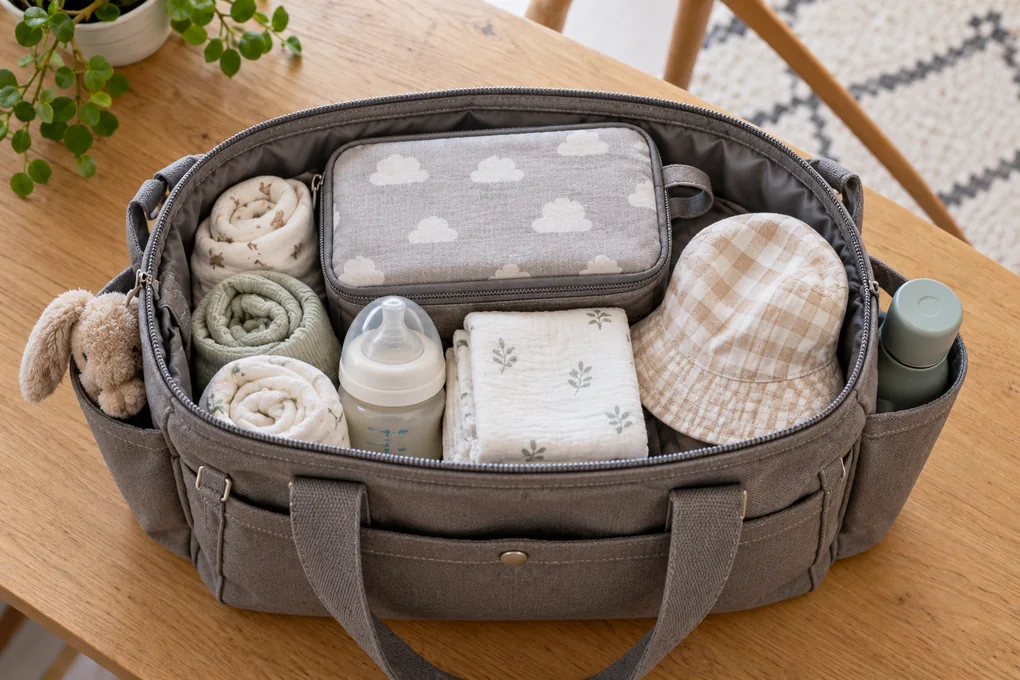
The whole bag
The pouch, plus the spare clothes, the feeds and the things for the weather. For half a day or longer.
Spare clothes: one change, or two for a newborn
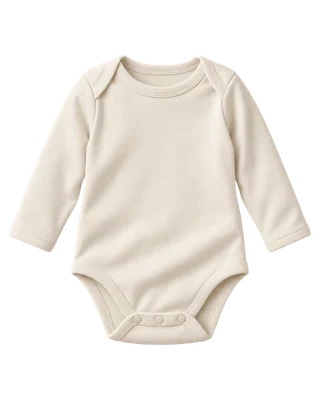
A diaper leak or a big spit-up soaks the clothes closest to the skin: the bodysuit, the pants and the socks. The jacket or pram suit on top rarely gets wet, so one spare set of those three pieces is enough. Newborns leak and spit up more often, so pack two sets in the first 3 months.
Roll the spare set together and keep a zip bag or a waterproof wet bag beside it. Wet and dirty clothes go straight in, away from everything else in the bag. In the first year a spare top for yourself is worth the room, because spit-up and leaks often reach the parent holding the baby too.
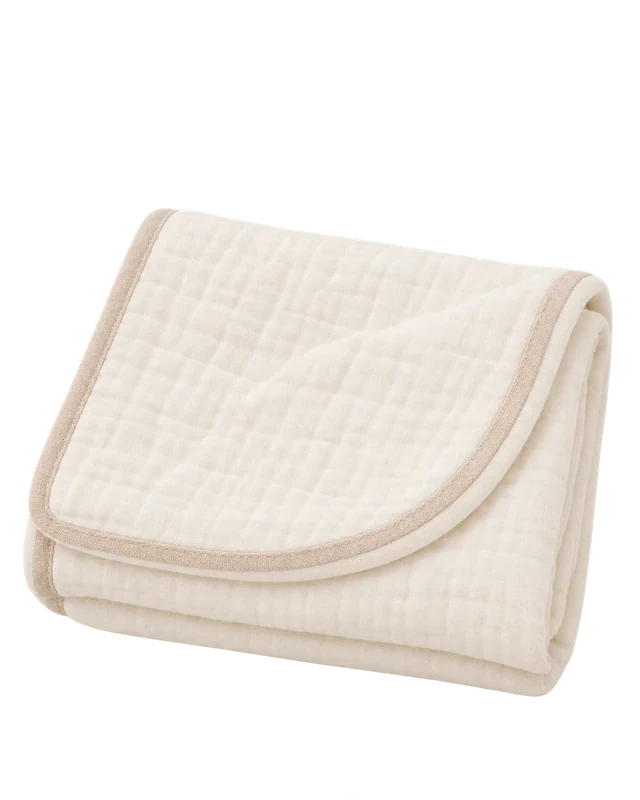
Muslin cloths (burp cloths) catch spit-up during burping and wipe up small spills. Two are useful for a young baby, and one is enough later in the first year. When the weather turns, so does the spare set: warm pants and warm socks on cold days. The diaper bag page shows how the spare set and the weather things go into the bag for a walk.
Feeding away from home
Babies feed most often in the first months, so a full day out means about 4 feeds under 3 months and 2 from 6 months. What to bring for each feed depends on how your baby feeds, and many babies feed in more than one way.
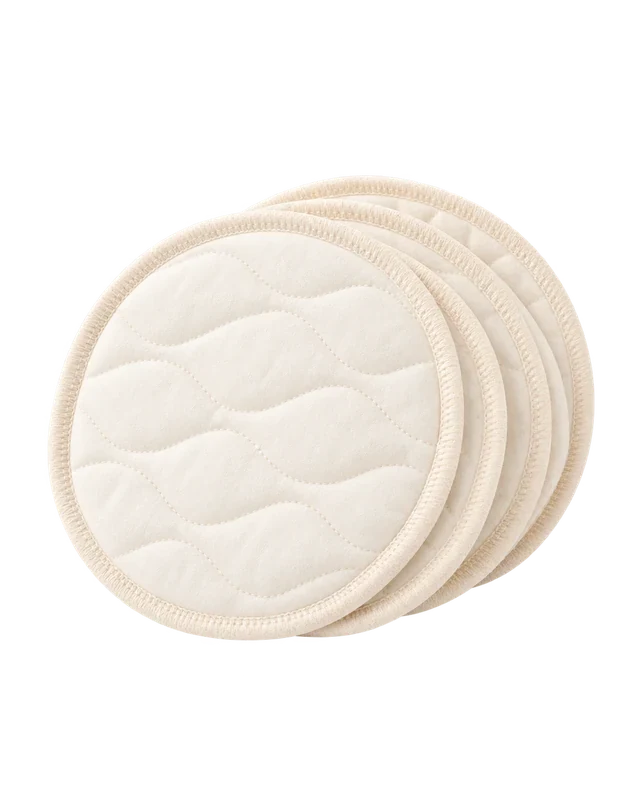
Breastfeeding
There is nothing to carry for the feed itself. Spare nursing pads and a muslin help, and a light scarf or cover if you want more privacy.
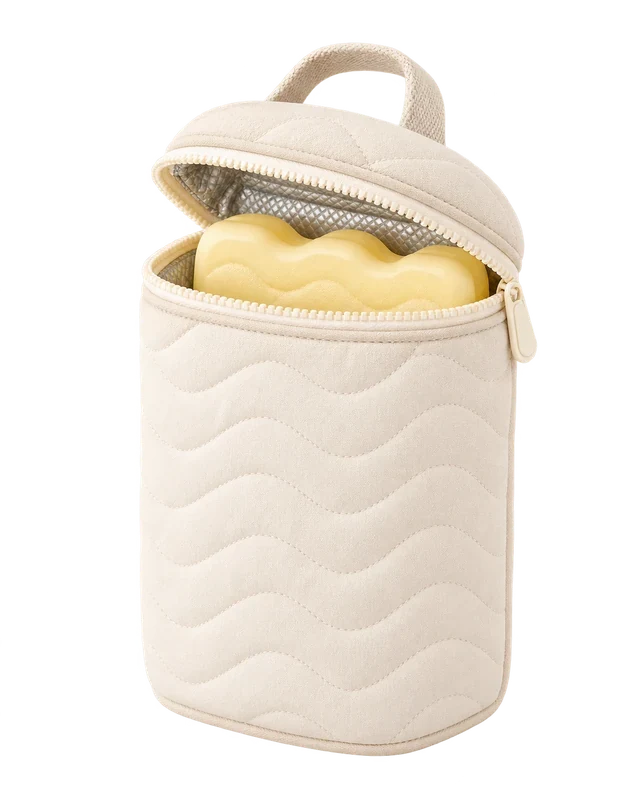
Pumped milk
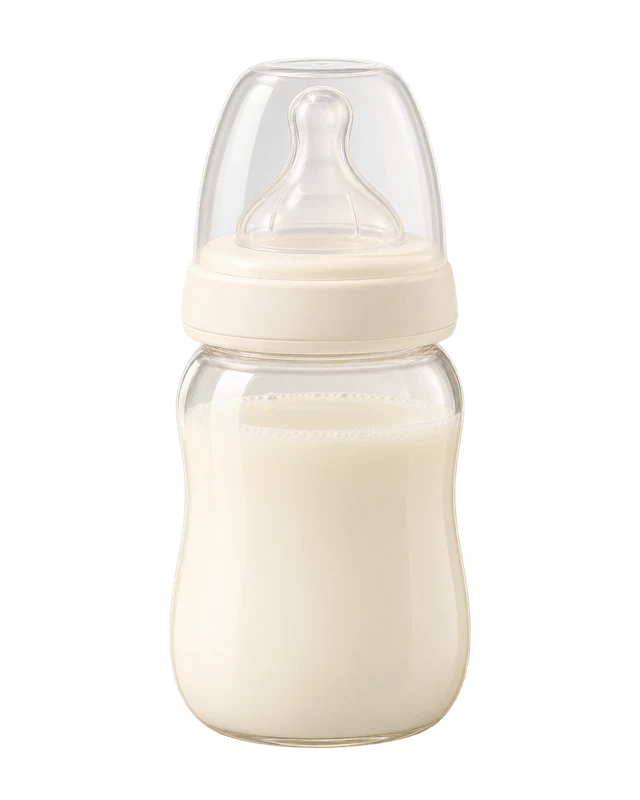
Pumped milk travels in a cool bag with frozen ice packs, where it keeps for up to 24 hours. Milk left in the bottle after a feed is used within 2 hours or thrown away.
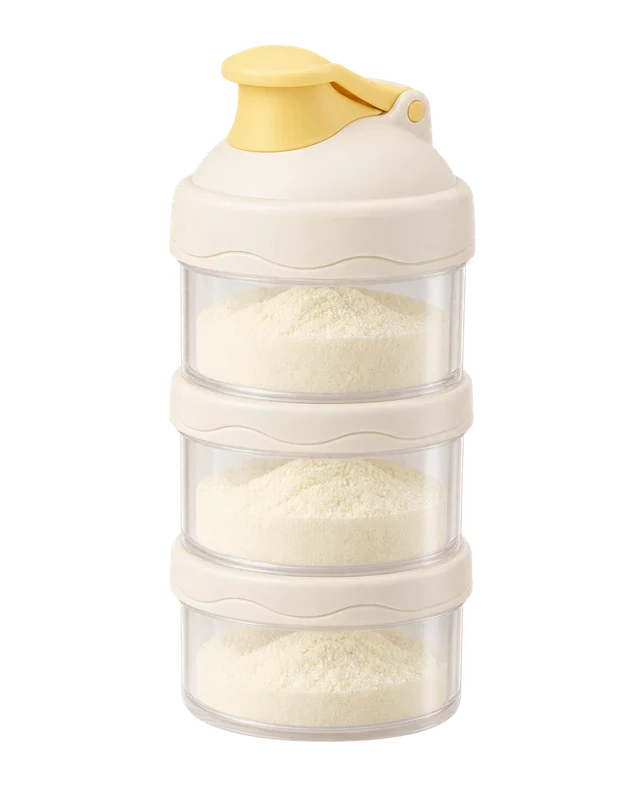
Formula
Measure the powder for each feed into a clean, dry pot and take a flask of water boiled just before you leave. A full, closed flask keeps the water above 70°C (158°F) for several hours, hot enough to kill germs that powder can carry, which matters most under 2 months. Mix each feed when it is needed and use it within 2 hours. Ready-to-feed formula needs no mixing.
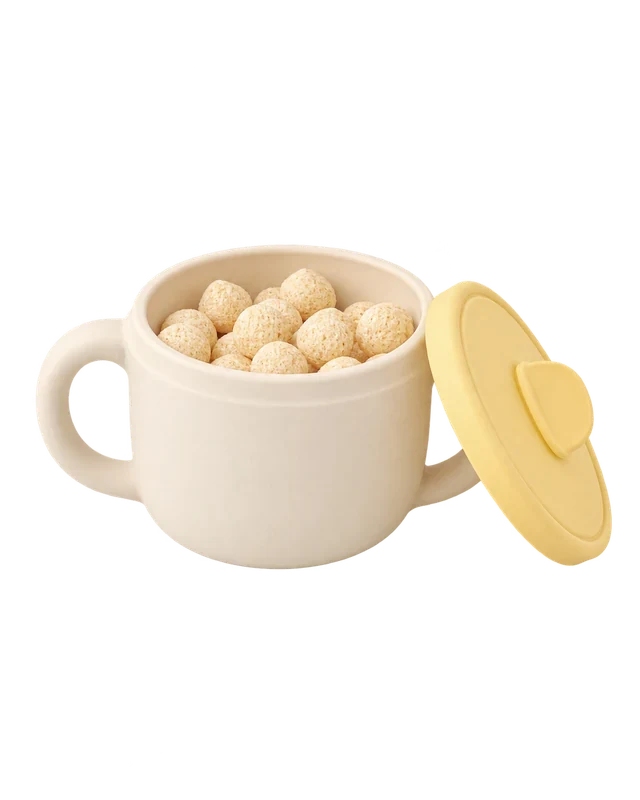
Solid food
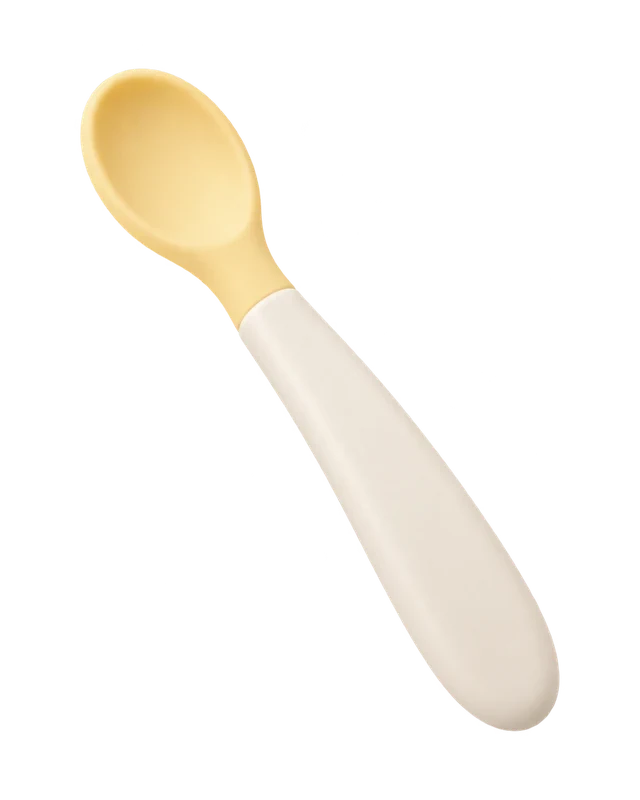
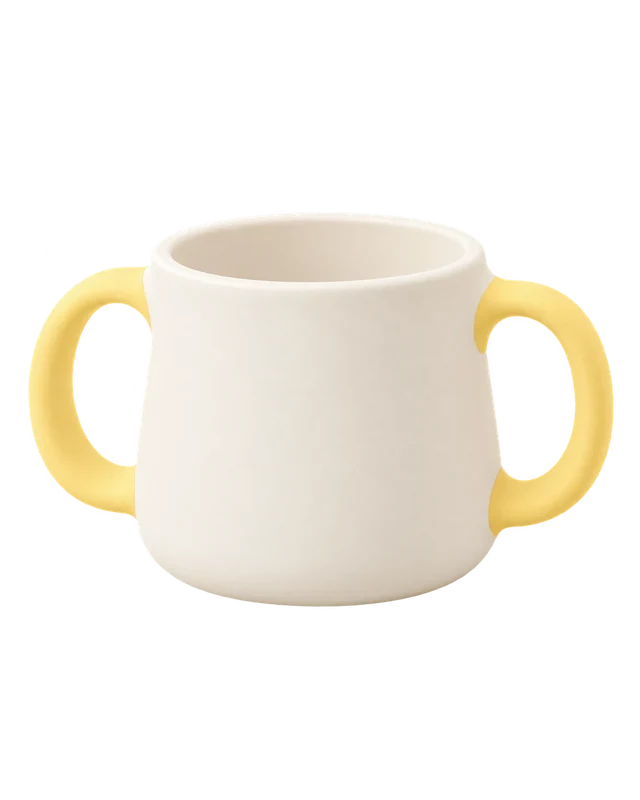
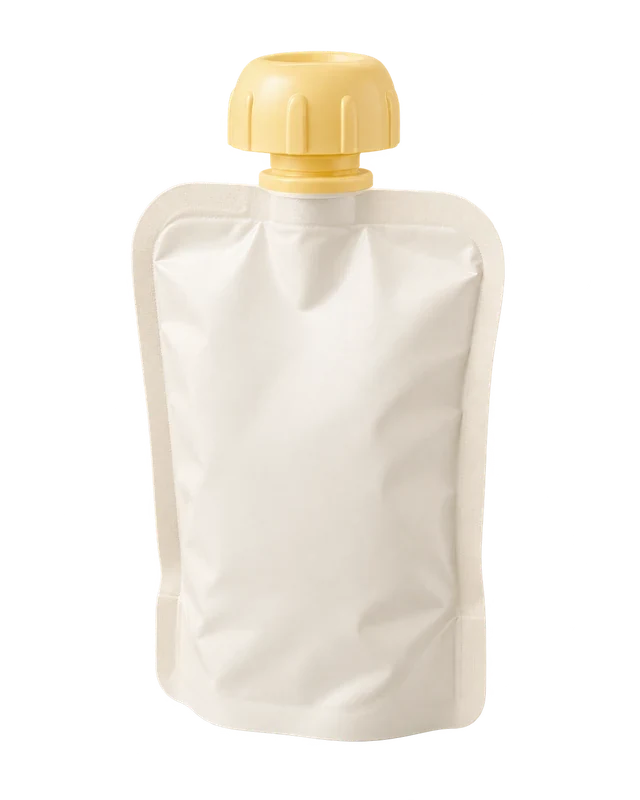
From 6 months: snacks in a pot with a lid, a spoon, a bib, and a pouch or jar of food for a longer day. Babies this age can have sips of water from an open or free-flow cup with meals.
Under 6 months, breast milk or formula is all the drink a baby needs. On a hot day, offer feeds more often.
What the weather adds
On a day with rain in the forecast, the stroller rain cover goes in before you leave. On a sunny day, pack a sun hat, and the stroller sunshade if you take the stroller. Sunscreen is for babies from 6 months, on the skin that shade and clothes leave bare; younger babies stay in the shade, in light clothes that cover the skin. On cold days a blanket for the stroller or the car comes along, and below 0°C (32°F) a wind cream for the cheeks.
If it will be colder on the way home, pack the extra layer now: a fleece and a hat take little room. In the car, a puffy coat stays off under the harness, and the blanket goes over the buckled straps, as the car seat guide explains.
What changes as your baby grows
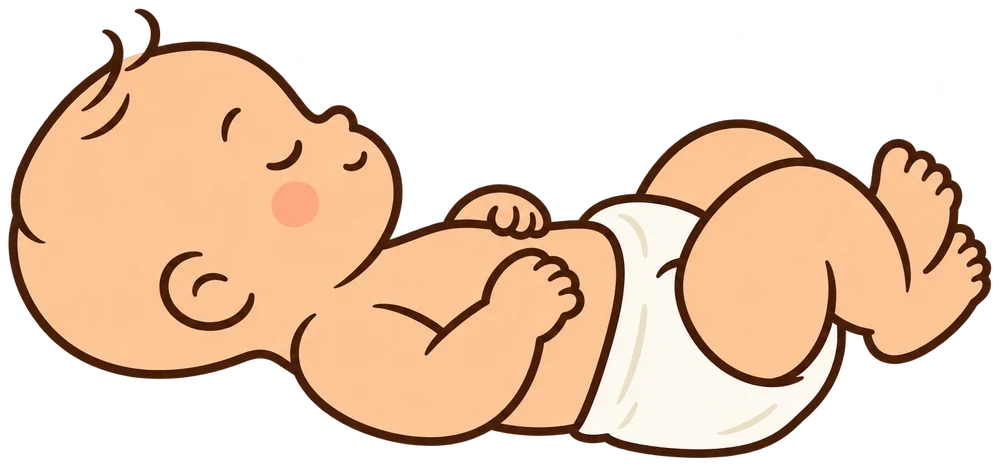 Newborn0–3 months
- 5 diapers for a day out
- 2 spare sets of clothes
- 2 muslins for spit-up
- A feed about every 2 hours
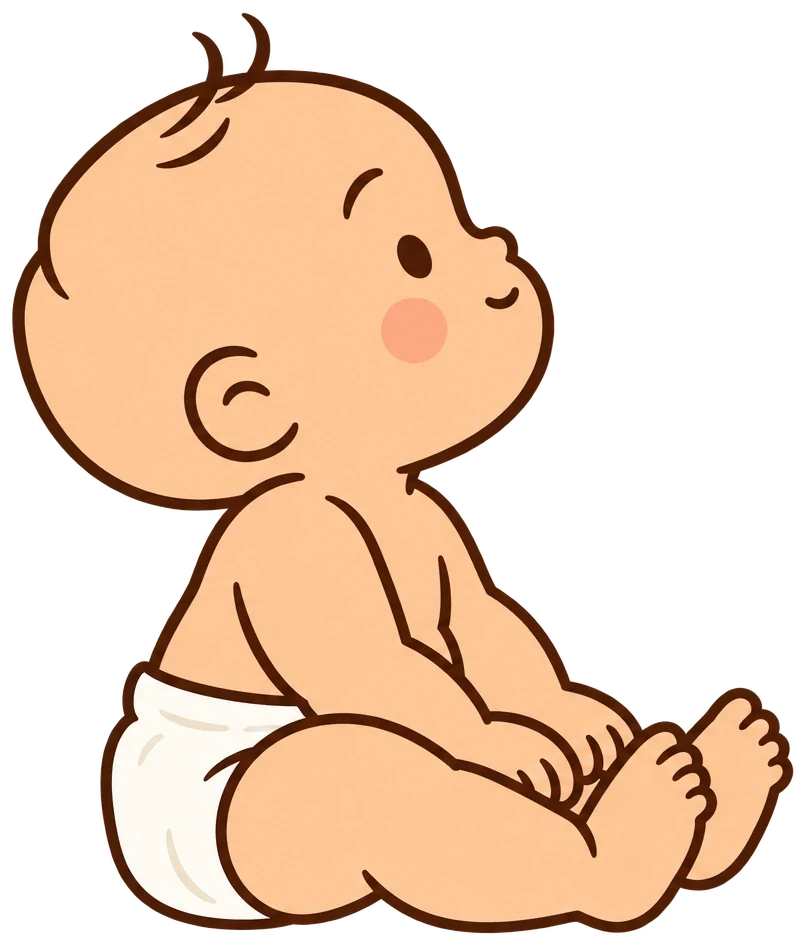 Starting solids6–12 months
- A spoon and a bib
- Snacks in a pot
- A cup of water with meals
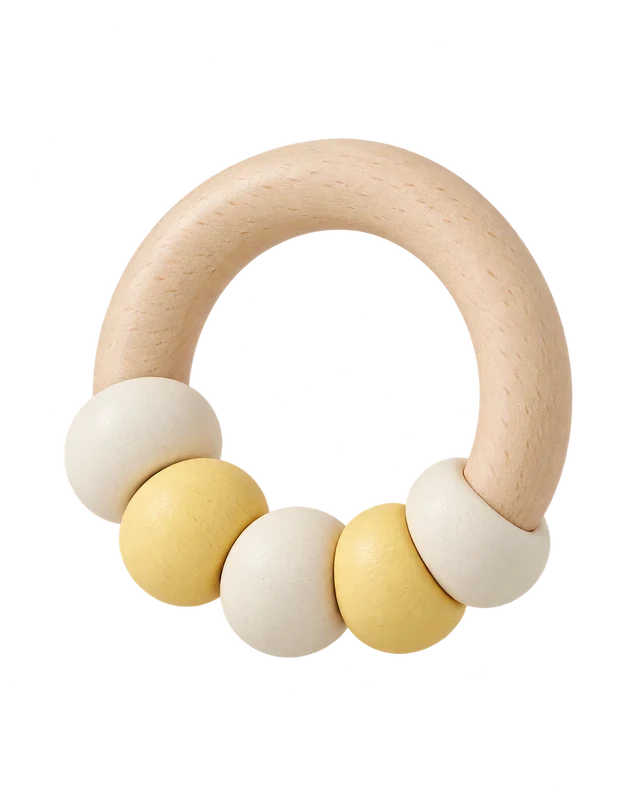
- A small toy for changes
 Toddler1–3 years
- 3 to 4 diapers for a day out
- Snacks, a pouch and water
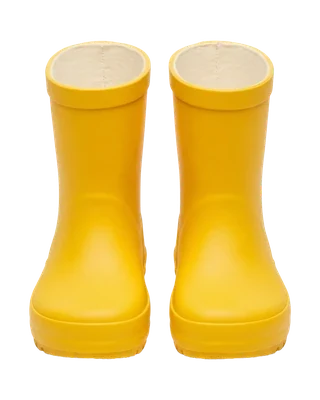
- Raincoat and boots on wet days
- A toy or a book for waiting
Restock when you get home
Refill the bag when you come home rather than when you leave. Put back the diapers and wipes you used, replace the spare clothes, empty the wet bag and wash the bottles. Opened food pouches and leftover milk are thrown away, while formula powder in a closed pot and dry snacks can stay.
Check the sizes every few weeks too. A growing baby moves up a diaper size and a clothing size, and the spare set in the bag has to move with them.
Questions parents ask
Do I need the whole diaper bag for a short walk?
No. For an hour or two, a small pouch with 2 diapers, wipes, a changing pad and a bag for the used diaper is enough. Add a spare set of clothes for a young baby.
How many diapers should I pack for a day out?
About 5 for a newborn, 4 from 3 months to 2 years and 3 after that. That is one for every 2 to 4 hours, depending on age, plus one spare.
How many spare outfits should be in the diaper bag?
One full change of the clothes next to the skin: a bodysuit, pants and socks. Pack two for a newborn, who leaks and spits up more often.
Should I bring water for my baby?
From 6 months, yes: sips of water from a cup with meals. Younger babies get all their drink from breast milk or formula and feed more often on hot days.
Do I need a changing pad if there is a changing table?
It helps. A pad gives your baby a clean surface on any table, and it turns a bench or the back seat of the car into a changing place when there is no table.
What goes in a toddler's diaper bag?
Fewer diapers, snacks and a cup of water, one change of clothes, and a toy or a book. On wet days, add a raincoat and rain boots for a child who walks.