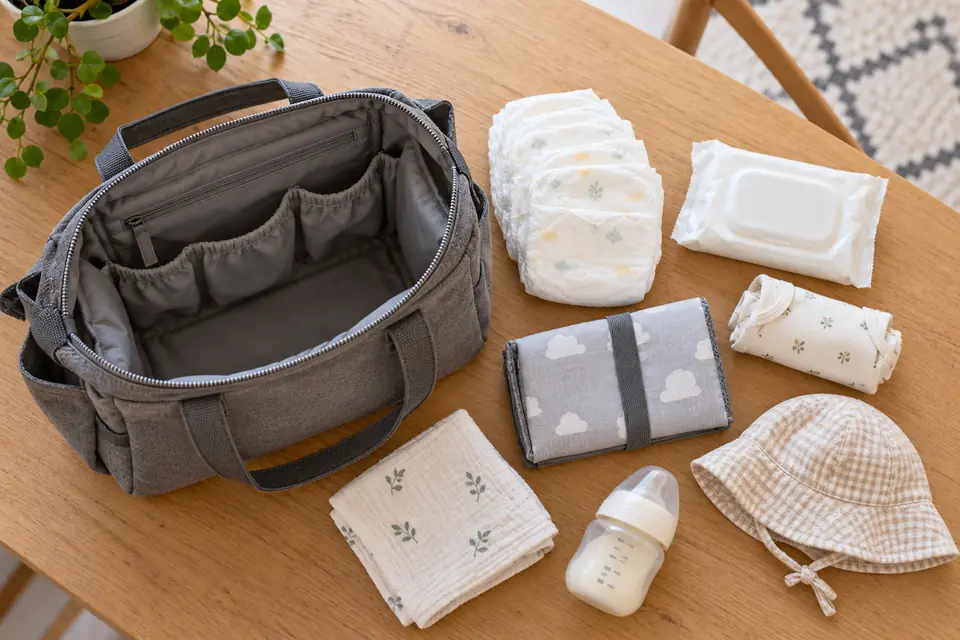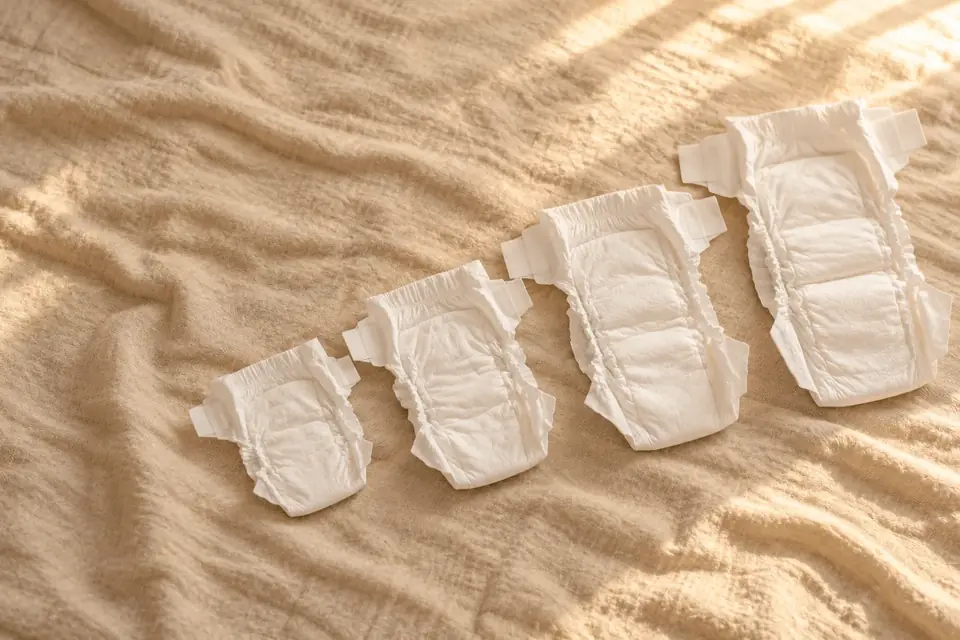
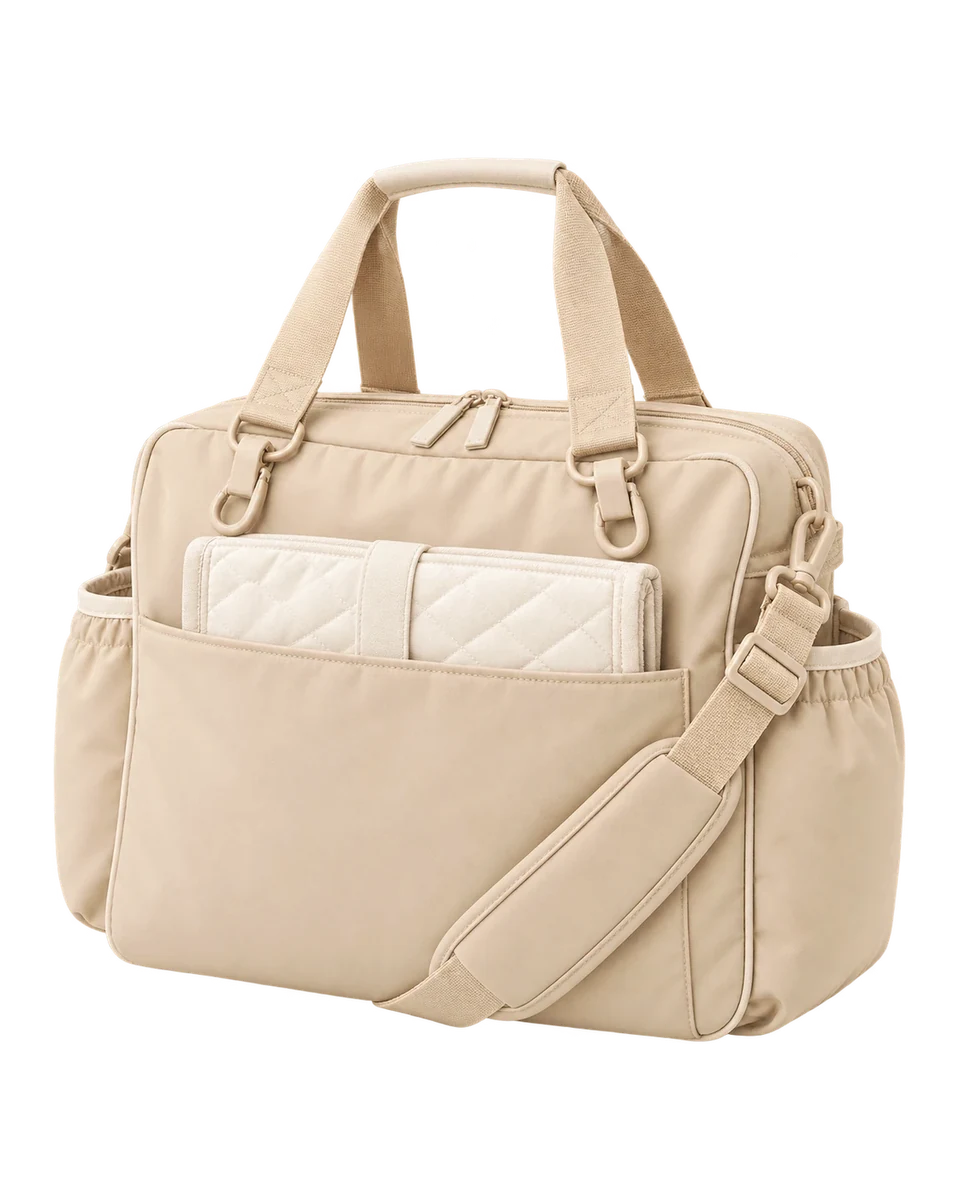
A diaper bag is a bag made for changing a diaper away from home. It opens wide, keeps diapers and wipes in their own pockets, and usually comes with a fold-out changing pad, a wipe-clean mat you lay your baby on. Many also have an insulated pocket for a bottle.
It goes out with you from the first walks until diapers end, around age 3. You don't need a special one, because any bag that holds those things does the job. A diaper bag keeps each of them in its own pocket, so your free hand finds it while the other stays on your baby.
- For ages0–3years
- You'll need1
- Use itAll year
Parts of a diaper bag
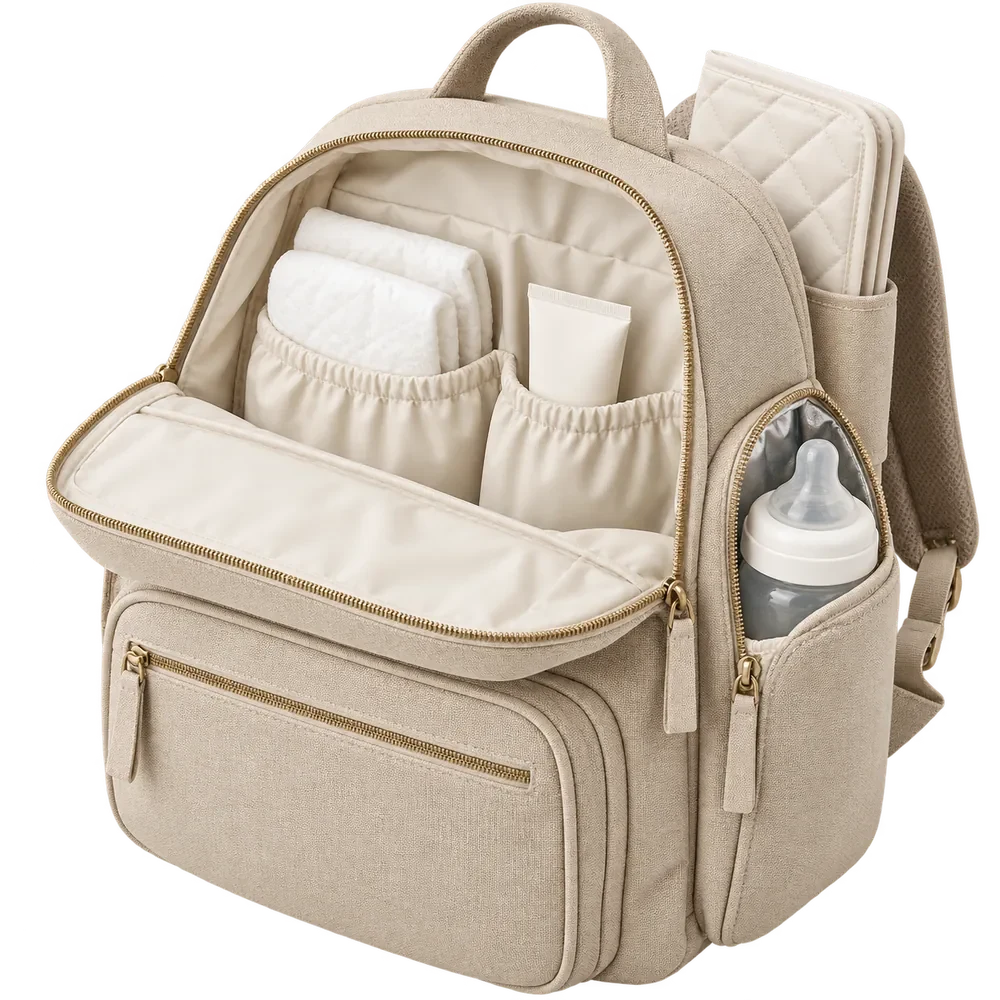
Most diaper backpacks are built like this one.
Inner pockets
Elastic pockets around the inside keep diapers, cream and a spare pacifier standing up, instead of sinking to the bottom.
Insulated pocket
A lined side pocket for a bottle. With a frozen ice pack inside, it keeps pumped milk cold.
Changing pad sleeve
The pad folds into its own sleeve, so it comes out without unpacking anything else.
Front pocket
For the wipes, your phone and keys: the things you reach for without opening the bag.
Types of diaper bag
Which one suits you depends mostly on how you get around.
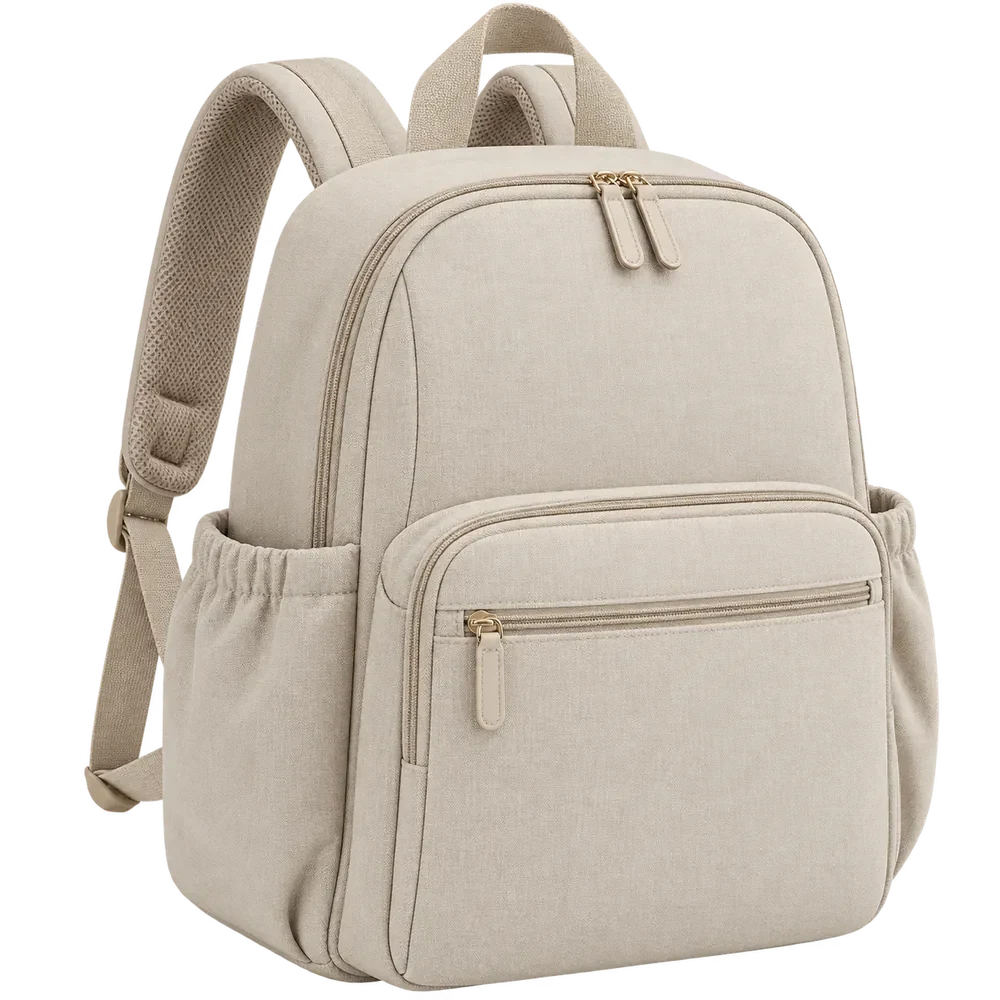
Backpack
Both hands stay free and the weight sits on both shoulders, so it suits long walks, a baby in a carrier and two parents sharing one bag. To reach inside, it comes off your back.
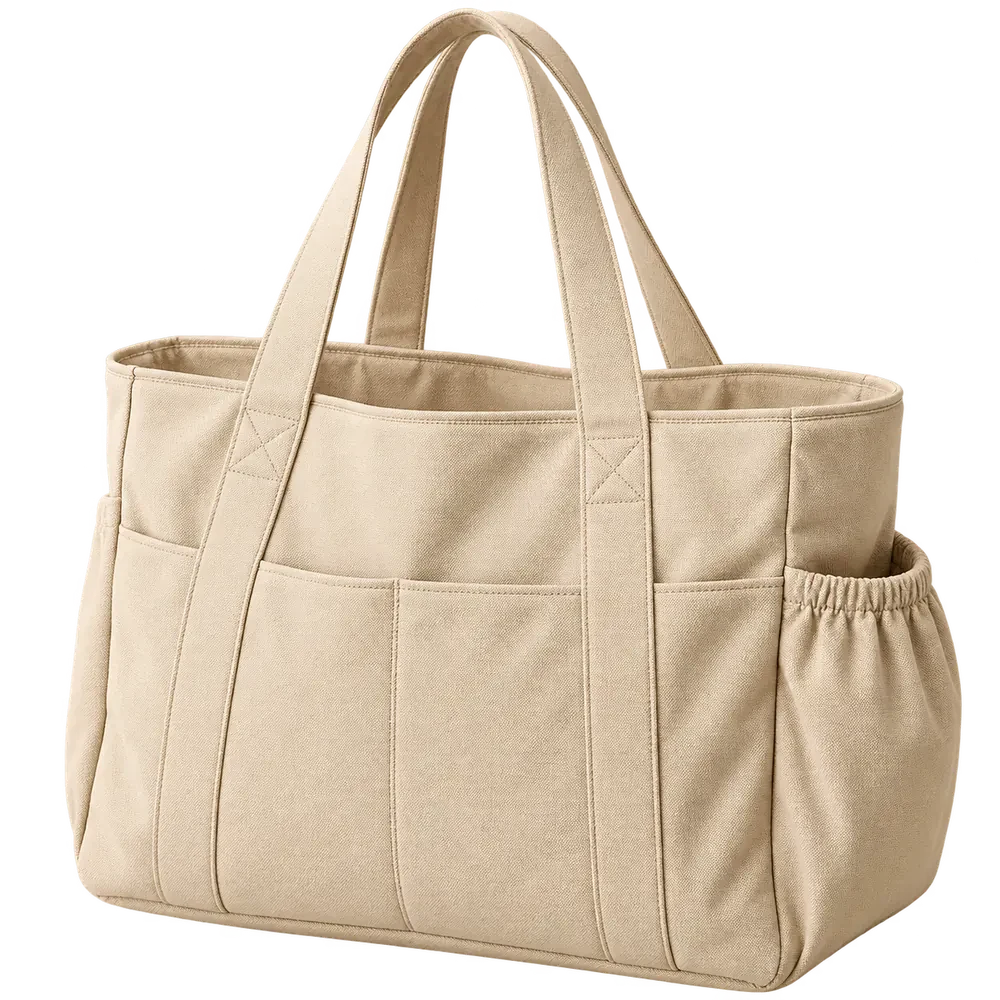
Tote
Suits trips by car, where it rides open on the seat and you can see everything from above, at a changing table too. On foot it slides down your arm when you lean over the stroller, and the weight pulls on one side.
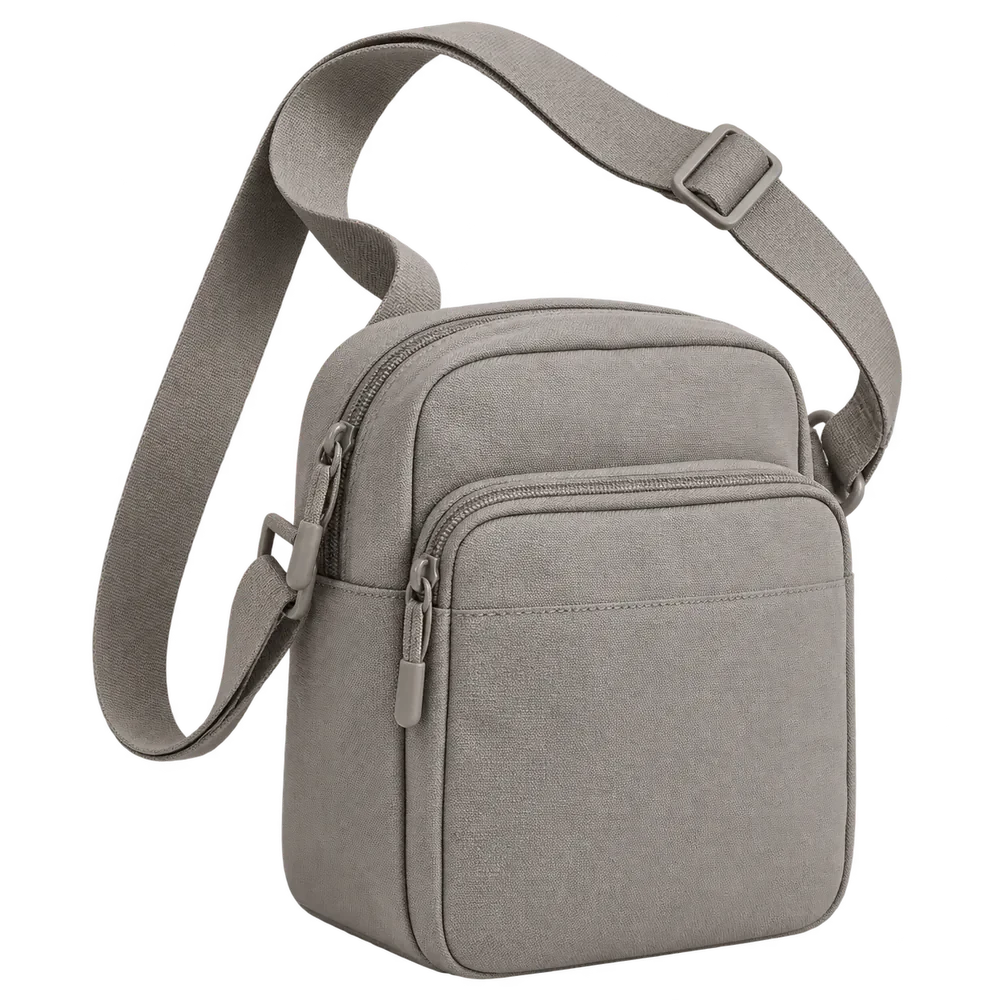
Crossbody bag
A small bag worn across the body, with room for the changing pouch, a bottle and your phone. Enough for a walk or an errand, too small for a day out with spare clothes and feeds.
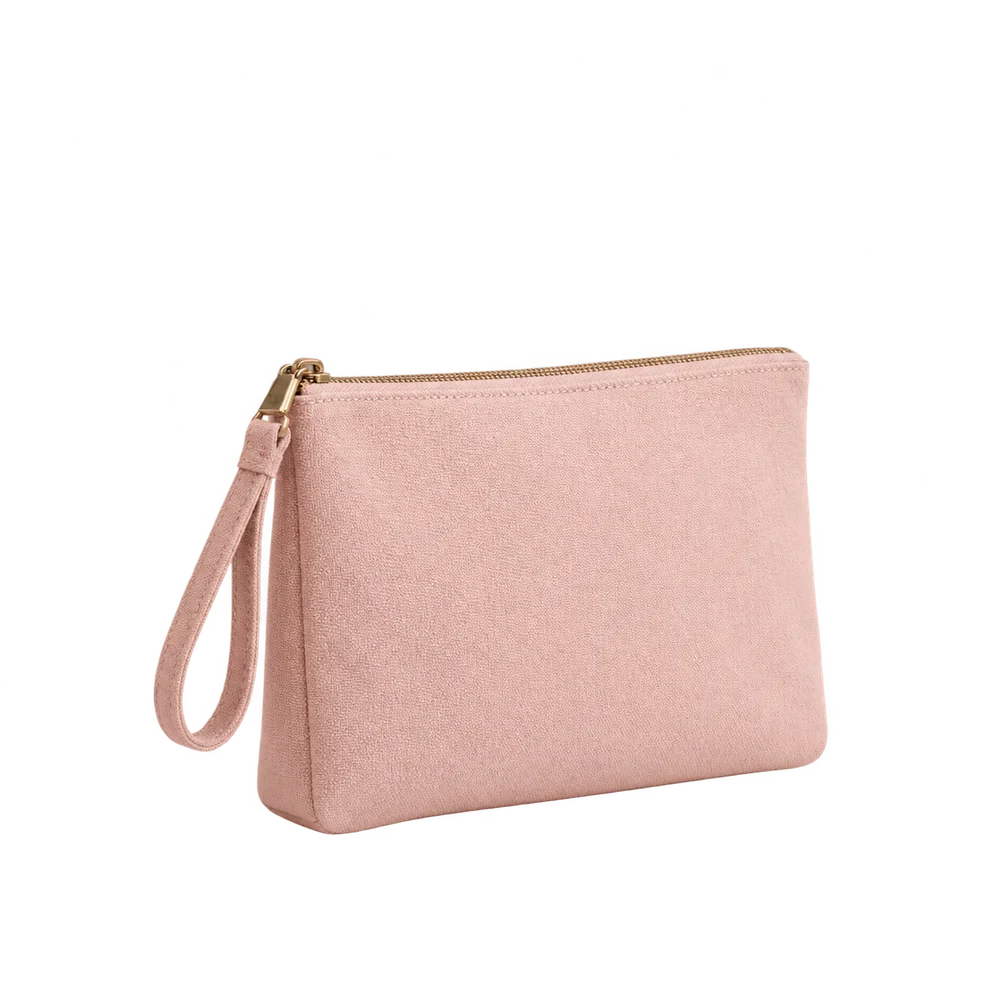
Changing pouch
A zip pouch with a few diapers, travel wipes and a fold-out pad: the kit for one or two changes. It lives inside a bigger bag, or goes out alone on a short walk.
Do you need a diaper bag, or will a backpack do?
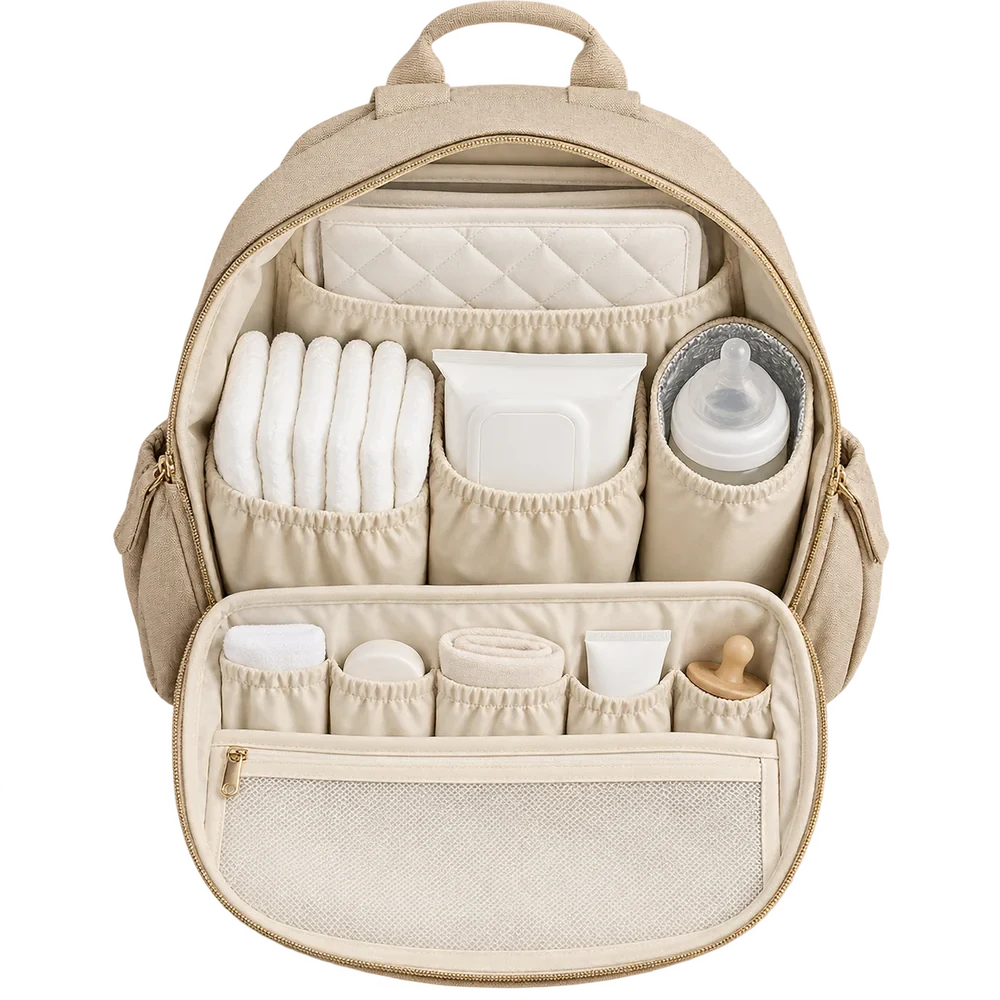
A diaper bag
A pocket for each small thing, a wipe-clean lining, a pad with its own sleeve and often an insulated pocket. It pays off on long days out, when spare clothes, feeds and the changing things all come along.
- Good: Everything has its pocket
- Good: Pad and lining included
- Not good: Costs more than a plain bag
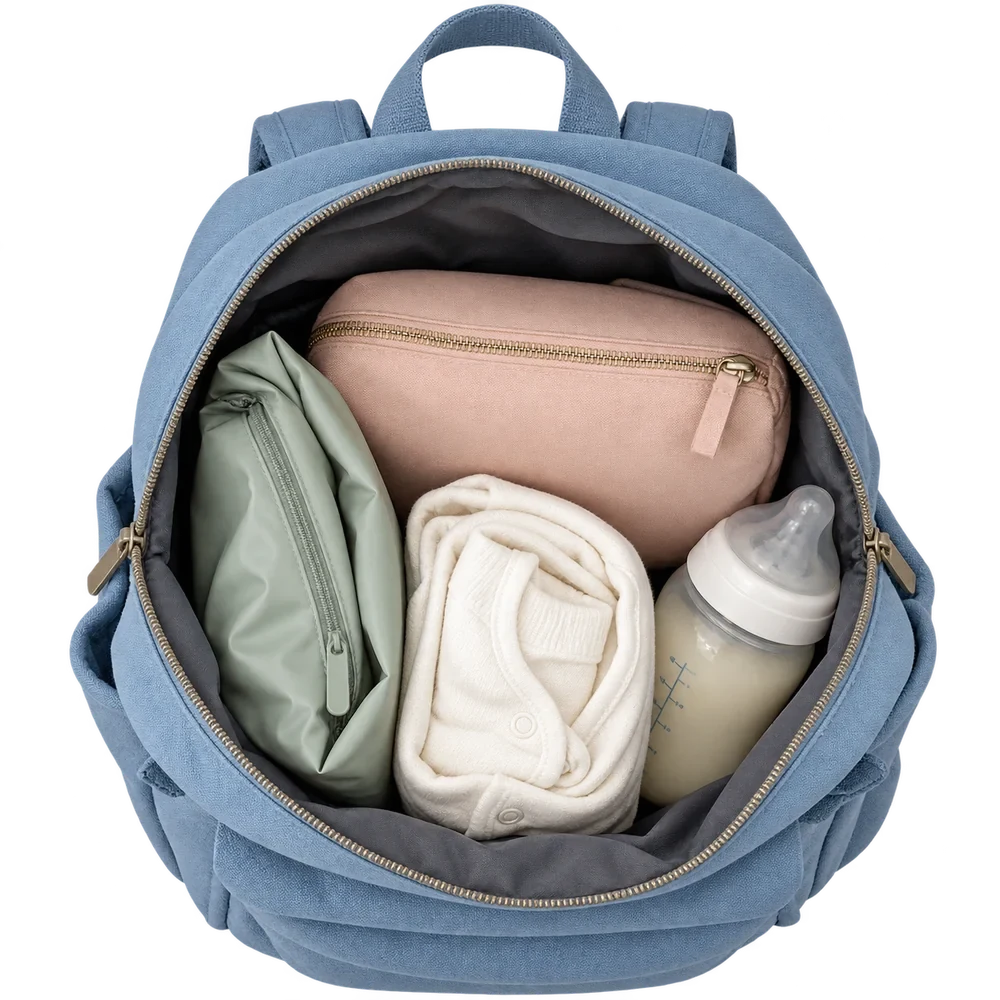
A backpack you already have
Does the job with two things added: a changing pouch with its fold-out pad, and a wet bag. Fine for short outings and a light load. On a long day, small things get lost in one deep compartment.
- Good: Nothing new to buy
- Good: Keeps working after diapers
- Not good: Small things sink to the bottom
How to choose a diaper bag
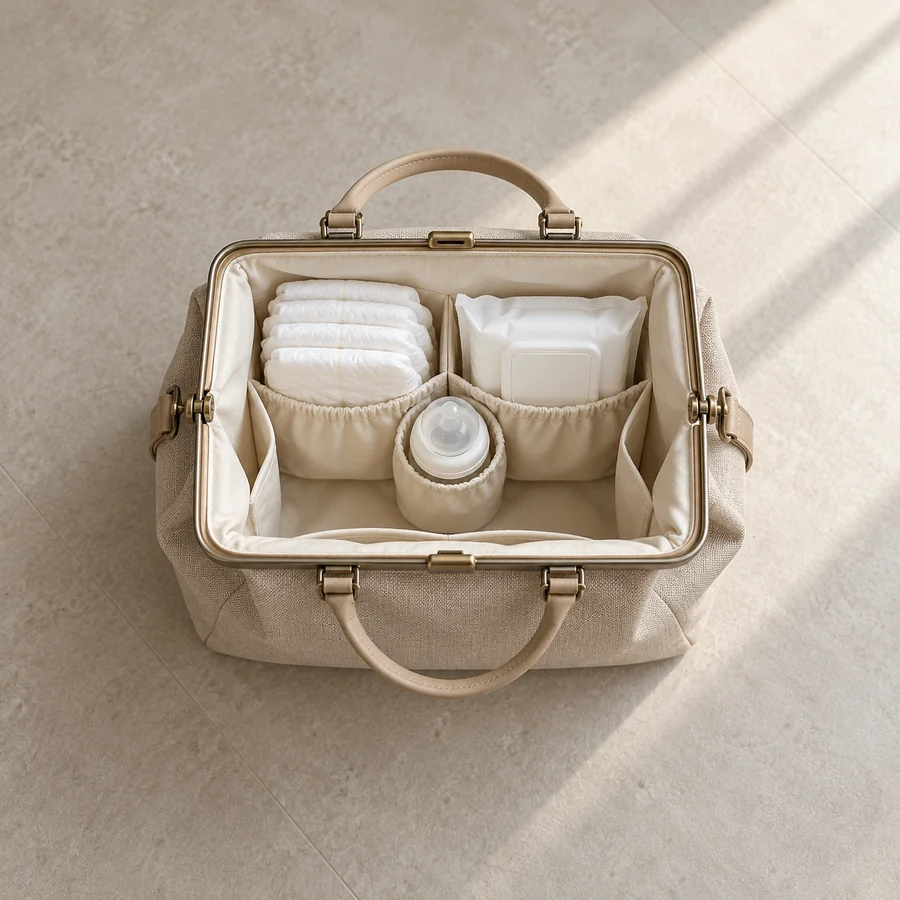
1. It opens wide
A bag that opens wide shows everything at once, so nothing has to come out before you find the wipes.
- Good: Zip runs down the sides
- Good: Stays open on its own
- Not good: Narrow top or drawstring
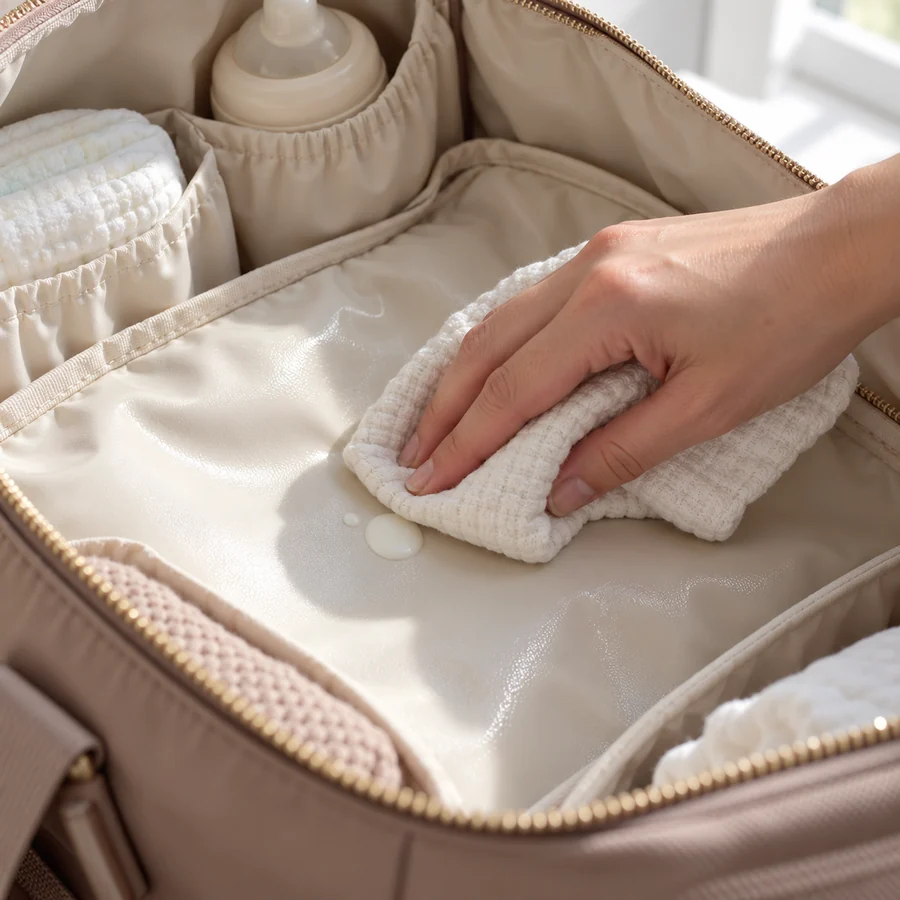
2. The lining wipes clean
Sooner or later milk, crumbs and a leaking diaper end up inside. A coated lining wipes clean with a cloth, and a light one shows you where things are.
- Good: Coated, wipe-clean lining
- Good: Light color inside
- Not good: Dark fabric that soaks up spills
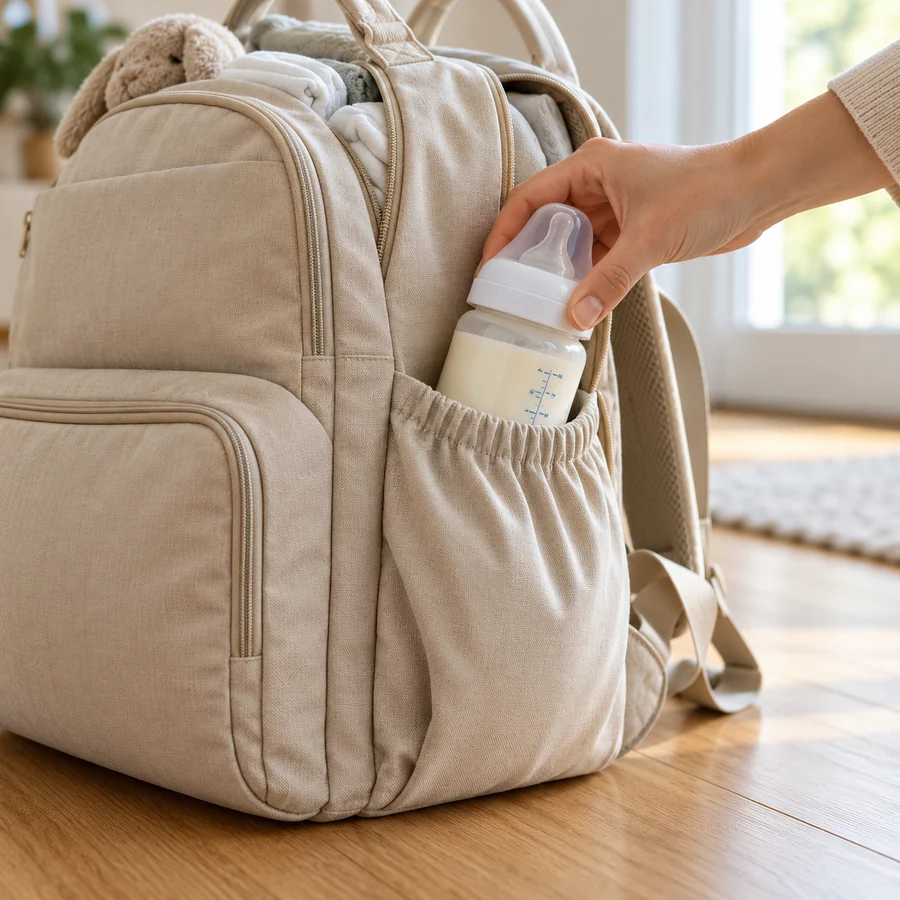
3. Pockets that open when it's full
The bottle and the wipes are needed most when the bag is packed. Stretchy side pockets and zipped outer pockets still take them then, while snaps tend to pop open.
- Good: Stretchy side pockets
- Good: Zips on outer pockets
- Not good: Snaps that pop open
The changing pad and the wet bag
These two make any bag a diaper bag. Many diaper bags come with a changing pad, some with a wet bag too, and both are sold on their own for a backpack.
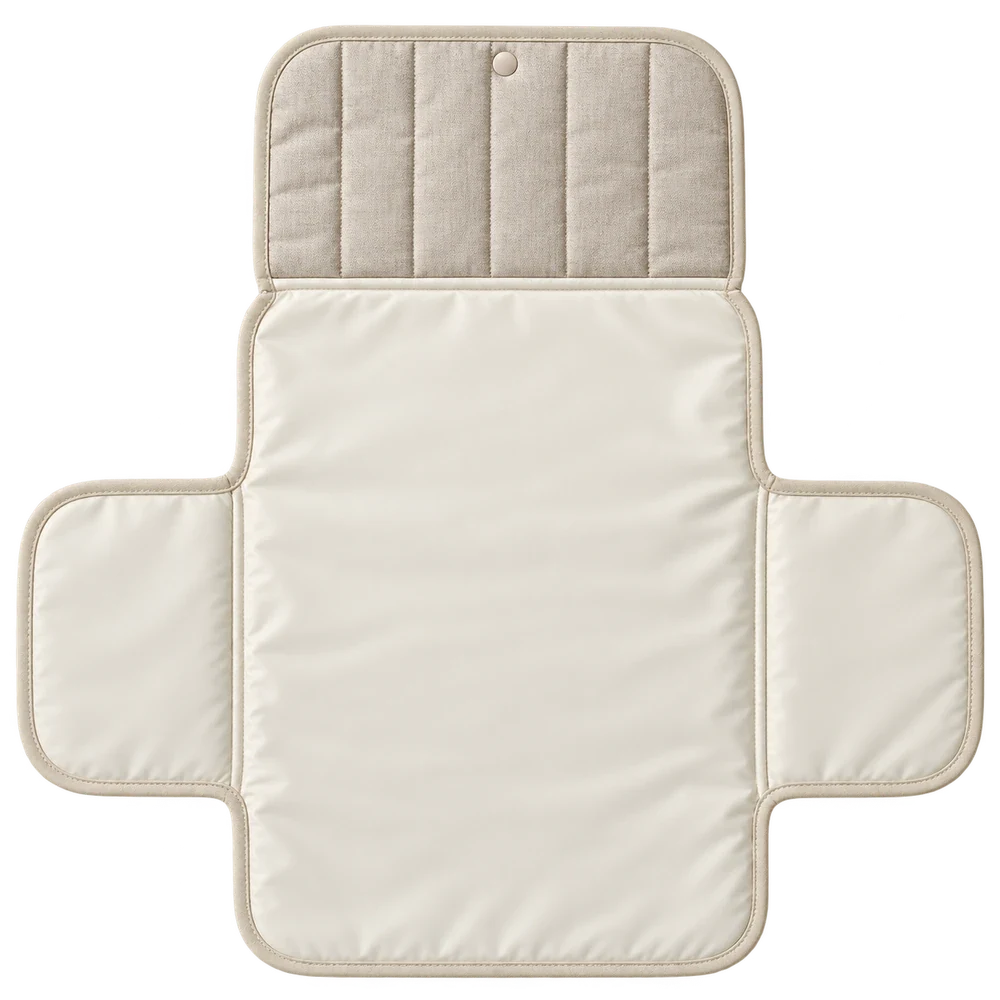
Changing pad
A wipe-clean mat that folds flat into the bag. Spread it on a changing table, a bench or the back seat, and wipe it after each change. On anything raised, keep a hand on your baby the whole time, even with the table's strap buckled, because babies roll without warning.
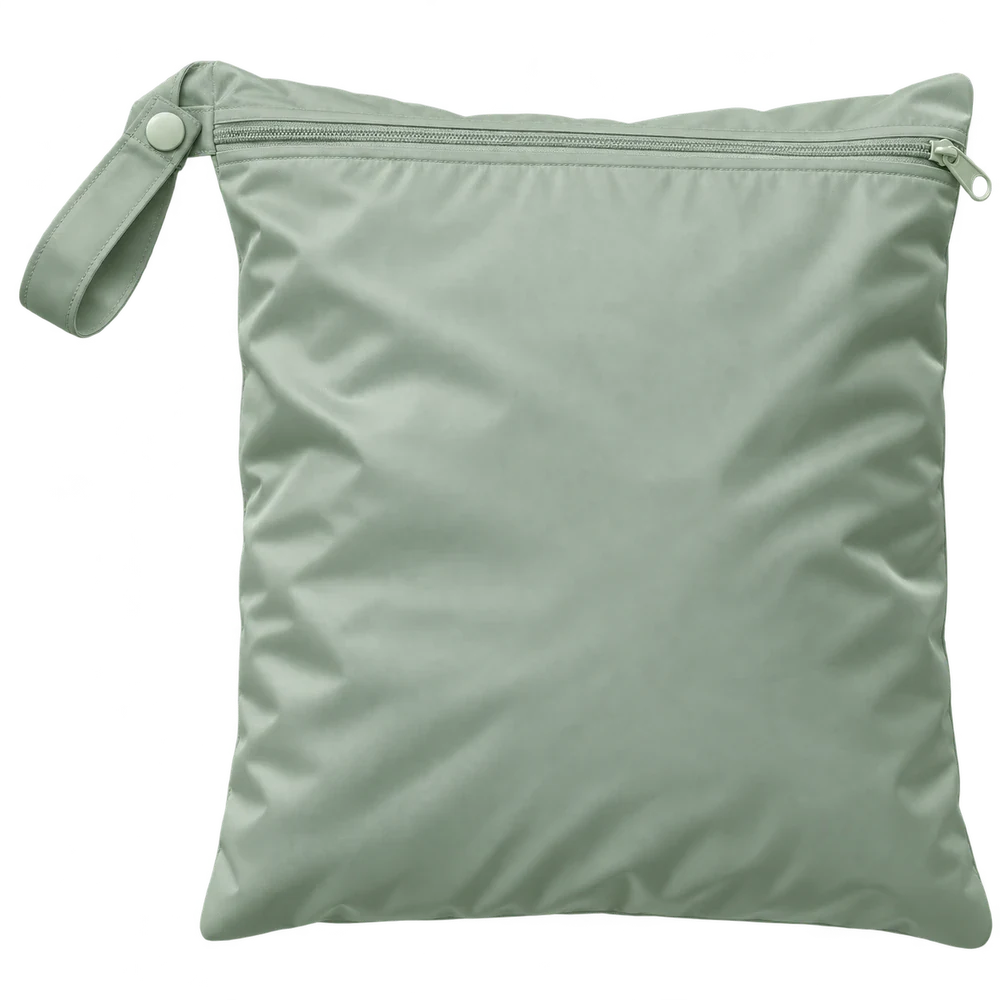
Wet bag
A zip pouch with a waterproof lining. Clothes from a leak, a wet swimsuit or a used cloth diaper go in, and the damp and the smell stay inside. Wash it without fabric softener and let it dry in the air, because softener and a hot dryer wear down the waterproof layer.
Packing it for a walk
An everyday walk needs less than the bag can hold: the changing things, one spare set of clothes, and whatever the forecast adds before you get back. How many diapers and feeds to bring for your baby's age and the hours you'll be out is in the diaper bag checklist.
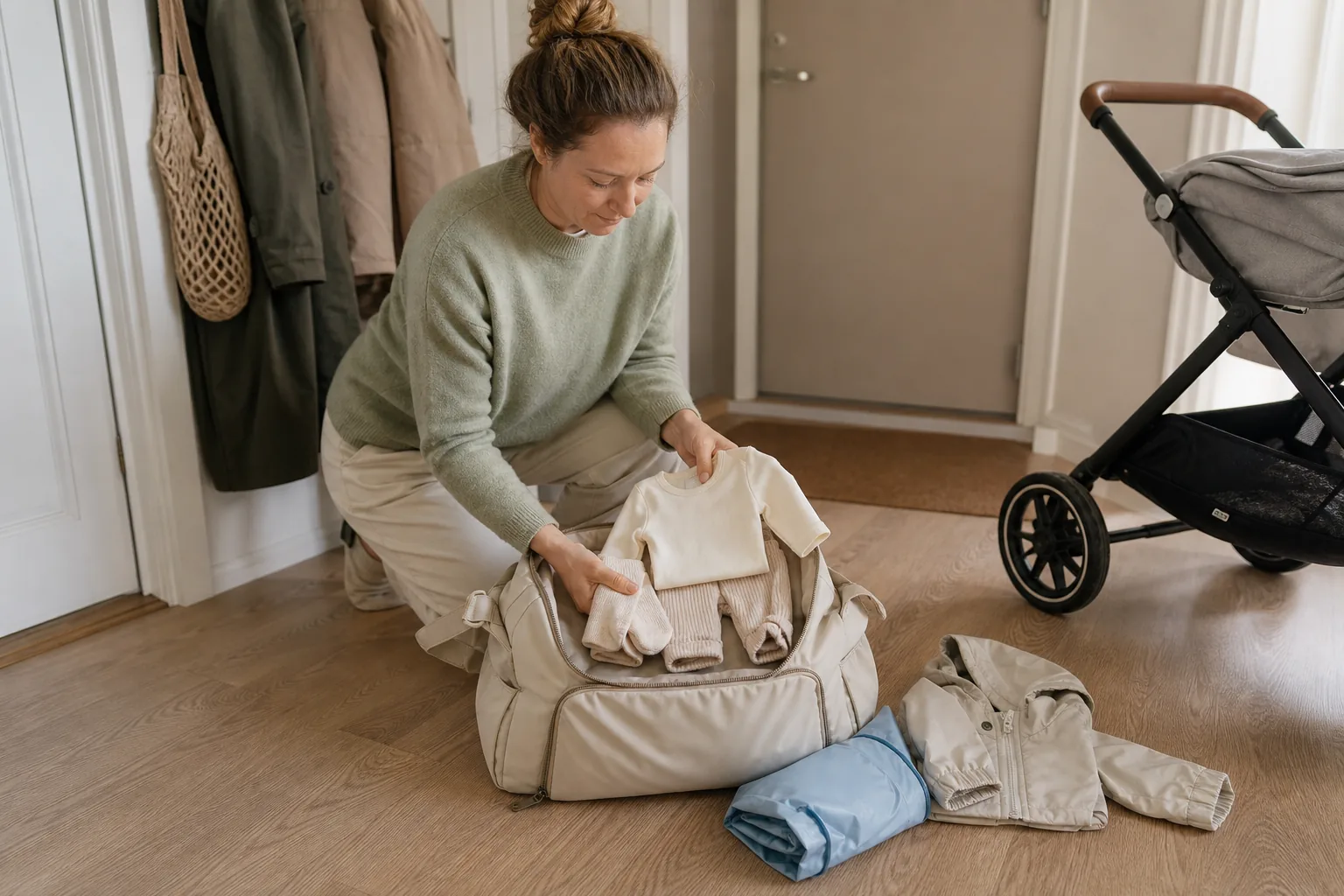
The spare set is only the clothes next to the skin, a bodysuit, pants and socks, because a leak or a big spit-up rarely reaches a coat or a pram suit (snowsuit). When the season turns, swap the set too: warm pants and warm socks for winter, a short-sleeve bodysuit for summer. Roll it into its own small zip bag with an empty wet bag folded in, so the whole change comes out in one go and the dirty clothes go straight back in.
Pack the bag before your baby's outdoor clothes go on. A baby zipped into a pram suit in a warm hallway soon gets hot and fussy while you look for the rain cover. With the bag in the stroller basket, the jacket or pram suit goes on last, at the door. After a change, a fresh spare set goes back in when you get home, so the next walk starts packed.
What the forecast adds to the bag
What the forecast adds to the bag
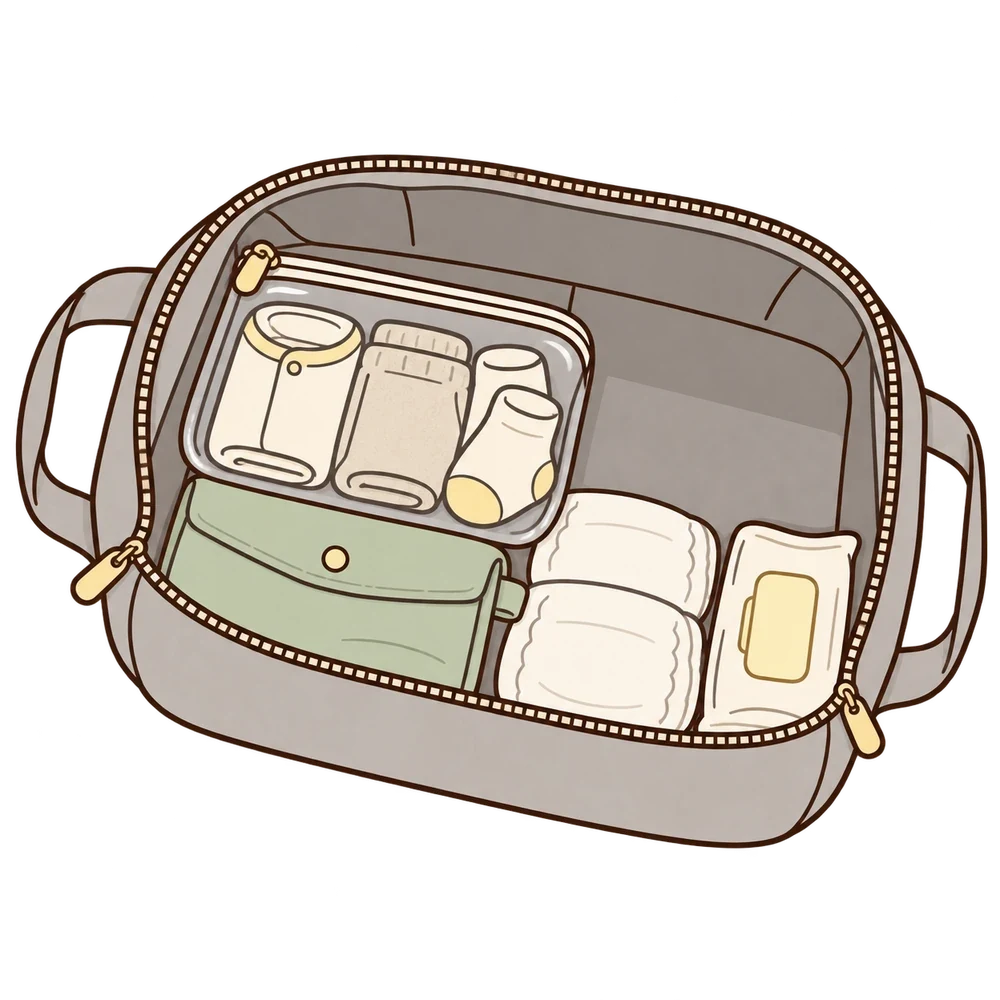
Only the spare set
The spare set and the changing things are the whole bag. The rain cover, the sun hat and a second jacket stay at home.
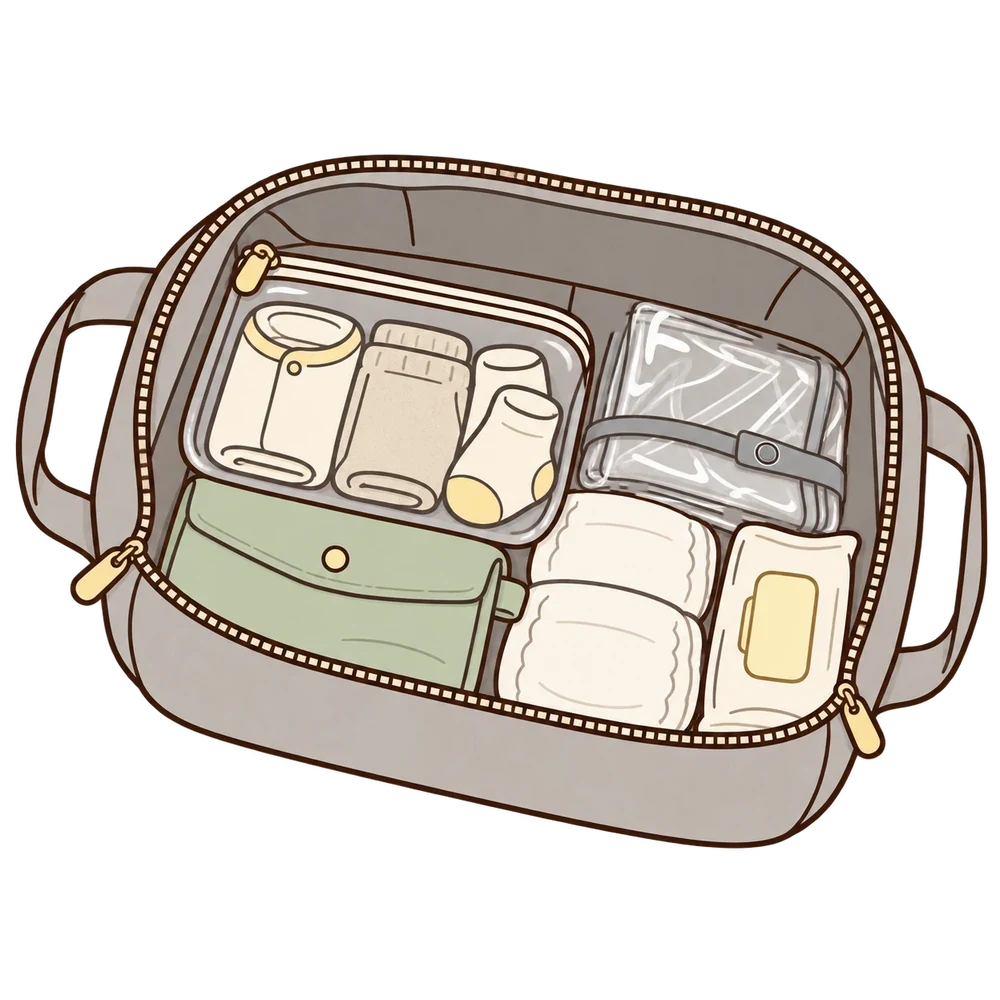
The rain cover goes in
The rain cover comes along from a 40% chance of rain while you're out, even under a blue sky at the door. Fit it once at home, and it goes on in seconds at the first drops. A toddler who walks adds a raincoat, rain pants and rain boots.
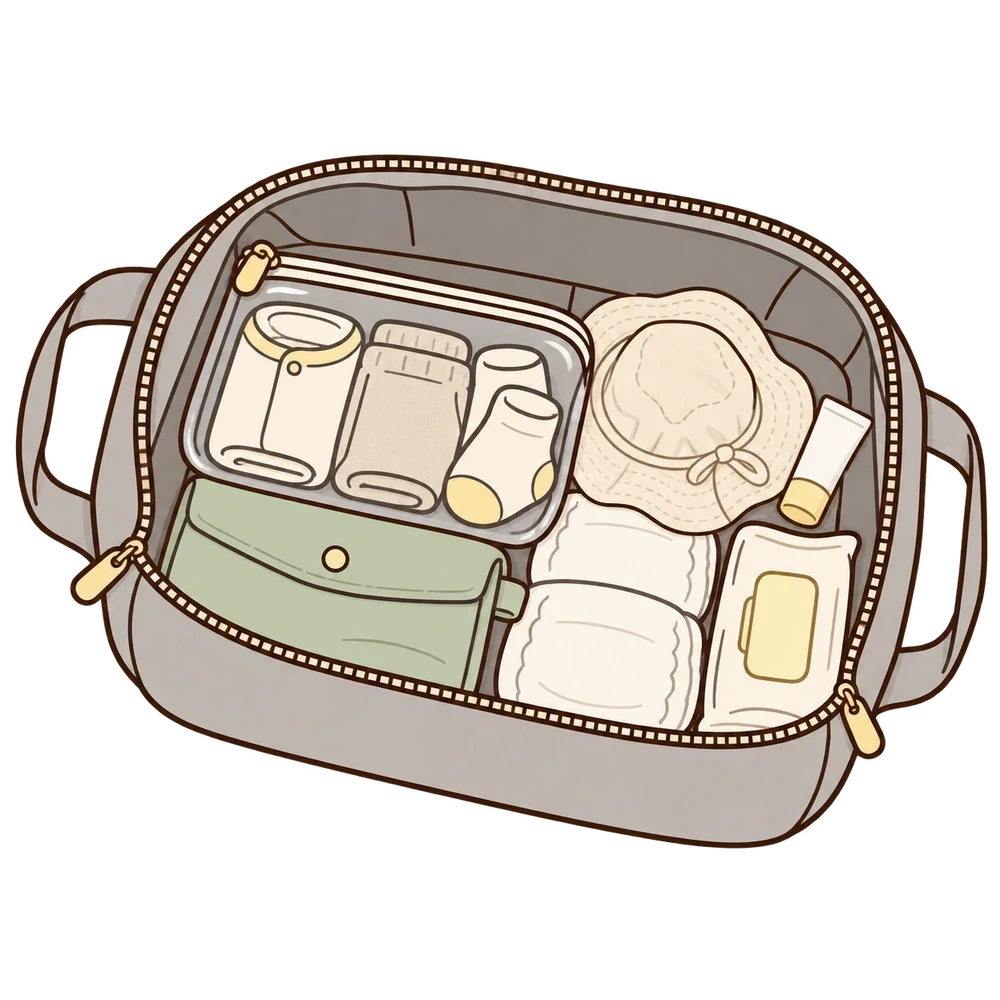
A sun hat and sunscreen
From a UV index of 3, the sun hat goes in if it isn't already on, and the stroller sunshade clips to the canopy. Sunscreen comes along from 6 months, while a younger baby stays in the shade.
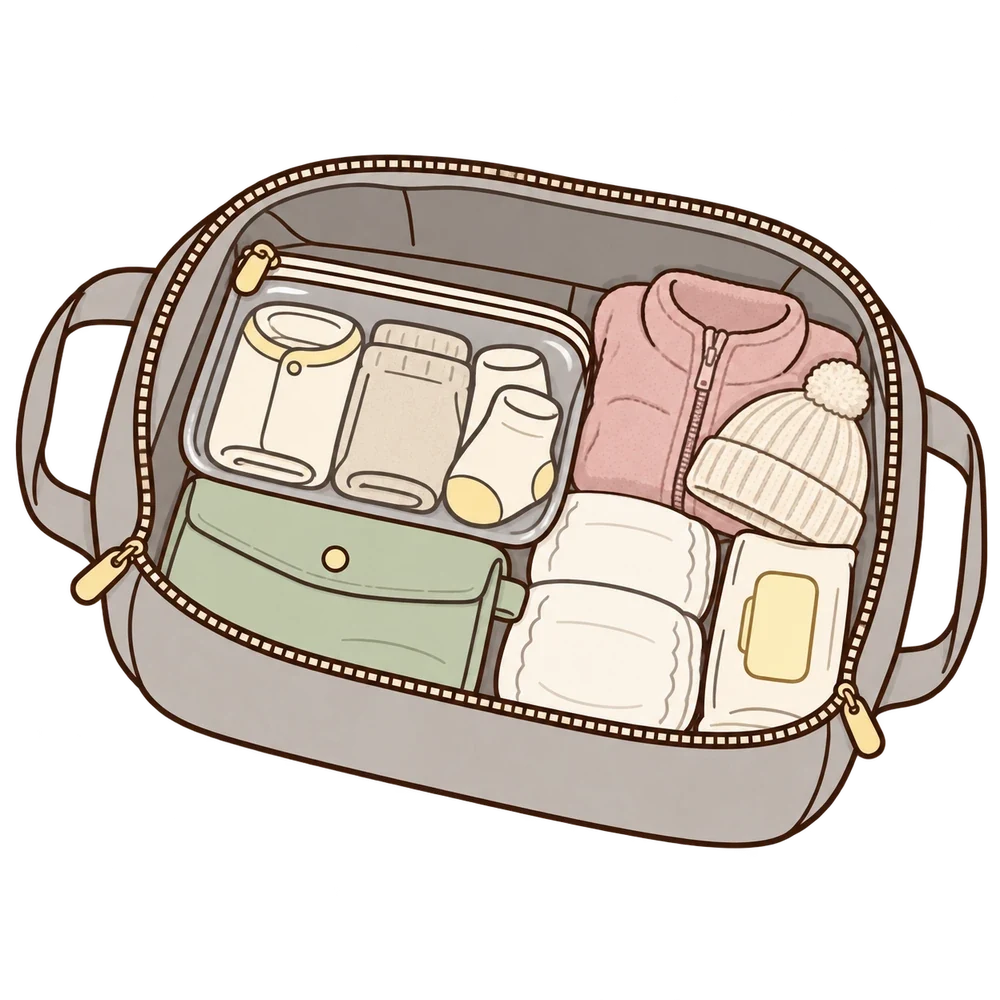
A fleece and a hat for the way home
When the walk back will be colder, a fleece and a knit hat go on top, so they come out without unpacking the rest.
Questions parents ask
How big should a diaper bag be?
Big enough for one spare set of clothes, the changing pouch, a bottle and a muslin (burp cloth), about the size of an everyday backpack. A bigger bag fills up with just-in-case things, and you carry them all.
Do we need two diaper bags?
Usually not. One bag goes with whoever takes the walk, and a spare changing pouch that stays in the car saves moving things over. With two children in diapers, one bigger bag with a pouch for each child keeps the sizes apart.
Do I need an insulated diaper bag?
Only if you carry pumped milk. It keeps for up to 24 hours in an insulated bag with frozen ice packs, then goes into the fridge or the freezer. Formula powder and a flask of hot water need no cooling.
Do I need a changing pad if there's a changing table?
Yes. Everyone uses a public changing table, so the pad goes between it and your baby, and you wipe the pad clean afterward.
Can I hang a diaper bag on the stroller handle?
Only a light one. Weight on the handle can tip the stroller backward, most of all when you lift your baby out, so the heavy things go in the basket underneath.
Is a diaper bag a personal item on a plane?
It depends on the airline. Some let a diaper bag fly on top of your carry-on and personal item, others count it as one of them, so check your airline's baggage rules before you pack.
Do I need spare clothes for a quick walk around the block?
For a baby in diapers, yes. A leak doesn't wait for a long walk, and the rolled-up set takes about as much room as a water bottle.
What should I pack for a walk with a newborn?
The same bag, with two spare sets in place of one, because newborns leak and spit up more often.
Is there a diaper bag for dads?
Any bag you are happy to carry. Many diaper backpacks look like everyday backpacks in plain dark colors, with nothing on the outside that says baby.