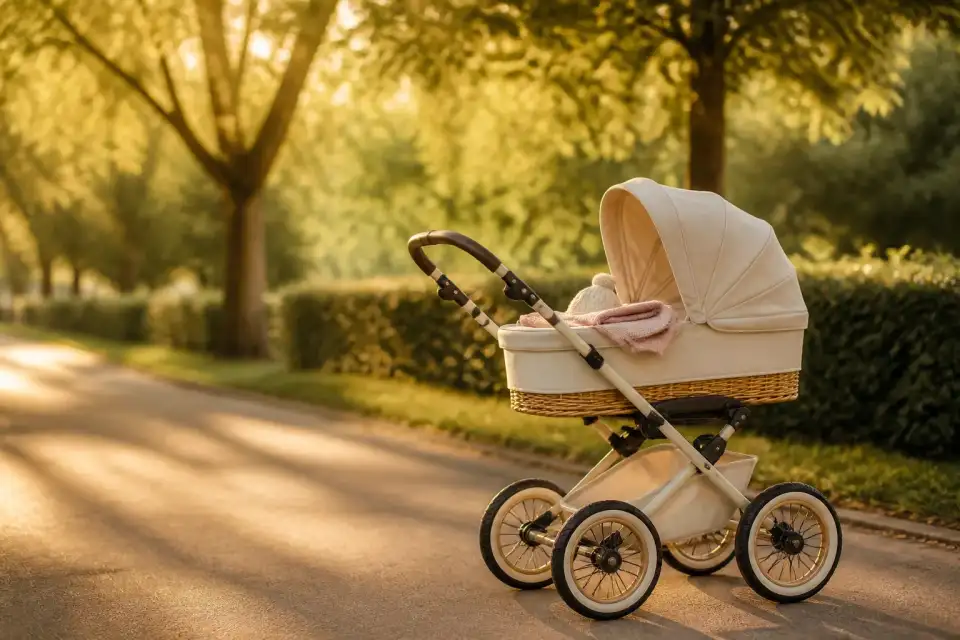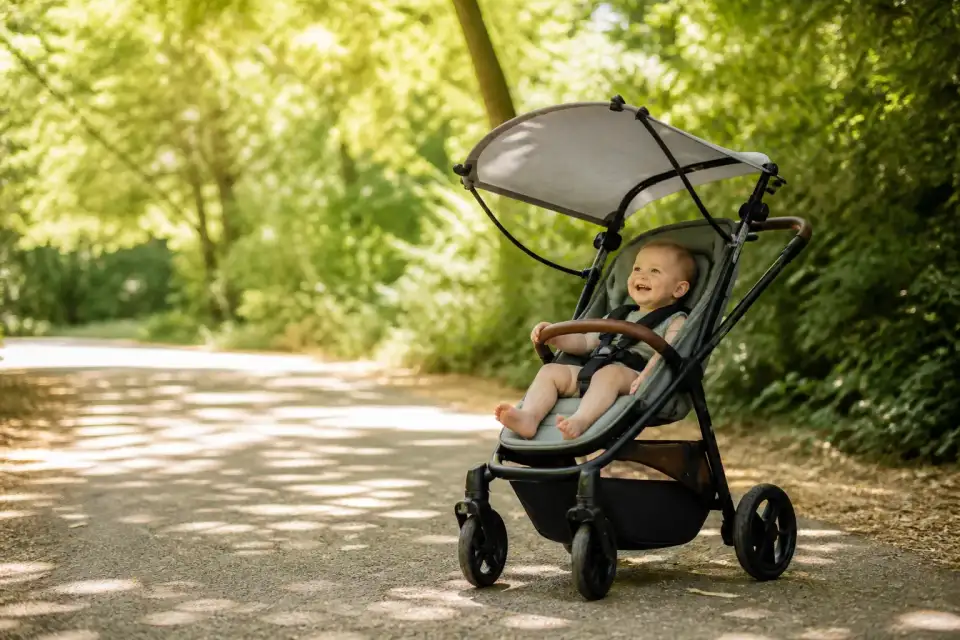
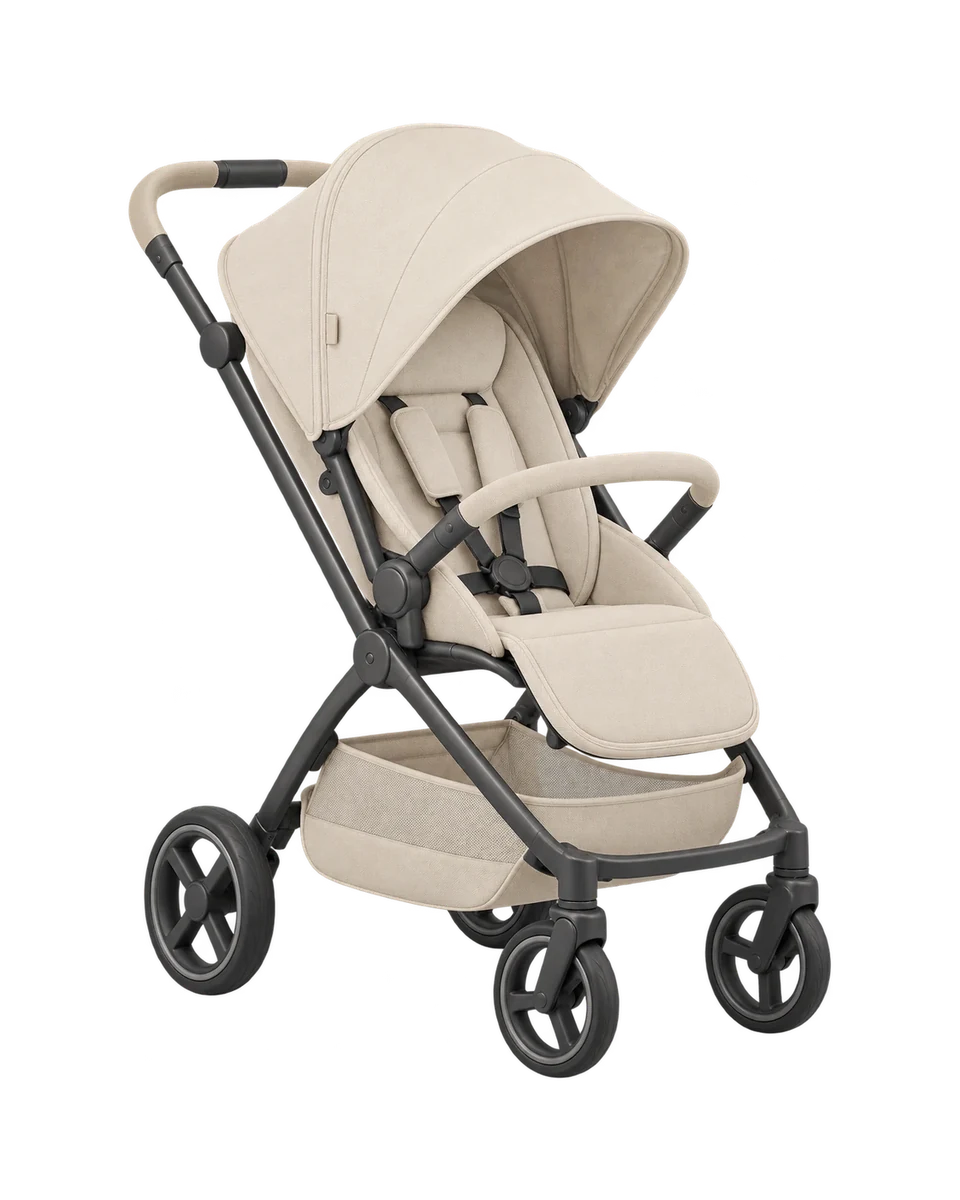
Its frame carries a seat or a carrycot (a small bed that clicks on, called a bassinet in US shops), a basket underneath for the bags and a canopy that shades your baby. A newborn lies flat in it, and from about 6 months your baby sits up and watches the street.
It carries your baby from the first walks until about age 3 or 4. Your days decide the kind. Rough streets and long walks call for big wheels, and stairs, a bus or a small trunk for a light stroller that folds small. For a newborn, it also needs a carrycot or a seat that lies flat.
- For ages0–4years
- You'll need1
- Use itAll year
Types of stroller
They differ most in their wheels, their weight and whether a newborn can lie flat in them. The weights are for typical models of each kind.
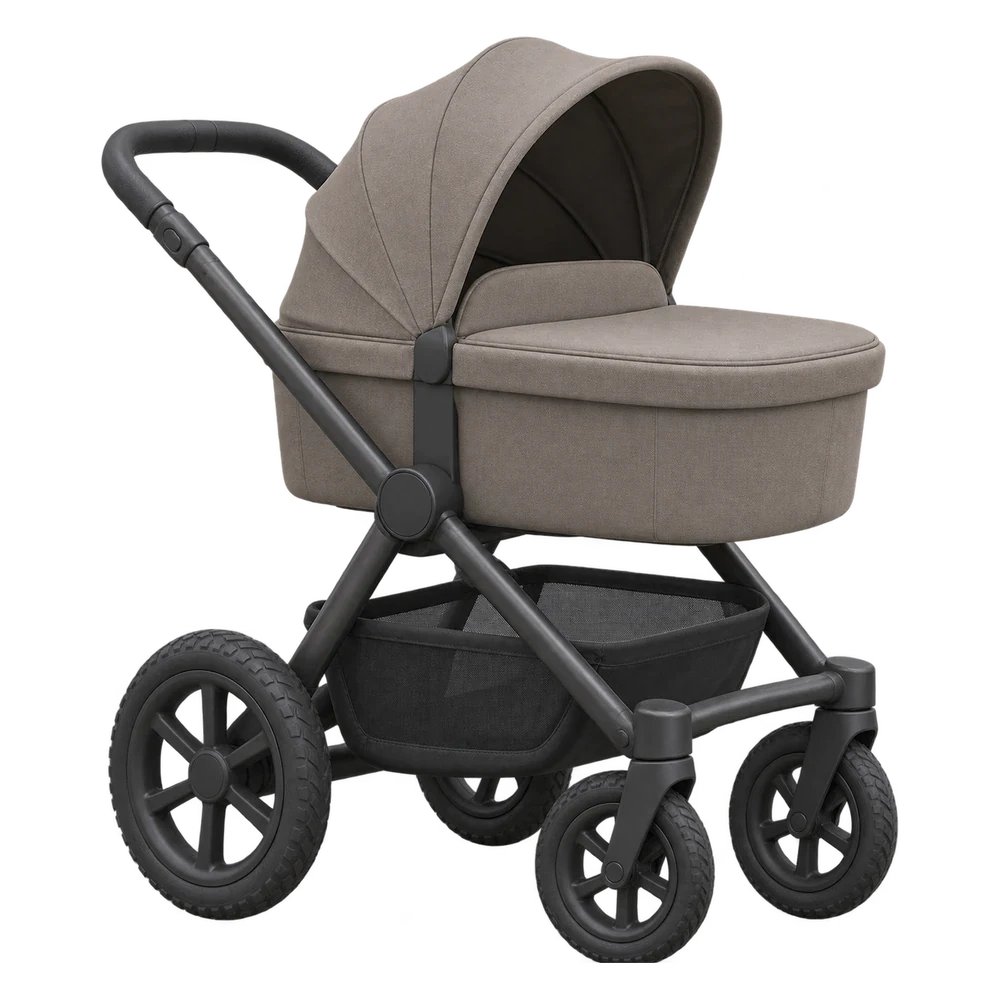 From birth
Full-size stroller
About 10–12 kg (22–27 lb)
Big wheels, a roomy seat that often turns to face you, and the biggest basket. With its carrycot, or a seat that lies flat (check which comes in the box), a newborn rides from the first day. Suits long walks and rough streets, if you have room to keep it. In the UK, one with a carrycot is a pram.
- Good: Smooth on rough ground
- Good: Roomy seat, big basket
- Not good: Heavy to lift and fold
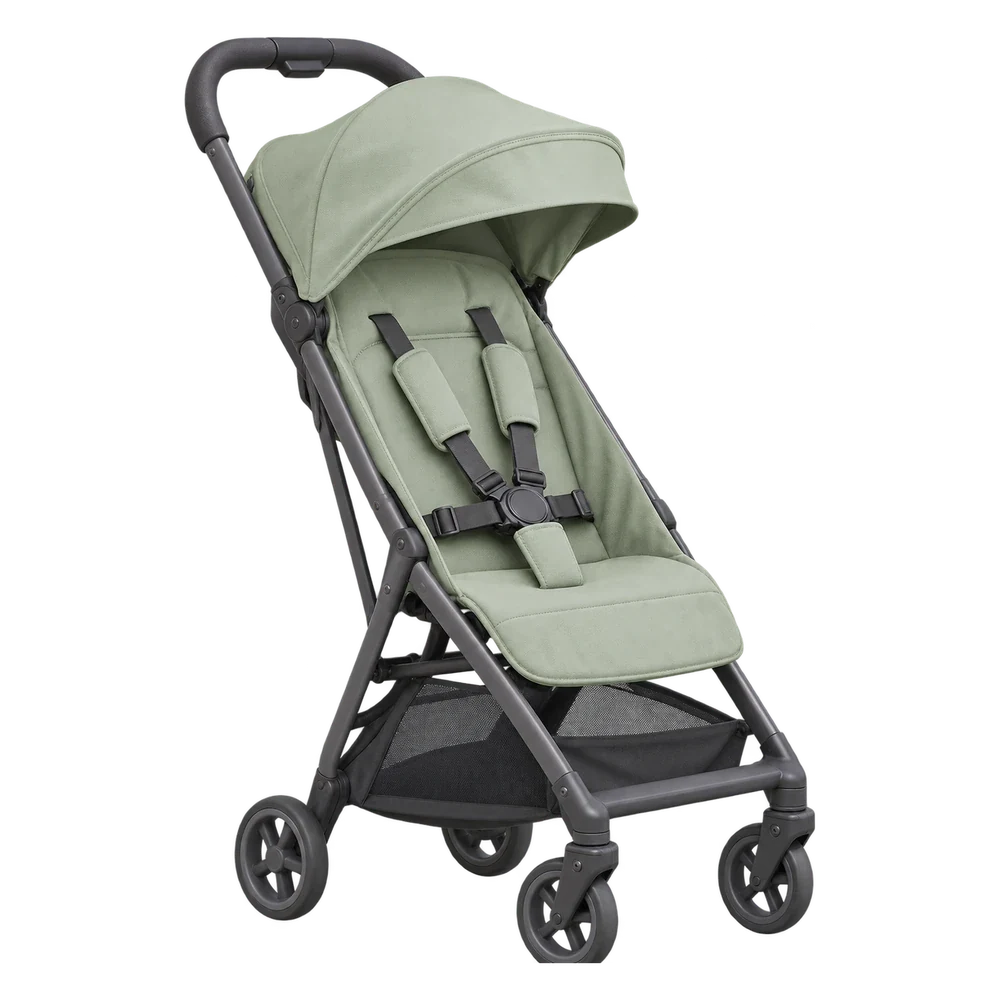 From birth or 6 months
Travel stroller
About 6–8 kg (13–17 lb)
Also sold as a lightweight or compact stroller. It folds small enough for a small trunk, a crowded bus and, for some, an airplane's overhead bin, which makes it the one for stairs. Its small wheels shake on cobbles and gravel. Some take a newborn on a seat that lies flat, others start at 6 months.
- Good: Folds small
- Good: Easy on stairs and buses
- Not good: Bumpy on rough ground
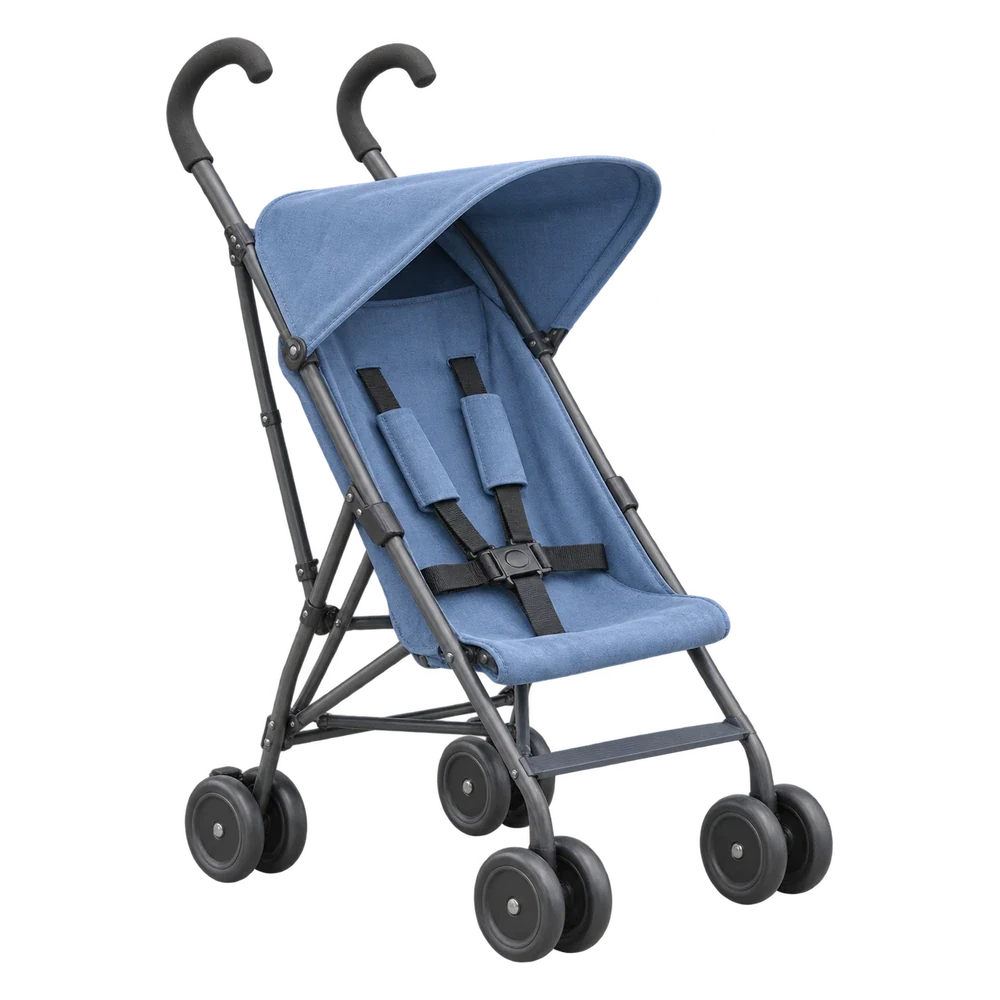 From about 6 months
Umbrella stroller
About 5–8 kg (11–17 lb)
A sling seat (a hammock of fabric) on a frame that folds into a long, thin bundle you hook over your arm. Cheap and light, it barely reclines, so it's for a baby who sits up well, and it makes a good spare for holidays, flights and the car.
- Good: Light to carry
- Good: Costs little
- Not good: Only once sitting up well
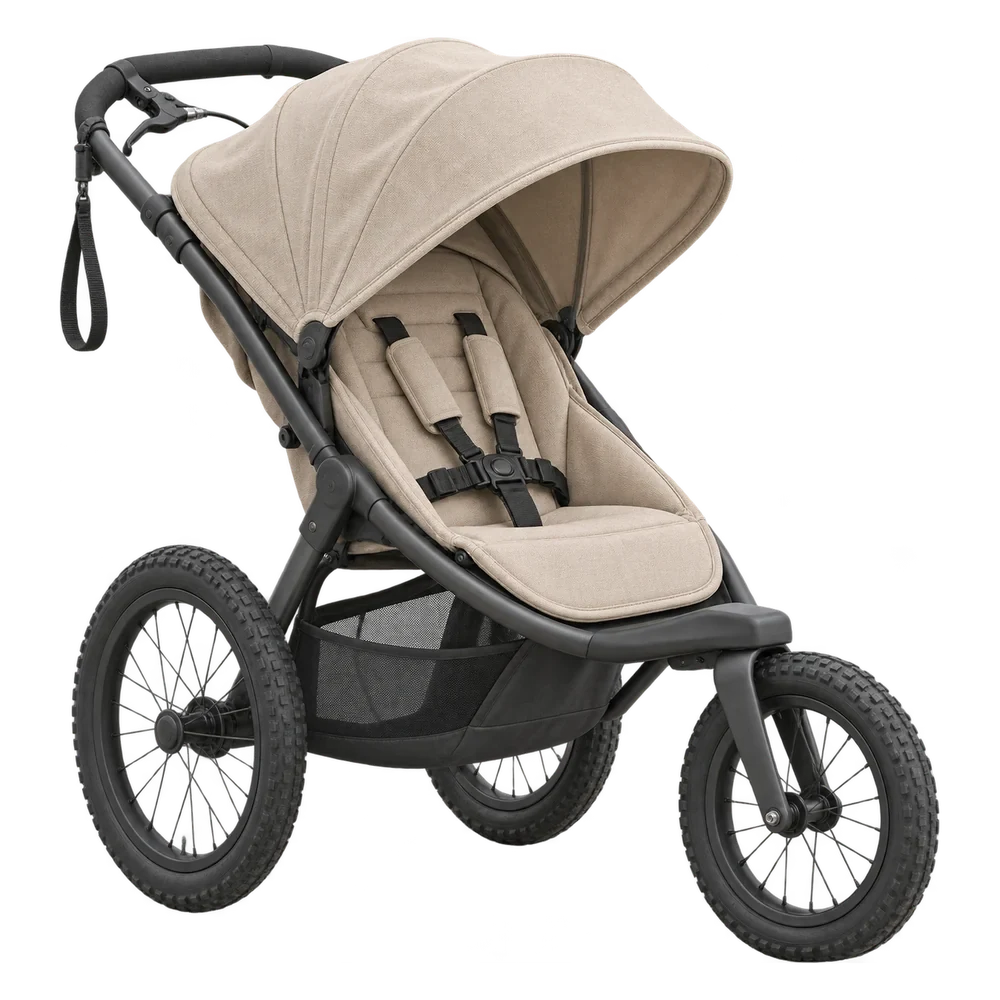 Running from 6–8 months
Jogging stroller
About 12–13 kg (26–29 lb)
Three big air-filled tires and suspension for gravel paths, forest trails, snow and sand. For running, the front wheel locks straight and there's a hand brake; an all-terrain stroller has the same big wheels without those. Suits trails and runners, but it's wide and heavy.
- Good: Rolls over gravel and snow
- Good: Made for running
- Not good: Wide, heavy, big folded
When can a baby sit up in a stroller?
In the first months your baby lies flat on the back. A young baby can't hold the head up yet, and slumped in a seat the chin drops onto the chest, which makes breathing harder. So a newborn rides in the carrycot, or on a seat that reclines all the way if its maker says it's made for newborns. A seat that only tilts back leaves your baby half sitting, so it's for later.
The seat comes up once your baby sits steadily without help, usually around 6 months. Your baby moves out of the carrycot about then too, or sooner once your baby pushes up on hands and knees or reaches its weight limit, often 9 kg (20 lb).
Shops sell the frame with these parts. A 2-in-1 comes with a carrycot and a seat, or a seat that turns into a carrycot. A 3-in-1 usually adds an infant car seat, the baby seat that lifts out of the car by its handle and clicks onto the frame with adapters (small clips). In US shops, a travel system is a stroller sold with its infant car seat. Shops use these names loosely, so read the list of parts in the box.
Which part your baby rides in, and when
Which part your baby rides in, and when
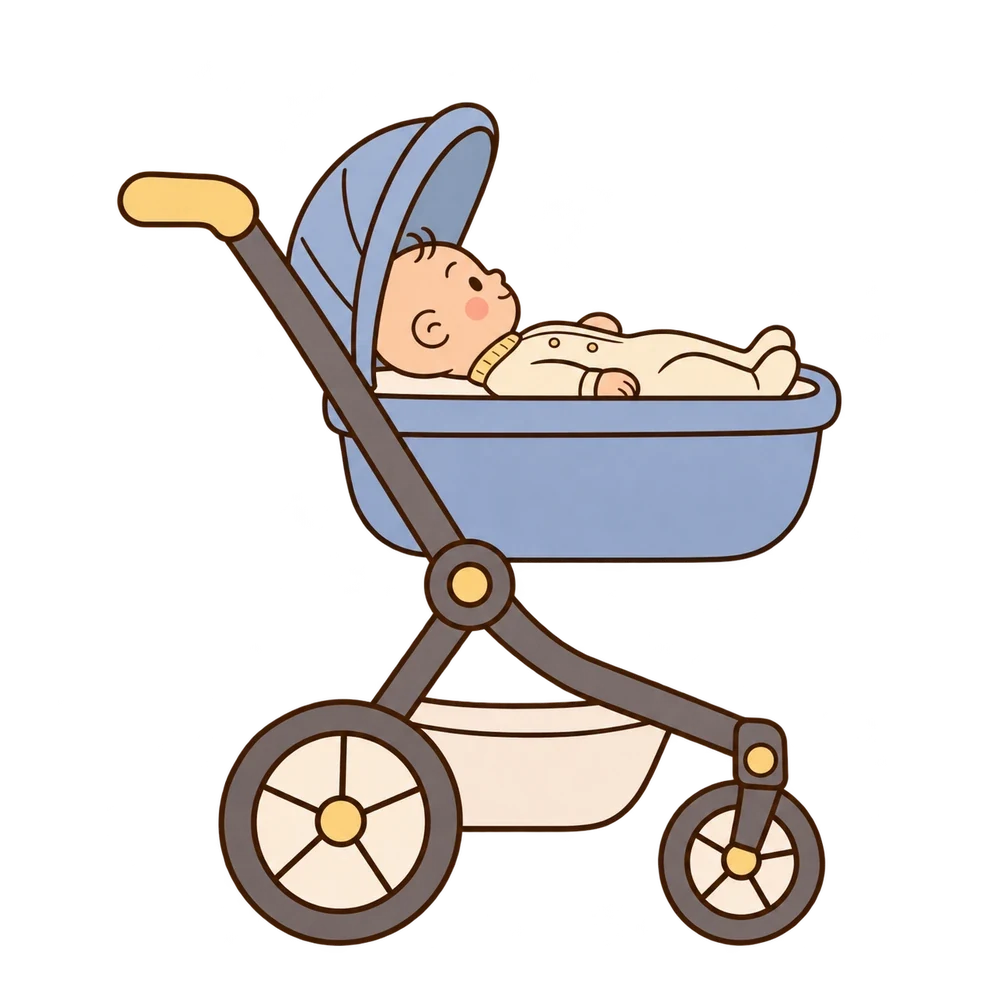
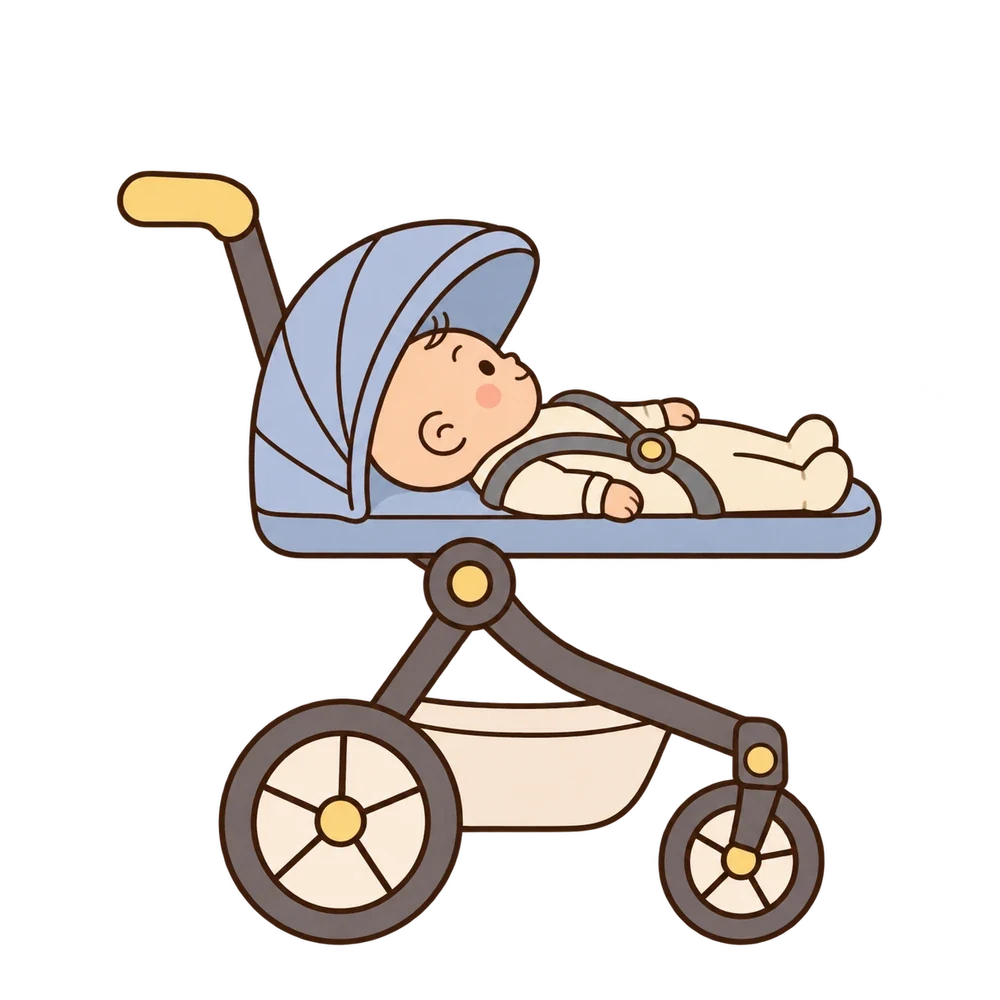
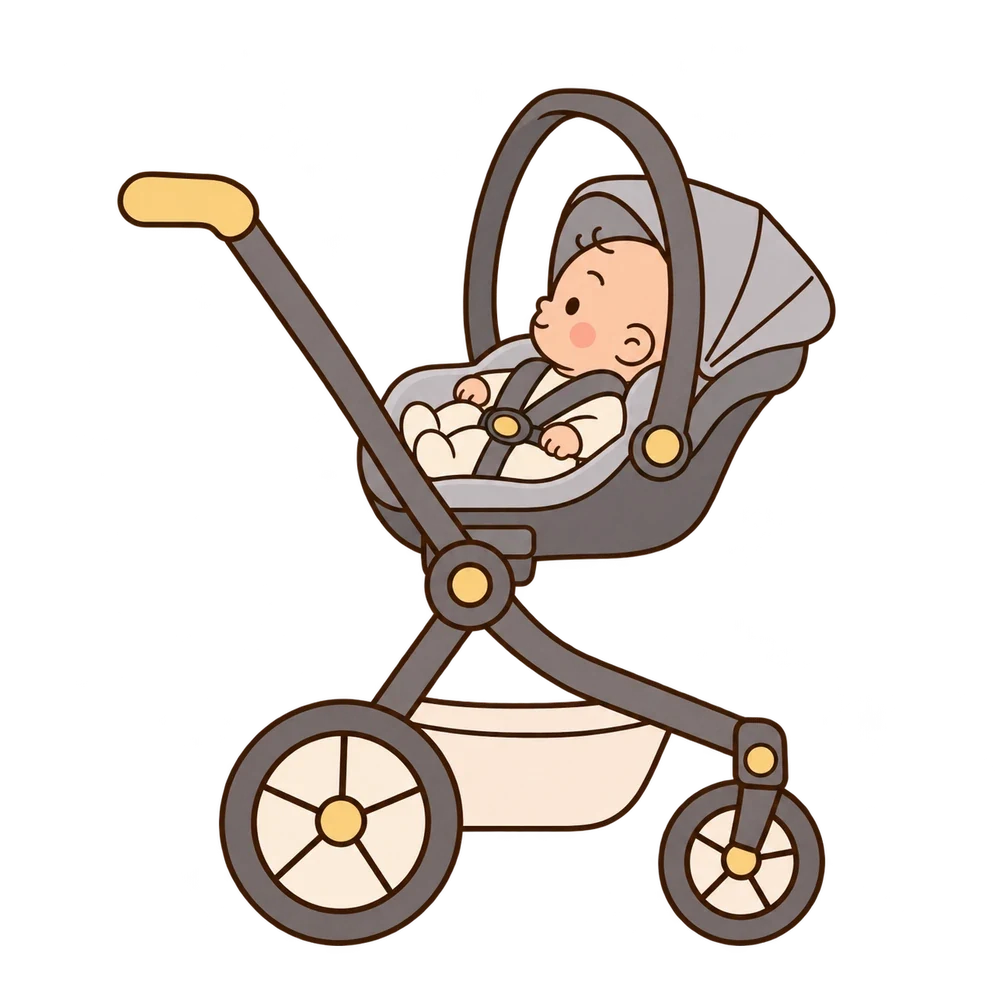
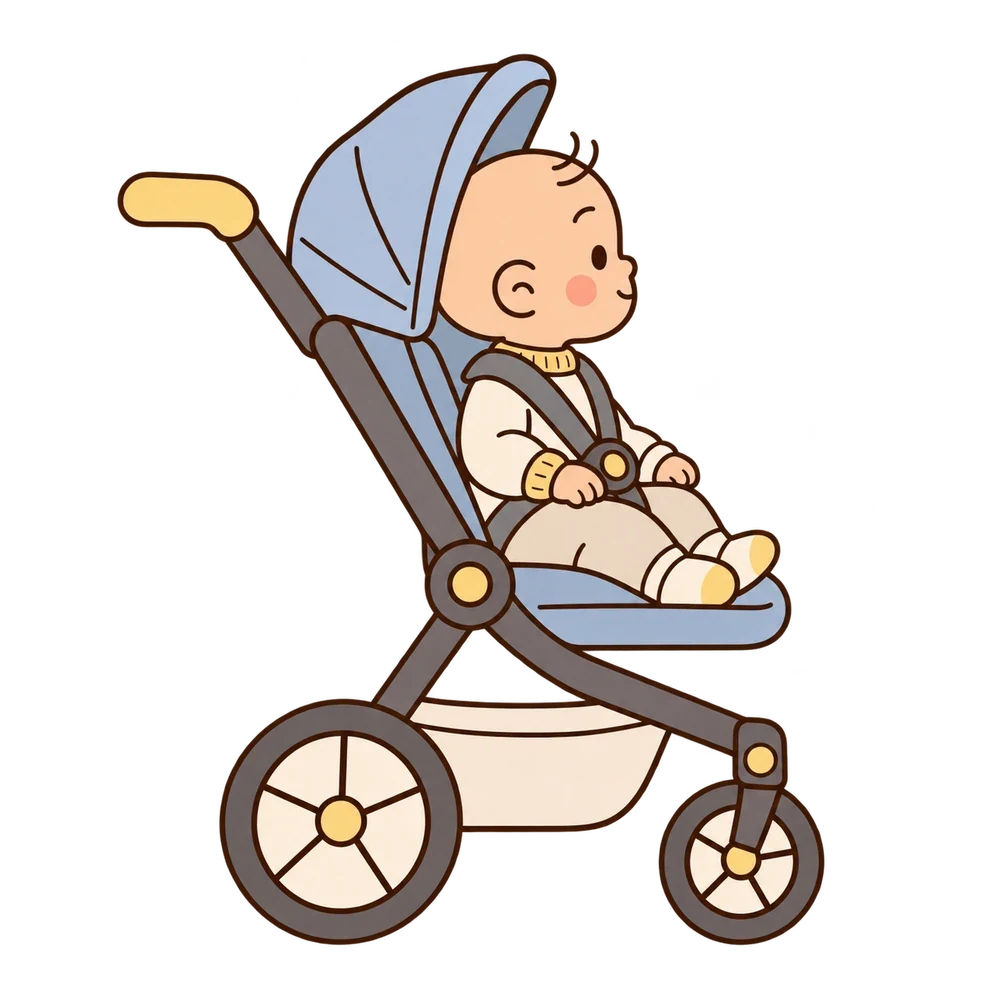
Lying flat in a carrycot
From birthto about 6 months
Your newborn lies on the back on a firm, flat mattress, with room to stretch and the hood up against the wind.
- Roomy and fully flat
- Some approved for night sleep
- An extra part for a few months
Lying flat in the seat
From birthif its maker says so
Some seats recline all the way and raise the leg rest, so the seat itself becomes a flat bed. It does the carrycot's job on walks, with one part less to buy and store.
- No extra part to buy
- Less sheltered than a carrycot
The infant car seat clicks on
For short trips
A sleeping baby goes from the car into the shop without waking. Your baby sits half upright in it, so it's for the errand, not the long walk or the nap.
Sitting up in the seat
From about 6 monthsonce sitting without help
The backrest comes up, and your baby sits buckled into the harness and watches the world go by. Many seats turn to face you or face forward.
Double strollers
For twins, or for two children close in age. Before you buy one, measure your front door and your car's trunk.
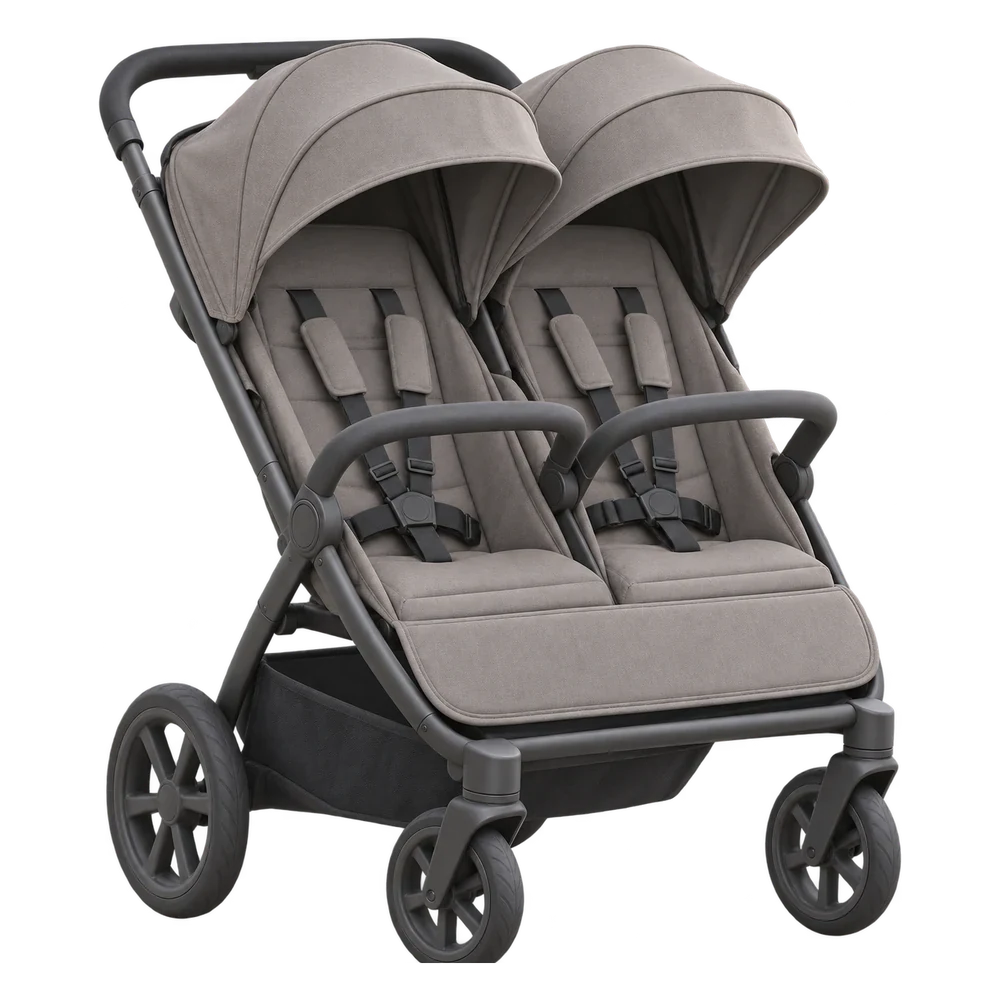
Side by side
Two seats next to each other, so both children see out and get the same ride. It's as wide as two strollers, so check doors, shop aisles and the bus.
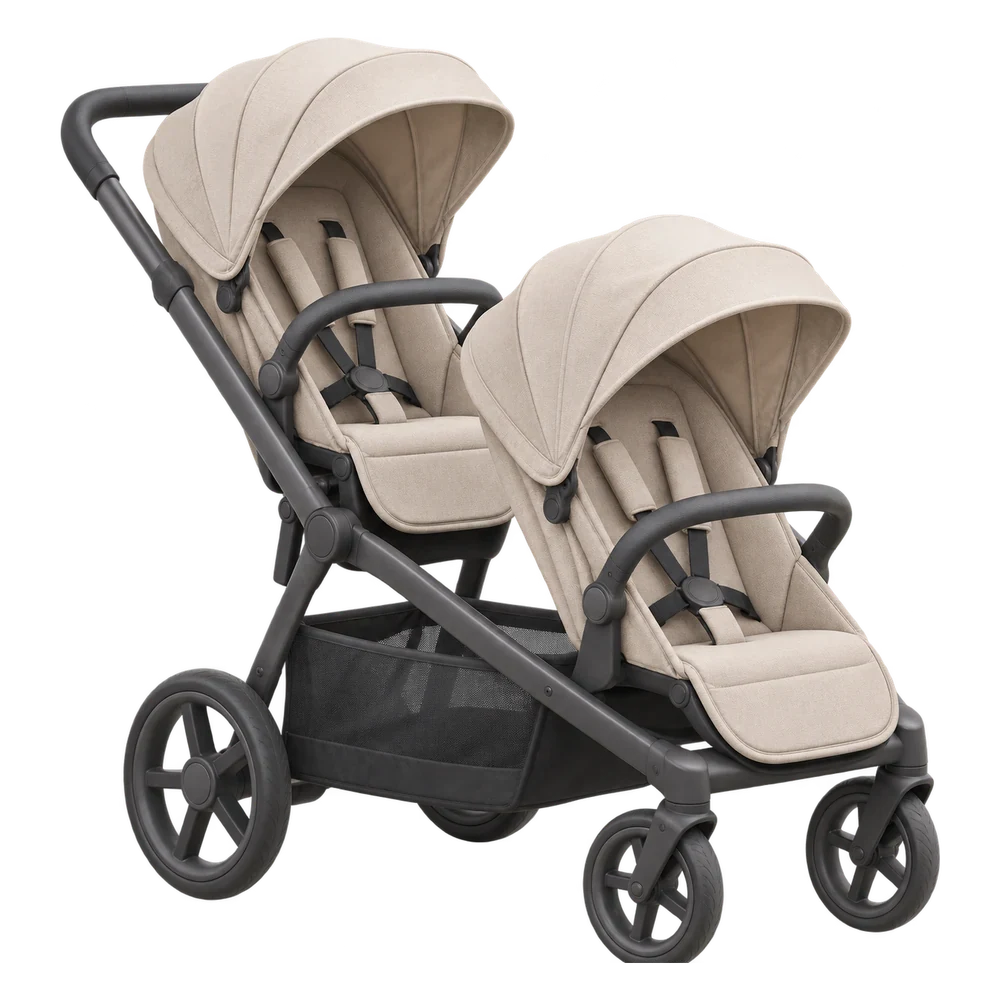
One behind the other
The seats sit in a line, so it's as narrow as a single stroller and fits through a normal door, but it's longer and harder to steer. Some single strollers turn into one when a second seat clips on (sold as single-to-double or convertible).
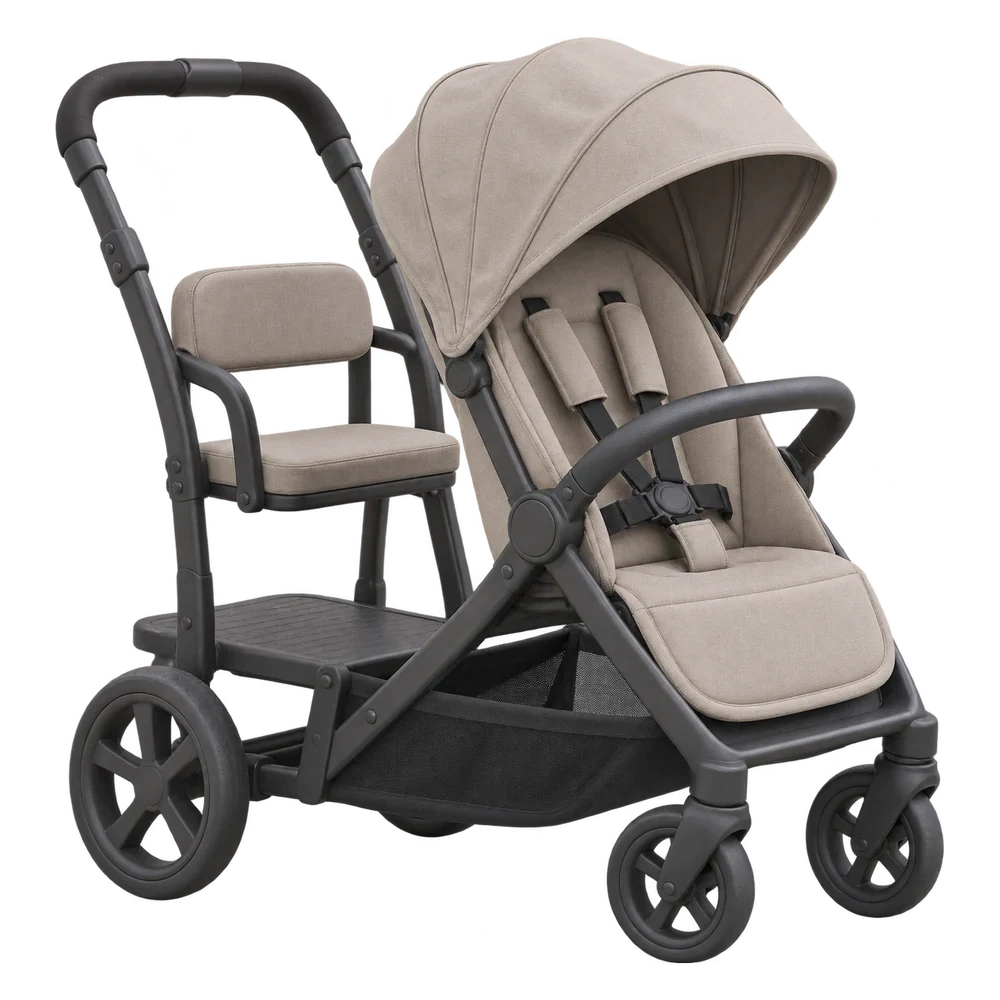
Sit and stand
A seat for the younger child, and a bench and a platform at the back for an older one who walks most of the way and hops on when tired. Keep to the weight limit at the back, because a lively child there can tip it.
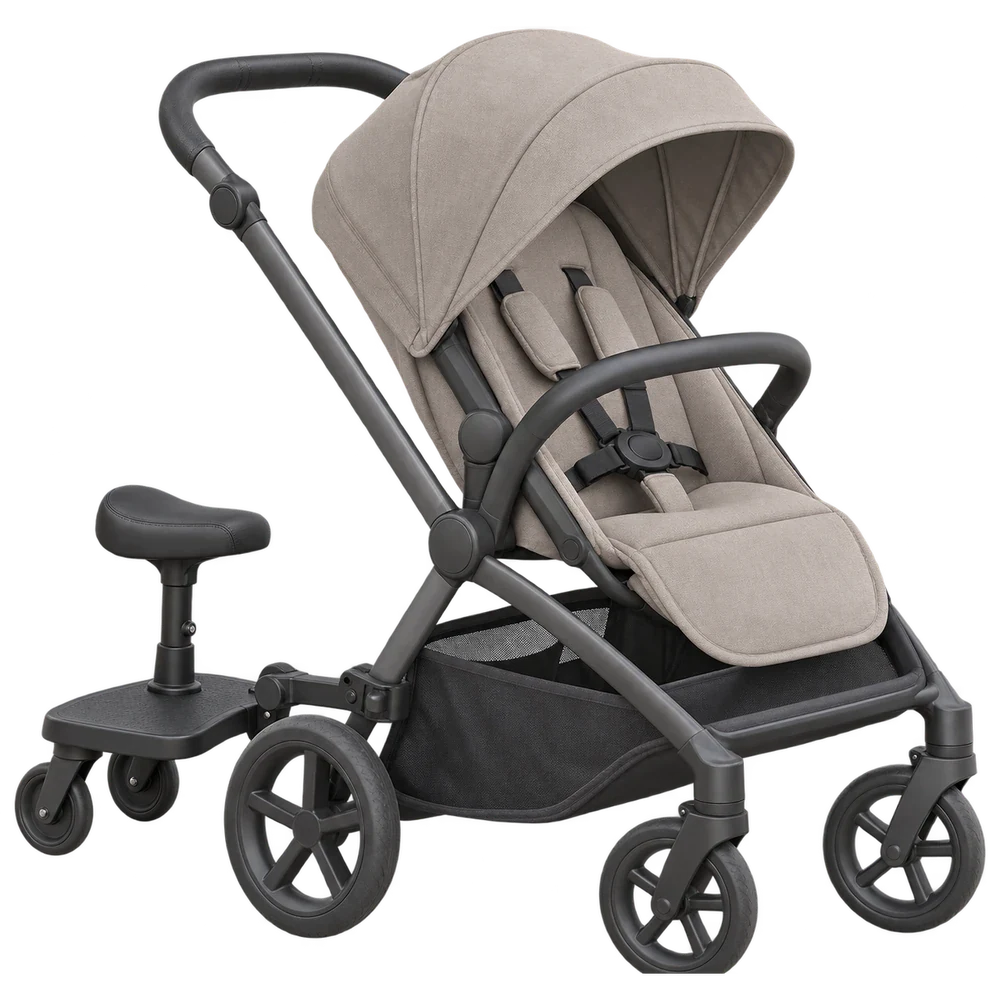
Stroller board
A small board on two wheels that clips onto the stroller you already have, behind the seat, so an older child can stand and ride, and some come with a small seat. It suits a child of about 2 or older who walks most of the way, up to about 20 kg (44 lb), and comes off when it isn't needed. Also sold as a ride-on board, or a buggy board in the UK.
How to choose a stroller
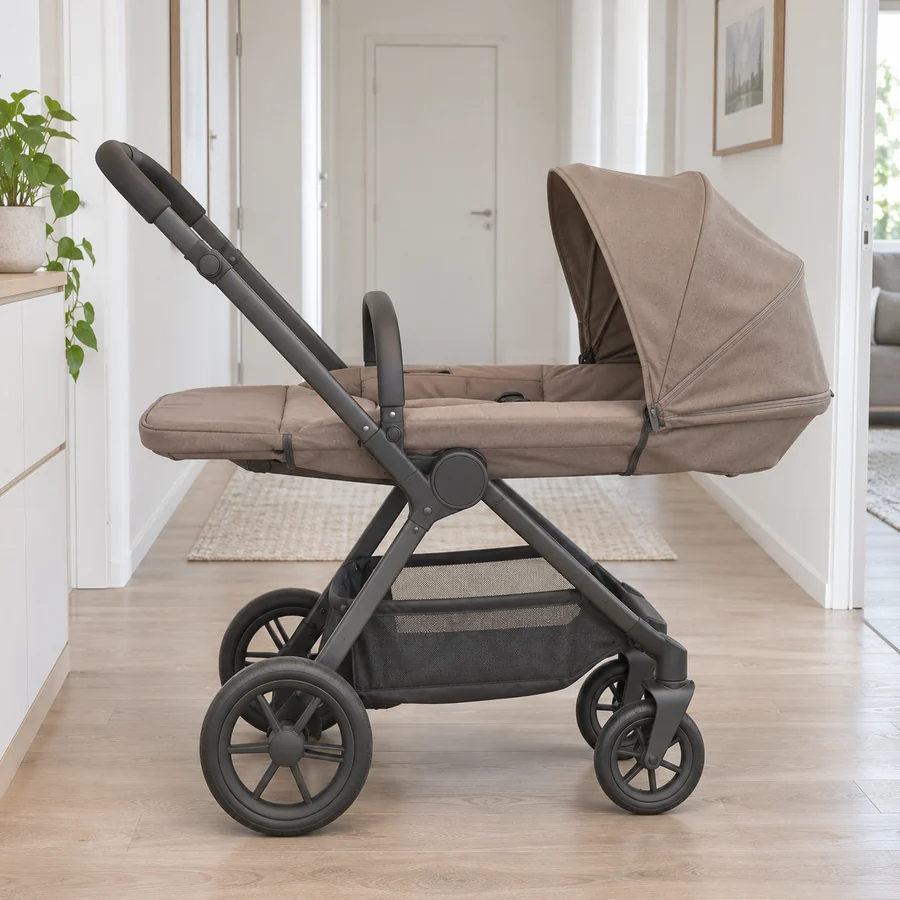
1. A flat bed for a newborn
If your baby isn't born yet, the stroller needs a carrycot or a seat that lies completely flat. In the shop, lay the seat all the way back: if a newborn would still half sit in it, the seat is for later.
- Good: Backrest goes fully flat
- Good: Leg rest rises level with it
- Not good: Tilts back, but not flat
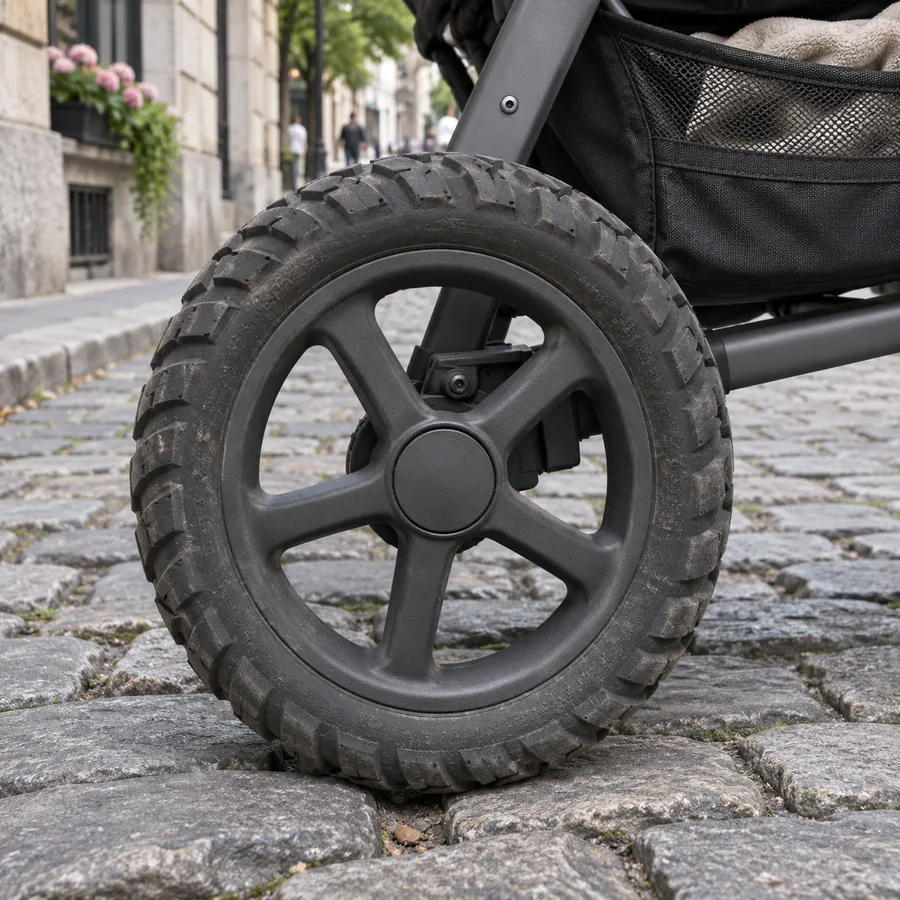
2. Wheels for your streets
Small, hard wheels roll well on smooth sidewalks and shake on cobbles, cracked pavement, gravel and snow. Bigger wheels with some give in them ride over curbs and roots without jolting your baby or your wrists, so try one over a curb and on rough ground before you buy.
- Good: Rolls up a curb easily
- Good: Big wheels with some give
- Not good: Small, hard wheels
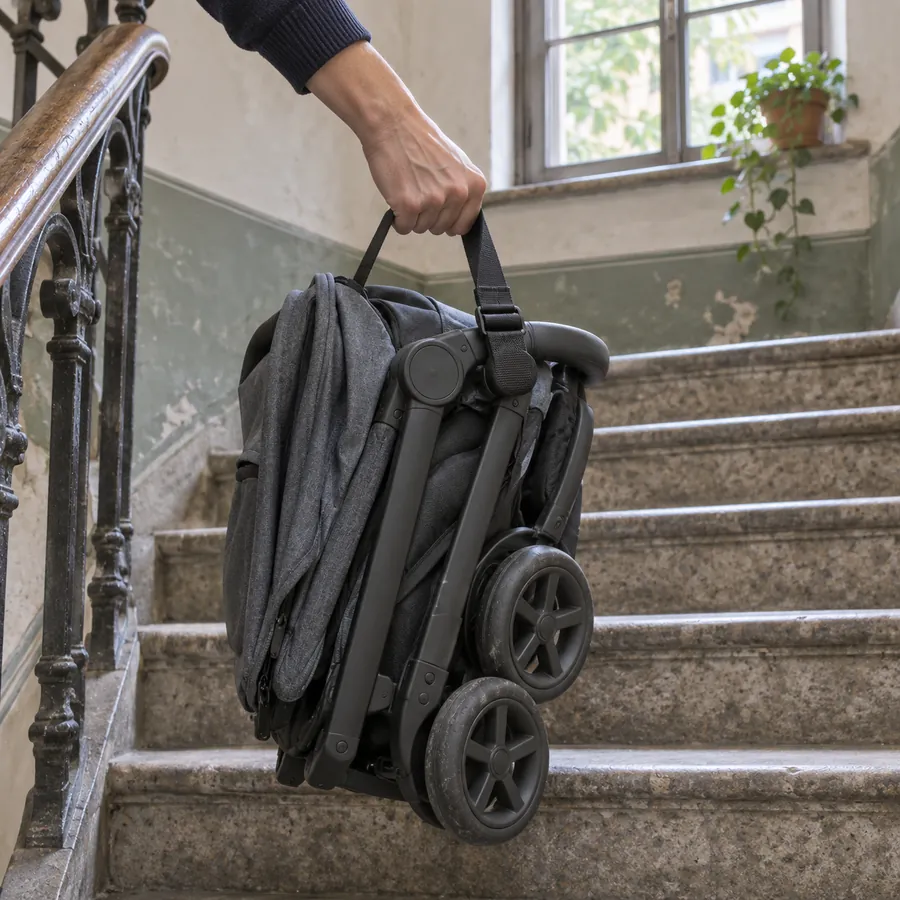
3. Light enough to carry
Fold it in the shop, then lift it with one hand, the way you will on your stairs or onto a bus with your baby in the other arm. At home, check it fits your trunk with room left for the shopping.
- Good: Folds with one hand
- Good: Room to spare in the trunk
- Not good: Too heavy for your stairs
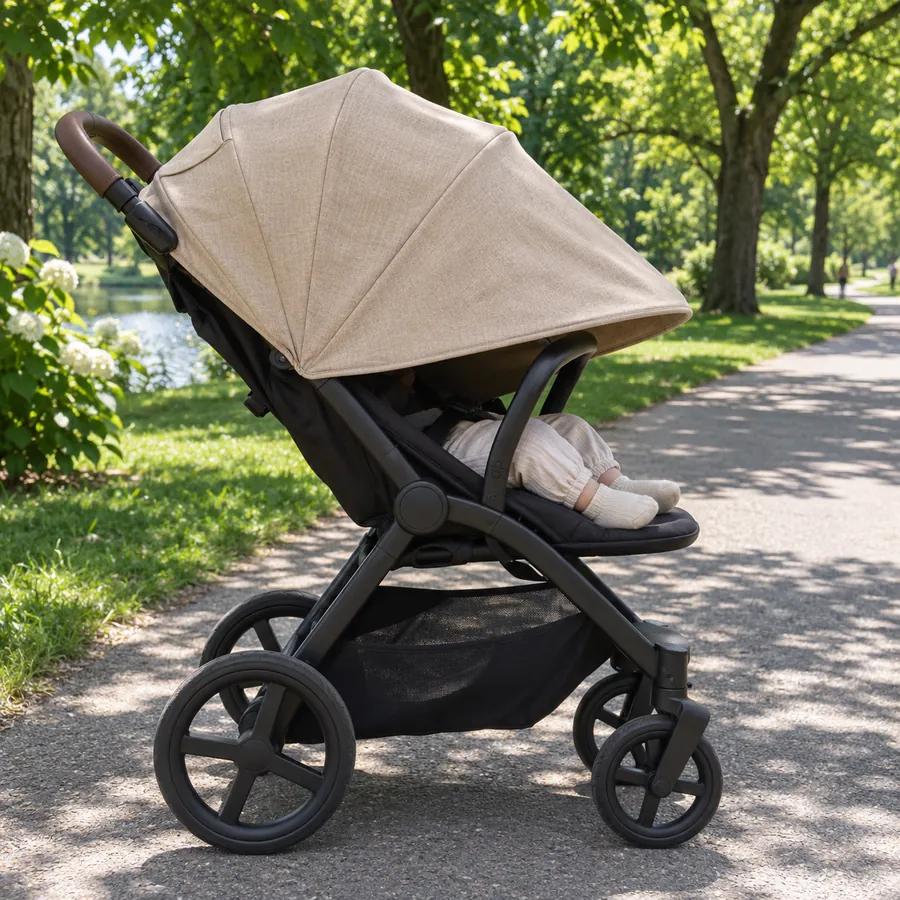
4. A canopy that comes down low
On a sunny walk the canopy is your baby's shade, so look for one that pulls far forward, past the bar in front of your baby. A UPF 50+ label means at most 1 in 50 of the sun's UV rays gets through (what UPF means). Never hang a blanket or a muslin over the opening instead, because the air inside heats up (why not).
- Good: Reaches past the front bar
- Good: UPF 50+ on the label
- Not good: Stops short at the forehead
Which stroller wheels for which ground
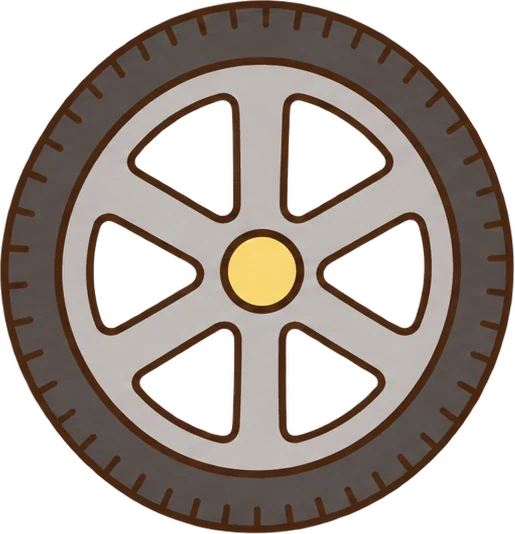
Small wheels keep a stroller light and quick to turn. Big wheels roll over a gap or a stone that a small one drops into, so your baby feels less of each bump, and wide ones sink less in snow and sand.
How small, big and air-filled stroller wheels ride on five kinds of ground
On smooth sidewalks, every wheel rolls well
On cobblestones, bigger wheels ride smoother
On gravel, bigger wheels stay on top
In snow, wide wheels sink less
On soft sand, wide air-filled tires keep rolling
- Good: Rolls wellNot good: RattlesNot good: Digs inNot good: Sinks inNot good: Gets stuck
Small wheels
13–15 cm (5–6 in)
Travel and umbrella strollers have these, and they're the lightest, at 5–8 kg (11–17 lb).
- Good: Light to carry
- Good: Turns on the spot
- Good: Folds small
- Not good: Bumpy off smooth ground
- Good: Rolls wellGood: Rolls overGood: Rolls onGood: Gets throughNot good: Digs in
Big rubber wheels
20–30 cm (8–12 in)
Full-size strollers have these, and weigh 10–12 kg (22–27 lb).
- Good: Smooth on most streets
- Good: Never goes flat
- Not good: Heavier to lift
- Good: Rolls wellGood: Rolls softGood: Rolls onGood: Rolls onGood: Rolls on
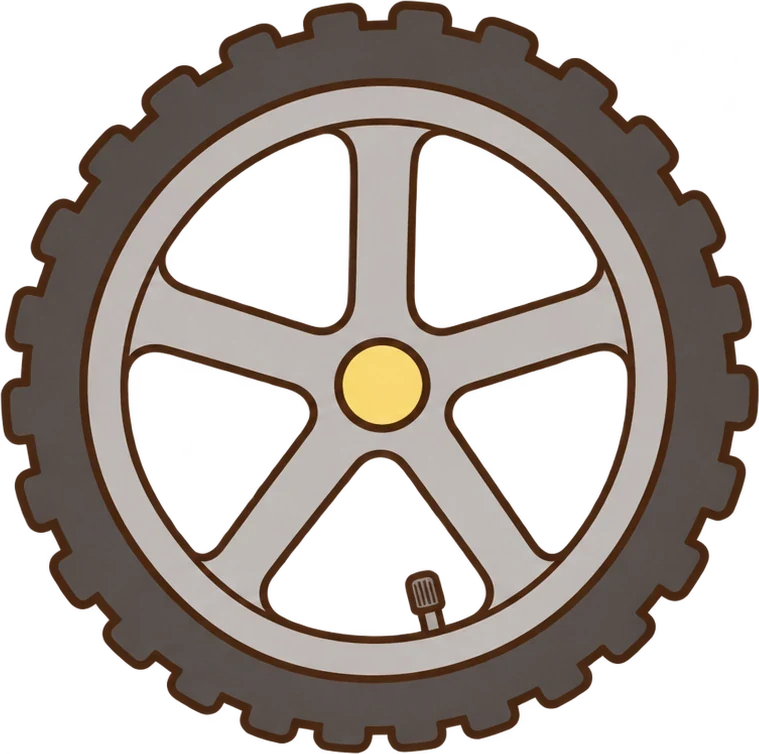
Air-filled tires
30–40 cm (12–16 in)
Jogging strollers have these, and they're the heaviest, at 12–13 kg (26–29 lb).
- Good: Softest ride anywhere
- Not good: Can go flat
- Not good: Needs pumping
- Not good: Wide and heavy

How to use a stroller safely
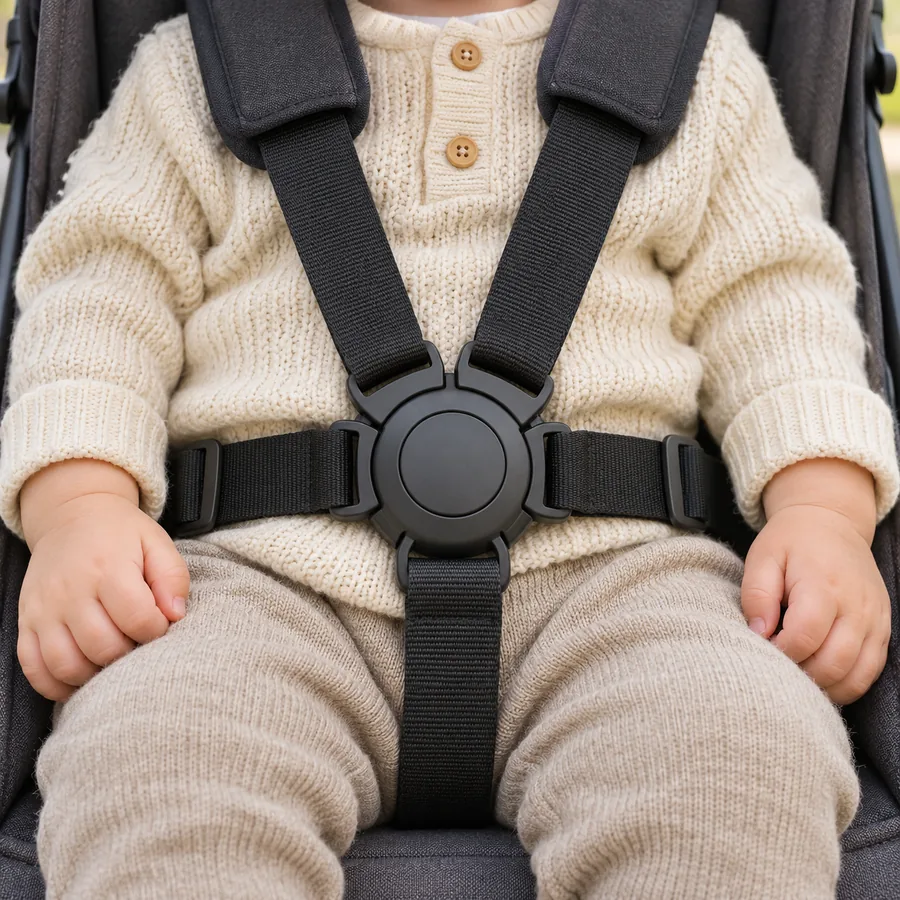
1. The harness on every ride
Buckle all five straps, two over the shoulders, two at the hips and one between the legs, and pull them snug, even for a short ride. Then your baby can't slide down or climb out.
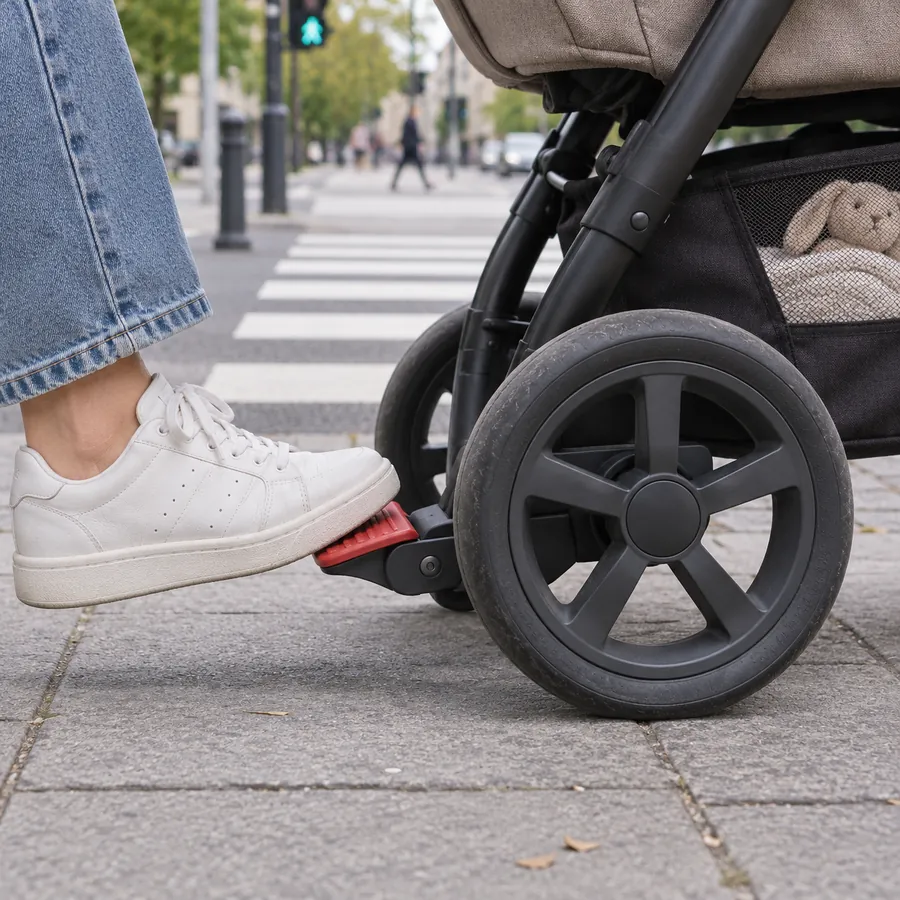
2. The brake at every stop
At a crossing, on a slope, or when you let go to open a door. On most strollers it's a pedal by a back wheel. On a jogging stroller, keep the wrist strap on, so it can't roll away if you lose your grip.
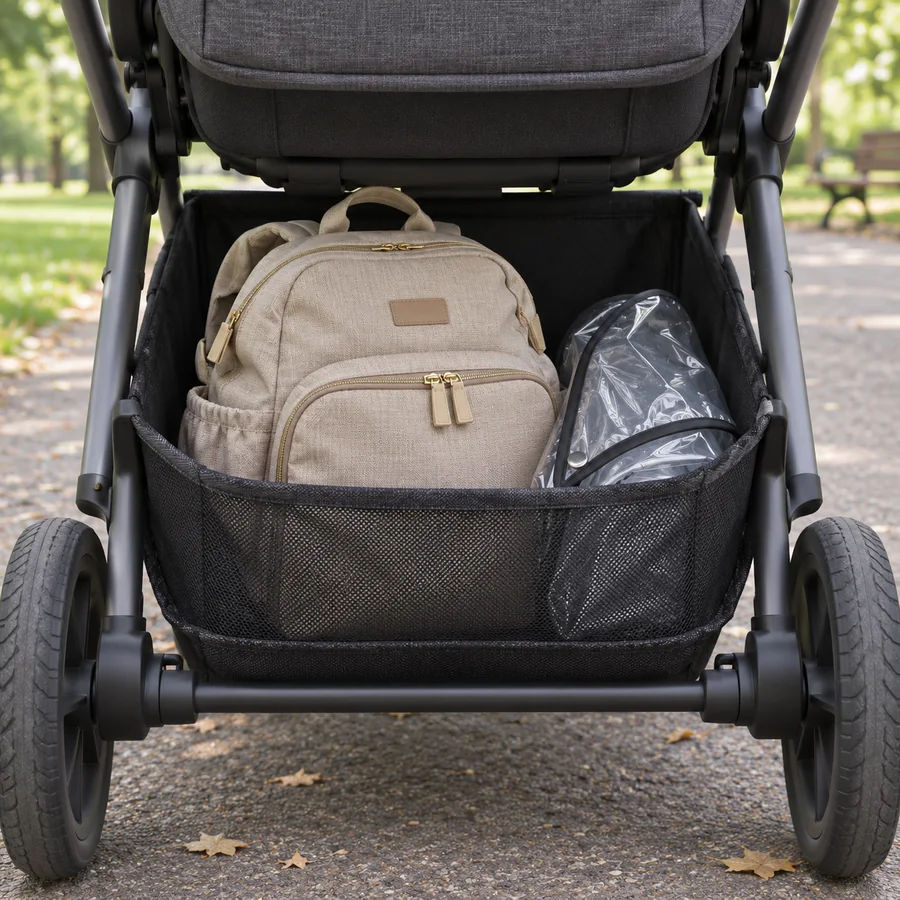
3. Bags in the basket
Weight on the handlebar can tip the stroller backward, most of all once you lift your baby out, because your baby's weight was holding it down. Low in the basket, the same bag keeps it steady.
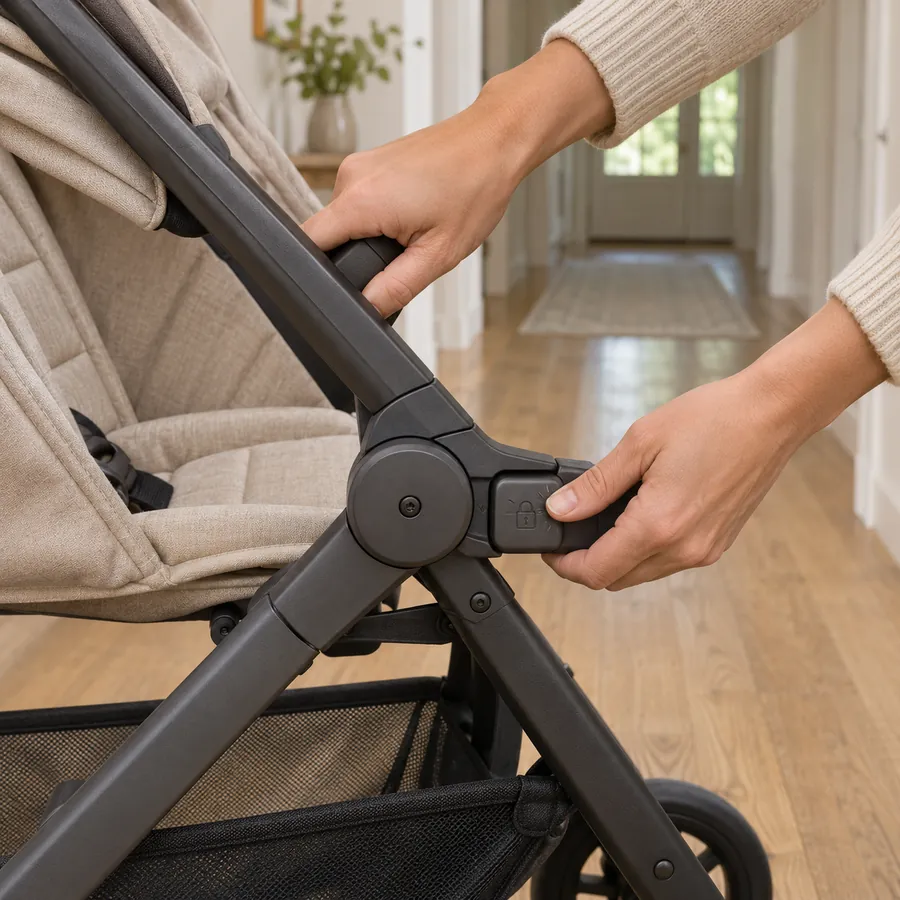
4. Locked open, fingers clear
Keep small fingers away from the hinges while you fold and unfold it, and check it has clicked open before your baby goes in, because a frame that isn't locked can fold.
Extras for each kind of weather
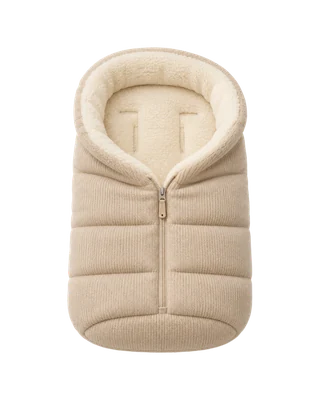
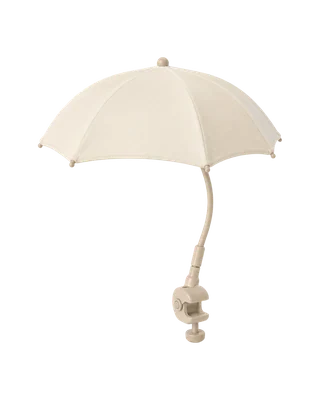
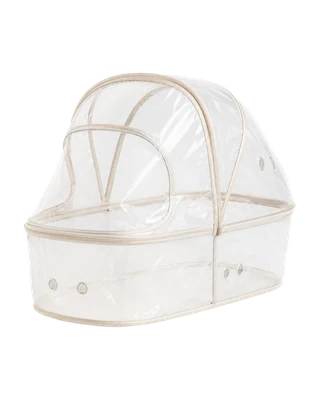
On cold walks, a footmuff zips around your baby's legs in the seat, and on cool days a stroller blanket tucks in over them. A rain cover goes on when the rain starts, a sunshade clips on for low sun, and a stroller fan keeps the air moving on hot days.
For dark afternoons there are reflectors, and for you a parent umbrella. What your baby wears underneath, in every weather, is in what to wear in the stroller.
Questions parents ask
Can I put my newborn in a stroller?
Yes, lying flat in a carrycot or on a seat made to lie flat for newborns. A healthy baby born at term can go for a first walk in the first days at home.
Do I need a stroller for a newborn, or will a carrier do?
A carrier is enough for the first weeks, and most babies like being carried close. A stroller takes over as walks get longer and your baby gets heavier: it carries the bags, rests your back, and lets a young baby nap lying flat.
Is a stroller bassinet worth it?
It is if your newborn will nap on long walks, you walk in cold wind, or your stroller's seat doesn't lie flat. If the seat lies completely flat and your walks are short, you can do without one.
Do you strap a baby into a carrycot?
Many carrycots have no harness. If yours has one, use it as its maker says. In the seat, the harness goes on every ride.
Can my baby sleep in the stroller?
On a walk, yes, with the face where you can see it. A baby who falls asleep sitting up moves to a flat bed once you're home (naps in the stroller).
When can my baby face forward in the stroller?
Once your baby sits up, it's your choice. Facing you, you can see your baby's face and talk on the way. Facing out, a curious baby watches the street.
When can I run with my baby in a jogging stroller?
Once your baby's head and neck stay steady on bumps, which makers put at about 6 to 8 months. Until then, walk only, and never run with an infant car seat clicked onto the frame.
Do I need two strollers?
Not at first. A light travel or umbrella stroller comes in handy once your baby sits up, for the car, flights and buses, while the big one stays for long walks.
Can a 4-year-old still ride in a stroller?
Yes, within the seat's weight limit, which is often about 22 kg (49 lb) on sturdy strollers. Once a child walks most of the way, the stroller comes along for tired legs, long days out and trips.
Stroller or wagon?
A stroller wagon is a wide tub on four wheels with two or more seats, for children who sit up well. It's heavy and wide, so it suits parks, beaches and days out more than shops and buses. Buckle each child in.
What's the difference between a pram, a pushchair and a stroller?
Pram and pushchair are British words. A pram has a carrycot, so a newborn lies flat, and a pushchair or buggy has a seat. In the US, all of them are strollers.
Is a used stroller safe?
Yes, if it's in good shape. Look up its model number, on a sticker on the frame, in the recall list (in the US, at the CPSC, the government's product safety agency). Test the brake, the fold lock, every buckle and the wheels, and ask for the manual and every part, such as the car seat adapters. In the US, pick one made after September 2015, when the federal safety rules for strollers began. The date is on the same sticker.
Do strollers expire?
No, not the way car seats do. A stroller lasts as long as its frame, brake, buckles and fabric hold up, so check them now and then, and before you pass it on.
Can I take a stroller on a plane?
Yes. Most US airlines take a stroller for each child free of charge, at the check-in desk or at the gate. Size and weight rules differ by airline, so check yours. A travel bag isn't required, but it keeps the stroller clean and its small parts together.
How do I clean a stroller?
Follow the label: most seat covers and canopies come off for a gentle wash, and the frame and wheels wipe clean with warm, soapy water. Let everything dry fully before you fold it, so nothing turns musty.