What this is about
On the changing mat, a hot-weather outfit can look almost unfinished. With a young baby, a single thin layer of cotton feels suspiciously slight. Bare legs and arms seem exposed, yet bundling them up to protect pale skin only traps body heat. The answer is to keep the clothes light and loose, then handle the sun and heat with shade, good timing, extra feeds and a quick route back indoors.
At 24°, keep the outfit light
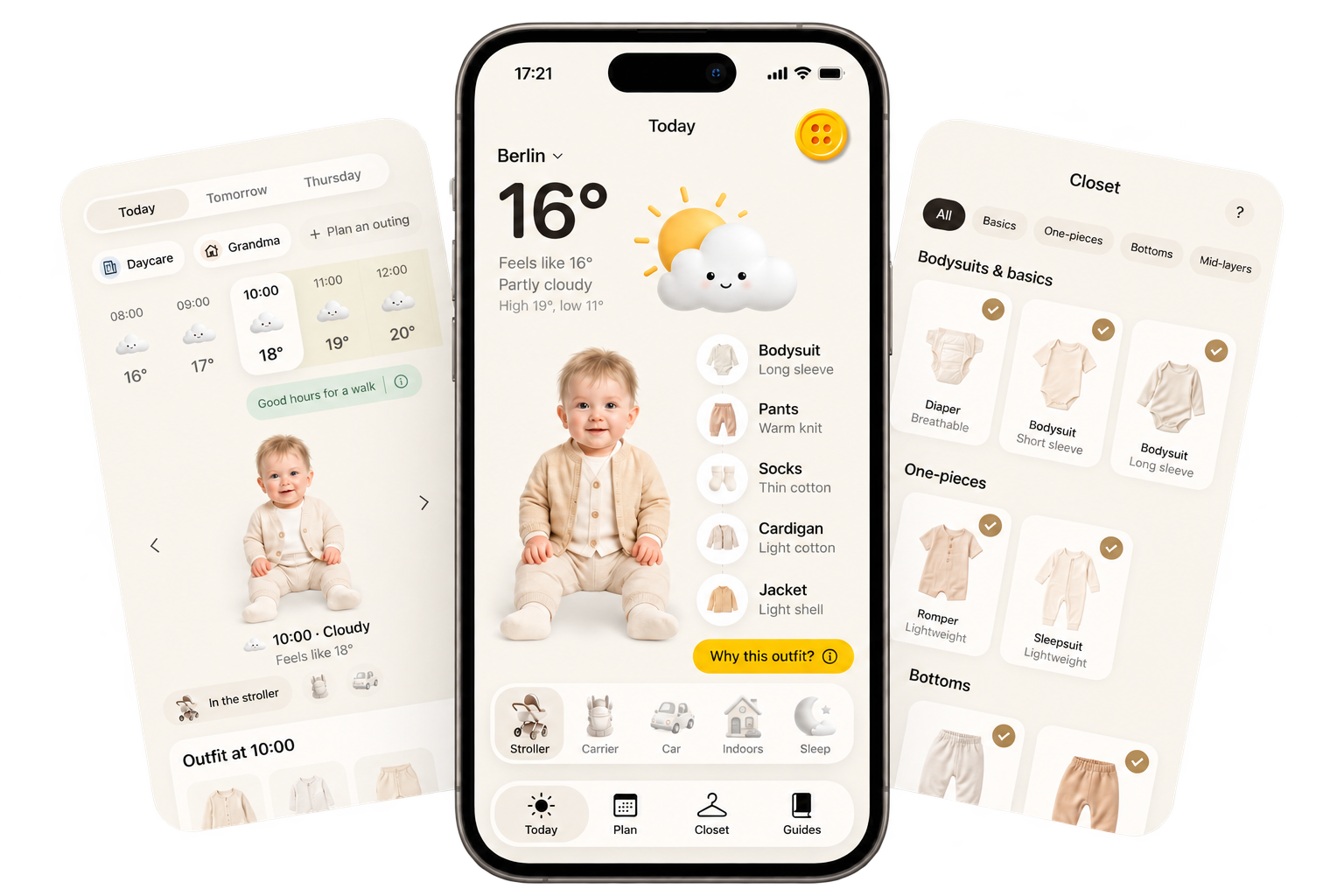
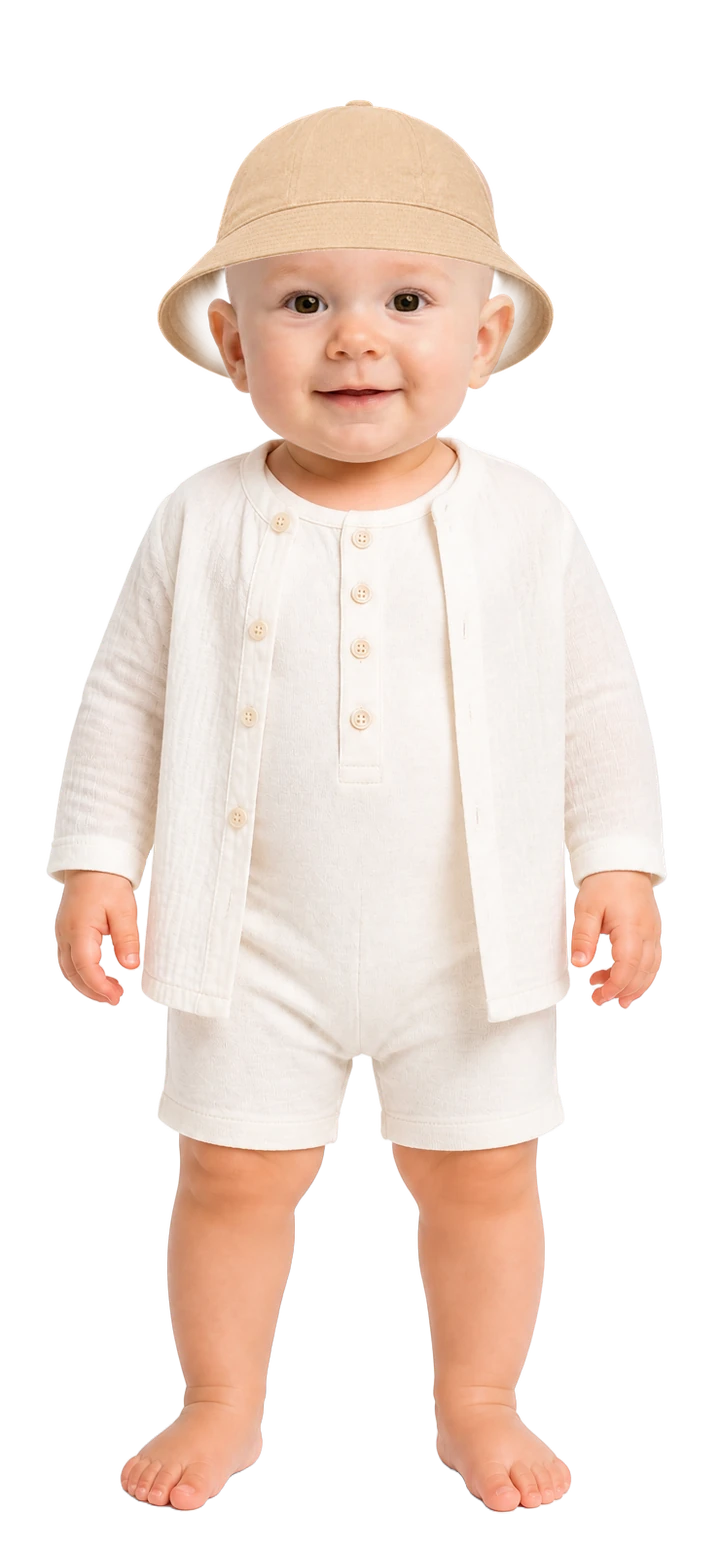
Hot-weather dressing comes down to one principle: one breathable layer. Between 24° and 27°, how you style that layer depends on age. In the first 3 months, a baby's temperature regulation is still developing, so a long-sleeve cotton bodysuit, light pants and thin socks protect fragile skin without holding in heat. From 3 months, switch to a short-sleeve bodysuit and light pants. Once it reaches 28°, a single short romper is all any baby needs.
Lightweight cotton and linen let moving air reach the skin. Do not worry if your baby's hands and feet feel cool when you pick them up. Circulation in infants directs blood to the core first, which leaves little fingers cool even on a warm afternoon. Checking their hands will fool you into adding a sweater they do not need. Feel the back of the neck instead.
A sweat-soaked bodysuit stops breathing and clings to the skin. If your baby gets clammy after a nap or a long stretch in the stroller, change them into fresh dry cotton before deciding whether the day has gotten too warm.
Warm
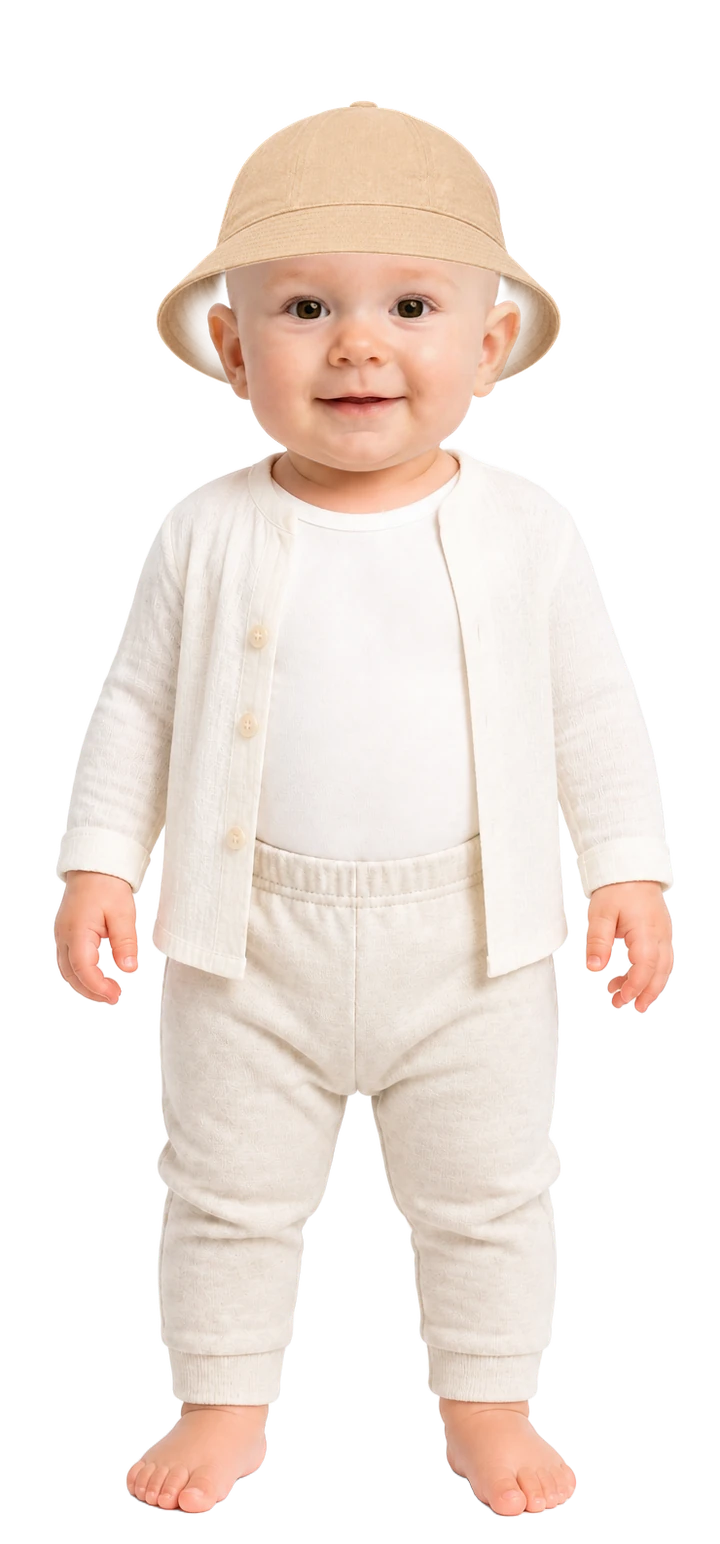
From 3 months, use a short-sleeve bodysuit and light pants. A younger baby wears a long-sleeve bodysuit, light pants and thin socks.
Hot
A short-sleeve romper keeps the outfit to one lightweight piece.
Around 32°, change the outing rather than the clothes
Once your baby is down to a single light romper, clothing has done everything it can. When the feels-like temperature climbs toward 32°, you cannot dress your way out of the heat. Babies produce heat faster than adults and sweat far less efficiently. At this point, the safety decision is not what they wear, but where you take them.
The street is always hotter than the weather report. Black asphalt radiates stored heat straight up into the stroller, and dark stroller fabrics soak up sun like an oven. Even in open shade, hot humid air can pool in a still bassinet. If it feels oppressive to you, keep outings down to quick loops with a guaranteed way back into cool air.
If an outing can wait, shift your walk to the cooler morning or early evening. Missing the peak afternoon heat makes a much bigger difference to a baby's comfort than swapping outfits ever could.
Heat and UV are two different numbers
The weather forecast pairs two numbers that parents often blur together: feels-like temperature and the UV index. Temperature tells you how much heat the baby's body must shed, which decides how lightly to dress them. UV measures the intensity of rays that burn skin, which decides how to guard them from the sun.
Heat and UV do not always peak together. Use sun protection whenever UV reaches 3. Choose shade, covering clothes and a brimmed hat. Check today's forecast because the times change. Humid heat can linger after UV drops. Around 32° feels-like, keep outings short.
A shaded stroller still needs air
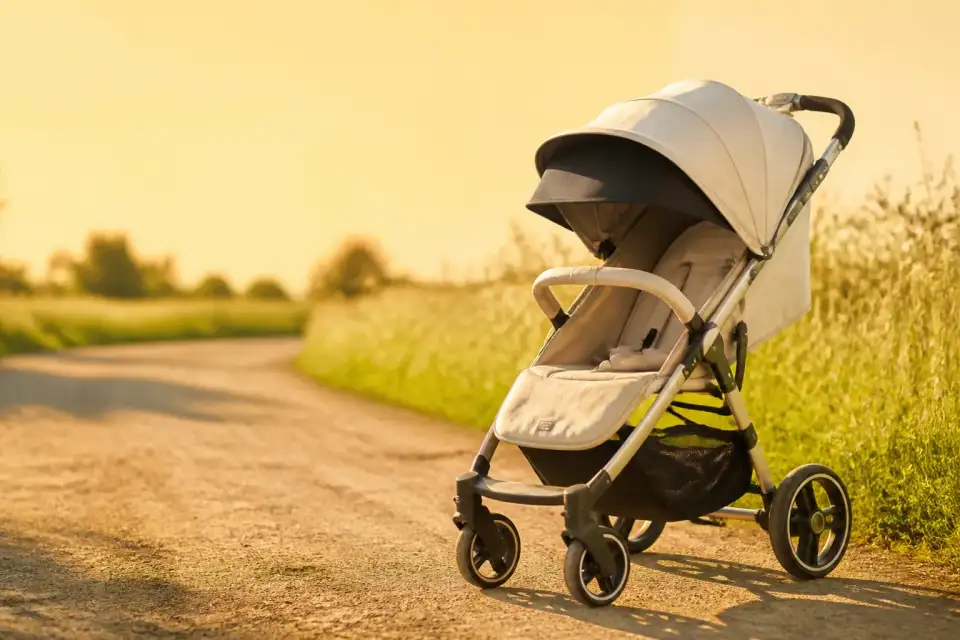
Keeping direct sun off the stroller is a moving target. As you turn corners and shadows shift, a canopy that covered your baby's face five minutes ago can leave their legs directly in the sun. For babies under 6 months, whose skin is too sensitive for regular sunscreen, physical shade is your main defense.
 Yes
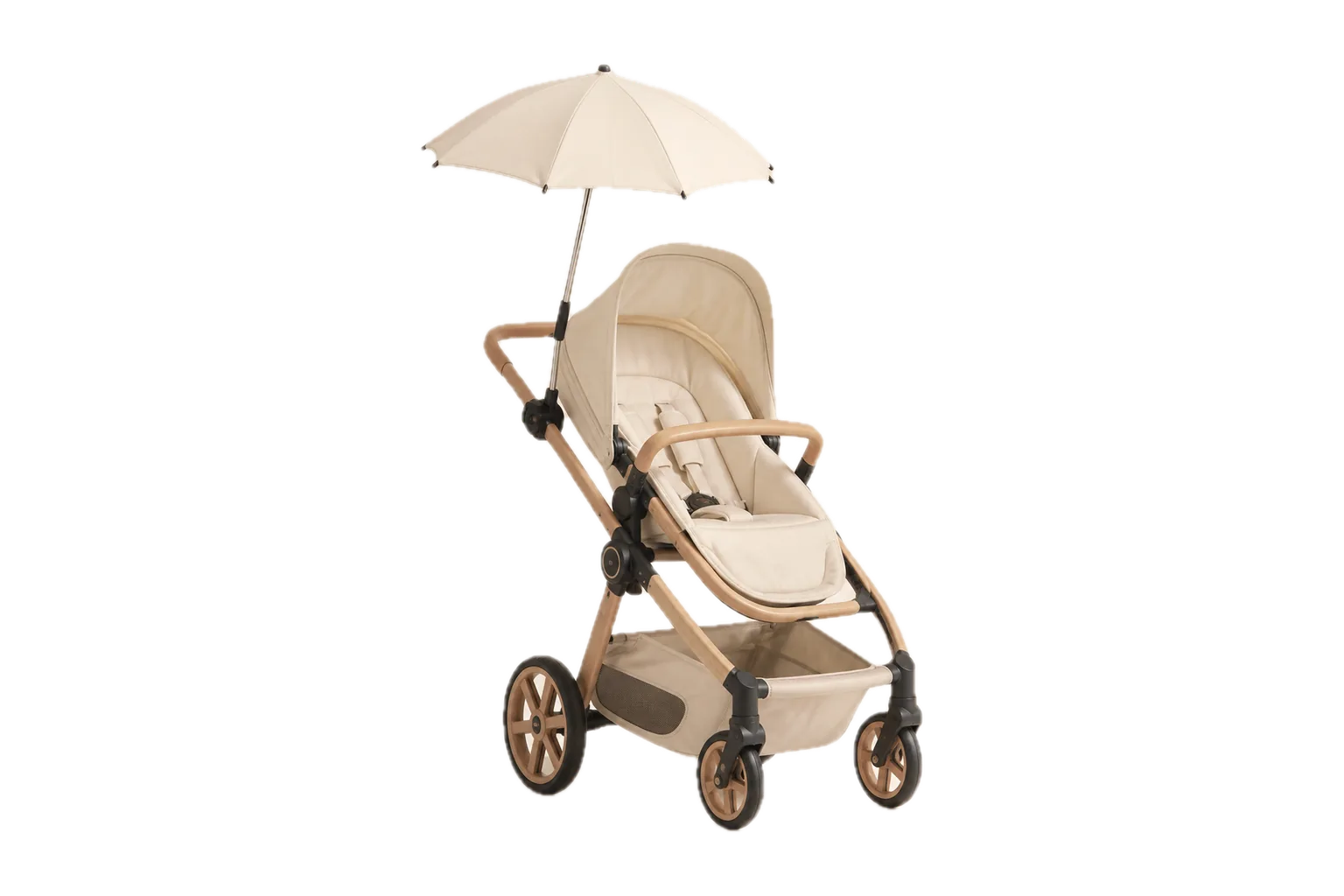
YesUse a fitted shade
A canopy, clip-on sunshade or parasol blocks sun from above while airflow stays completely open.
 No
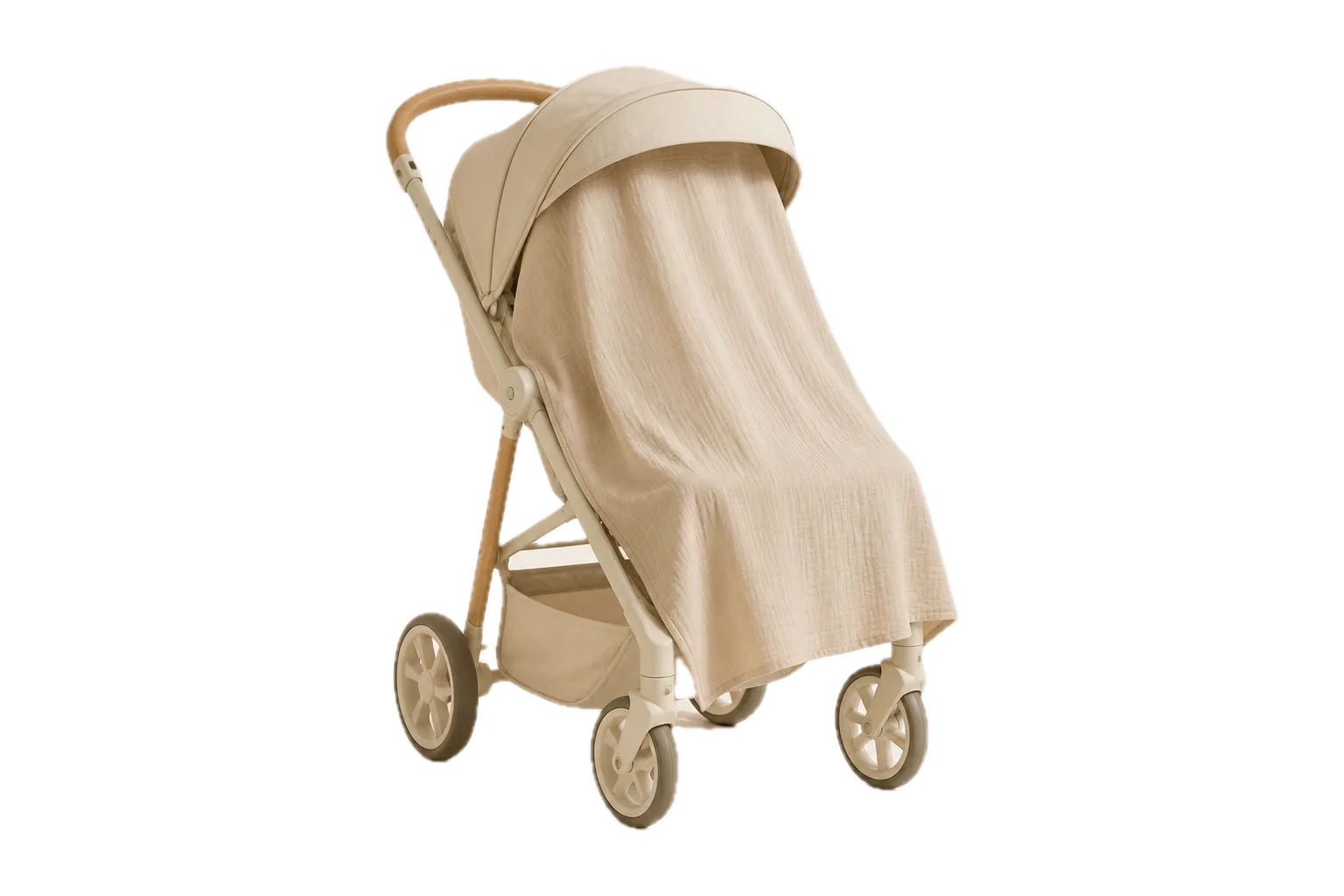
NoNever drape a blanket
Even open-weave muslin traps hot air inside the seat and hides your baby from view.
Draping a muslin over the stroller is an understandable reflex when sunlight hits a sleeping baby. It feels light, looks breathable, and creates a quiet dark cave. But even thin cotton turns the inside of a stroller into a greenhouse, raising the temperature by several degrees in minutes while cutting off fresh air. If sun hits the opening, adjust the canopy, clip on a dedicated parasol, or turn the stroller around.
Check the seat from the front every few blocks. From behind the handlebars, it is impossible to see whether a shaft of sun is baking your baby's feet or chest. And if the stroller has been sitting in a warm hallway or car trunk, press your palm against the seat fabric and metal harness buckles before setting your baby down.
Sun protection: hats, shade and sunscreen
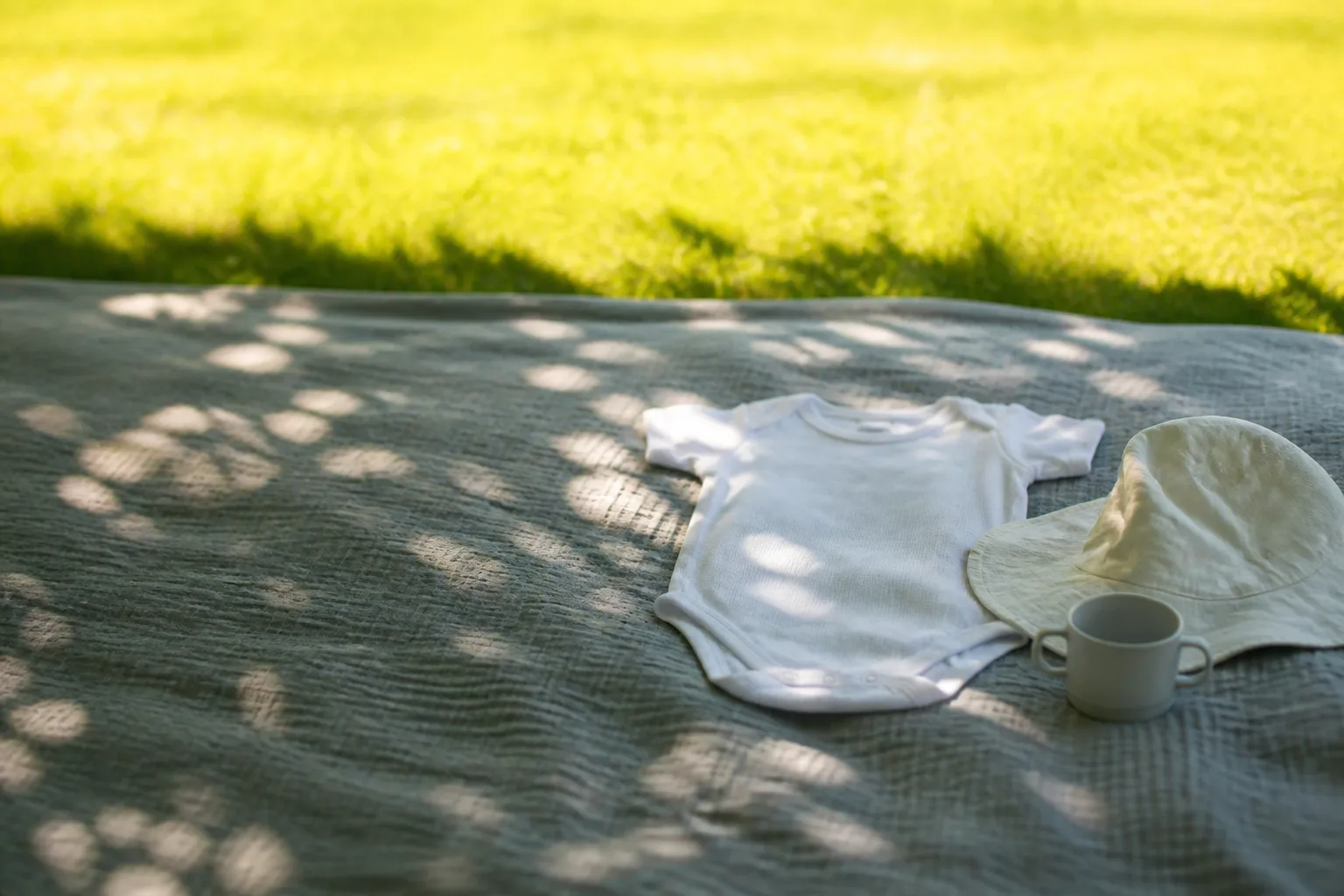
A sun hat should be wide-brimmed enough to cast shade over the face, ears and the sensitive back of the neck, with a soft brim that does not collapse into their eyes. If your baby resists a chin strap, an adjustable toggle at the back of the crown works best.
Sunscreen follows a strict age line. Under 6 months, sunscreen is more likely to irritate your baby's skin. Keep your baby in complete shade and loose clothing. If shade is genuinely impossible, ask your pediatrician before dabbing minimal sunscreen on small exposed spots like the back of the hands. From 6 months onward, broad-spectrum mineral sunscreen can safely cover whatever the hat and shade miss.
Hot days change hydration
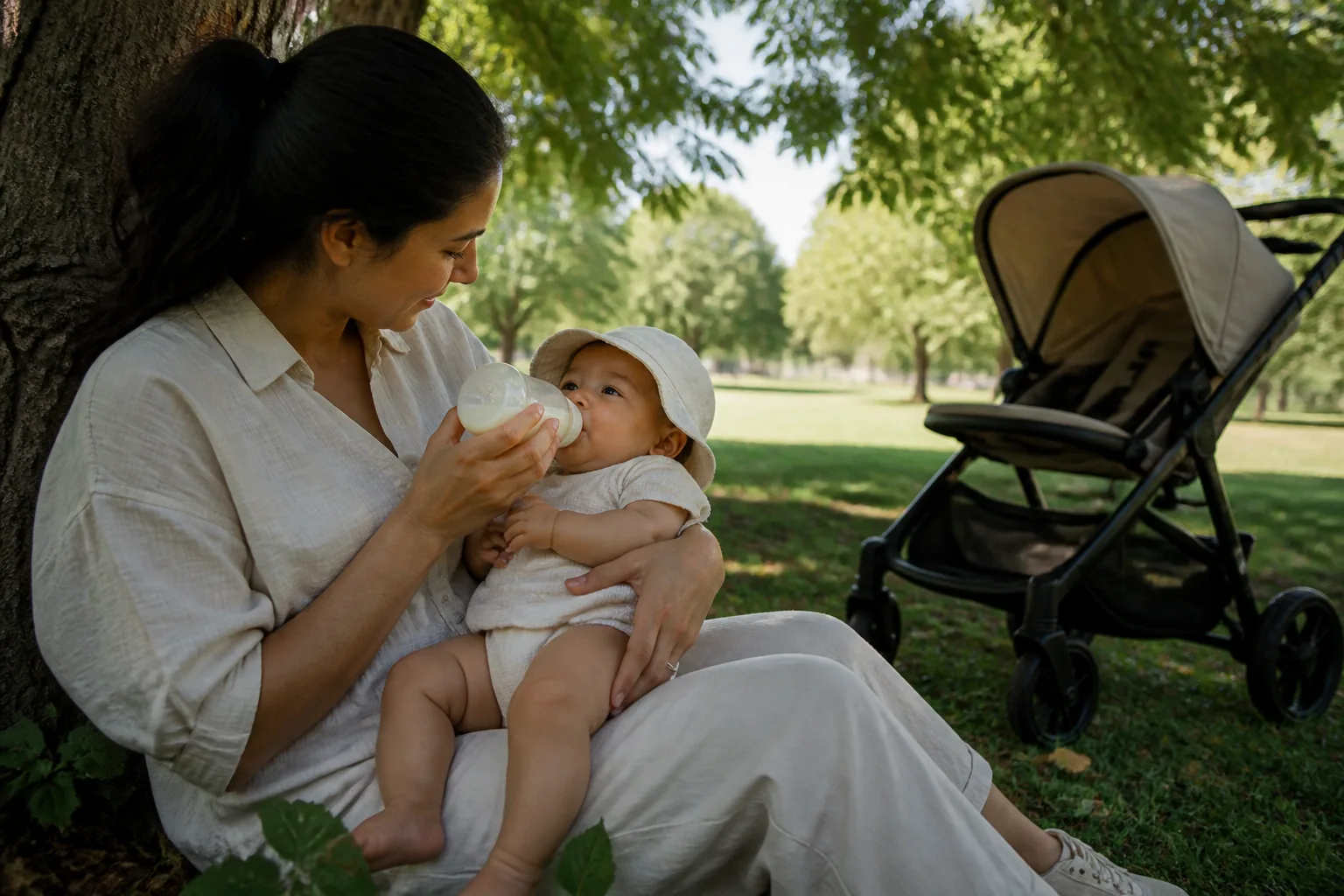
Before 6 months, offer extra breast milk or formula in the heat. For formula-fed babies, a doctor may recommend small sips of cooled boiled water between milk feeds. Breast milk and formula are more than 80% water and provide the hydration your baby needs. In hot weather, expect your baby to ask for shorter, more frequent feeds.
Feeding quenches thirst, but it does not cool down hot surrounding air. If your baby finishes feeding and their neck still feels damp and hot, treat that as your cue to pack up and head inside.
The car seat and the hard stop
Never leave a baby alone in a parked car for even a minute, regardless of whether the windows are cracked or the car sits in the shade. Car cabins act like heat traps, warming up to dangerous temperatures within ten minutes on an ordinary summer day. Take your baby with you every time you step out.
During the drive, car seats present a different challenge. The thick synthetic foam and safety padding hug the baby tightly, trapping body heat along their back. Even with air conditioning running, babies frequently wake up with soaked onesies. Dress them in a single, thin layer beneath the harness, and use a fitted window shade to keep direct sun off their legs.
Stepping straight from outdoor heat into a blast of supermarket air conditioning is jarring for a sweaty baby. Take off the sun hat as soon as you enter so heat can release from the head. If their cotton bodysuit is damp from sweat, keep a dry spare in the bag so chilly indoor air does not leave them cold.
Check the neck before continuing
Feel the back of the neck or upper chest to check whether your baby needs fewer clothes. Slip two fingers beneath the collar. Warm and dry skin means the outfit is working. If the skin feels hot, sweaty or sticky, move into shade immediately, unbutton the top of the outfit, and let air reach your baby's skin. Do not start walking again until the chest feels comfortably warm rather than hot. The comfort check guide walks through each step.
If your baby is limp, hard to wake or struggling to breathe, call emergency services now. If your baby stays unusually hot or unwell after moving somewhere cool, contact your pediatrician promptly.
Questions parents ask
Does shade make a stroller cool enough?
Shade cuts direct solar radiation, but it does not lower the ambient air temperature. Around 32° feels-like, shaded air is still hot air. Keep the stroller canopy open to airflow, keep the outing brief, and head indoors if your baby's neck feels hot.
What changes for a newborn at 24–27°?
In the first 3 months, newborn circulation and temperature control are still maturing. Use a thin long-sleeve cotton bodysuit, light pants and thin socks to protect skin. Above 28°, drop the extra coverage: one short-sleeve romper is plenty.
Can I use a fan near my baby?
A fan helps circulate air in a warm room, but aim it across the room rather than directly at your baby's face. In extreme heat, fans simply blow hot air and cannot prevent overheating on their own. Use air conditioning or a cooler location.
Does a baby need socks in hot weather?
No. Stroller rides in warm weather are best with bare feet so heat can escape. If your baby is walking, lightweight socks with breathable shoes protect their soles from hot pavement, but riding babies should keep their feet free.
Can I cool my baby with a wet cloth?
Dabbing a lukewarm, damp cloth across their forehead, neck and arms can help cool skin through evaporation. Never wrap a baby in a wet towel or cold wet muslin, which blocks air and can cause rapid shivering.
Signs of heat illness
- Fainting or extreme tiredness.
- Confusion or loss of coordination.
- A severe headache or fever.
- Intense thirst or no urination for many hours.
- Nausea or vomiting.
- Fast or deep breathing.
- Numbness, tingling, muscle aches or spasms.
If your baby is limp, hard to wake or struggling to breathe, call emergency services now. If your baby stays unusually hot or unwell after moving somewhere cool, contact your pediatrician promptly.