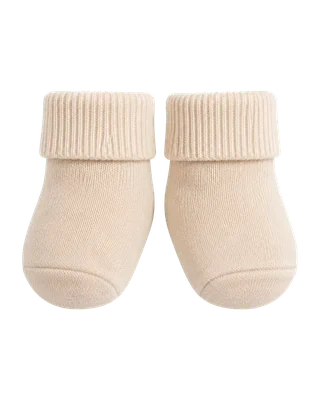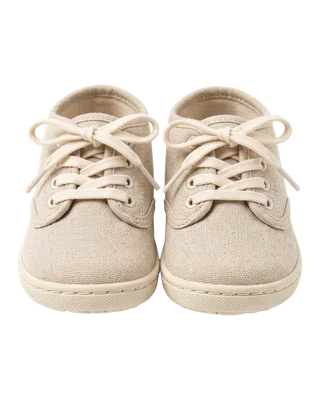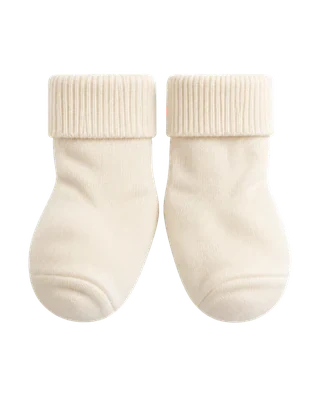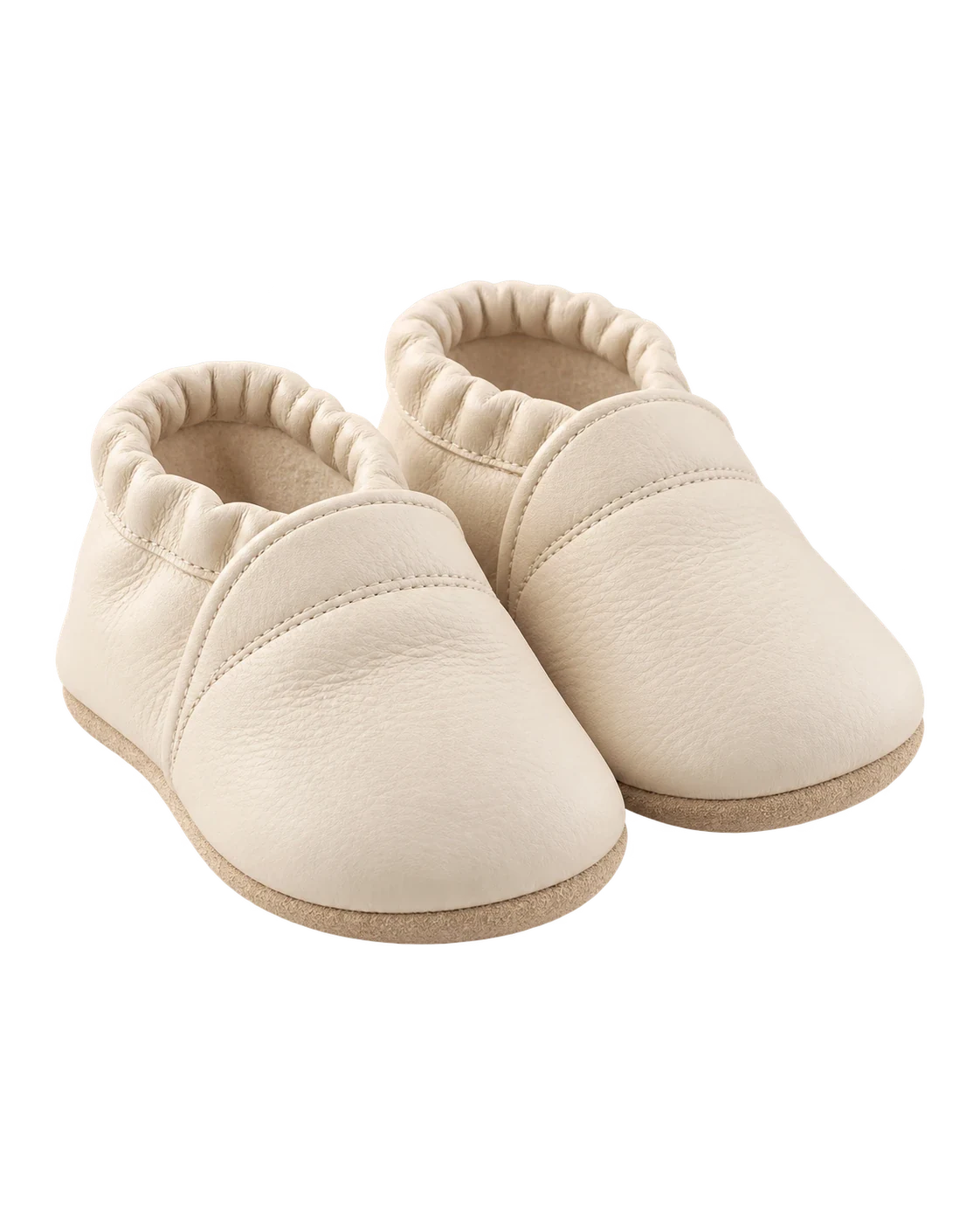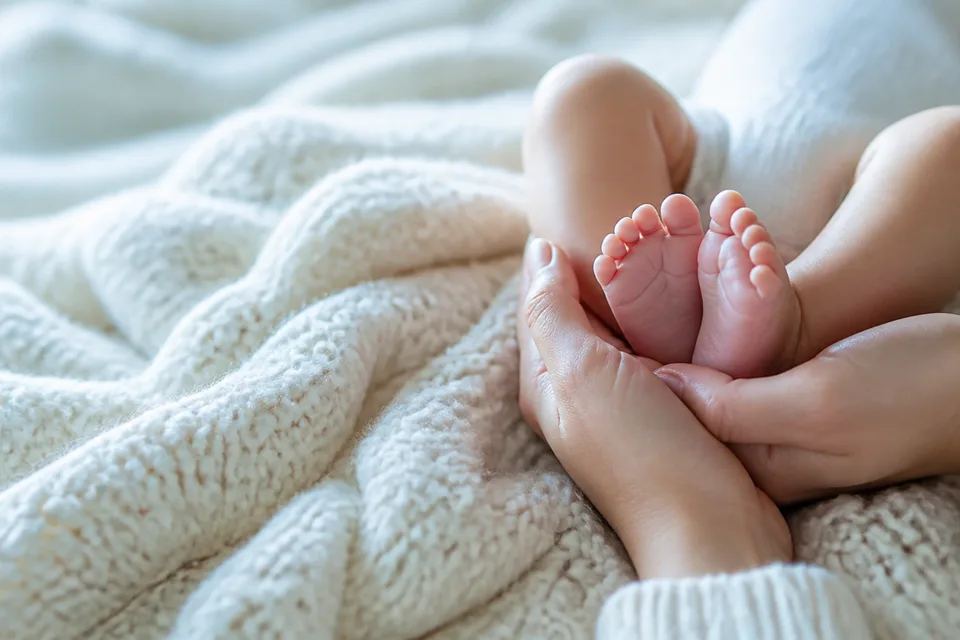
Baby booties are soft shoes for a baby who does not walk yet. They go over warm baby socks, fasten at the ankle so a kicking baby cannot fling them off, and keep the feet warm in the stroller or the carrier.
They come before first shoes and winter boots, so they have no firm sole: only cloth, fleece or thin suede underneath.
- UntilFirst steps
- You'll need1–2pairs
- Wear them below12°C54°F
When babies wear them
Indoors in a warm room, your baby does not need booties. Bare feet, a footed sleepsuit or thin baby socks are enough. Once your baby walks, the indoor pair for a cold floor is slippers.
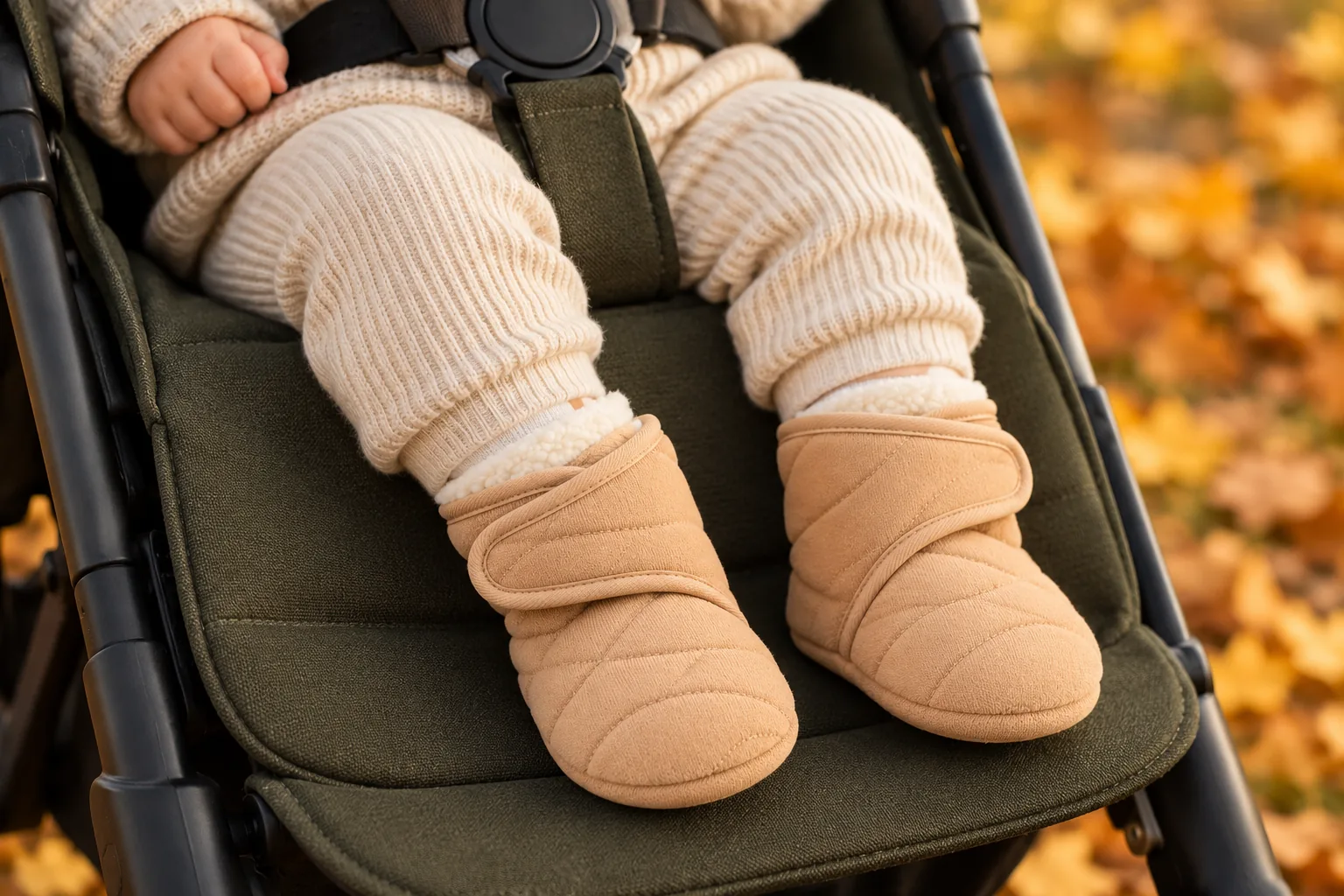
Outdoors below 12°C (54°F), booties go over warm baby socks in the stroller or the carrier, and they keep the socks on too. In a carrier, warm pants with calf-high booties beat a footed suit, which pulls tight over the bent knees and presses on the toes. Skip booties when a quilted sleepsuit or a pram suit already has fold-over foot cuffs, or when the legs are in a stroller footmuff. To check warmth, feel the chest or the back of the neck, not the toes.
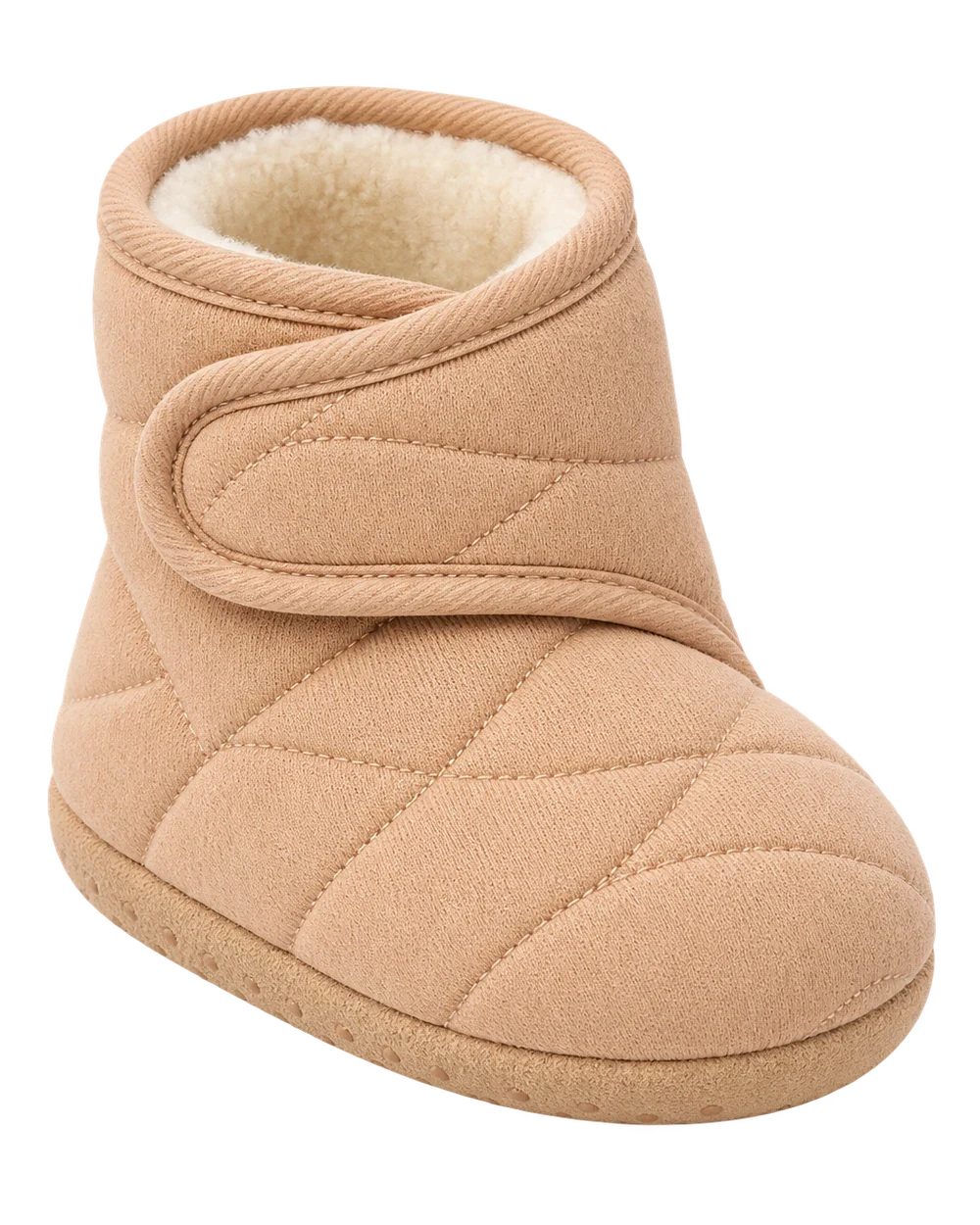
Why booties get kicked off, and what keeps them on
Babies kick, and rub one foot against the other, so a loose slip-on bootie soon ends up on the sidewalk. Four details keep a bootie on.
A strap or snaps at the ankle
They close at the narrowest point, just above the heel, so the foot cannot back out. Two snap settings suit slim ankles. A hook-and-loop strap (Velcro) closes at any width, so it also fits chubby ankles, a high instep (the rounded top of the foot) or thick socks.
A cuff above the ankle
A fleece or knit cuff reaches over the hem of the pants, so no cold air gets in at the ankle.
Room at the toes
Soft, roomy fabric at the front lets the toes spread and wiggle, even over a warm sock, with nothing pressing on soft toenails.
A soft, flat sole
A thin suede or cloth sole that bends with the foot. Grip dots on it help an older baby push against the floor.
Types of baby booties
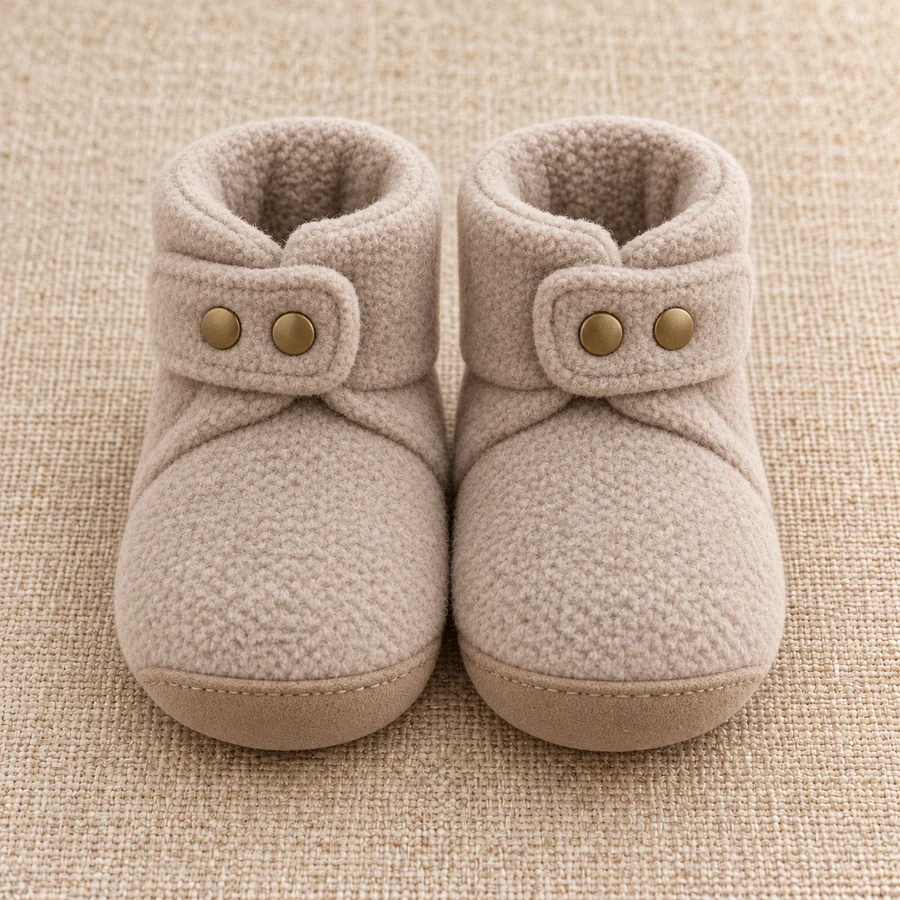
Fleece or quilted booties
Fleece, quilted cotton or a windproof shell, for cold walks below 12°C (54°F) in the stroller or the carrier. If you buy one pair for autumn and winter, make it this one.
- Good: Warmest for cold walks
- Good: Snaps or strap hold it on
- Not good: Too puffy for crawling
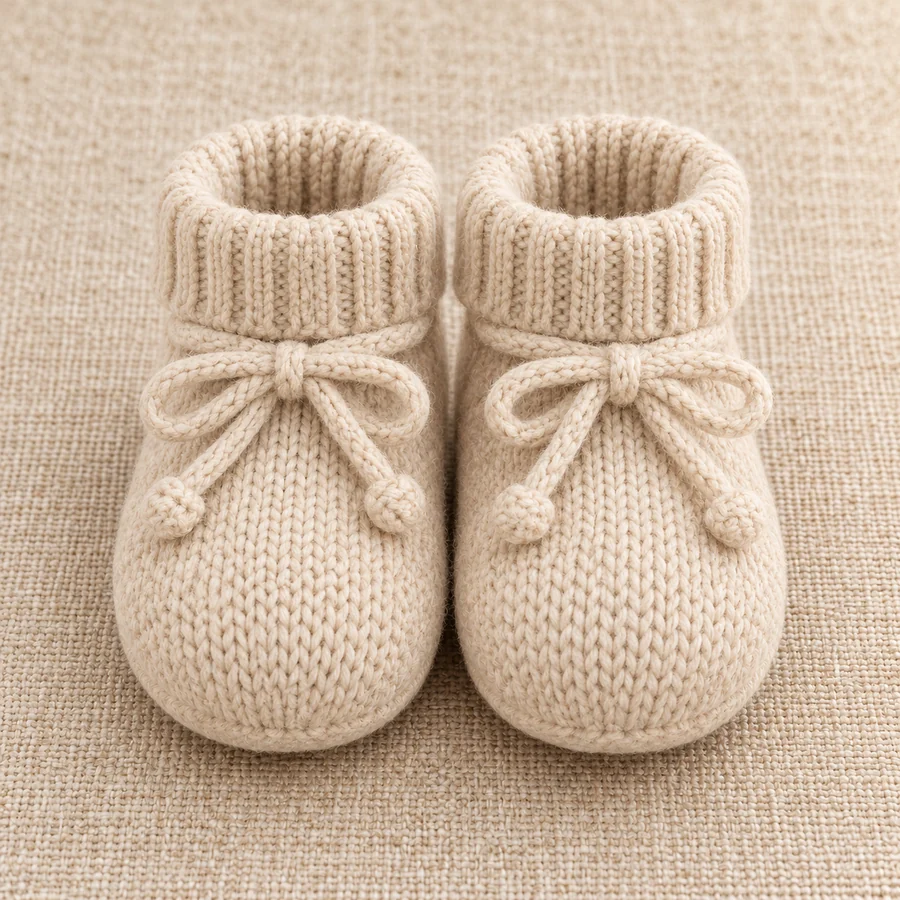
Knit booties
Knitted or crocheted in merino, cotton or soft acrylic, and often a handmade gift. For mild days, or under a blanket in the stroller.
- Good: Breathable for mild outings
- Not good: Slides off hard kickers
- Not good: Loose yarn loops inside
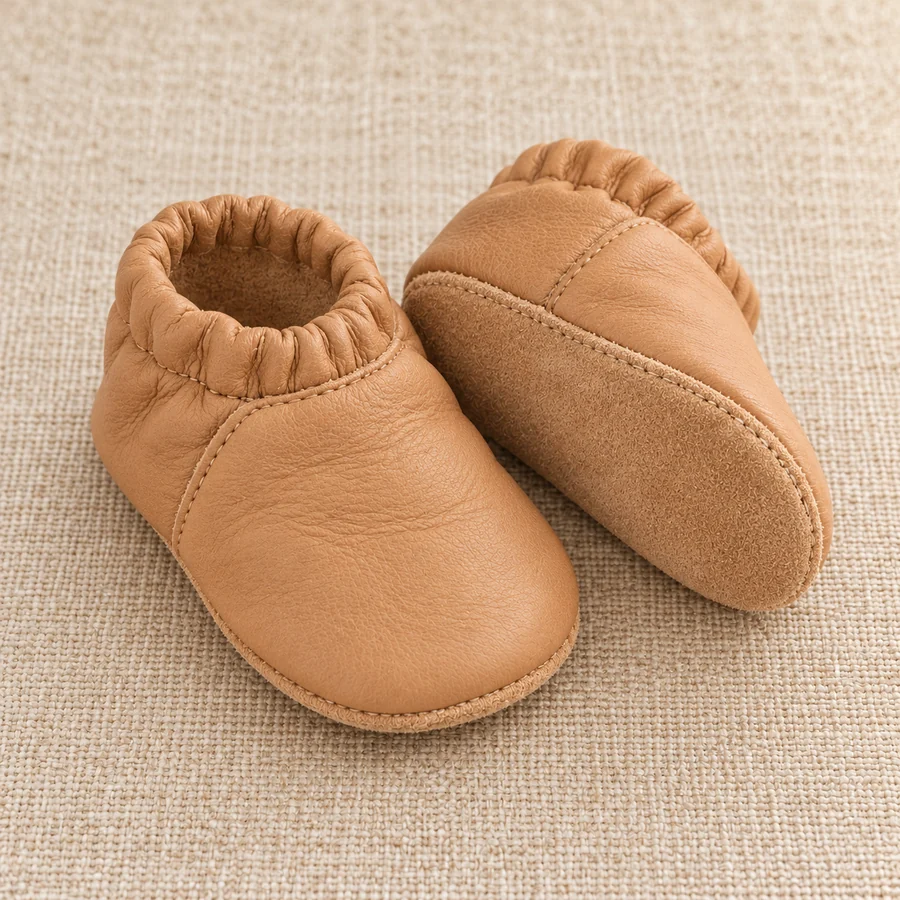
Soft leather moccasins
Thin, soft leather with elastic at the ankle and a suede sole. They fit close to the foot, for a crawler of 6–12 months on a cool floor.
- Good: Stays on while crawling
- Good: Wipes clean with a cloth
- Not good: Not insulated for cold walks
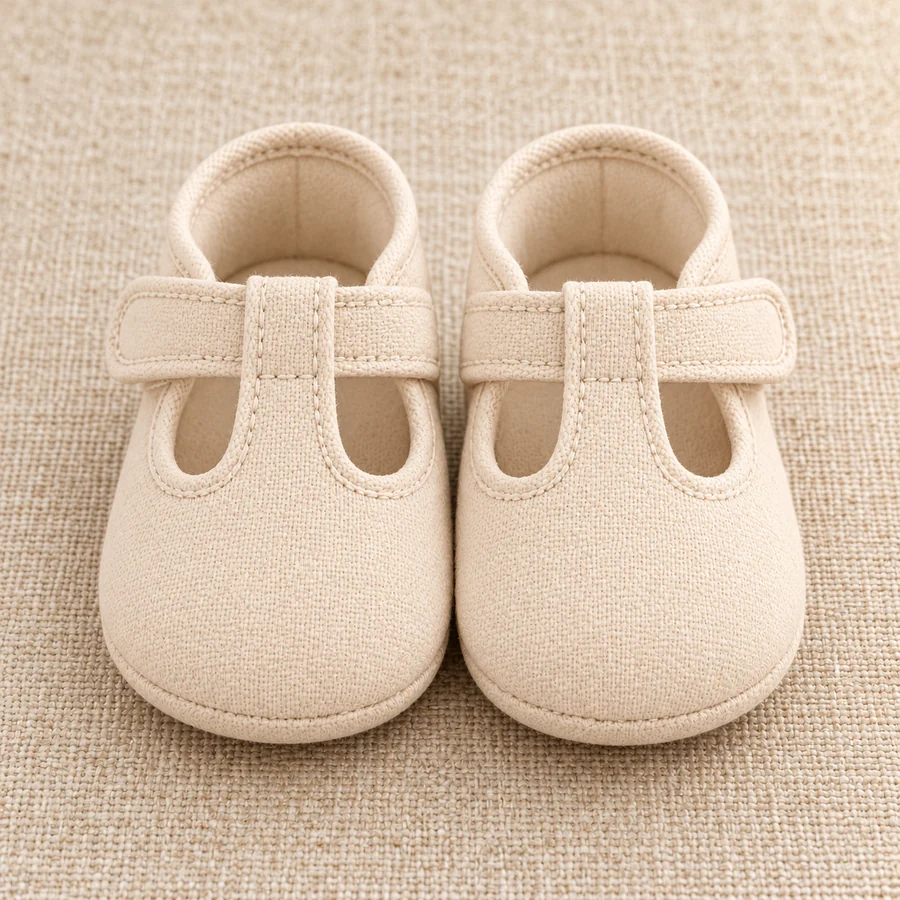
Crib shoes (pram shoes)
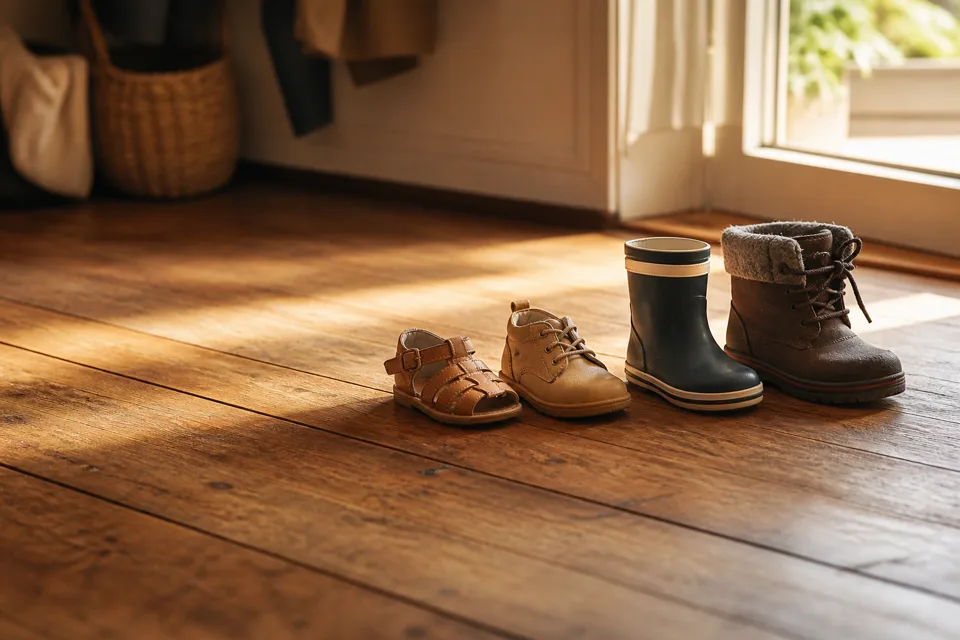
They look like tiny sneakers, loafers or T-bar shoes, but the sole is flat cloth or thin suede. For outfits, photos and mild stroller rides.
- Good: Smart for outfits and photos
- Not good: Not for walking outside
Booties or socks?
Both. Socks go on the skin, and booties go over them, like a coat for the feet.
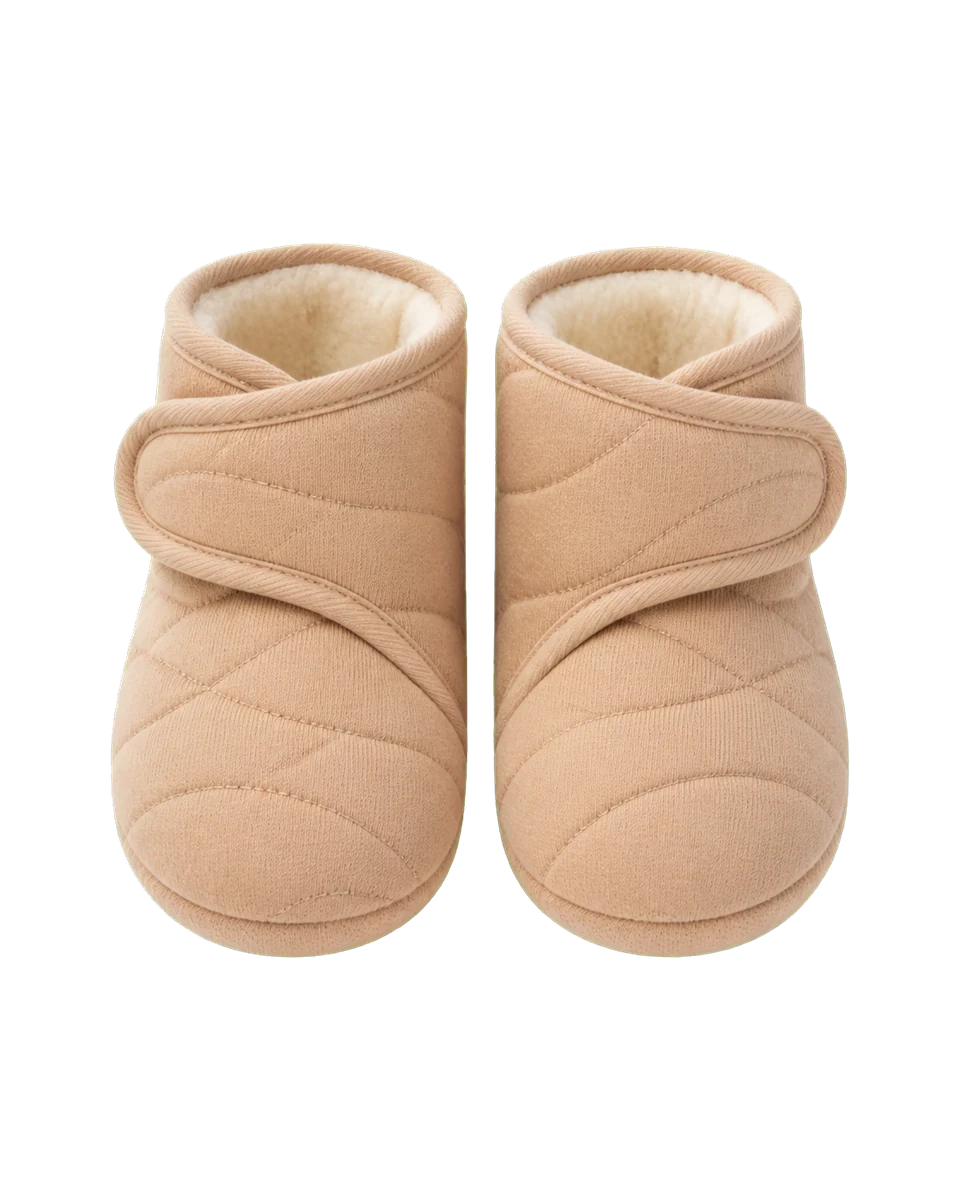
Baby booties
Over socks, outdoors below 12°C (54°F), in the stroller or the carrier. The strap holds the bootie and the sock on, and keeps the wind out.
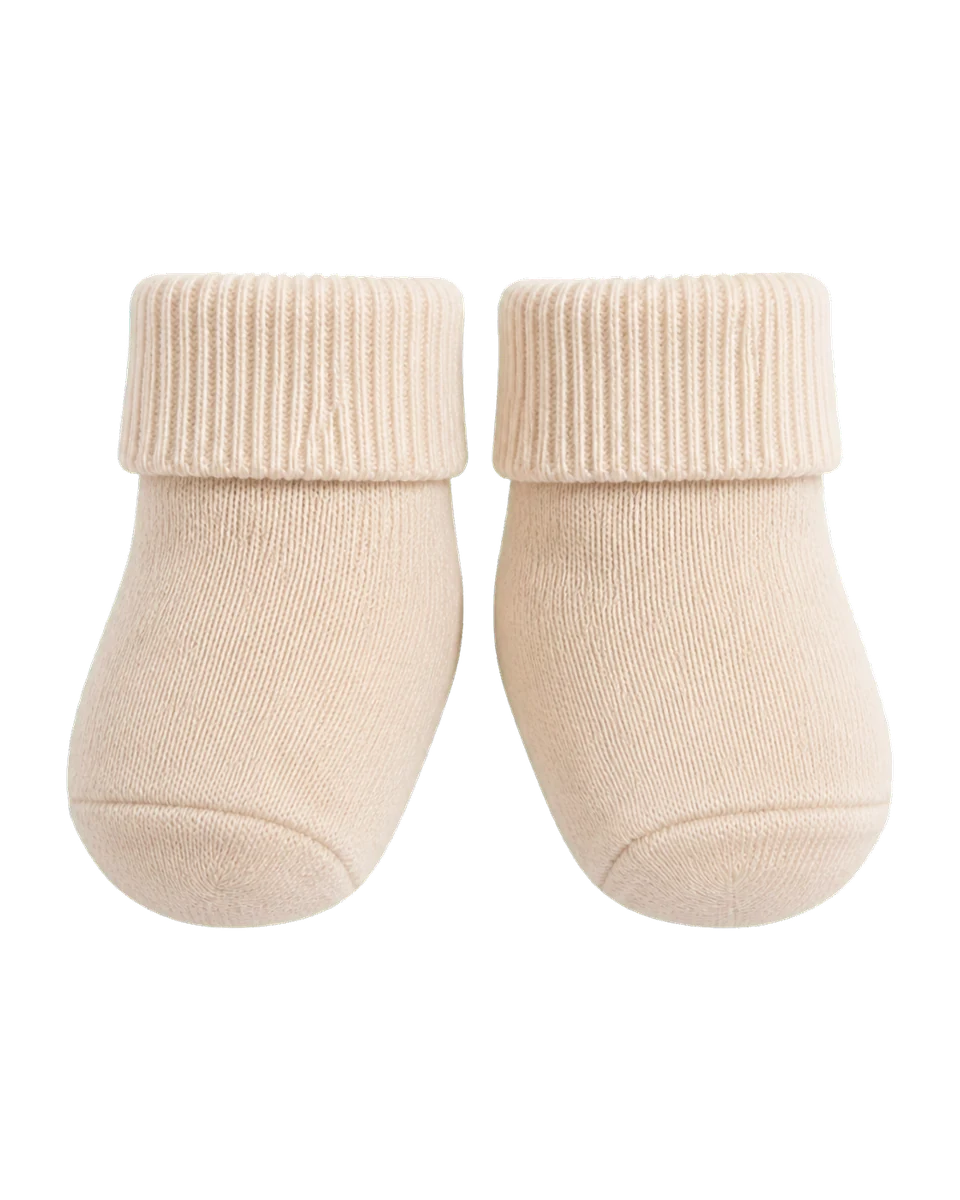
Warm baby socks
On the skin, from 12°C (54°F) down, under the booties. They fit inside a footed sleepsuit, a pram suit or winter boots, but a baby can kick a bare sock off in seconds.
Crib shoes vs first walking shoes
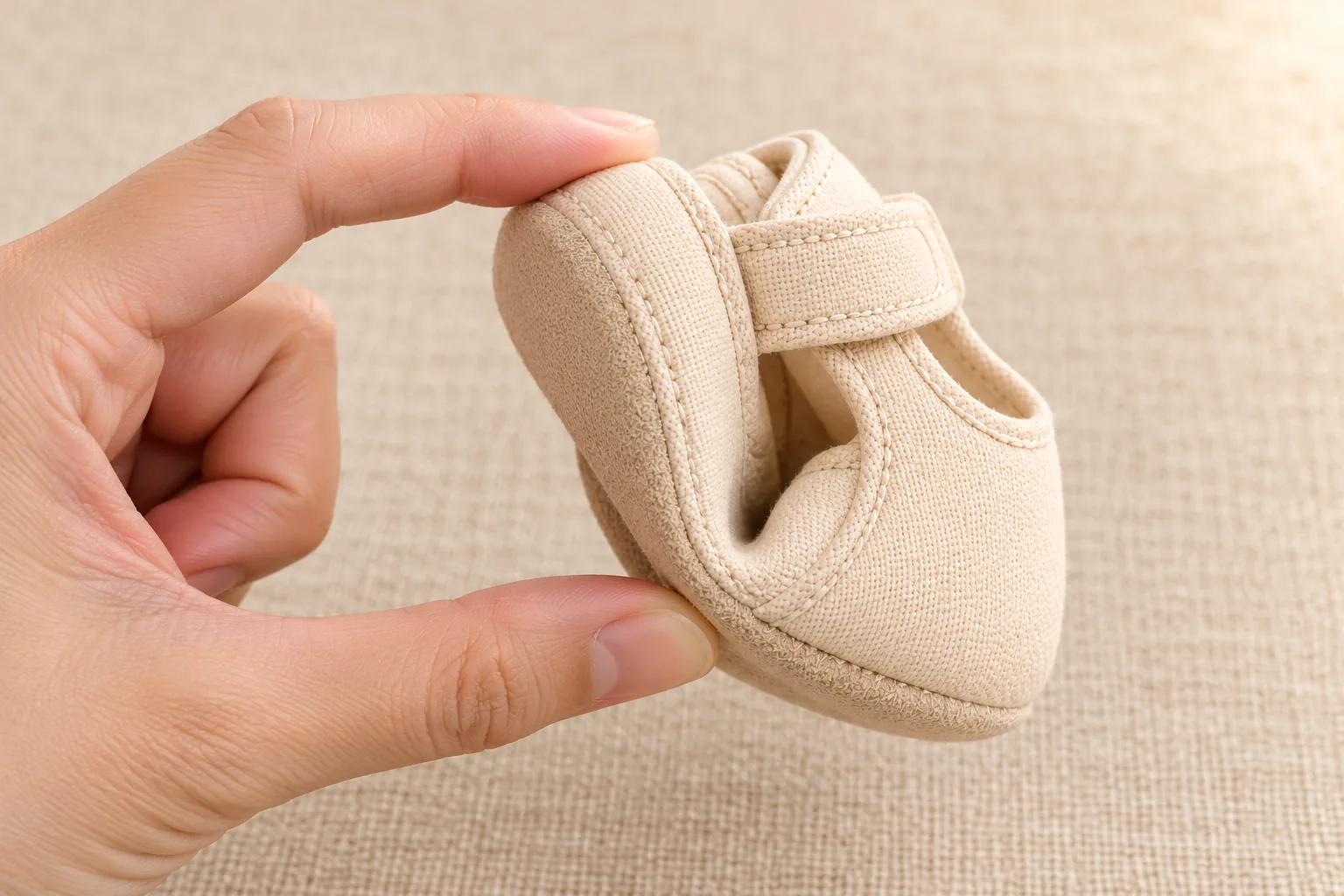
Crib shoes (pram shoes in the UK) look like tiny sneakers, loafers or Mary Janes, so they are easy to take for first walking shoes. Underneath, the sole is flat canvas, faux suede or thin leather, with no firm heel cup and no rubber tread. Pinch the toe and the heel together, and the shoe folds in half.
Cloth and thin suede soak through on damp ground and do not protect from stones, so crib shoes are for riding in a stroller or being carried. Buy first shoes once your baby walks outdoors without help, usually at 10 to 15 months. For cold sidewalks after that, move to baby winter boots.
Questions parents ask
What age are baby booties and crib shoes for, and how do sizes work?
From birth until your baby walks outdoors, usually at 10 to 15 months. Sizes go by foot length, from the back of the heel to the longest toe with the foot flat: 0–3 months (crib shoe size 0–1) fits 8.5–9.5 cm (3.3–3.7 in), 3–6 months (size 1–2) fits 9.5–10.5 cm (3.7–4.1 in), and 6–12 months (size 2–3) fits 10.5–11.5 cm (4.1–4.5 in). Leave about 1 cm (3/8 in) ahead of the toes over warm socks. If the ankle strap leaves a red mark that does not fade after a few minutes, loosen it. If it still marks, go up a size.
Should a baby wear booties while crawling or learning to stand?
No, not thick ones. Take fleece or quilted booties off indoors: a puffy bootie twists sideways on the foot when your baby crawls or pulls to stand, and bare feet grip the floor best. On a cold tile or wood floor, use grip-dot thin baby socks, cotton tights or close-fitting leather moccasins.
Can a baby sleep in booties?
No. Take crib shoes, moccasins and thick stroller booties off for sleep. In bed, a footed sleepsuit or a warm sleep bag keeps the feet warm, with no tight strap and no loose shoe in the bedding. What goes under the sleep bag depends on the room temperature.
Are loose threads inside knit or faux-fur booties a toe hazard?
Yes, if worn over bare feet. Turn knitted, crocheted or faux-fur-lined booties inside out before dressing, and check for loose loops of yarn or shed hairs that could wrap around a toe.
How many pairs of booties does a baby need, and how do you wash them?
One or two pairs that stay on are plenty for autumn and winter, because booties for a baby who does not walk never touch mud. The baby clothes checklist counts one warm pair. Close the hook-and-loop straps, then machine-wash fleece or cotton booties in a mesh bag on a cool gentle cycle. Hand-wash merino in cool water and dry it flat, and wipe leather moccasins with a damp cloth.