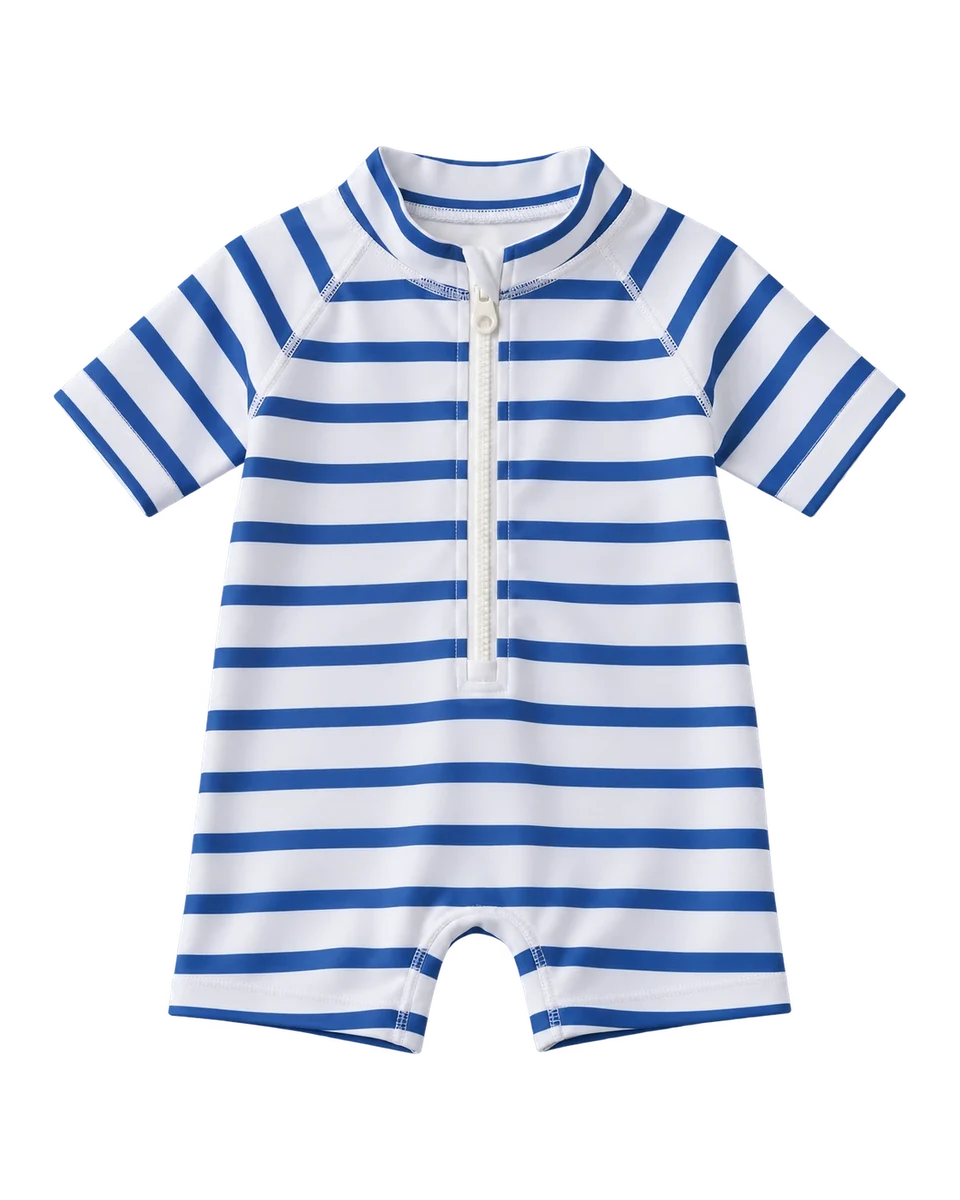
A baby swimsuit goes over the swim diaper in the water. Many cover more than a grown-up's swimsuit, with long sleeves and a high neck in a stretchy fabric that blocks the sun. For cooler water there are neoprene suits, which keep a baby warm.
Outdoors, your baby needs one: a long-sleeve suit keeps the sun off the skin that stays above the water. In a warm indoor pool there's no sun, so a swim diaper is all your baby needs, and in a cooler pool a neoprene suit lets your baby stay in longer.
- For ages0–3years
- You'll need1–2per size
- Wear itAll year
Types of baby swimsuit
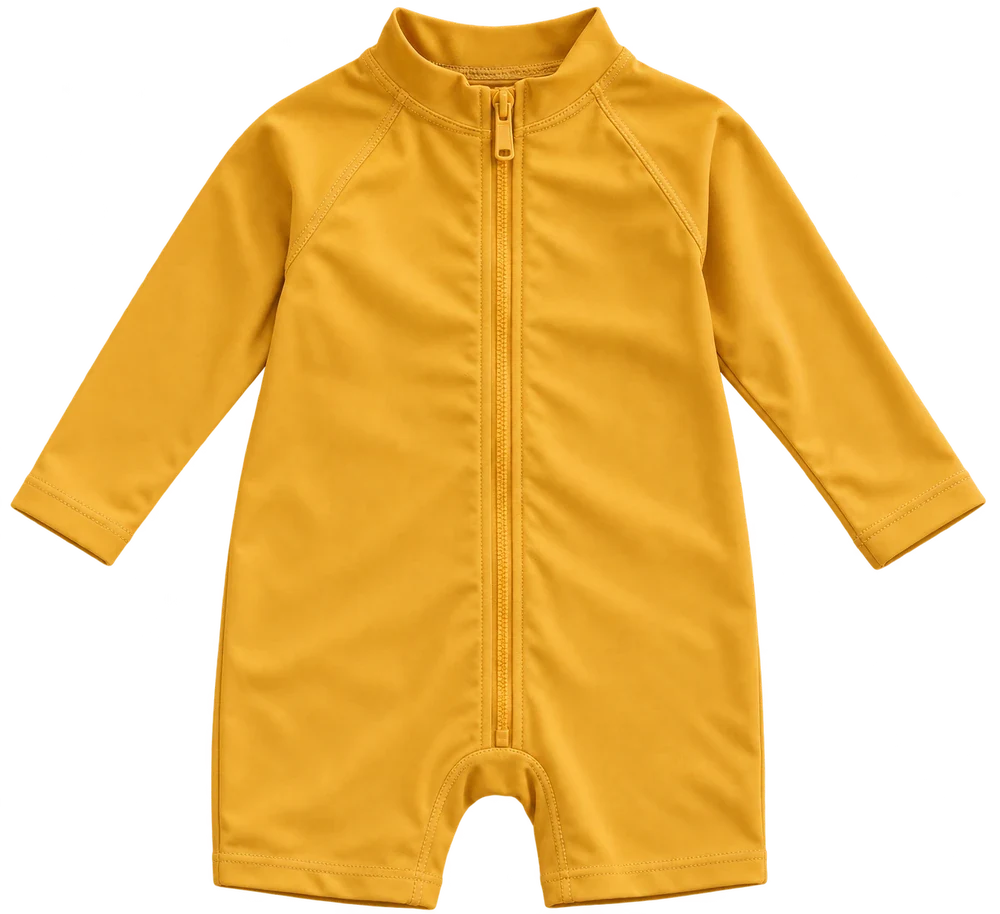
UV sunsuit
A one-piece with long sleeves and short or long legs, zipped down the front, in fabric rated UPF 50+ (a sun rating for fabric: very little sun gets through). It covers the most skin and nothing rides up, so it suits the beach, outdoor pools and holidays.
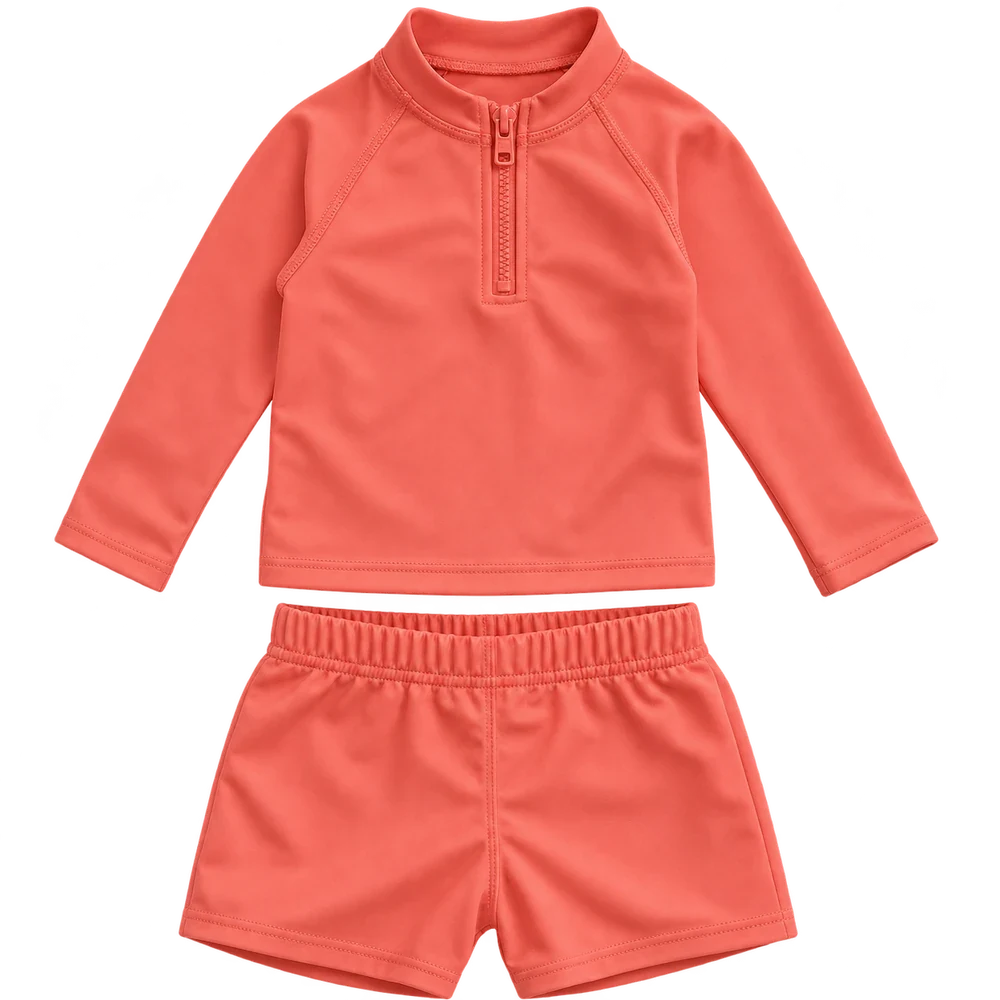
Rash guard set
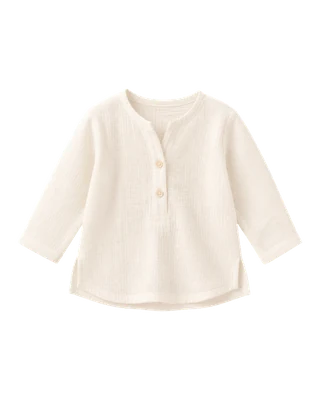
A snug top with long or short sleeves (a rash guard, or rash vest in the UK) over swim shorts or bottoms. The two pieces are easy to change separately and suit a toddler who is starting to use the potty, but the top can ride up at the waist.
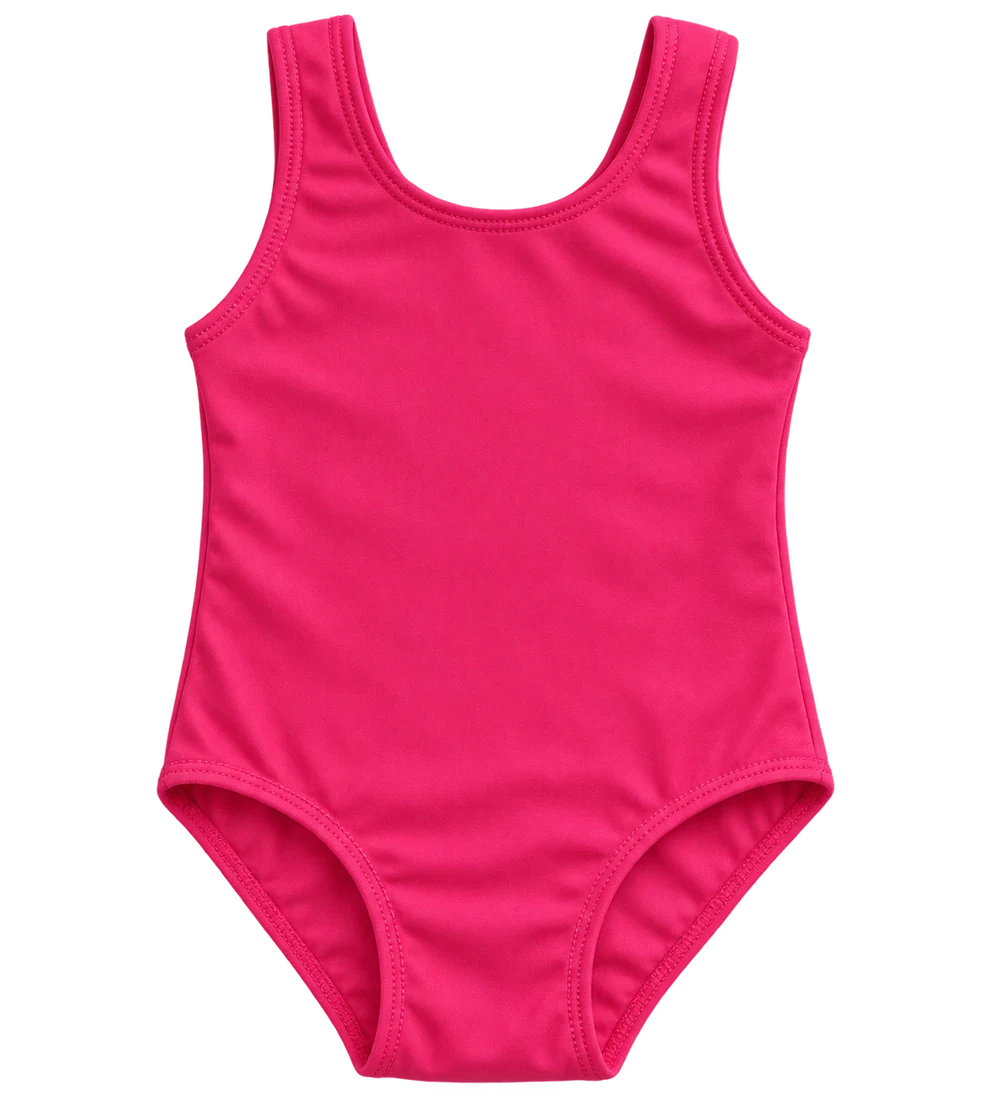
Classic swimsuit
A sleeveless one-piece or swim trunks, like a grown-up's. Fine for a warm indoor pool, but outdoors it leaves the shoulders, back and arms bare, and they then need shade and sunscreen.
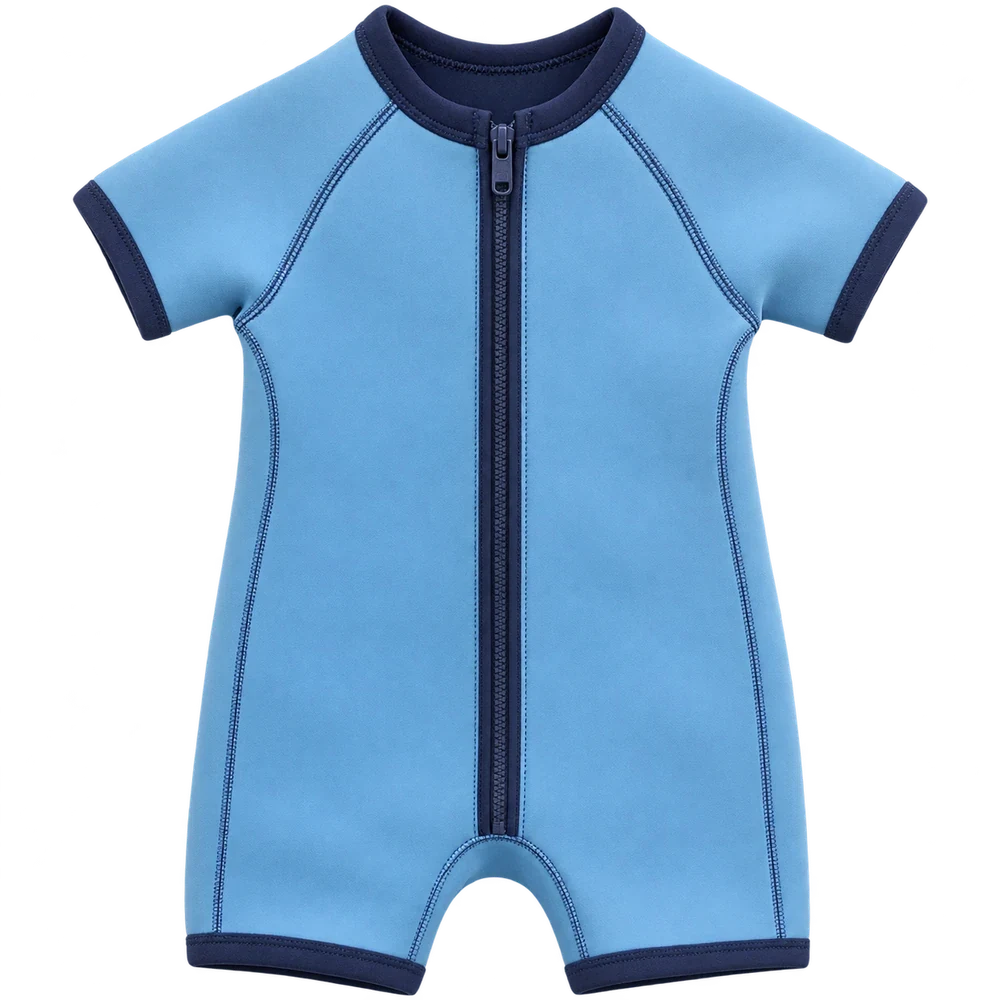
Neoprene suit
A thin wetsuit of neoprene (a soft, rubbery foam), either a wrap that closes around the tummy and back or a suit with sleeves. It keeps a thin layer of water against the skin that your baby's body warms, so it's made for cooler pools, lakes and the sea.
Keeping your baby warm in the water
Water takes warmth from the body much faster than air of the same temperature, and a small body loses it faster than yours, so a pool that feels fresh to you can soon chill your baby. How warm the water needs to be depends on your baby's age.
Shivering, chattering teeth, fussing, or skin and lips turning pale or bluish mean it's time to get out, dry off and get dressed, even if you've only just got in.
How to dress your baby for the pool
Pools are heated to different temperatures, and the warmer the water, the less your baby needs to wear.
How to dress your baby for the pool
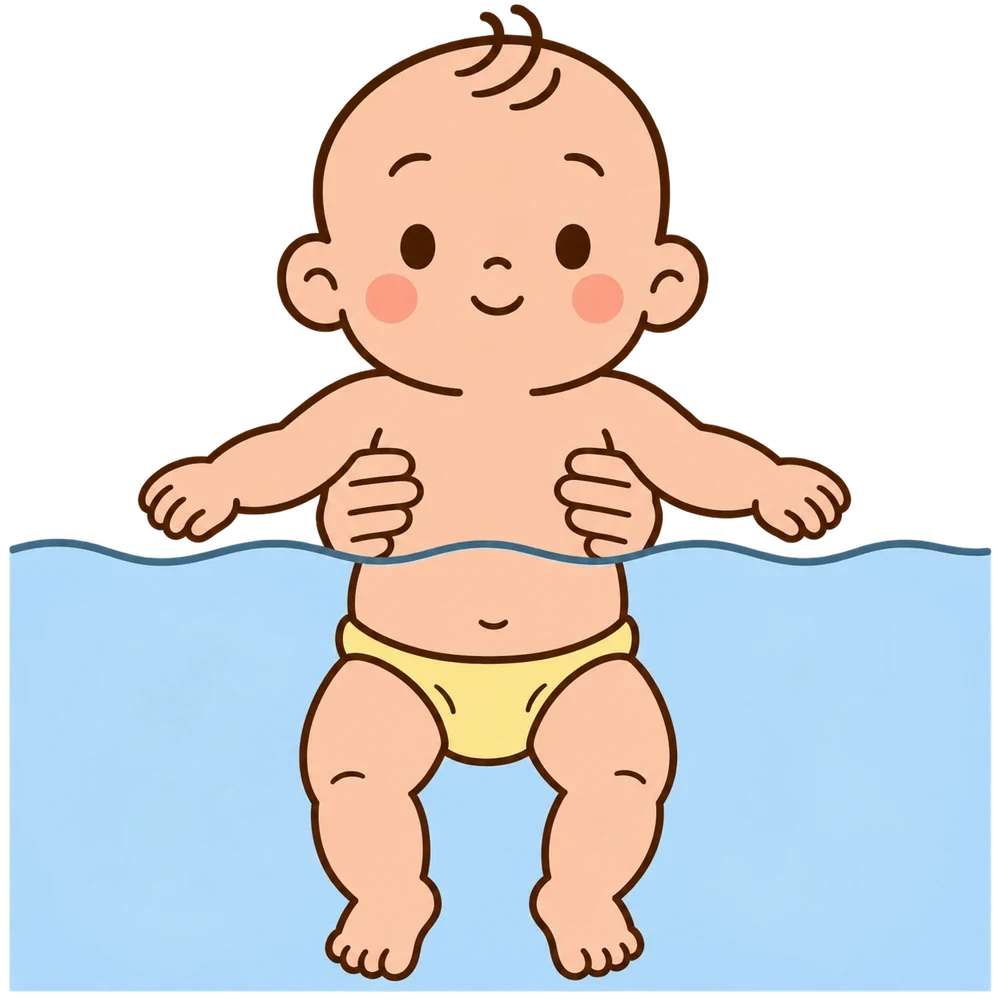
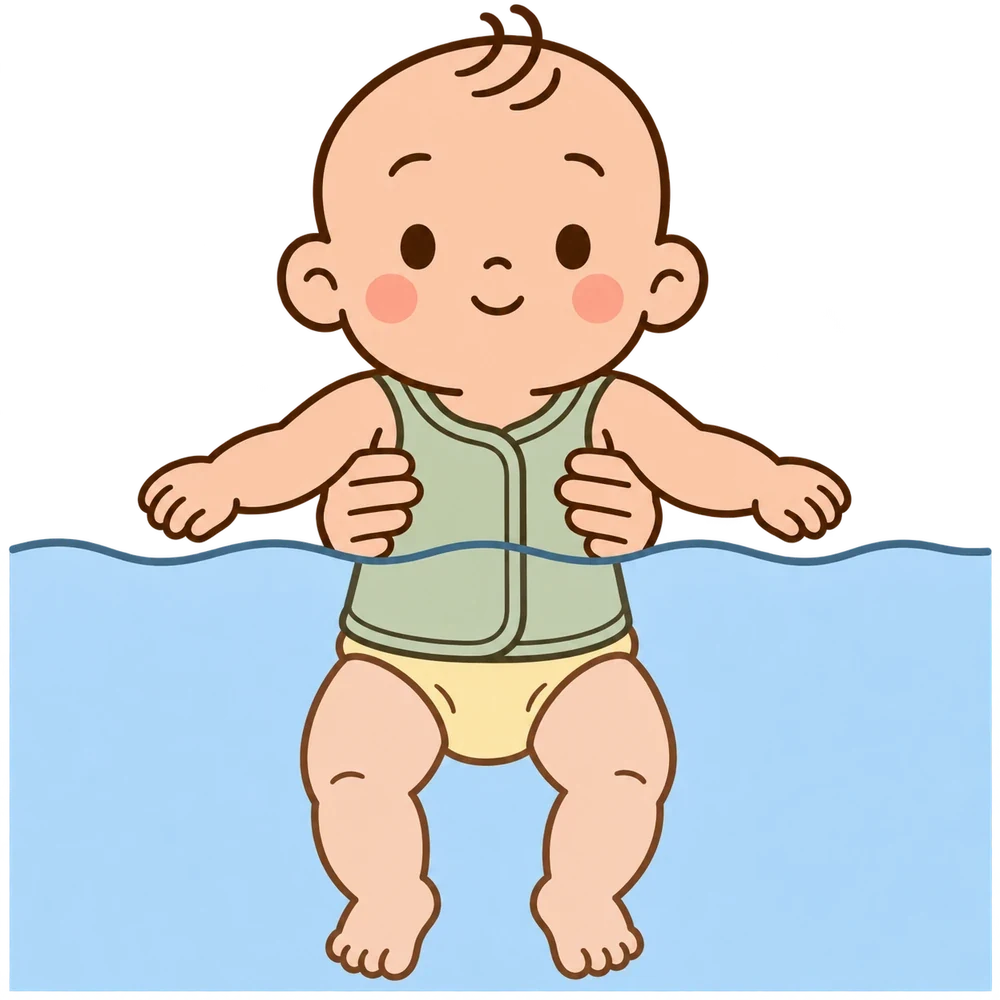
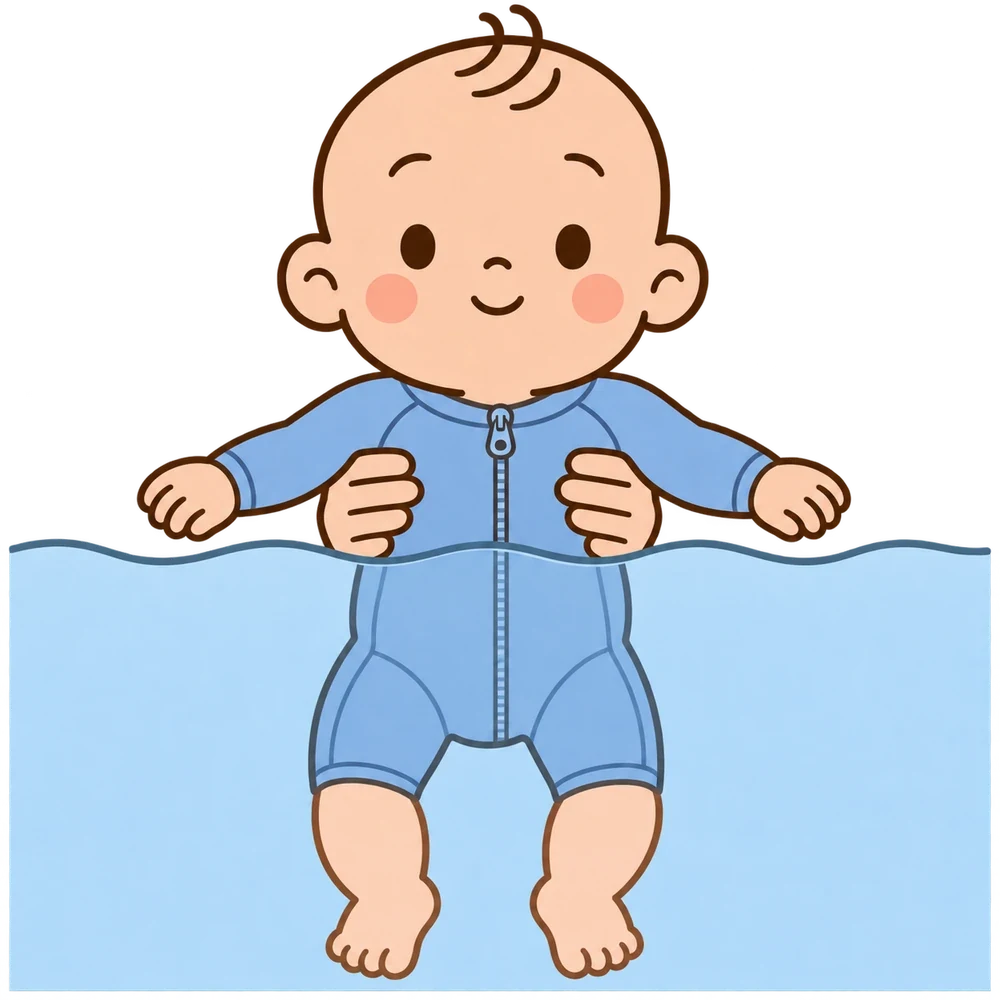
Warm enough from birth
32°C 90°F
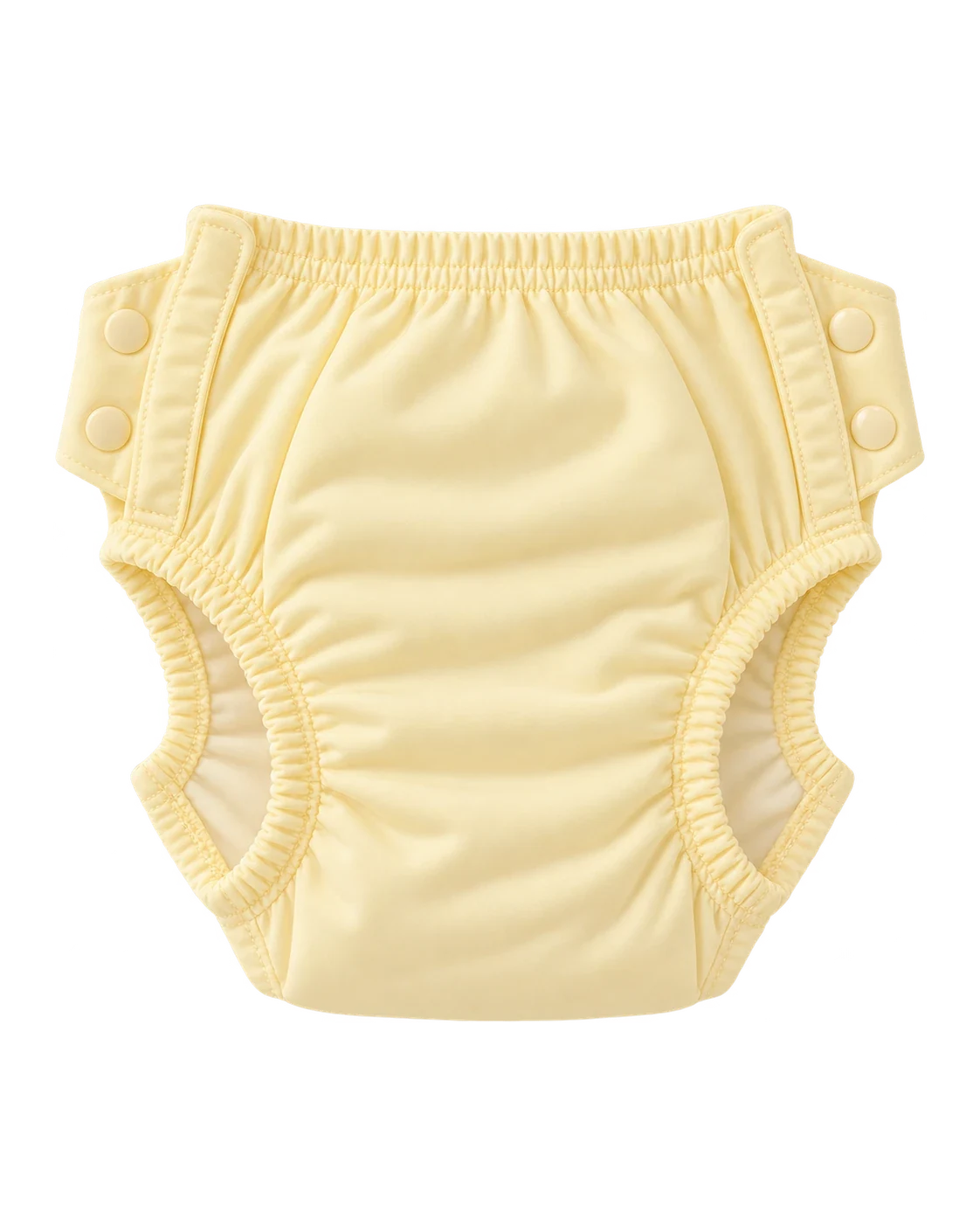
Baby pools and baby swim classes heat the water to about 32°C (90°F), warm enough for a newborn. A swim diaper is all your baby wears, with a snug neoprene cover over it to keep poop in if the class asks for one. A neoprene suit isn't needed here, and in water any warmer it can make a baby too hot.
From 3 months, with a wrap if your baby gets cold
30°C 86°F
From about 3 months, 30°C (86°F) is warm enough as it is, and a neoprene wrap around the tummy and back helps a baby who gets cold quickly. A baby under 3 months needs the warmer baby pool.
A short swim in a neoprene suit
28°C 82°F
Pools for lane swimming are kept nearer 28°C (82°F), too cool for a baby under 3 months. An older baby wears a neoprene suit with sleeves, or one lined with fleece, and the swim stays short even so.
How to choose a baby swimsuit
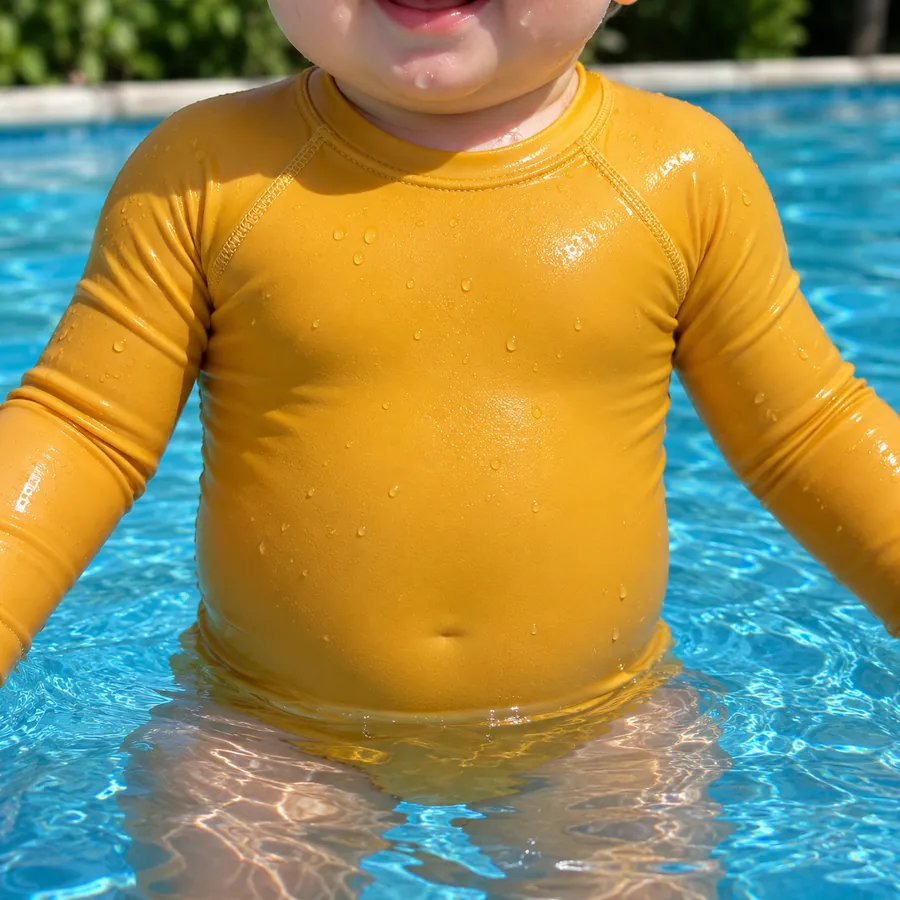
1. Snug, not baggy
A loose suit fills with water and drags at the arms and legs, and a baggy top can float up over the face. Buy the size that fits now, not one to grow into.
- Good: Lies smooth on the body
- Good: Your baby's size now
- Not good: Bags at the seat or arms
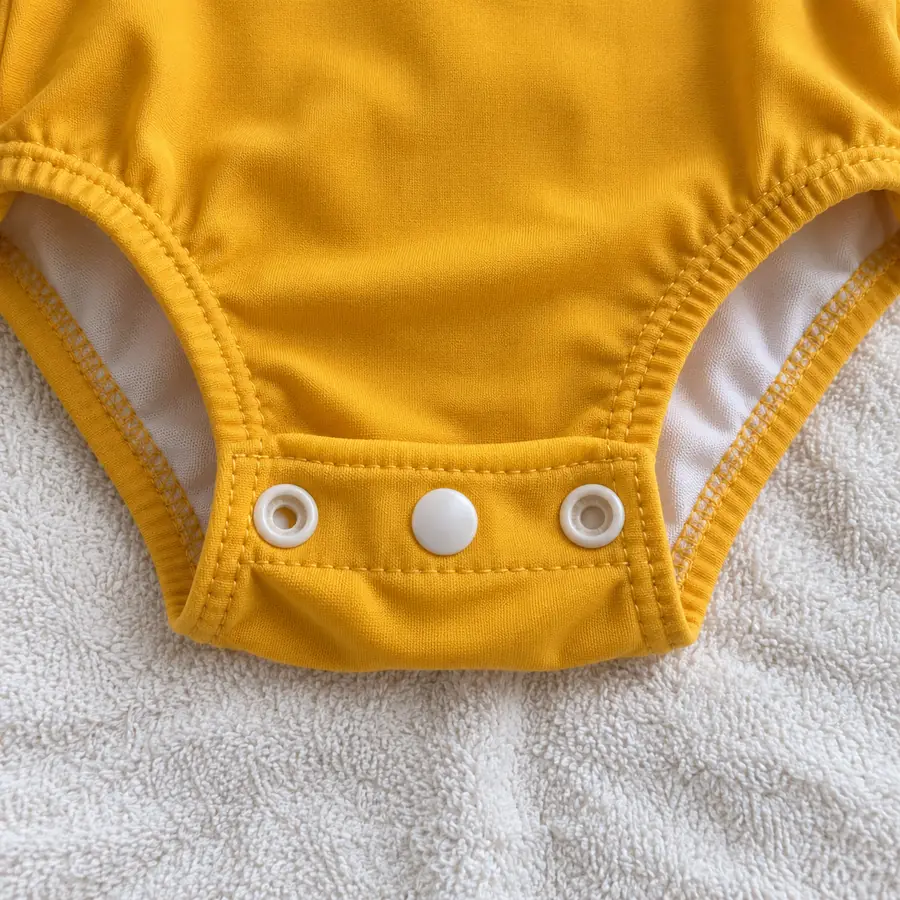
2. It opens to the diaper
On a long day at the pool or the beach, you check the swim diaper about every hour. Snaps between the legs, or a zip that runs down to them, let you check and change without peeling a wet suit off over the shoulders.
- Good: Snaps between the legs
- Good: Zip down to the legs
- Not good: Only comes off over the shoulders
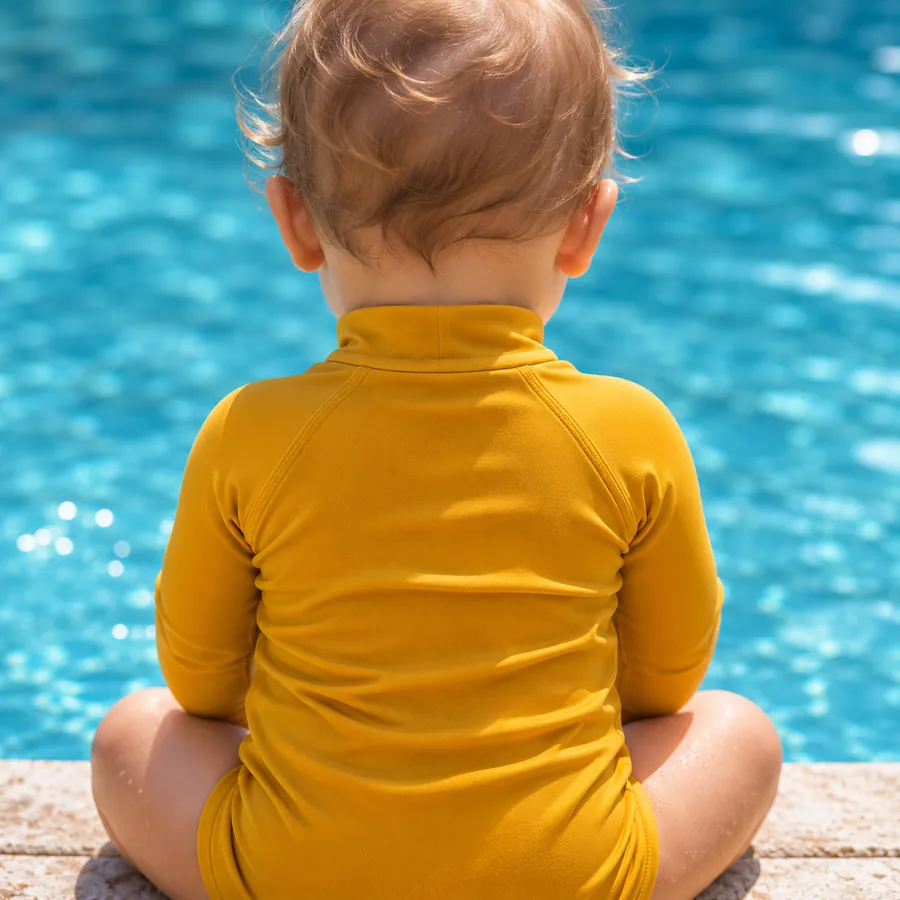
3. Covers the shoulders outdoors
In the water, the shoulders and the back of the neck stay above the surface in the sun. Sleeves and a stand-up collar in UPF 50+ fabric cover them, so less skin needs sunscreen.
- Good: UPF 50+ on the label
- Good: Stand-up collar
- Not good: Bare shoulders in the sun
After the swim
Your baby cools fastest just out of the water, wet skin in moving air. Take the wet suit off straight away, swap the swim diaper for a regular one, wrap your baby in a hooded towel and dress them in dry clothes, with a warm hat on a cool day. Swimming makes babies hungry, and a feed helps them warm up and settle.
Rinse the chlorine or salt off your baby's skin in the shower. If your baby has eczema, put on moisturizer while the skin is still damp, because pool water can dry it out. The wet suit travels home in a wet bag.
Questions parents ask
Can my 2-month-old go in a swimming pool?
Yes, in the right pool. A baby under 3 months needs water heated to about 32°C (90°F), which most public pools don't have, so ask before you go. Baby swim classes in warm pools start from the first weeks, before the vaccinations, though many pediatricians suggest waiting until about 6 months, when a baby holds the head up well.
How long can a baby stay in the pool?
About half an hour at most, the length of a baby swim class, and less in cooler water. Get out sooner at the first shiver.
Can a baby go in a chlorine pool?
Yes. Chlorine keeps the water free of germs, which matters for a young baby. Rinse it off in the shower afterward, and moisturize if your baby's skin gets dry.
Can I take my 3-month-old to the beach?
Yes, in the shade. Under 6 months babies stay out of direct sun, so bring shade, a long-sleeve UV suit and a sun hat. The sea is usually much cooler than a baby pool, so keep dips short, or just dip your baby's feet.
Does a 3-month-old need a swimsuit?
Not always. In a warm baby pool, a swim diaper is enough. Outdoors, a long-sleeve UV suit keeps the sun off, and in a cooler pool a neoprene wrap keeps your baby warm for longer.
What does a baby wear for swimming lessons?
Usually a swim diaper with a snug neoprene cover over it, which many classes ask for. Add a neoprene wrap or suit only if the class's water is cooler than your baby needs: 32°C (90°F) under 3 months, 30°C (86°F) after that.
Does a baby wear a diaper under a swimsuit?
Yes, a swim diaper, never a regular one, which soaks up the water and swells. It goes on first, against the skin.
Should a baby swimsuit have long or short sleeves?
Long sleeves outdoors, because they keep the sun off the arms without sunscreen. Indoors there is no sun, so short sleeves or none are fine in a warm pool.
Does a rash guard keep a baby warm in a cool swimming pool?
Hardly. It's a thin layer of stretchy fabric that keeps the sun off and stops the skin scraping on the pool edge, but it holds almost no warmth. For a cool pool, a neoprene suit is the one that keeps your baby warm.
Do baby swimsuits have UV protection?
Many do. Look for UPF 50+ on the label, which lets through only 2 in 100 of the sun's rays. Without a rating on the label, you can't tell how much a swimsuit blocks.
What color swimsuit is safest?
A bright one, because it's easier to spot in the water than pale blue or white.
Is a swim vest or armbands safe for a baby?
They help a child float, but they don't keep a baby safe, and they can make you feel safer than you are. In the water, stay within arm's reach of your baby the whole time. Near a lake, a river or the sea, a life jacket made for your child's weight is the one to use.
Are there non-toxic baby swimsuits?
Look for the OEKO-TEX Standard 100 label. It means the fabric was tested for harmful substances, with the strictest limits for clothes made for babies and children up to 3.
Does my baby need a swim hat?
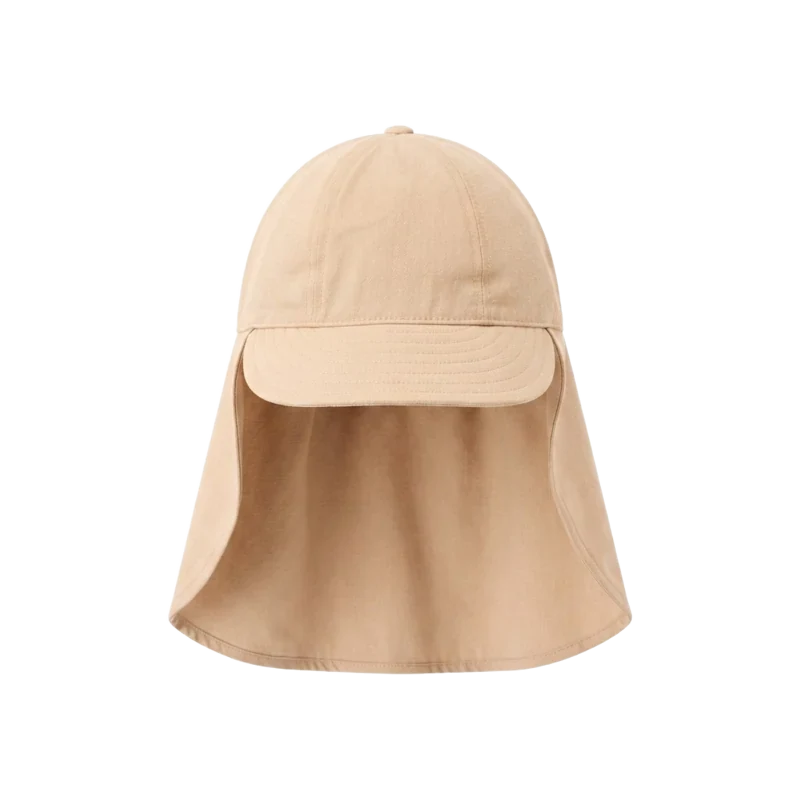
In the sun, yes: a swim legionnaire with a neck flap goes in the water and dries fast. In an indoor pool your baby needs none.