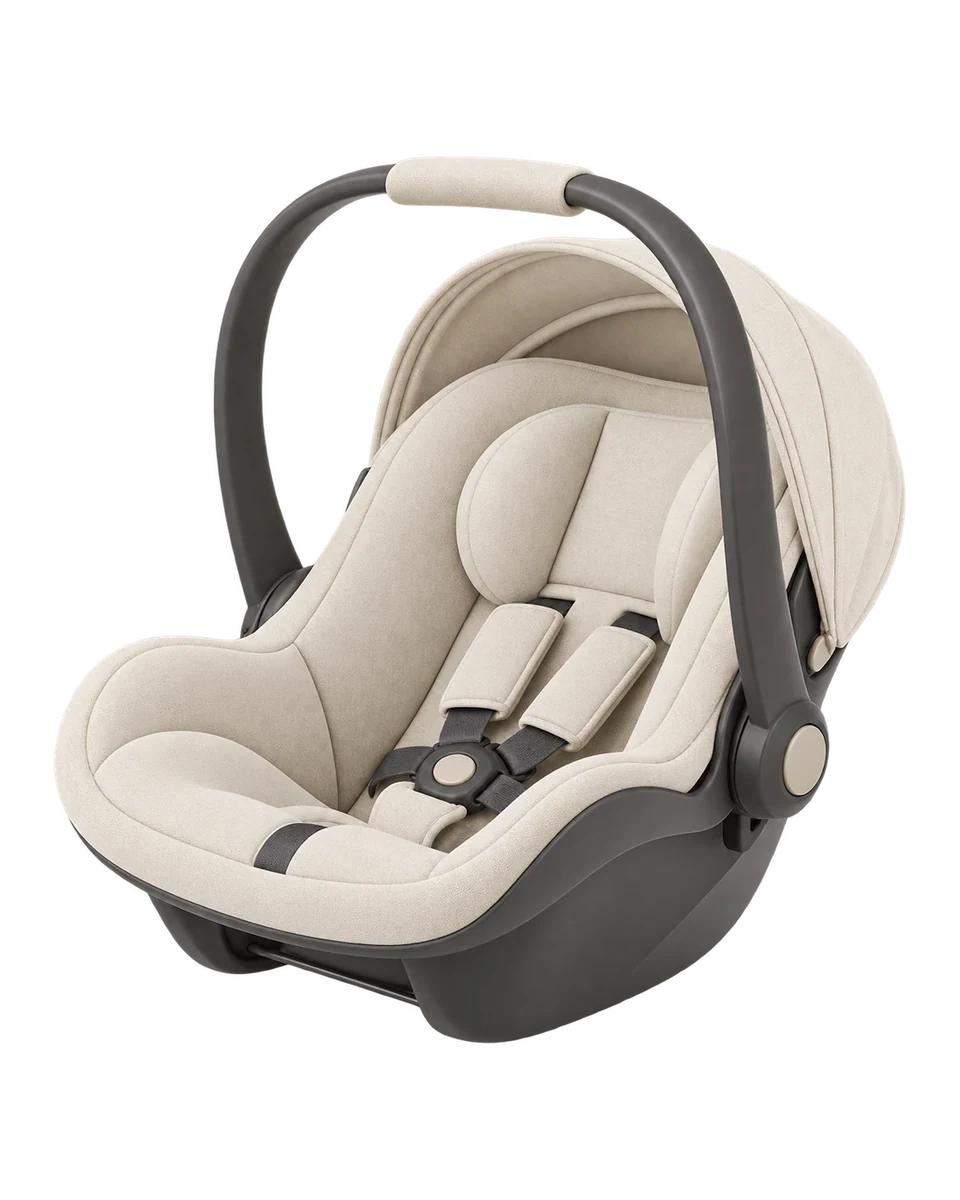
Most children use two or three car seats before the car's own seat belt fits them, at about 8 to 12 years old. The first is usually an infant seat, a small seat with a handle that lifts out of the car with your baby in it. Next comes a bigger seat that stays in the car, and from about 4 a booster.
Every seat has a weight and a height limit on its label, and your child rides in it until one of them is reached. Fit the first seat before the birth, because its first ride is the trip home from the hospital.
In US shops the infant seat is also called an infant carrier. It has nothing to do with a baby carrier you wear.
- For ages0–12years
- You'll need2–3seats
- Use itAll year
Types of car seat
 From birth
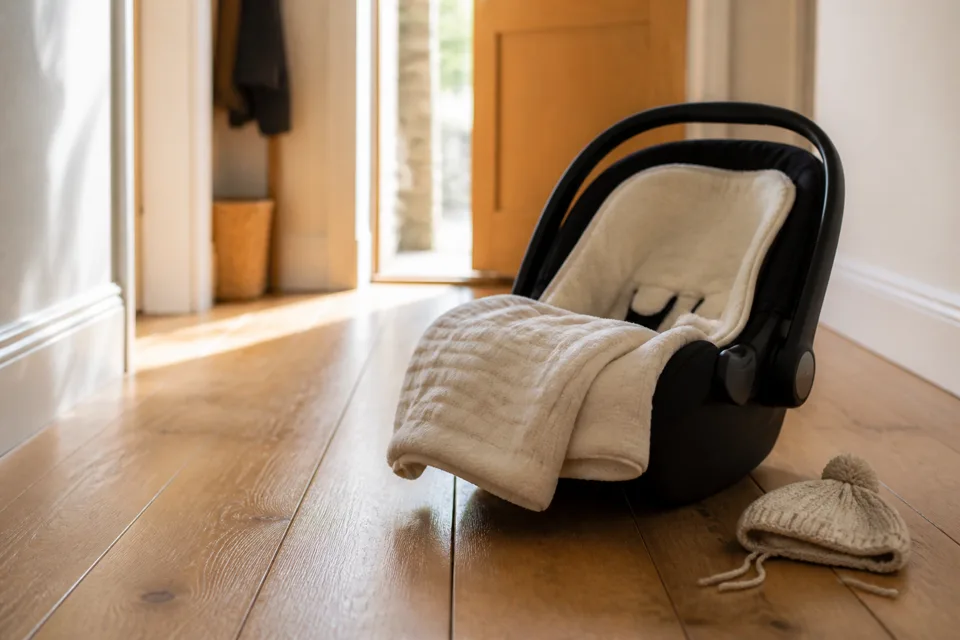
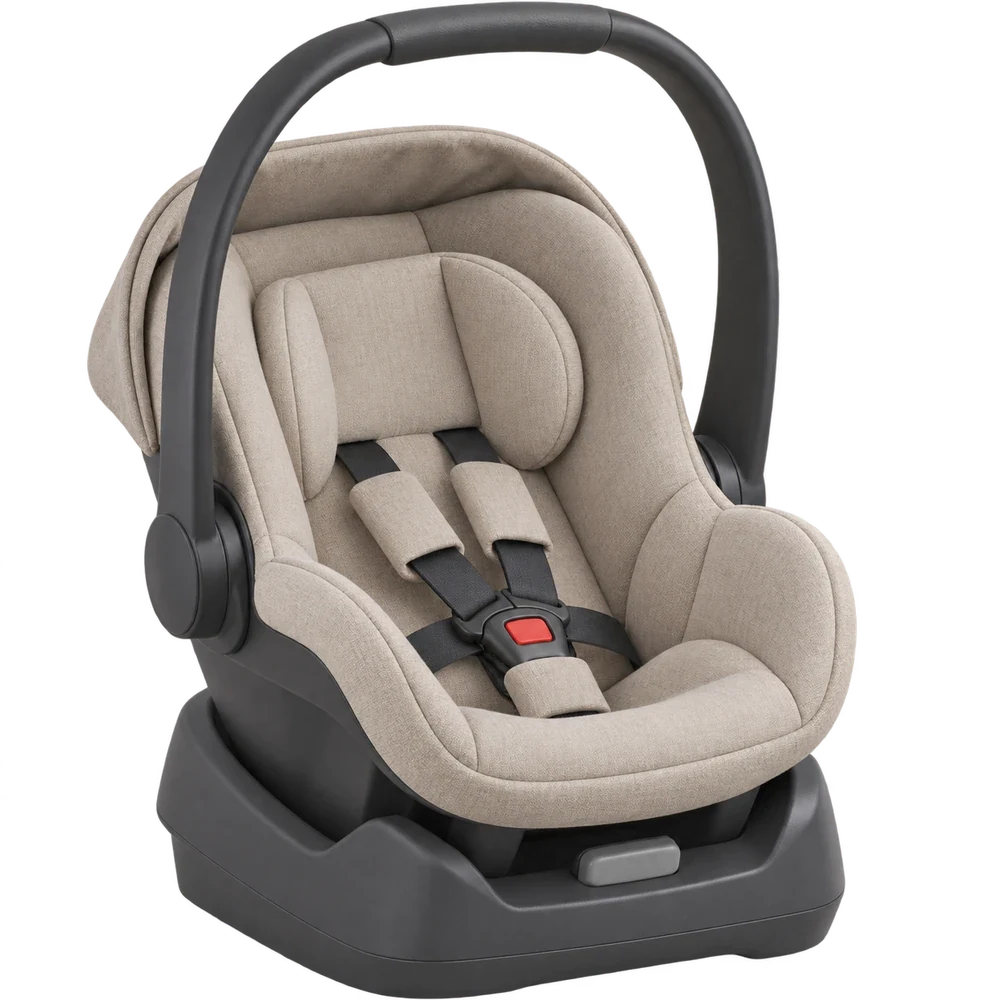
Infant seat
Top weight 22–35 lb (10–16 kg)
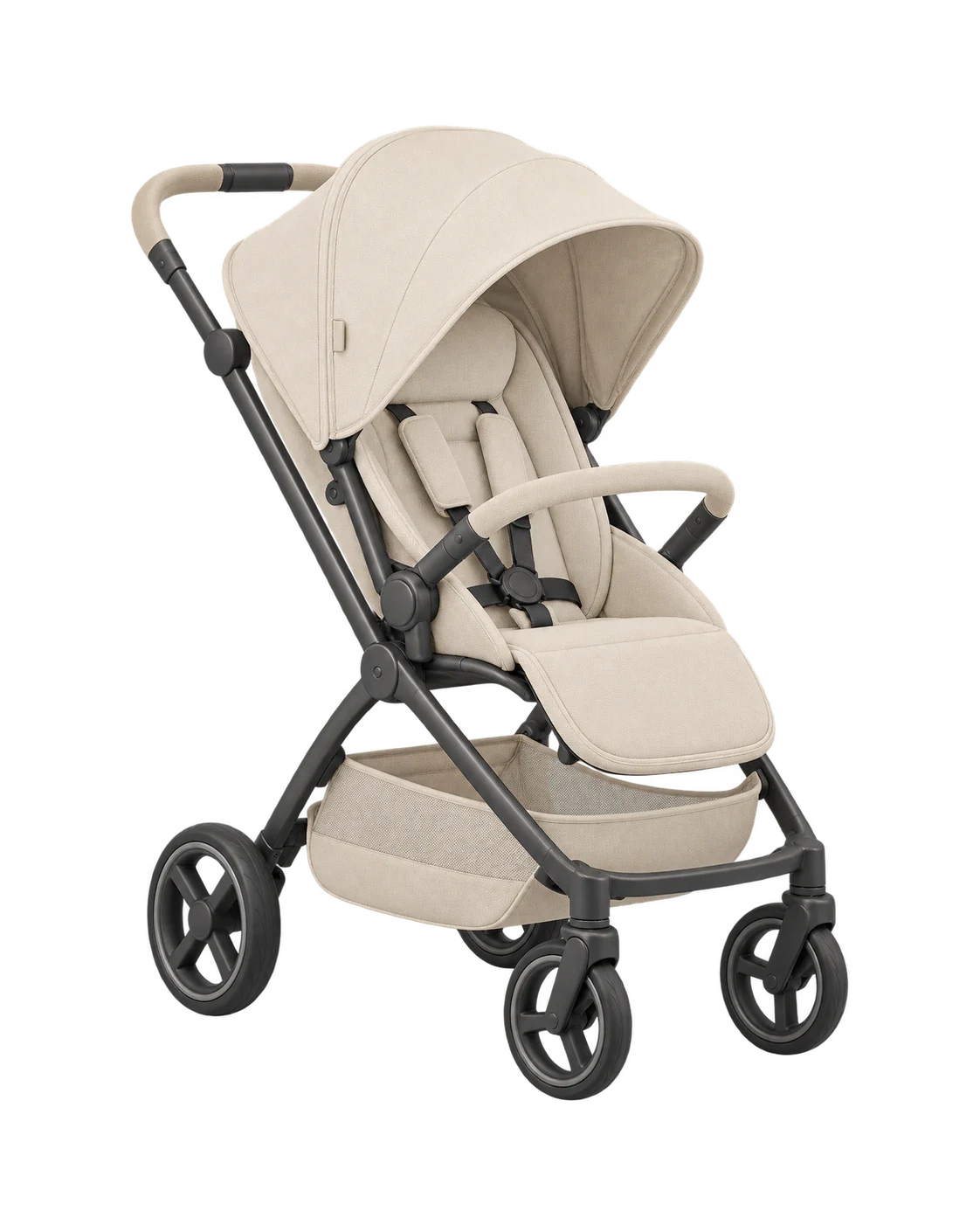
The small first seat, with a carry handle, that faces the back only. Its base stays fitted in the car and the seat clicks in and out of it. Many also click onto a stroller frame (sold together as a travel system), so your baby goes from car to stroller still buckled in.
 From birth
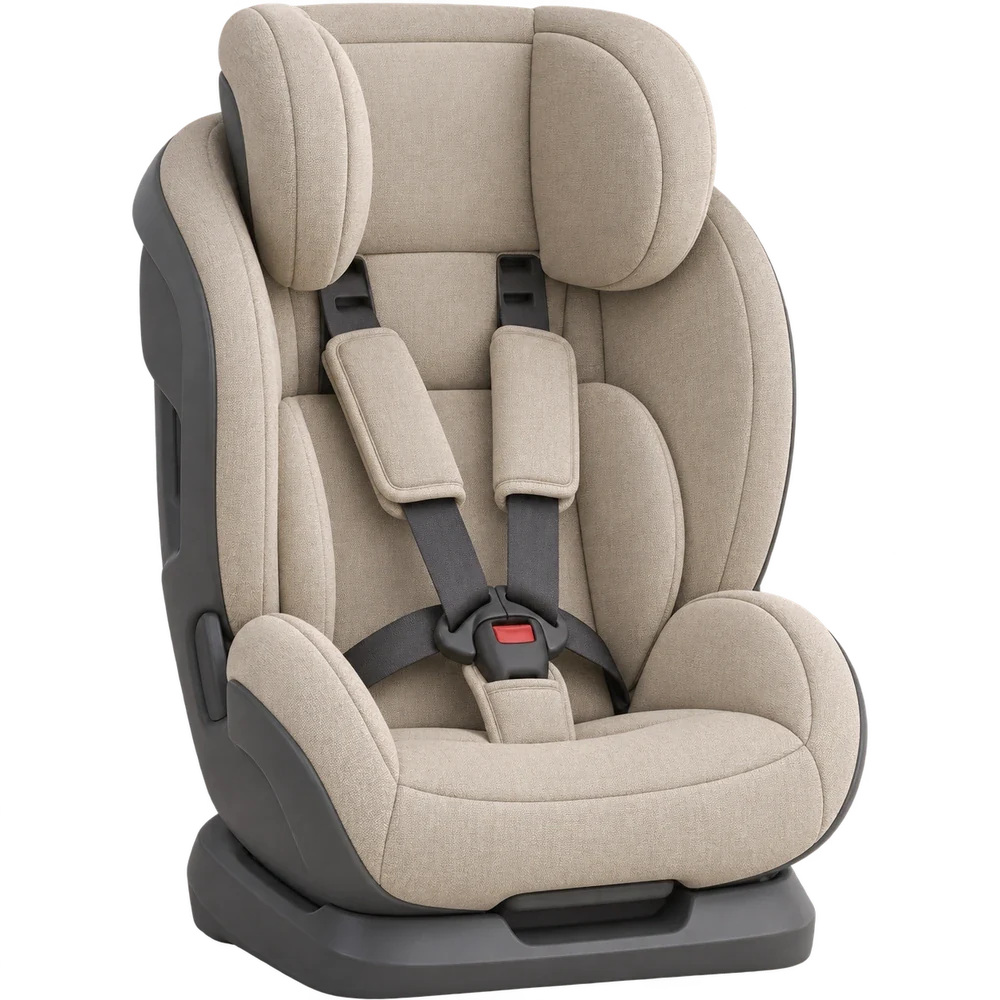
Convertible seat
Faces the back to 40–50 lb (18–23 kg)
A bigger seat, too heavy to carry around, that stays fitted in the car for years. Your child rides facing the back in it, in most seats until age 2 or older, and the same seat then turns to face forward.
 From birth
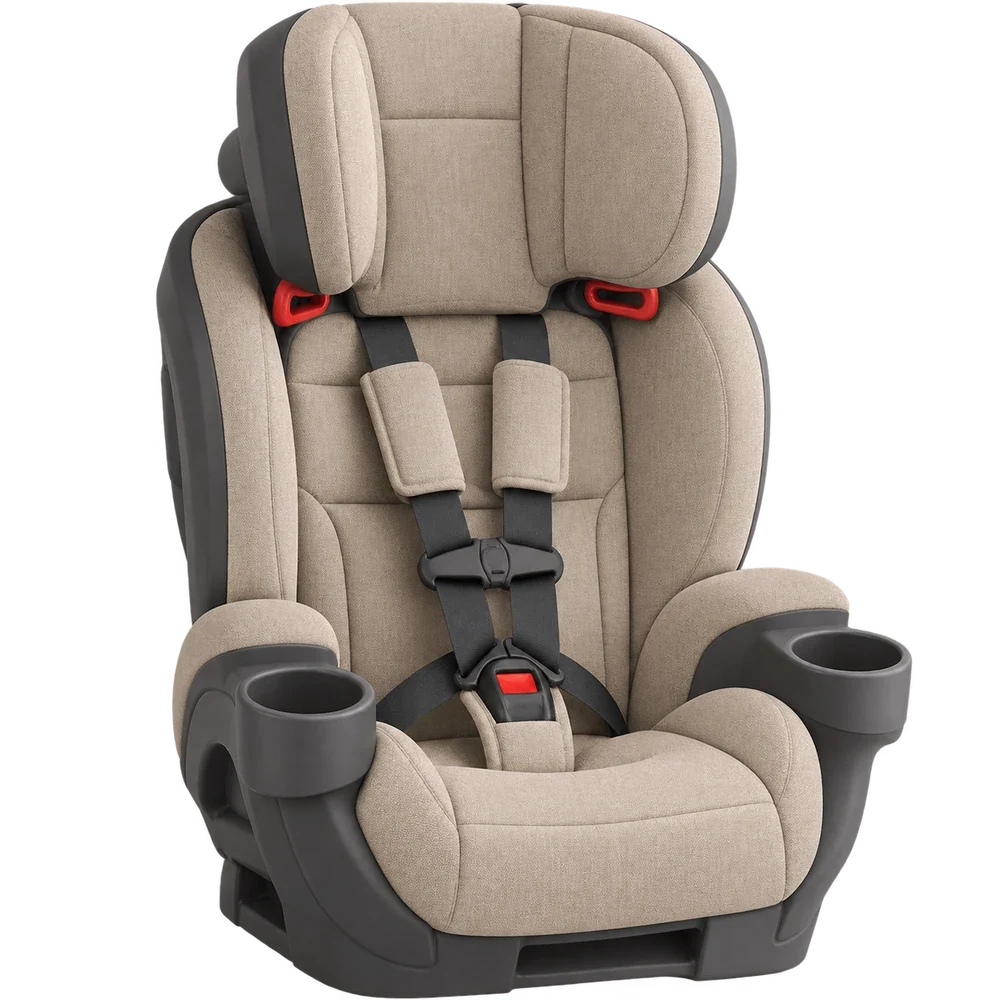
All-in-one seat
Faces the back to 40–50 lb (18–23 kg)
A convertible seat that turns into a booster at the end, so one seat can last for years. It is big and heavy, and some fit a small newborn or a small car poorly.
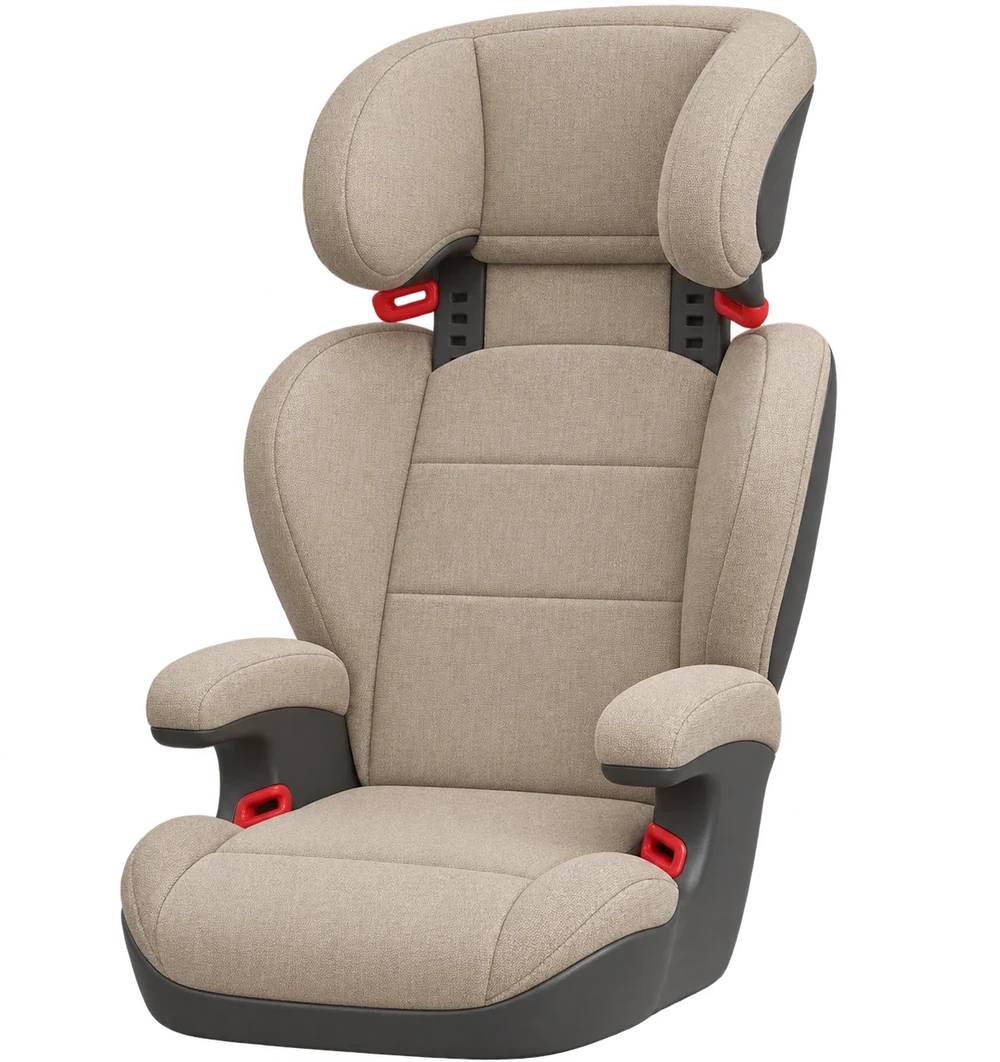 4 years or older
Booster seat
Until the seat belt fits, 8–12 years
For a child who has outgrown the harness. Your child wears the car's own seat belt, and the booster raises your child so the belt sits low across the hips and over the middle of the chest.
When can my baby face forward?
Not as a baby. Every baby rides facing the back of the car, and a toddler keeps facing the back until reaching the seat's rear-facing height or weight limit. In most convertible seats that comes at age 2 or later.
Facing the back, the seat's shell (its hard outer body) catches the head, neck and back together in a sudden stop. Facing forward, the harness holds the body while the heavy head keeps going, as the car seat guide shows in three drawings.
In Europe, seats sold by your child's height (marked i-Size or R129) must face the back until at least 15 months, and some face the back up to about 4 years.
Infant seat or a convertible from birth?
Take an infant seat if you will often carry your baby to and from the car, ride in taxis or other people's cars, or want the seat on your stroller. A convertible from birth suits families who mostly drive door to door, or who carry their baby in a sling or carrier.
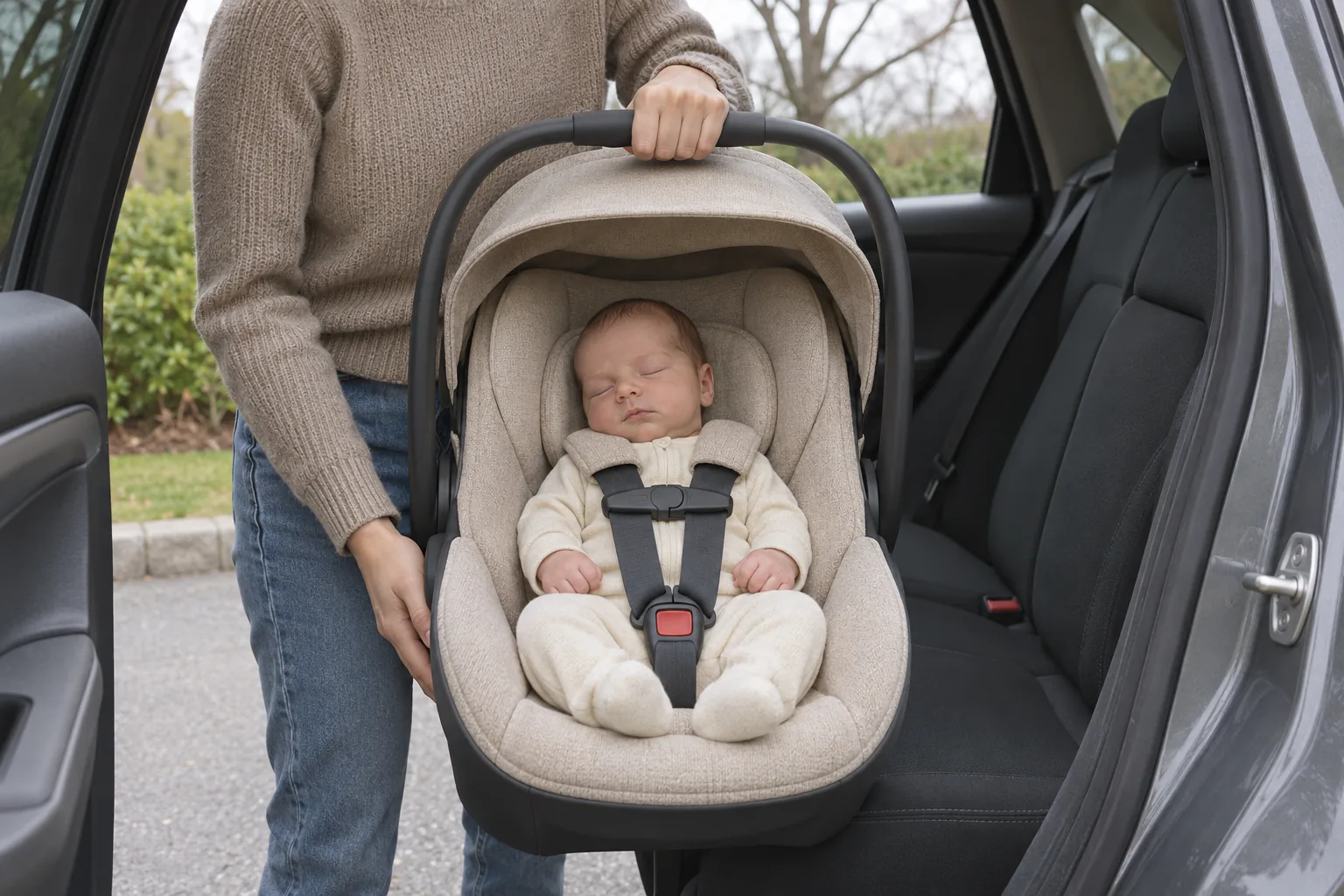
Infant seat first
It lifts out with your baby buckled in, so a baby who fell asleep in the car can stay asleep on a short errand, and it gives a newborn the best fit. Once it is outgrown, you still need a convertible.
- Good: Carry your baby in it
- Good: Best fit for a newborn
- Not good: Heavy once your baby grows
- Not good: A second seat to buy later
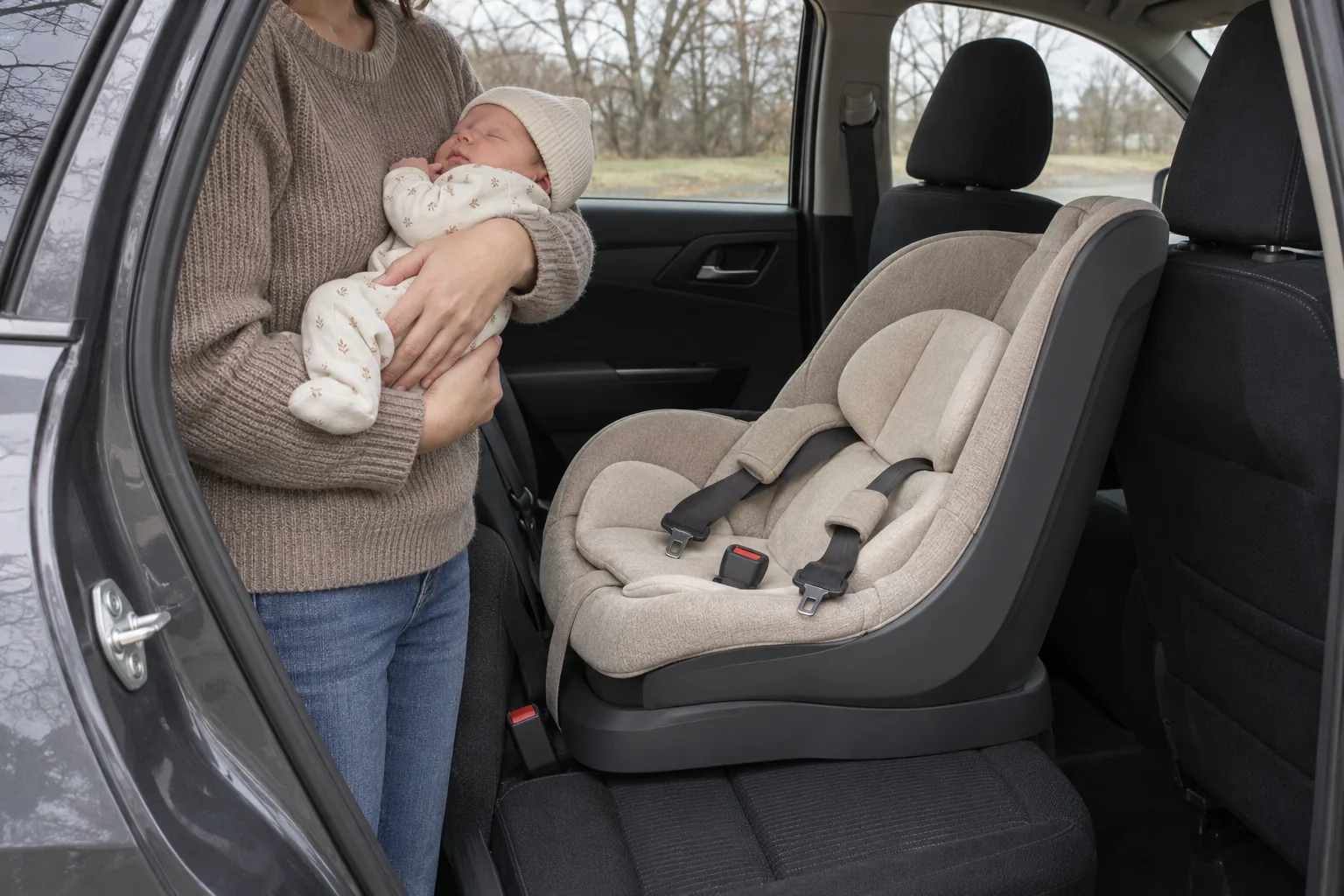
Convertible from birth
One seat, fitted once, that faces the back for years and never leaves the car. Your baby is lifted in and out at every stop, in rain and in cold, and the seat takes more room in a small car.
- Good: One seat for years
- Good: Nothing to carry
- Not good: Baby lifted out at every stop
- Not good: Bulky in a small car
When to move up from the infant seat
The infant seat is outgrown when your baby reaches its weight or its height limit, both printed on the label, or when less than 1 in (2.5 cm) of shell is left above the head. Most babies reach the height first.
Has your baby outgrown the infant seat?
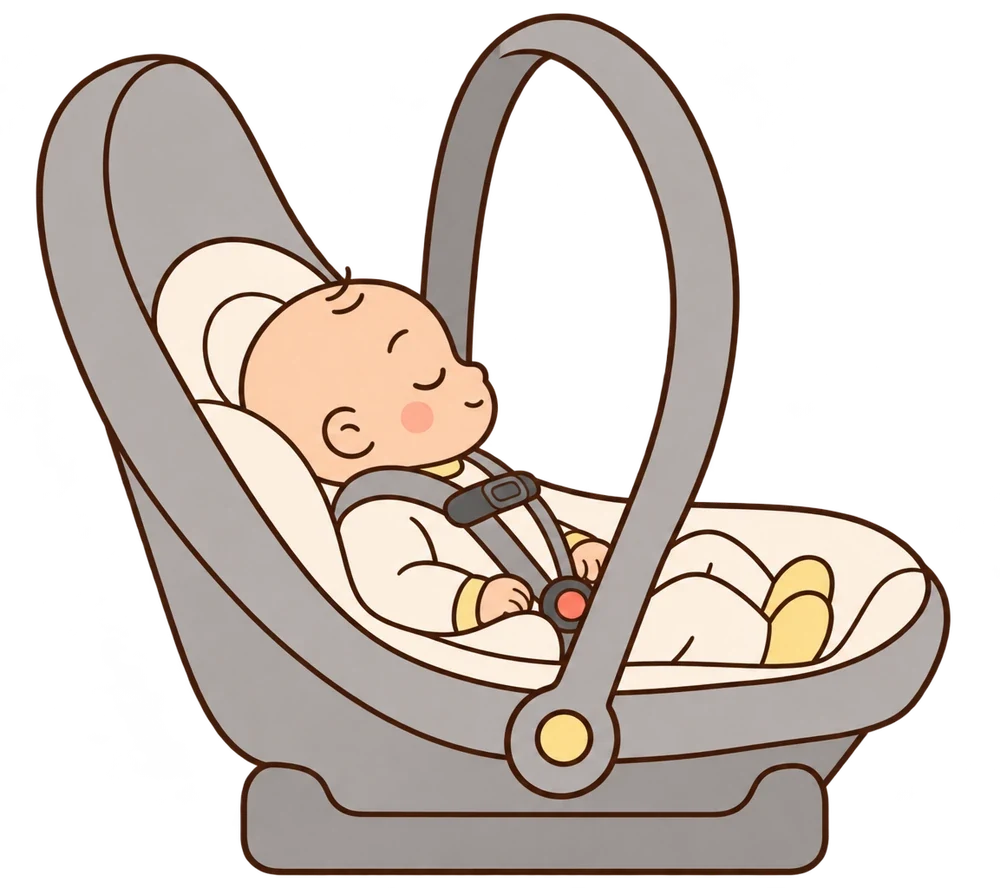
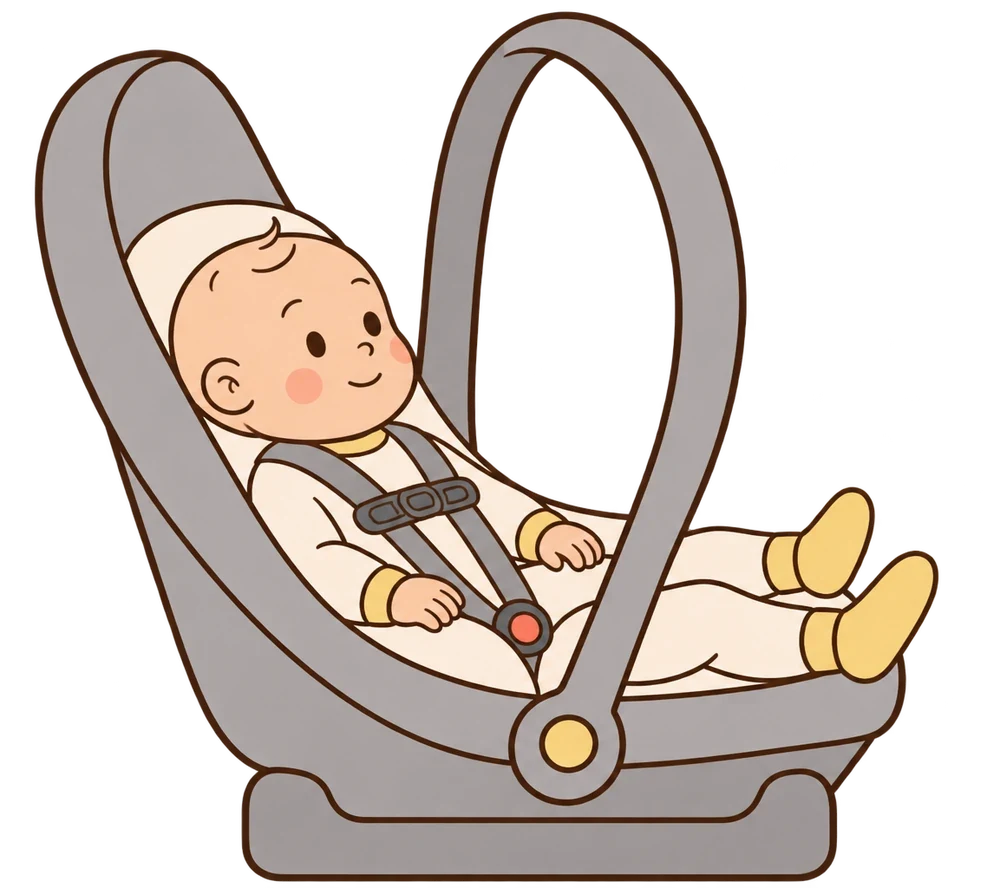
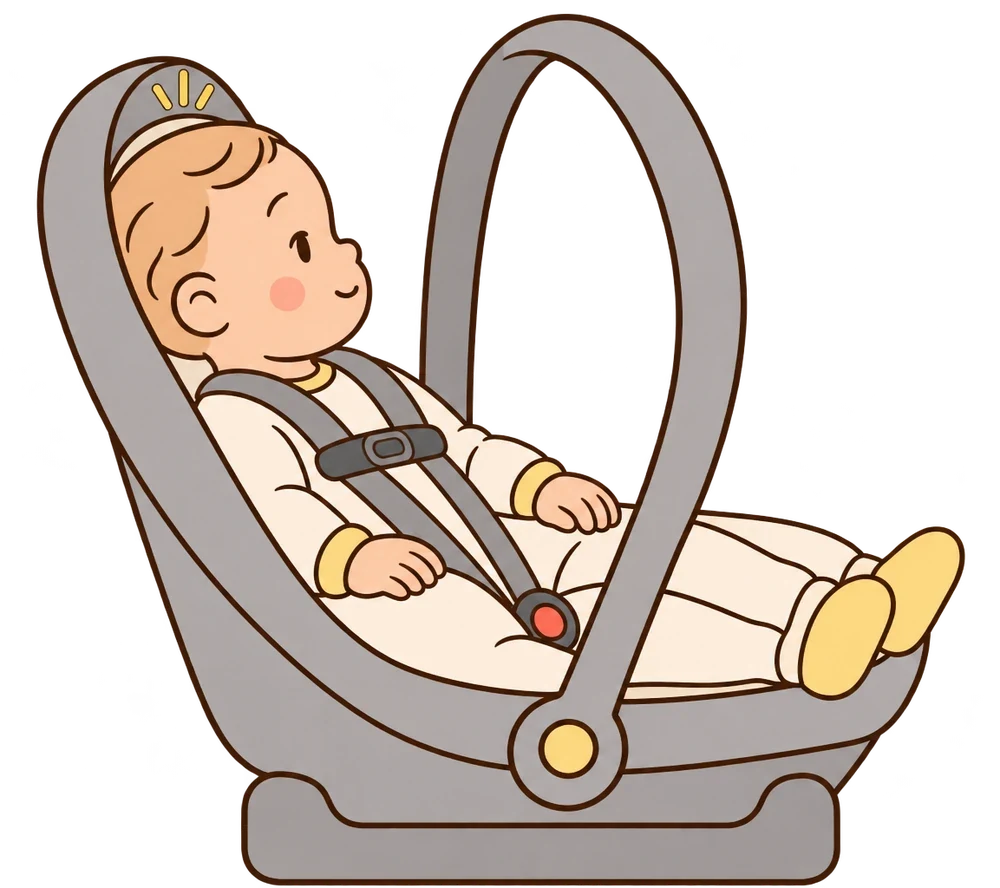
Good: Room to grow
A newborn sits low in the seat, with the newborn insert (an extra cushion that comes with the seat) behind the back, and plenty of shell above the head.
Good: Still fits
Legs that bend or reach past the end of the seat are fine. Check the head and the label, not the feet.
Not good: Time for the next seat
1 in (2.5 cm)or less above the head
With that little shell left above the head, the seat is outgrown, even if your baby is still under its weight limit.
The next seat is a convertible, still facing the back. You can move up earlier, for example once the infant seat with your baby in it gets too heavy to carry.
How to choose a car seat
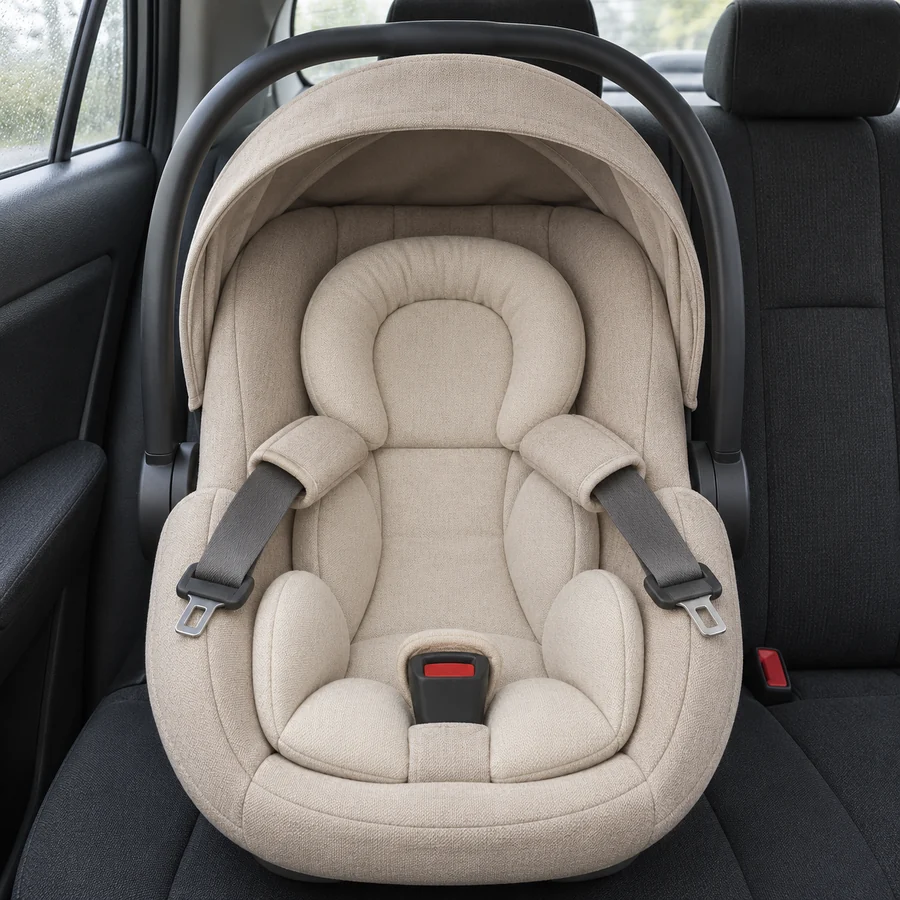
1. It fits your baby now
For a first seat, look for a low starting weight on the label and a newborn insert in the box, so a small baby sits snug. For the next seat, look at the rear-facing limits: the higher they are, the longer your child faces the back.
- Good: From 4 lb (1.8 kg) on the label
- Good: Faces the back to 40 lb (18 kg) or more
- Not good: Faces forward only
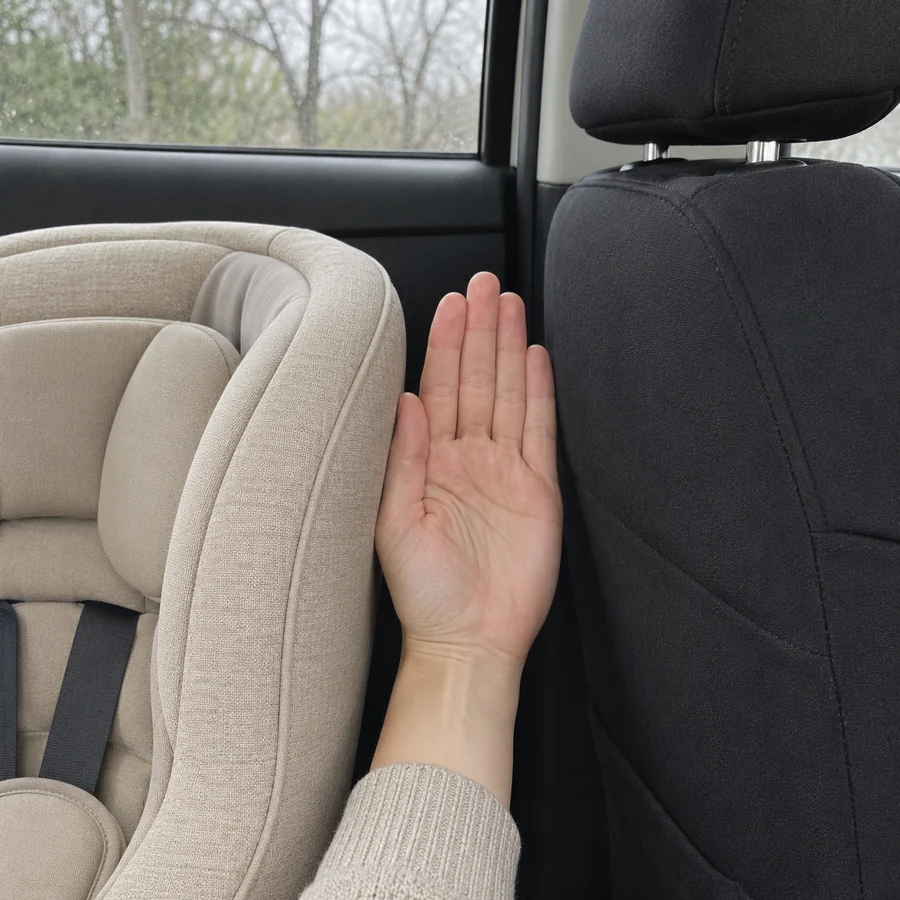
2. It fits your car
Back seats differ in shape, and a seat facing the back takes room from whoever sits in front of it. Try the seat in your own car before the birth, or buy it where you can take it back.
- Good: Front seat still fits an adult
- Good: Goes in tight in your car
- Not good: Rocks after tightening
3. It's easy to get right
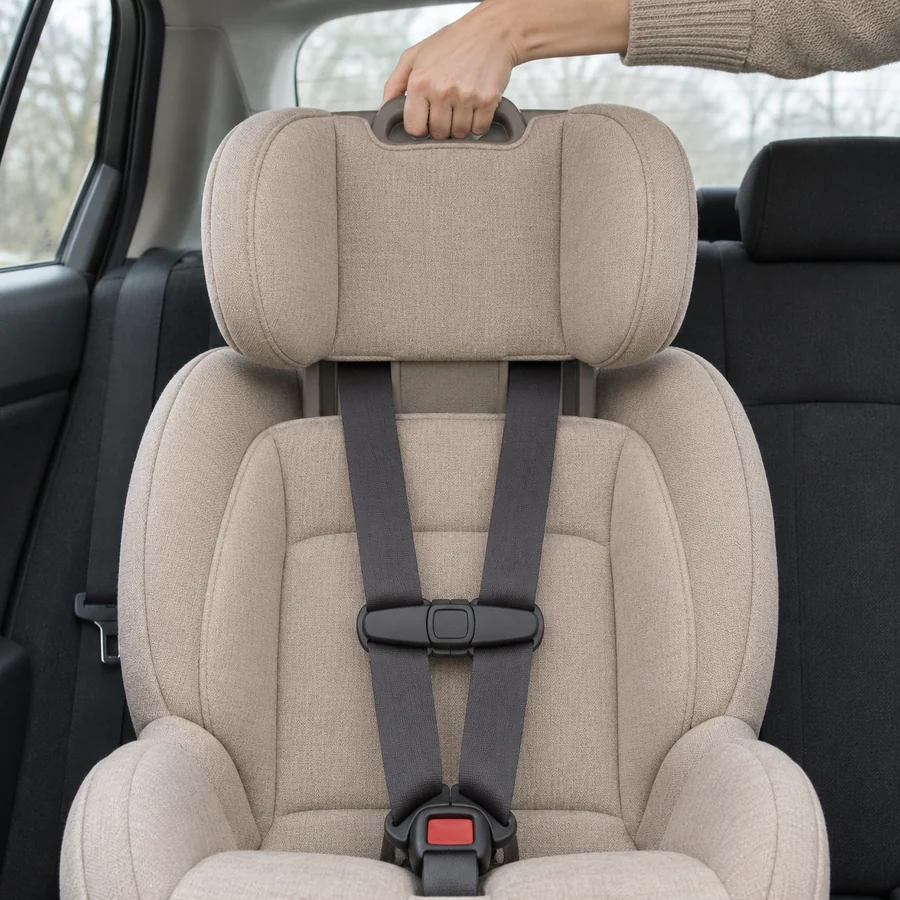
When technicians check car seats, about 6 in 10 turn out to have at least one mistake. That's why the parts that help you get it right matter more than cup holders or soft fabric: a recline indicator, a lock-off (a clamp that holds the car's belt tight) and a headrest that moves the straps up with it.
- Good: Recline indicator on the side
- Good: Headrest moves the straps up
- Not good: Straps moved by hand between slots
Parts of an infant car seat
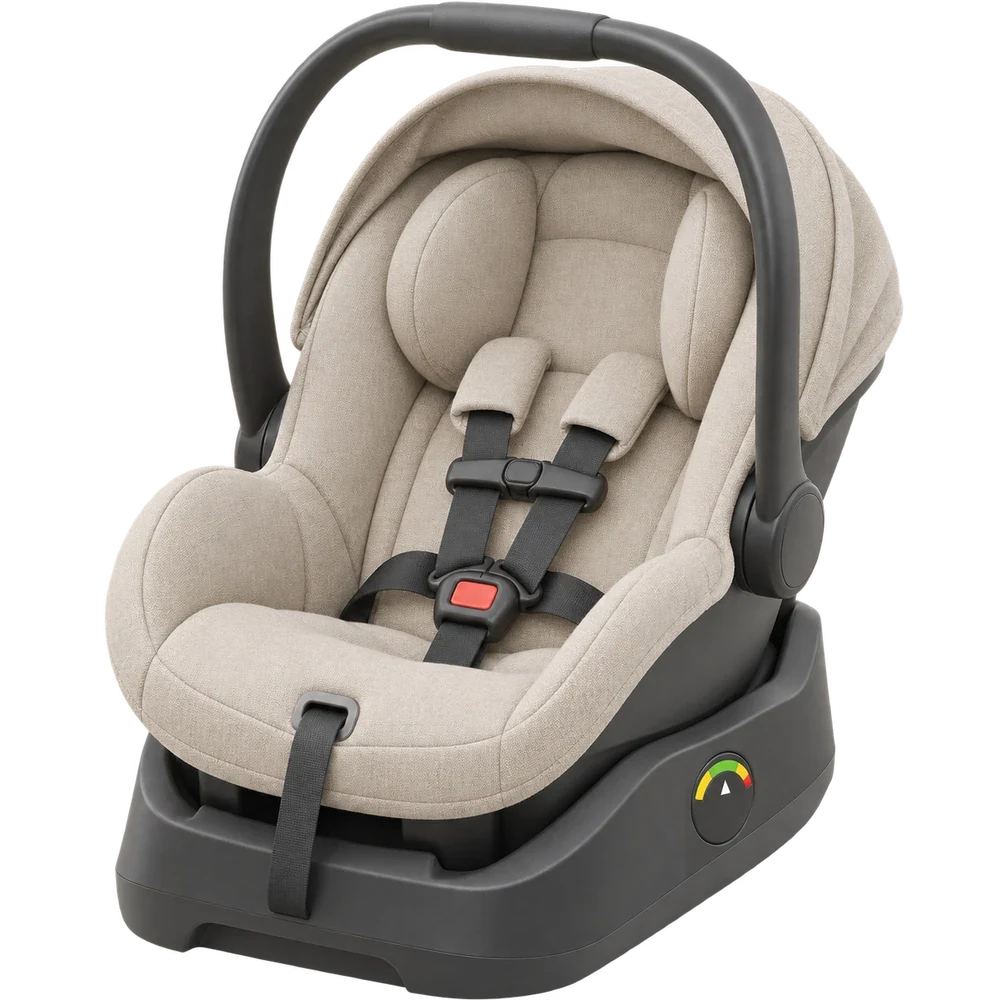
Most infant seats are built like this one, and the bigger seats share the harness.
Five-point harness
Two straps over the shoulders, two at the hips and one between the legs, joined at the buckle.
Chest clip
Holds the shoulder straps in place on the chest. Many European seats have none, because their rules ask for a harness that opens with one press.
Harness adjuster
The strap at the front of the seat. Pull it to tighten the harness, and press the button beside it to loosen.
Base
Stays fitted in the car, so the seat clicks in and out.
Recline indicator
A bubble or a line that shows when the seat sits at the right angle.
Putting it in the car
Read the seat's manual and your car's manual first. The car's manual shows which seats can take a car seat and where its anchors are.
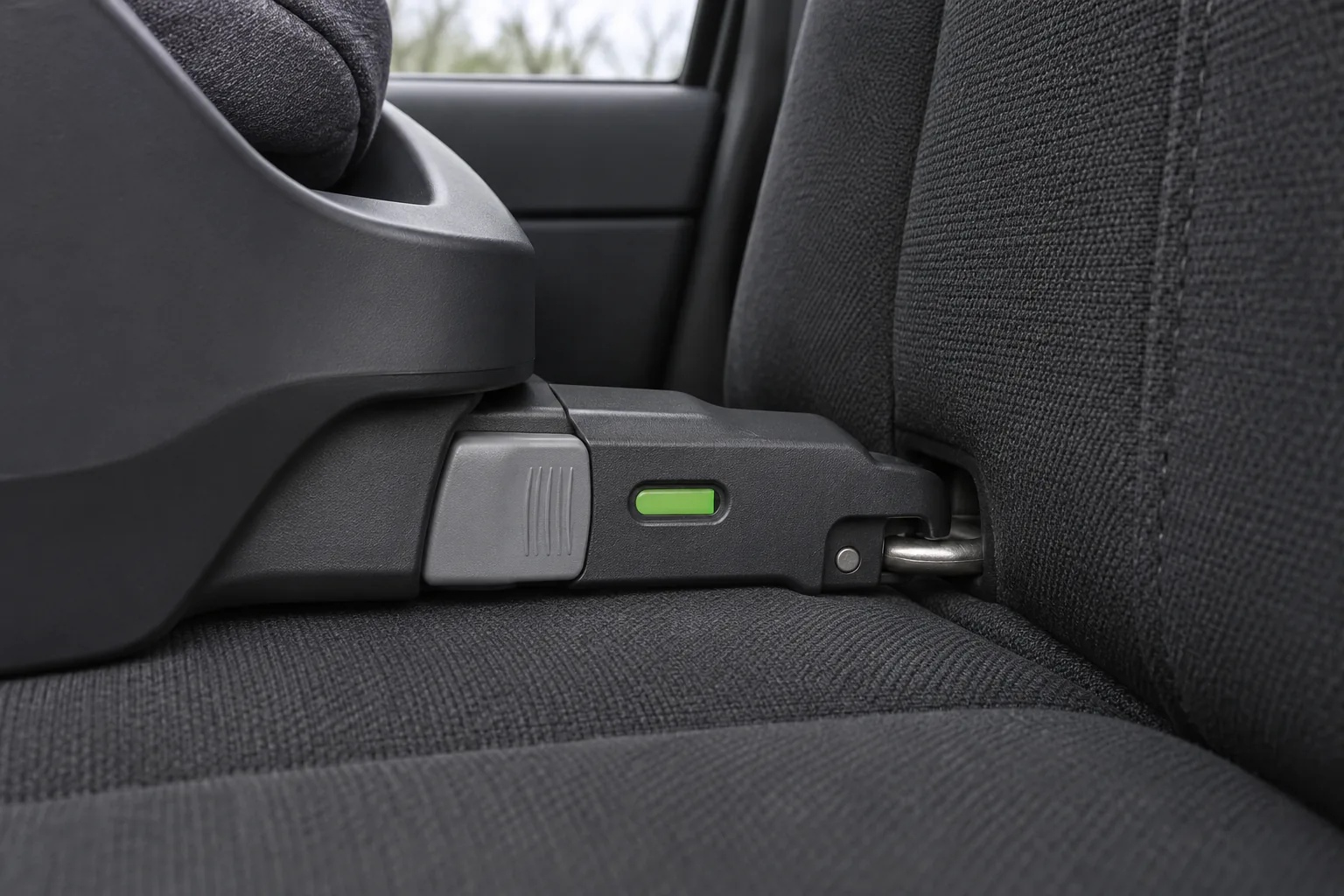
Set the seat, or the infant seat's base, on the back seat facing the right way. Then fix it with one of two things, not both, unless both manuals allow it: the car's seat belt, threaded through the belt path (the slots or hooks marked on the seat or base), or the lower anchors, two metal bars in the crease of the back seat that the seat's connectors click onto (LATCH in the US, ISOFIX in Europe). Both hold the seat equally well.
Pull the belt or the anchor strap tight, then lock the belt. In most cars the belt locks when you pull it all the way out and let it wind back in, and many seats have a lock-off that does it for you. Many bases and European seats also have a support leg, a foot down to the car floor that takes some of the push in a crash.
A seat facing forward always gets its top tether too: a strap from the top of the seat to an anchor behind the back seat, which stops the seat tipping forward in a crash.
Then do the first two checks below. A certified child passenger safety technician (CPST) will check the seat with you, often for free, and in many baby shops the staff fit the seat they sell.
Buckling your baby in
Sit your baby back in the seat in thin clothes, bring the straps over the shoulders and click them into the buckle between the legs. Pull the harness adjuster at the front until the straps are snug, then close the chest clip, if the seat has one, and slide it up.
Nothing goes behind or under your baby unless it came with the seat or its maker made it for that seat. Head cushions, strap covers and liners sold to fit any seat were never crash tested with yours.
As your baby grows, move the straps up. While the seat faces the back, they come out at the shoulders or just below, and once it faces forward, at the shoulders or just above.
Five checks before you drive
Do the first two when the seat goes in. Do the last three every time you buckle up, because outfits change and your baby grows.
Tug at the belt path
Hold the seat where the belt or the anchors go through it, and pull side to side and front to back.
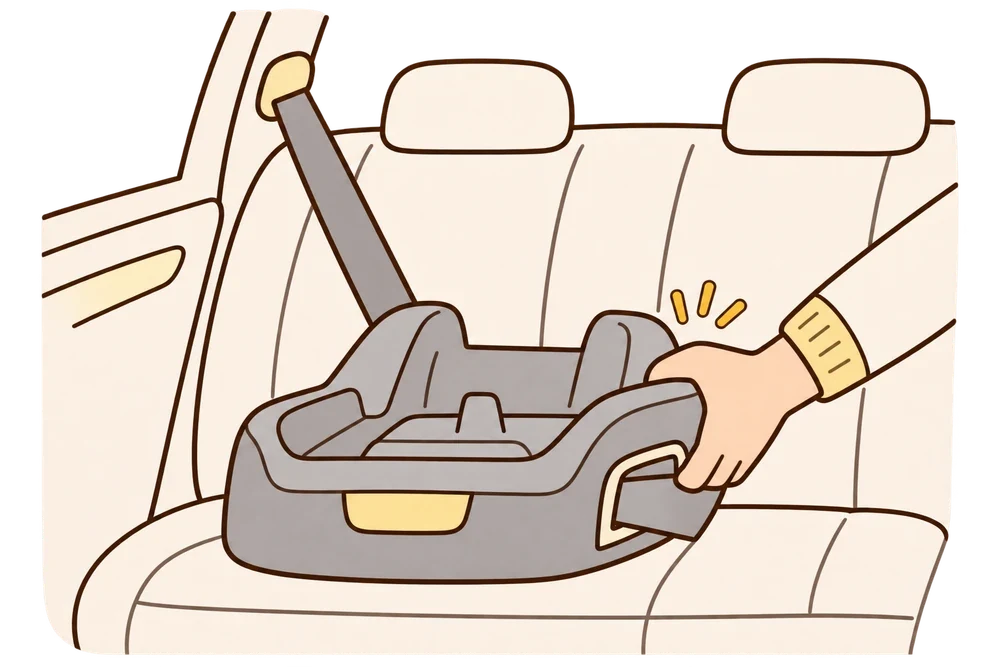
- Moves less than 1 in (2.5 cm)
- Slides or rocks further
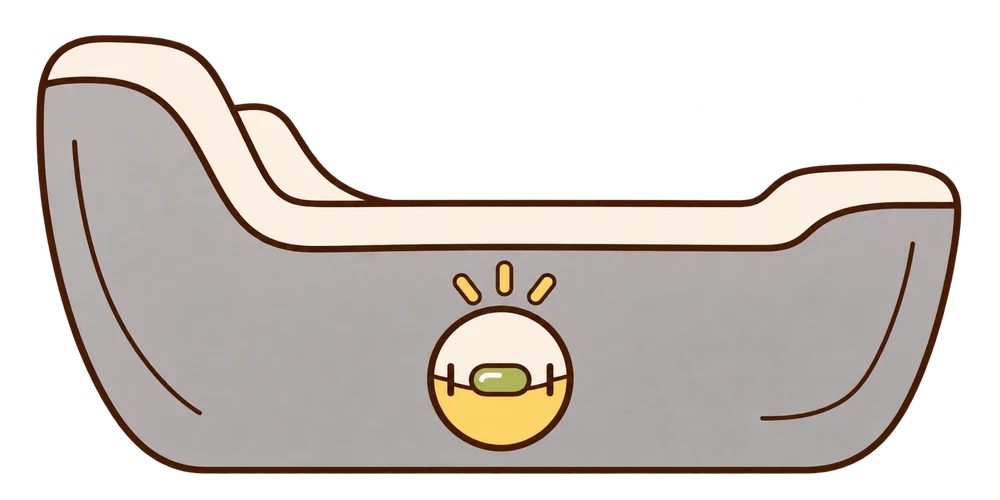
Read the recline indicator
Look at the bubble or line on the side of the seat or its base. At the right angle, a young baby's head can't drop forward onto the chest.
- Inside the marked zone
- Outside the zone
Straps at the shoulders
Look where the straps come out of the seat back, beside your baby's shoulders.
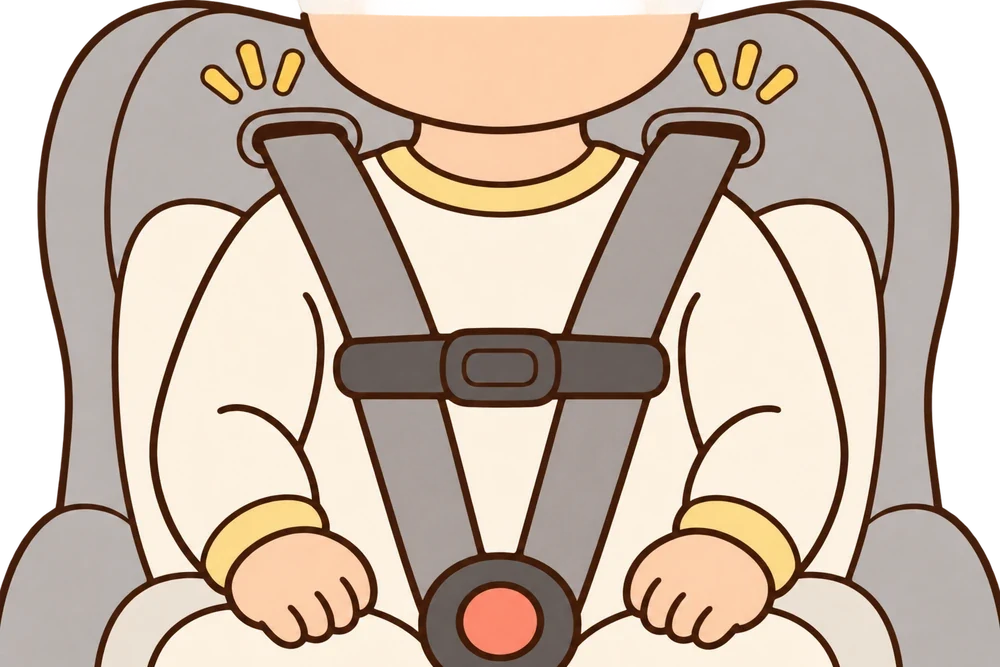
- At or just below the shoulders
- Above the shoulders
The pinch test
Tighten the straps, then try to pinch a fold of strap at the collarbone.
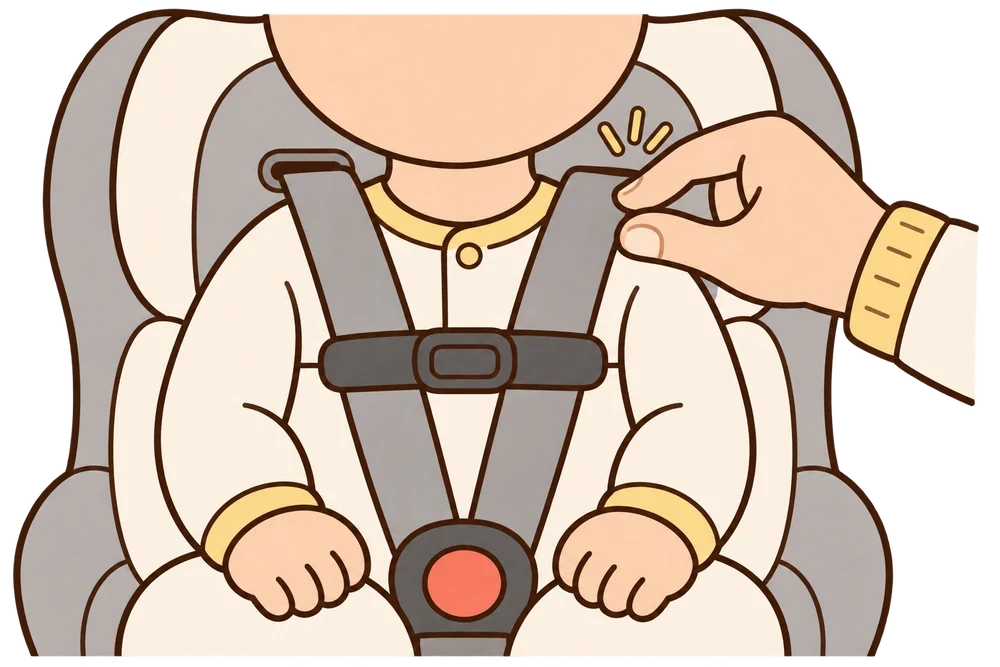
- Fingers slide off
- A fold pinches up
Chest clip at the armpits
On a seat with a chest clip, slide it up to the middle of the chest.
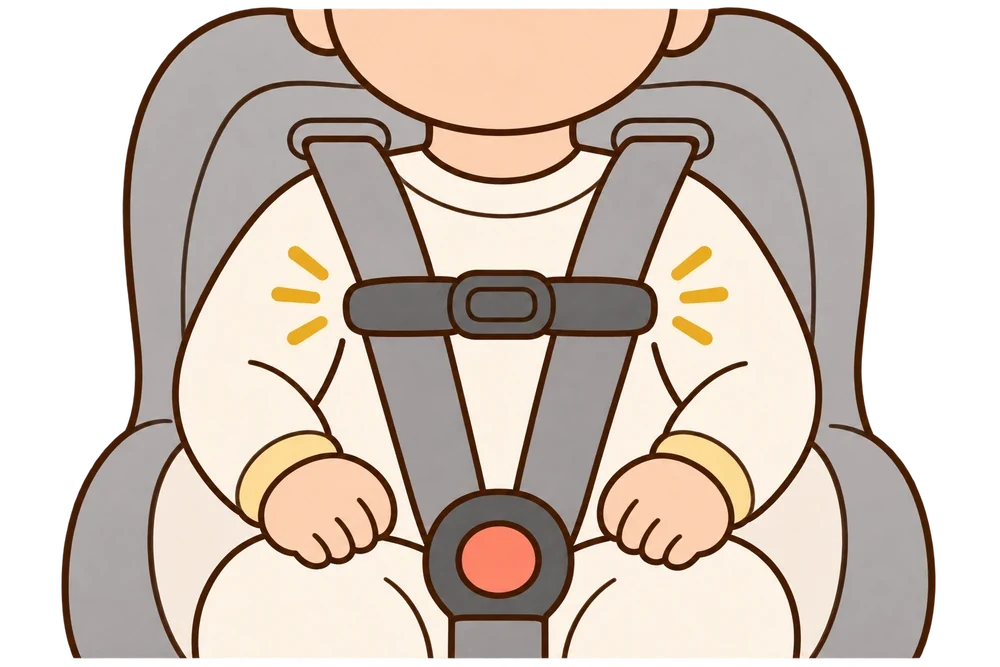
- Level with the armpits
- Down on the tummy
How long a car seat lasts
Car seats expire. Most have an expiration date 6 to 10 years after they were made, because the plastic weakens with years of heat and cold and the safety rules keep improving. Look for it on a label or stamped into the plastic, often underneath. An infant seat and its base each have their own. If the seat shows only the date it was made, the manual says how many years it lasts.
A used seat is safe only when you know its history: never in a crash, with every part, its labels and its manual, in date and not recalled. That means a seat from someone you trust, not from a stranger.
After a moderate or severe crash, replace the seat even if it looks fine, and its base with it. After a minor crash it may stay, but only if all five are true: the car could be driven away, the door nearest the seat wasn't damaged, nobody was hurt, the airbags didn't open, and the seat shows no damage. Some makers ask for a new seat after any crash, so check the manual.
Register the seat with its maker, on the card in the box or on the maker's website, so you hear about a recall.
Questions parents ask
How long can my baby stay in the car seat?
For the drive, with breaks. The 2-hour rule you may have heard of isn't a hard limit, but on a long trip it's a good habit to stop every 2 to 3 hours and take your baby out for a stretch. With a young baby or one born early, avoid long drives where you can.
Can my baby keep sleeping in the car seat once we're home?
No. Sleeping in the seat while you drive is fine, but when you arrive, lay your baby down on the back on a firm, flat surface, even if it wakes your baby. Slumped upright for a long time, a young baby can find breathing harder.
Can I use the infant seat on the stroller for walks?
For getting from the car to where you're going, yes. For a long walk, a young baby is better lying flat in a stroller carrycot or a flat seat, for the same reason as in the car.
Do I need the base for an infant car seat?
Not always. Many infant seats can go in with the car's seat belt alone, threaded around the seat as its manual shows, which suits taxis, rental cars and other people's cars. A few can't, so check the manual. The base makes daily trips quicker, and a second base saves refitting in a second car.
Do we need a car seat if we don't have a car?
Yes, if your baby will ever ride in a car: a taxi, a friend's car, a rental car. An infant seat that goes in without its base is the easiest to take along.
Where in the car should the car seat go?
In the back seat, away from the front airbags. The middle may be the safest place if the seat goes in tightly there; if it doesn't, either side is fine. In the US a seat facing the back never goes in front of a passenger airbag. In the UK and the rest of Europe it may go in front, with the airbag switched off.
When do I take the newborn insert out?
When your baby reaches the weight or height that the manual or the insert's label gives. A baby born early may get a car seat test in the hospital before going home, to check that riding in the seat is safe yet.
Can we use the car seat on a plane?
Many US seats with a harness can: look for the label that says the seat is certified for use in motor vehicles and aircraft, which makes it FAA-approved. You then buy your baby a plane seat, and a car seat facing the back goes by the window, so it doesn't block anyone's way out. Boosters can't be used on planes, and many European seats need a shoulder belt, which plane seats don't have, so check with your airline too.
Are rotating car seats worth it?
They swivel toward the open door, which saves your back when you buckle up, and they meet the same safety rules as any other seat. They cost more, weigh more and take more room. Turn the seat back and lock it facing the back or forward before you drive.
Is a more expensive car seat safer?
No. Every seat sold legally meets the same safety standard, and a higher price buys easier fitting, softer fabric or less weight. The safest seat is the one that fits your child and your car and goes in right every time.
What can my baby wear in the car seat?
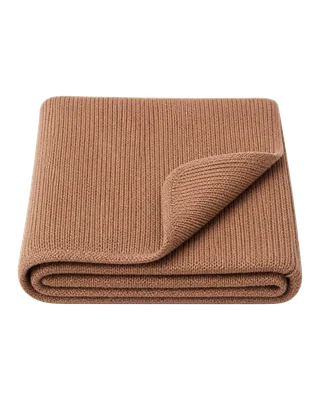
Thin, close layers under the straps, and the warmth on top: a light car blanket or a warm one over the buckled harness. A puffy coat squashes flat in a crash and leaves the straps loose. The car seat guide has the outfit for every temperature.
How do I keep the sun off my baby in the car?
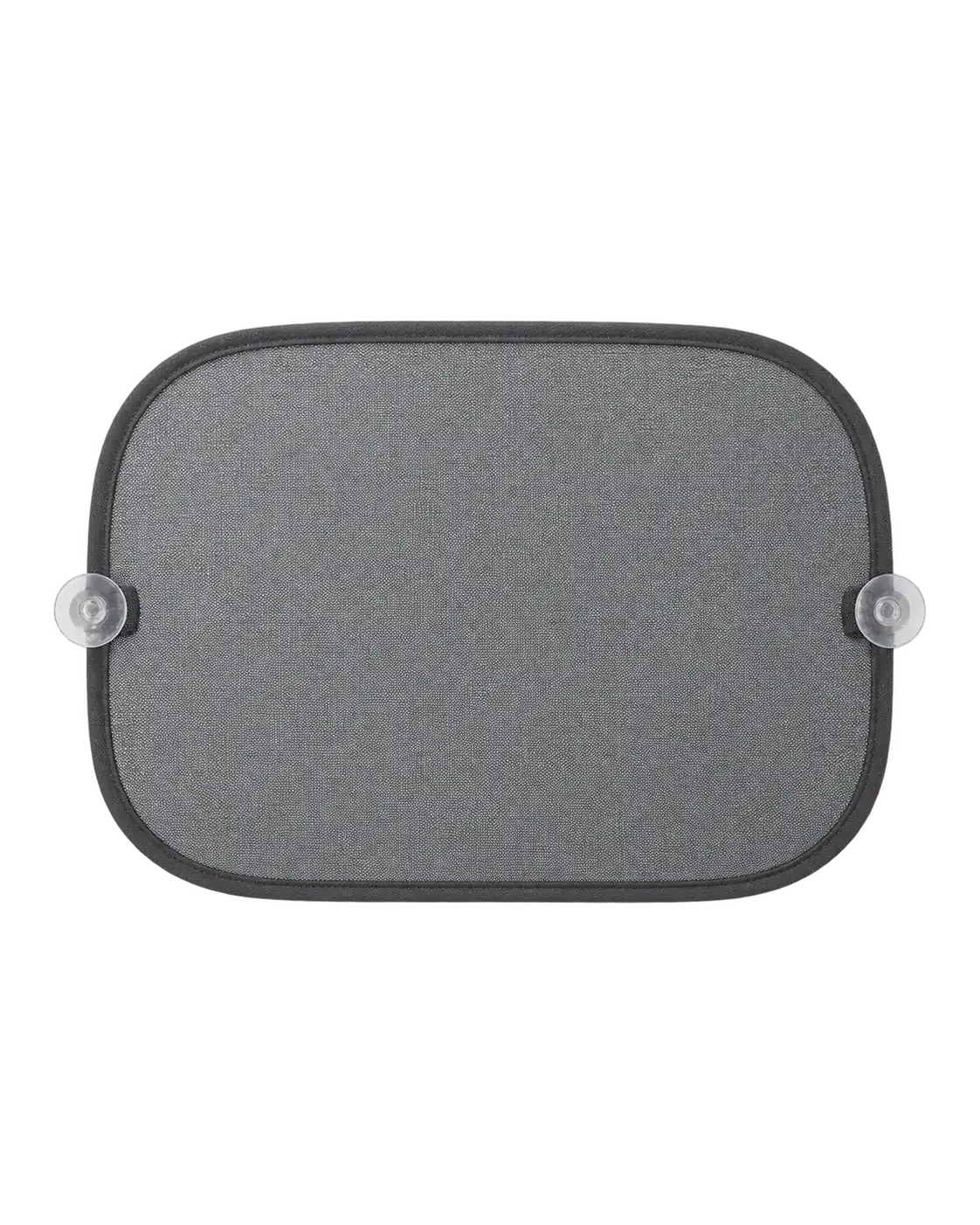
A car window shade on the window beside your baby. On a hot day, touch the buckle before you strap your baby in, because metal parts left in the sun can get hot enough to burn.