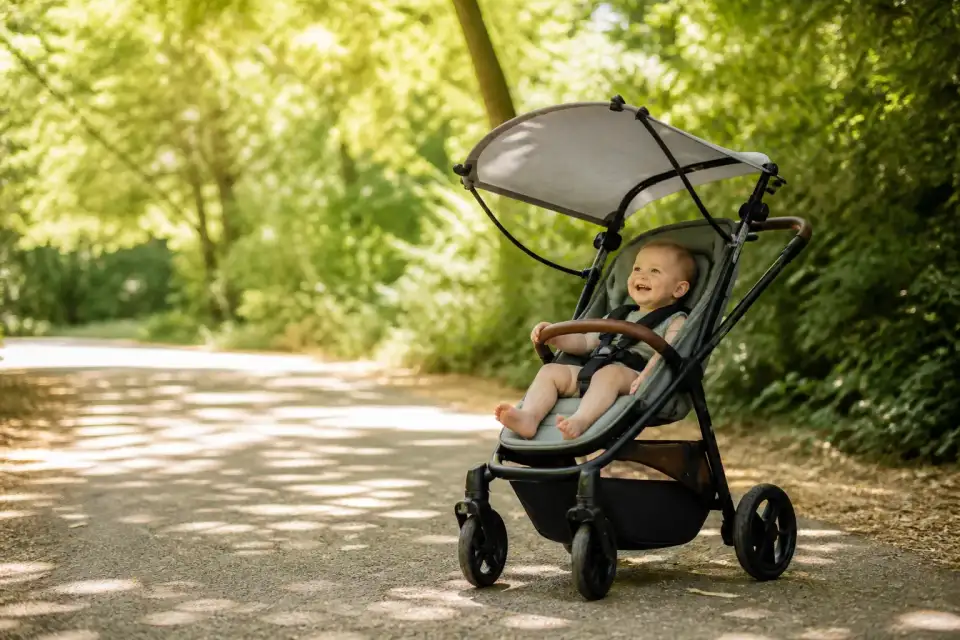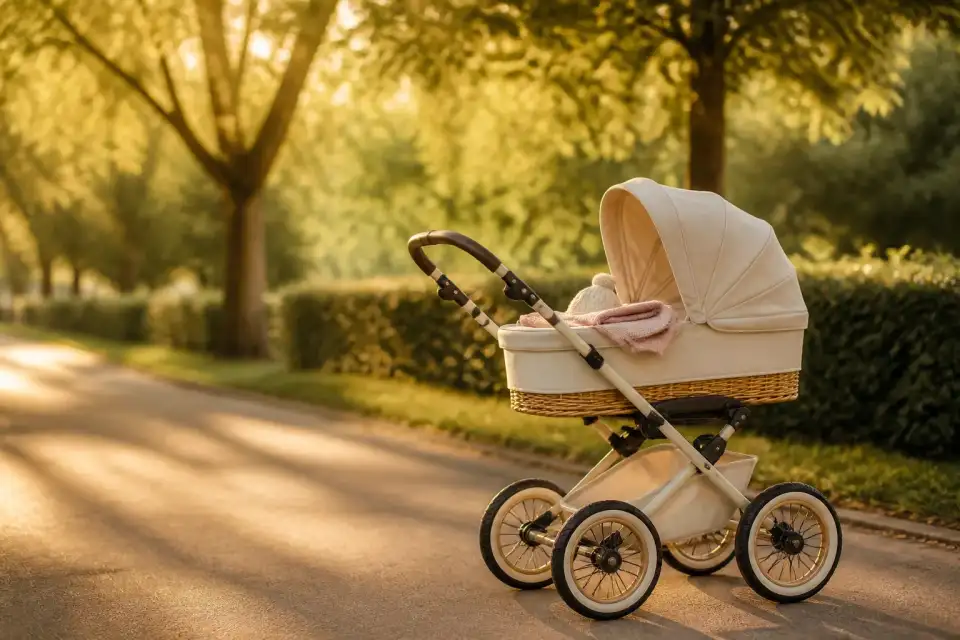
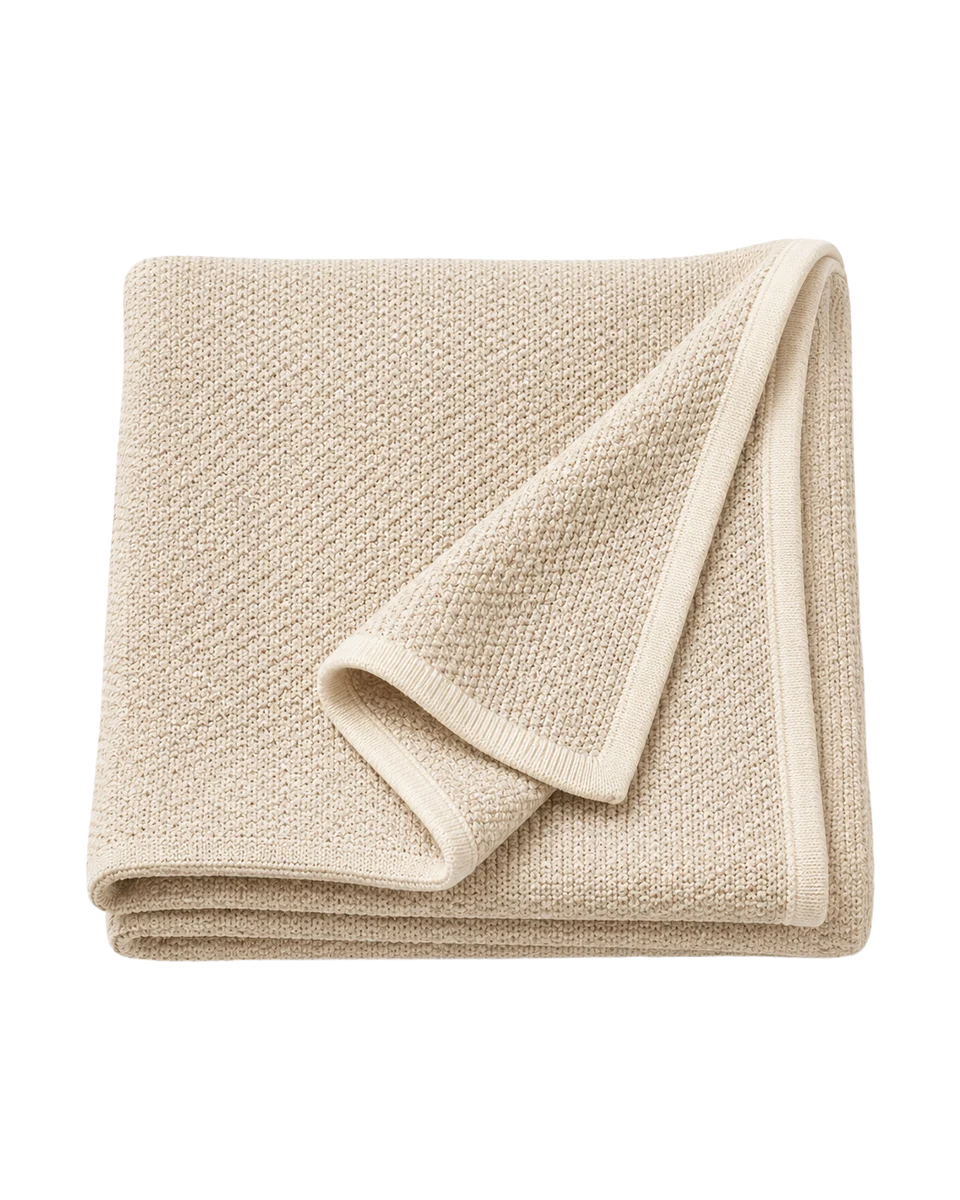
A stroller blanket goes over your baby's legs and lap in the stroller, on top of the buckled harness (the stroller's safety straps). It is smaller than a bed blanket, so it tucks in at the sides without trailing down.
- For ages0–4years
- You'll need1
- Use it at10–20°C50–68°F
Do you need one?
You will use one if you walk with the stroller on cool days: in spring and autumn, or on a morning that starts cold and warms up later. A walk warms you up, but your baby sits still the whole way. A blanket is the quickest layer to add, and to take off again.
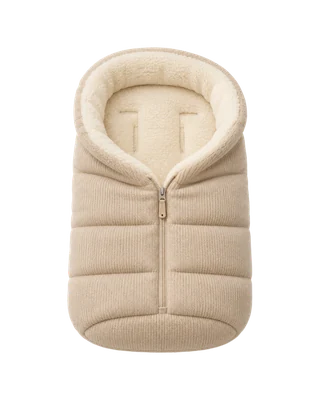
On cold winter walks, a footmuff is warmer: a padded bag that zips up around the legs and stays on through every kick. On hot days, leave the blanket at home.
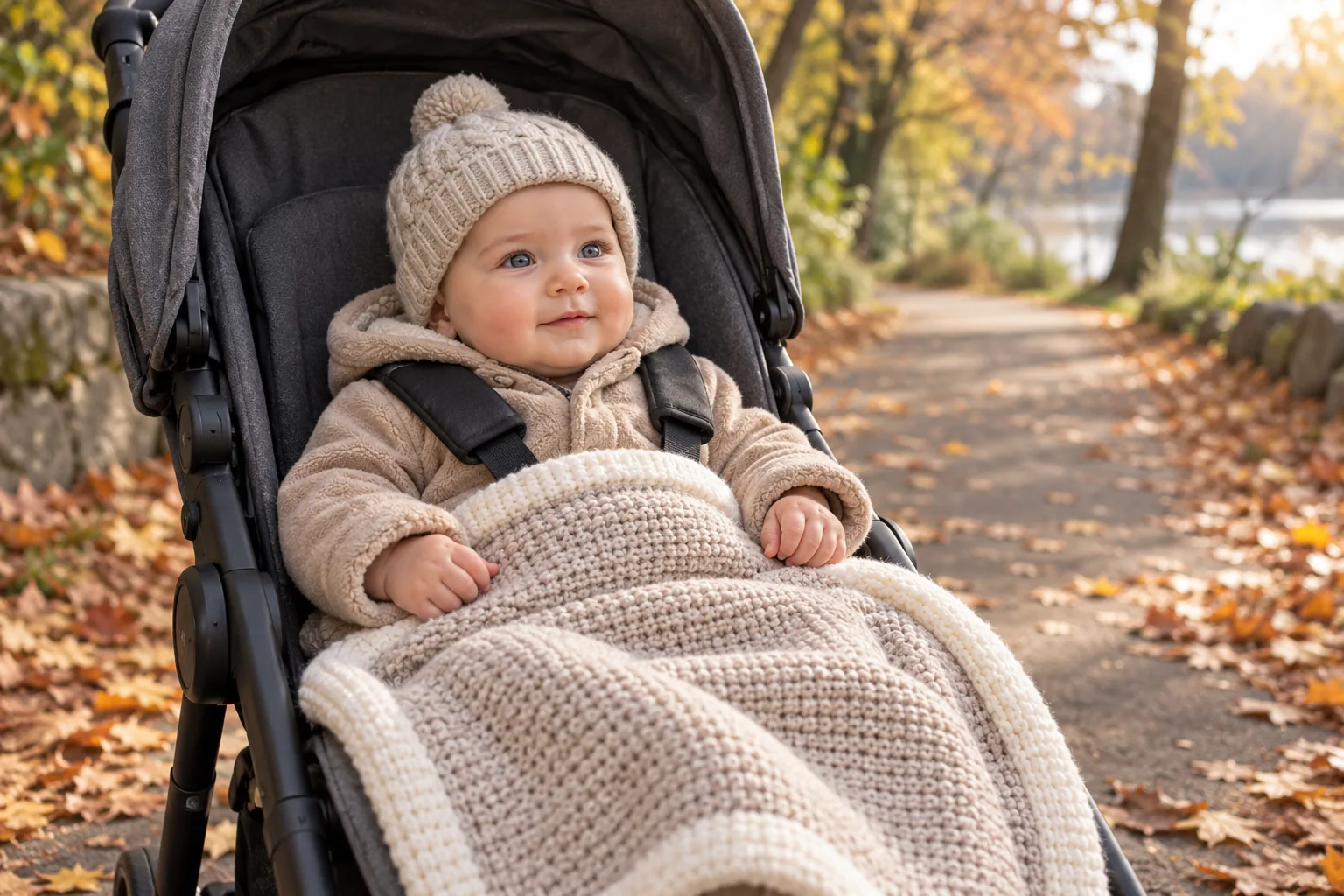
Types of stroller blanket
The fabric decides how warm it is. Pick the one for the weather you walk in most.
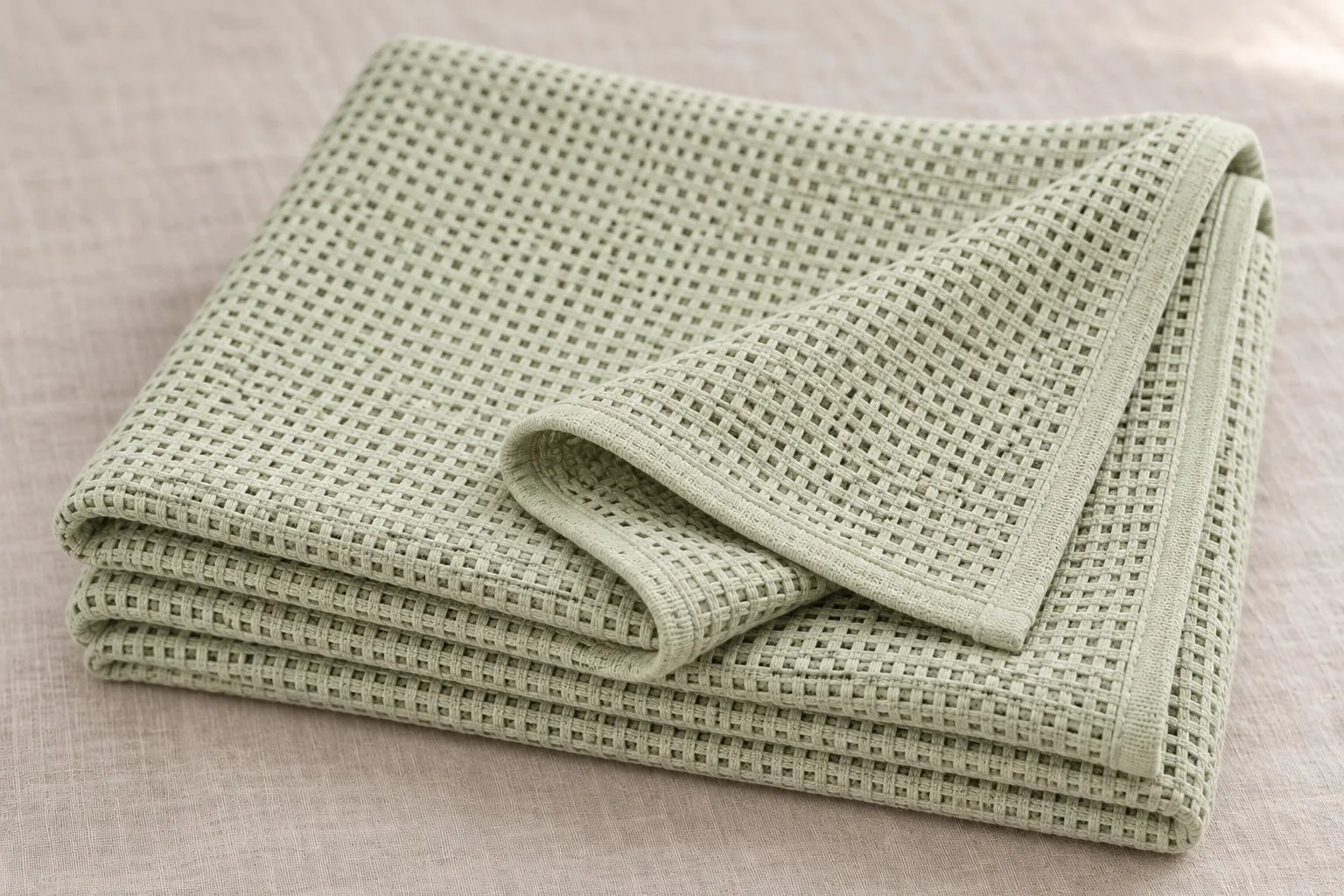
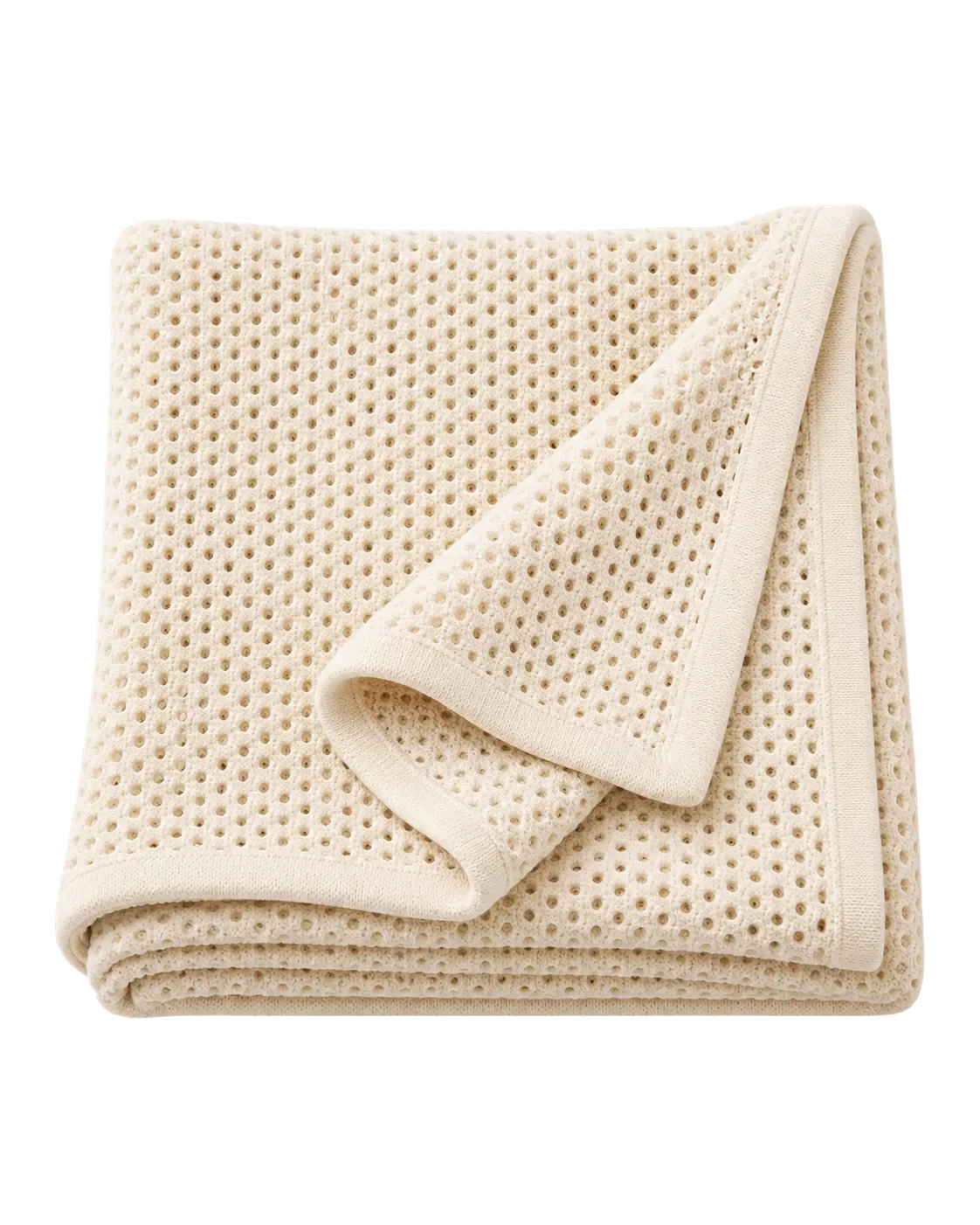
Thin cotton
Cotton woven with small holes (a cellular blanket, in the UK), or muslin, a thin, loosely woven cotton. The lightest kind, for mild days.
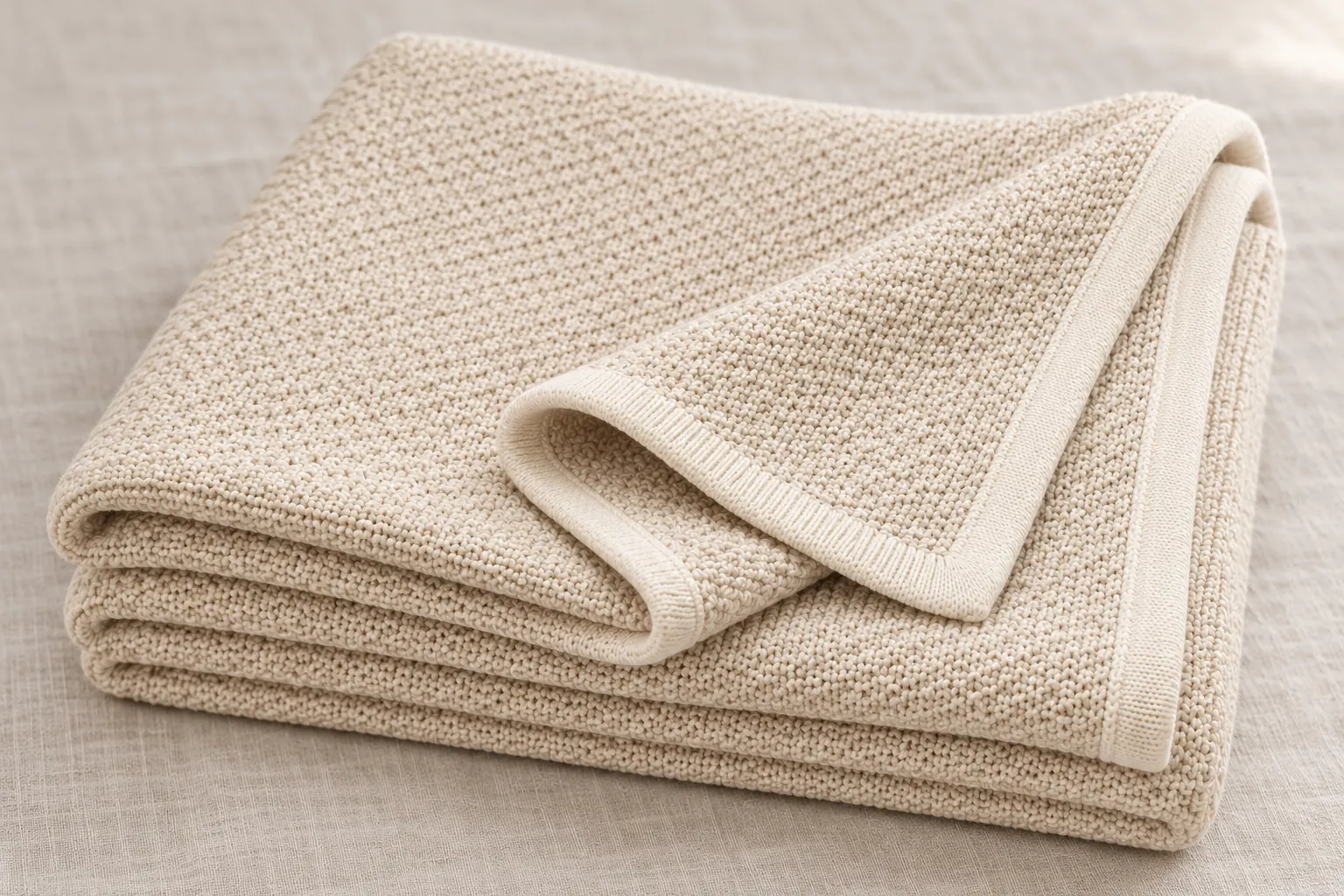
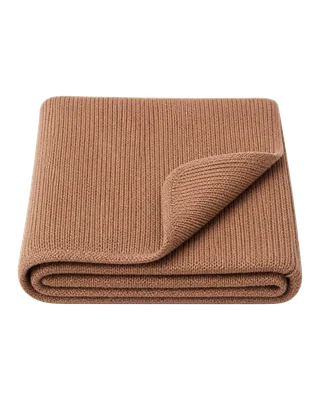
Knit
Cotton, wool or acrylic yarn, knitted like a sweater, and often handmade as a gift. Warmer than thin cotton, for cool days. Wool stays warm even when it gets damp.
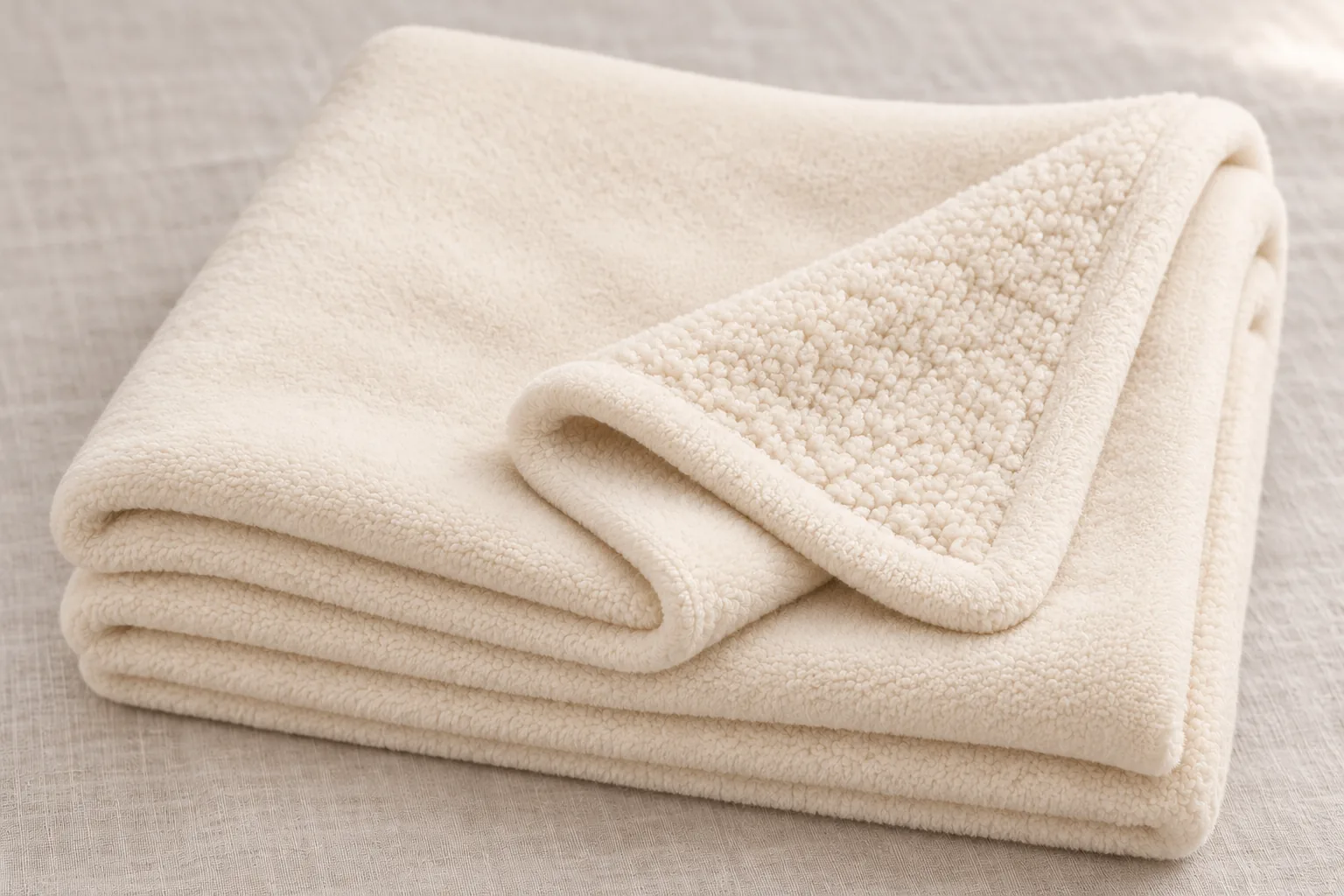
How to choose a stroller blanket
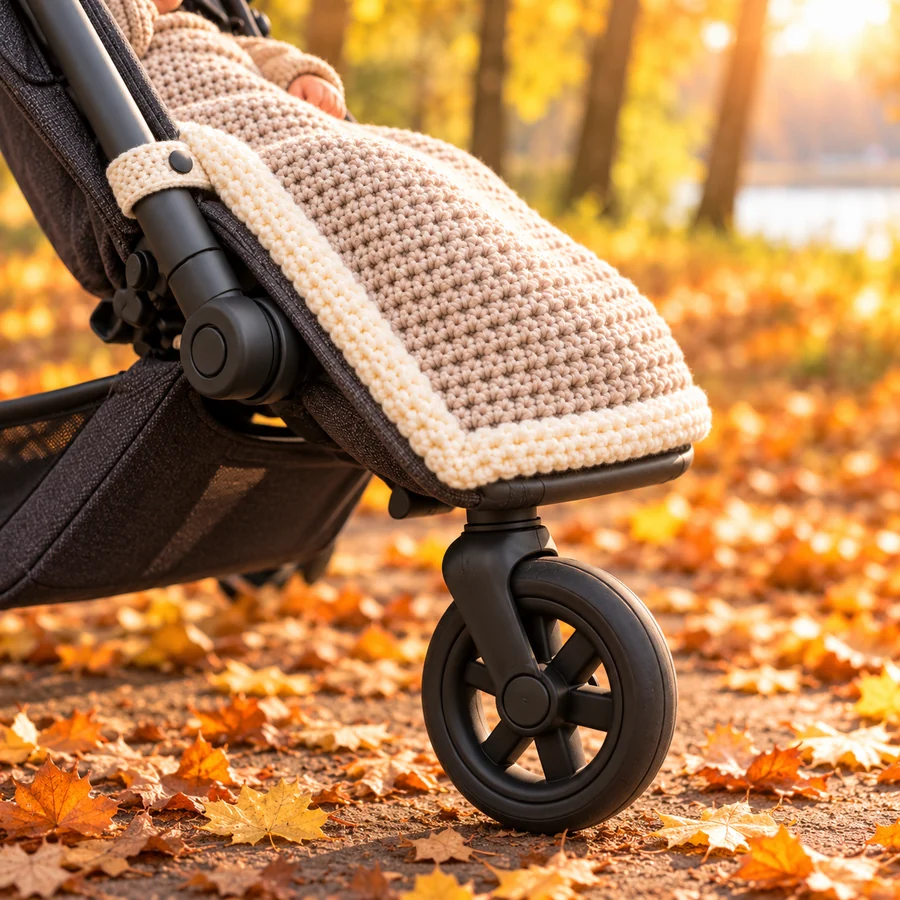
1. The right size
It should reach past the toes, so the end folds under the feet, and tuck in along both sides. A bed blanket is too big: its edges hang down toward the wheels.
- Good: Reaches past the toes
- Good: Tucks in at both sides
- Not good: Edges hang toward the wheels
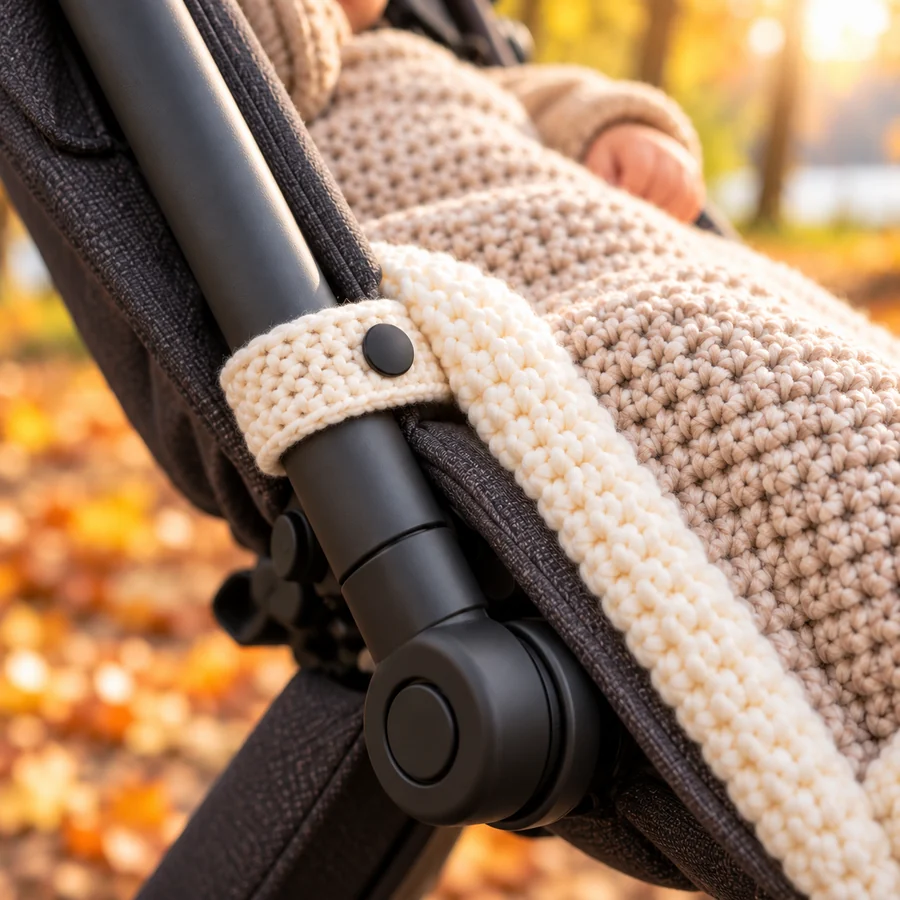
2. It stays on
A kicking baby soon slides a loose blanket off, and it drags. Some blankets have straps or snaps that fasten around the stroller frame. For one without, use two stroller clips (spring clips made for this) to hold its edges to the frame at the sides.
- Good: Straps or snaps for the frame
- Good: Stays put through a kick
- Not good: Slides off at the first kick
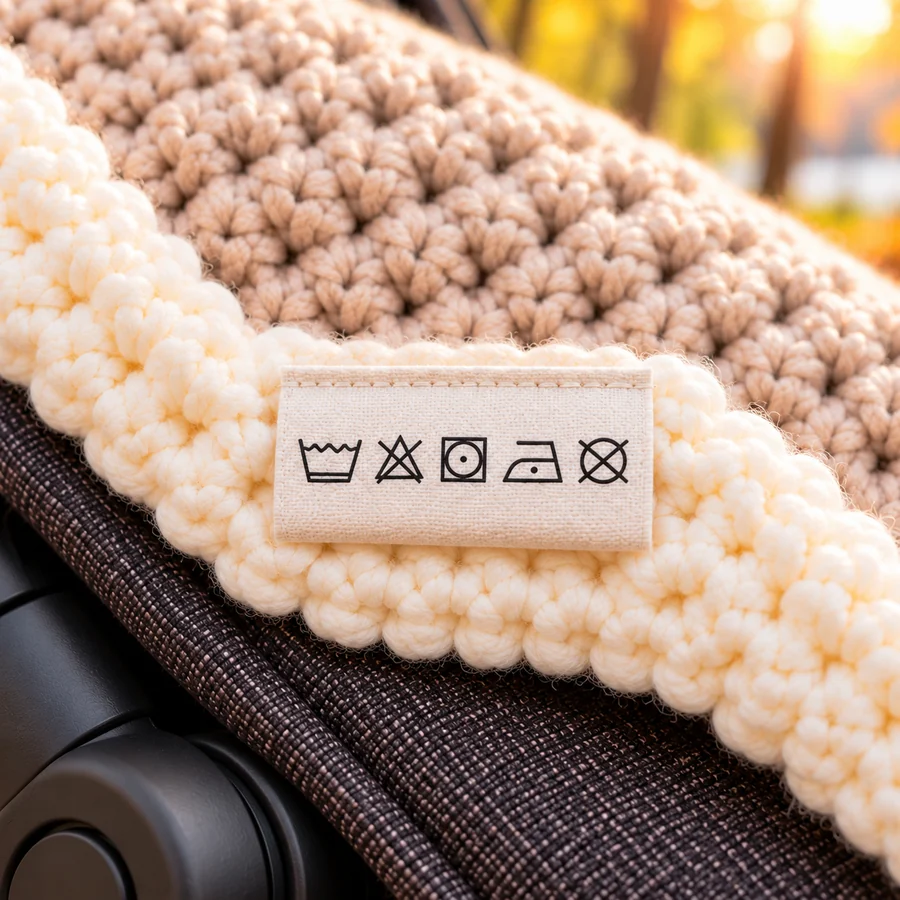
3. It goes in the washing machine
Muddy boots, spit-up and a drop on the sidewalk now and then mean it needs washing often. Cotton and fleece usually go in the machine. Check the label on a knit: some are hand-wash or dry-clean only.
- Good: Machine-wash on the label
- Not good: Hand-wash only
- Not good: Dry-clean only
How to use it
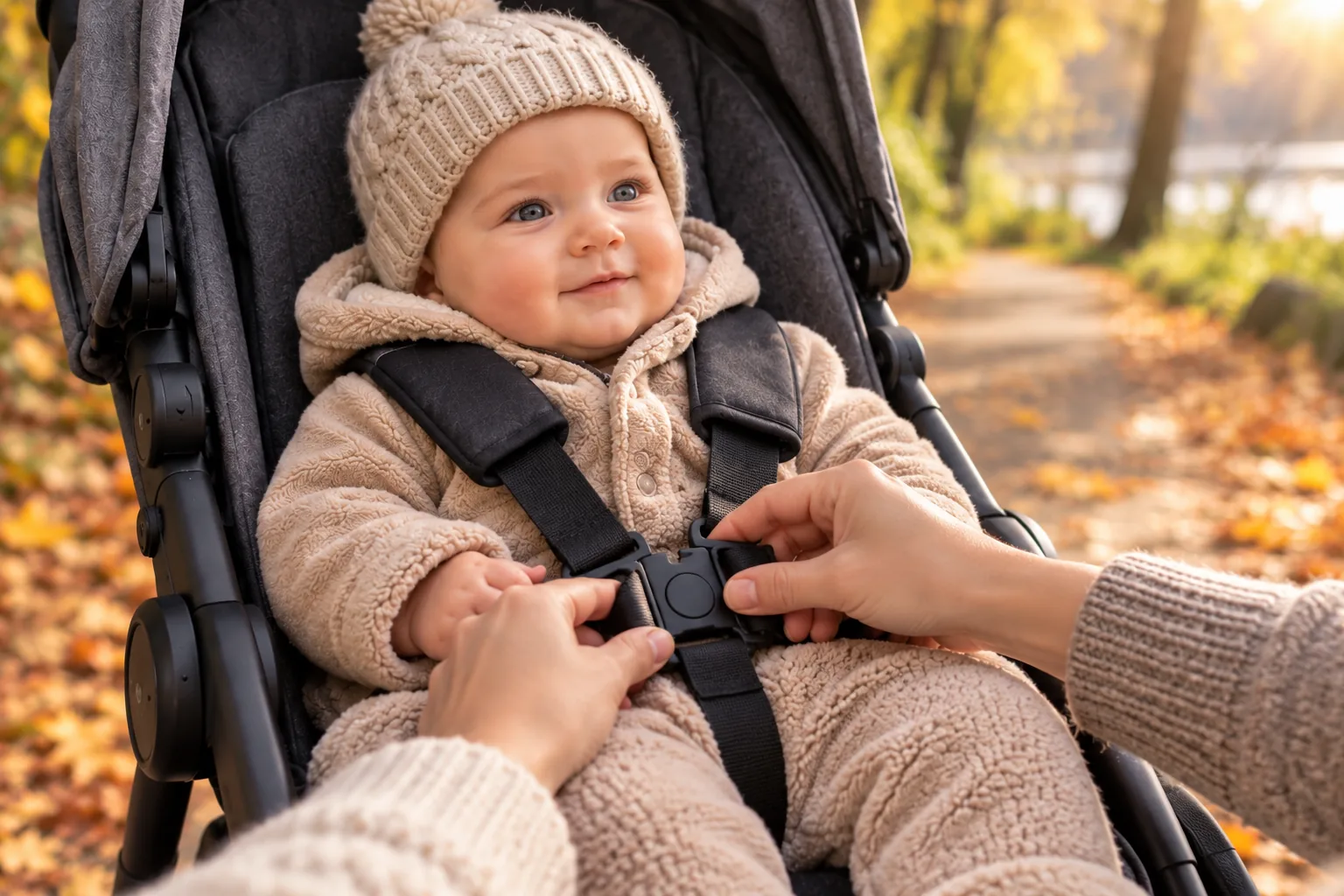
1. Buckle, then cover
Buckle the harness and pull it snug first. Then lay the blanket on top, so the straps sit close to your baby and the blanket comes off without unbuckling.
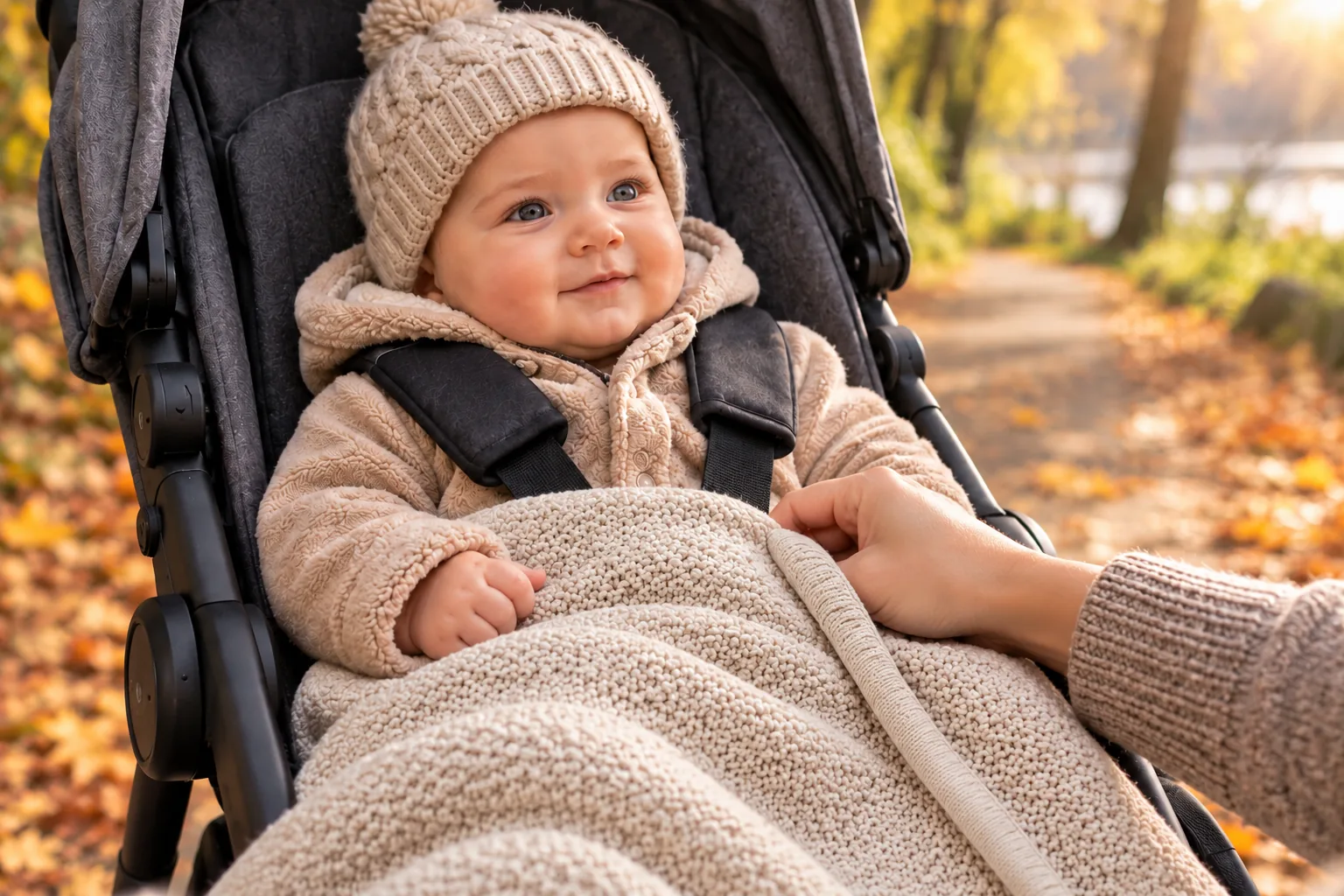
2. Tuck it in
Tuck the sides in along the seat and fold the end under the feet, so nothing hangs near the wheels. Keep the top edge under the arms, clear of the face.
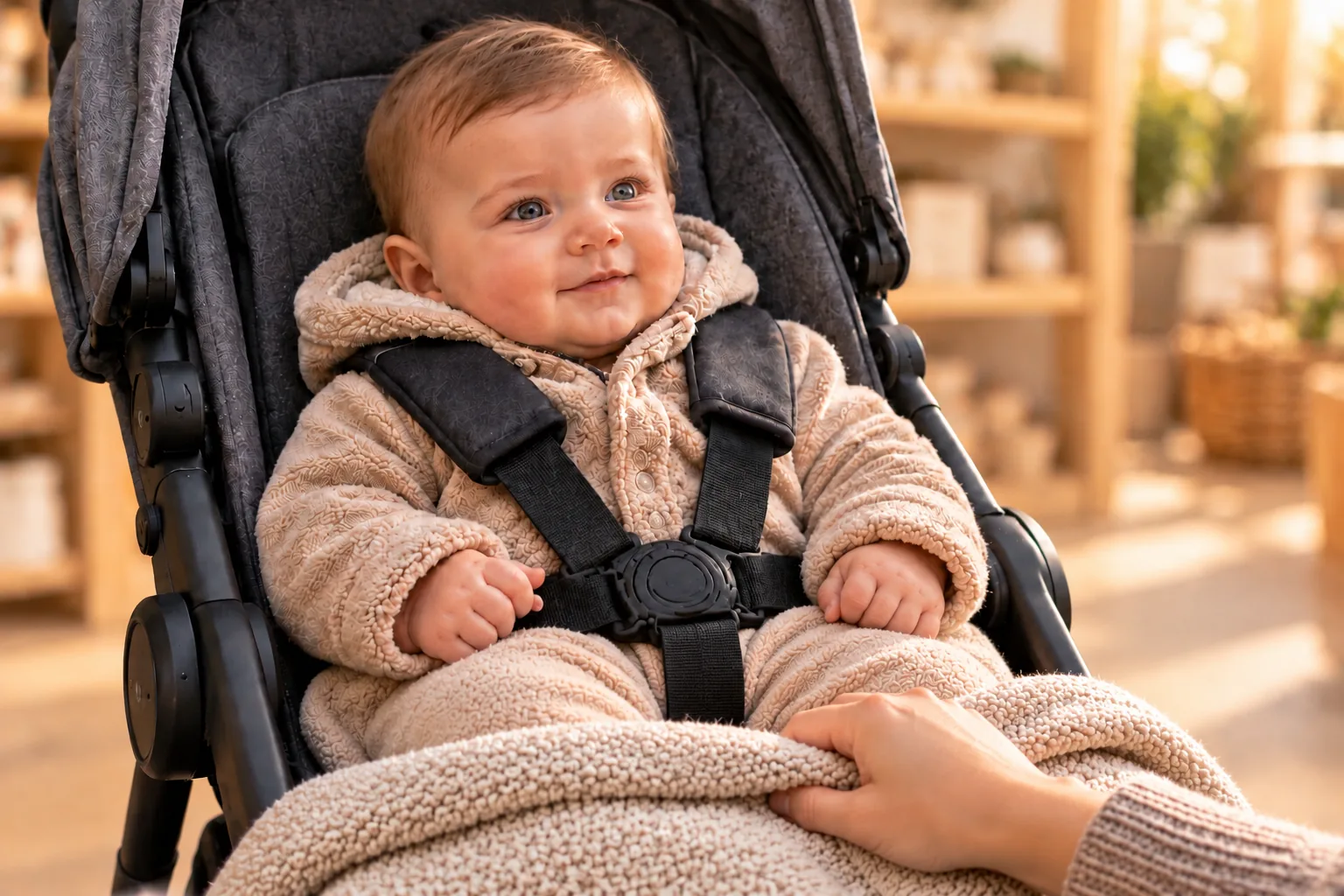
3. Fold it back indoors
Inside a shop or on a bus, fold it down to the shins or take it off. Do it even if your baby is asleep: a sleeping baby may not fuss when too warm. Outdoors, fold it back if the back of the neck feels hot or damp.
Questions parents ask
What size is a stroller blanket?
Most are about 75 × 100 cm (30 × 40 in). That covers a baby's legs and lap, with enough left over to tuck in.
Can you put a blanket on a baby in a car seat?
Yes, over the buckled harness, never under the straps or behind your baby. The car seat guide says what to wear under the straps.
Are stroller blankets safe?
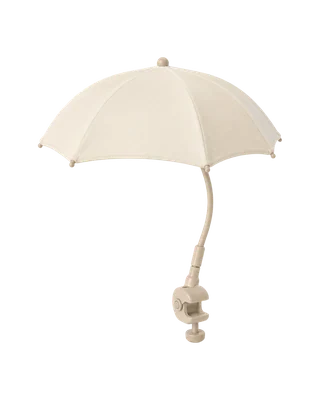
Yes, over your baby's legs and lap, with the face clear. Never hang one over the stroller's opening for shade, even a thin muslin: a blanket there can make your baby overheat. The guide on covering a stroller explains why.
Can I use a receiving blanket or a muslin in the stroller?
Yes, on a mild day. A receiving blanket (a thin flannel blanket for newborns) is about 75 cm (30 in) square, close to stroller size. A muslin swaddle is about 120 cm (47 in) square, so fold it smaller first, or it reaches the wheels.
Can my baby sleep under a blanket at night?
Not under a loose one before 12 months. Until then, a sleep bag keeps your baby warm in the crib, or a thin cotton blanket tucked in so firmly that it stays put all night. Baby blankets shows how to tuck one in, and which kinds are right for a bed.