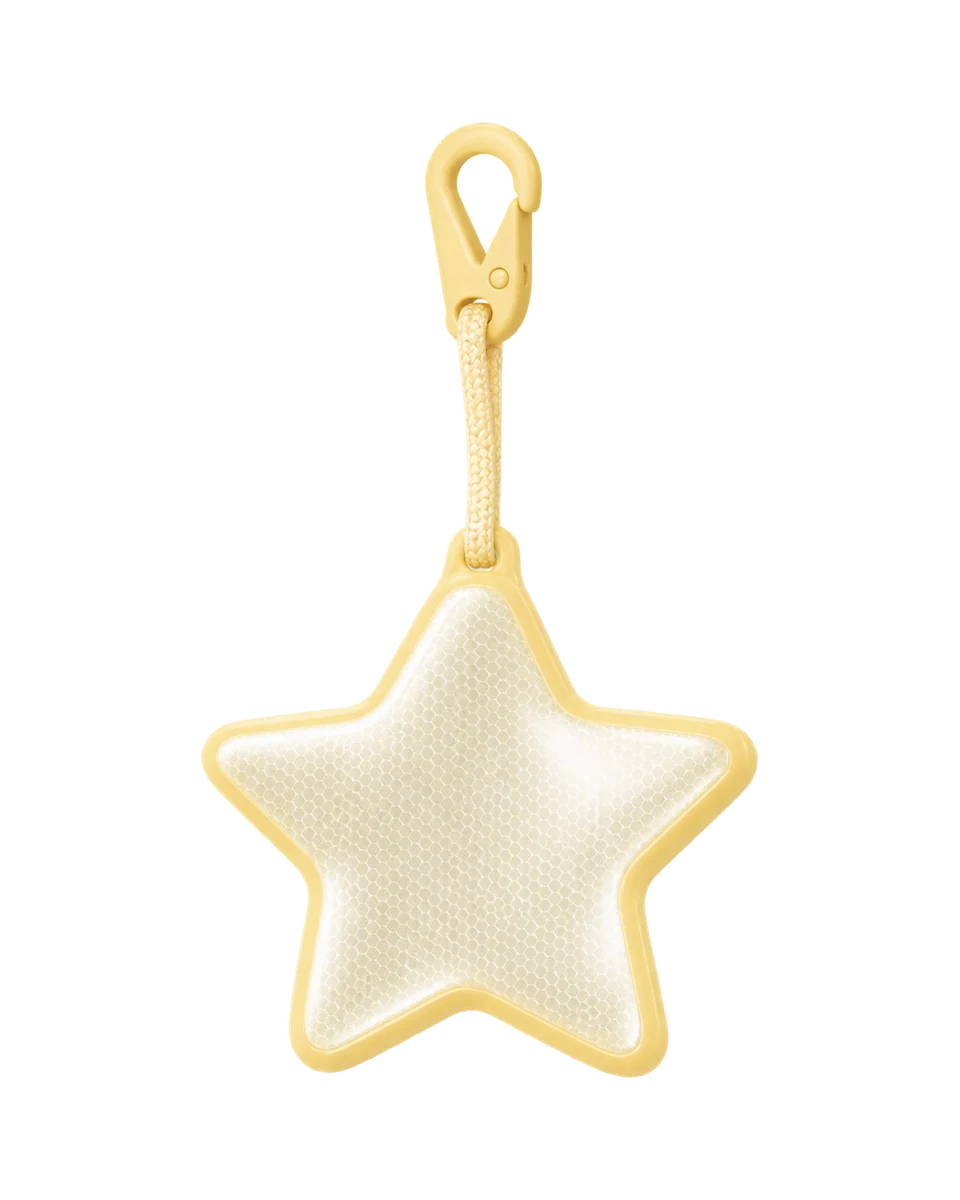
A reflector sends the light of car headlights straight back to the driver, so on a dark street the driver sees a bright spot long before they see you. Reflectors come as tags on a cord, bands, stickers and tape, and vests.
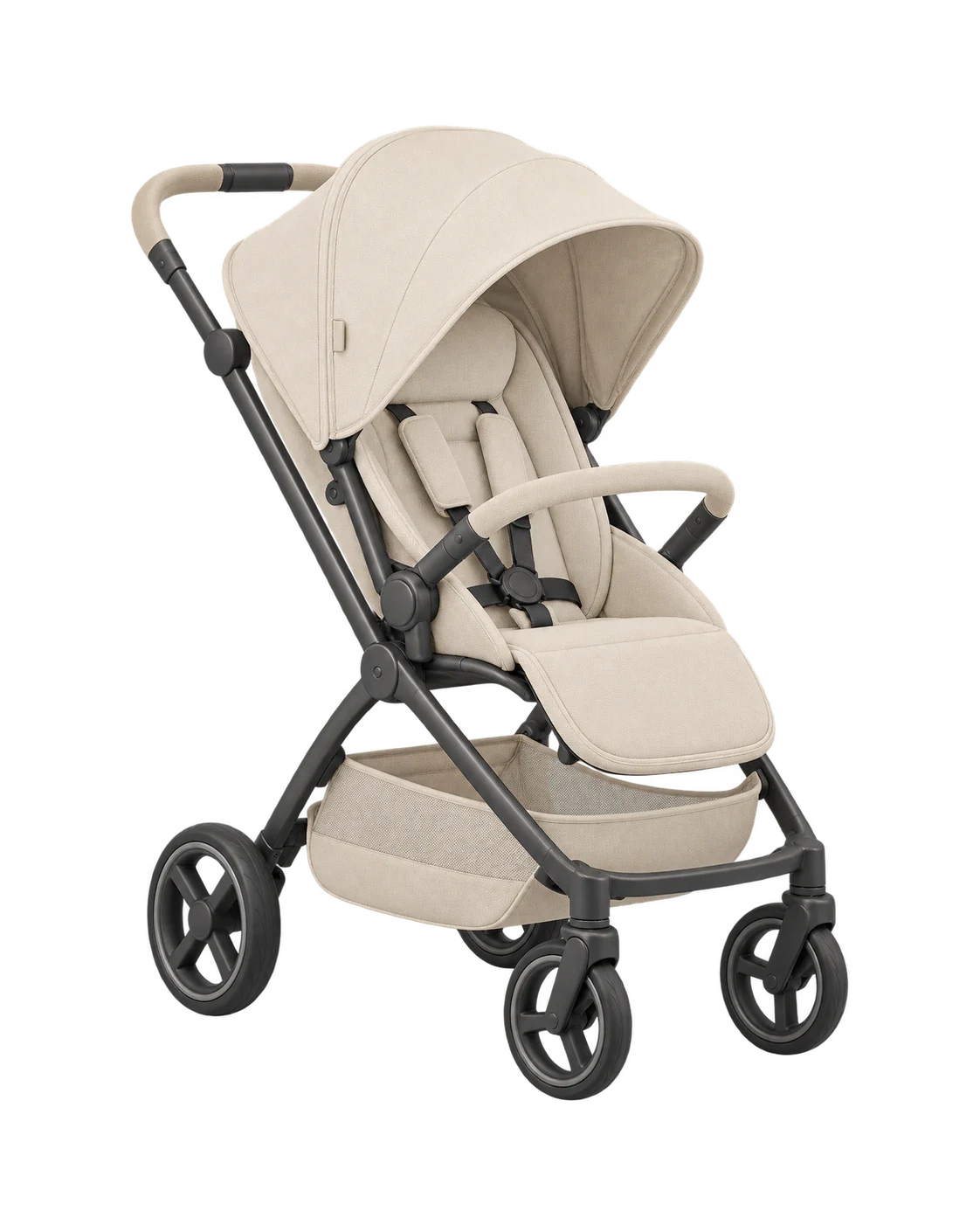
You need them whenever you walk in the dark. From fall to spring that is often the walk home from daycare, and on gray, rainy afternoons it starts early. Reflectors go low and on both sides, so a parent with a stroller starts with four: one hanging at each knee and one on each side of the stroller. Leave them on the stroller and the coats you wear most, all year, because the usual reason for walking without one is forgetting it.
- For ages0–6years
- You'll need4+
- Use themAll year
Do reflectors really work?
Yes. On a dark street with low beams, a driver sees a walker in dark clothes only from about 25 m (80 ft) away, and reflectors from about 140 m (460 ft). That is the difference between a car that can still stop and one that can't.
A reflector only shines back toward the light that hits it, and only where headlights reach. That is why a small light helps too on paths without cars, where cyclists and other walkers need to see you.
What a driver sees on a dark street
What a driver sees on a dark street
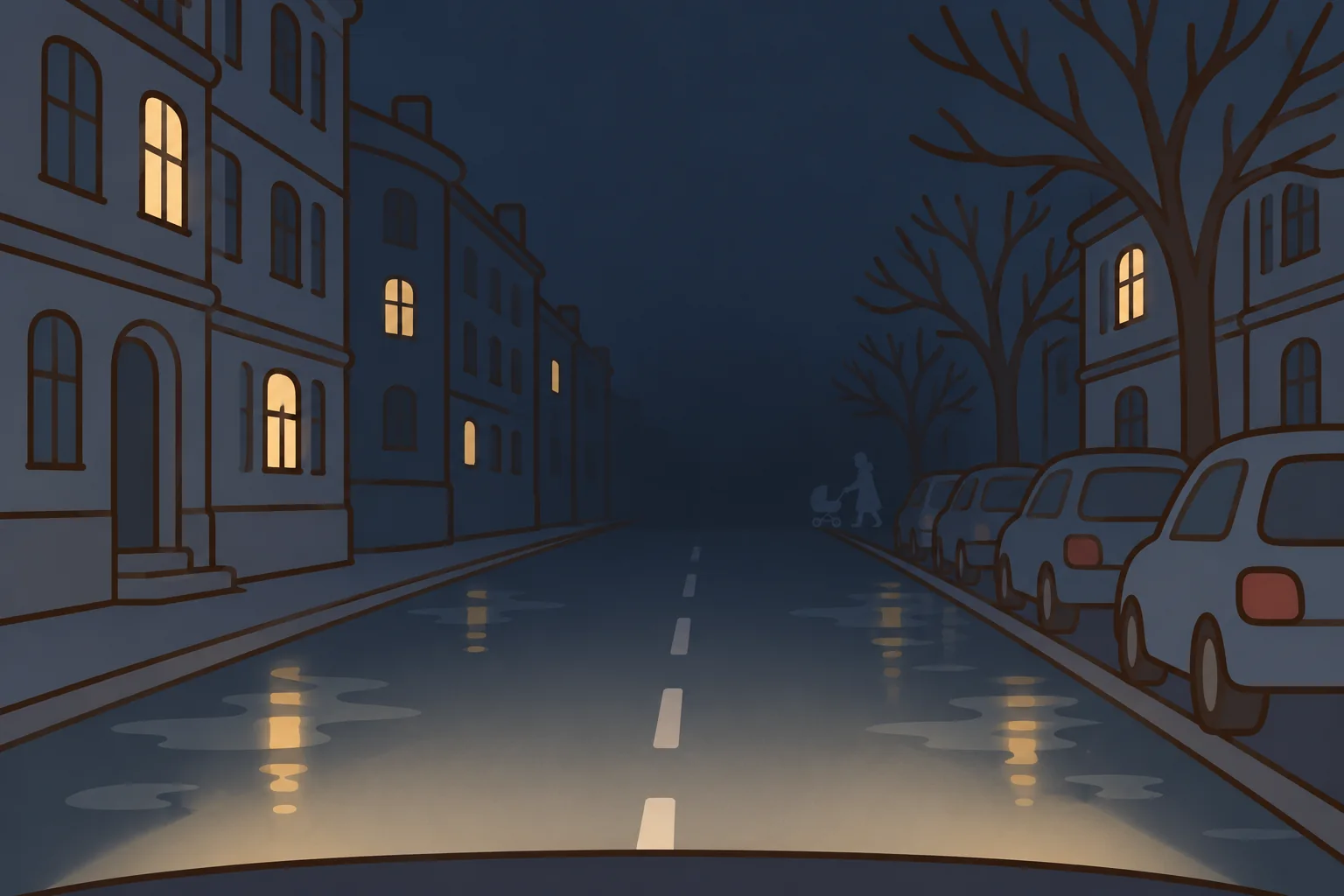
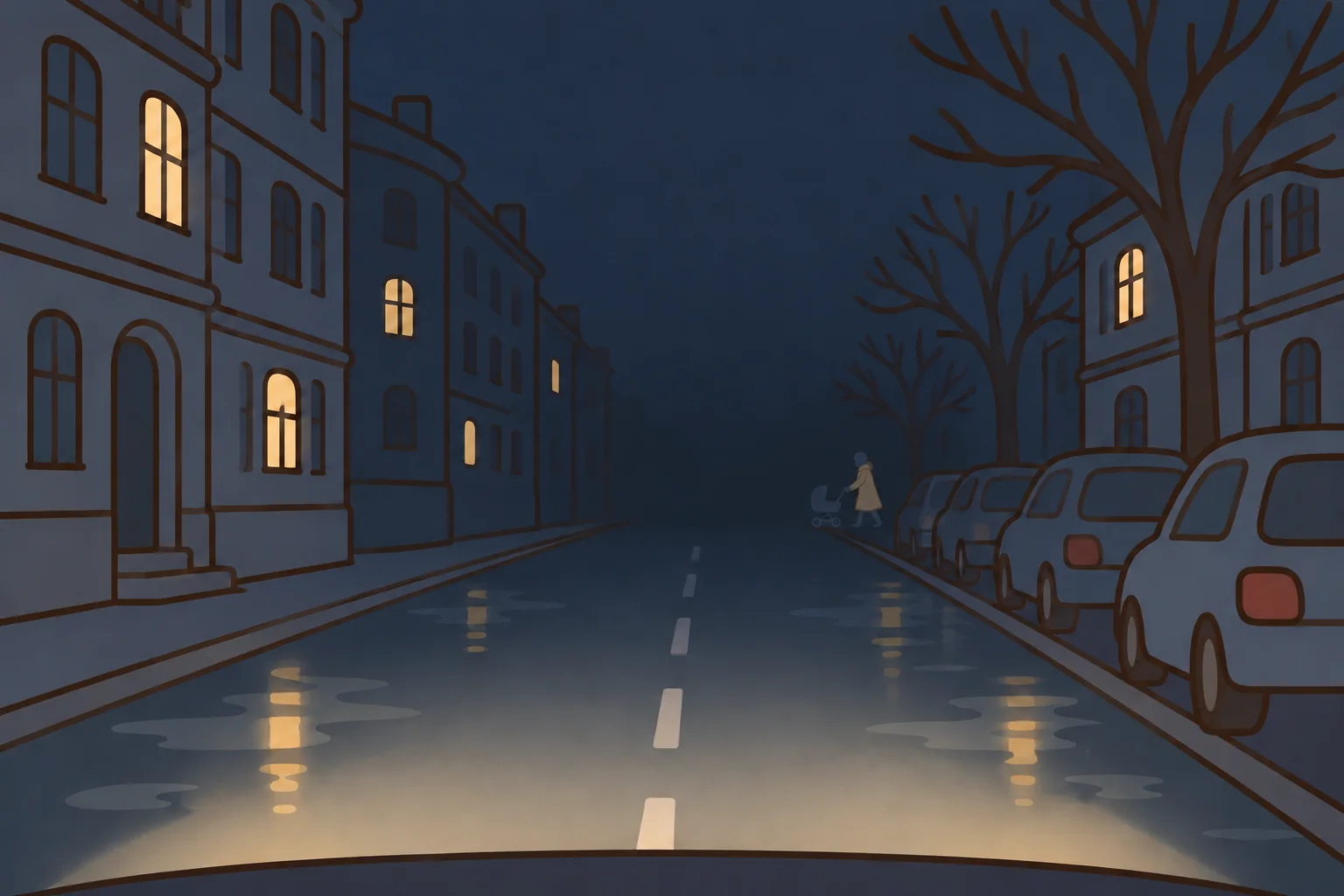
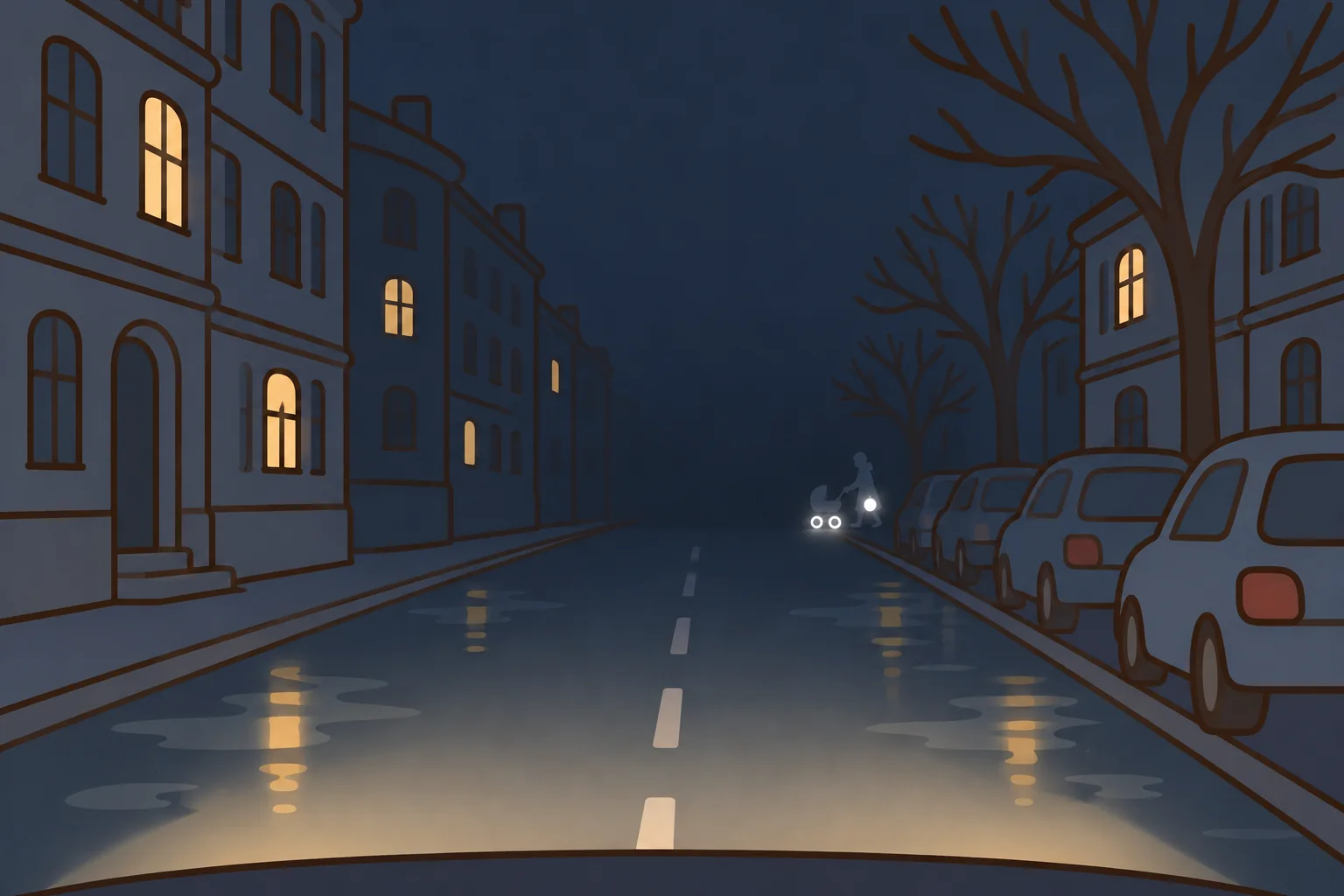
Not good: Seen too late
25 m(80 ft)
In dark clothes you melt into the street. A car braking hard from 50 km/h (31 mph) needs about 28 m (90 ft) to stop, so a driver who sees you only at 25 m cannot stop in time.
With care: Seen a little sooner
40–50 m(130–160 ft)
A light coat shows up a little sooner, but still late. Bright and neon colors help by day and at dusk, not in the dark.
Good: Seen in good time
140 m(460 ft)
The reflectors light up long before the rest of you shows. One swings at your knee and the bands turn with the wheels, so the driver sees a person walking.
Types of reflectors
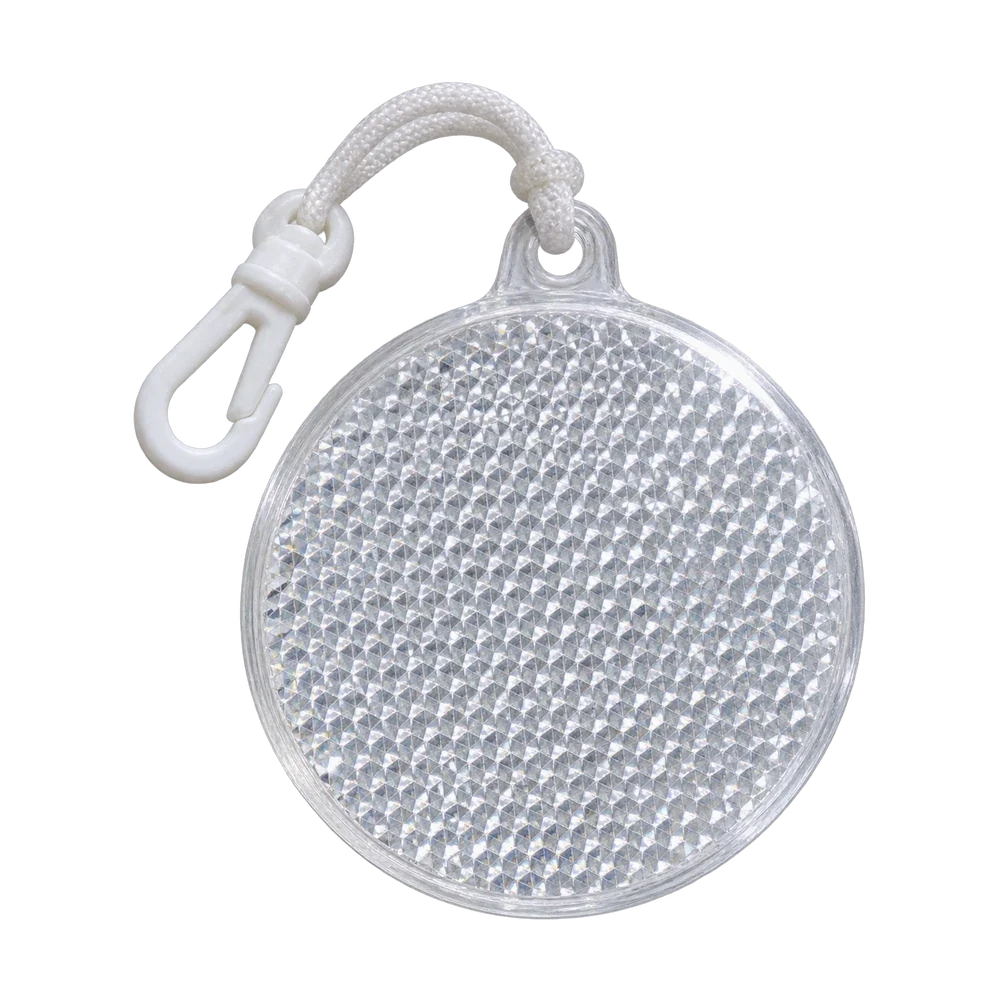
Hanging reflector
A reflector on a cord with a clip. Clipped low on your coat, it hangs near your knee and swings as you walk. On the stroller it clips to the frame, out of your baby's reach, and a baby never wears one around the neck.
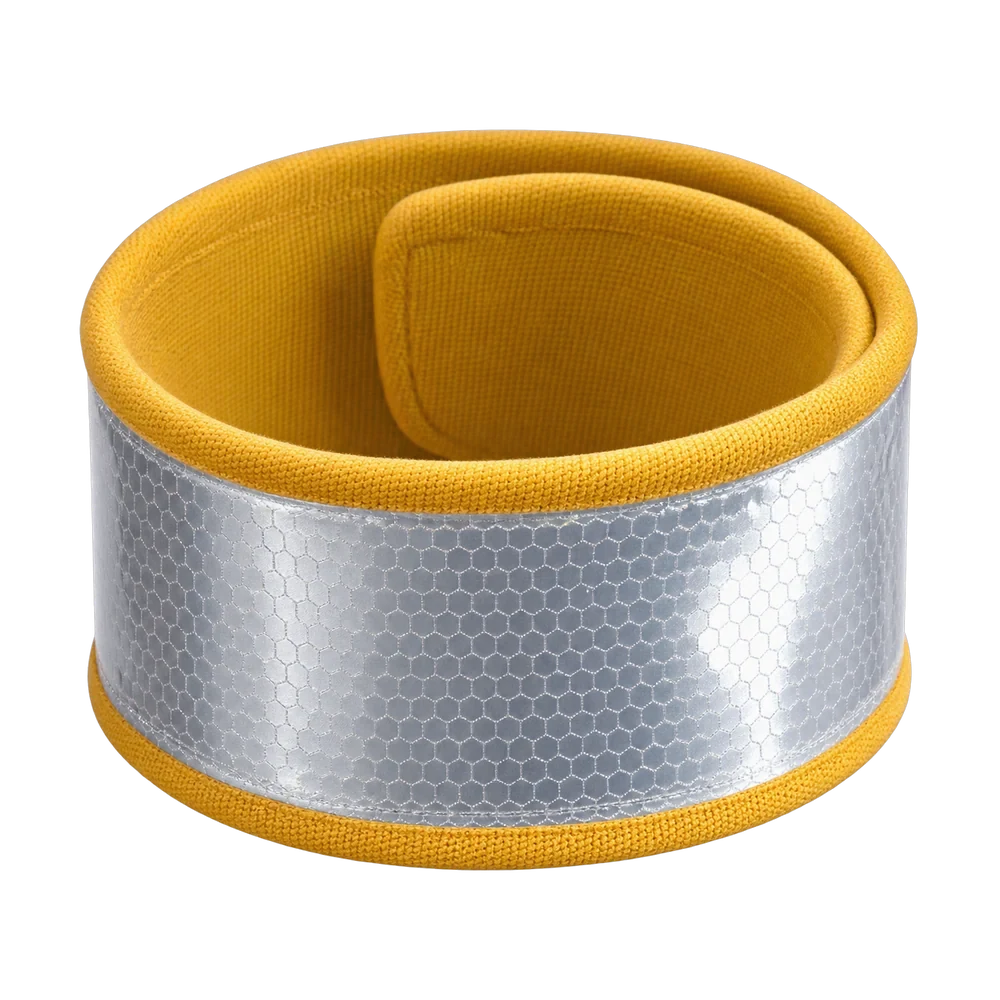
Slap band
A stiff band that curls around an ankle, a wrist or the stroller frame with one slap. On an ankle it moves with every step, and with no cord it suits a child who walks.
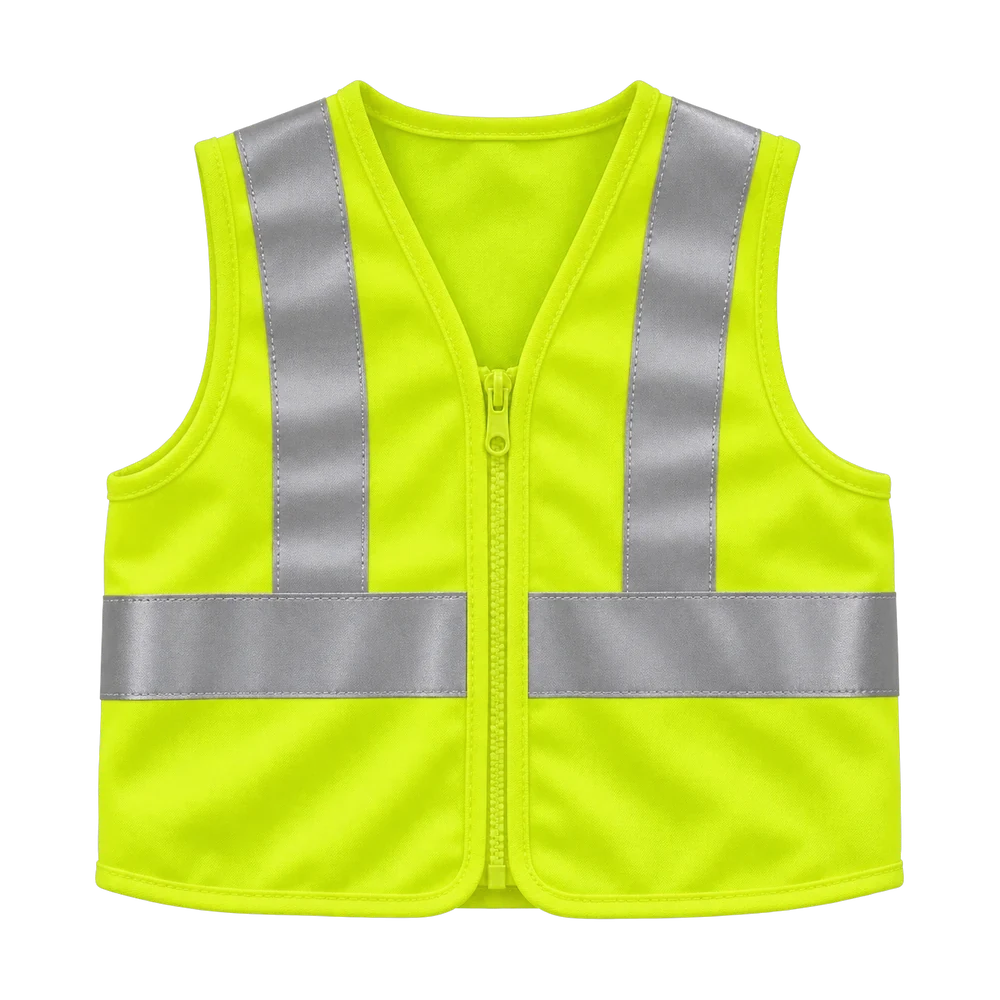
Reflective vest
A vest with wide reflective bands that goes over the jacket, often in neon yellow so it shows by day too. It suits a child who walks beside the stroller on dark mornings and afternoons.
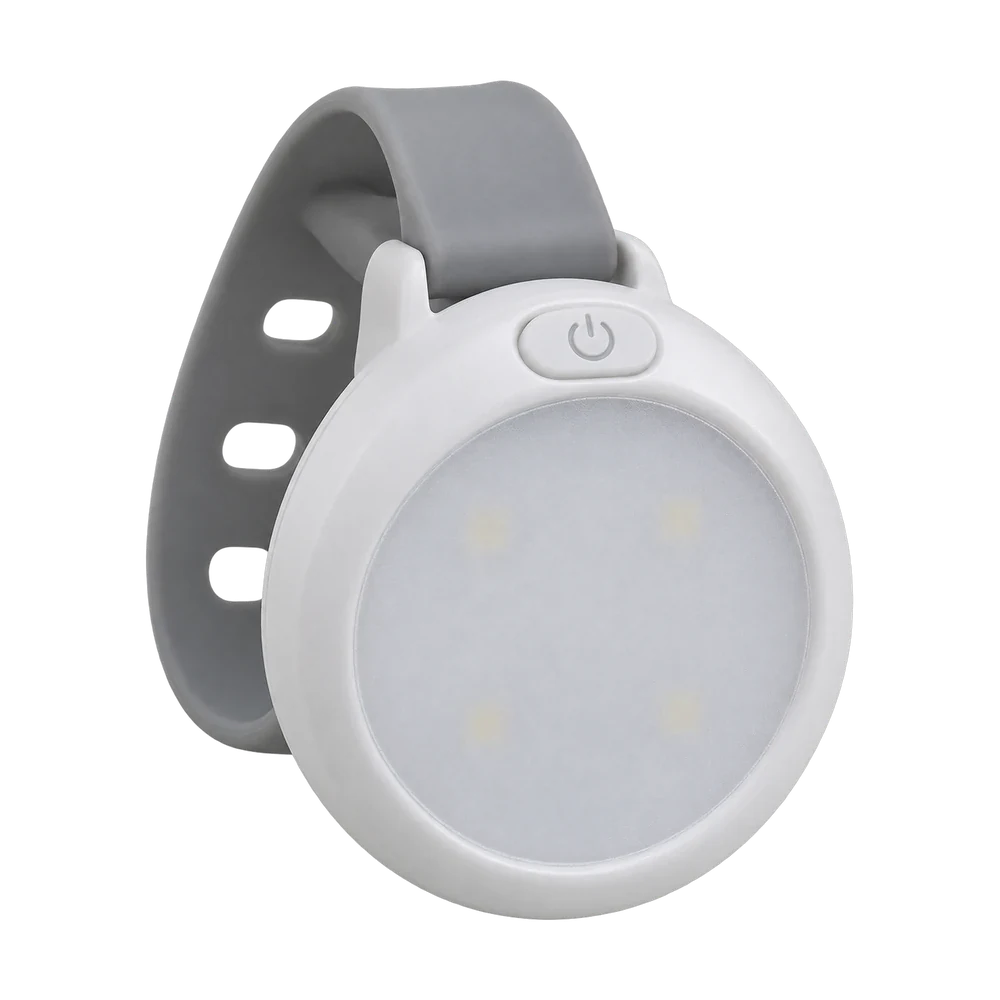
Stroller light
A small LED light that straps to the frame. It shines on its own, so cyclists and walkers see you on paths no headlights reach.
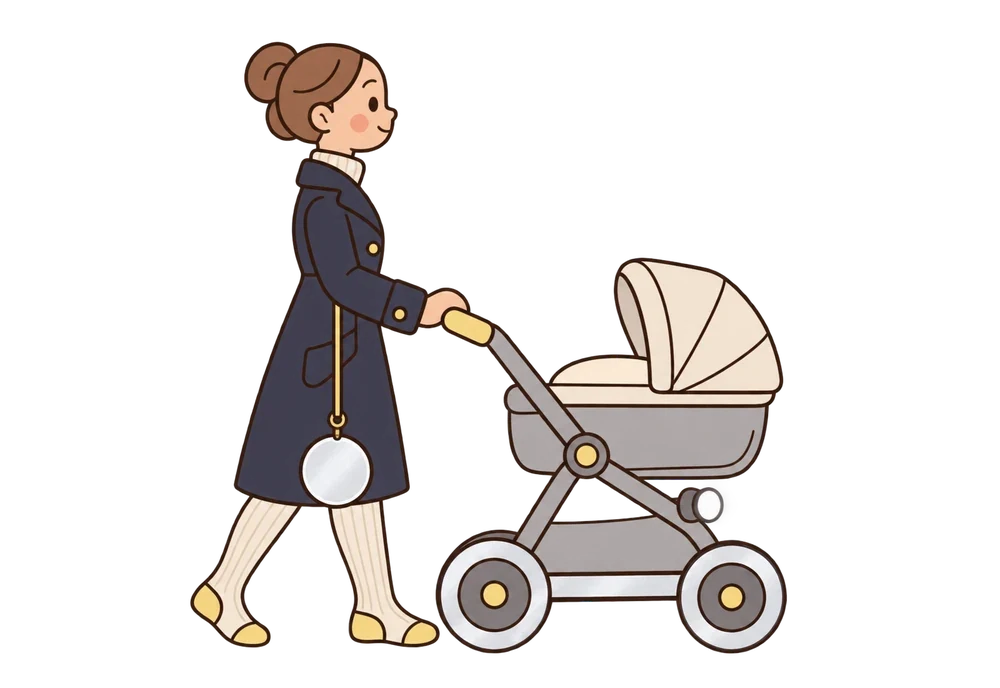
Where reflectors go
Put them low, on both sides, and on things that move, because headlights reach the lower half of a walker first, and movement tells a driver it is a person.
At your knees
A hanging reflector on each side, clipped low on your coat so it hangs about half a meter (20 in) above the ground.
On the wheels
Reflective bands or stickers on the wheels turn as you walk, and show from the side.
Low on the frame
A reflective band or tape low on the frame, left and right, so cars from both directions see the stroller.
A light on the frame
A small light pointing ahead, so cyclists and other walkers see you coming.
How to choose reflectors
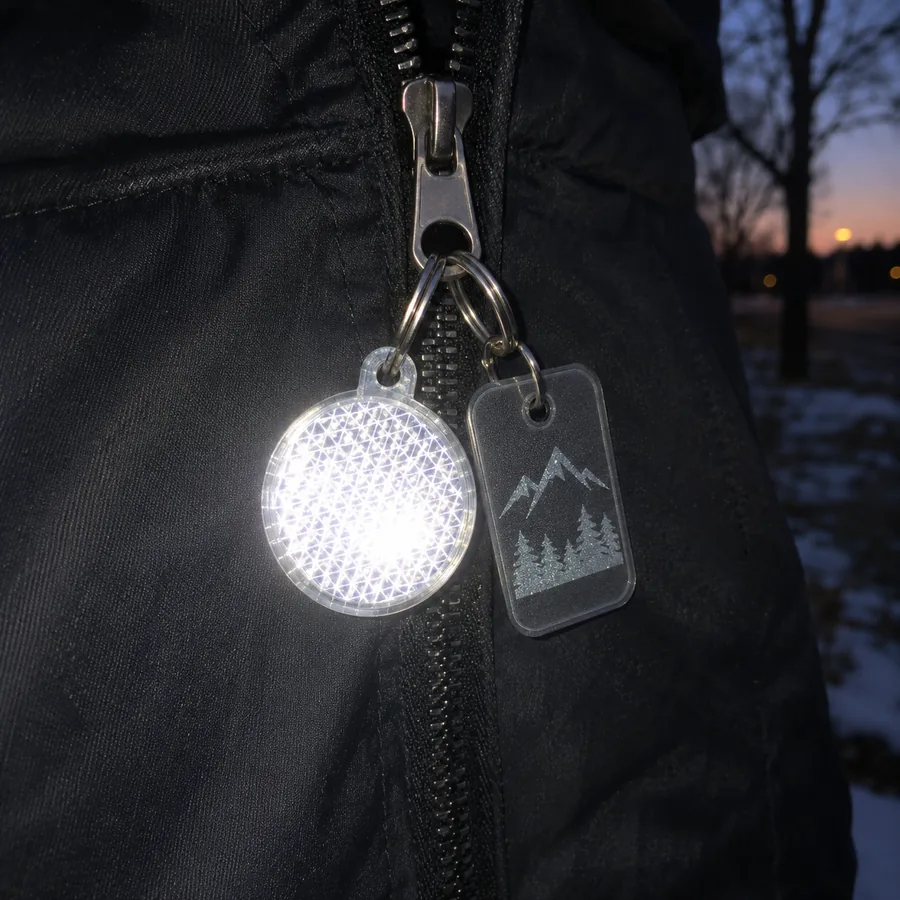
1. A real reflector
In Europe, a reflector made for walkers is tested, and its pack shows the marks below (EN 13356 is the older standard). Reflective print, reflective yarn and the trim on bags and jackets have no such test, and how well they shine varies widely. Anywhere, the flashlight test below shows how well one shines.
- Good: CE mark on the pack
- Good: EN 17353 or EN 13356
- Not good: Reflective print or yarn only
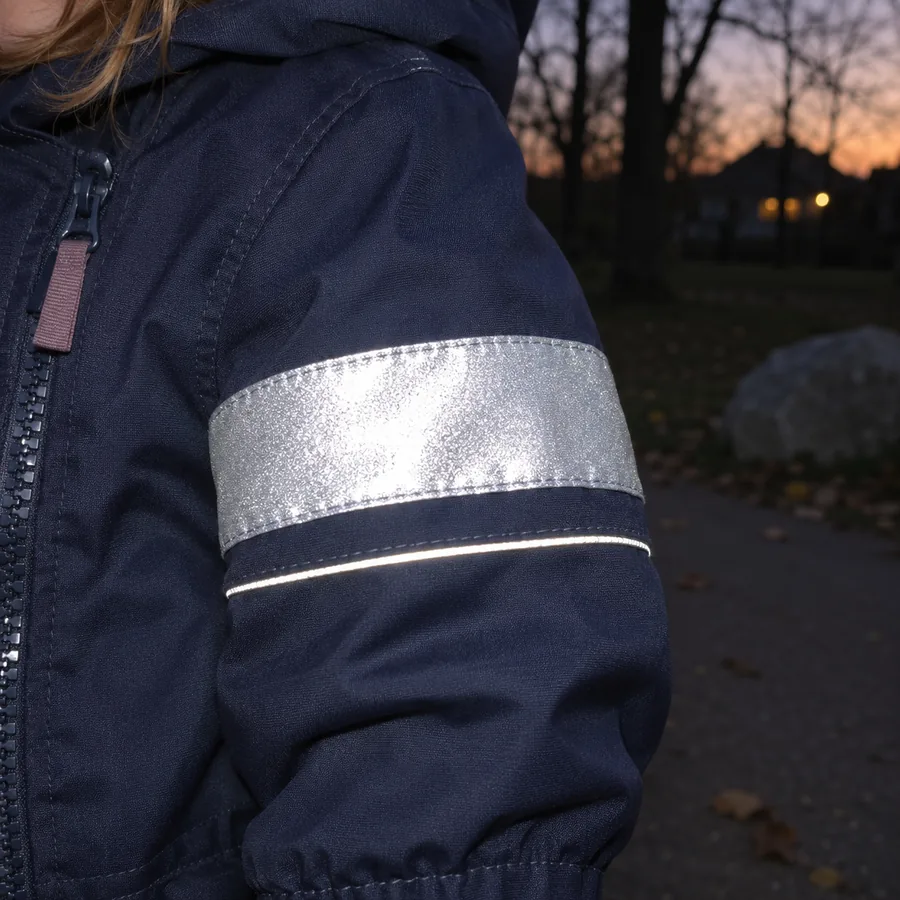
2. A big, unbroken surface
The more reflecting surface, the more light comes back. A wide band or a vest beats a thin stripe or a tiny charm on a zipper.
- Good: Wide bands, no gaps
- Not good: Thin stripe or tiny charm
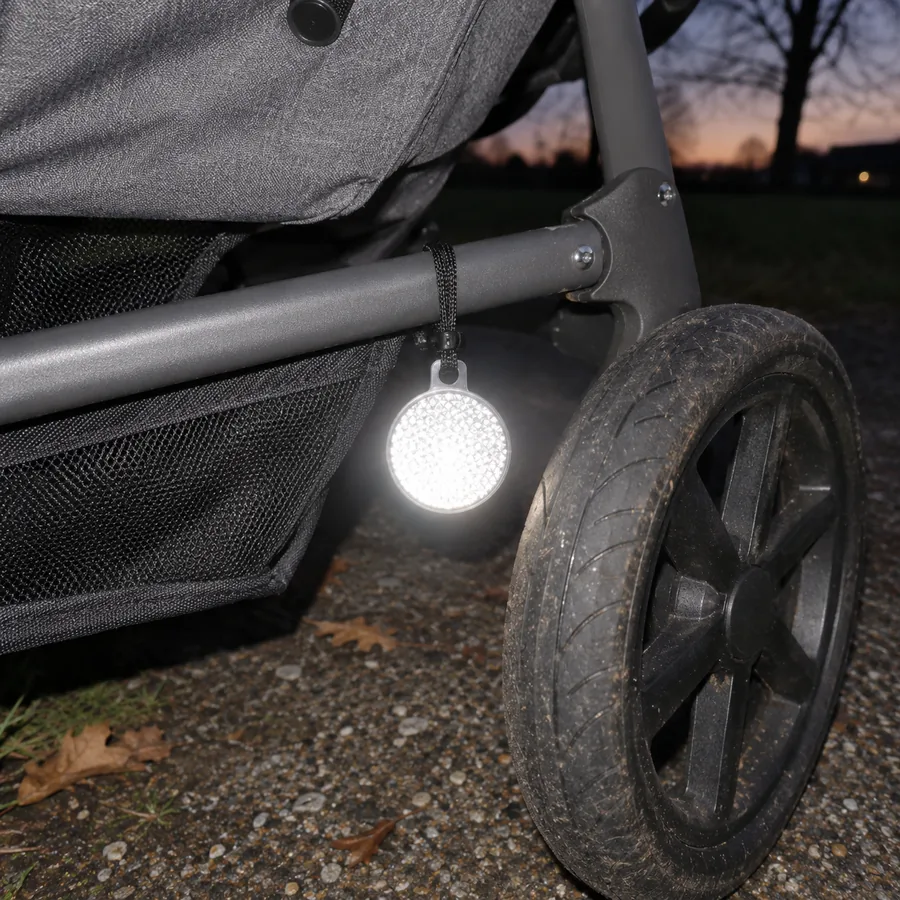
3. It stays put
On a child's jacket, a sewn-on reflector or a band that wraps around stays on through play, while a hanging one comes loose. On the stroller, pick a clip that grips the frame and a short cord.
- Good: Sewn on or wraps around
- Good: Short cord on the stroller
- Not good: Long cord a baby can reach
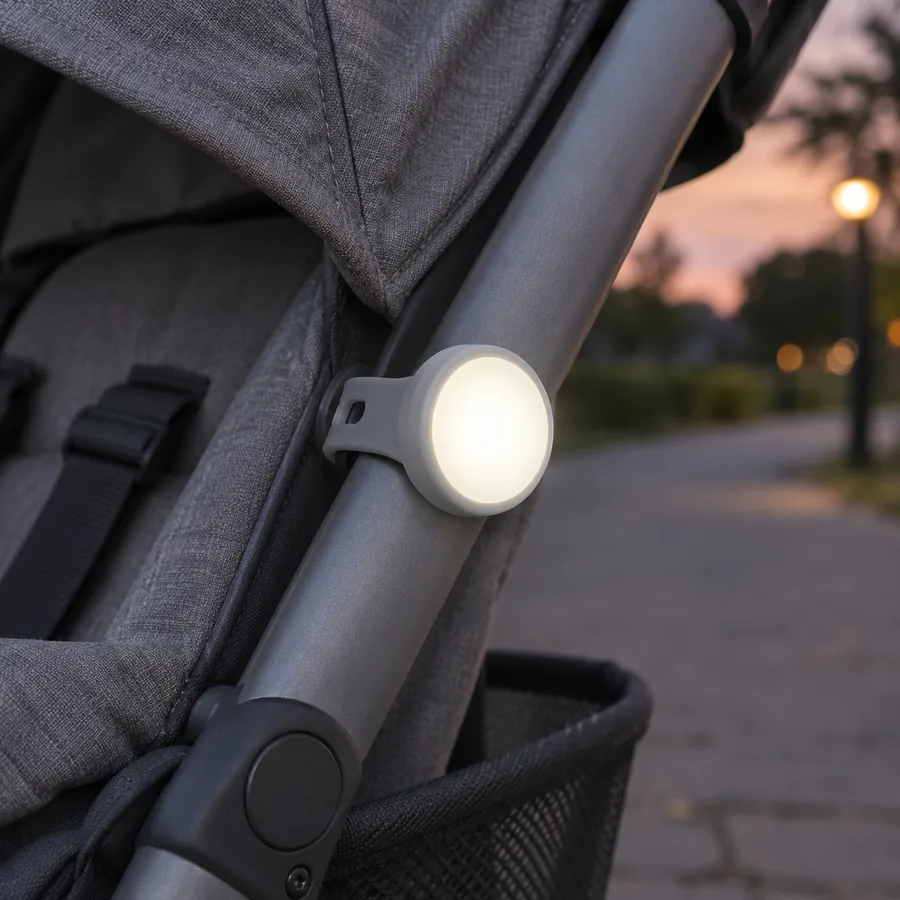
4. A light that doesn't dazzle
Pick a light with a steady setting. A very bright or fast-flashing light dazzles cyclists and drivers coming toward you.
- Good: Has a steady setting
- Not good: Very bright, fast flashing
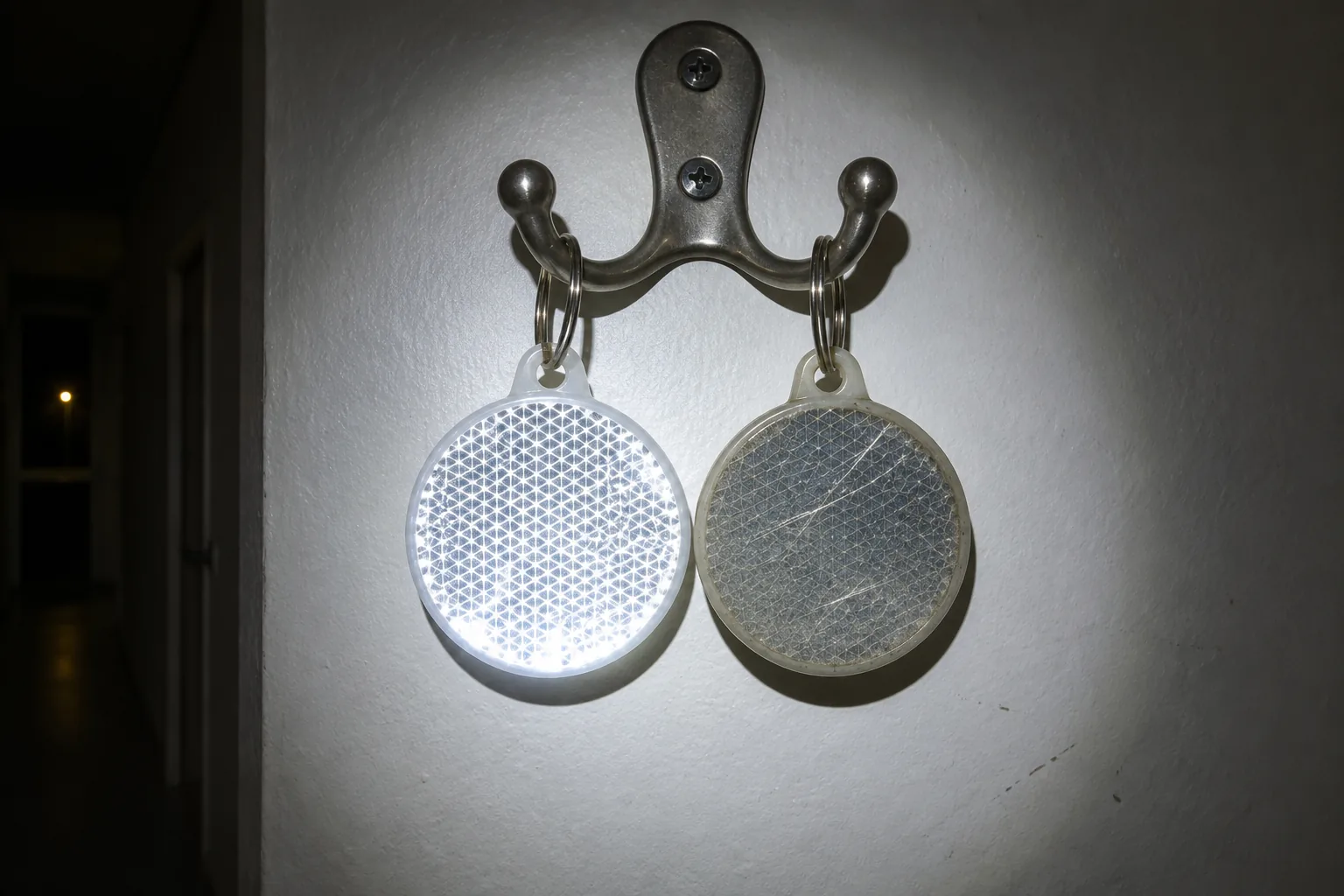
Check that they still work
Reflectors wear out: scratches dull the surface, and an old one may barely shine. Test them each fall. Hang them in a dark room, stand 3 to 5 m (10 to 16 ft) away or more, and hold a flashlight at your nose, where a driver's eyes would be. Stand well back, because a phone flash held up close makes almost any reflector look bright. A good reflector shines bright, so throw out one that stays dull.
Questions parents ask
How do I make my child visible in the dark?
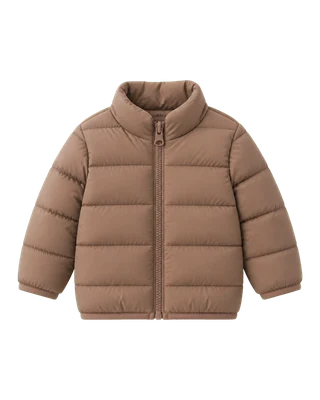
Put reflectors low and on the parts that move: a slap band on each ankle, and reflectors sewn onto both sides of the jacket. On dark mornings and afternoons, a reflective vest on top adds wide bands front and back.
Where should a baby's reflector go?
On the stroller and on you, not on your baby. Clip hanging reflectors to the frame where small hands can't reach the cord, and never hang anything on a cord around a baby's neck. With a baby in a carrier, the reflectors go on you, at your knees.
Do reflective vests work?
Yes. A vest's wide reflective bands and bright color stand out even in poor light, front and back. Close it, so it shows from every side.
Can a light replace a reflector?
No, use both. Batteries run out and lights fade, while a reflector keeps working wherever headlights reach it.
Are reflectors required by law?
It depends on the country. In Finland the law says walkers should generally wear one in the dark, and Estonia can fine walkers who don't. In many other places they are advice rather than law, so check your local road rules.
Do reflectors help on a bike seat or trailer?
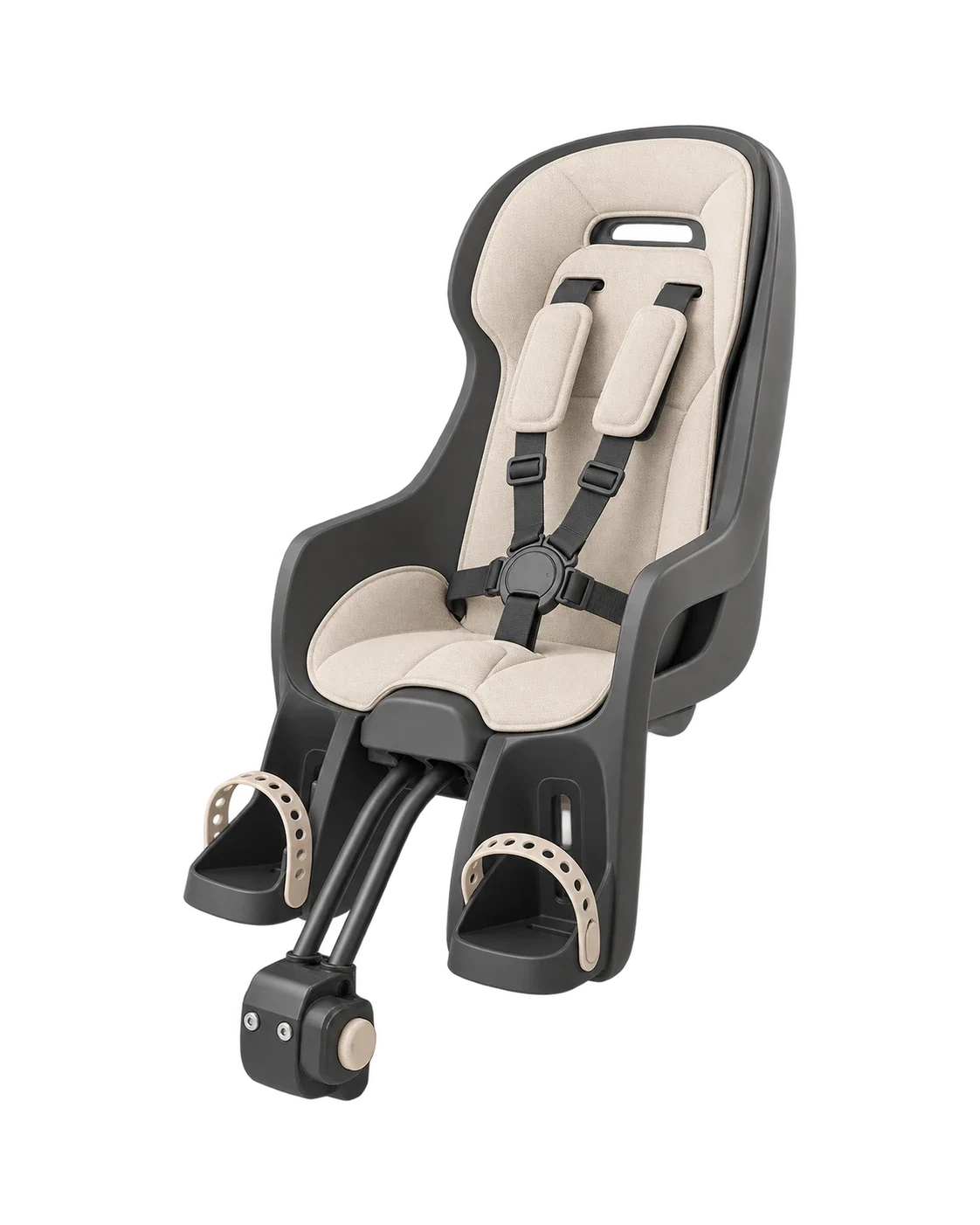
Yes, on your child's jacket and helmet and on the seat itself. Bike lights and the rest of riding with a child are on the page about the bike seat and trailer.