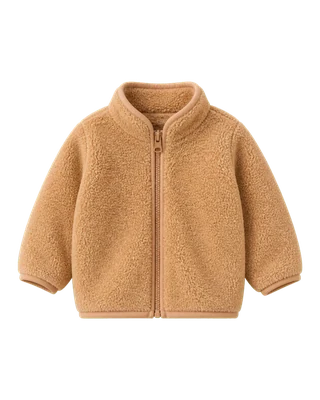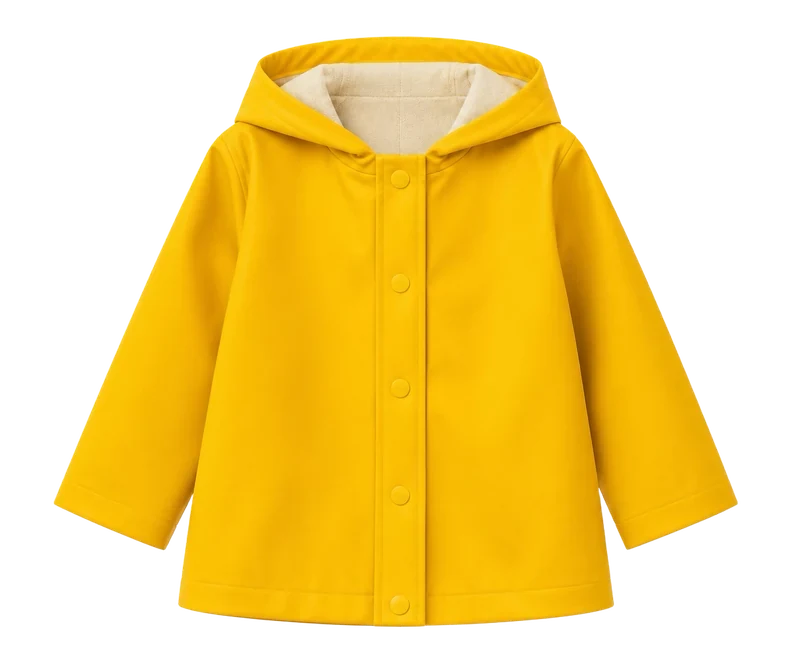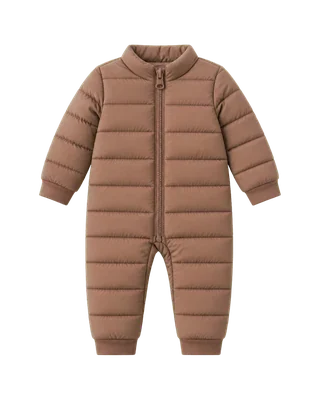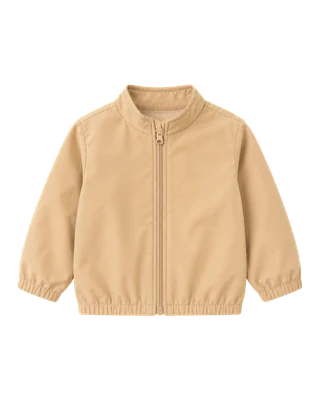
A warm jacket is a padded coat: down or synthetic filling between a windproof shell and a soft lining. Below 12°C (54°F), it goes over indoor clothes and a warm fleece or a sweater.
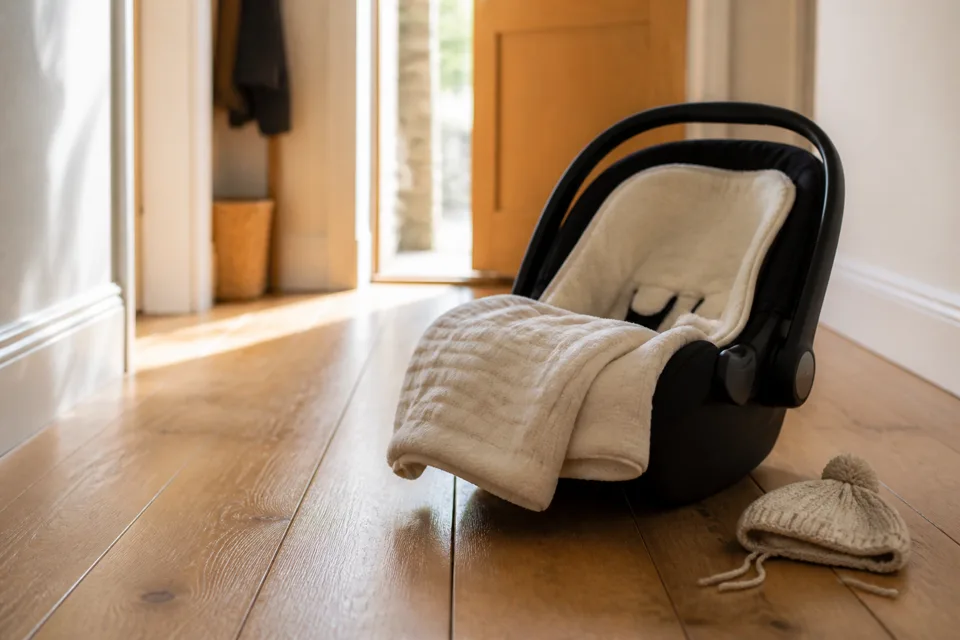
It works best from around 6 months, once your baby moves from a flat bassinet to an upright stroller seat. It always comes off for the car seat and the baby carrier.
- For ages6+months
- You'll need1per winter
- Wear it below12°C54°F
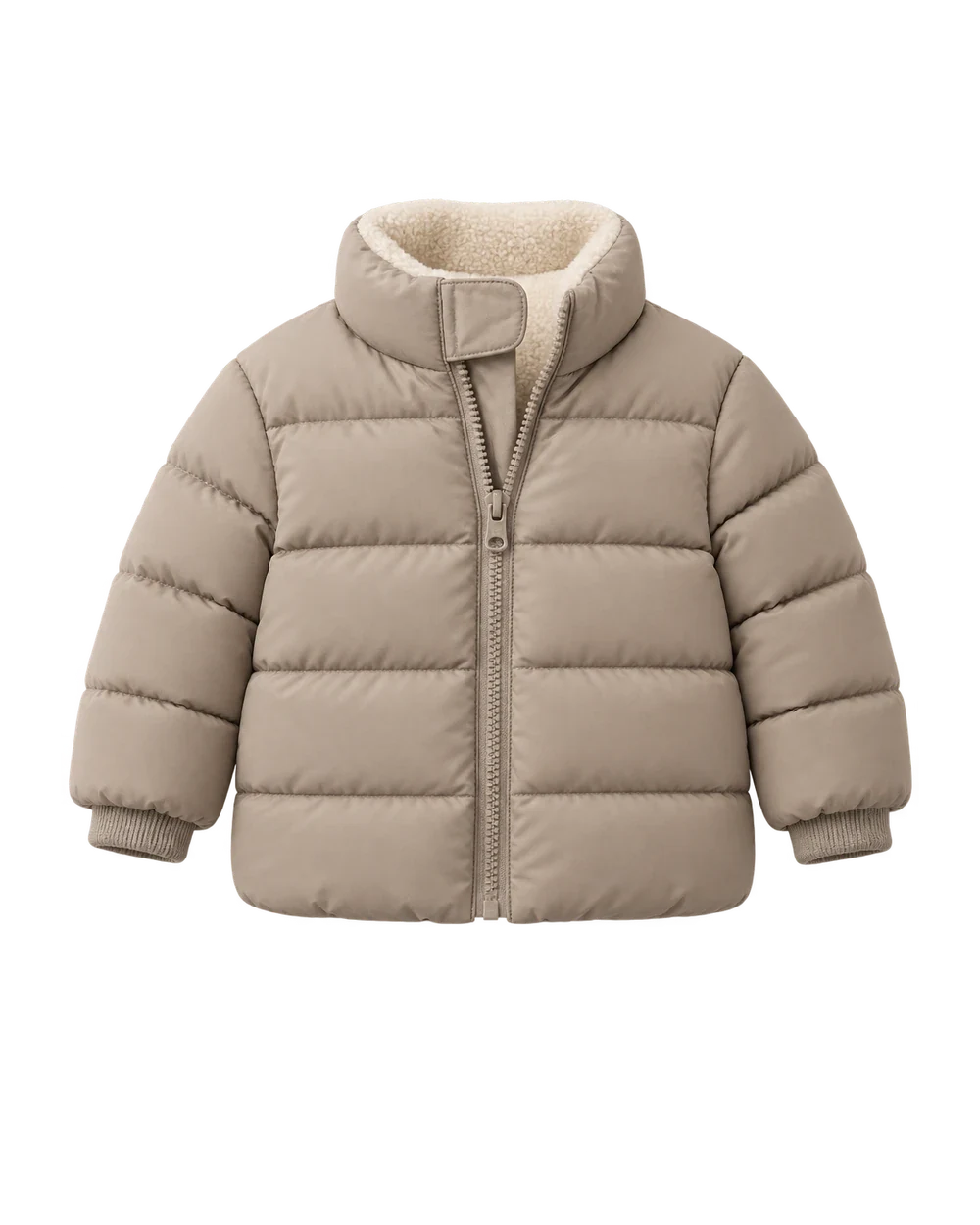
How a warm jacket is built
A good winter coat keeps cold drafts out and metal away from your baby's skin.
Soft stand collar
A fleece-lined collar warms the neck without bunching behind the head when your baby leans back in a stroller.
Chin guard and inner flap
A folded fabric tab covers the metal zipper pull under the chin. A fabric strip behind the zipper stops cold wind blowing through.
Quilted channels
Stitched rows hold the down or synthetic filling evenly across the chest, back and arms, so it cannot sink to the hem.
Ribbed inner cuffs
Soft knit cuffs hidden inside the wrists seal out cold air and hold slightly long sleeves neatly above the hands.
Warm jacket or pram suit?
It comes down to whether your baby still lies flat in a bassinet, or sits up and walks.
Warm jacket
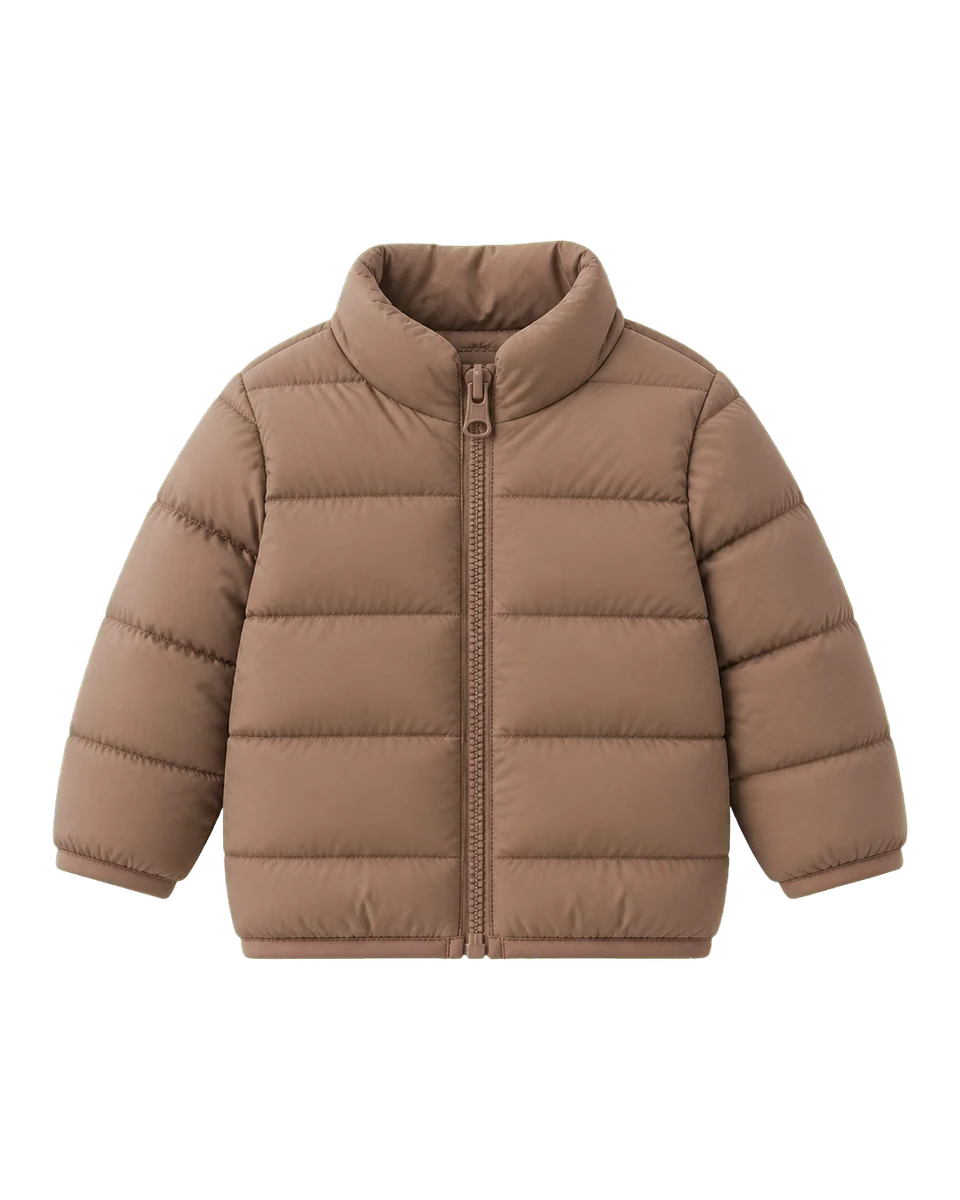
Best from around 6 months, once your baby sits up in a stroller footmuff (the zip-up padded bag in the stroller seat), or starts walking. In a warm shop, you unzip the front in seconds and leave the legs as they are.
Insulated pram suit
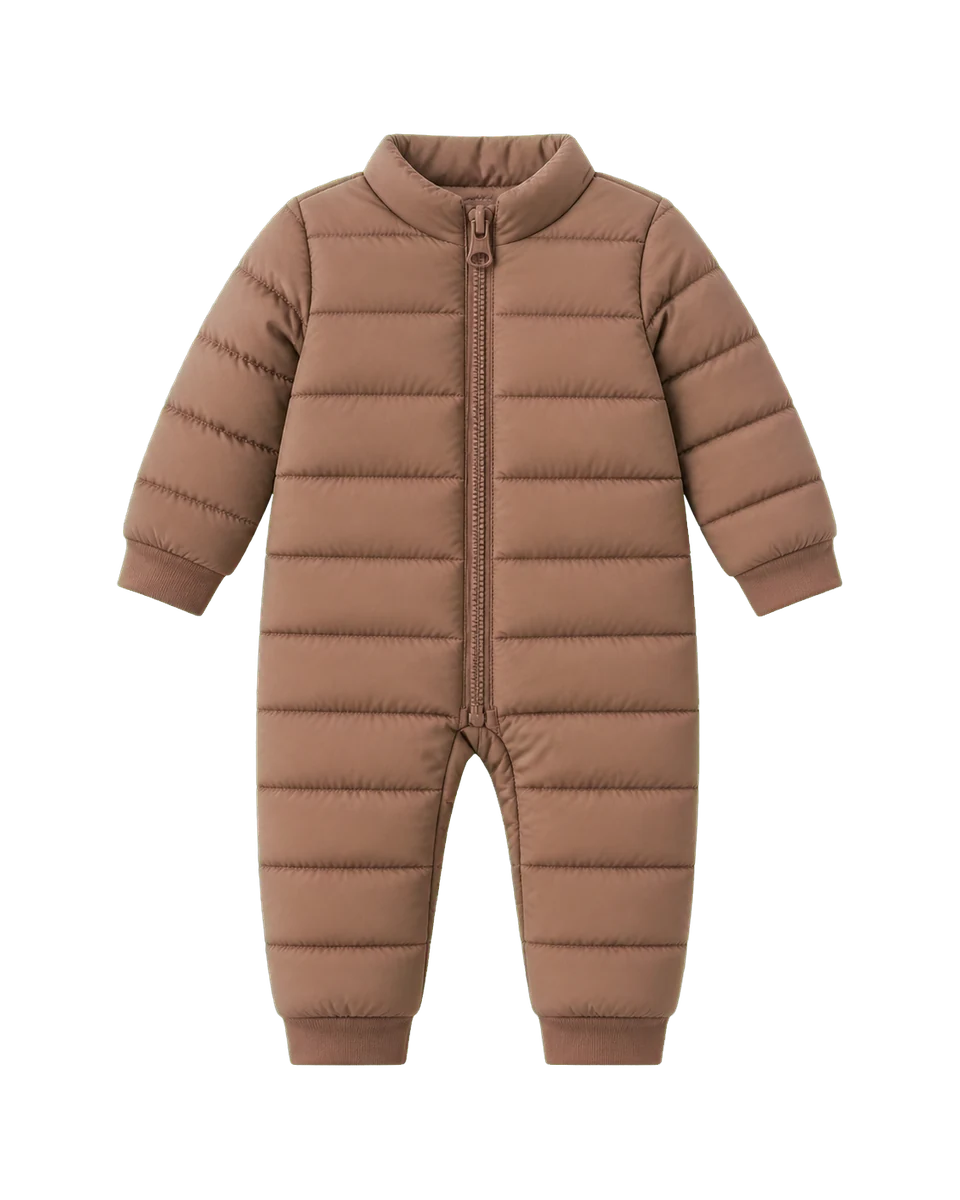
Best for newborns and young babies lying flat in a stroller bassinet, or for toddlers playing in deep snow. Covering the body, arms, and legs in one piece stops the coat from riding up behind the back.
Types of warm jacket
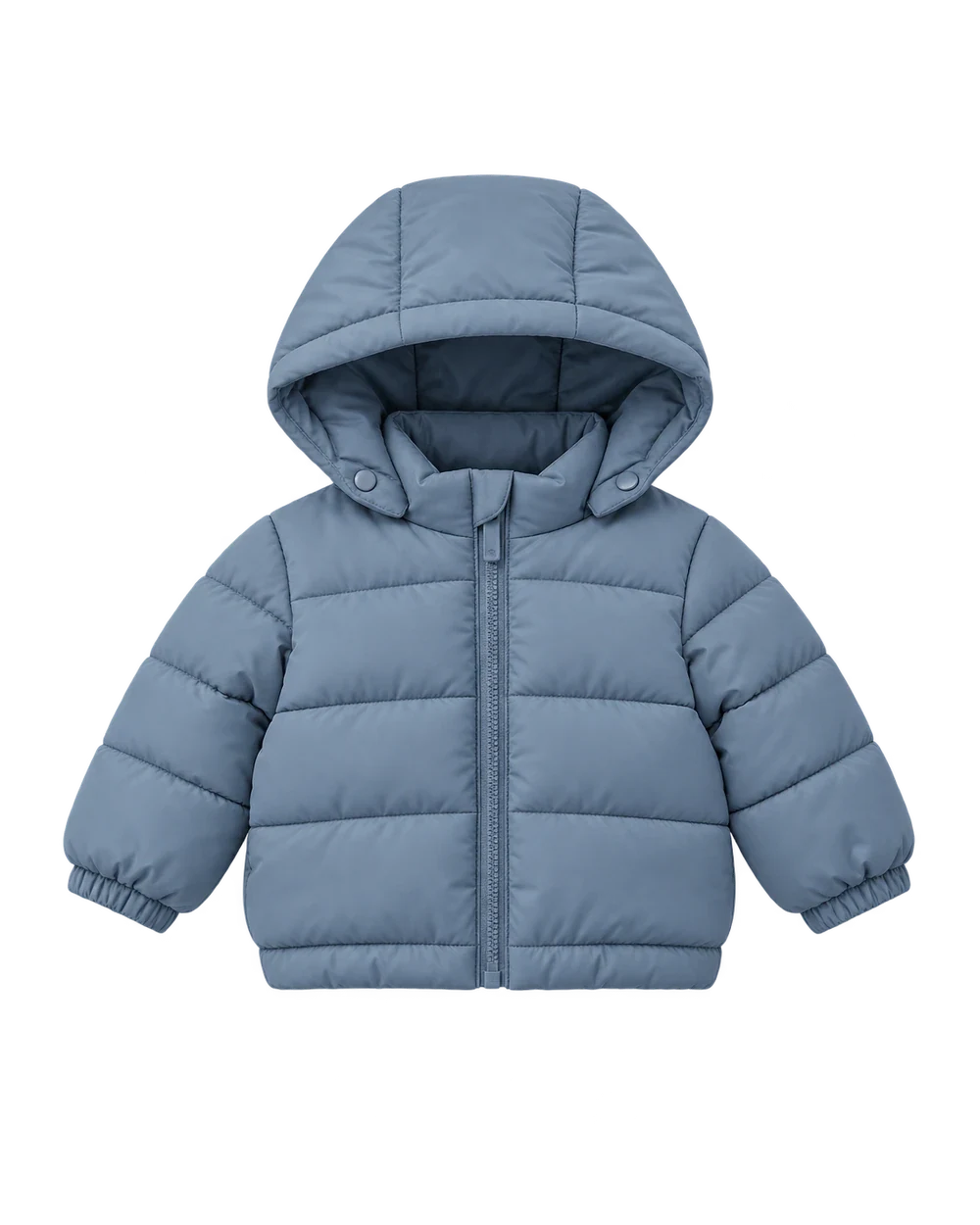
Puffer jacket
Quilted channels filled with down or synthetic fibers. It is light, flexible, and waist-length, often with a hood that snaps on and off, making it the easiest everyday winter coat for strollers and playgrounds.
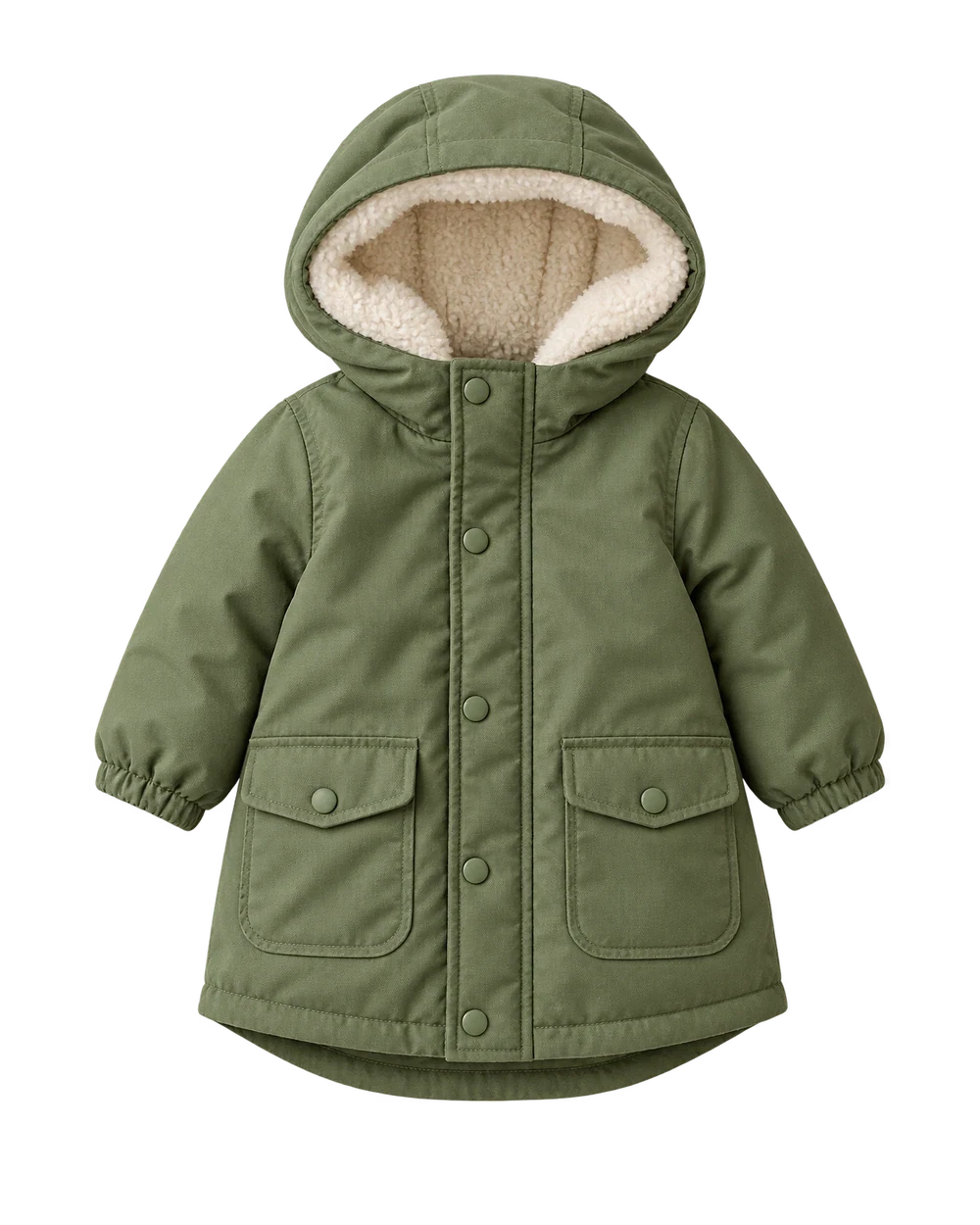
Parka
A longer coat that covers the hips, with a wind- and water-resistant outer shell, thicker synthetic filling, and a fleece-lined hood for deeper cold and windy walks.
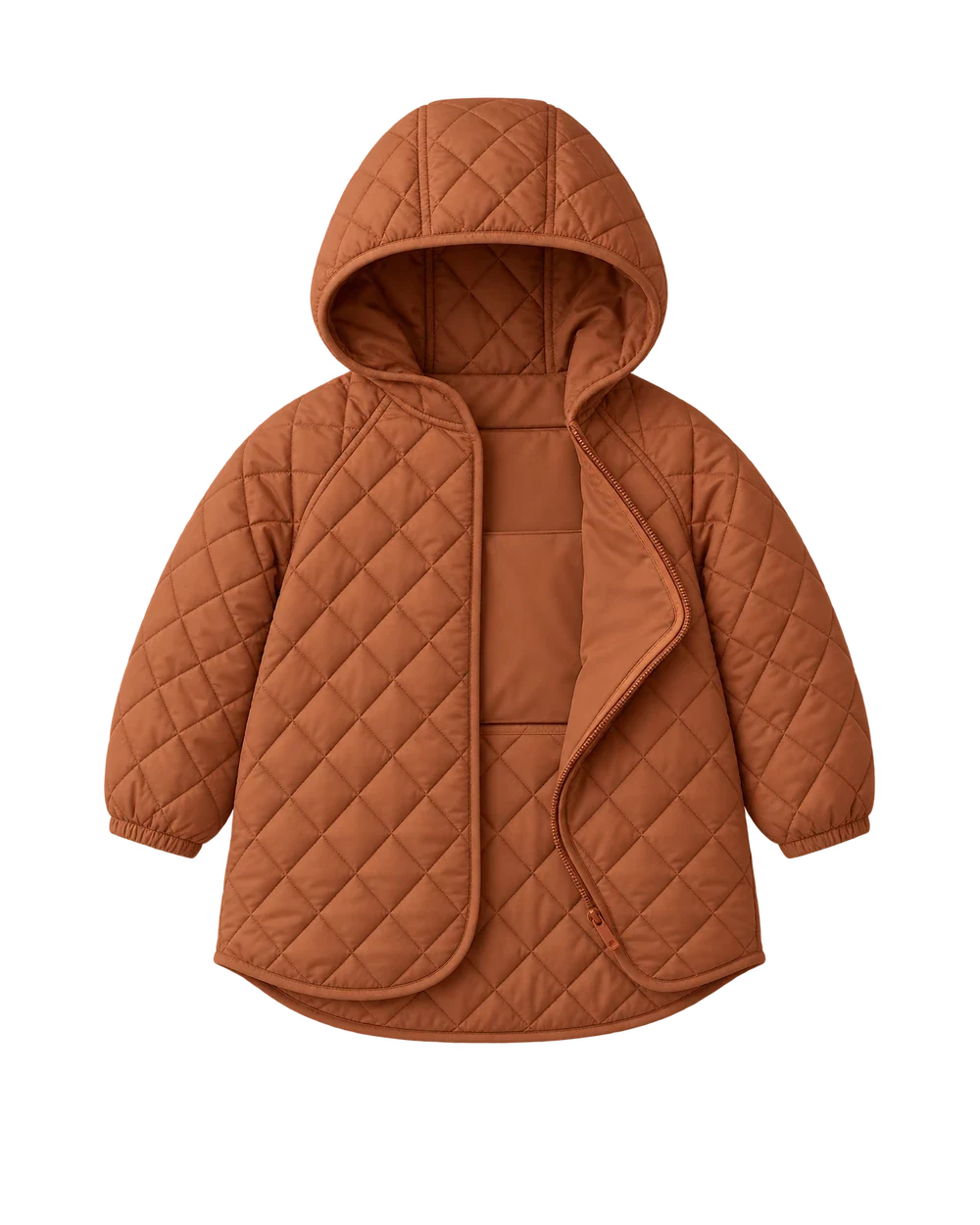
Car seat coat
A thin quilted coat made for the car. Some have thin, firm padding. Others have a chest panel that unzips, so the harness buckles right against the clothes underneath.
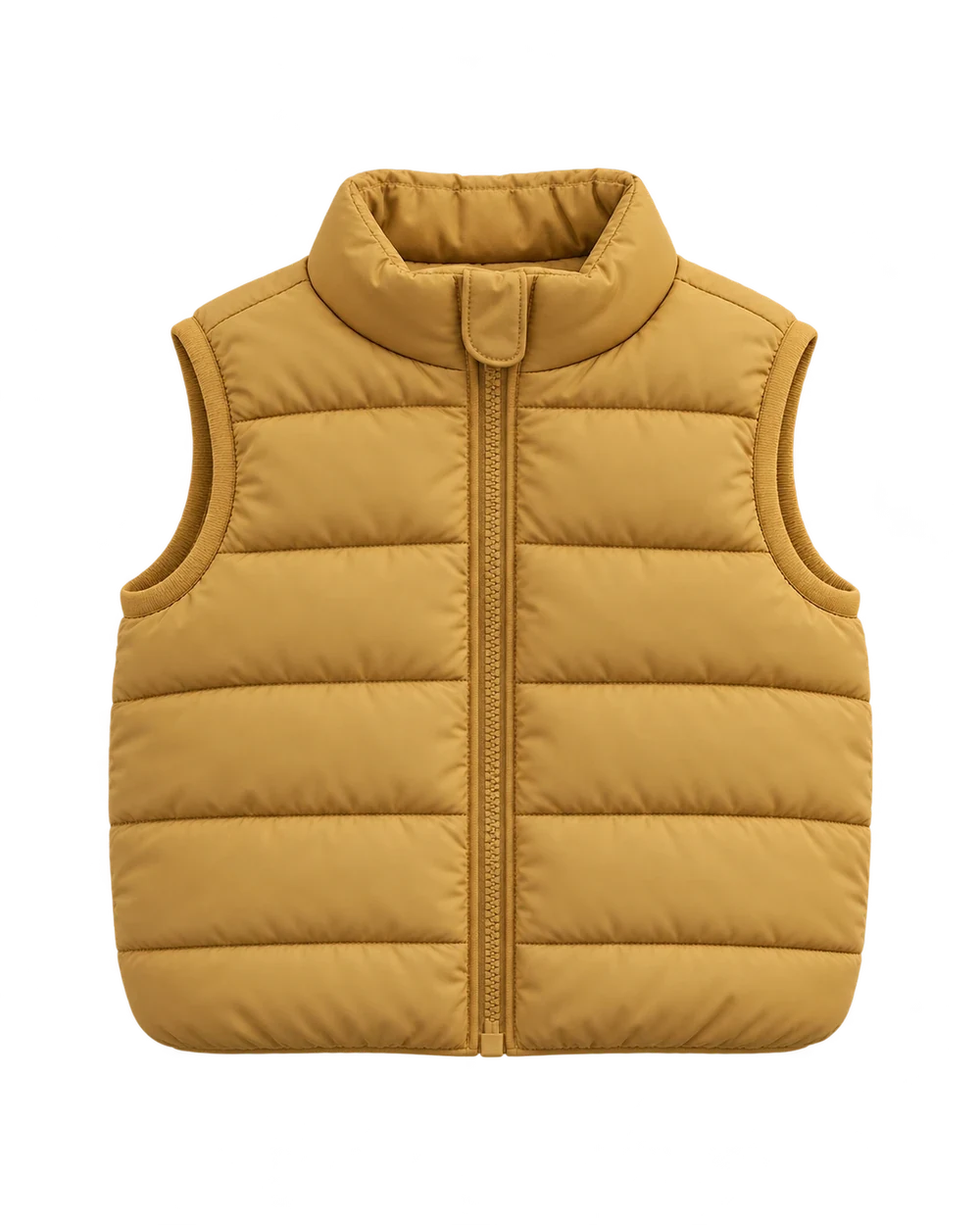
Vest
Quilted padding with no sleeves, so the chest stays warm and the arms move freely when your toddler walks and climbs. In the car seat it is still padding under the harness, so it must pass the coat test below. A fleece vest is the lighter version, on the warm fleece page.
Down or synthetic fill?
Both fillings keep your baby warm by trapping tiny pockets of air inside the coat. The same choice comes up when buying a stroller footmuff, an insulated pram suit, or a warm carrier cover.
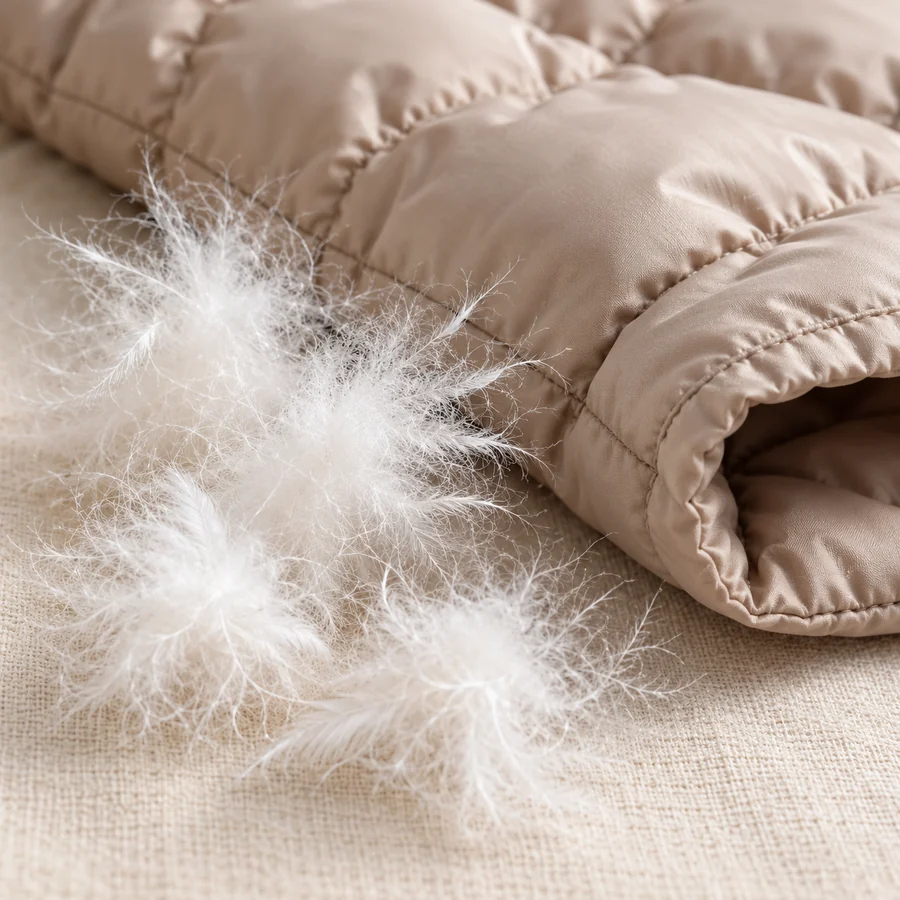
Down fill
Duck or goose down. Best for dry cold, and for a coat that will be handed down.
- Good: Light and thin for its warmth
- Good: Keeps its puff for years
- Not good: Clumps and stops warming when soaked
- Not good: Needs a special down soap
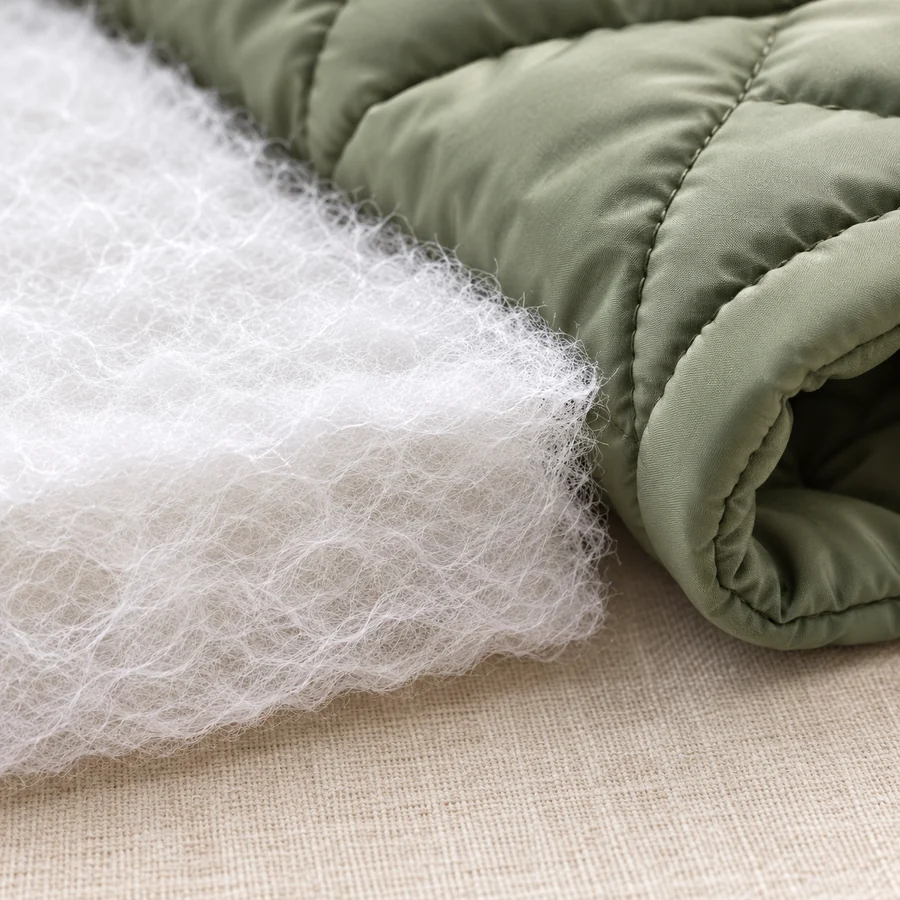
Synthetic fill
Polyester fibers. Best for wet snow and damp winters, and it costs less.
- Good: Still warm in wet snow
- Good: Washes with normal detergent
- Not good: Heavier and a bit stiffer
- Not good: Flattens a little over the years
How to choose a warm jacket
What to check on the hanger before you buy.
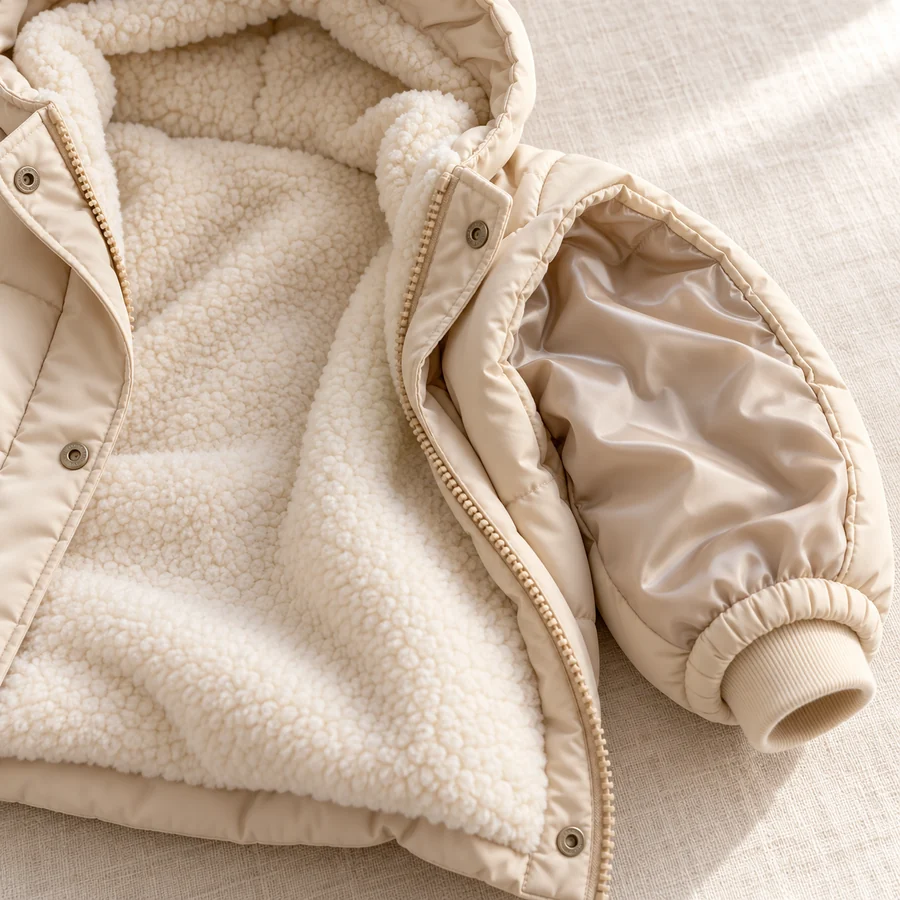
1. Smooth sleeve lining
A fleece lining feels cozy against the chest, but fleece inside the arms grabs onto sweater sleeves. Look for smooth, slippery nylon inside the sleeves so a dressed arm slides straight through.
- Good: Slippery nylon in both arms
- Good: Arm in a sweater slides right in
- Not good: Fleece or fur inside the arms
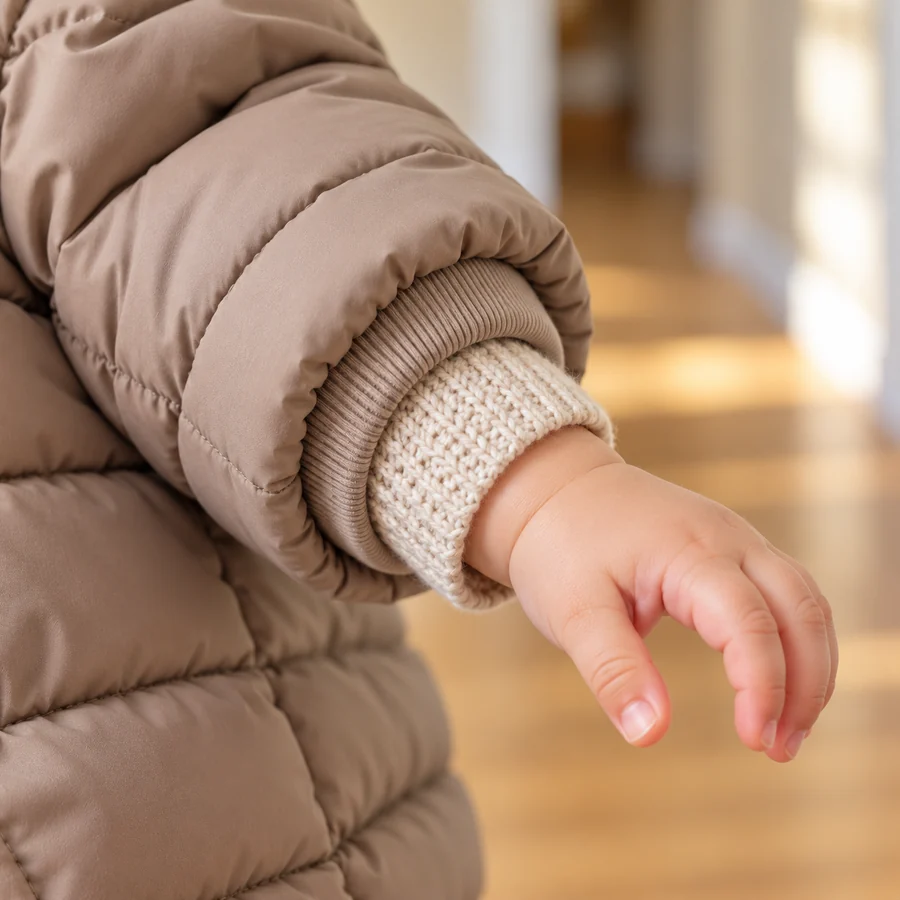
2. Current size, with wrist cuffs
Winter coats are already cut wide enough for a sweater, so buy the size your baby wears now. Baby sizes go by the top of the range: a 6–9 month label means up to 9 months. A size up leaves your baby stiff and lost in the coat.
- Good: Same size as everyday clothes
- Good: Ribbed cuff inside each sleeve
- Not good: Hands lost inside the sleeves
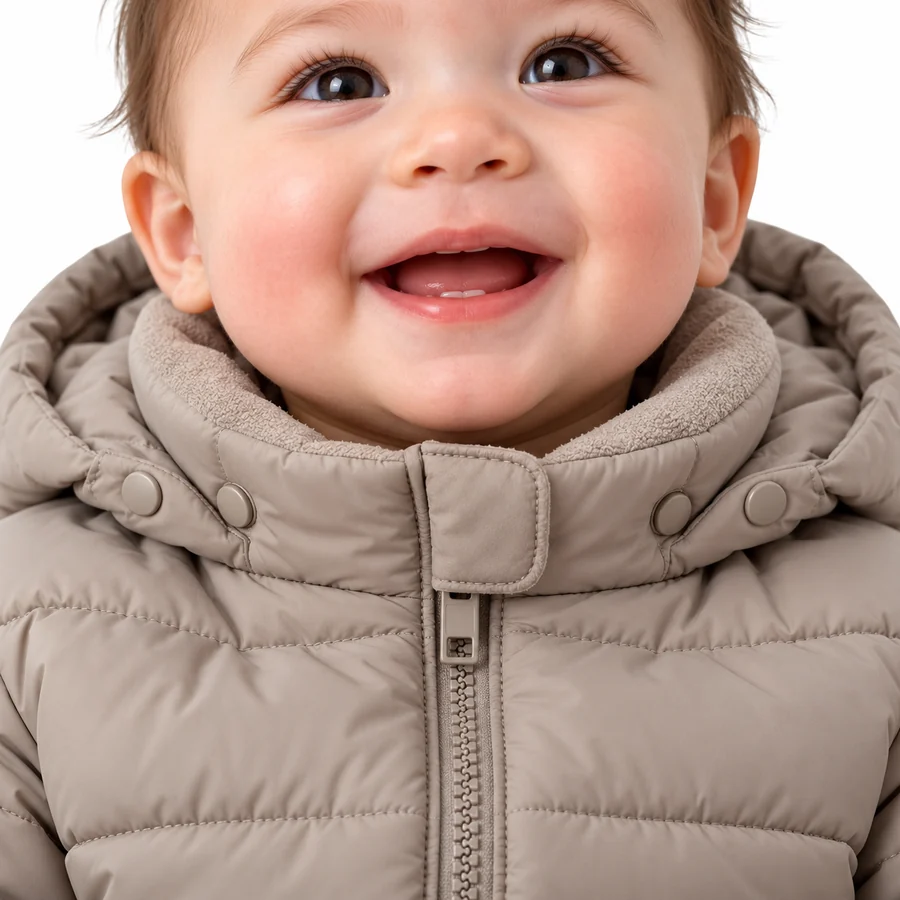
3. Collar below the mouth
When your baby sits down, a stiff coat pushes upward. Pick a soft collar with a chin guard that sits comfortably below the mouth.
- Good: Mouth clear when your baby sits
- Good: Hood unsnaps for the stroller
- Not good: Collar up over the chin when seated
Car seats and baby carriers
Puffy winter coats keep your baby warm by trapping 5 to 10 cm (2 to 4 in) of air inside the padding. Crash forces flatten that padding right away, and the harness straps are left loose.
Take a padded jacket off before buckling your baby into a car seat. Dress your baby in indoor clothes and a close-fitting thin fleece, pull the straps snug, and try to pinch a fold of strap fabric at the collarbone between your thumb and forefinger. If your fingers slide off without pinching any fabric, the harness is tight enough. Lay a light car blanket over the buckled straps, or turn the coat around and slip your toddler's arms into the sleeves backward over the fastened harness so they can push it off once the car warms up. Full steps are in the car seat dressing guide.
In a front or back carrier, a thick puffer jacket also bunches between the two of you and pushes the collar toward your baby's face. Keep your baby in thin indoor layers inside the carrier, because you count as a layer, and share a warm carrier cover or your own open coat on the outside.
Is this coat too puffy for the car seat?
A puffy coat makes the straps feel tight when they aren't. Try this once with your baby's own coat and car seat, and you'll see whether the coat is hiding slack.
Is this coat too puffy for the car seat?
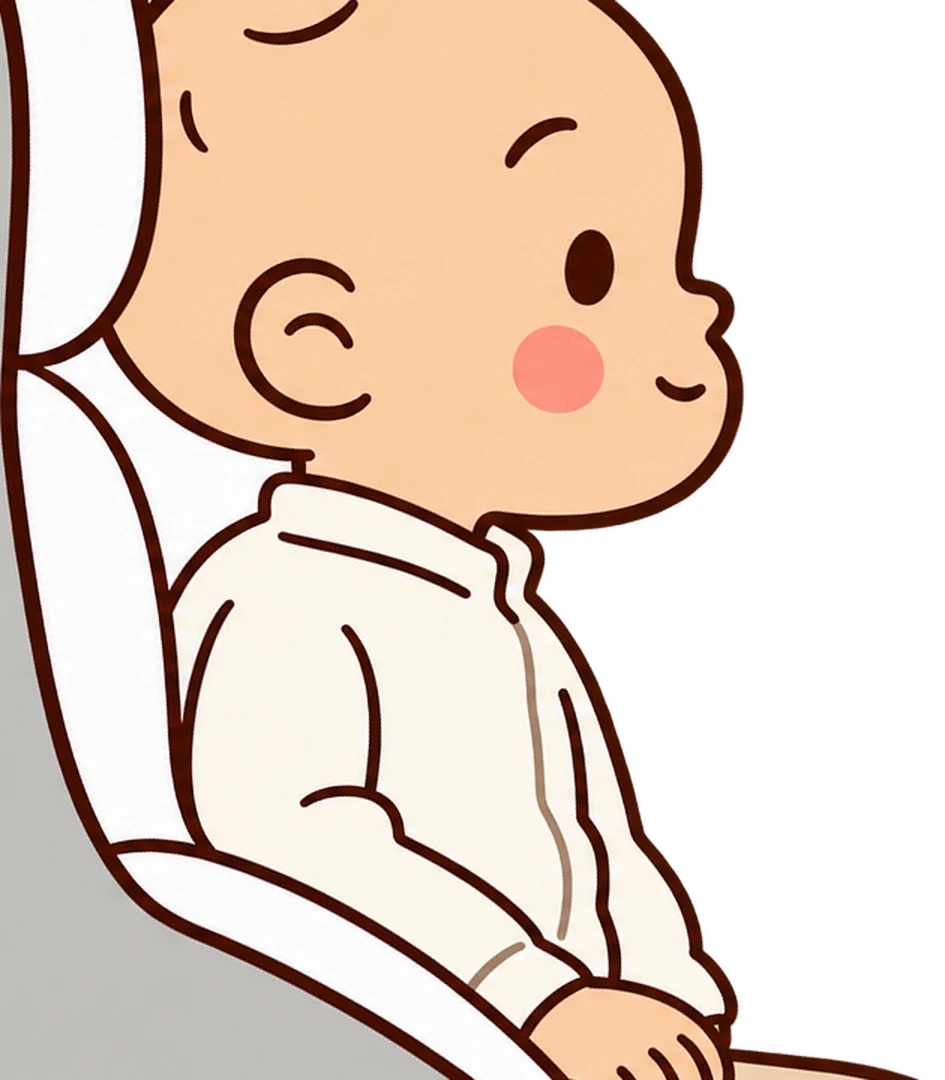
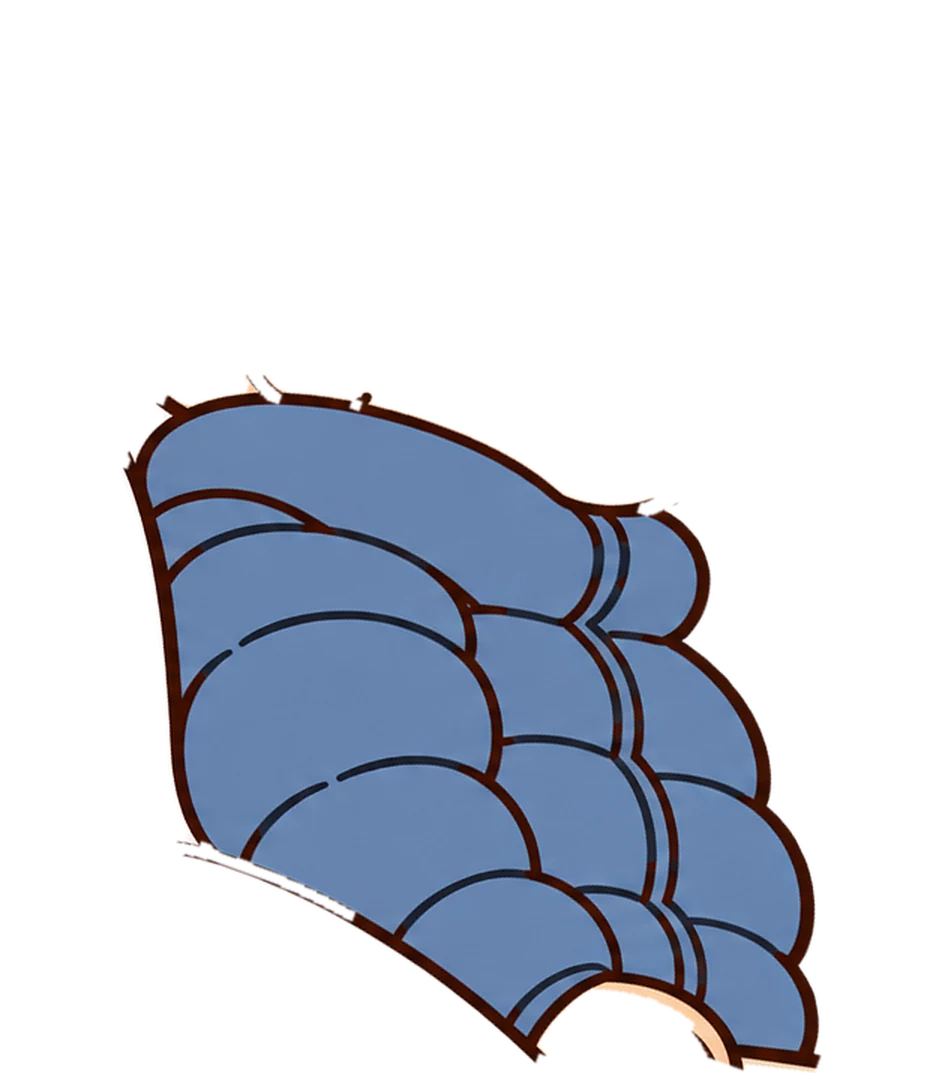
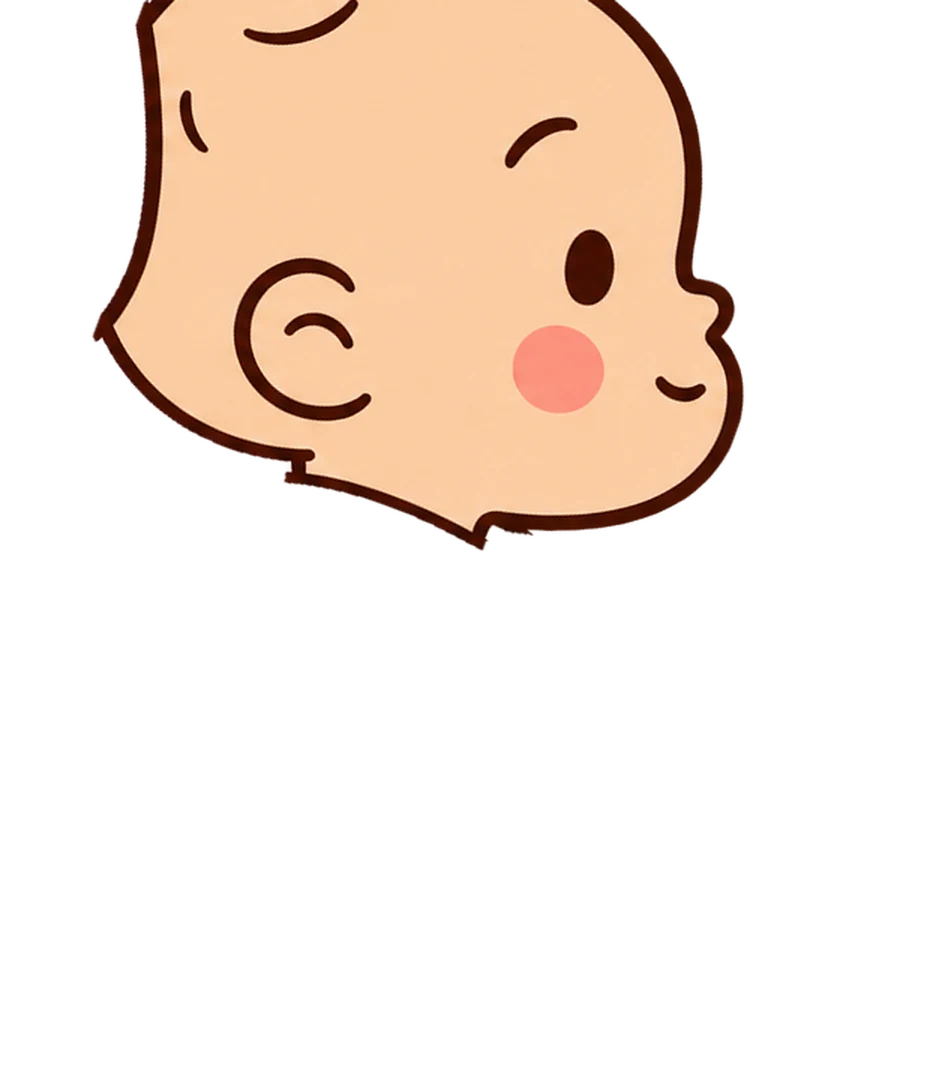
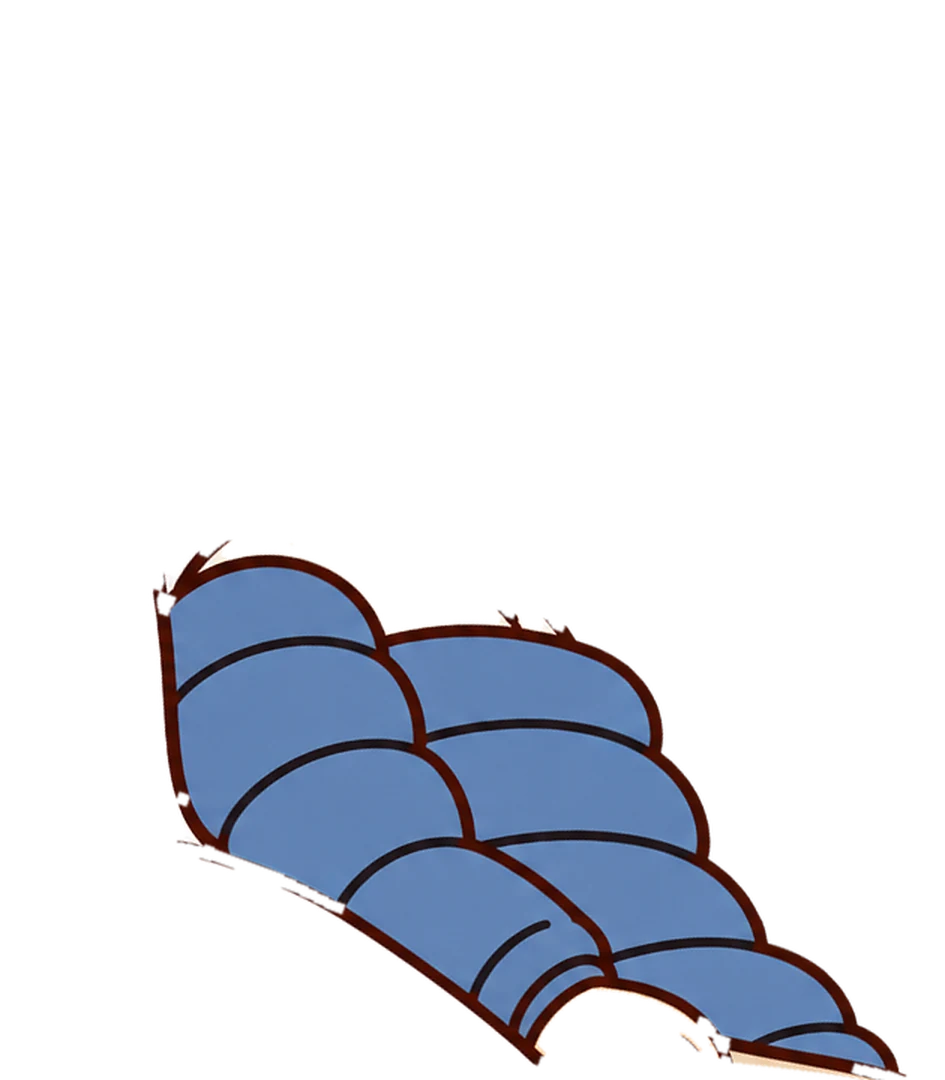


Buckle up over the coat
Put the coat on and buckle your baby in. Pull the straps tight until you cannot pinch any strap at the collarbone. It feels snug.
Take the coat off
2–4 in(5–10 cm) of air
Without loosening the straps, lift your baby out, take the coat off and buckle up again. Now pinch the strap at the collarbone. The room your fingers find is the air the padding held.
- A fold of strap pinches up
Do this instead
Dress your baby in indoor clothes and a thin fleece, and pull the straps snug until your fingers slide off the strap at the collarbone. Then turn the coat around and slip your toddler's arms into the sleeves, over the buckled straps.
- Fingers slide off the strap
- Coat on top of the straps
How to wash and dry a puffer jacket
Most mud, food and spit-up wipe off a nylon puffer with a damp cloth, so one coat usually lasts the winter with only a few washes. Wash it on a gentle cycle at 30°C (86°F) in a front-loading machine, or by hand in a sink, because the center post of a top-loading machine can tear the stitched seams. Never use fabric softener: it coats the fibers and flattens the padding.
A synthetic puffer washes with a small amount of mild liquid laundry detergent and dries on a low tumble setting or on a hanger. A down jacket needs a liquid soap made for down coats (sold at outdoor shops), because ordinary laundry detergent strips the natural oils from feathers and leaves them flat.
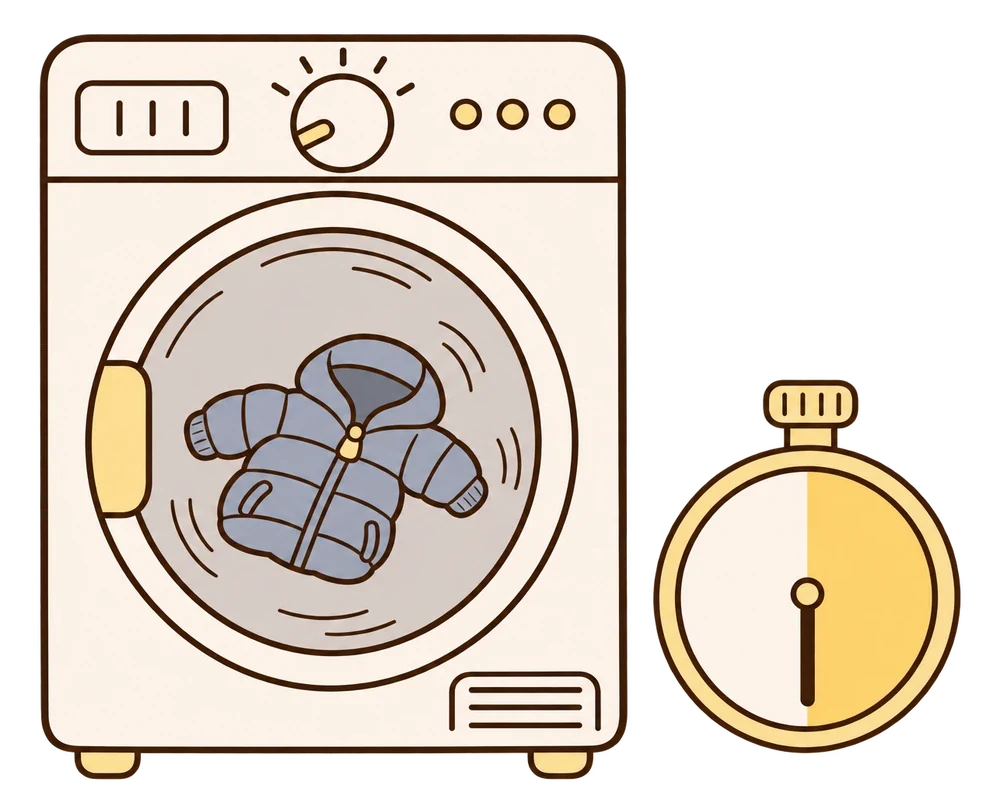
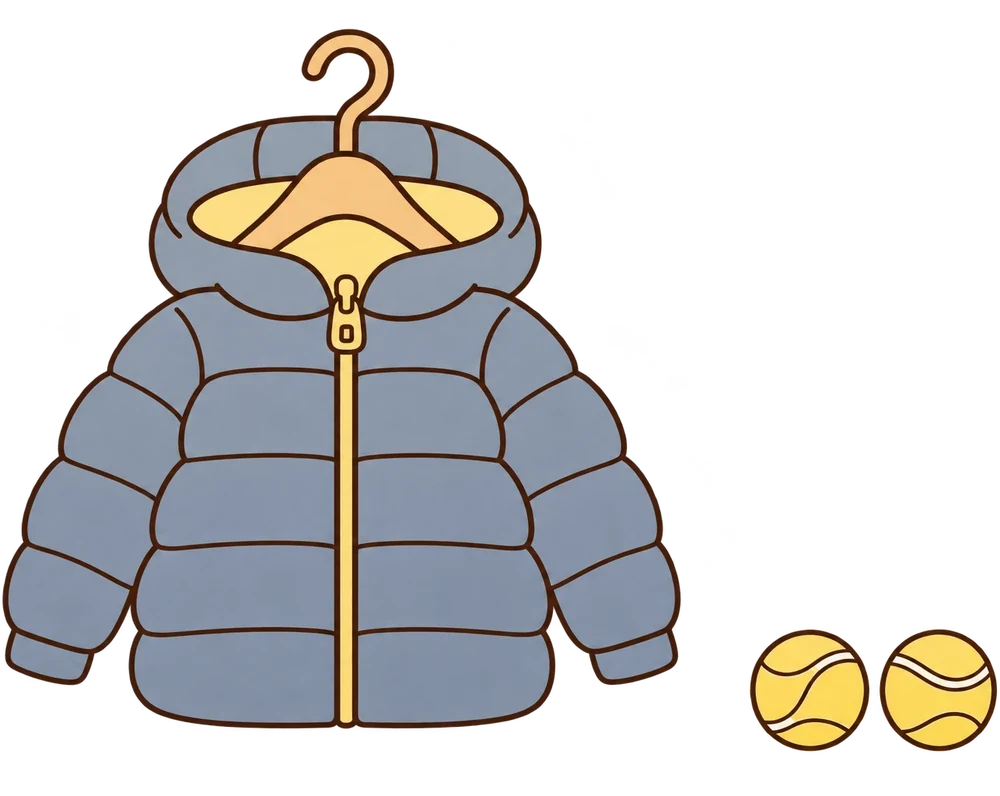
When a down puffer comes out of the washer, it always looks flat, heavy, and clumped. Press excess water out gently in a towel without wringing, then tumble dry on the lowest heat setting with two or three clean tennis balls or wool dryer balls. The bouncing balls break up the wet clumps and bring the puffiness back. Pause every 30 minutes to pull any remaining clumps apart with your fingers until the inside feels completely dry.
How to make a flat puffer puffy again
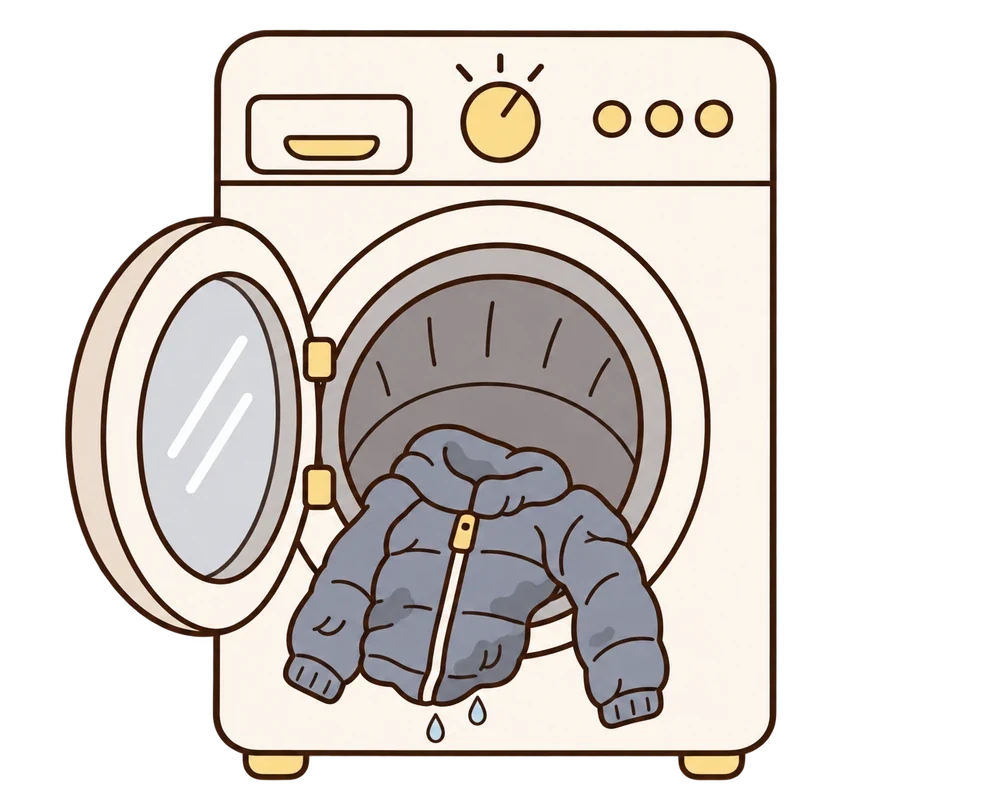
Flat and lumpy is normal
Every down puffer comes out of the washing machine like this, because wet down sticks together in clumps. Press the water out in a towel. Don't wring it.
Low heat, two tennis balls
The balls bounce on the coat and knock the clumps loose. Every 30 minutes, take the coat out and pull the last lumps apart with your fingers.
Puffy again, and dry inside
Squeeze the channels and feel inside. No lumps and no damp spots means it's done.
Questions parents ask
Does a newborn need a winter coat?
Not as a coat on its own. Where a newborn's outfit has a warm jacket, an insulated pram suit does that job, and on a baby lying flat it can't ride up at the back. A coat makes sense once your baby sits up, from around 6 months.
Are car seat coats and car seat ponchos safe?
A car seat poncho goes on over the buckled straps, like a light car blanket, so nothing thick sits under them. A car seat coat is fine only if it passes the coat test above, with your baby's own seat.
How do I tell if my baby is too warm or too cold in a winter coat?
Slip two fingers under the collar to feel the back of the neck or the chest. Warm and dry skin means the outfit is right. If the skin feels hot or damp, unzip the jacket right away or take off the middle layer. Hands and feet normally feel cooler than the torso, so do not judge warmth by the fingers alone.
Should a baby winter jacket have a hood?
A hood is helpful for a walking toddler in cold wind, but a thick hood bunches behind the head when a baby leans back in a stroller seat and can tip forward over the eyes. A coat with a snap-off hood, or a hoodless collar worn with a close-fitting winter hat, works best in a stroller.
At what temperature does a baby need a warm jacket instead of a fleece?
Below 12°C (54°F). At 12–15°C (54–59°F), a light jacket over a cardigan or a thin fleece is enough. A long-sleeve bodysuit and a warm fleece go under the warm jacket, and dressing a baby for cold weather has the full outfit for each temperature.
What should my baby wear on the legs with a warm jacket in the stroller?
Inside a stroller footmuff, regular indoor pants and socks are enough because the padded bag warms the legs. Without a footmuff, pair the jacket with warm pants and a stroller blanket tucked around the legs, plus a hat, mittens, and booties.
Are puffer jackets waterproof in rain?
Most puffer jackets have a water-repellent finish that sheds dry snow and light drizzle, but their stitched seams soak through in steady rain. On cold, wet days, use a waterproof warm raincoat, or slip an unlined light raincoat over the puffer.
What does 600 fill power mean on a down jacket tag?
Fill power measures how fluffy the down clusters are. A 600-fill or 650-fill coat gives the same warmth with less weight and stiffness than a 450-fill coat, though a lower-number coat with more down packed inside can still be just as warm.