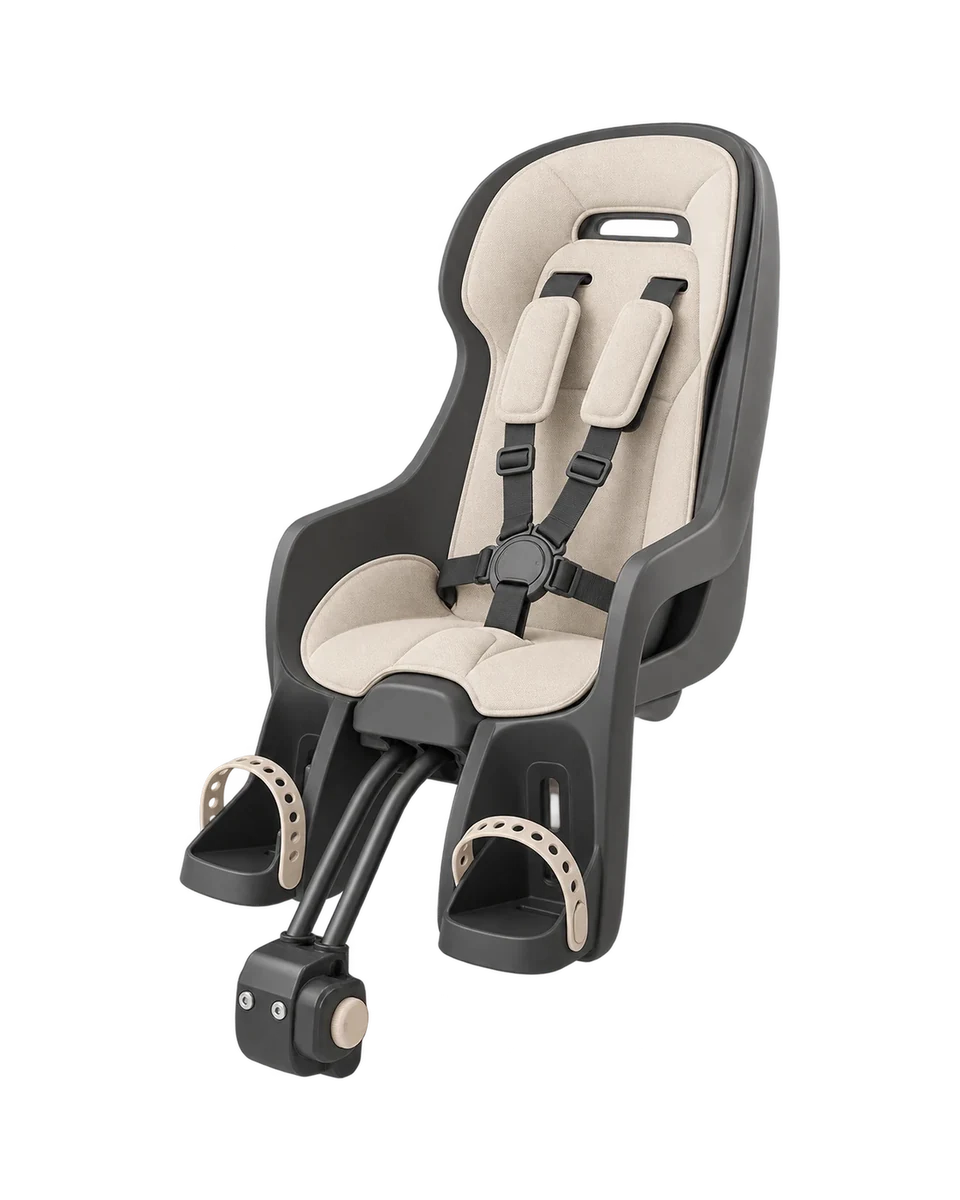
A child bike seat lets your child ride along on your own bike: a small seat with a harness, clamped in front of you between the saddle and the handlebar, or behind you over the back wheel. A bike trailer is a covered cart on two wheels that your bike pulls, and a cargo bike carries children in a box at the front or on a long back seat.
You need one only if you ride a bike anyway. Then it is how you get to daycare, the shops and the park, all year round. Most children start around their first birthday, once they sit up well on their own, and they always wear a helmet.
- For ages1–5years
- You'll need1
- Use itAll year
When can a baby ride in a bike seat?
When your baby can sit up from crawling without help and holds the head steady with a helmet on. Bike seats are made for children from 9 kg (20 lb) who sit without help, and most babies get there between 9 and 12 months. If your baby still tips over after a few minutes of sitting, wait, because in the seat the body slumps and the helmet tips the head forward.
Pediatricians advise waiting until the first birthday for any ride, in a seat or a trailer. If you do take a younger baby along, as plenty of Dutch parents do, it goes in a cargo bike, buckled into a baby car seat that's fixed firmly in the box on a holder made for it, and only once the head is steady. A baby never rides in a carrier or a sling on a bike.
Whichever way you go, start with short, slow rides on smooth, quiet paths, because a seat or trailer passes every bump straight on to a small head.
Four ways to take your child along
For one child up to about age 3, a front or a rear seat, and from 3 to about 5, a rear seat. For two children, or long rides in any weather, a trailer, and for two or three children every day, a cargo bike, if you have room to park it.
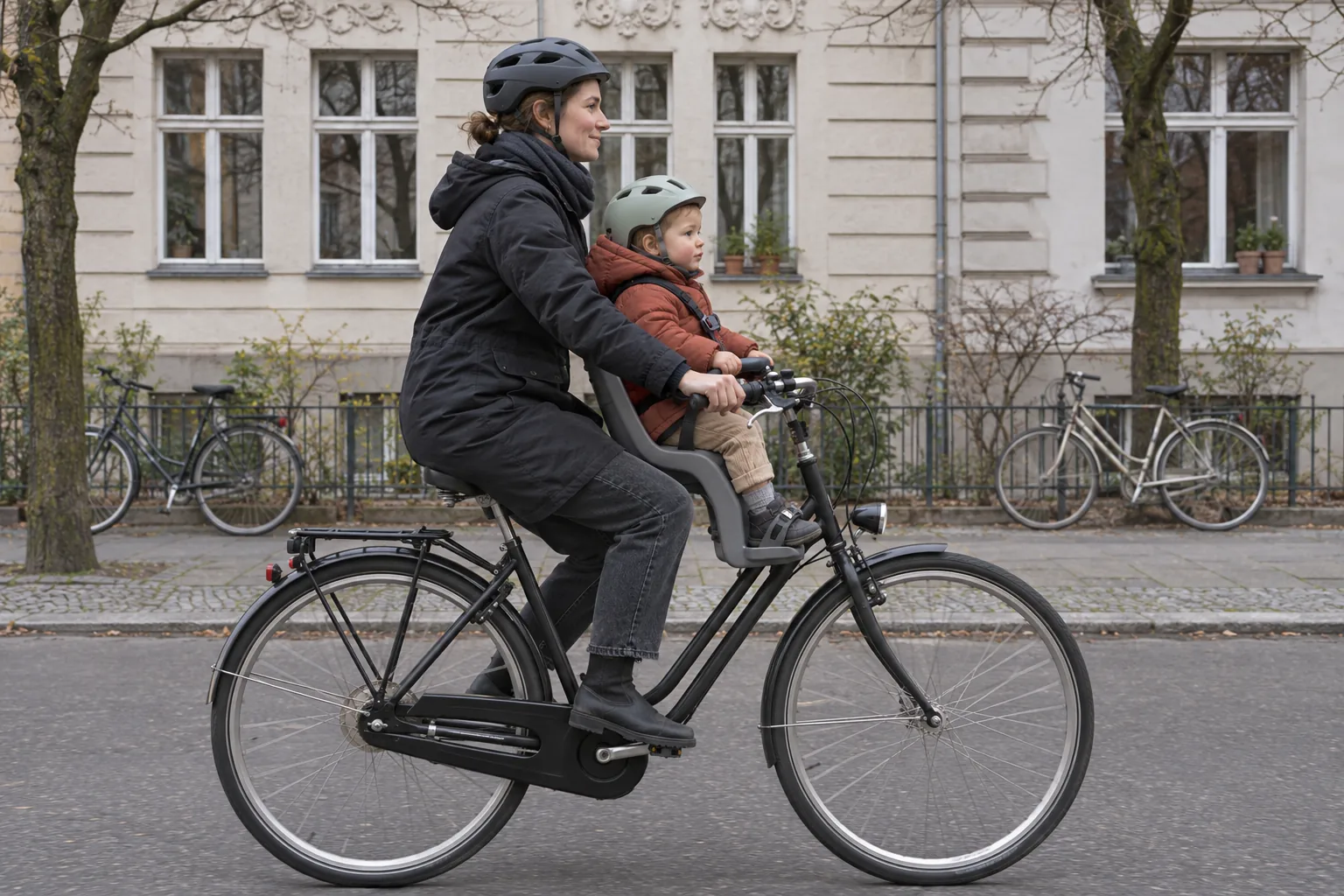
Front seat
Clamps between the saddle and the handlebar, so your child sits inside your arms, sees the road and hears you. Front seats carry children up to 15 kg (33 lb), about age 3.
- Good: Your child sits in view
- Good: Easy to talk on the way
- Not good: Outgrown around age 3
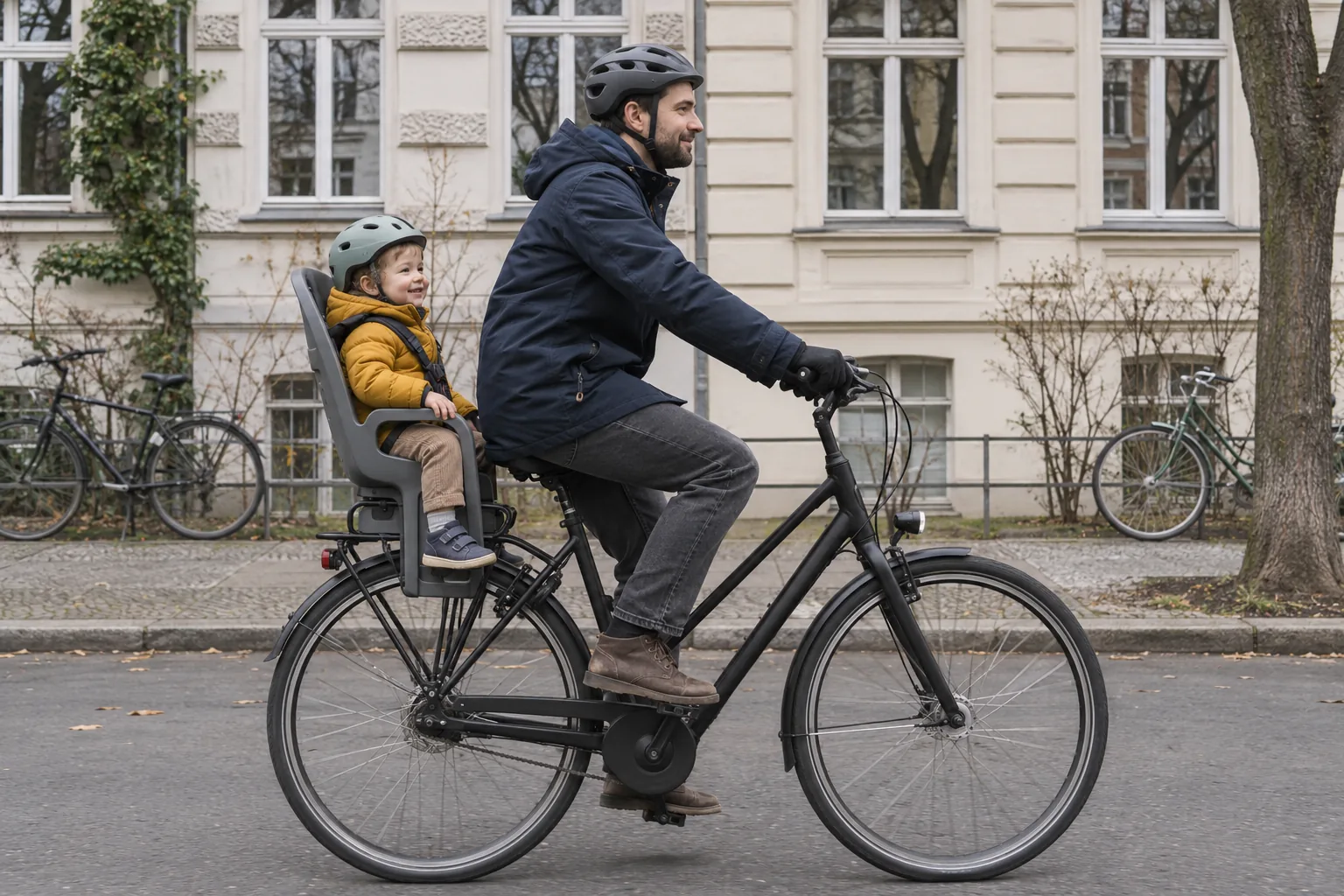
Rear seat
Sits behind you, clamped to the frame or on a strong rack, and carries children up to 22 kg (about 48 lb), about age 5. Rear seats are the most common kind, the everyday seat for the ride to daycare.
- Good: Lasts until about age 5
- Good: High back for naps
- Not good: Parked bike tips easily
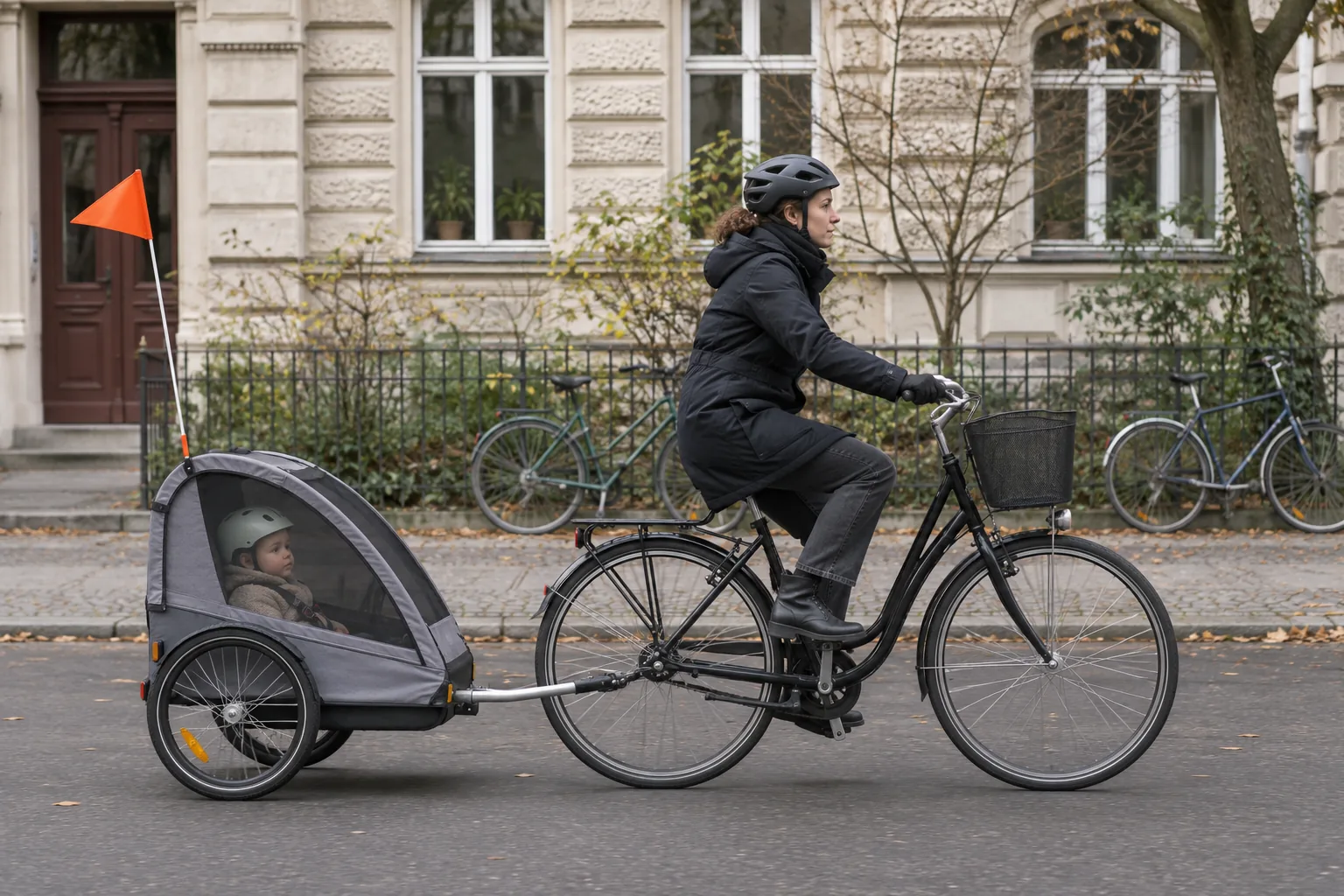
Trailer
A covered cart with one or two seats that your bike pulls on a hitch (a coupling) at the back wheel. It sits low, keeps out the weather, and many turn into a stroller at the other end. A tall flag helps drivers see it.
- Good: Two seats, out of the rain
- Good: Room to nap and for bags
- Not good: Wide, long and heavy uphill
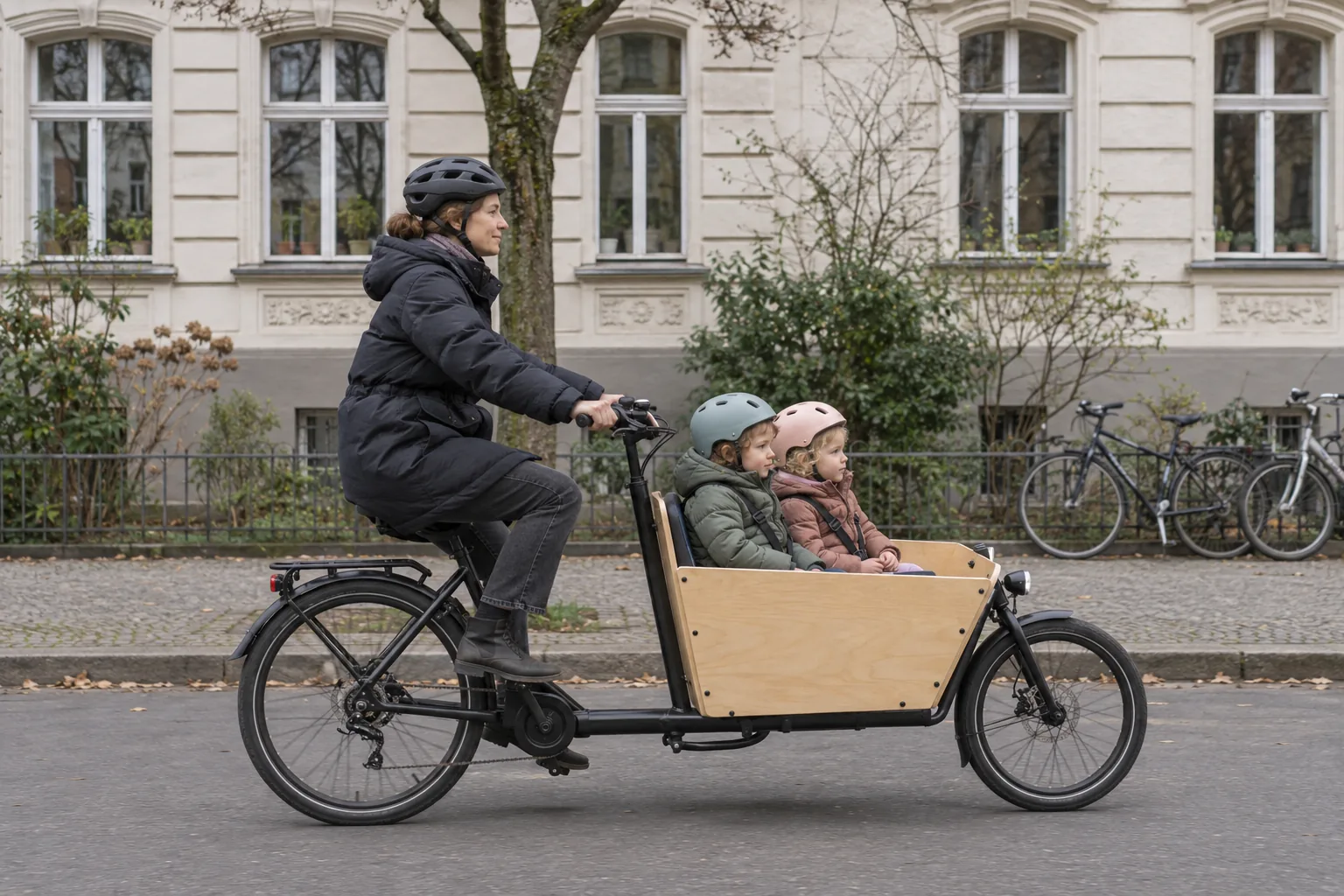
Cargo bike
A bike built for carrying: a box at the front with a bench and belts (a box bike), or a long back with seats (a longtail). Many have a motor, and a rain canopy closes over the box.
- Good: Room for two or three
- Good: Canopy over the whole box
- Not good: Needs a big space to park
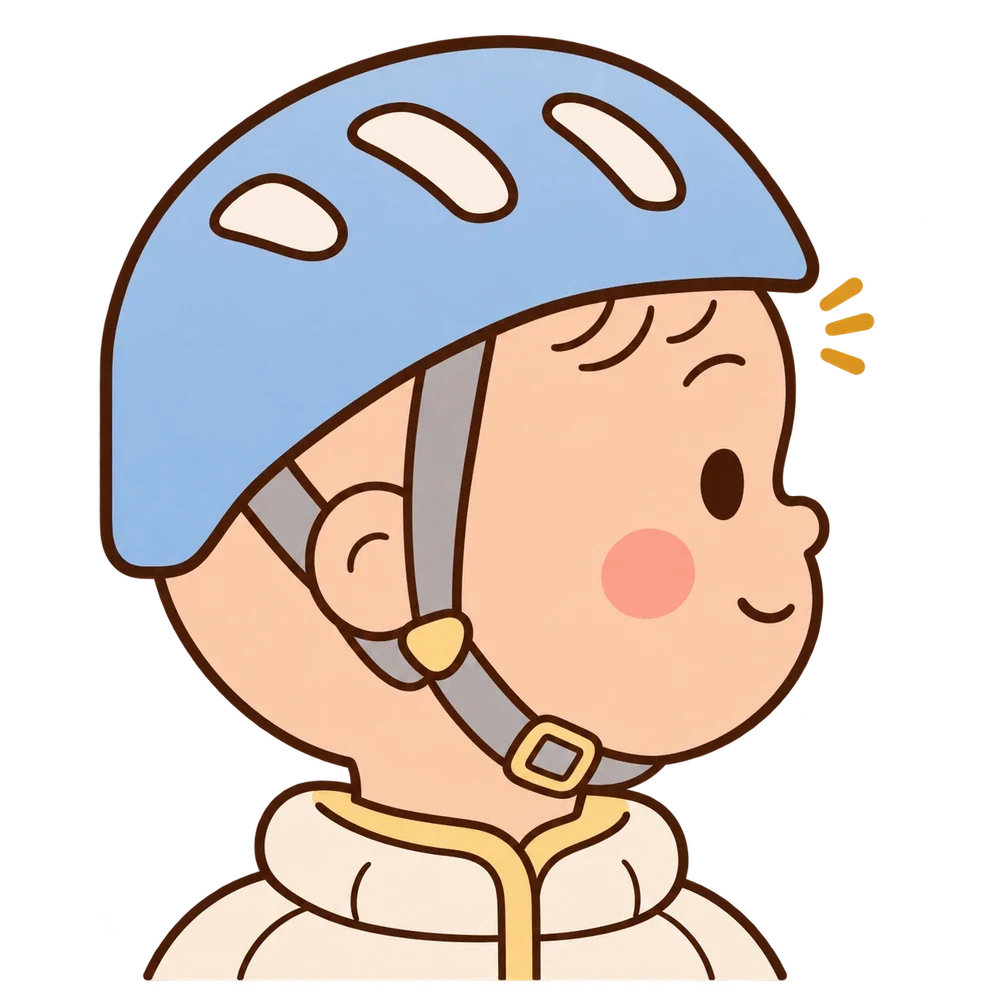
How a bike helmet should fit
Buy the size that fits now, not one to grow into, and check these four things each time it goes on. Inside, look for the CPSC sticker in the US, or the CE mark with EN 1078 in Europe.
Low on the forehead
The front sits level, one or two finger-widths above the eyebrows, so your child sees its edge when looking up. Tipped back, it leaves the forehead bare.
A V under each ear
The two side straps meet just below each ear and a little in front of it.
A snug chin strap
One or two fingers fit under the buckled strap, no more. Ask your child to open the mouth wide: the helmet should pull down on the head.
A flat back
A smooth, flat back lies against the seat's backrest without pushing your child's head forward.
Wind, cold and rain on the bike
On the bike your child sits still while you pedal and warm up, so they cool down faster than you do. Riding also makes its own wind: a ride through town runs at about 16 km/h (10 mph), so your child sits in a steady breeze even on a still day.
So dress your child warmer than yourself, as for a windy day: a windproof outer layer, mittens that stay on, warm socks, and a thin hat or balaclava under the helmet. Where your child sits decides how much of that breeze arrives.
In the rain, a seat needs a rain cape (a poncho that goes over your child and the seat), or your child wears a raincoat and rain pants. On sunny days, touch the seat before your child goes in, because a dark seat gets hot in the sun.
Where the wind reaches your child
Where the wind reaches your child
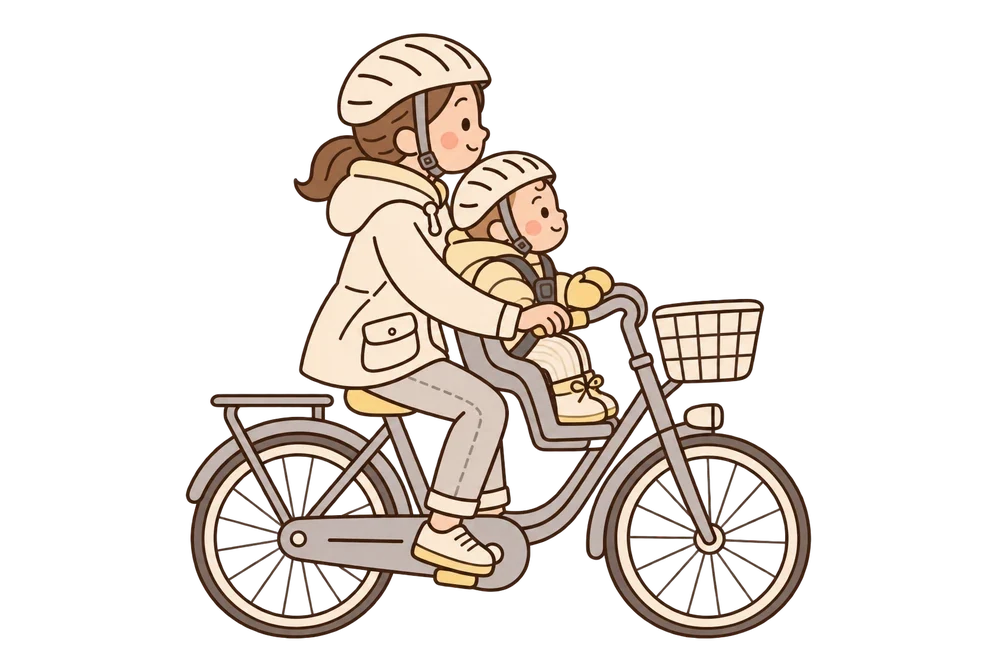
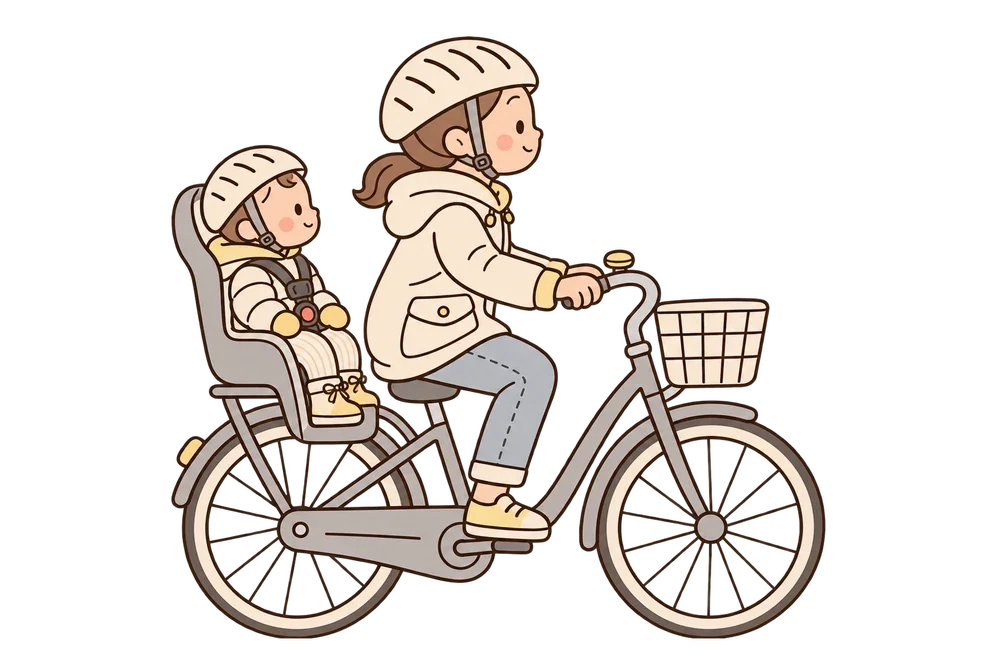
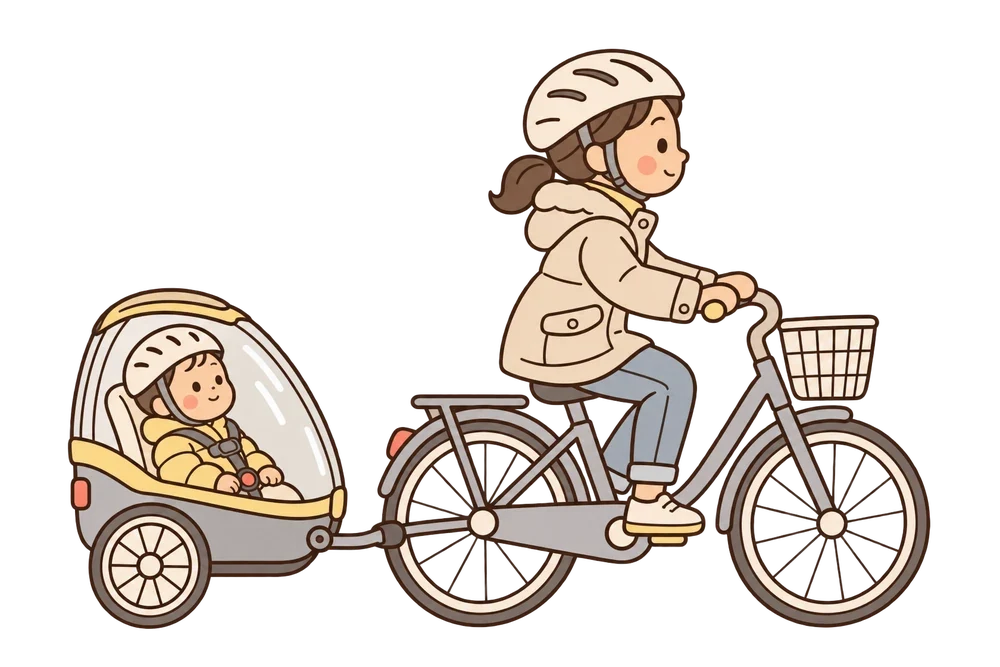
Your child meets the wind first
In front of you, your child takes the whole breeze of the ride, face and hands first. Some front seats take a small windscreen.
Your back takes some of it
Behind you, your body breaks part of the wind, but legs and hands still ride in the airflow, and you can't see when your child gets cold. When you stop, feel the back of the neck: warm and dry is right.
The cover keeps it out
With its rain cover closed, a trailer keeps the wind and rain off, so dress your child much as for a stroller walk, with a blanket over the legs on cold days. A box bike with its canopy up works the same way.
How to choose a bike seat
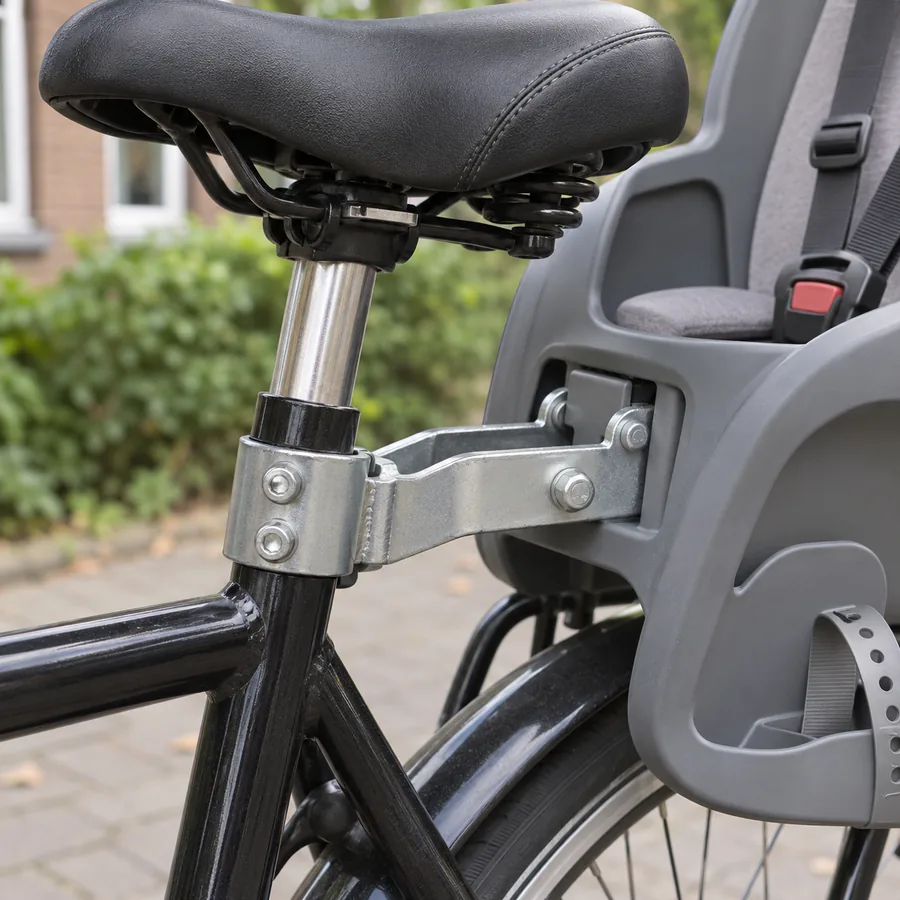
1. It fits your bike
A rear seat clamps to the frame tube under the saddle, or sits on a rack made to carry a child seat. A front seat needs room between the saddle and the handlebar. Not every frame and rack is made for one, so check what your bike's maker allows and try the seat on your bike in the shop.
- Good: Bike maker allows a child seat
- Good: Rack rated 27 kg (60 lb) or more
- Not good: Clamp doesn't close on the tube
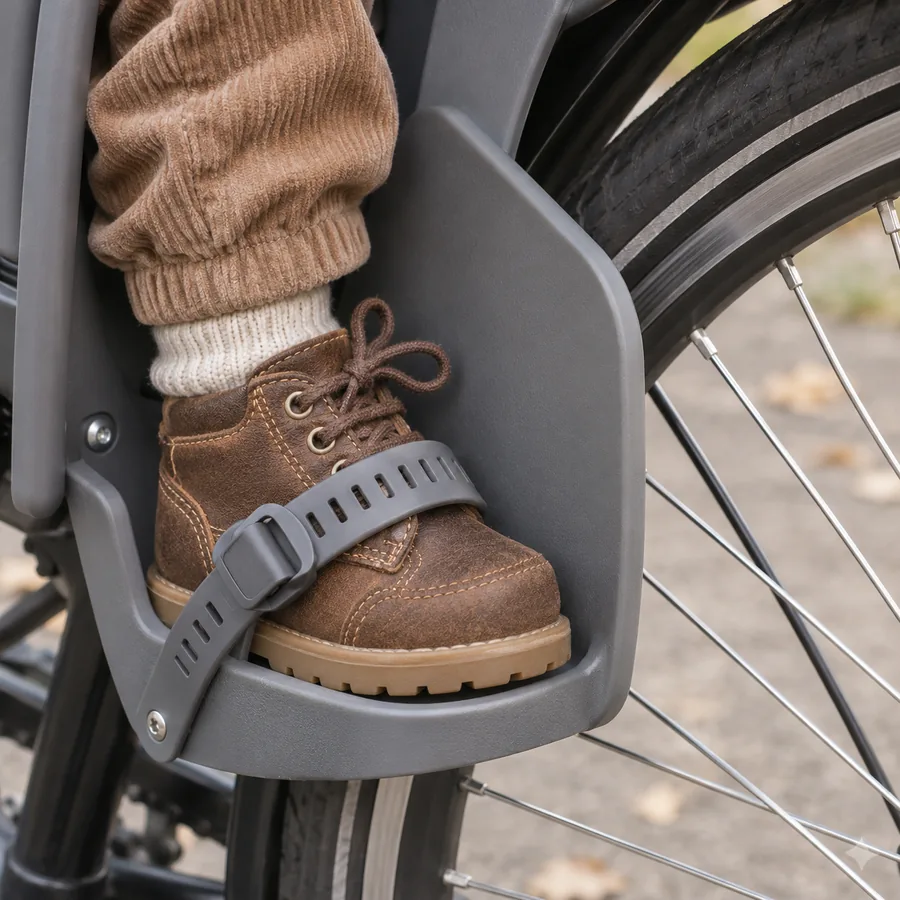
2. Feet held clear of the spokes
Foot rests with straps, and a hard guard between the feet and the wheel, keep small feet out of the spokes. The thin plastic cover some bikes have over the back wheel is not enough.
- Good: Strap over each foot
- Good: Foot rests that move up
- Not good: Open foot cups, no guard
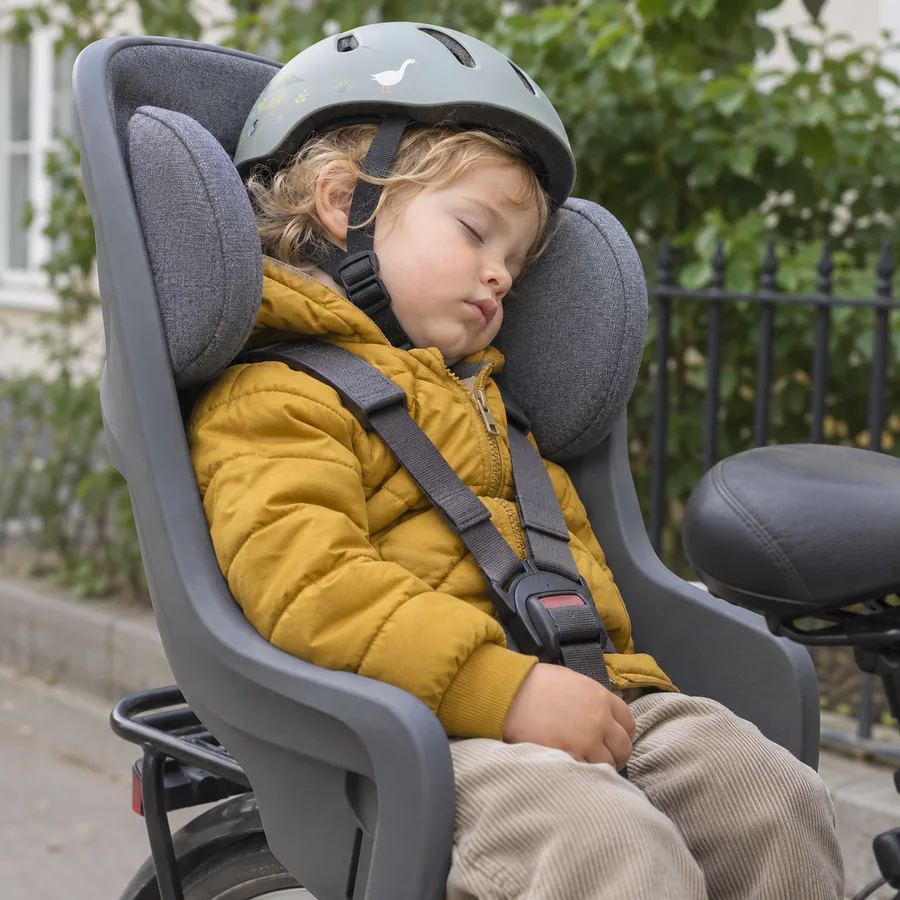
3. A high back for naps
Children often doze off on the bike. A high back with side wings, and a seat that tilts back while you ride, keeps a sleeping head from flopping.
- Good: High back with side wings
- Good: Tilts back on the move
- Not good: Low back, head unsupported
How to ride with your child on board
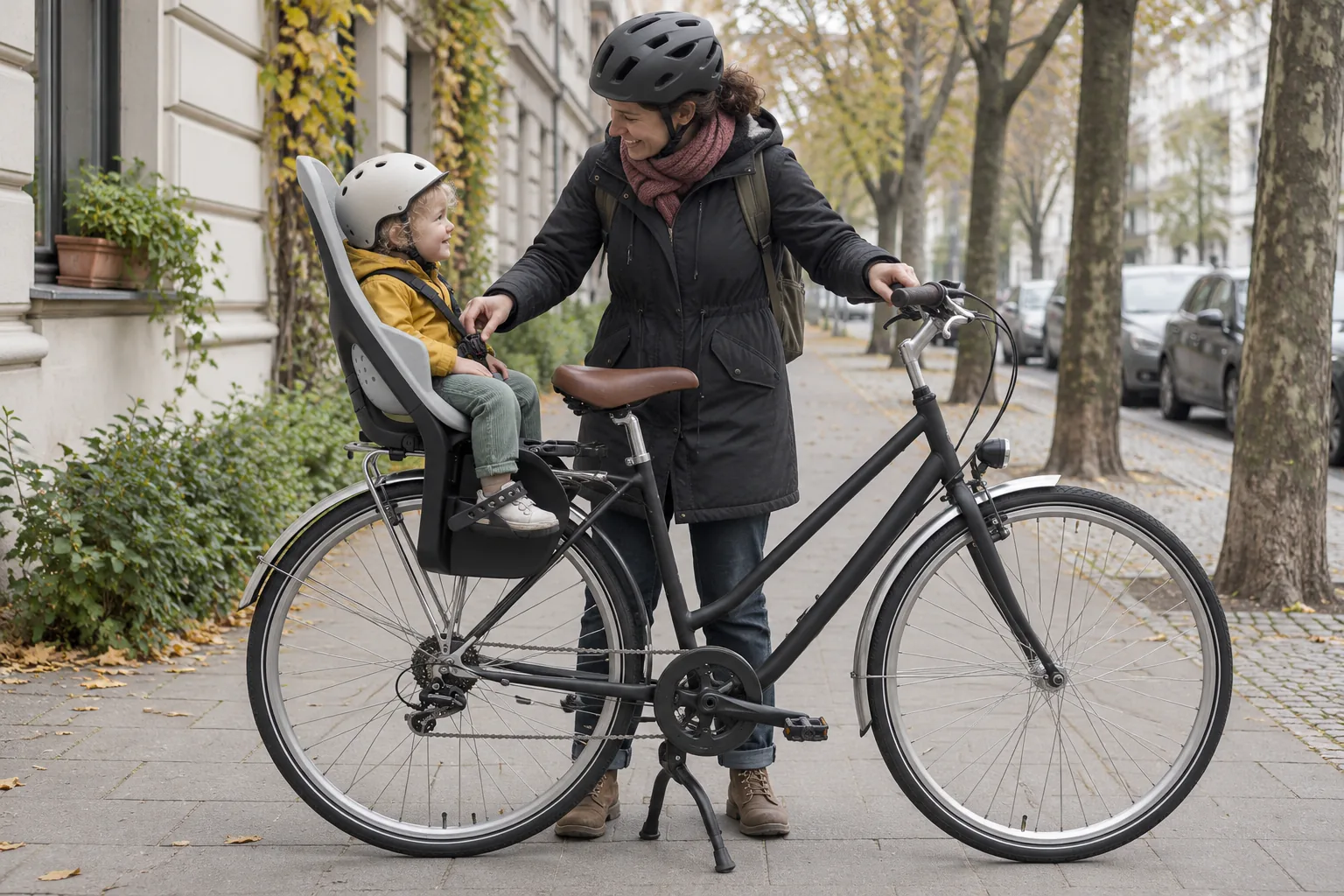
A bike with a child in the seat is top-heavy, and many injuries happen when the parked bike tips over. So a bike with a seat needs a two-legged stand (a kickstand with a leg on each side). Do everything else first (your helmet, the bags, the lock), then keep one hand on the handlebar while you lift your child in and buckle up. Never step away while your child sits in the seat.
Ride a few practice rounds on a quiet street before the first trip, because the extra weight changes how the bike steers and how long it takes to stop. Check that the harness and the foot straps are snug before every ride. If your saddle sits on open springs, cover them, because small fingers reach them from the seat. With a trailer, ride a little further out from parked cars, because it is wider than you are.
Questions parents ask
What age can a child ride in a bike trailer?
In the trailer's own seat, from about 12 months, once your child sits up well. Before that, look in your trailer's manual. Many infant inserts are only meant for walking, with the trailer pushed as a stroller, but some trailers take a baby hammock that's made for riding from the first weeks.
Is a bike trailer safer than a bike seat?
Pediatricians lean toward a trailer. It sits low, so if it does tip over, your child has less far to fall. A seat, on the other hand, keeps your child close and in sight.
Does my child need a helmet in a trailer?
Yes. A trailer can tip over on a curb or in a tight turn, and the helmet protects the head when it does. Austria requires one for children under 12 in a trailer too.
Can my child wear a hat under a bike helmet?
A thin one, yes: a thin cotton or fleece cap, or a thin balaclava, barely changes the fit. A thick knit hat lifts the helmet off the head, and a pom-pom doesn't fit under it at all. For the winter cap, loosen the fit ring (the dial at the back), and tighten it again in spring.
Is it legal to carry a child on a bike?
Yes, in a proper seat or trailer, but the rules differ by country. Germany allows children under 7 in a special seat with foot guards, with a rider aged 16 or older, and up to two children under 7 in a trailer. Austria allows seats only behind the saddle. France requires a helmet up to age 12, Spain up to 16, and in the US many states have their own helmet laws for children.
Can I carry two children on one bike?
A front and a rear seat on one bike are allowed in some places, but the bike gets hard to handle and may go over its weight limit, usually 100 to 130 kg (220 to 285 lb) including you. For two children, a trailer or a cargo bike is easier.
What if my child falls asleep in the bike seat?
A seat with a high back and side wings, tilted back, holds a sleeping head. In a seat without them the head flops with every bump, so stop for the nap if you can. In a trailer, children nap in comfort.
Do we need lights and reflectors with a child on board?
Yes. Many countries require bike lights after dark, and a child seat or trailer is one more thing a driver can miss. Add reflective stickers to the seat, a flag on the trailer, and reflectors on your child's jacket.