
What this is about
Outdoor gear advice makes layering sound like preparing for an alpine expedition. When you stand in front of a dresser with a squirming infant, three technical layers sound exhausting. For a baby, the idea is much simpler. Think of base, middle and outer as three separate jobs rather than three mandatory outfits.
Not every outfit needs all three
Three full layers are a cold-weather toolkit, not a daily uniform. On a hot summer afternoon, a single cotton romper does the entire job. Indoors, a soft bodysuit and light pants are completely finished. Stacking three garments when the weather does not call for them turns the stroller into an oven.
A single piece can also handle two jobs at once. On a crisp, dry autumn walk, a fleece jacket over a bodysuit keeps your baby warm and blocks the gentle breeze. It serves as both the middle warmth and the outer piece. You only add a dedicated outer shell when wind, rain or biting cold demand real protection.
The base covers the torso
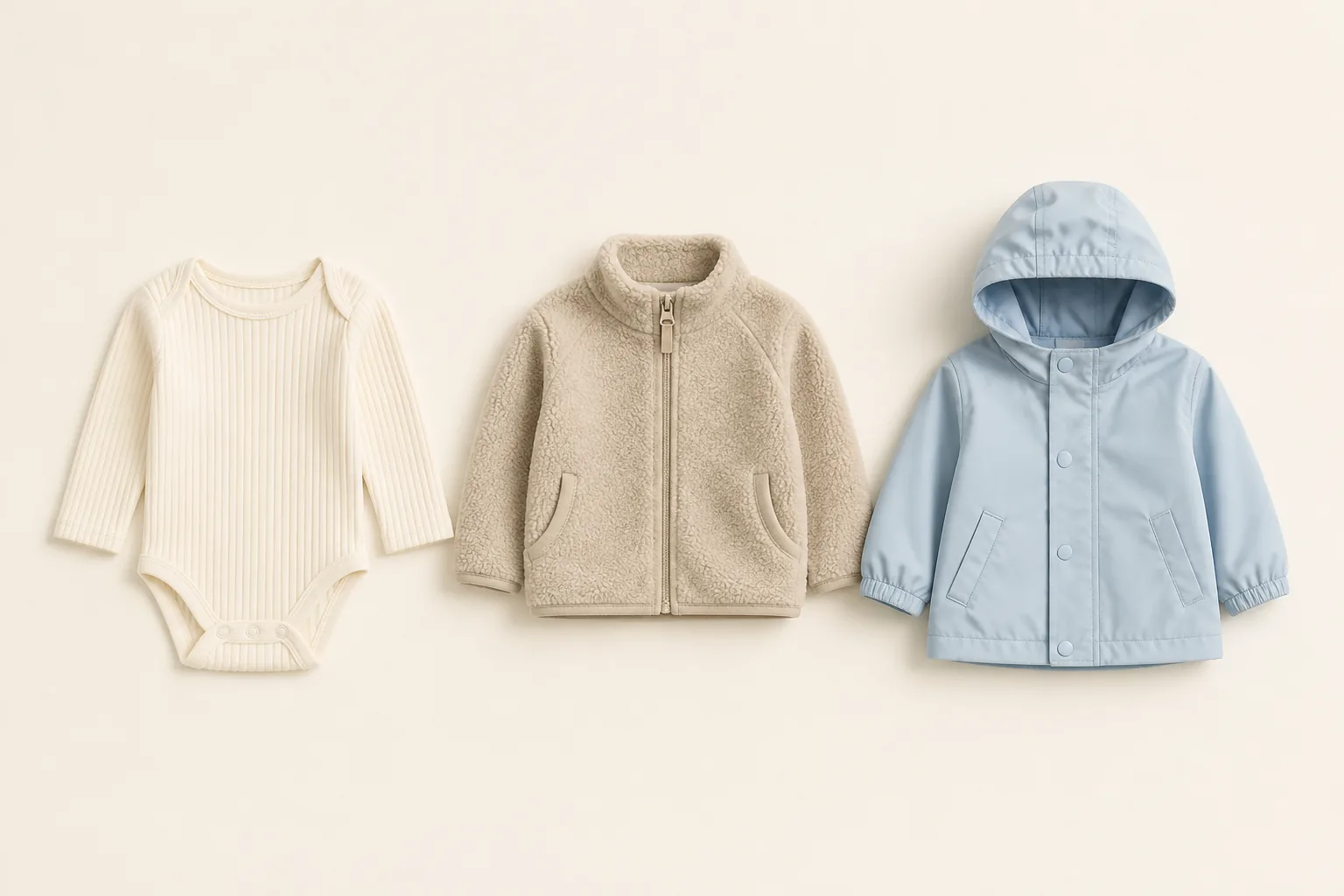
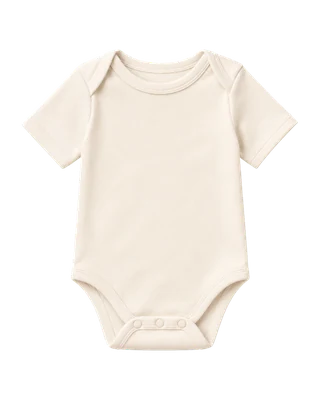
The base layer is your foundation. A snug cotton bodysuit with crotch snaps is the gold standard because it stays tucked in. Regular t-shirts ride up to the armpits when you lift your baby or buckle a stroller harness, leaving bare skin pressed against cold fabric. A bodysuit stays flat and keeps the core covered.
Keep this layer soft, breathable and tag-free. Cotton breathes well and absorbs moisture if your baby gets warm. In warm weather, a short-sleeve bodysuit or sleeveless romper is plenty. In cooler weather, switch to long sleeves and add soft pants and socks.
One-piece footed sleepsuits are an easy alternative, especially in the first few months. They save you from wrestling tiny socks onto kicking feet. Bodysuits with separate pants, however, make quick diaper changes and mid-walk temperature adjustments far simpler.
The middle is your volume dial
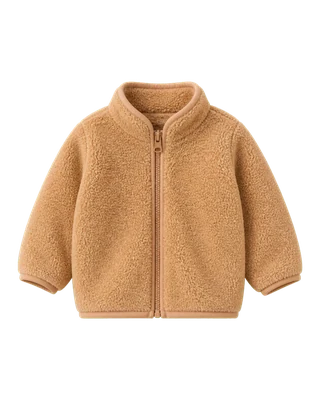
The middle layer is where you control warmth. A knit cardigan, cotton sweater or fleece jacket traps warm air close to the chest. More importantly, it is the easiest piece to peel off when the surroundings heat up.
Think of an ordinary morning walk. You leave a breezy 12° sidewalk, walk into a heated grocery store, and then step onto a crowded bus. If your baby is wearing one thick, padded snowsuit, you are stuck. Either your baby roasts in the stroller, or you have to unbuckle the whole harness and strip them down in the aisle.
A middle layer gives you options. You unbutton the cardigan or unzip the fleece jacket while the bodysuit and pants stay on. Choose pieces with front buttons or zippers rather than tight pullovers. Pulling a snug sweater over a hot, fussy baby's face on a bus is a struggle nobody needs.
The outer meets the weather
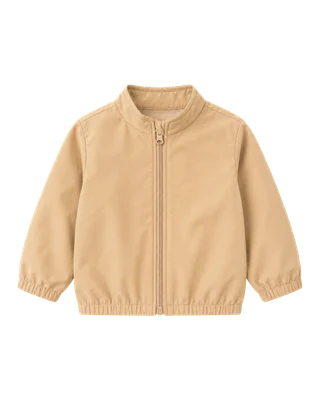
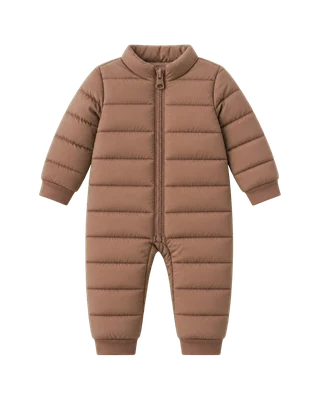
The outer layer is the shield. It stops wind from cutting through knitwear and keeps wet weather out. In cool air, that means a light windbreaker or jacket. In freezing winter weather, a padded pram suit encloses the whole body.
For a baby in a stroller, the stroller itself often acts as the outer layer. A windproof stroller footmuff wraps the legs and torso in thick protection, often replacing the need for a bulky winter coat. When the wind picks up, pull the canopy down to create a quiet pocket of still air.
Keep stroller weather gear honest. Rain covers keep rain off the stroller, but they trap heat and humidity quickly. Put the rain cover on when rain is falling, and take it off when the rain stops. Never use a rain cover as a wind shield on a mild day, and never drape a blanket or muslin cloth over the stroller opening. Draped cloths block air circulation and cause temperatures inside to spike dangerously fast.
The shorthand leaves out heads, hands and feet
The three-layer model protects the torso, but parents usually worry most about icy fingers and bare ankles. A newborn's circulatory system is still developing, which means hands and feet naturally feel cooler than the rest of the body. Feeling cool hands while the chest is warm and dry is completely normal. It is not a sign that your baby needs another winter sweater.
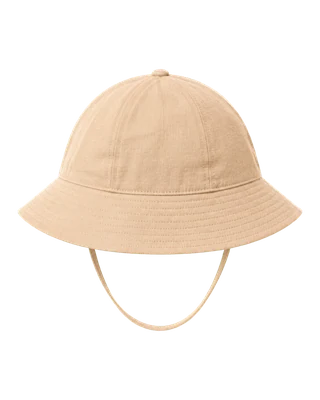
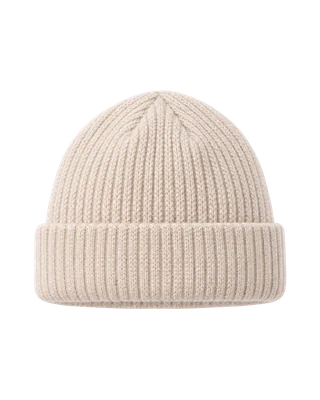
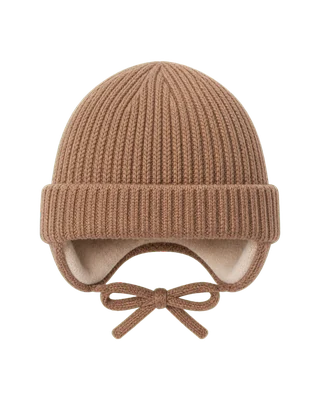
Heads need careful handling. Babies release excess body heat through their heads to regulate temperature. A sun hat protects delicate skin in summer, and a soft knit hat keeps winter wind off small ears. But hats must come off the moment you step indoors or into a warm car. Leaving an outdoor hat on a sleeping baby inside a heated room is one of the most common ways babies overheat.
Head
sun hat, knit hat, warm hat
Choose the hat for its job: sun, cool air or cold winter air. Take it off indoors.
Feet
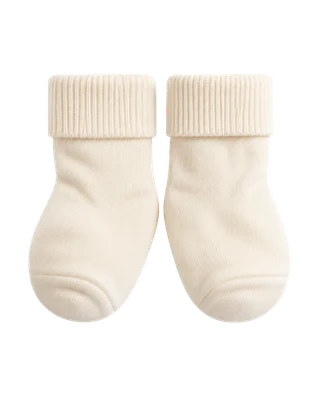
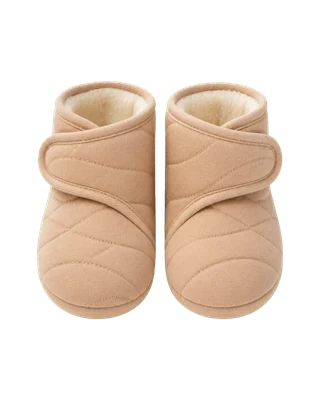
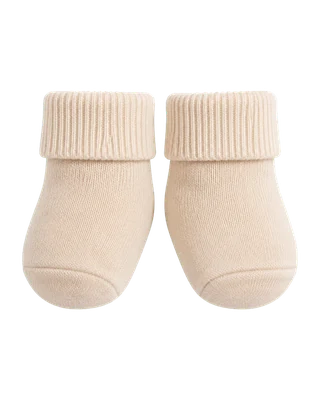
thin socks, booties
Keep base socks on. Add insulated booties when the air turns frosty.
Hands
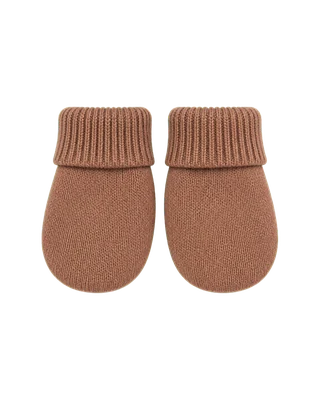
mittens
Add soft mittens in cold weather to shield fingers from biting wind.
Watch the function change as the air gets colder
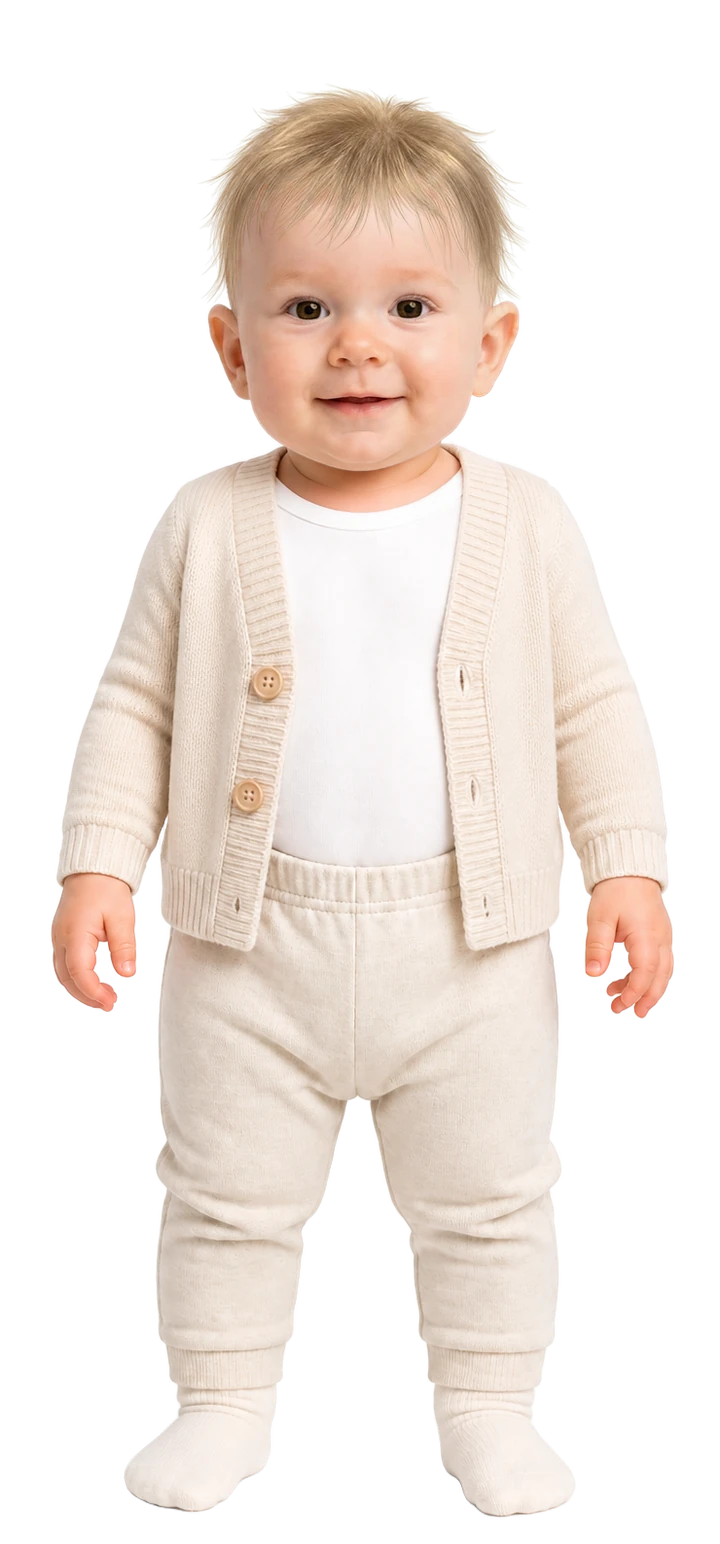
Seeing how layers combine across three real days makes the system simple. On a mild spring morning around 17°, you do not need three pieces. A cotton bodysuit covers the skin, and a knit cardigan adds gentle warmth. Because the air is calm, the cardigan is both your warm layer and your outer piece.
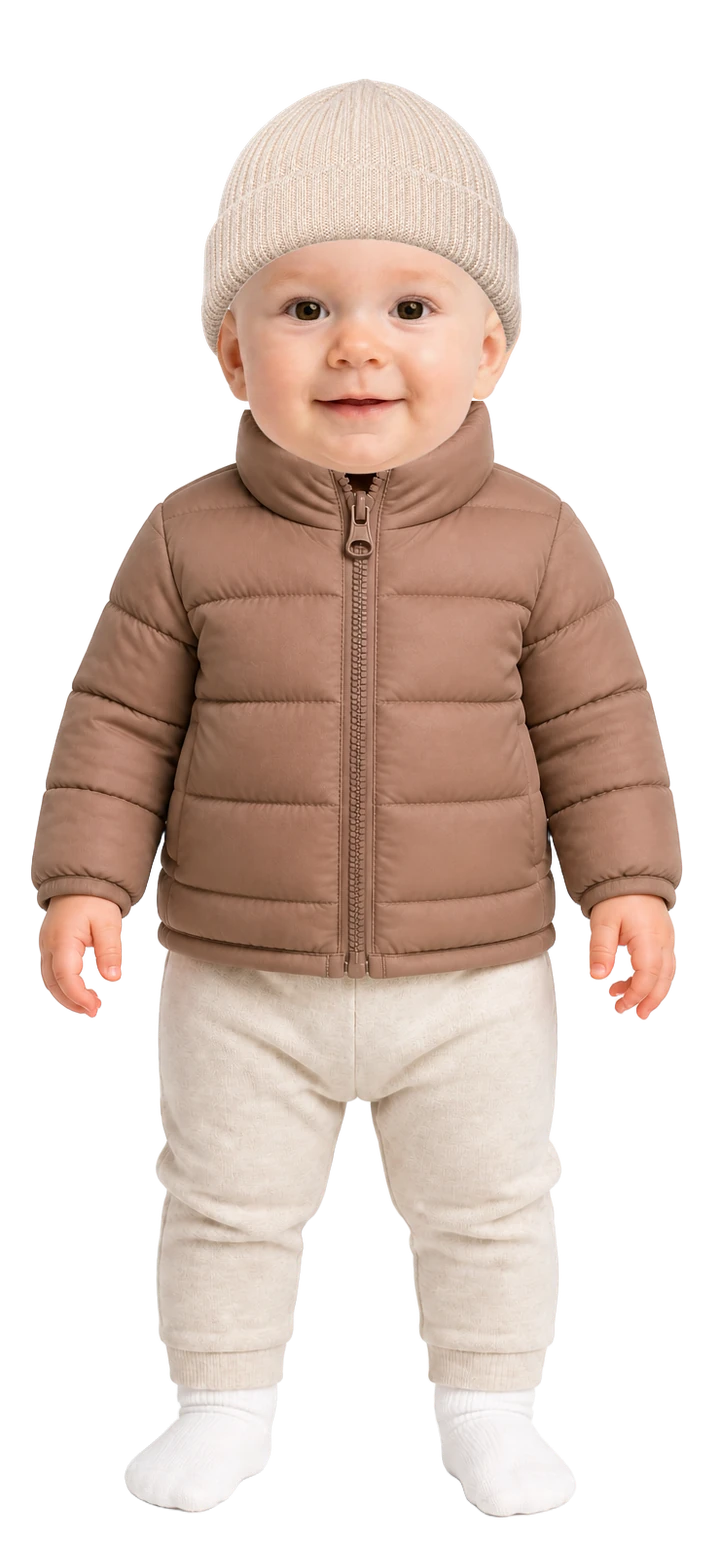
When the air drops to around 9°, wind cuts right through knit fabric. Now the warmth and the weather barrier must split into two garments. A soft fleece jacket holds body heat close to the chest, while a weather-resistant jacket on top blocks the chill. A knit hat covers the head.
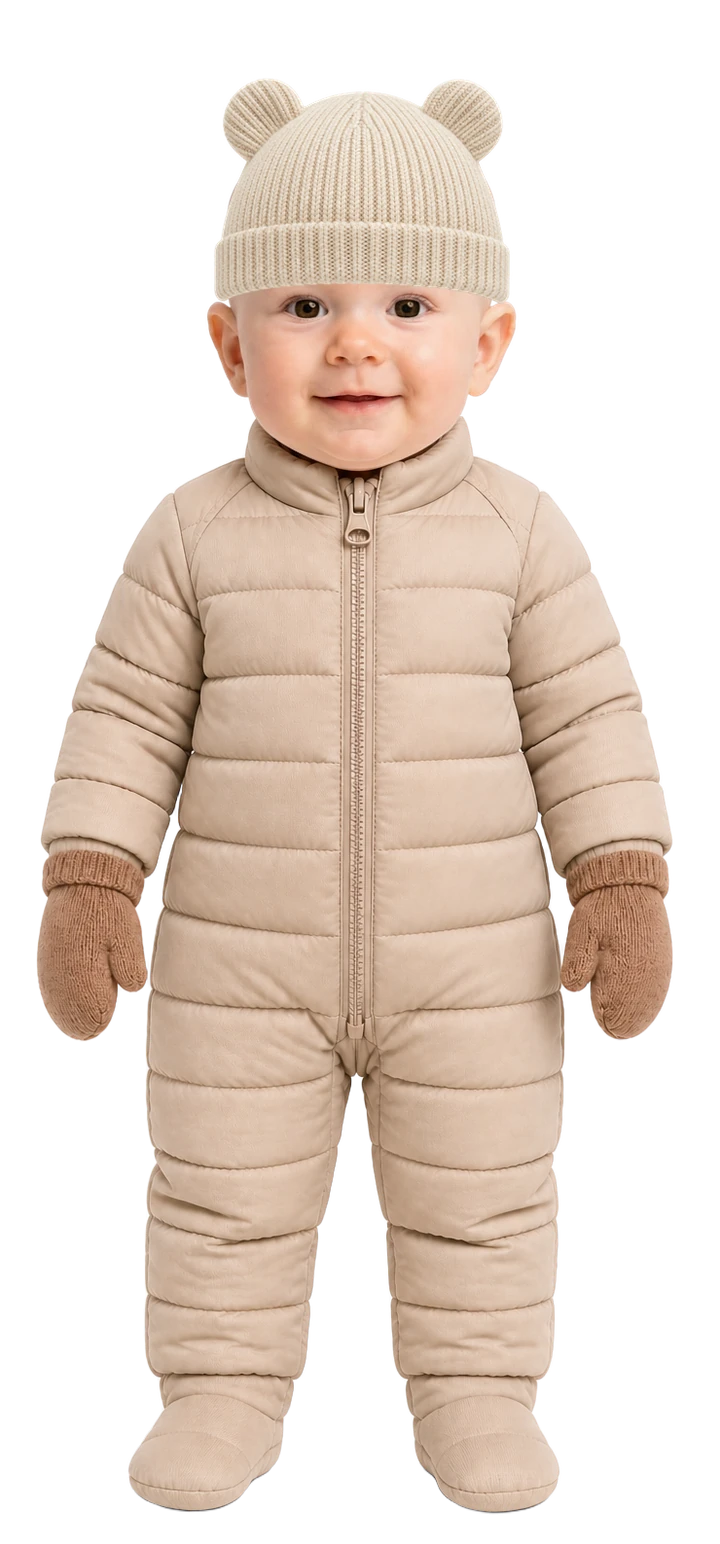
On a frosty winter day near freezing, the base bodysuit and warm fleece stay on duty. But a jacket leaves gaps around the waist. A full pram suit takes over the outer job, sealing warmth from shoulders to ankles. Insulated booties and mittens protect the fingers and toes.
Put on from the skin out, then reverse indoors
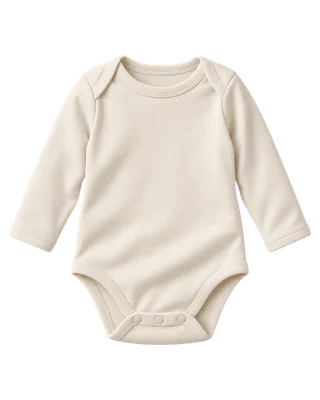
Base first
Fasten the cotton bodysuit against the skin, then pull on comfortable pants and socks.
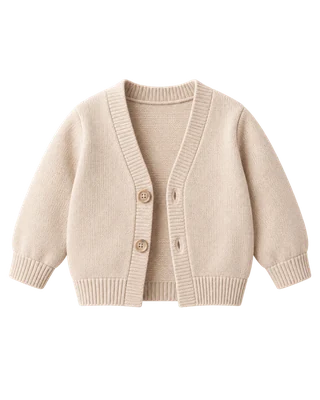
Warm middle next
Button or zip the cardigan or fleece over the chest. Keep the neck area easy to feel.
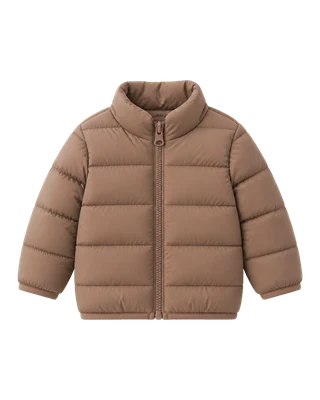
Outer at the door
Put the jacket or pram suit on right before leaving so your baby does not overheat in the hallway.
Timing in the hallway matters. If you zip your baby into a pram suit and then spend ten minutes searching for car keys or lacing your boots, your baby will be sweaty and crying before you reach the front door. Outer layers and hats go on last, right as you walk out.
When you come back inside, reverse the process immediately. Take off the hat and unzip the outer coat. If your baby has fallen asleep in the stroller, it is tempting to leave everything zipped up to protect the nap. Resist that temptation. Babies can overheat quickly in indoor heating. Unzip the pram suit, pull off the hat, and peel back blankets, even if it risks a wake-up.
Stroller outfits by temperature
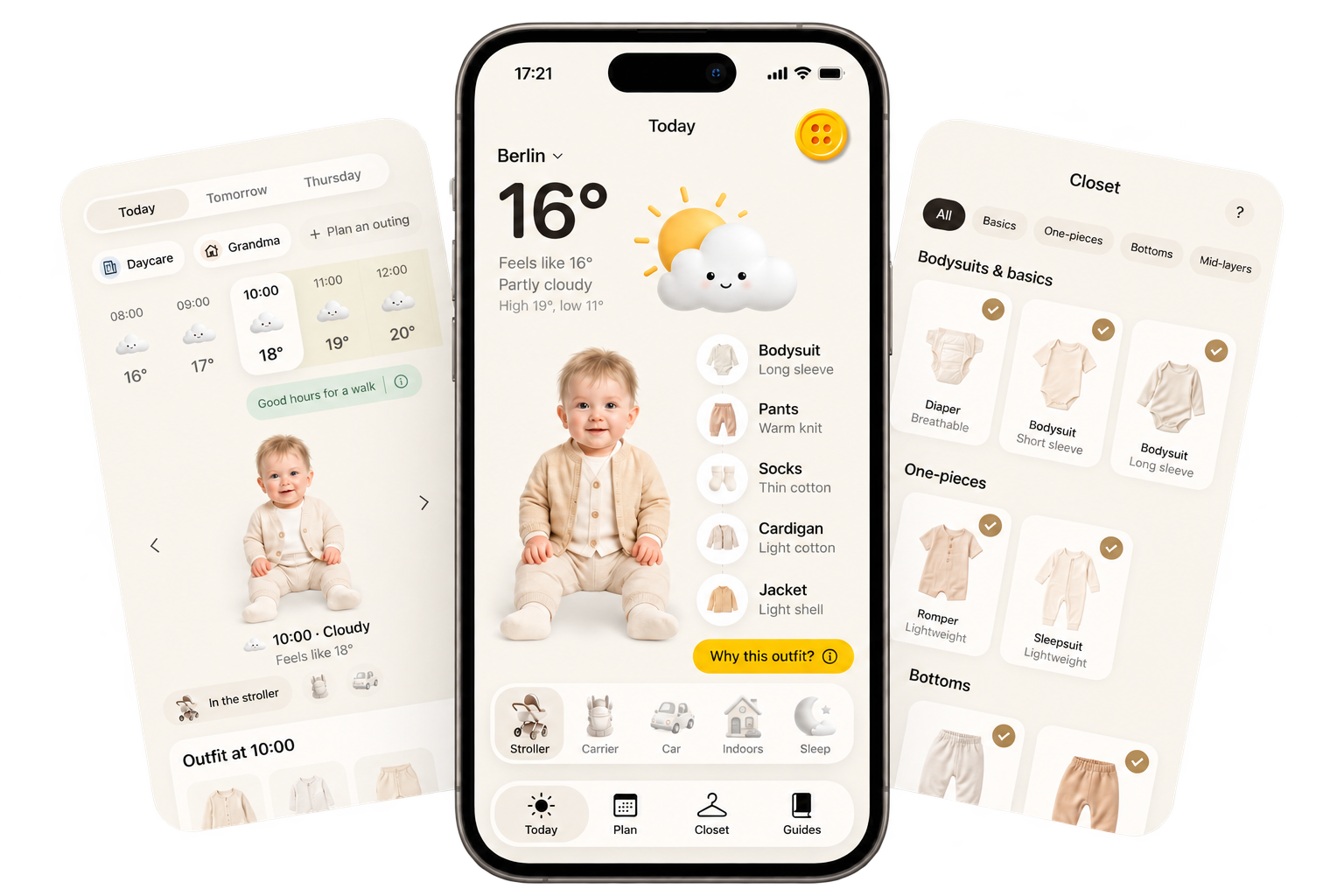
When you want to skip the mental guesswork and see exact garments, check today's feels-like temperature below. Keep in mind that items cover different parts of the body. A longer list in winter does not mean piling seven layers on the chest; it means adding booties to bare feet, mittens to cold hands, and a hat to the head.
28° and warmer
short-sleeve romper
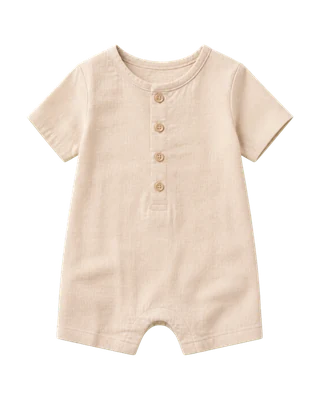
24–27°
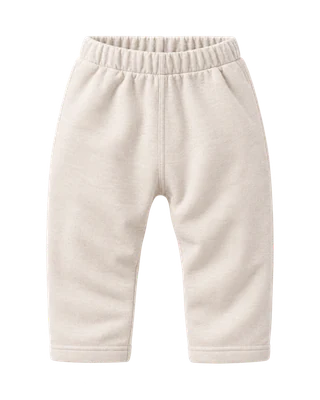
short-sleeve bodysuit, light pants
20–23°
long-sleeve bodysuit, light pants, thin socks
16–19°
long-sleeve bodysuit, light pants, thin socks, cardigan
12–15°
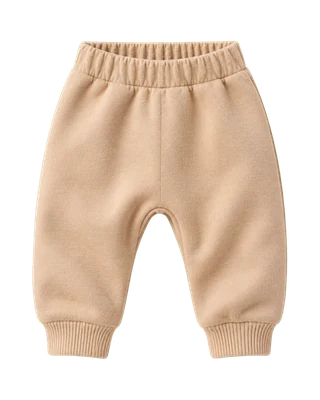
long-sleeve bodysuit, warm pants, thin socks, cardigan, light jacket
8–11°
long-sleeve bodysuit, warm pants, warm socks, warm fleece, warm jacket, knit hat
4–7°
long-sleeve bodysuit, warm pants, warm socks, warm fleece, warm jacket, booties, mittens, warm hat
Below 4°
long-sleeve bodysuit, warm pants, warm socks, warm fleece, pram suit, mittens, warm hat
Once you are outside, the three jobs make adjustments simple. If your baby feels hot, peel off the middle fleece. If wind picks up, pull down the stroller canopy. If rain starts, put on the stroller rain shield rather than adding another sweater. The best question to ask is never just whether your baby needs more clothes. It is which specific job the outfit needs help with.
Questions parents ask
Which layer should come off first indoors?
Take off the hat and outer coat or pram suit first. If the back of the neck still feels hot or sweaty after a few minutes, unbutton or remove the middle cardigan. The base bodysuit and pants stay on.
Does a stroller footmuff count as an outer layer?
Yes. A thick, windproof footmuff wraps the lower body and chest in heavy insulation. When using a warm footmuff, dress the torso in lighter pieces so your baby does not overheat.
Is a romper a base layer?
Yes. A romper sits directly against the skin, so it does the base layer's job. In warm weather above 28°, a single loose romper is the entire outfit. You do not need any middle or outer garment.
Does a rain cover replace a jacket?
No. A rain cover keeps water off the stroller fabric, but it does not replace clothing insulation. Dress your baby for the feels-like temperature, and pull the rain cover on only while rain is actively falling.