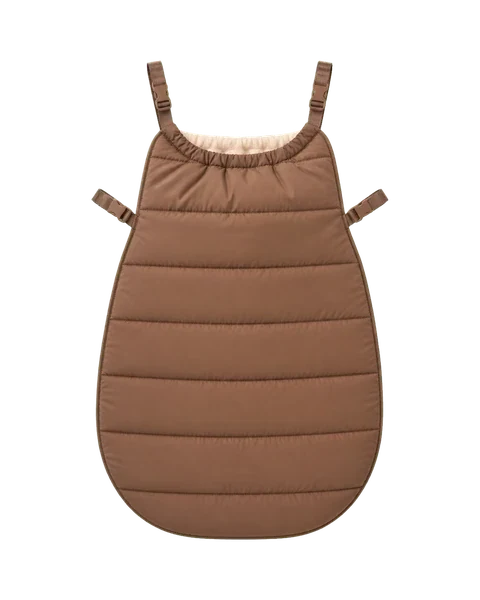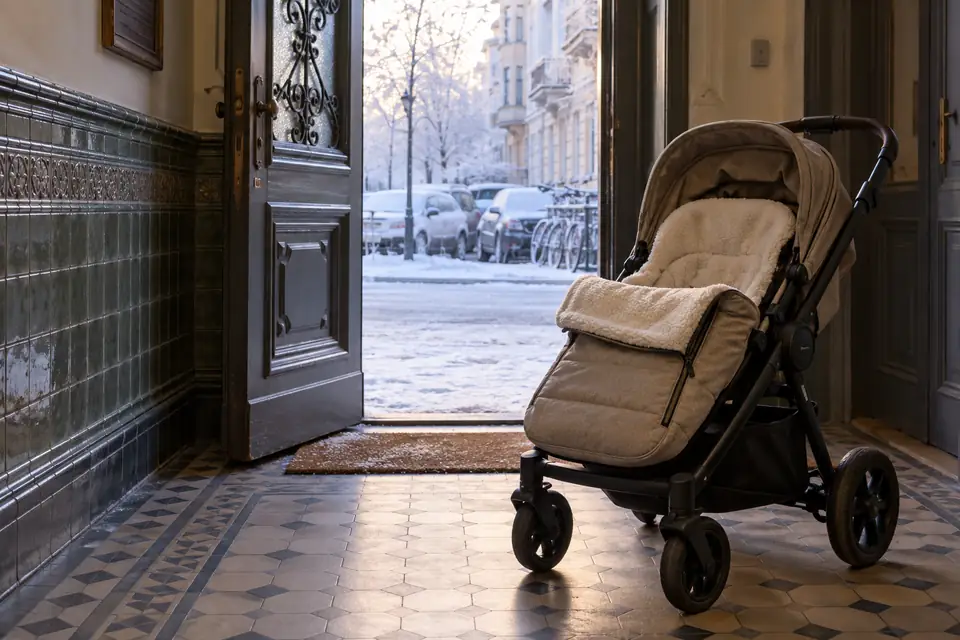
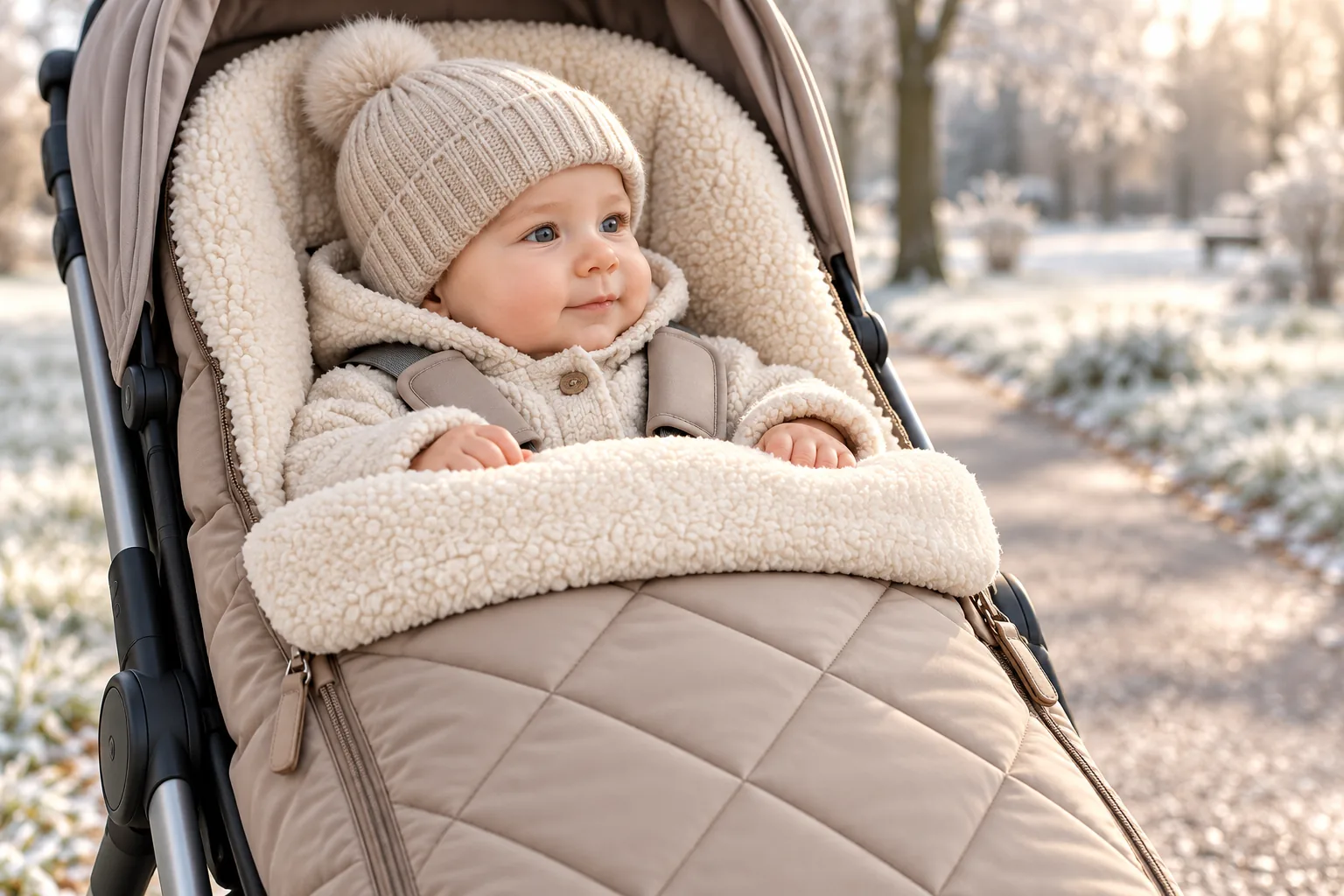
A footmuff is a warm, padded sleeping bag made for the stroller. It stays in the seat with the safety straps threaded through its back, so you just sit your baby inside, buckle up, and zip the front up to the chest. In the US, you will often see it sold as a stroller bunting or bunting bag.
On cold walks, it keeps your baby's legs and body as cozy as a snowsuit, without the wrestling match of putting one on.
- For ages0–4years
- You'll need1
- Use it below12°C54°F
Do you need one?
It is worth every penny if you walk with the stroller most days in cold weather. Walking keeps you warm, while your baby sits completely still in the cold air. It also makes errands easier: when you step into a warm shop or café, you just unzip the front instead of waking a sleeping baby to take off a heavy suit.
You can skip it if your winters are mild, your walks are short, or you mostly use a baby carrier or the car.
Footmuff or stroller blanket?
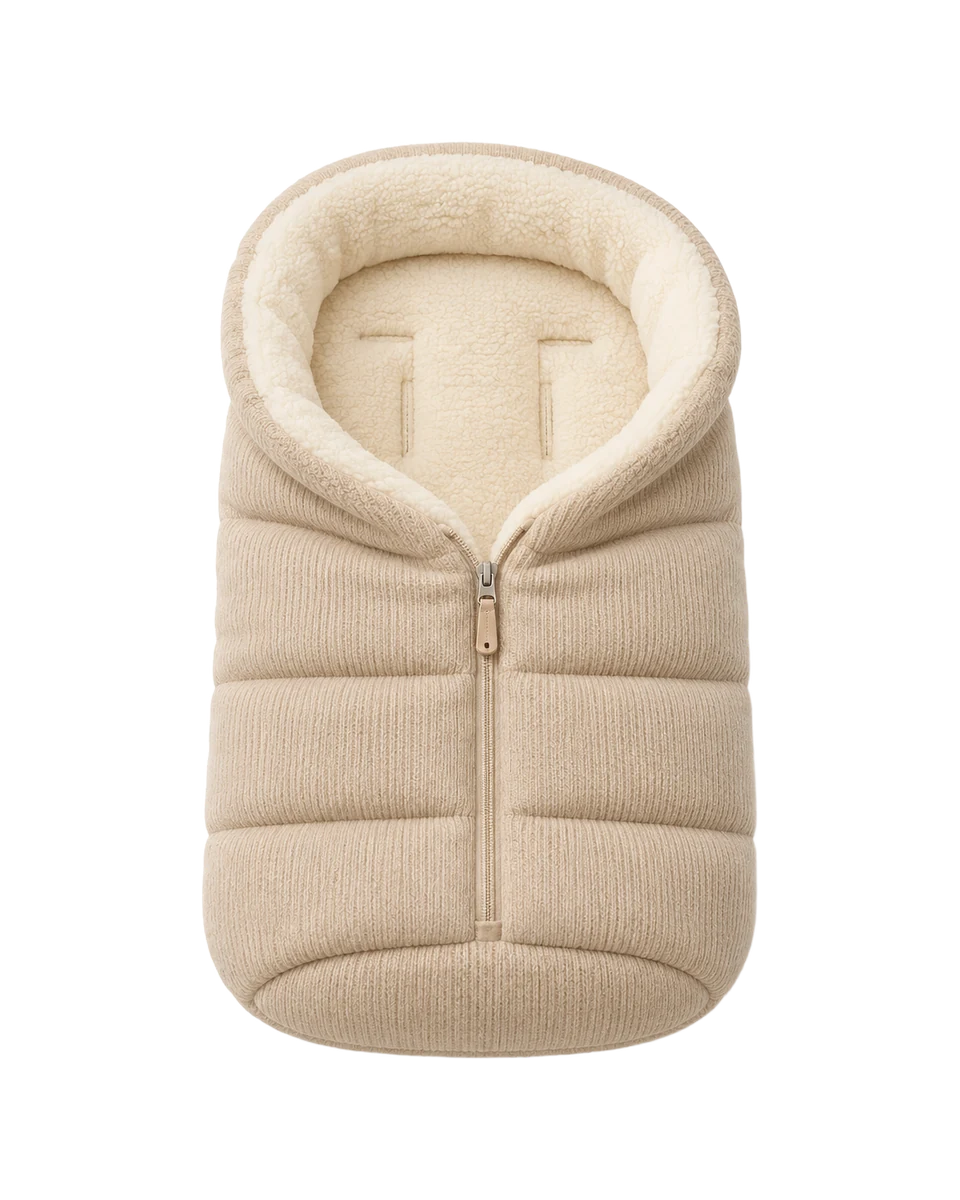
Footmuff
Best if you walk in the cold most days. Your baby is zipped in, so there is nothing to tuck in or pick up off the wet path.
- Good: Can't be kicked off
- Good: Never drags in the wheels
- Not good: Pricier than a blanket
- Not good: Only works in the stroller
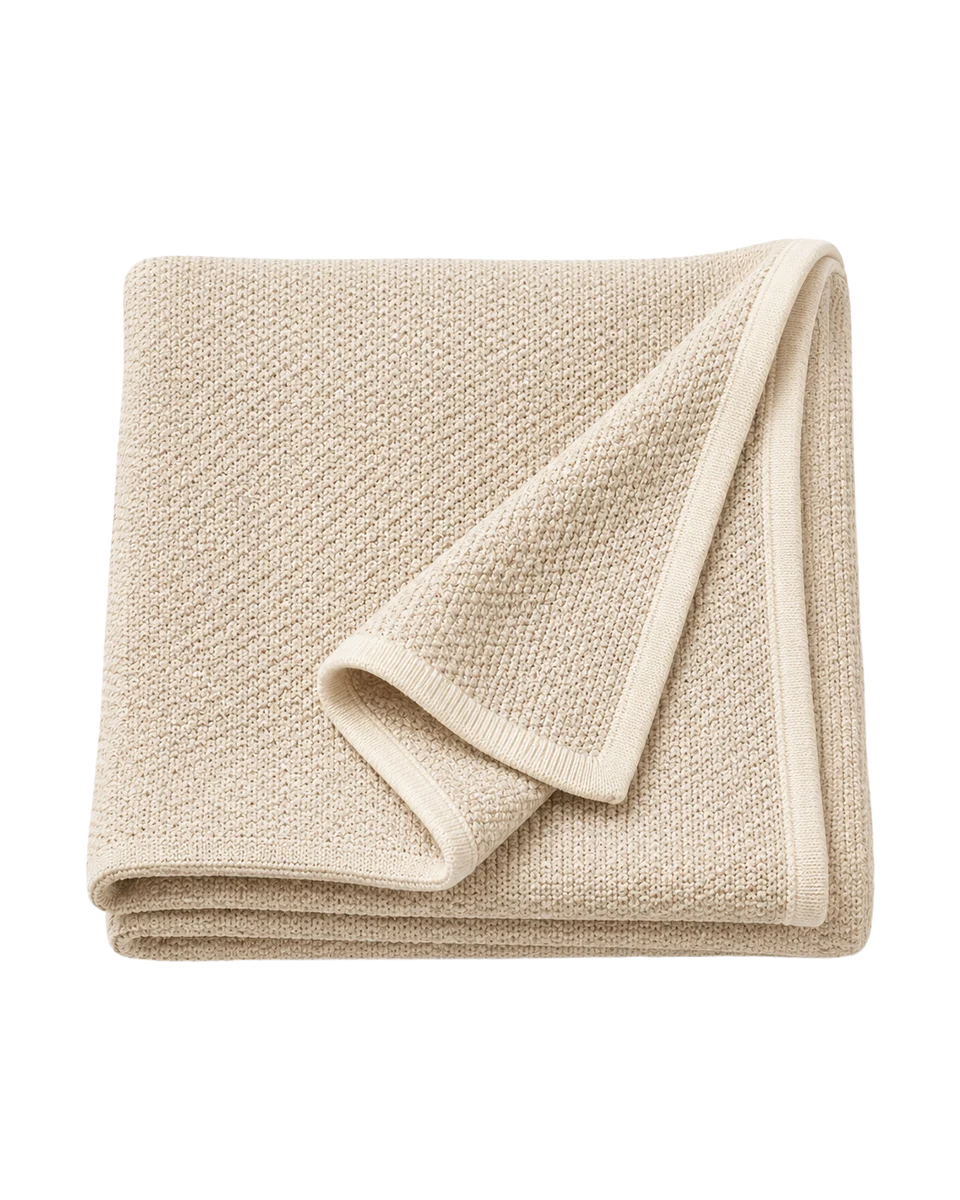
Stroller blanket
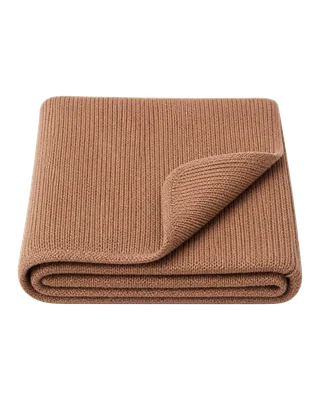
Best for cool days and short walks. You tuck it in around the legs, and in the car seat it goes over the buckled harness.
- Good: Much cheaper (you likely own one)
- Good: Works in the car seat and carrier too
- Not good: Easy for a kicking baby to push off
- Not good: Loose corners can catch in the wheels
Types of footmuff
Choose the one made for where your baby rides.
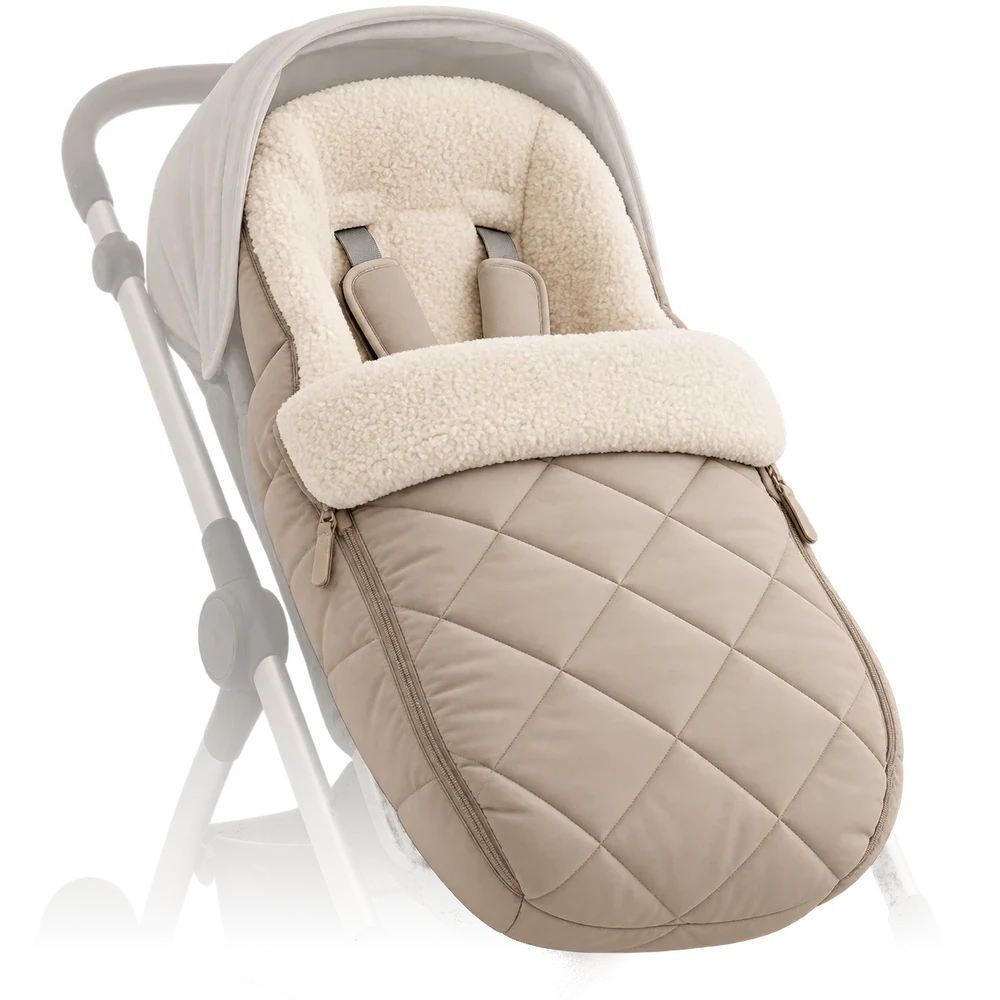
For the stroller seat
The classic upright bag for once your baby sits in the stroller seat. Buying your stroller brand's own footmuff guarantees the harness slots and seat shape match. A universal footmuff often costs less and can move to a travel buggy later, as long as its back openings fit your straps.
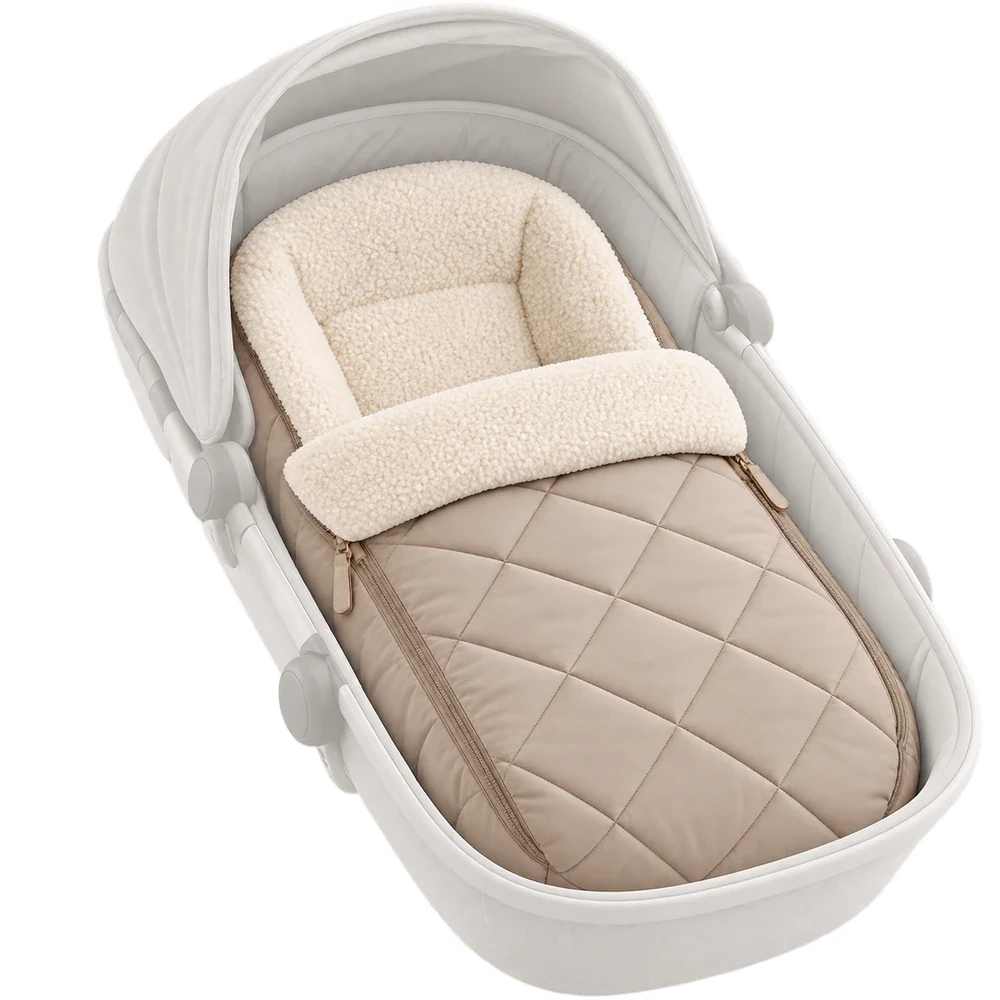
For the carrycot
Shorter and flatter, shaped for a newborn lying flat in a stroller bassinet (carrycot). Because there is no upright seat, it usually has no harness slots inside unless your carrycot uses straps.
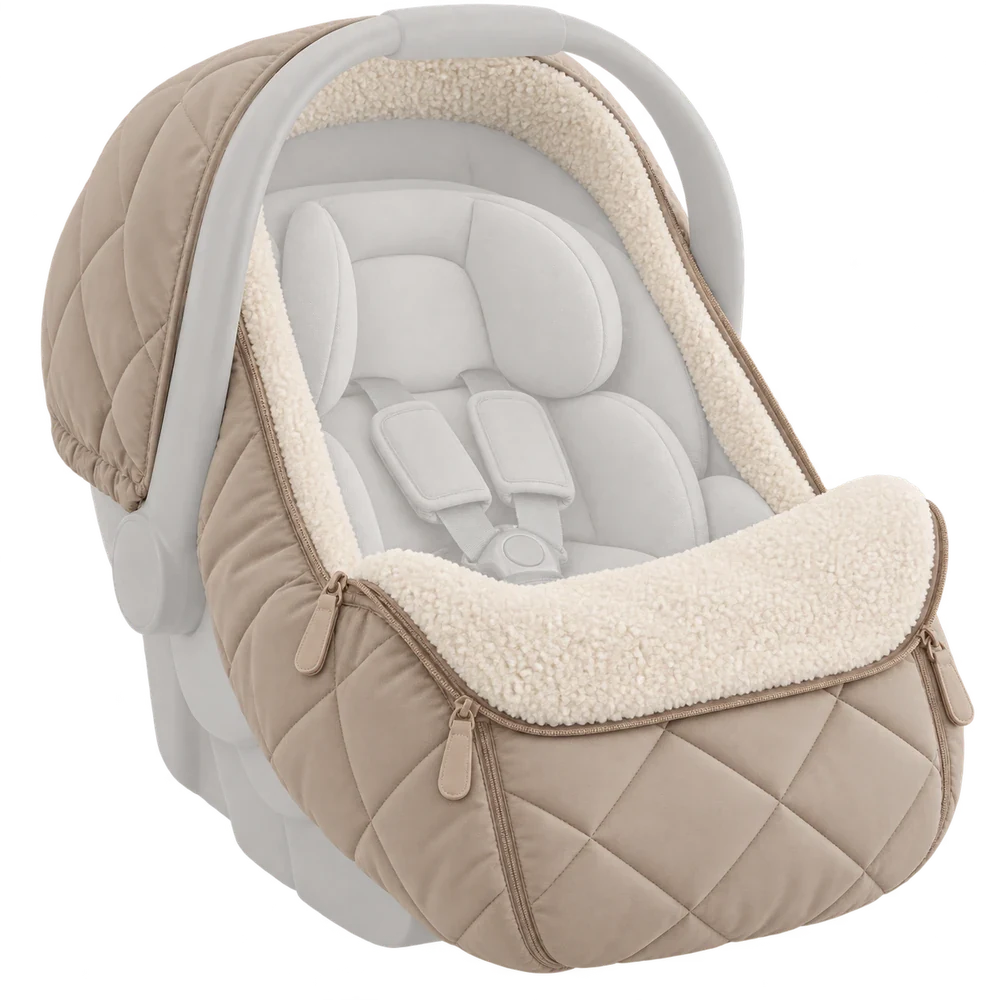
Outer cover for the car seat
For an infant car seat, look for a shower-cap style cover that stretches over the outside rim. That way, no thick padding sits behind your baby's back or under the safety straps.
How to choose a footmuff
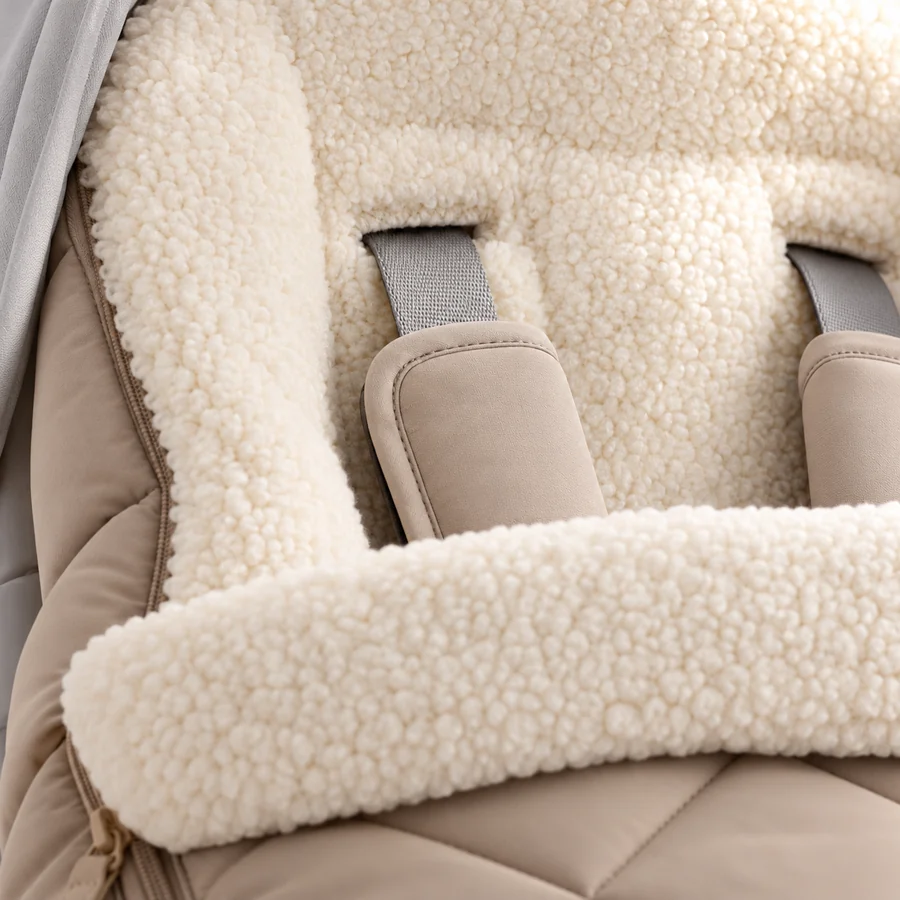
1. It fits your stroller
Look at the back before you buy. Some footmuffs have small individual slits, which means unthreading your stroller straps to put the bag in. Others have long vertical openings that close with Velcro around the straps. Velcro openings are much easier to fit, and a must if your stroller's straps are sewn into the seat.
- Good: Velcro slots that open around the straps
- Good: Straps run straight without twisting
- Not good: Closed slits if your straps don't detach
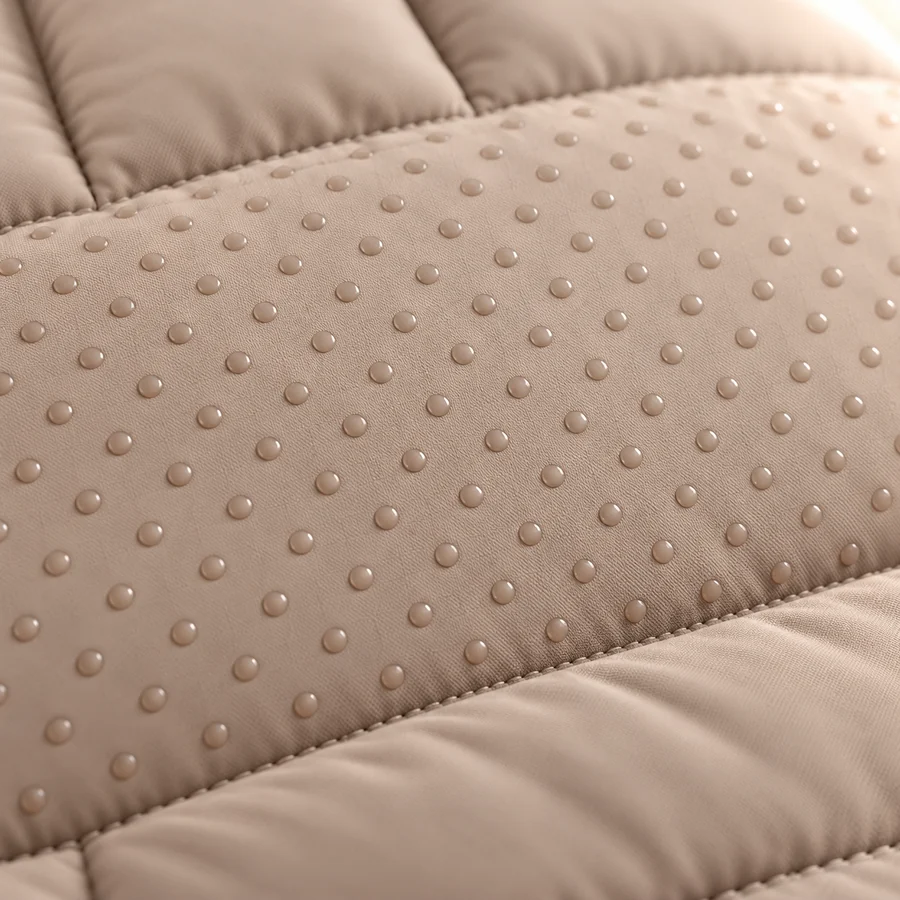
2. It stays put
A grippy back, or a hood flap or strap that hooks over the top of the backrest, keeps the footmuff from sliding down the seat every time you lift your baby in.
- Good: Non-slip grip dots on the back
- Good: Flap or band over the backrest
- Not good: Slides down the seat
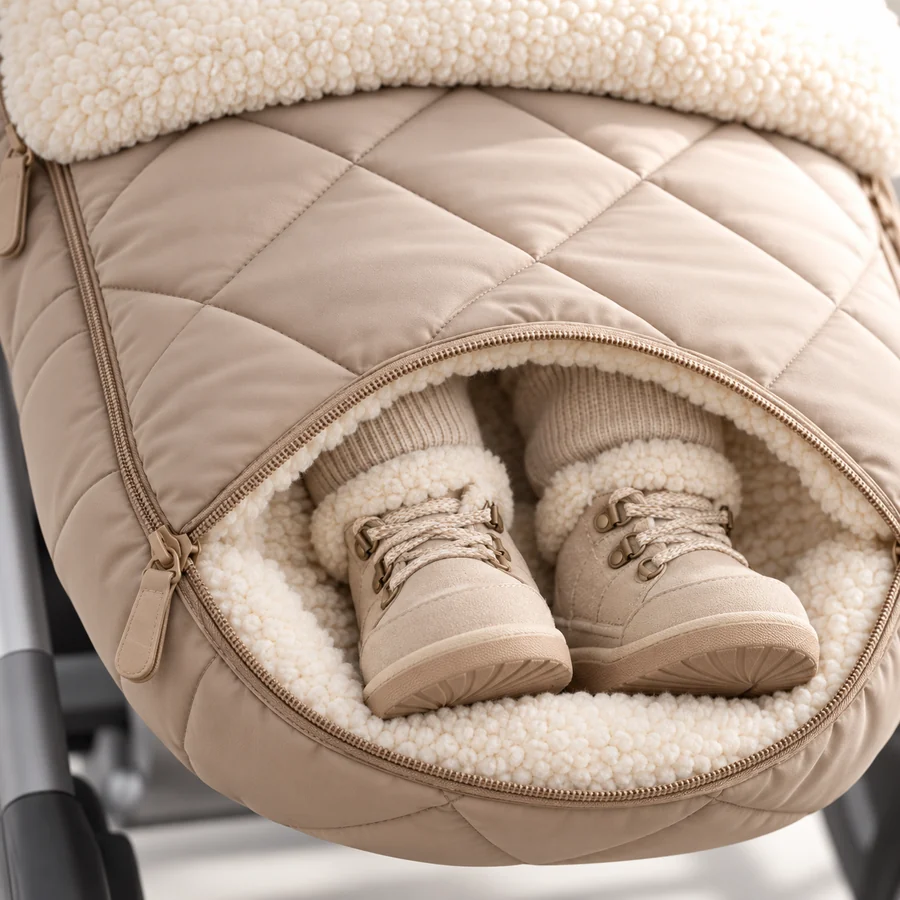
3. It unzips at the feet
A two-way zip that opens at the bottom lets you let warm air out, or let muddy boots poke through, without unbuckling your baby.
- Good: Zip that opens at the feet
- Good: Top folds down to cool off
- Not good: Opens from the top only
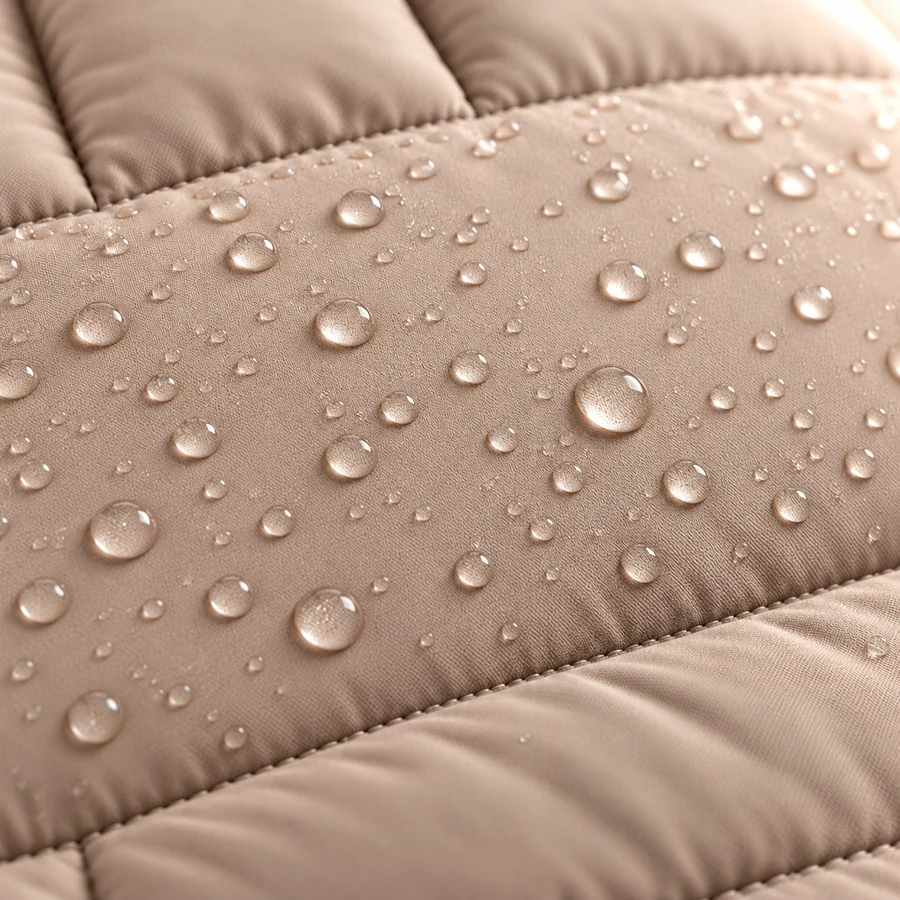
4. It suits your weather
Look for a wind- and water-repellent outer shell. Inside, synthetic fill is the easiest everyday choice: it stays warm if it gets damp and goes straight in the washing machine. Down is light and wonderfully warm for freezing days, but needs a rain cover in wet weather. Sheepskin regulates warmth naturally and lasts for years, though it needs gentler washing.
- Good: Water-repellent outer fabric
- Good: Synthetic fill for damp, muddy winters
- Not good: Unprotected down in heavy rain
How to use it
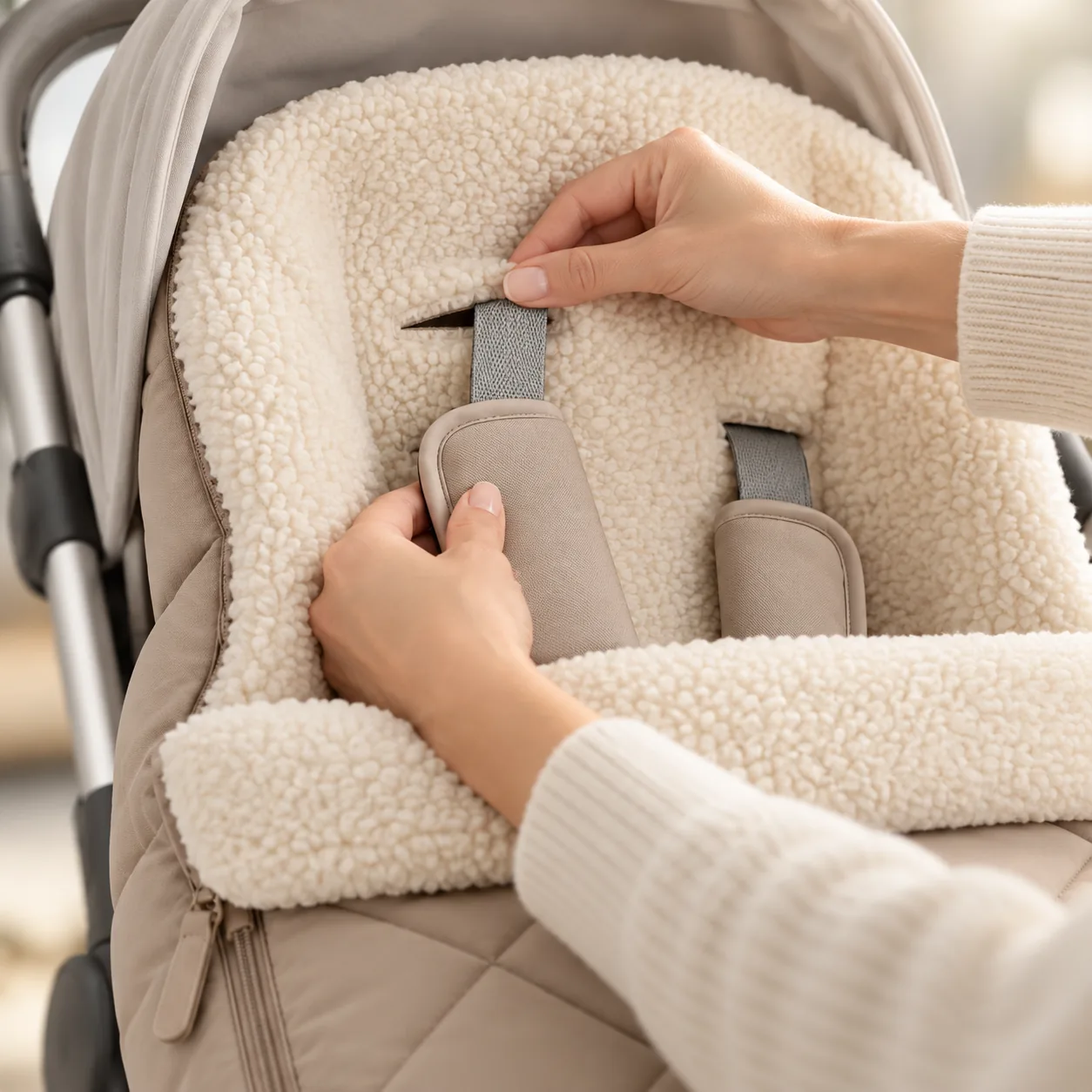
1. Fit it around the straps
Lay the footmuff in the seat and hook its top flap or band over the backrest. Open the Velcro slots at the back to wrap around your stroller's straps, or unclip the shoulder and waist straps and thread them through the holes at your baby's shoulder height.
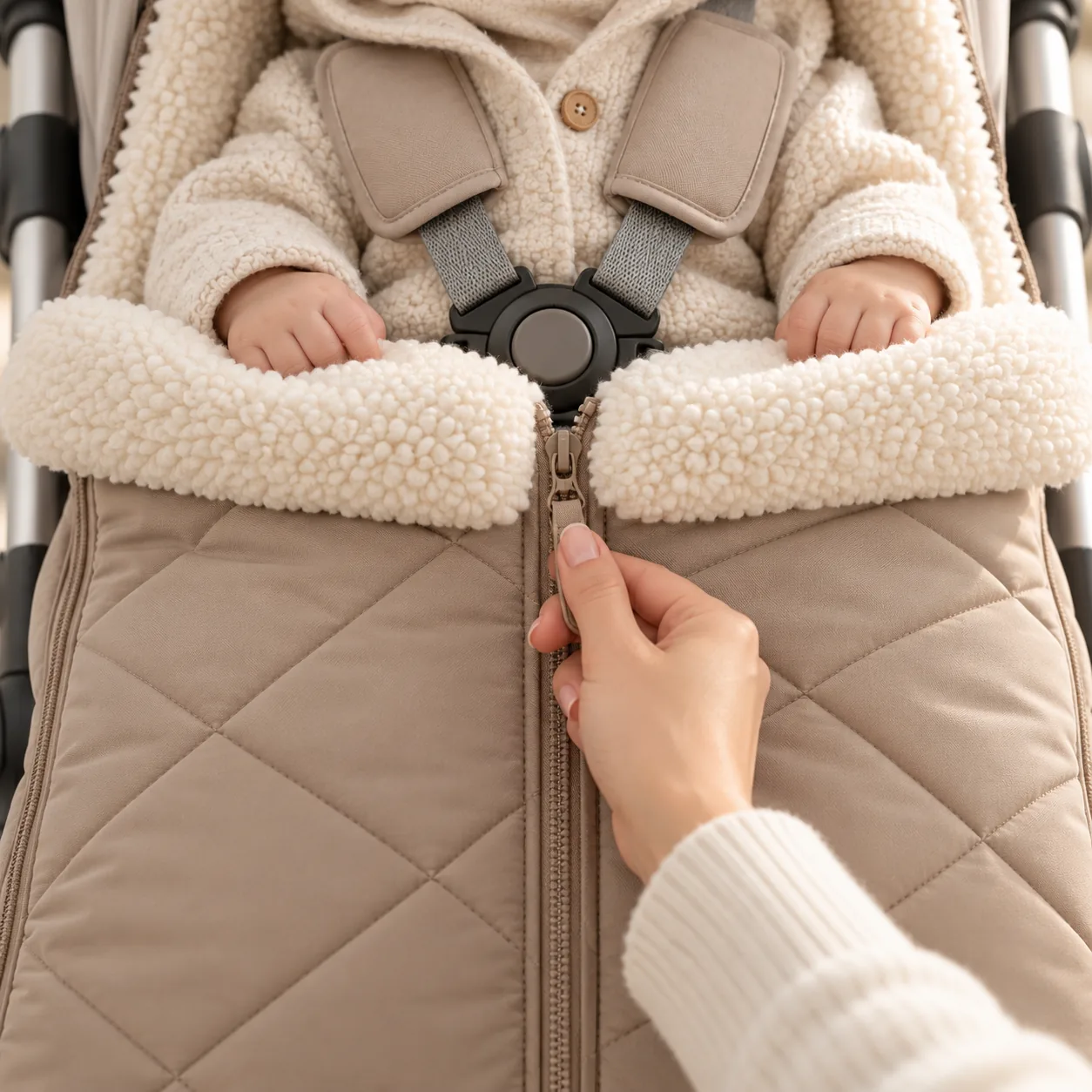
2. Buckle, then zip
Buckle the harness over your baby and pull it snug every time, because a footmuff does not hold your baby in. Then zip up, with the top edge at or below the shoulders so the face stays clear.
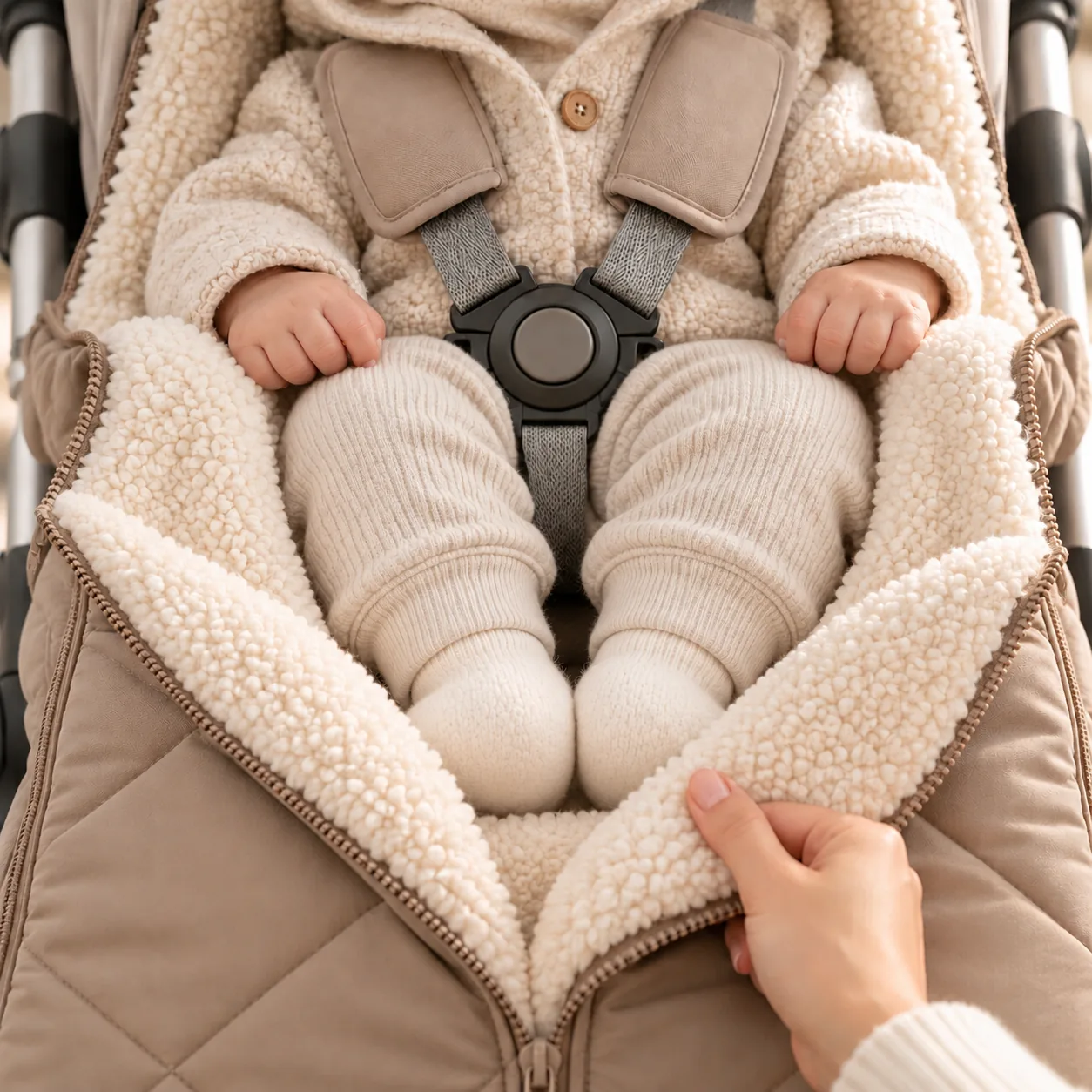
3. Open it indoors
In a warm shop, café, or bus, unzip it all the way and take off the hat, even if your baby is asleep. Outdoors, touch your baby's chest or the back of the neck to check warmth. If the skin feels hot or sweaty, fold the top down or take off a layer.
Questions parents ask
Can you use a footmuff in a car seat?
Not a stroller footmuff. Nothing bulky goes behind your baby or under the harness, because thick padding compresses in a crash and leaves the straps loose. Use a shower-cap style cover over the outside of the seat, a blanket over the buckled straps, or a footmuff made and crash-tested by your car seat's maker for that exact model.
Do I need a footmuff for a newborn?
Not always. In a stroller bassinet (carrycot), the zip-on top cover (apron) blocks the wind, so many parents dress their newborn in a warm one-piece suit or tuck in a blanket instead. If you walk a lot in freezing weather, a small newborn bassinet bag is a cozy alternative.
Are footmuffs safe for newborns?
Yes, as long as both the stroller setup (such as a bassinet or lie-flat seat) and the footmuff are made for newborns. Never put a newborn into an upright toddler footmuff: a small baby can slide down inside until the fabric covers the face.
Does a footmuff go in a bassinet?
Only a flat, shorter model made for a stroller bassinet (carrycot) outdoors. Your baby lies inside the bag with the head and face completely clear. For unsupervised sleep at home, keep the bassinet bare: a firm, flat mattress with no footmuff or soft bedding.
Do footmuffs fit all strollers?
Not all. Even a universal footmuff is worth testing in your stroller before you snip the tags off: check that the straps sit at the right height without twisting, and see whether the stroller still folds with the footmuff left in.
What should a baby wear under a footmuff?
Think of a winter footmuff as your baby's snow pants. Inside the bag, normal indoor clothes (a bodysuit, pants and warm socks) are usually enough. Because arms and shoulders sit above the zip, dress the top half for the weather outside with a warm jacket, hat, and mittens. The guide covers what to wear inside, and when to unzip.
Footmuff or pram suit?
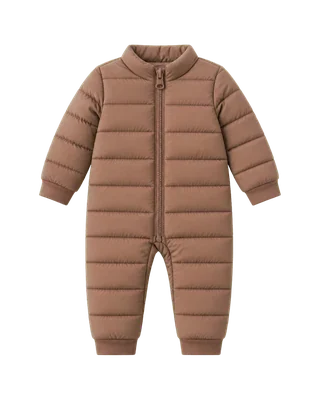
Usually one or the other, because wearing both together is often too warm. A pram suit (a padded snowsuit) stays on when you lift your baby out of the stroller, while a footmuff stays in the seat and unzips in seconds when you go indoors.
What age should I stop using a footmuff?
Full-size stroller footmuffs usually last until about 3 or 4 years. Stop using it when your child's feet press hard against the bottom end, or when the highest harness slots sit too low for the shoulder straps to fit properly.
How do you wash a footmuff?
Check the care label first. Most synthetic footmuffs go straight into the washing machine. Down needs a gentle wash with down detergent and a long, low tumble dry (with a couple of tennis balls to fluff the filling back up). Sheepskin needs a wool or fur detergent on a cold wool cycle or by hand, and must dry flat away from radiators.
Is a footmuff too warm for summer?
Yes, a winter footmuff comes out of the stroller once spring days warm up. On some models, the top zips completely off so the back panel can stay in the stroller as a seat liner for cool spring mornings.