What this is about
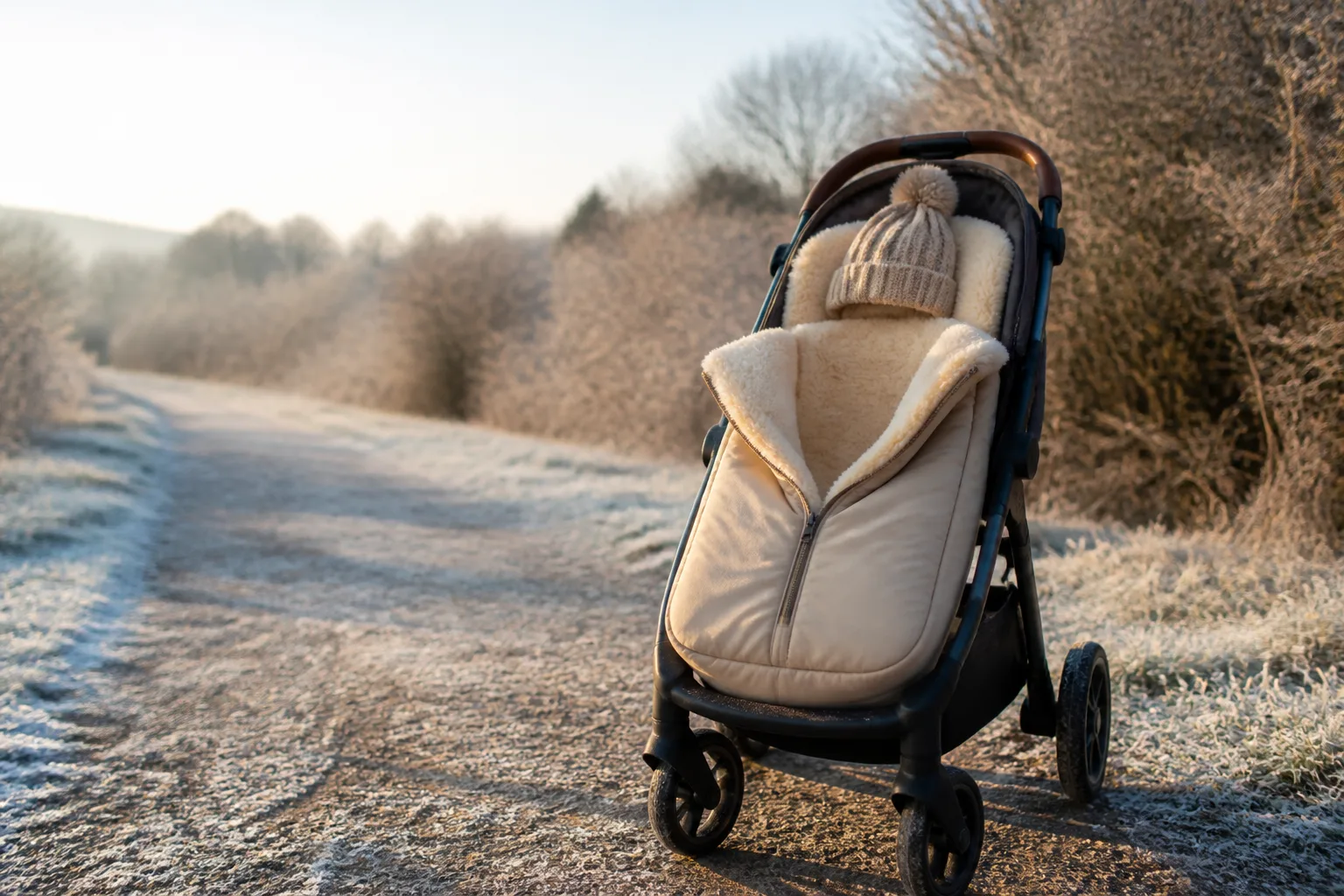
Standing by the stroller with a baby bundled in a thick snowsuit, it is tempting to zip them straight into a fleece-lined footmuff. That double layer turns the stroller into an oven. A footmuff is not an accessory on top of a winter outfit. It is the winter outfit for the lower body.
The footmuff is the coat for the legs
From the waist down, the footmuff does all the heavy warming. A windproof outer shell blocks the chill, while thick fleece or down traps body heat around the legs and feet. That means your baby only needs normal indoor clothes underneath: a bodysuit, pants, and socks.
Adding a padded snowsuit inside a winter footmuff is almost always too warm. The extra padding traps sweat against the skin and restricts movement. If you wonder whether thin pants are enough, remember that the stroller seat and backrest also block cold wind from behind.
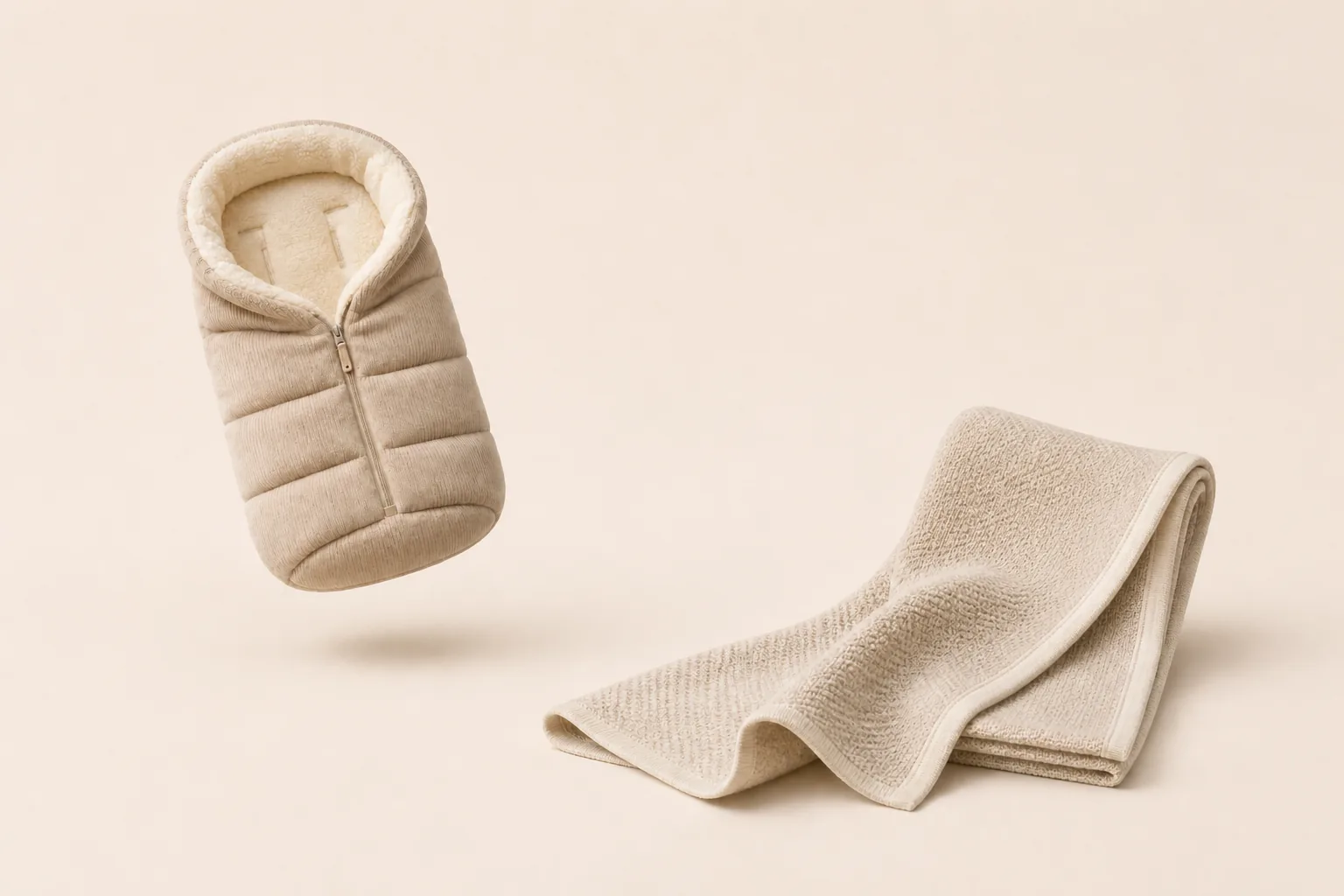
Dress the top half for the open air
A stroller in cold weather creates two different climates. The lower half of your baby rests inside an insulated cocoon. The arms, chest, and head stay out in the cold air. Dress the upper body for the open breeze with a warm jacket or fleece, a knit hat, and mittens.
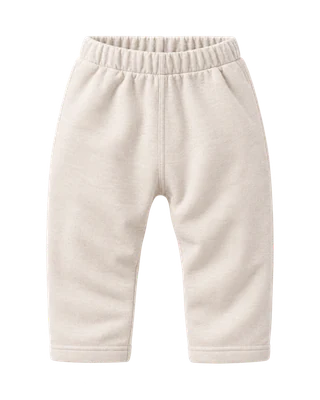
Dress the legs light
Keep ordinary indoor pants and socks on. The insulated footmuff handles the rest.
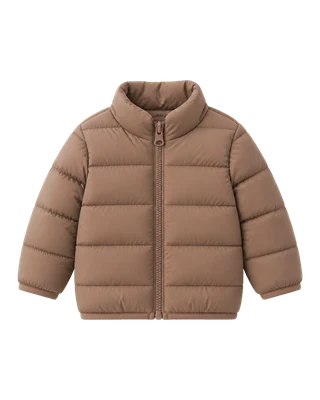
Bundle the top half
Add a warm jacket, knit hat, and mittens for the chest, arms, and head.
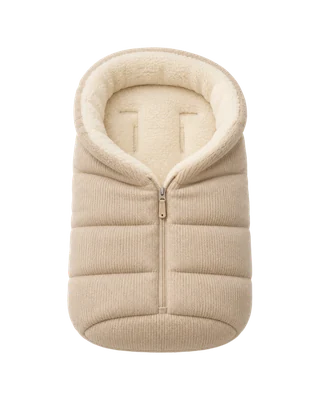
Fasten and zip
Buckle the five-point harness snugly, then zip the front flap up to the chest.
The zip is your thermostat
A winter walk rarely stays at one temperature. You walk along a freezing sidewalk, get on a heated bus, or sit down in a warm café. You cannot easily pull a sleeping baby out of their harness to take off clothes. The front zip solves this problem in seconds.
Pull the zip all the way down to the feet as soon as you step into a heated space. Fold the front flap back so heat escapes freely. When you head back outside into the wind, zip the front back up to the chest.
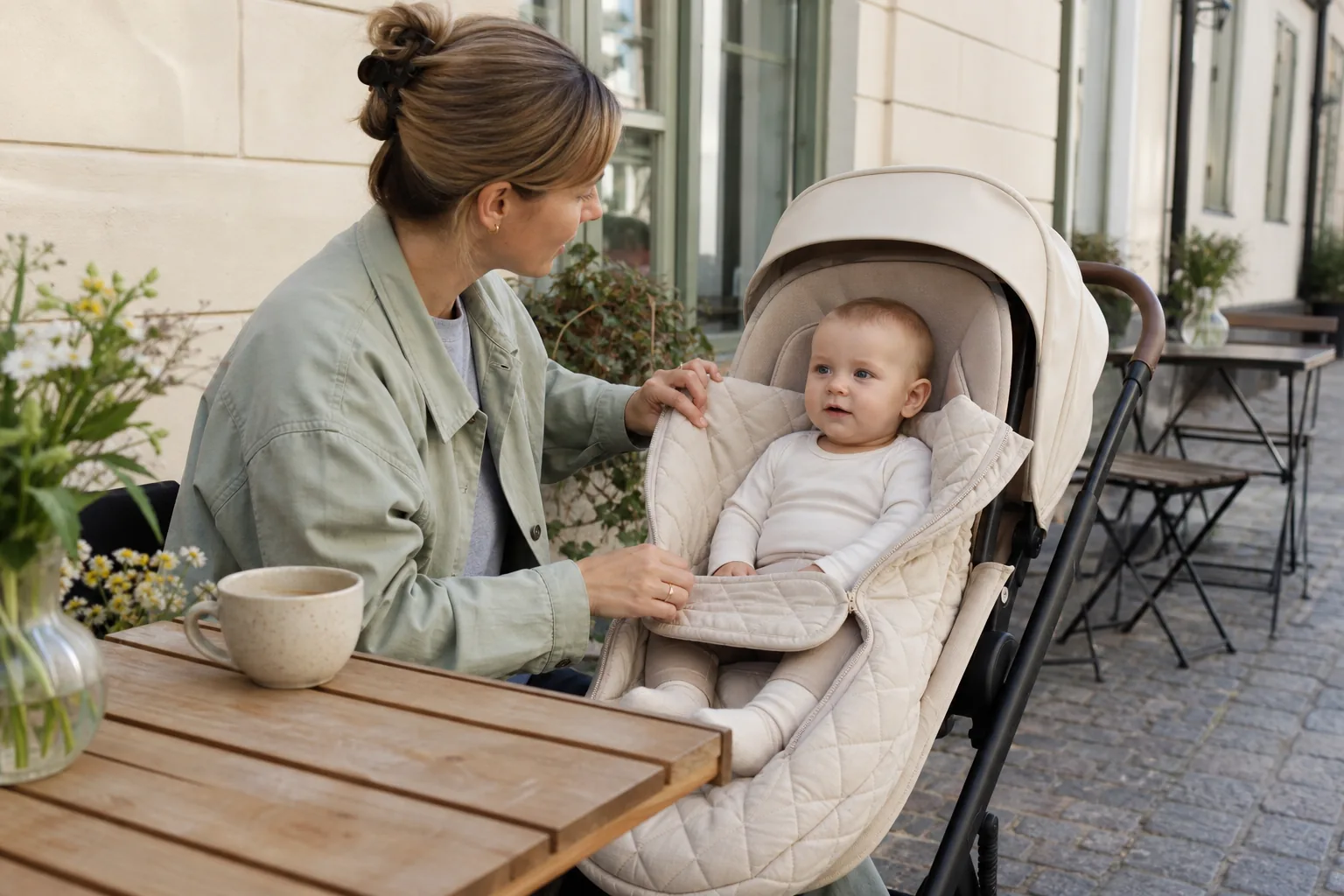
Never move a stroller footmuff into a car seat
A stroller footmuff has harness slots, which makes it tempting to thread into an infant car seat. Never do this. Thick padding behind your baby's back and under the straps prevents the car seat harness from tightening properly.
In a sudden stop or crash, thick material compresses under pressure. That sudden compression leaves dangerous slack in the harness straps. In the car, buckle the harness snugly over thin, fitted clothes. Lay a blanket over the buckled straps if the car is cold, and remove it once the heater warms the cabin.
Muddy boots and walking toddlers
Once your toddler starts walking, winter outings get messier. A child will stomp through wet slush, then want to climb straight back into the stroller. Wet boots can soak the fleece lining and leave cold dampness against their feet.
Many footmuffs have a two-way zip at the bottom. Open the bottom zip so dirty boots can poke out into the air while the legs stay zipped up and warm. If your footmuff opens only from the top, take the wet boots off at the stroller and tuck feet in with thick wool socks.
Questions parents ask
Do I need a snowsuit inside a stroller footmuff?
No. A fleece-lined or down footmuff already acts as the snowsuit for the lower body. Layering a snowsuit inside traps too much heat. Dress your baby in normal indoor pants and put a warm jacket on top instead.
Can my baby sleep in the footmuff indoors?
Unzip the footmuff right down to the feet when you come indoors. If your baby is asleep in a stroller seat, move your baby to a crib or bassinet as soon as you can. In a carrycot approved for sleep, your baby can stay on the firm, flat mattress.
Can I use a stroller footmuff in the car seat?
Never. Padded layers between your baby and the car seat harness create hidden slack that makes the seat unsafe in a crash. Keep the harness snug over thin clothes, and place a blanket over the outside of the buckled straps.