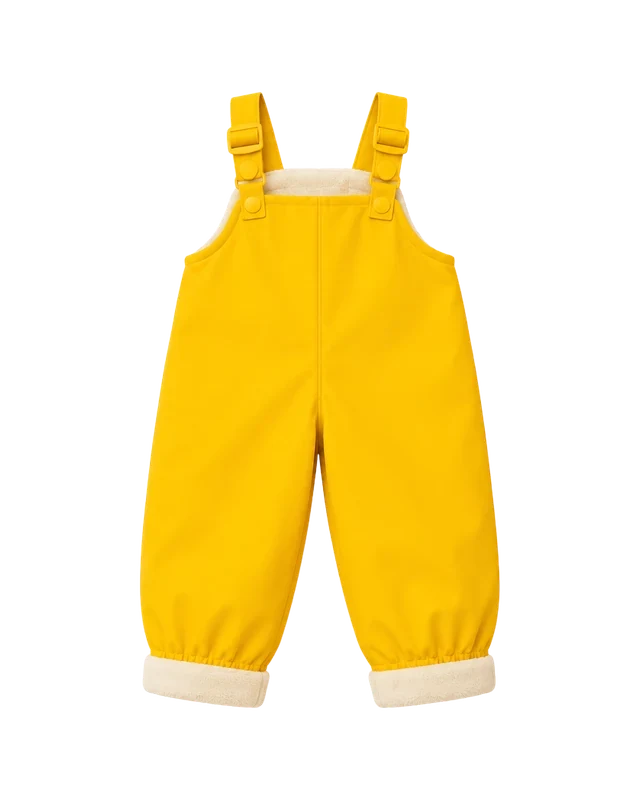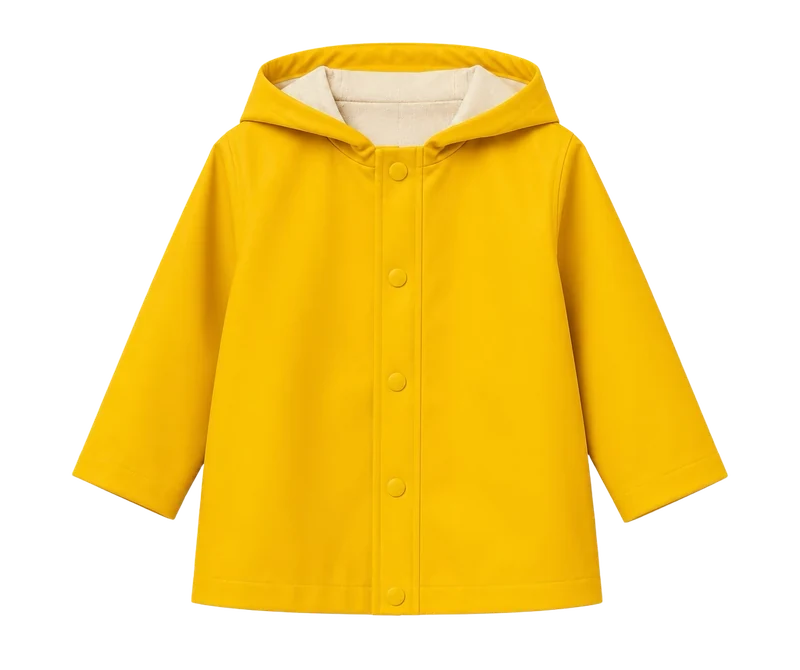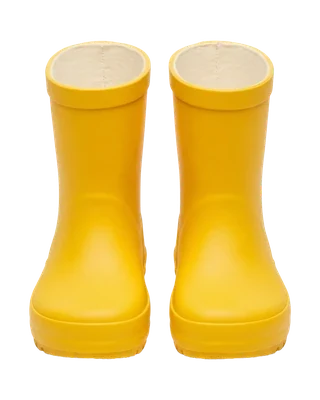
Rain pants are thin waterproof pants that go over your child's usual pants. Most pairs for babies and toddlers have straps over the shoulders and a strap under each boot. In US shops they are also sold as rain bibs, rain overalls or splash pants.
They are for a child on wet ground. Sitting, kneeling or crawling on wet grass or sand soaks cotton pants through at the knees and the seat. Wet clothes make a child cold much faster than dry ones. Rain pants keep the legs dry, and the clothes underneath clean for the rest of the day.
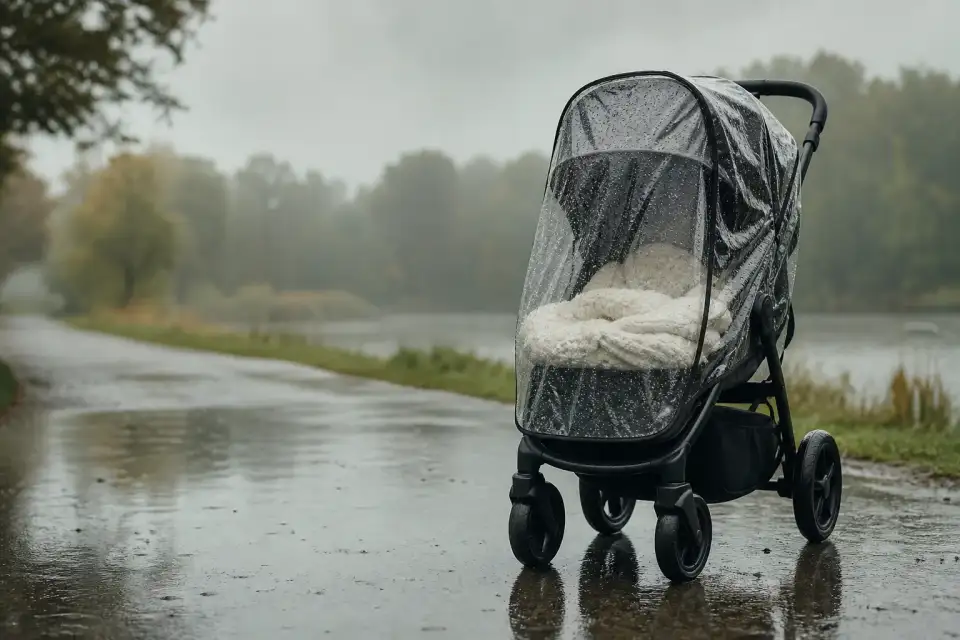
Babies wear them from about 6 months, once they sit and crawl at the playground. Walkers wear them on wet days with a light raincoat and rain boots. A baby riding in the stroller doesn't need a pair: a stroller rain cover keeps the seat dry.
With no lining, rain pants suit days from about 12°C (54°F). On colder days, pull them over warm pants, or switch to fleece-lined rain pants, which replace both. From about 24°C (75°F), a child gets sweaty in them, so in warm rain a dry change of clothes works better.
- For ages6+months
- You'll need1per size
- Wear them at12–23°C54–73°F
Types of rain pants
Bib rain pants
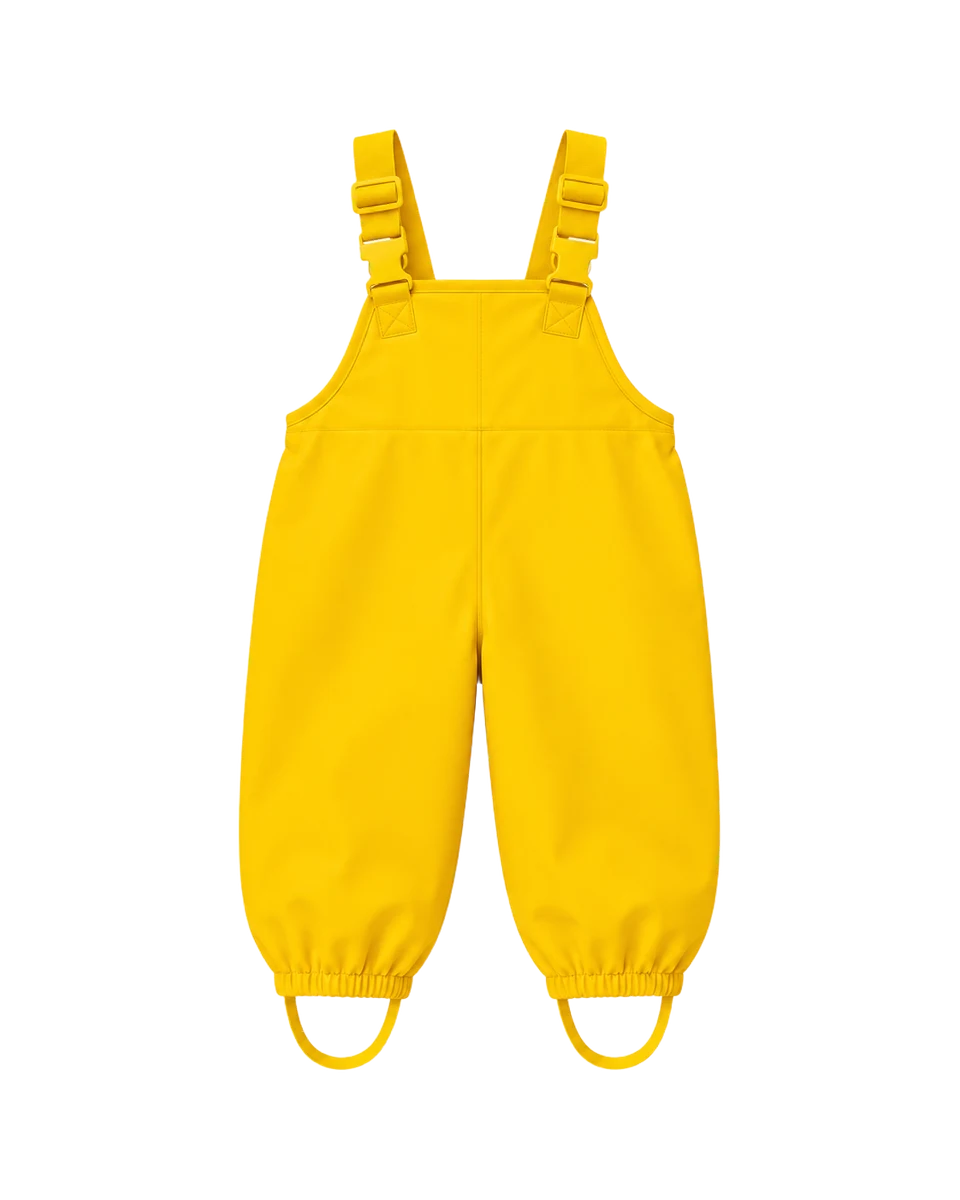
A high front and back, held up by straps over the shoulders. Nothing gaps at the waist when your child bends over or sits in a puddle, and the straps let out as your child grows. The usual kind for babies and toddlers.
- Good: No gap at the back when sitting
- Good: Straps let out as your child grows
- Not good: Slower off for diapers and the potty
Pull-on rain pants
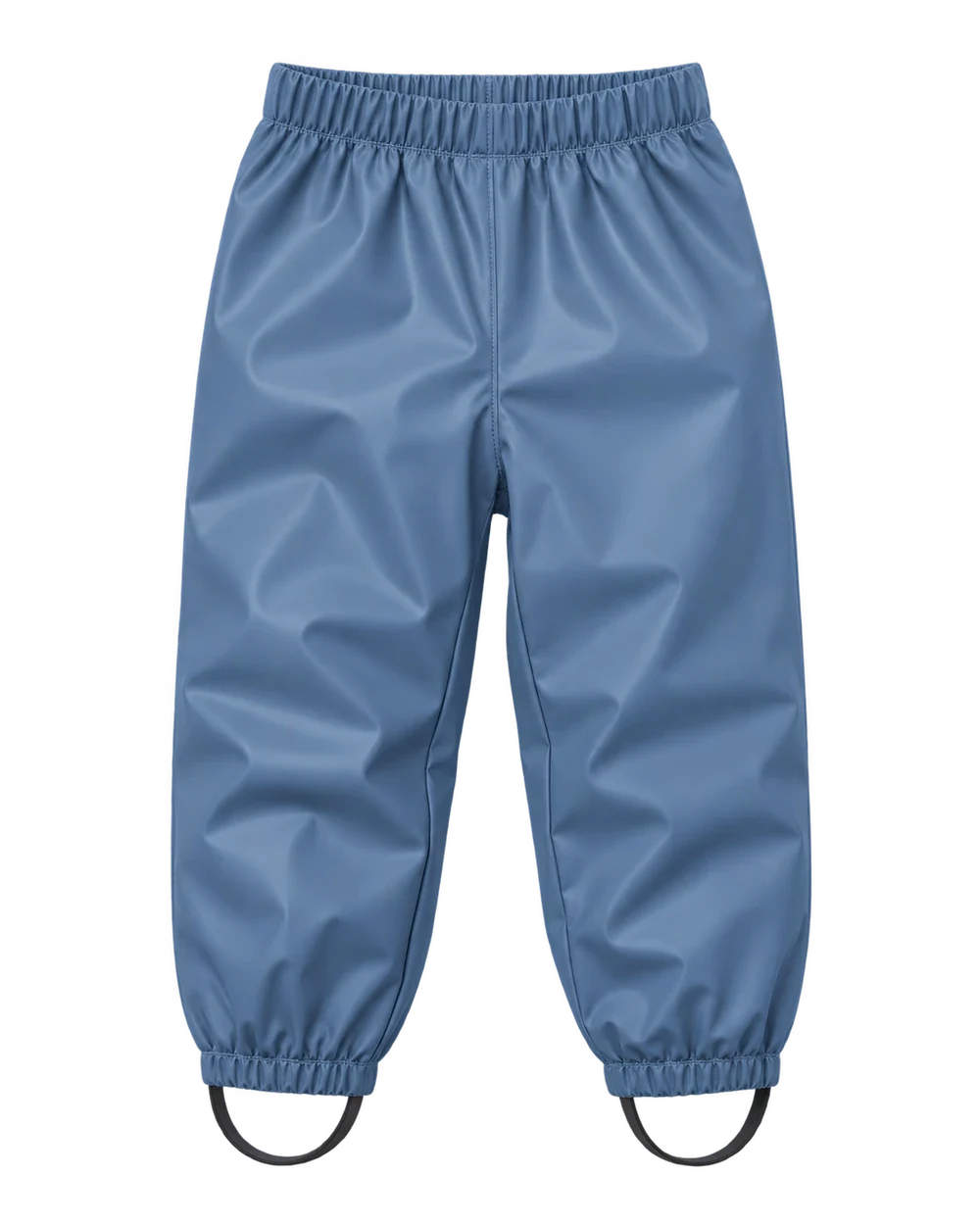
An elastic waist, like everyday pants. They pull on and off quickly over shoes, so they suit a child who uses the potty. When your child sits in a puddle, water can get in at the back.
- Good: Quick off for the potty
- Not good: Back gaps when sitting in water
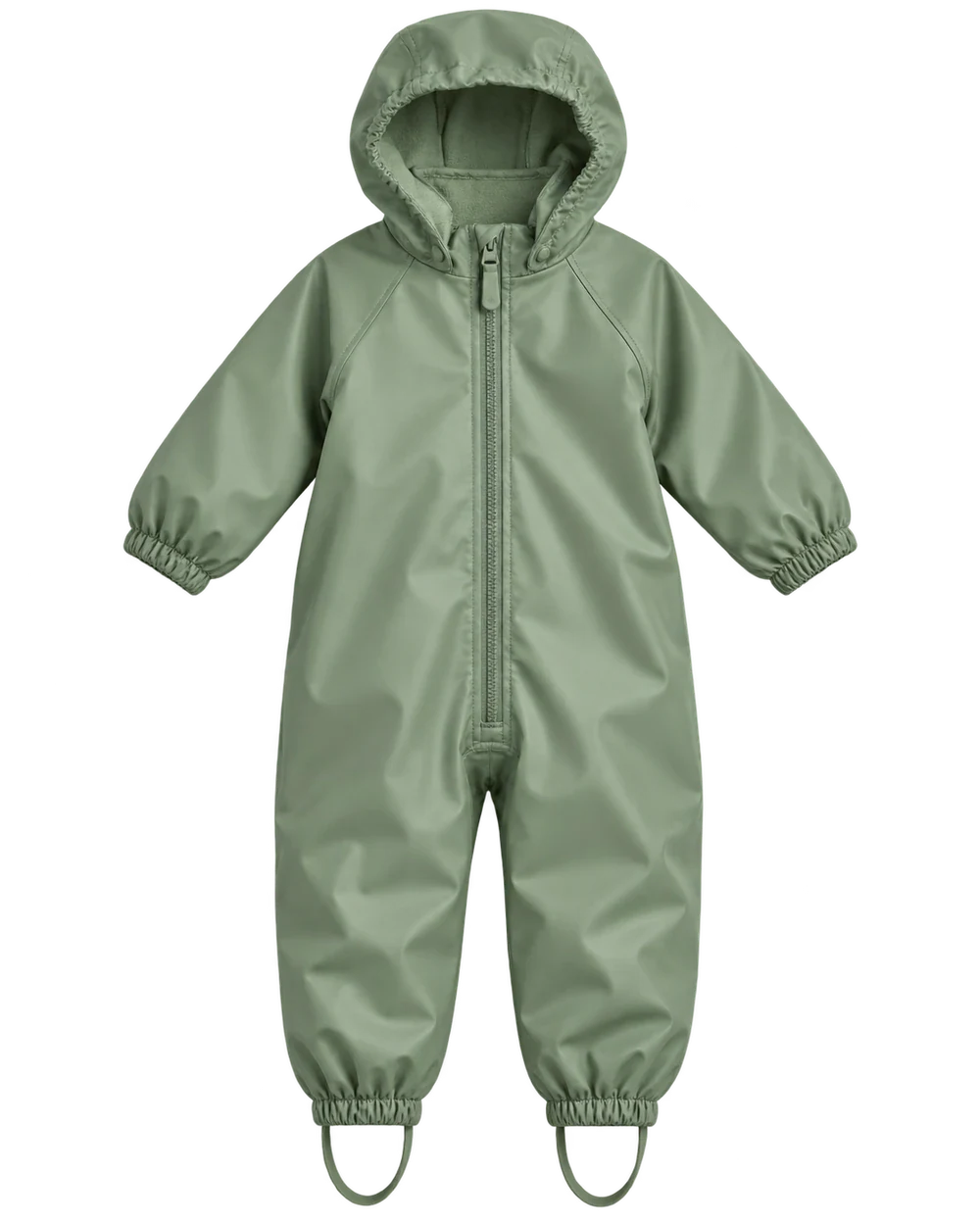
One-piece puddle suit
Jacket and pants in one, with a hood, also sold as a rain suit or splash suit. With nothing to gap, it is the driest choice for a baby who crawls. Once your child walks and uses the potty, a raincoat and rain pants come off faster.
- Good: Dry from the neck to the ankles
- Not good: All of it off for the potty
How to choose rain pants
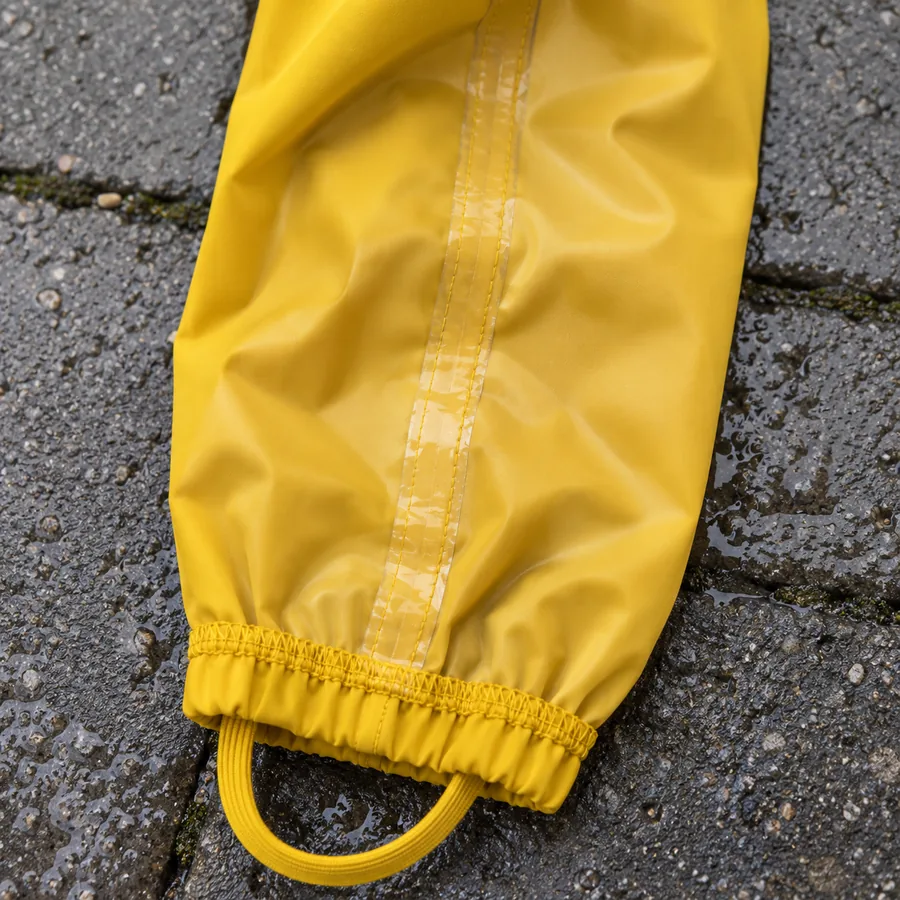
1. Waterproof, with sealed seams
The label should say waterproof, not water‑resistant or showerproof, and the seams inside should be welded or covered with tape. Some cheap pairs keep out a shower but soak through when a child sits in a puddle, because sitting and kneeling press the water through. More in what waterproof ratings mean.
- Good: Label says waterproof
- Good: Taped or welded seams inside
- Not good: Water-resistant or showerproof
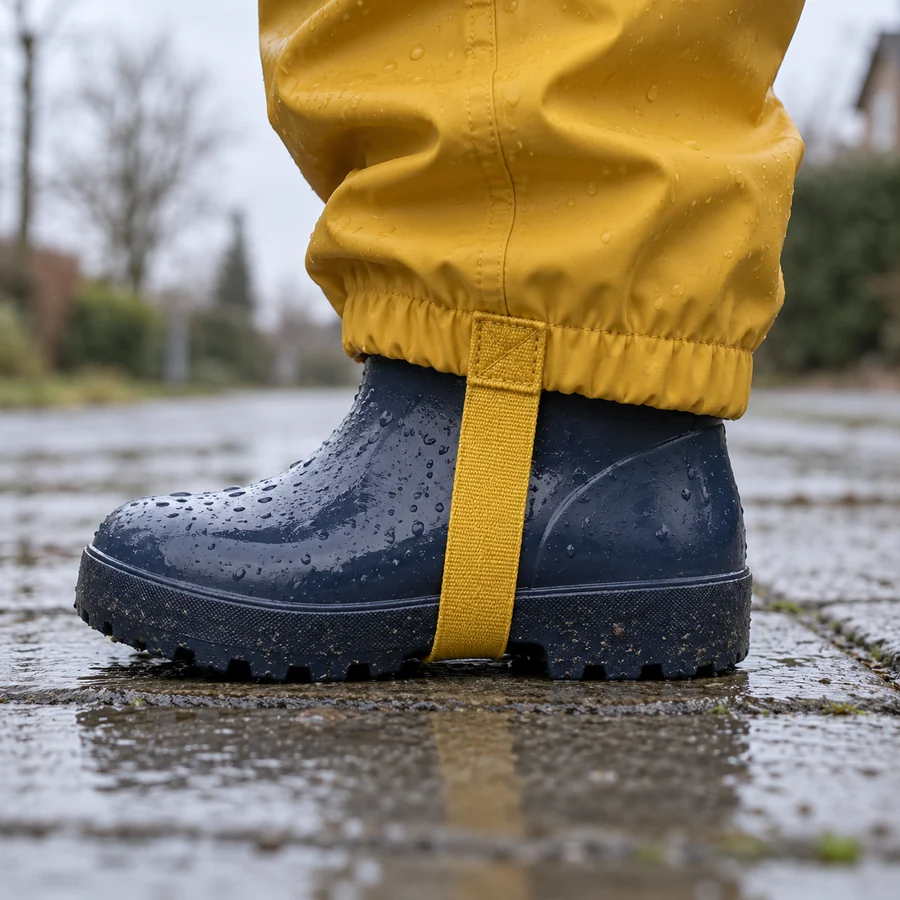
2. A strap under each boot
An elastic strap under each boot keeps the legs down over the boots when your child squats, climbs or kicks. Straps that come off can be replaced when they wear out.
- Good: Elastic strap under each foot
- Good: Straps you can replace
- Not good: Legs ride up in a squat
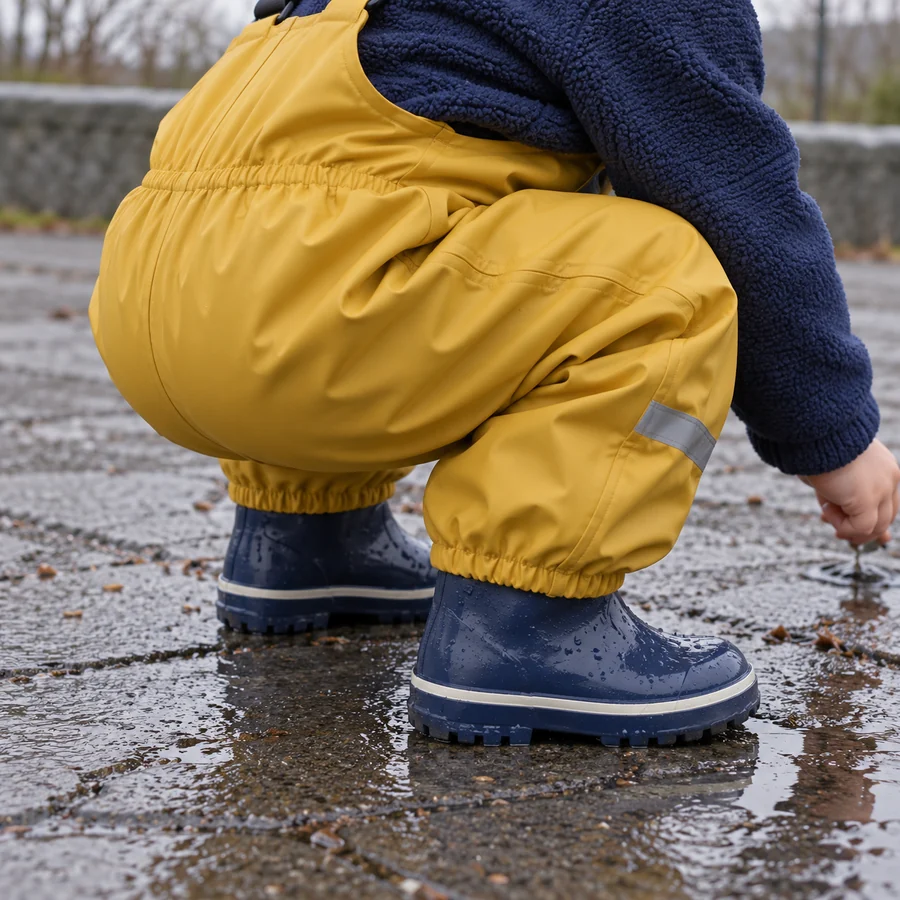
3. Room to squat
Rain pants don't stretch, and they go over other clothes. Try them on over the usual pants and have your child squat: the seat shouldn't pull tight, and the knees should bend easily.
- Good: Squats without pulling at the seat
- Not good: Seat pulls tight in a squat
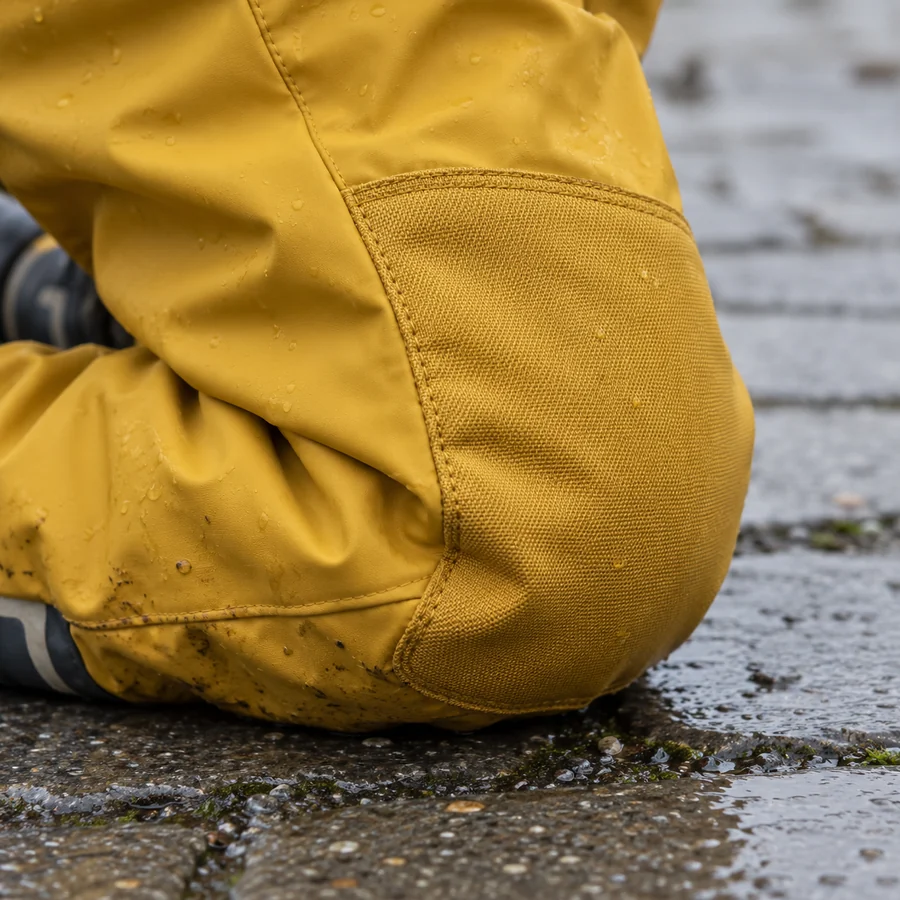
4. A tougher seat and knees
Crawling and sliding wear the waterproof coating thin, most of all at the knees and the seat. A second layer of fabric there keeps a crawler dry for longer.
- Good: Second layer at the knees and seat
- Not good: One thin layer at the knees
How to wear rain pants
Pull the cuffs down over the rain boots and hook the straps under the soles, so the rain runs off onto the boot instead of into it.
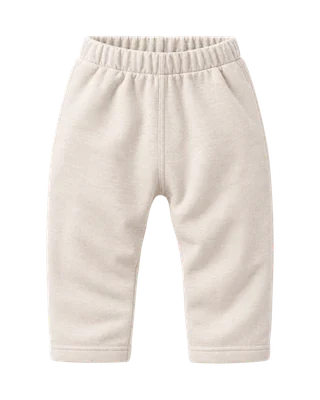
What goes underneath depends on the day, because rain pants add little warmth. On a mild day, the usual light pants or leggings. On a cold one, warm pants, or fleece-lined rain pants instead of both. Leggings and tights sit flat underneath, where thick pants bunch up at the knees.
Questions parents ask
Are rain pants worth it?
Yes, whenever it rains or the playground is wet, and at daycare or in the woods after rain. Daycares that go out in all weather often ask for a pair that stays there.
Should I buy rain pants a size up?
One size up at most, and only with straps you can shorten. Legs that are too long drag under the heels and trip a walker.
What can a crawling baby wear on the feet?
Booties soak through on wet ground, and rubber boots are too heavy for a baby who doesn't walk yet. Waterproof overshoes (rain booties) pull on over the booties, and some crawling pants have waterproof feet sewn on. The strap under each foot keeps sand out of the booties too.
How do I wash rain pants?
Rinse or wipe off the mud, then hang them up to dry, away from the radiator. Machine wash them only when they're really dirty, at the temperature on the label, and skip fabric softener, which leaves a film that soaks up water. Rubbery coated pairs stay out of the dryer. More in caring for rainwear.