What this is about
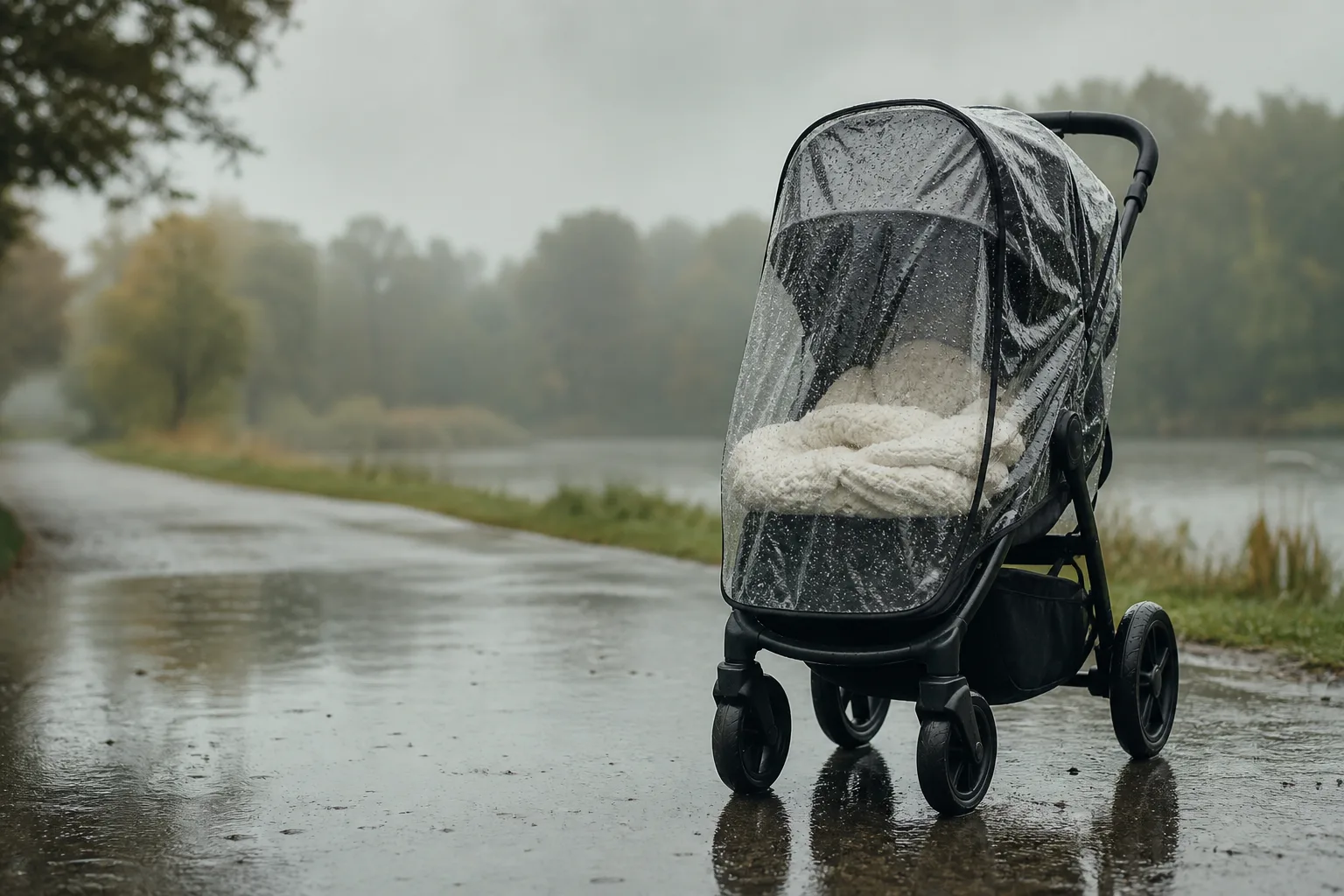
Grey skies make any morning look colder than it actually is. The immediate instinct is to bundle your baby into winter layers and wrap the stroller in thick plastic. That usually backfires. Clear rain covers reduce airflow and can trap body heat, turning the stroller into a small greenhouse. Separate the two jobs: dress for the actual temperature, then let the rain cover handle the water.
Keep the usual weather layers underneath
The clothes inside the stroller follow the feels-like temperature, whether it is pouring or completely dry. If the thermometer calls for a cotton bodysuit and a light fleece, rain does not turn that into a snowsuit day. Overdressing under a plastic shield leaves a baby clammy and sweating before you reach the corner.
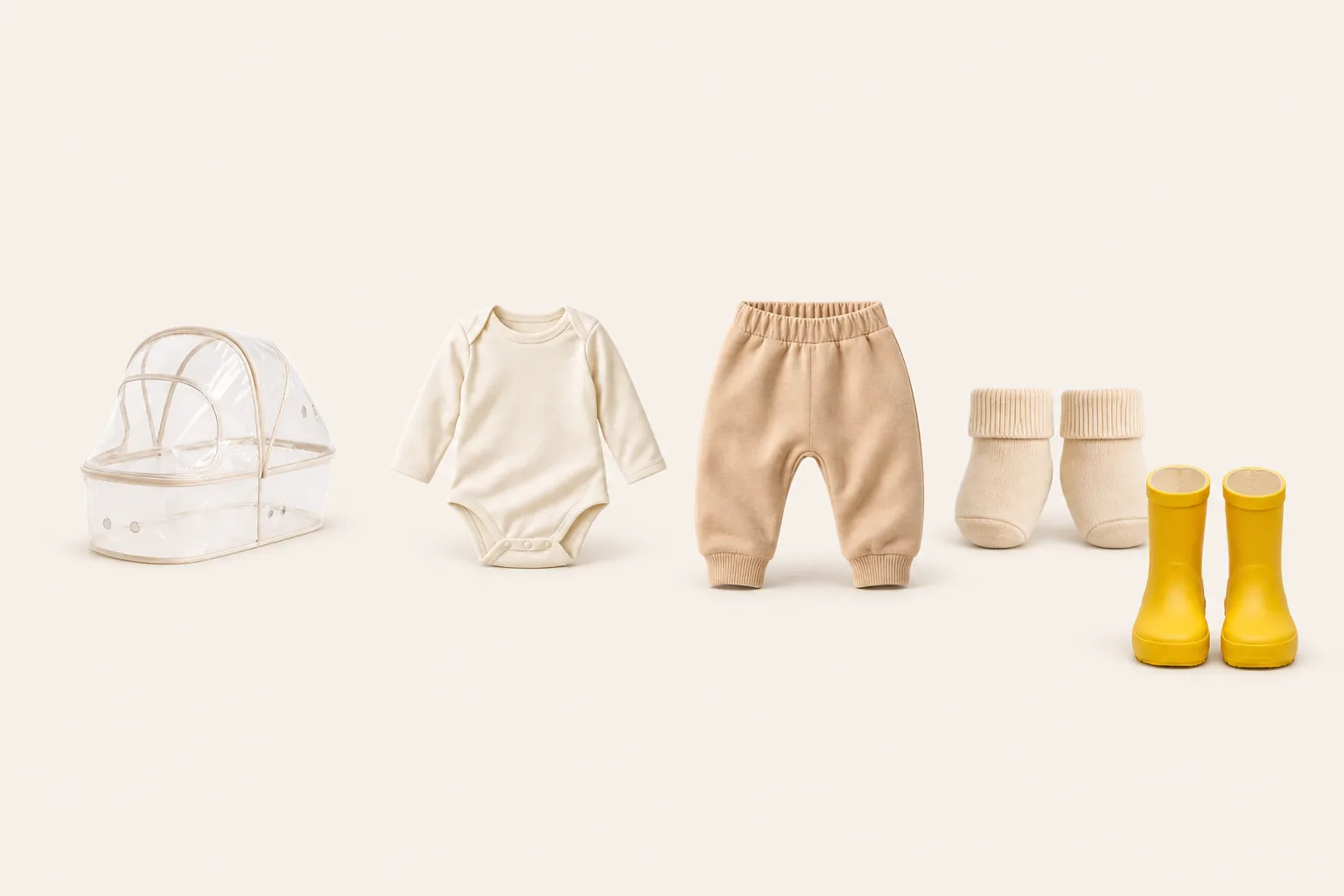
Fit the cover before the sky opens
Stroller rain covers are notoriously awkward. Wrestling stiff plastic and tight velcro tabs during a sudden downpour is miserable. Test the fit on a dry afternoon by your front door. You want to know exactly how it clips around the frame, where the window opens, and that the side mesh vents sit completely free of folds.
Airflow is what keeps a covered stroller safe. A dedicated cover has built-in ventilation so fresh air moves across the seat. Never substitute a loose plastic sheet, and never drape a blanket or muslin across the stroller opening. If wind begins to lift the plastic, move out of the gust and secure the lower tabs.
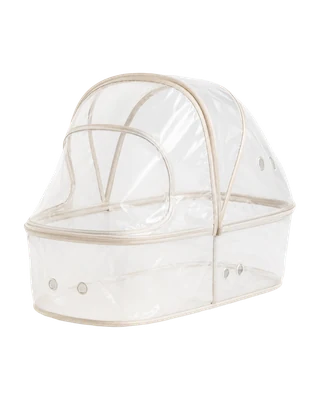
Rain falling
Fit the stroller's own cover with every vent clear. Take it off as soon as you step inside a warm shop or bus.
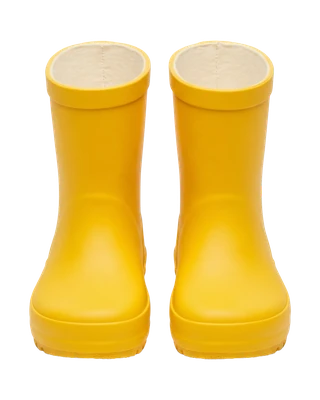
Feet on wet ground
A baby staying in the stroller needs soft booties or warm socks. Save rubber rain boots for toddlers who walk.
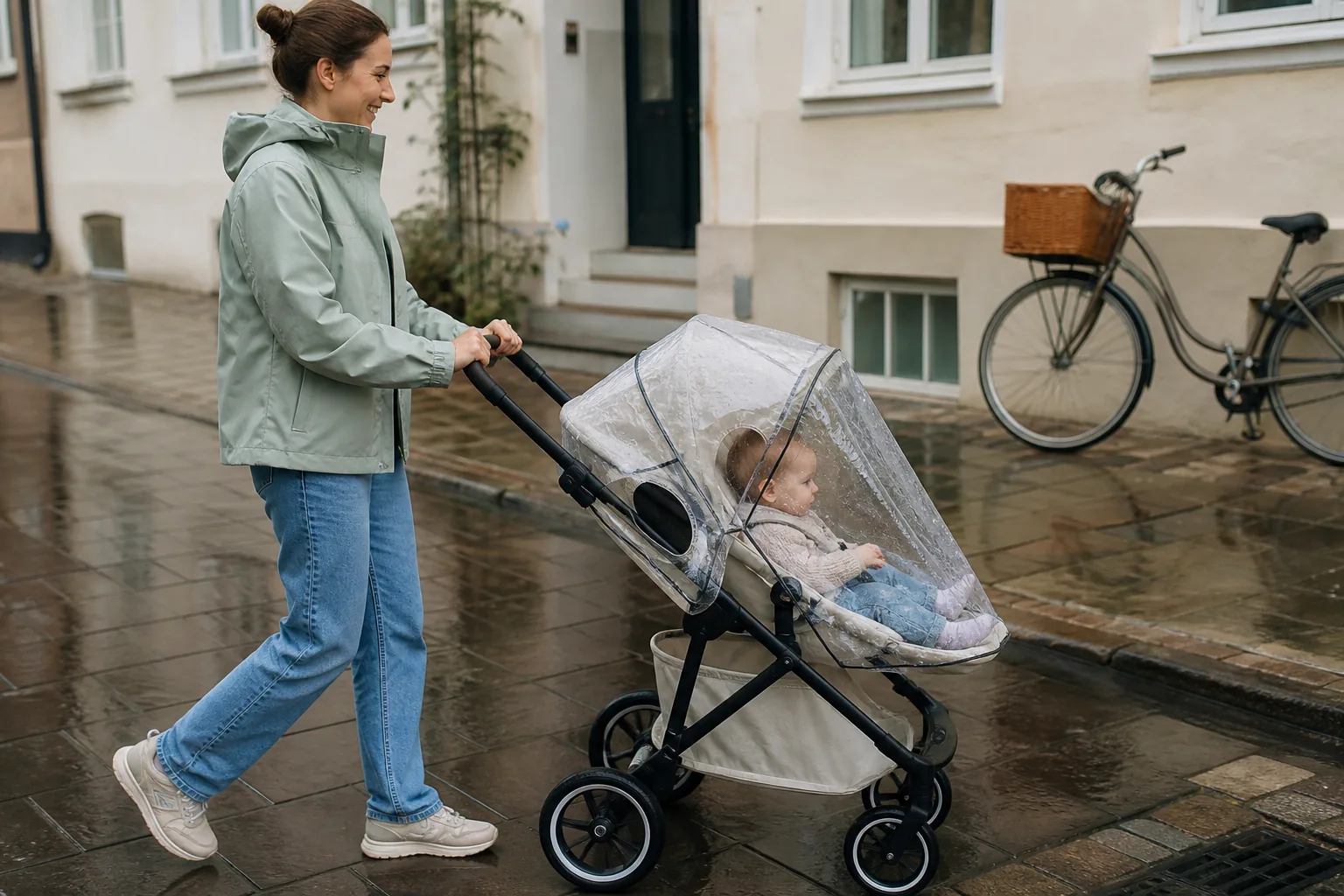
Pack for wet walks and quick changes
Pack the folded rain cover right at the top of the basket. If a shower hits, you want to grab the shield in three seconds without dumping the diaper bag onto a wet sidewalk. A street lined with shop awnings offers an easier route than an open park when you need to adjust fastenings or soothe a crying baby.
Always carry a spare bodysuit, pants and socks in a sealed, dry pouch. Even with a good cover, water finds a way in through an unzipped cuff or wet shoes. Keeping fresh basics completely dry saves the outing if dampness creeps in. When you get home, shake the cover out and let the stroller seat dry before the next walk.
Walking toddlers need their own rain gear
Once a toddler climbs out of the stroller to explore, water resistance becomes part of the outfit. From 12°, an unlined puddle suit or lightweight raincoat keeps clothes dry. Between 4–11°, switch to a warm, fleece-lined waterproof coat or suit. Below 4°, keep the padded pram suit and rely on the stroller cover for heavy rain.
Footwear depends on the thermometer as much as the puddles. From 8°, flexible rubber rain boots keep little feet dry. Below 8°, switch to insulated winter boots with water-resistant shells. A baby who rides the entire time does not need stiff rubber boots: they are heavy, slip off easily, and get cold quickly.
Check inside the boots before slipping them on. A damp lining from yesterday's walk will soak fresh socks instantly. After puddles, pull the boots off indoors and check the sock heels before putting your toddler back in the stroller seat.
Keep airways clear when babywearing in the rain
Carrying a baby in the rain changes the warmth entirely. Your chest acts like an active heater, so a baby in a carrier needs fewer layers than a baby sitting in a stroller. The simplest rain protection is a large golf or walking umbrella that shelters both of you. If you use a water-resistant babywearing jacket or carrier cover, clip it over the outside of the carrier.
Airway safety comes first. Your baby's nose and mouth must stay completely visible and clear of wet fabric. Never zip your raincoat up over your baby's head or drape a wet hood across their face to shield them from drizzle. Use a soft, brimmed rain hat to keep drops off their forehead instead.
Catching leaks before they spread
Rain rarely soaks a baby all at once. It creeps in through an unzipped collar, wicks up from wet cuffs, or drips into boot tops. Sweat can also dampen clothes from the inside if the stroller cover is on during a mild shower. If you notice dampness, step under cover, peel off the wet item, and swap in the dry set from your bag.
Once dry clothes are on, check the neck again. Warm and calm means you can keep walking. If your baby still feels cool or fussy after getting dry, head home and warm them gently with skin-to-skin contact and dry layers.
Questions parents ask
Can I use an umbrella instead of a stroller rain cover?
An umbrella shields your head, but wind drives rain right into the stroller seat. A fitted rain cover protects your baby, keeping both hands free to push.
What if it rains on a warm day?
Keep the lightweight outfit on. A plastic cover heats up quickly in mild weather, so make sure all vents are open and remove the cover the moment the rain stops.
Can I leave the rain cover on between showers?
Take the cover off when the rain stops. Use the stroller canopy to shelter your baby from dry wind.
If your baby stays cold after getting dry
Move indoors, replace wet clothes and warm your baby gently. Call emergency services now if your baby becomes floppy or does not respond normally. Get immediate medical advice if your baby remains cold.