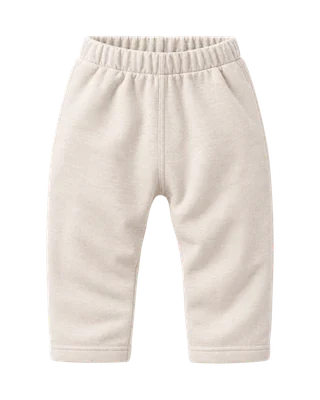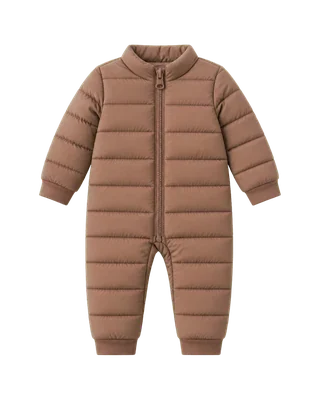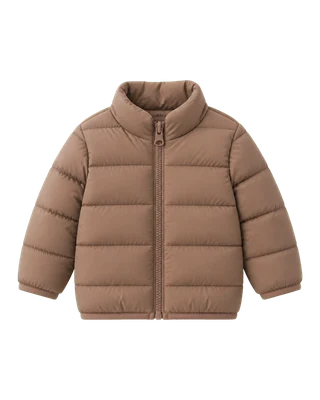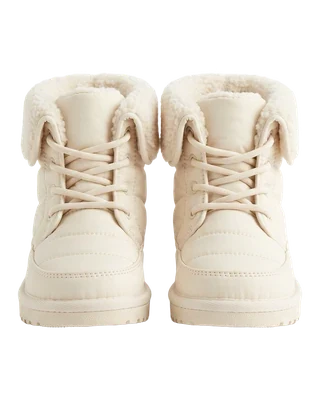
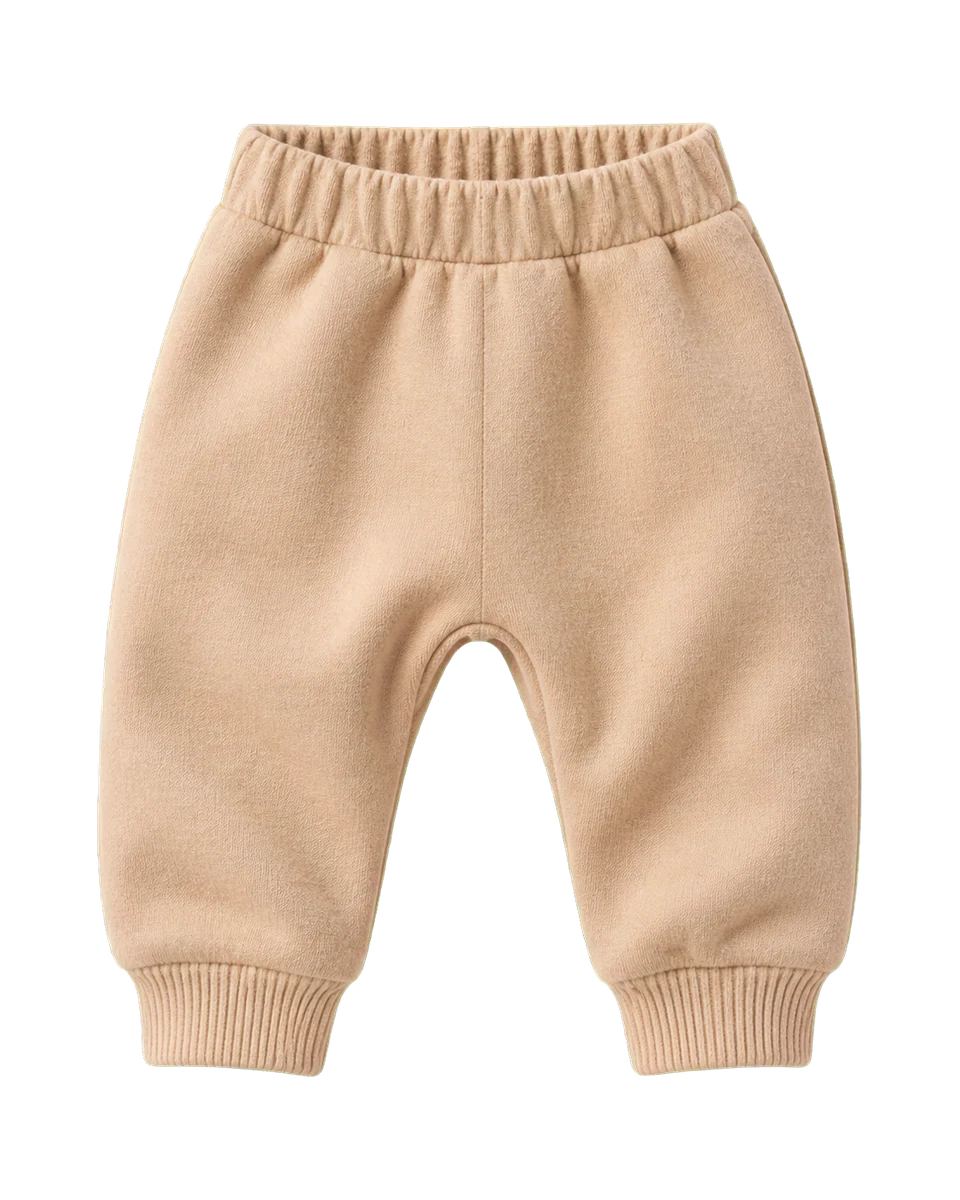
Warm baby pants are thicker pants for cold days: thick knit, brushed fleece, or cotton with a soft lining. Snow pants, which keep out water too, are the kind for playing in snow. Warm pants take over when thin leggings or joggers are not warm enough.
Many sweatpants look thick on the hanger and are thin, smooth T-shirt fabric inside. Feel the inside before you buy: warm ones are fuzzy (brushed) or lined.
Indoors, reach for them when the room drops below 18°C (64°F), especially once your baby crawls on cool floors. Outdoors, they replace light baby pants from 12°C (54°F) down in a stroller, baby carrier, or car seat.
Inside a winter stroller footmuff they stay on, and only snow pants are left at home, because the footmuff is a warm coat for the legs.
- For ages0–3years
- You'll need3–4per size
- Wear them below12°C54°F
Four kinds of warm pants
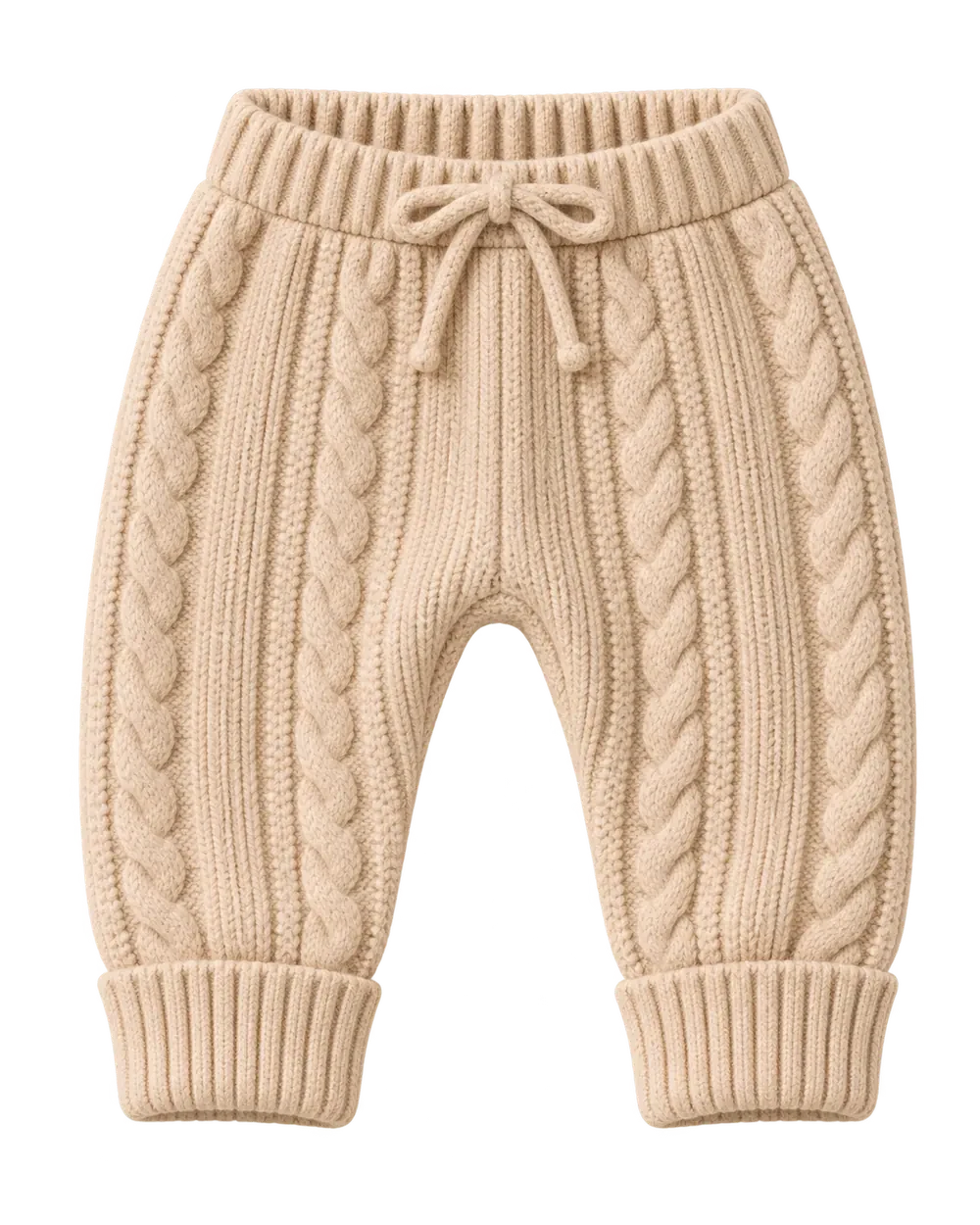
Knit and sweater pants
Thick knit in cotton or merino wool, warm without being stiff. Wool stays warm even when your baby sweats a little, so it suits the carrier and the stroller. Thick cotton knit is good for cool floors at home.
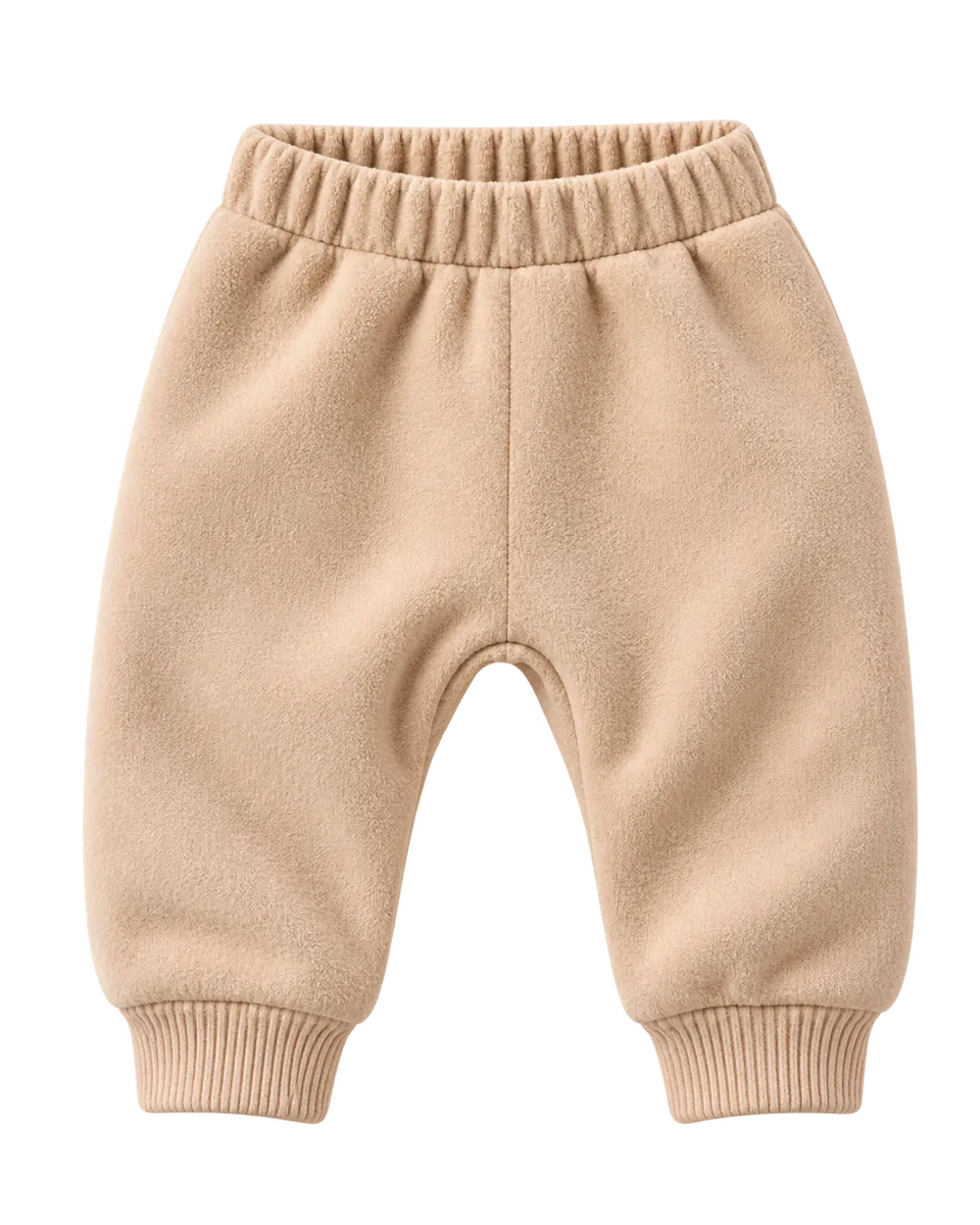
Fleece pants
Light, soft and quick to dry, for dry cold and car rides. Fleece lets the wind through on its own, and it can feel too warm indoors.
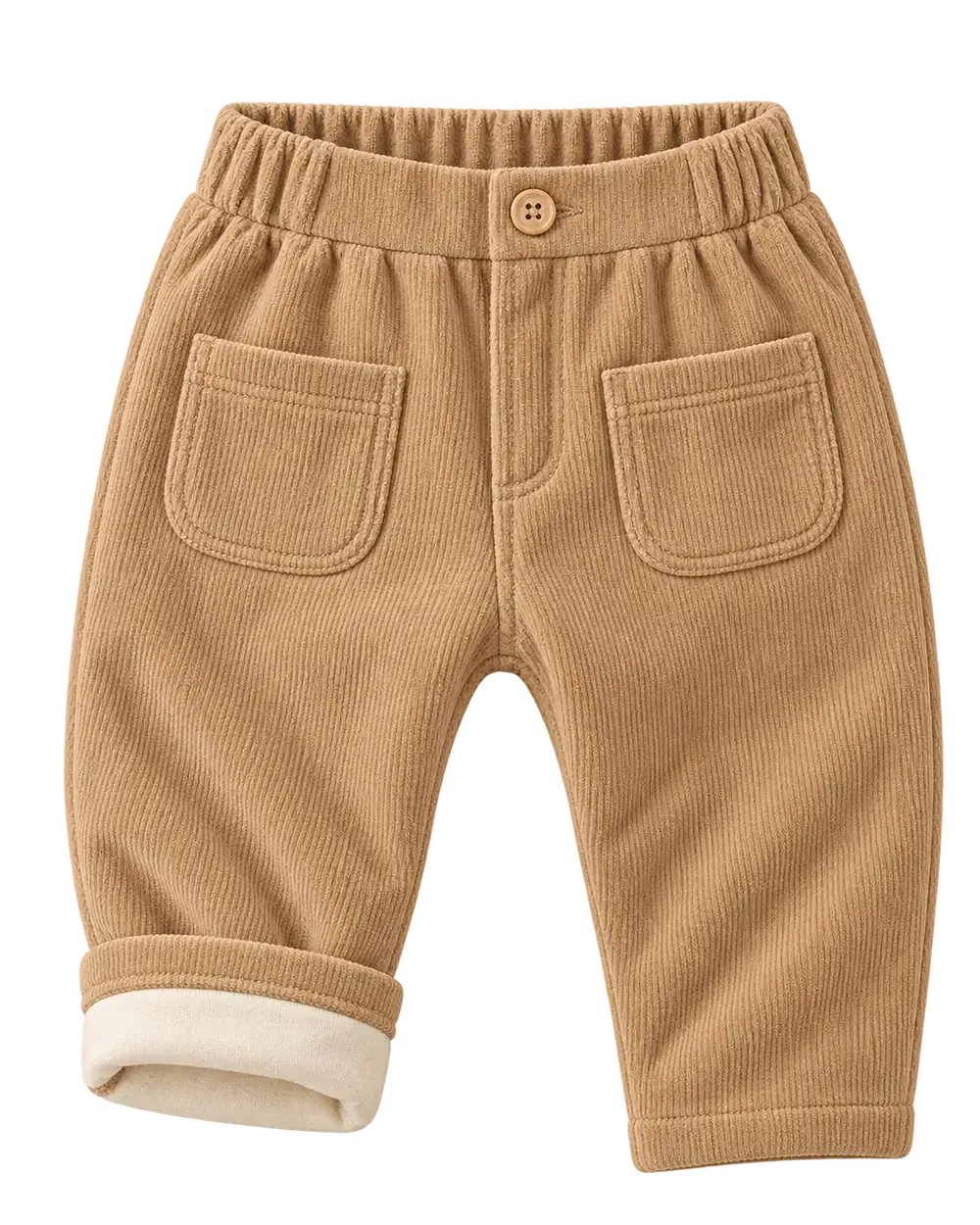
Lined trousers
Canvas or corduroy outside, with a soft lining of cotton jersey, flannel or fleece. The firm outside keeps out wind and a damp park bench better than knit, and they stay slim enough for a car seat.
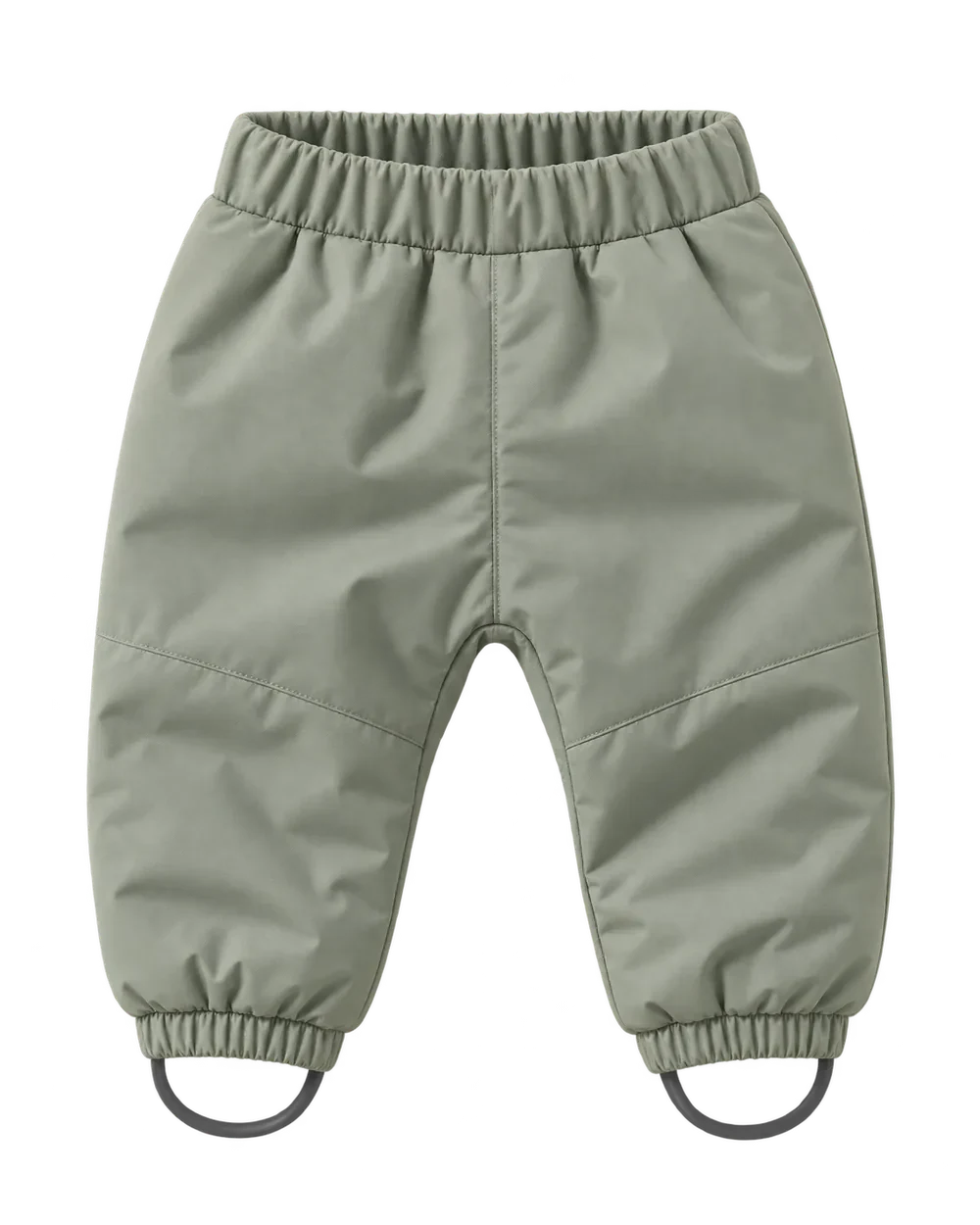
Snow pants and bibs
Waterproof and windproof, with warm padding inside. They are for a crawler or a walker who sits and plays in wet snow.
Snow bibs or snow pants?
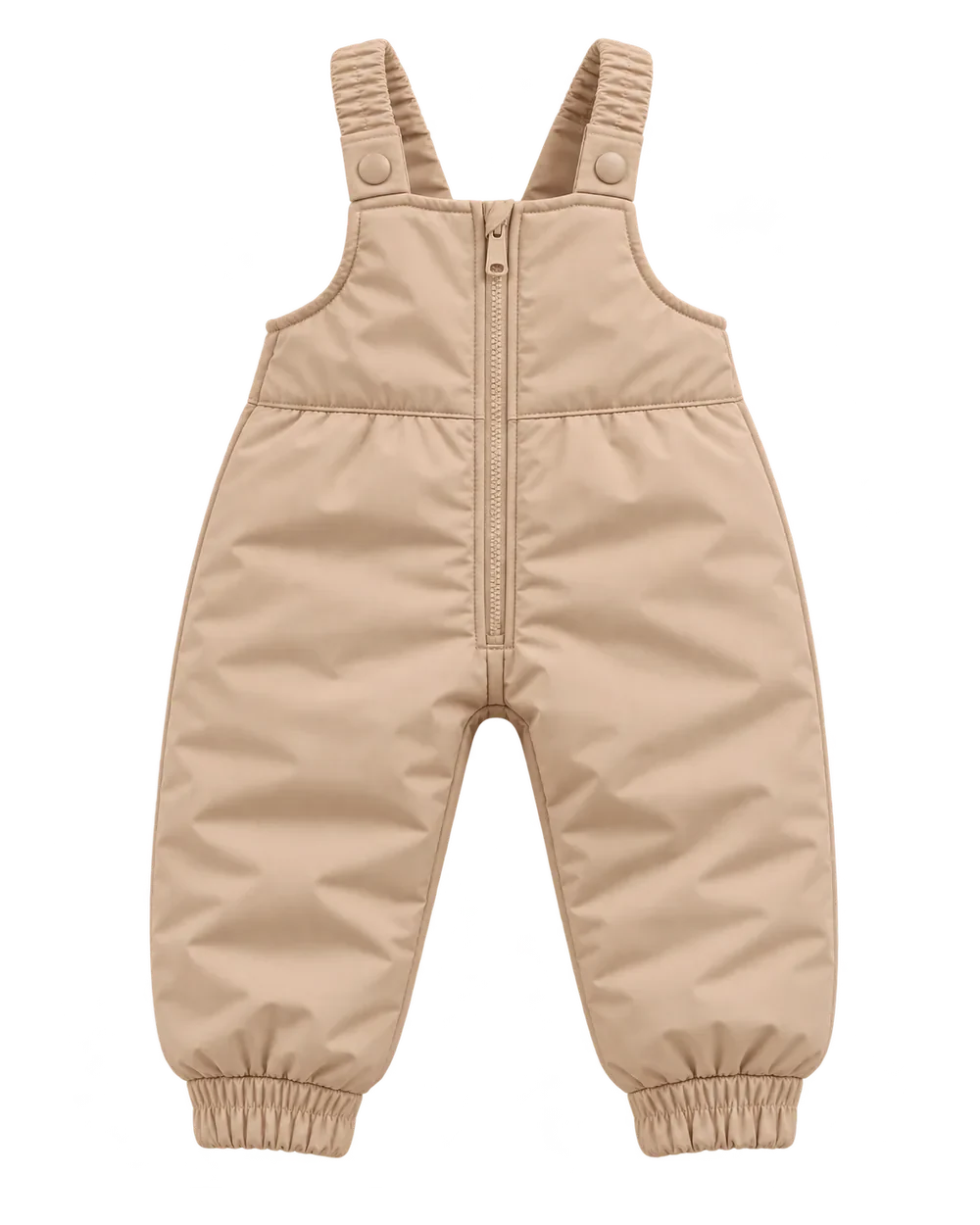
Snow bibs
Best for a crawler or a new walker who sits in the snow. The bib reaches over the chest and back, held by straps over the shoulders like everyday overalls.
- Good: No snow in at the waist
- Good: Stays up over a diaper
- Not good: Straps slow diaper changes
- Not good: Warmer than needed on mild days
Waist snow pants
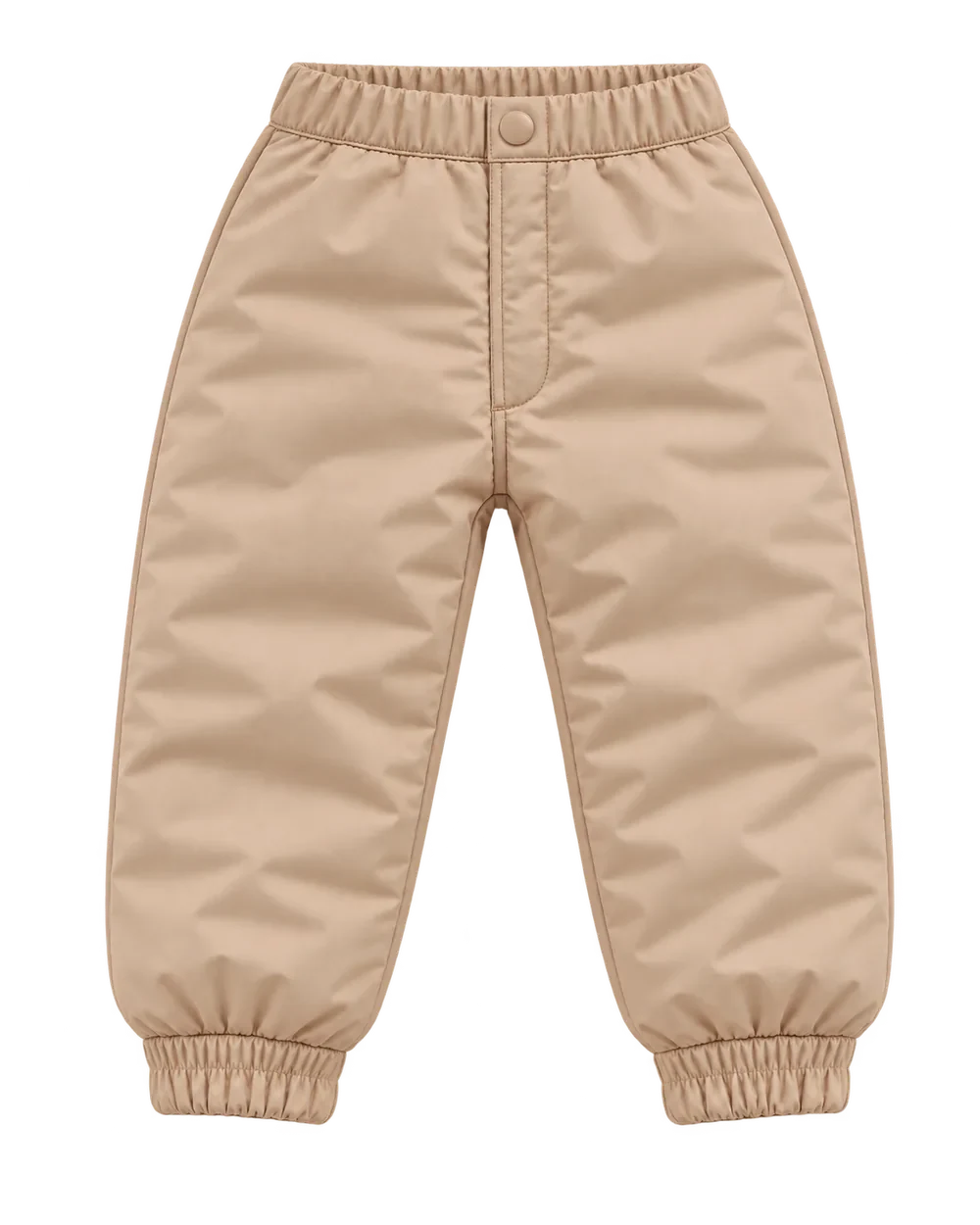
Best for a toddler who walks, and who is starting to use the potty. They pull down like ordinary pants.
- Good: Quick diaper changes, coat on
- Good: Cooler on milder days
- Not good: Slides down over a diaper
- Not good: Back gap in deep snow
How to choose warm pants
1. Cotton lining for in and out
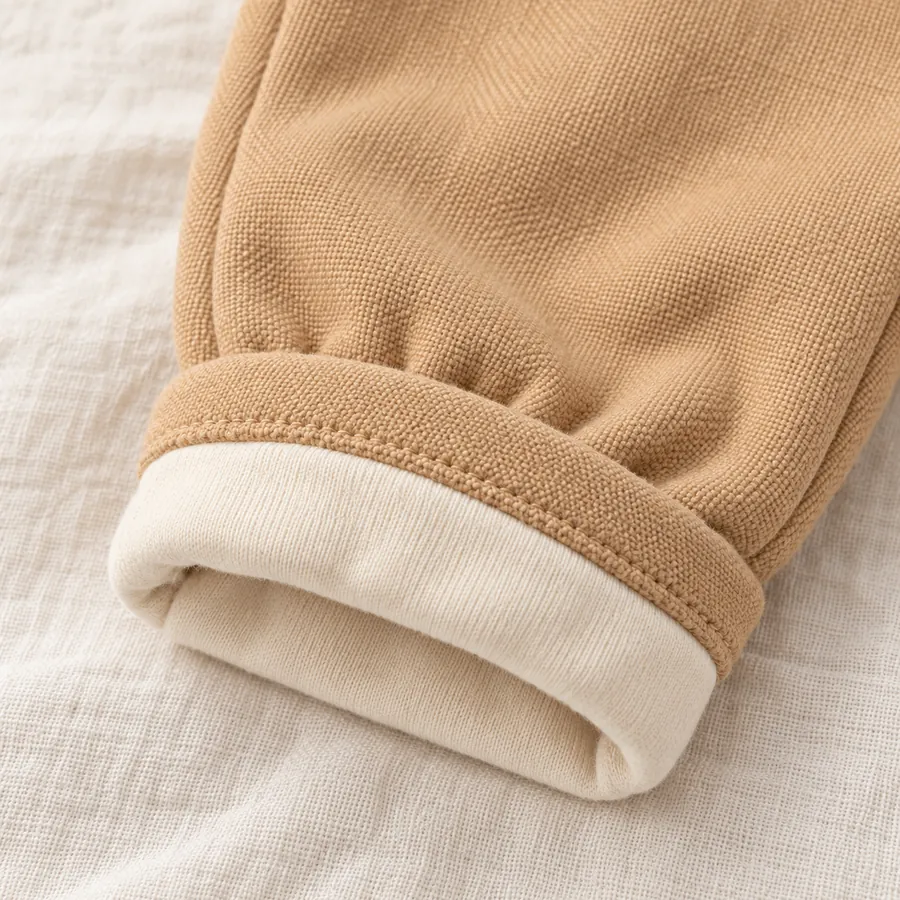
On lined pants, cotton jersey or flannel inside suits days that go from the cold street into a heated shop or home. A thick fleece lining is warmer outside, and can make the legs sweaty indoors.
- Good: Dry legs after a warm shop
- Not good: Damp legs after a warm shop
2. Pre-shaped knees and a roomy seat
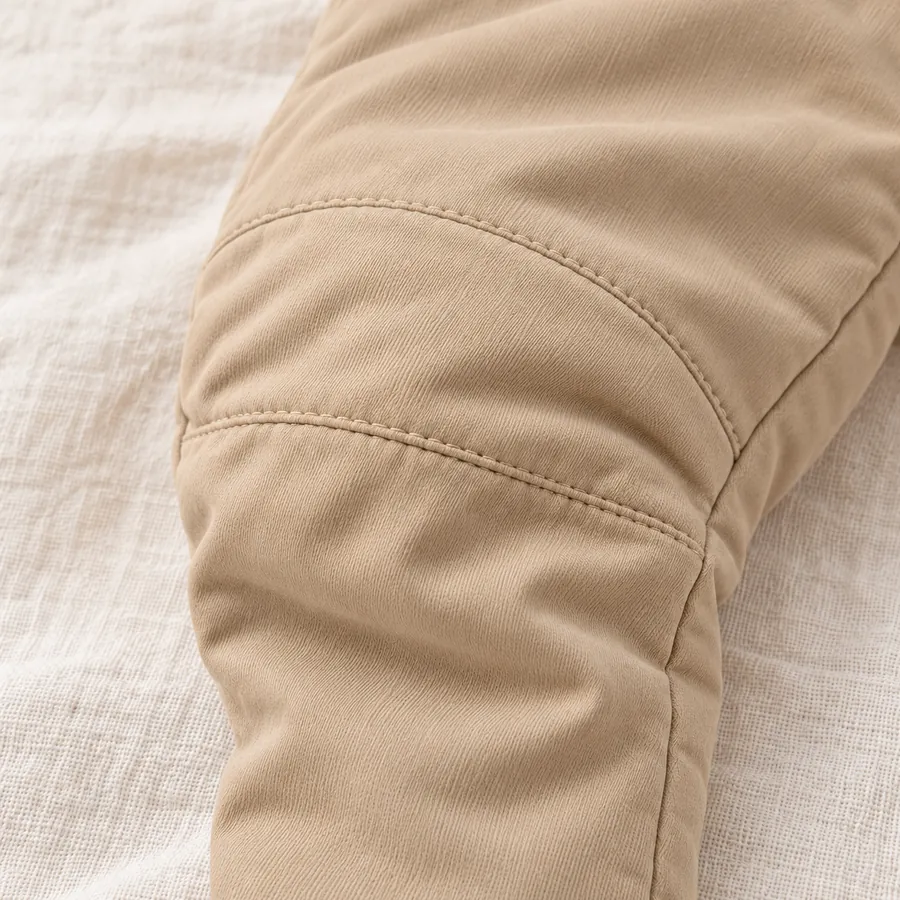
Lined pants and snow pants are stiffer than leggings. Small shaping seams at the knees (darts) and room in the seat let the legs bend without the fabric bunching.
- Good: Darts stitched at the knees
- Good: Roomy seat over the diaper
- Not good: Fabric bunched behind the knee
3. Cuffs that stay put
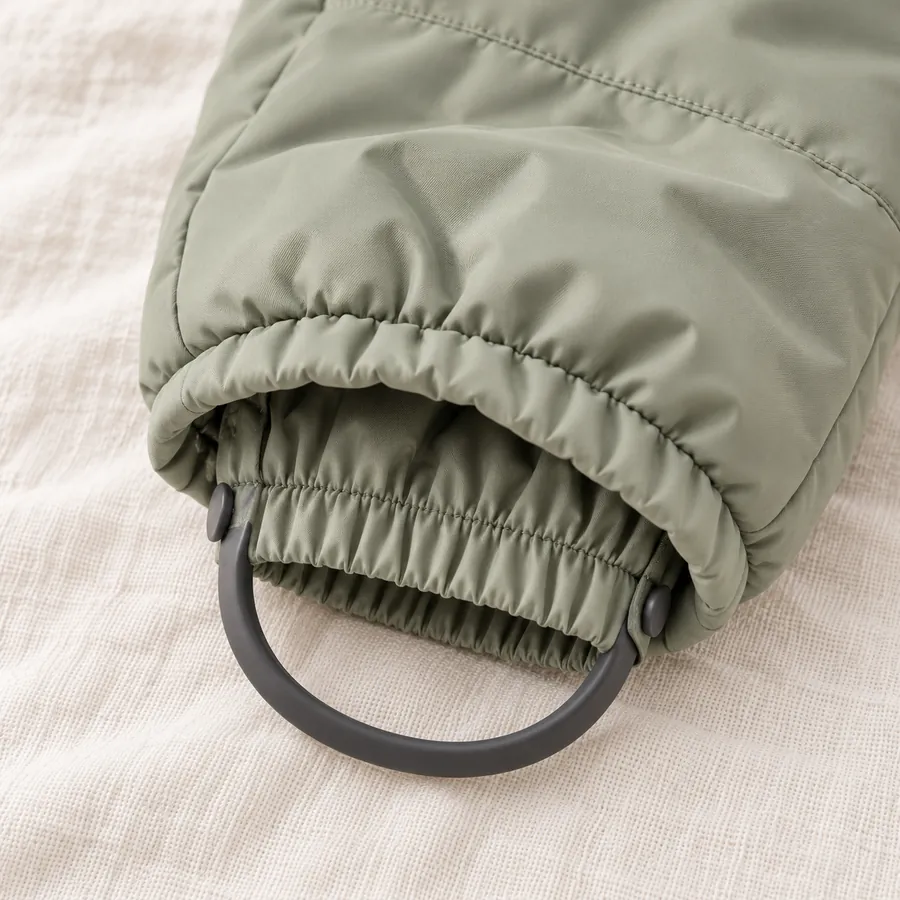
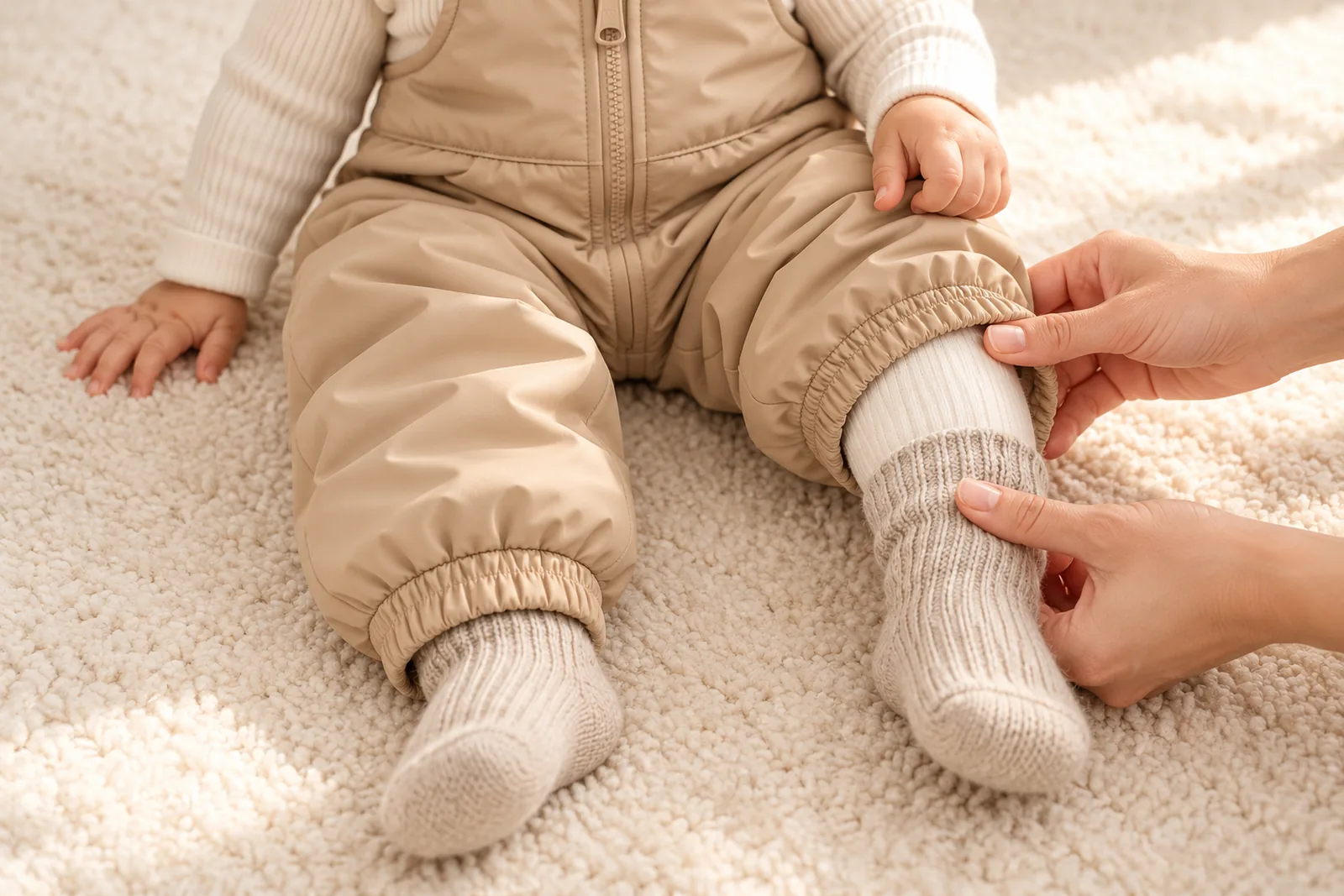
In a carrier or stroller, pant legs ride up and leave the shins bare. On snow pants, an inner elastic cuff (a snow gaiter) or a strap under the boot keeps the snow out of the boots.
- Good: Ribbed cuff snug at the ankle
- Good: Inner gaiter or under-boot strap
- Not good: Hem rides up a bare shin
How to layer them
For cool rooms and dry outings down to 4°C (39°F), knit, fleece or lined pants go straight over the diaper and a short-sleeve bodysuit. They replace thin pants, rather than going over them. Add warm socks or booties, so the ankles stay covered when the knees bend.
Below 4°C (39°F), keep them on and put a one-piece pram suit (a padded winter overall) over the top. For sitting and playing in wet snow, waterproof snow pants go over one close-fitting cotton or merino layer (leggings or tights) instead of warm pants.
Questions parents ask
What should my baby wear under snow pants?
One close-fitting layer over the bodysuit and diaper: cotton leggings, cotton tights, or merino wool long underwear. Skip thick, baggy sweatpants under snow pants, because the doubled seams bunch behind the knees and make it hard for your baby to bend the legs.
Can my baby wear snow pants or fleece pants in a car seat?
Fleece, knit and lined pants, yes: they sit close to the body. Puffy snow pants and snow bibs, no. Take them off before buckling up, because thick padding flattens in a crash and leaves the harness loose.
Do babies and toddlers need snow pants, or is a one-piece snowsuit better?
A baby who rides in a stroller or carrier does not need snow pants: a footmuff or a one-piece pram suit is warmer, with no gap at the waist. Separate snow bibs and a winter jacket make sense once your toddler walks in the snow and goes in and out of the car, shops and playground.
Are snow pants warm on their own?
Yes. Snow pants and snow bibs have warm padding sewn inside a waterproof, windproof shell. Check the label, though: unlined rain pants only keep out water, and need warm fleece or knit pants underneath.
Can you machine wash snow pants and fleece pants?
Yes, on a cool, gentle cycle, as the care label says. Wipe off the mud first. Skip bleach and fabric softener: they clog the water-repellent coating on snow pants and flatten the soft fuzz on fleece.
What size snow pants or warm pants should I buy?
Your baby's size now, not next winter's, because long legs drag under the heels and trip a walker. For growing room, pick warm pants with cuffs that fold over, or snow bibs with straps that adjust and elastic cuffs that hold the hem above the shoe.