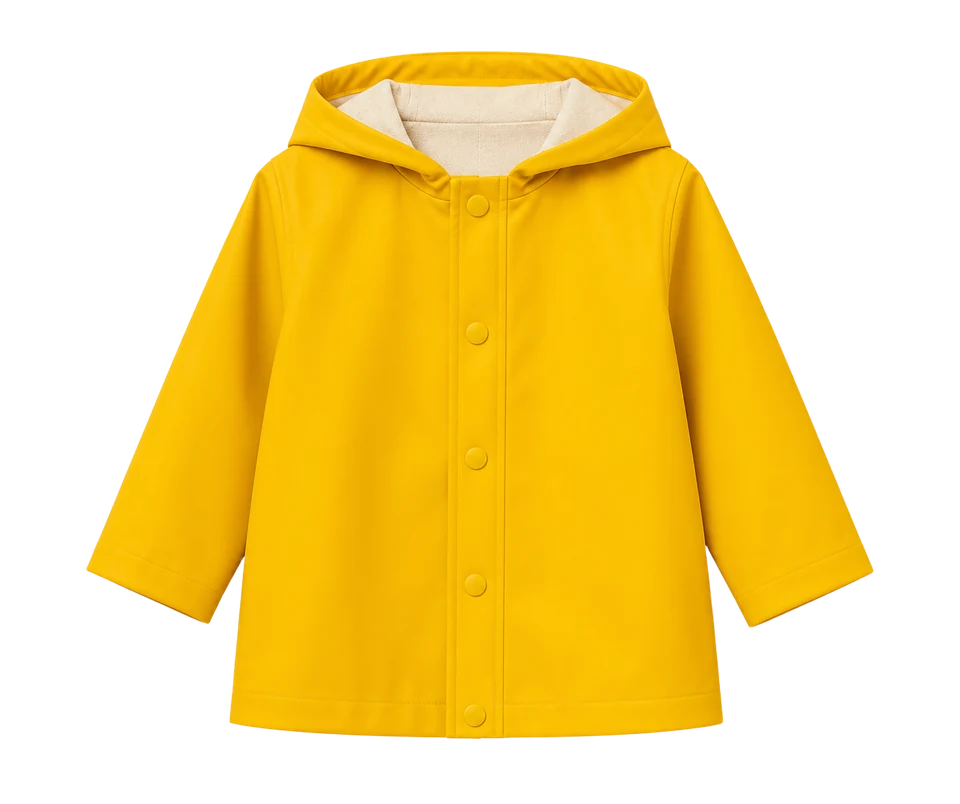
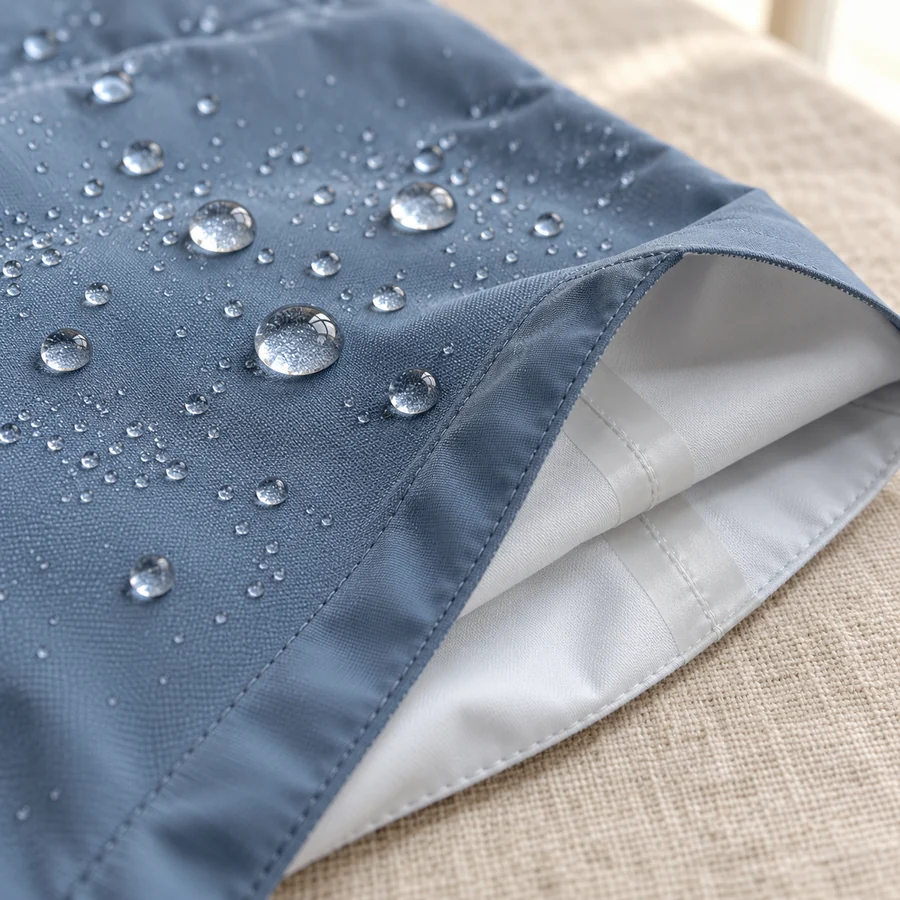
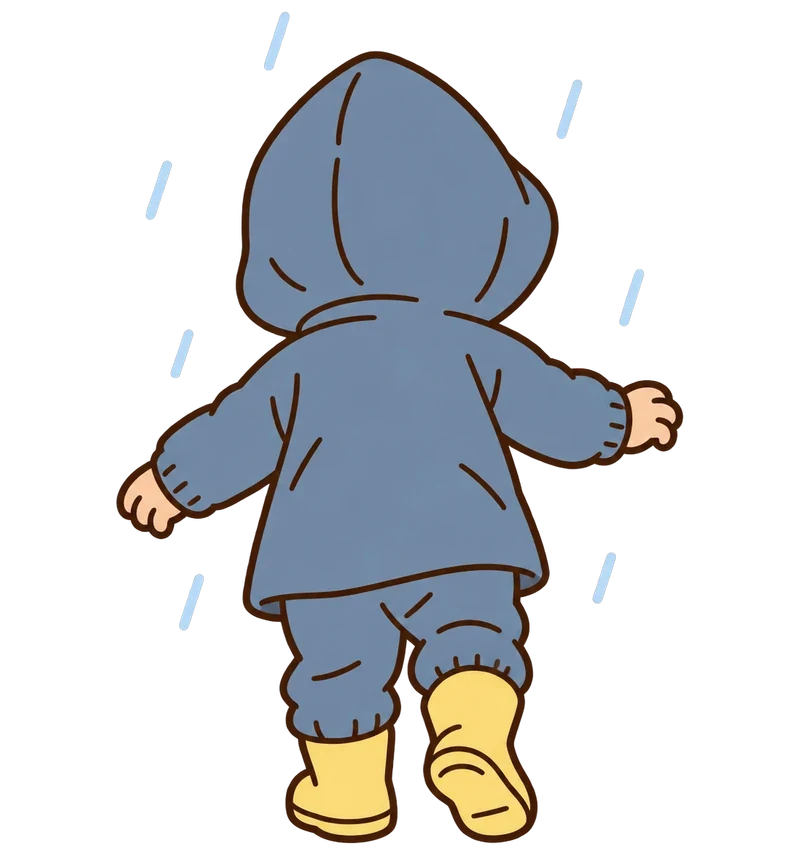
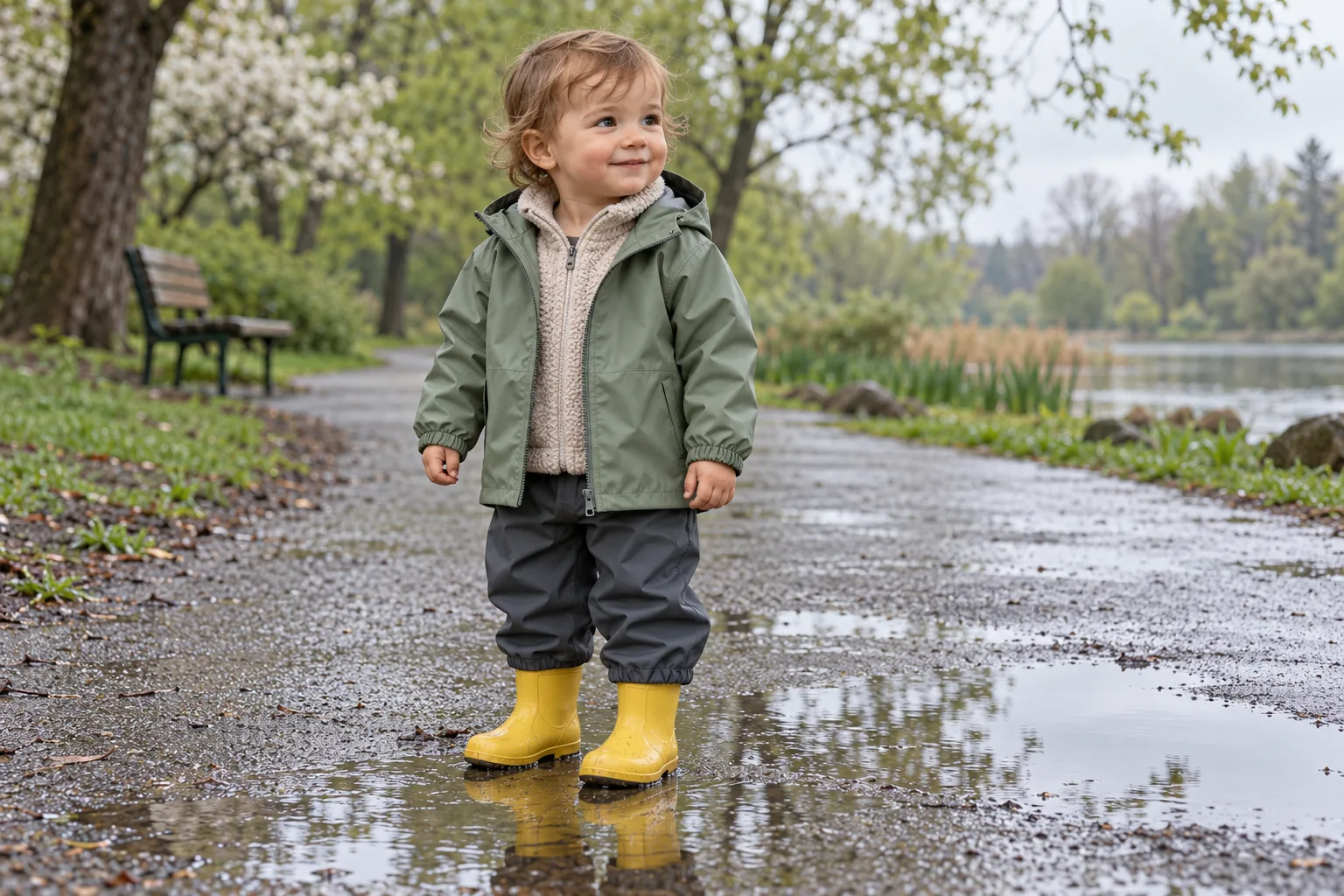
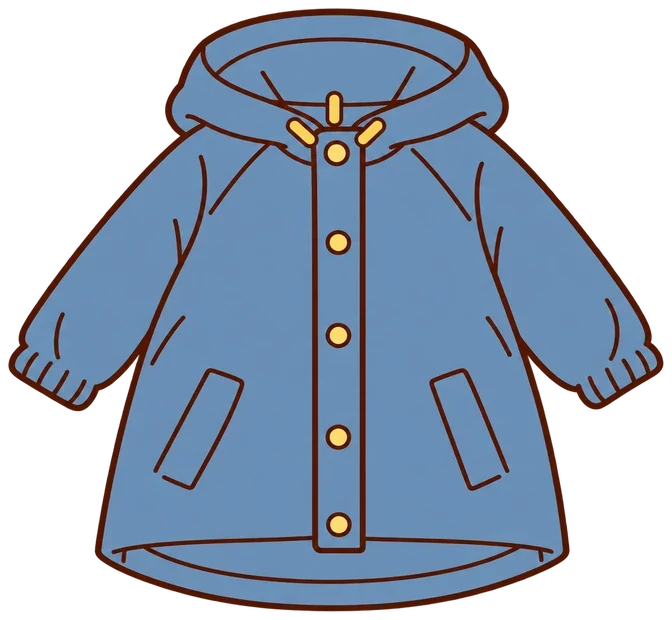
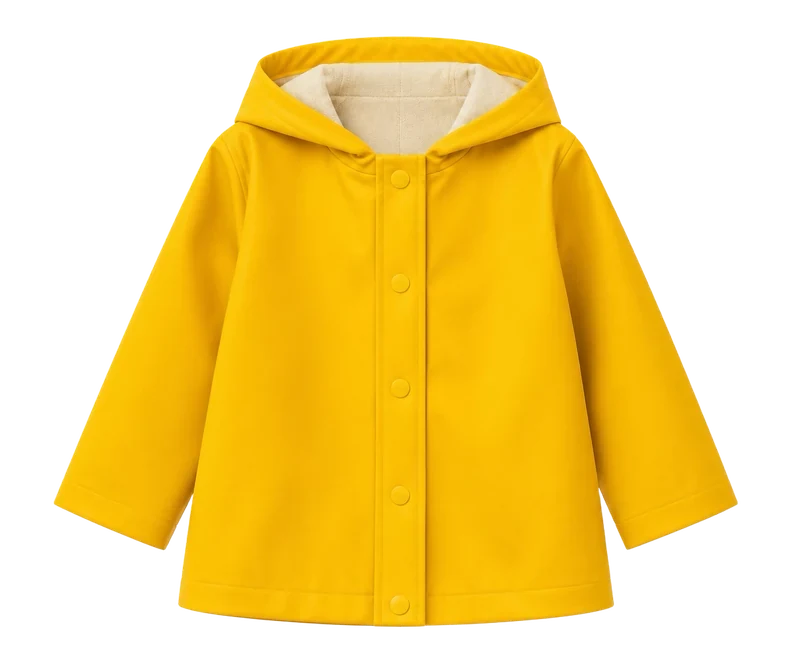
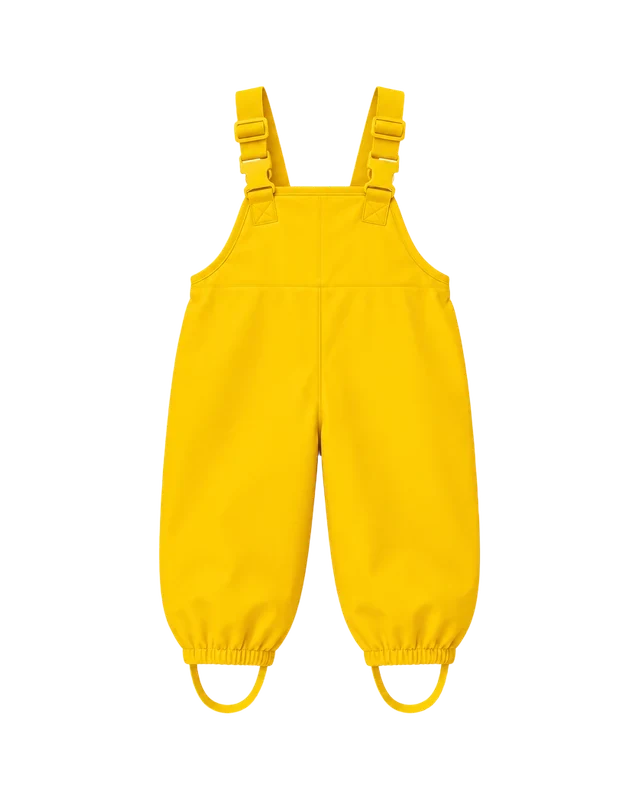
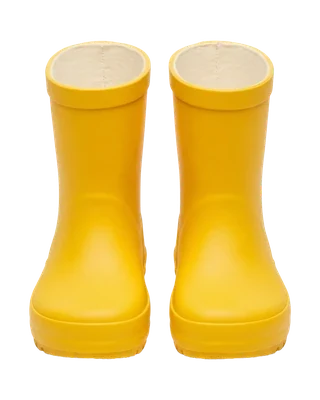
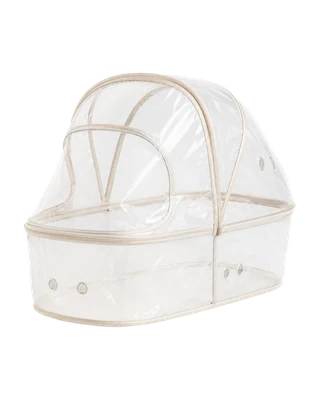
A thin waterproof jacket for rainy days that keeps the clothes underneath dry.
Rain shellLightweight waterproof
Also called
rain jacket
waterproof jacket
A light raincoat keeps out the rain and the wind, but it has no warm lining. The layers underneath do the warming, and that's what makes it so useful. An ordinary light jacket sheds a short drizzle, but steady rain soaks in at the seams.
On mild days, from about 12°C (54°F), it goes straight over everyday clothes. In cooler rain, around 4–11°C (39–52°F), add a thin fleece or a warm fleece underneath, or choose a lined warm raincoat instead.
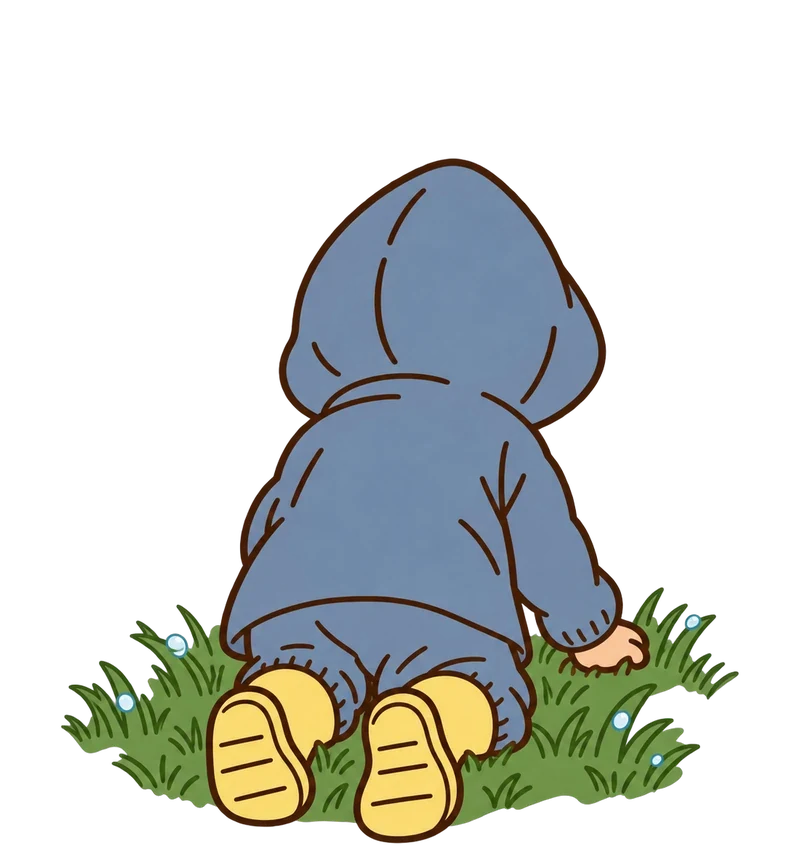
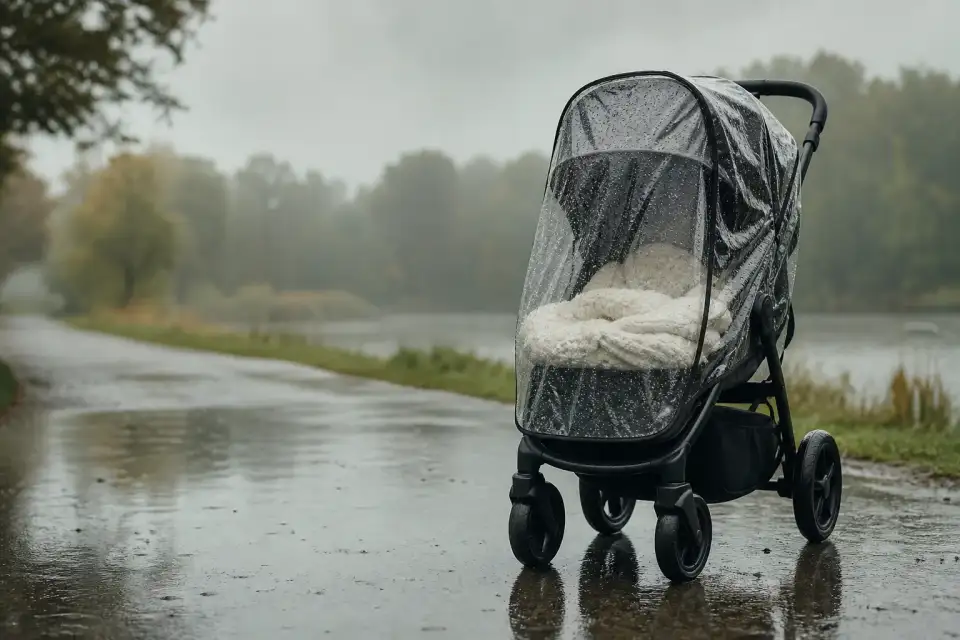
A baby riding in the stroller doesn't need one. A stroller rain cover keeps your baby and the seat dry, and a coat would only bunch up behind the back. A raincoat makes sense once your child is out on foot or crawling across wet grass, usually somewhere between 9 and 15 months.
For ages9+months
You'll need1per size
Wear it from12°C54°F
Waterproof or water-resistant?
Look for two things on the label: the word waterproof, not just water-resistant, and taped or welded seams. The same two checks work for a warm raincoat and a stroller rain cover.
Waterproof
The fabric has a coating or a thin waterproof layer inside (a membrane), and the seams are sealed. It keeps out steady rain.
Water-resistant or water-repellent
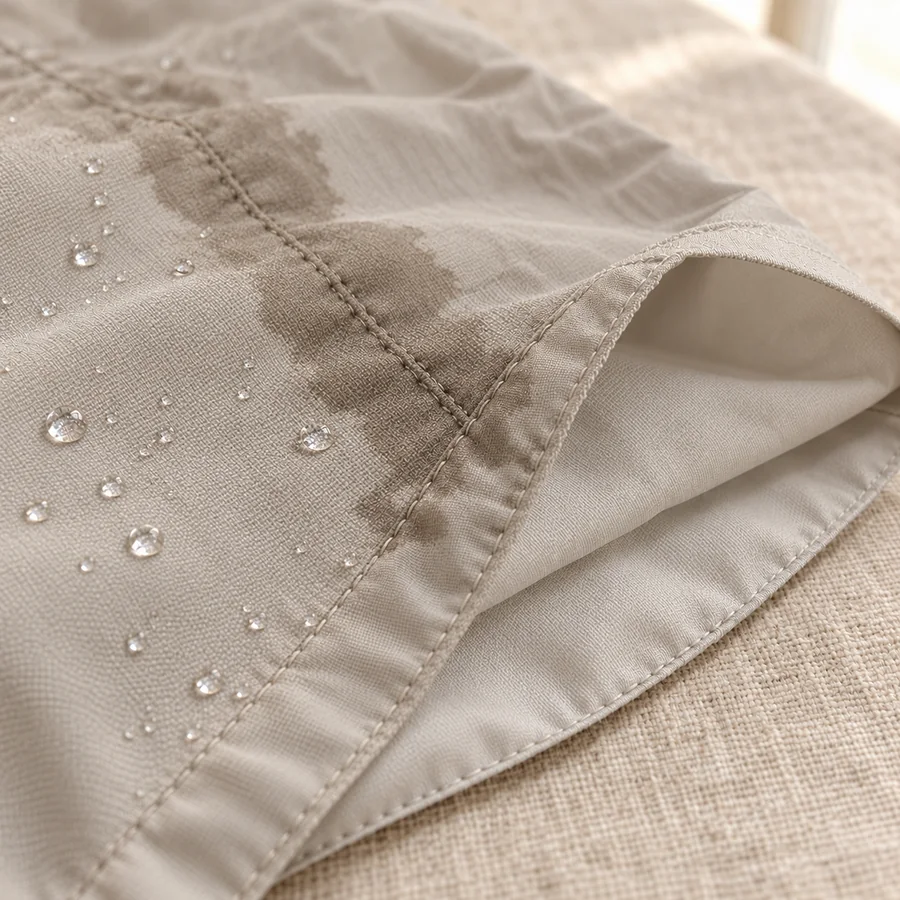
A tightly woven fabric with a finish that makes drizzle bead up and roll off. With no coating or membrane and no taped seams, steady rain or wet grass soaks through the fabric and the stitch holes before long.
What waterproof ratings mean
The number on the label, in millimeters (mm), is how tall a column of water the fabric holds back in a lab test before drops come through. Kneeling and sitting press wet fabric hard against the ground, so rain pants and rain suits need a higher number than a coat for walks.
Move the slider to the number on the label to see what keeps your toddler dry.
Waterproof rating
5,000 mm
A column of water 5 m (16 ft) tall
What does your rain gear's label say?
3,0005,0008,00010,00012,000+
Walking in the rain
Dry on a long rainy walk
3,000 mm is enough for a short shower, and 5,000 mm for a long walk in steady rain.
Kneeling on wet grass
Aim for 8,000 mm or more
Each knee presses the rain pants into the wet grass.
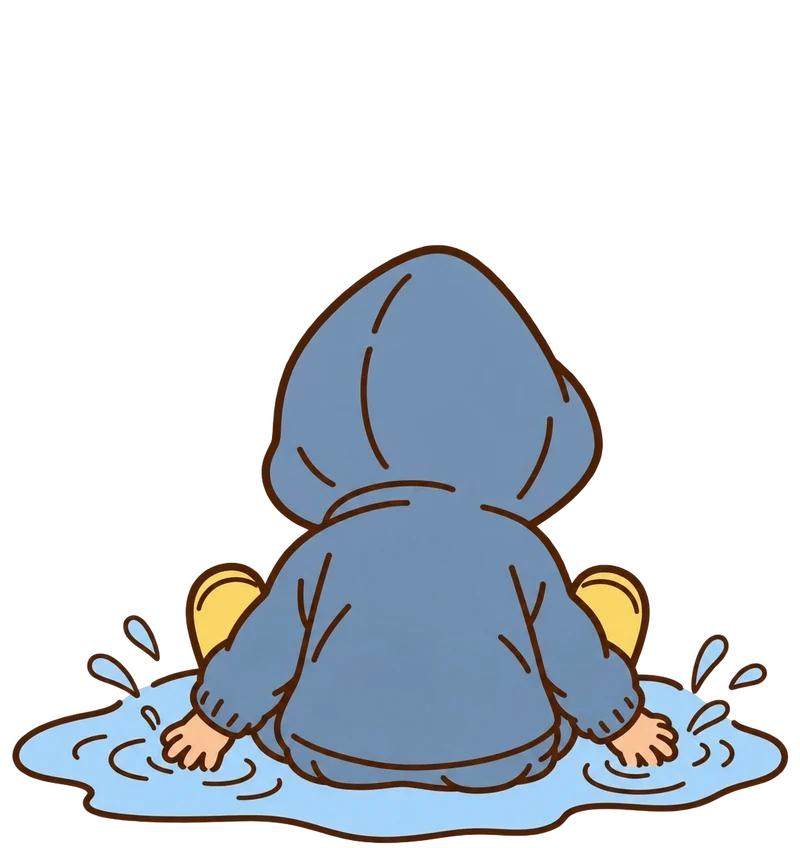
Sitting in a puddle
Aim for 8,000 mm or more
The seat of the rain pants and the hem of the coat sit in the water.
The rating is for the fabric alone, not the seams. Many children's rain sets and rain suits are rated 8,000 mm or more.
Separate raincoat or one-piece rain suit?
Once your toddler is out of the stroller on wet days, you can choose a hip-length raincoat, alone or with waterproof rain pants, or a one-piece hooded rain suit, also called a puddle suit.
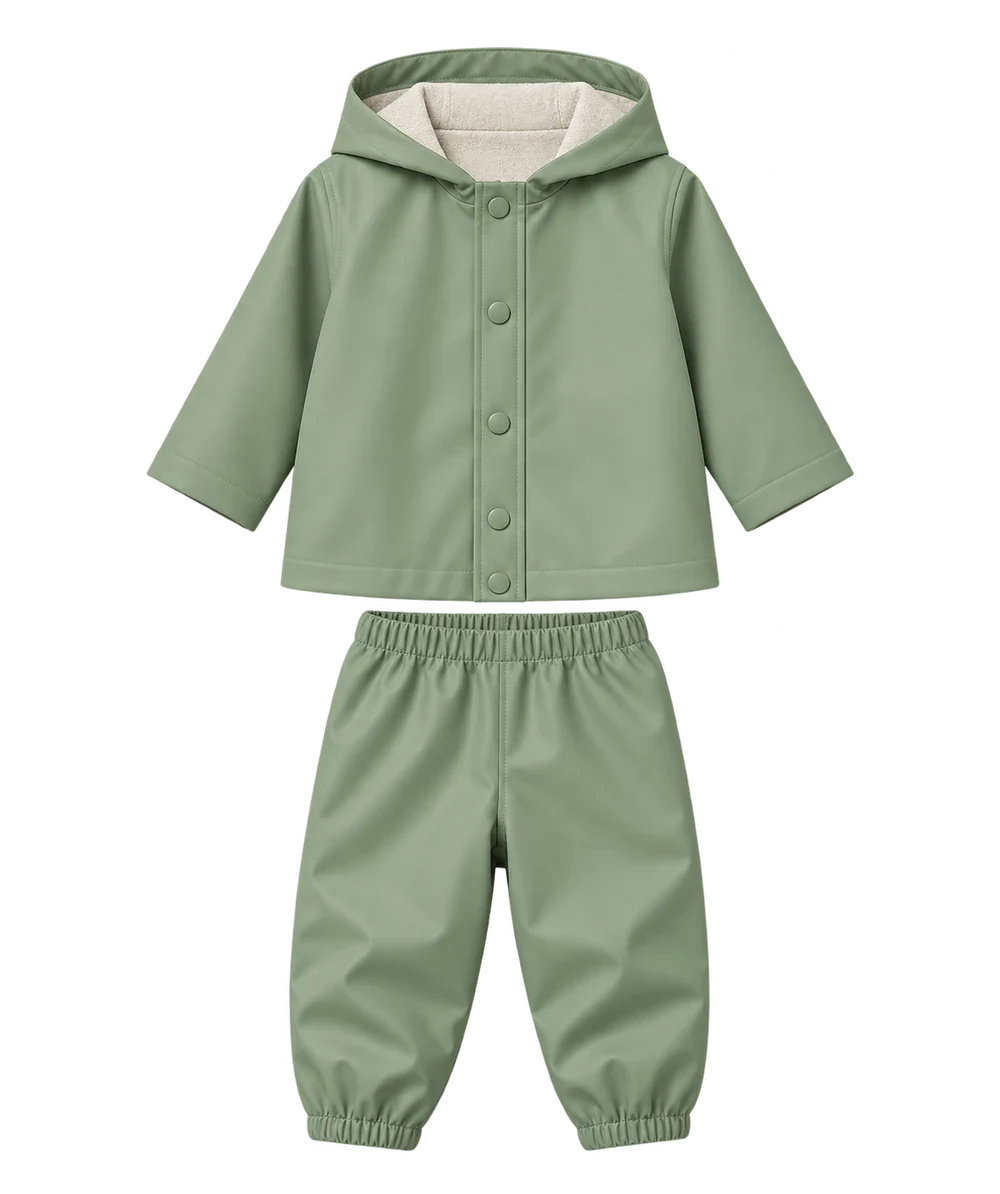
Separate raincoat (or two-piece set)
Best for a toddler who walks steadily, for quick errands, and during potty training. On a damp sidewalk, the coat alone is enough.
Good: Off in seconds in a store or car
Good: Easy diaper and potty stops
Not good: Without bib pants, the waist can gap when sitting in water
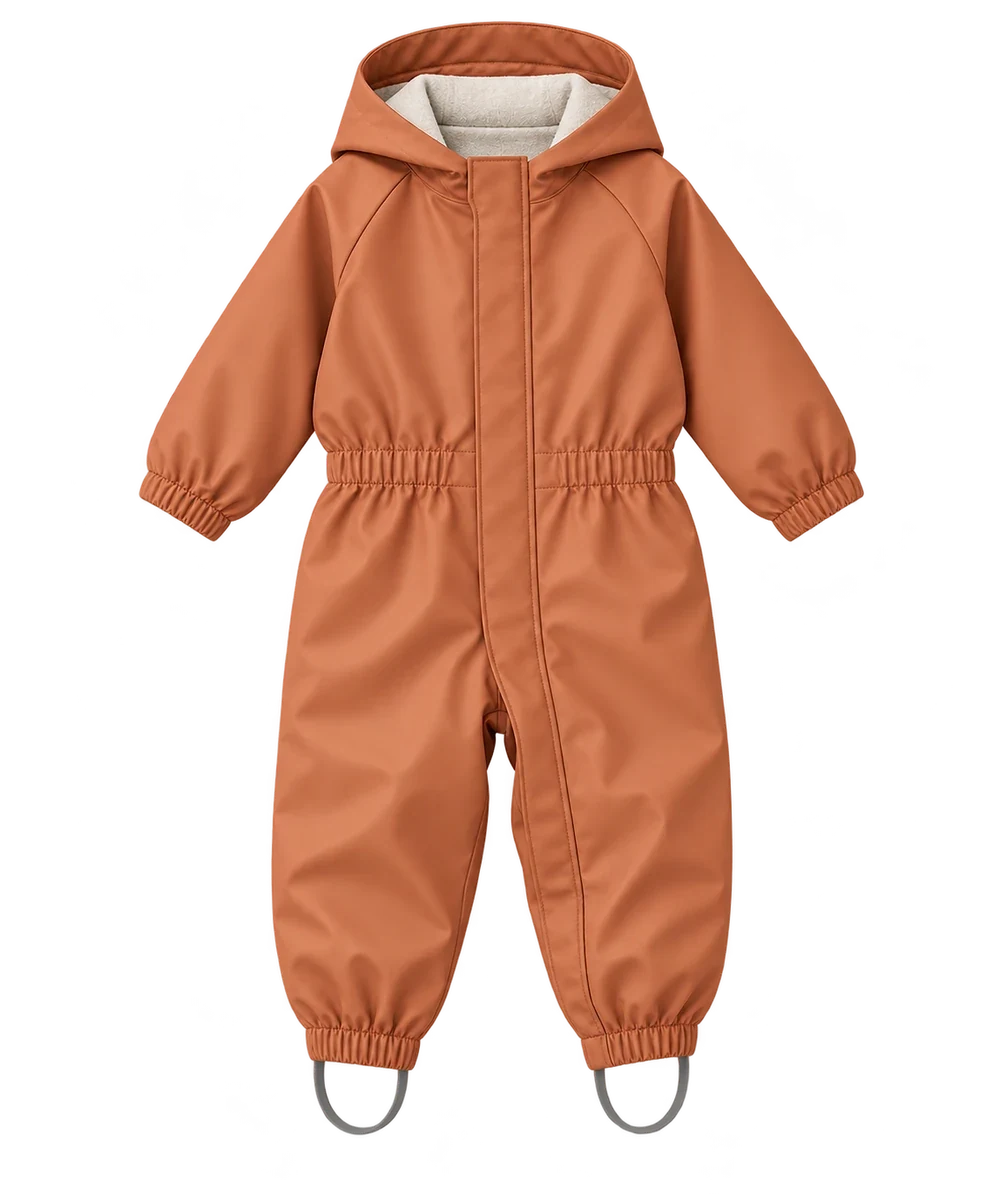
One-piece rain suit
Best for crawlers and puddle sitters, and for wet mornings in the woods or at the playground. It's one piece from neck to ankle, with loops that hook under the rain boots.
Good: Stays dry at the waist in puddles
Good: Legs stay down over the boots
Not good: Whole suit off for the potty
Types of light raincoats
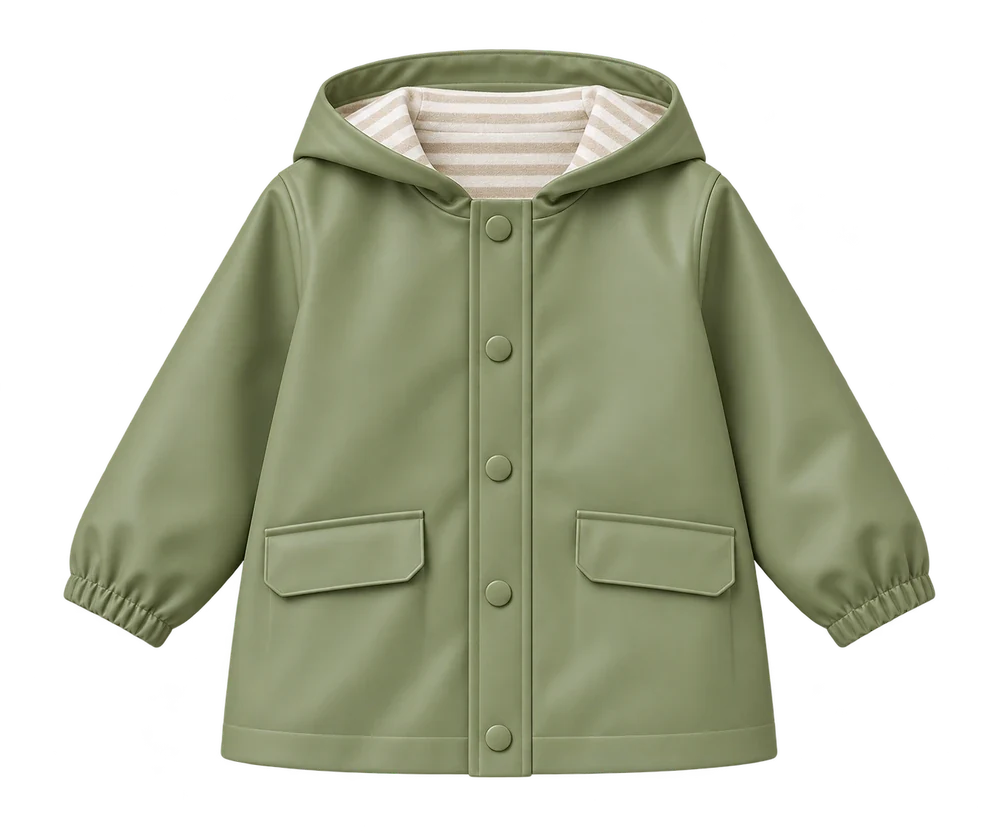
Coated PU rain slicker
Smooth and rubbery outside, with a polyurethane (PU) coating and seams welded shut. The toughest kind for puddles and mud.
Good: No stitch holes for rain to get in
Good: Wipes clean after puddles
Not good: Clothes underneath get clammy in active play
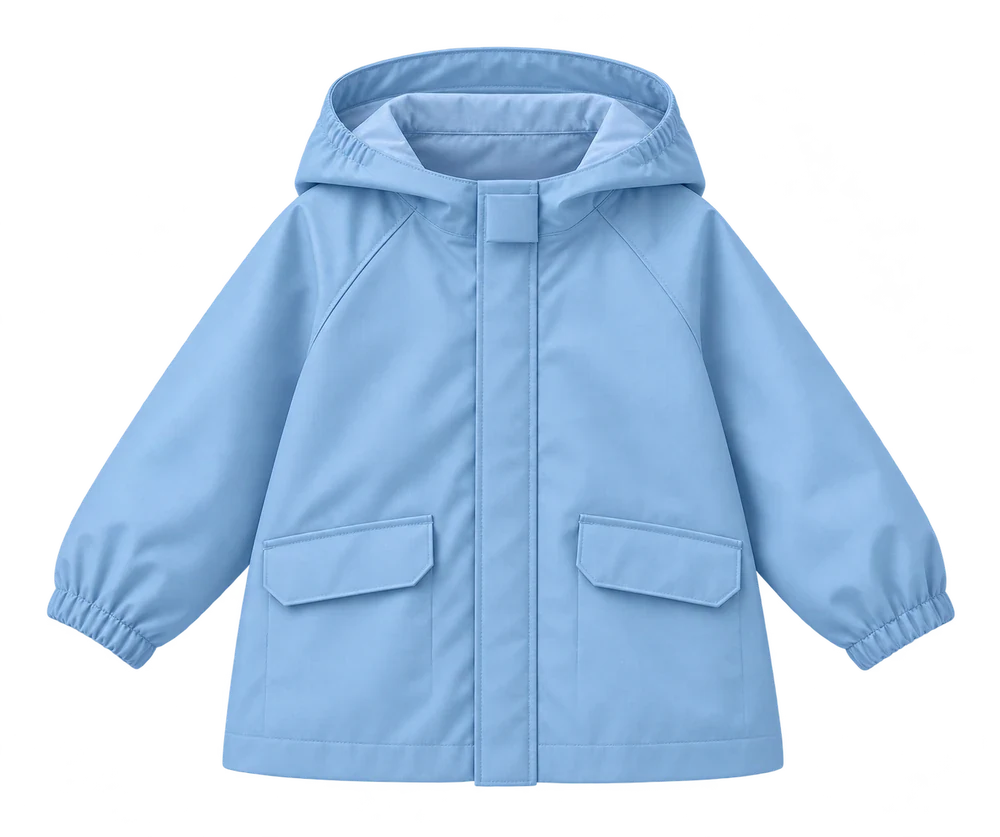
Woven breathable shell
Woven nylon or polyester outside, with a thin waterproof layer inside and taped seams. A good choice for a toddler who runs and climbs.
Good: Lets sweat out when running
Good: Folds small for the bag
Not good: Needs a waterproofing spray now and then
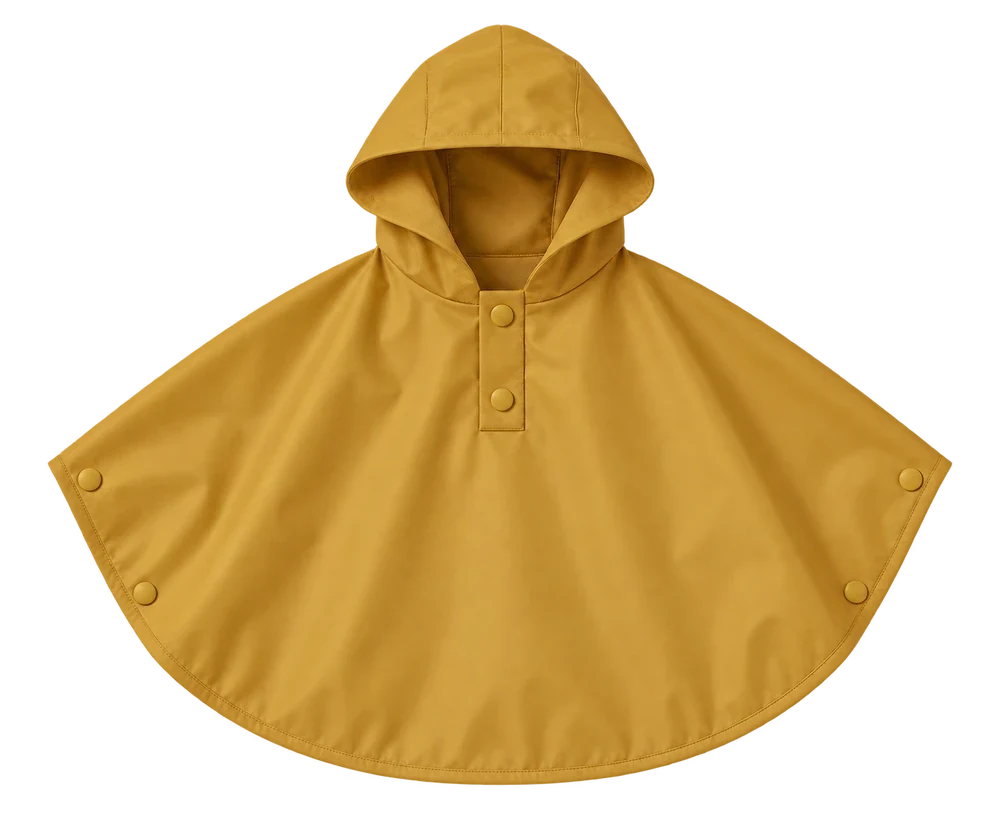
Packable rain poncho
A loose waterproof cape with a hood, and snaps under the arms instead of sleeves. Handy to keep in the bag for a sudden shower.
Good: On in seconds over a sweater
Not good: Hem lifts in the wind
Not good: Splashes get in at the sides
1234
How to choose a light raincoat
Waterproof fabric is only the start. Rain still finds its way in at the seams, the zipper, the neck and the wrists, so check these four places.
1
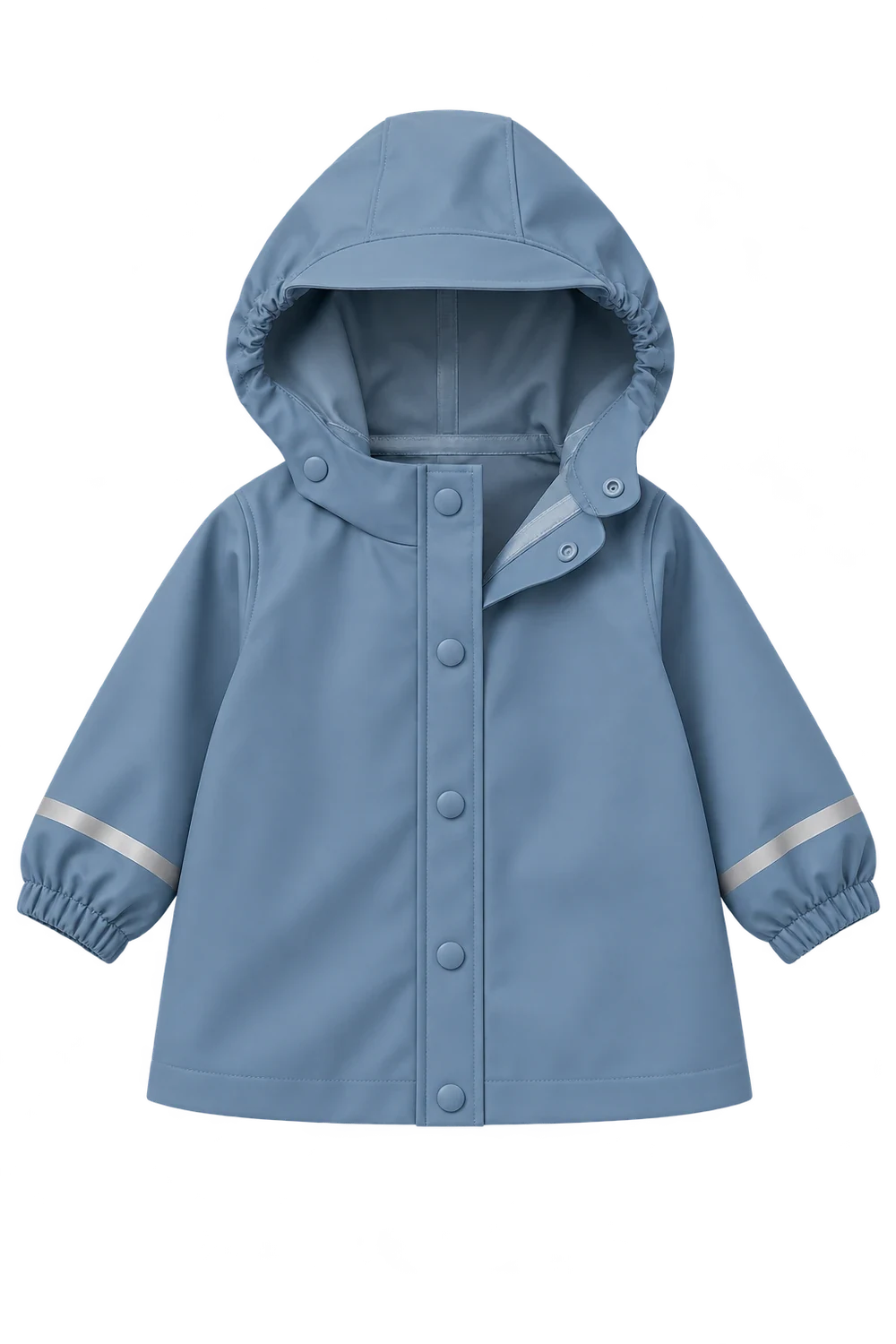
A hood that snaps off, with no cords
A small brim drips rain past the forehead. Snaps or Velcro let the hood come off if it catches on something. In the US, hood and neck drawstrings are banned on children's coats in sizes 2T to 12, because they can catch on a slide or other play equipment.
2
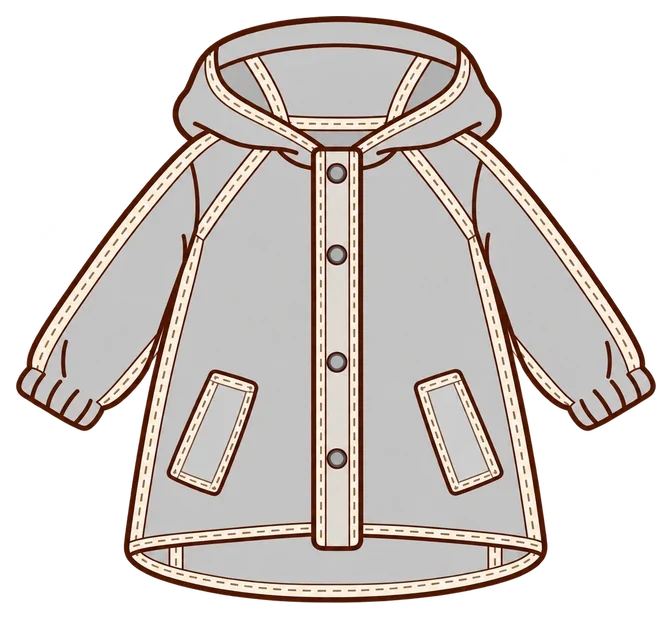
Every seam taped
Turn the coat inside out and look at the seams on the shoulders and sides. Each one should be welded with no thread, or covered with waterproof tape. A label that says "critically taped" means only the seams that take the most rain are sealed, usually at the hood and shoulders, so the others can leak.
3
A flap over the zipper
A flap that snaps over the front zipper keeps the wind from driving rain through it. A soft fold at the top keeps the zipper off the chin.
4
Elastic cuffs and a reflective band
When a toddler reaches up for your hand, rain runs down the sleeve. Elastic cuffs keep it out. A reflective band catches car headlights on gray afternoons.
What to wear under it, and in a carrier
Choose a coat with a little room at the arms and shoulders, so a long-sleeve bodysuit and a fleece fit comfortably underneath. In a warm summer shower, a short-sleeve bodysuit is enough. Light pants or rain pants go below. If you buy a size up so it lasts, elastic cuffs keep the long sleeves off the hands. Outfits for every temperature are in the guides to rainy days and changeable weather.
Skip a cotton hoodie underneath. If its hood, a cuff or the hem pokes out and gets wet, the cotton draws the water inside.
Over a fleece on a cool, wet day, and open a little at the neck, so a busy toddler doesn't get sweaty.
How to wash, dry, and re-proof a raincoat
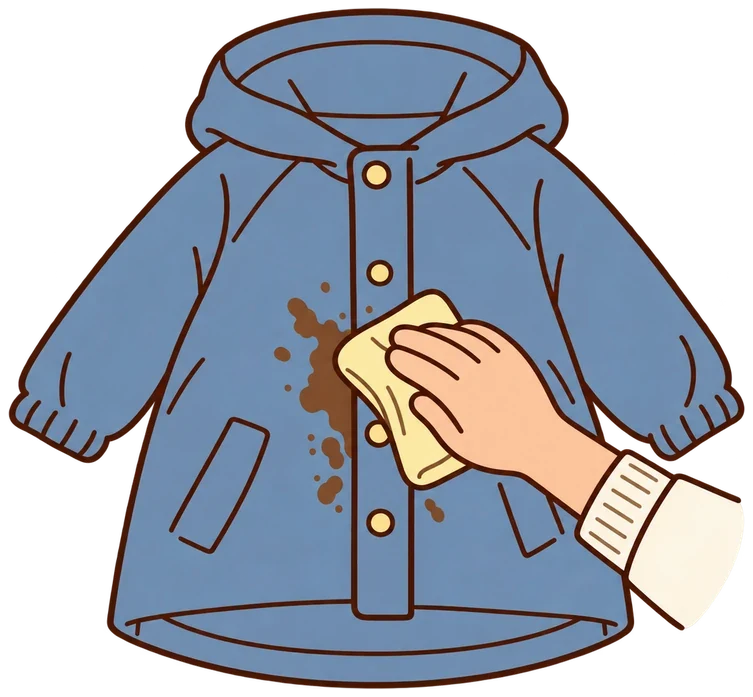
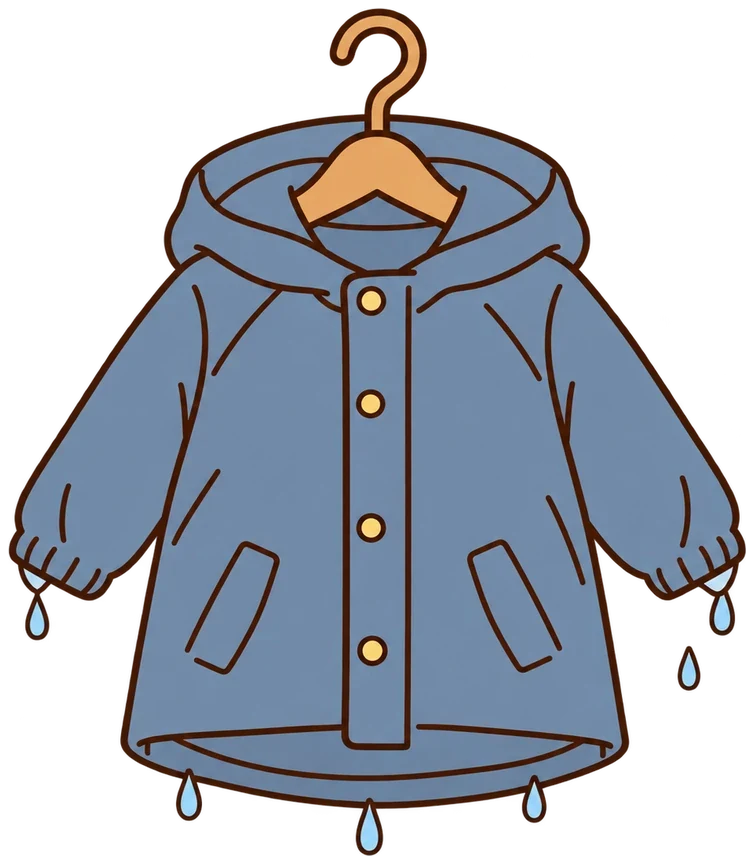
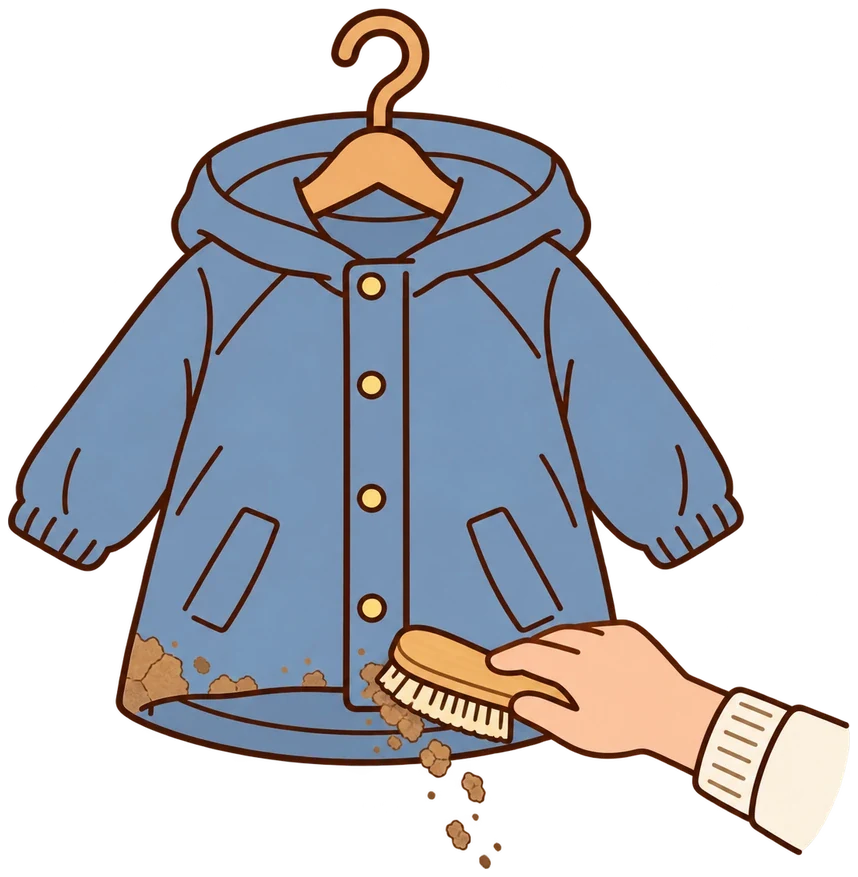
A raincoat needs a wash far less often than the clothes under it. Too many washes wear down the finish that makes rain bead up, so it goes in the machine only when it is really dirty. The rest of the time, a damp cloth, a hanger and a brush do the job.
After most outings, Wipe it with a damp cloth
After puddle play, Let it dry, then brush it
1
Hang it up to dry, away from the radiator.
2
Once it is dry, brush off the mud. Whatever the brush misses comes off with a damp cloth.
Between outings, keep rainwear on a hanger too, so the coating does not crease or peel.
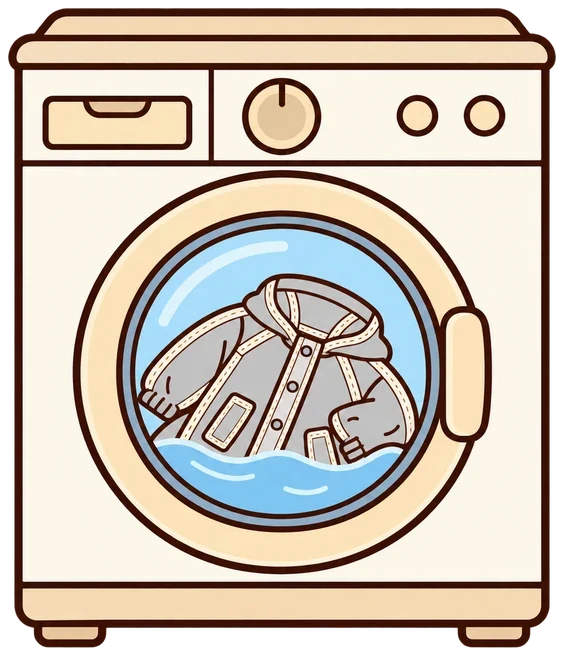
When it is really dirty, Wash it gently
1
Close the zipper and the snaps.
2
Turn it inside out.
3
Choose a gentle cycle at the temperature on the label.
4
Use a little mild liquid detergent, or a wash made for outdoor gear.
Not good: Never use these
All three leave a film that makes the outer fabric soak up water.
Fabric softener
Scent boosters
Dryer sheets
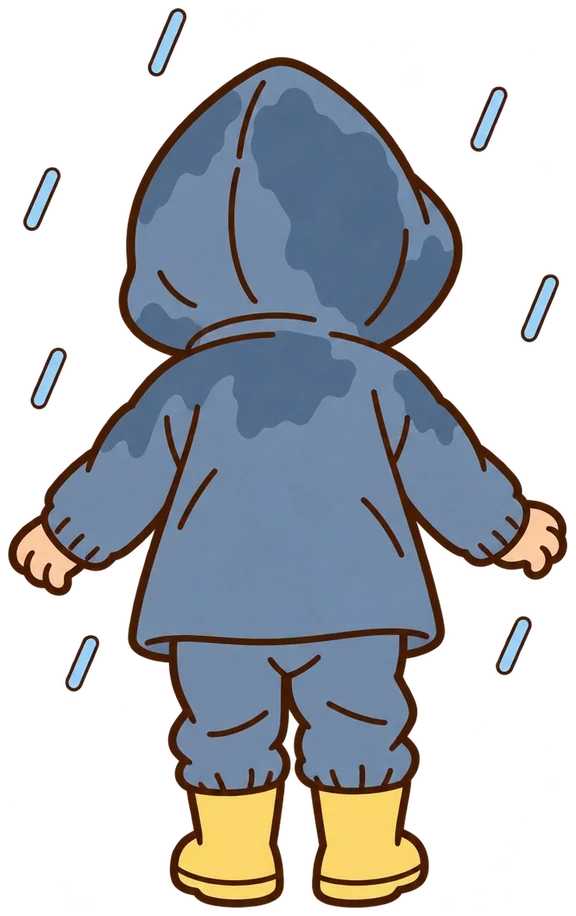
If it looks dark and soaked in the rain, It is usually not leaking
On a breathable coat, the outer finish is dirty or worn, so the fabric soaks up water. The waterproof layer inside still keeps it out. A wash, then a short tumble dry on low if the label allows, often brings the finish back.
Good: Breathable shell: a short tumble dry on low
Not good: Rubbery PU slicker: never in the dryer
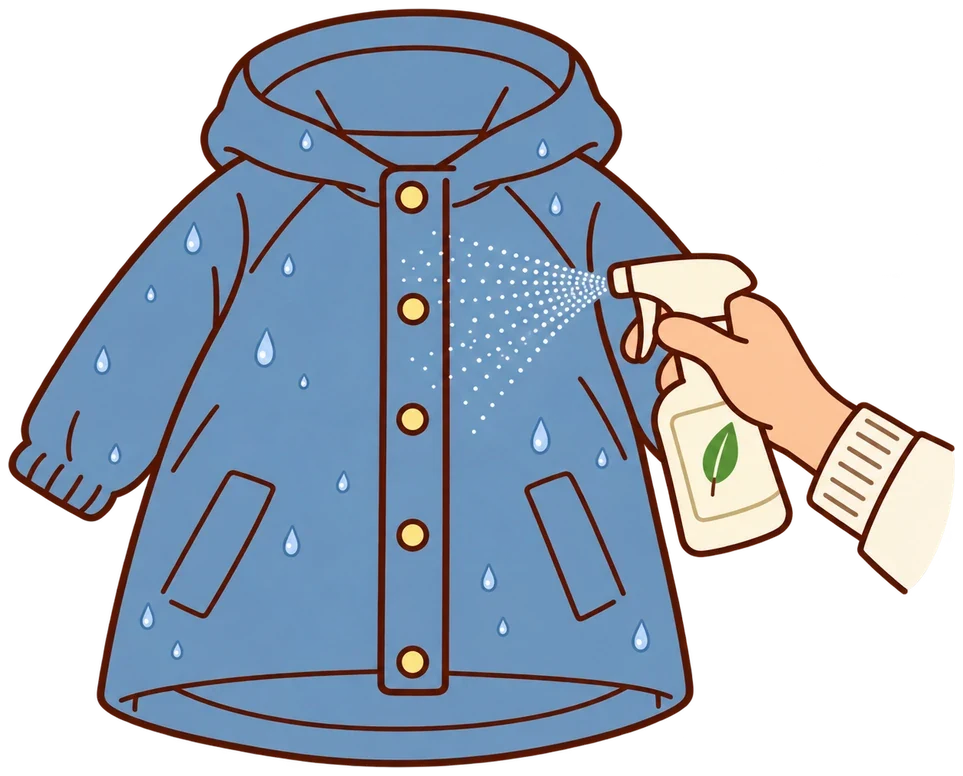
If water stops beading, Spray it after a wash
If water still doesn't bead on a clean breathable coat, use a PFAS-free waterproofing spray for outdoor clothes. Many go on while the fabric is still damp.
Questions parents ask
Can my toddler wear a raincoat in the car seat?
Yes, if it's thin and unlined and the straps still fit snugly. Buckle your toddler in, tighten the straps, then try to pinch a fold of strap at the collarbone: if you can't, the fit is right. If the coat is soaked, take it off, so your toddler doesn't ride in cold, wet clothes, and lay a dry light car blanket over the buckled straps. A lined warm raincoat comes off before you buckle your toddler in.
Why do my toddler's clothes feel damp inside a rubberized rain slicker?
A rubbery coating keeps the sweat in as well as the rain out. When a toddler runs or climbs in mild, damp weather, sweat condenses on the cool inside of the coat and dampens the sleeves underneath. For busy play above 12°C (54°F), a woven breathable shell is more comfortable. Or open the neck a little.
Is a fleece-lined raincoat better than an unlined shell over a separate fleece?
For most of the year, the unlined coat over a separate thin fleece does more: it dries faster and also works in warm summer showers. A lined warm raincoat is quicker on cold, wet mornings, because there's one less layer to put on before daycare.
Are shiny baby raincoats made with PVC, and what should I look for?
Some still are. Look for a polyurethane (PU) coating on the label, not PVC or vinyl. PVC often smells strongly of plastic and stiffens or cracks in the cold, but the label is the only sure way to tell. Also look for "PFAS-free". It means the finish that makes rain bead up is made without the "forever chemicals", which break down very slowly.