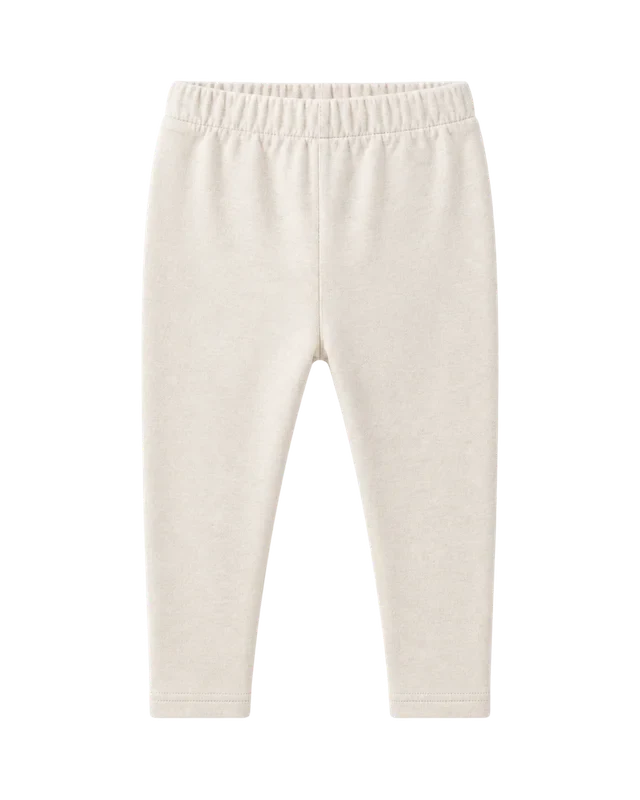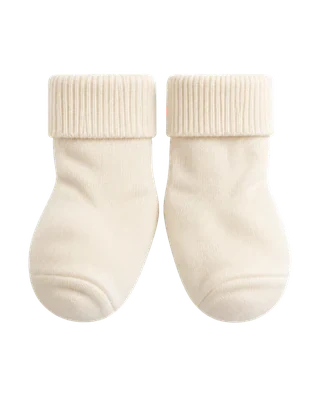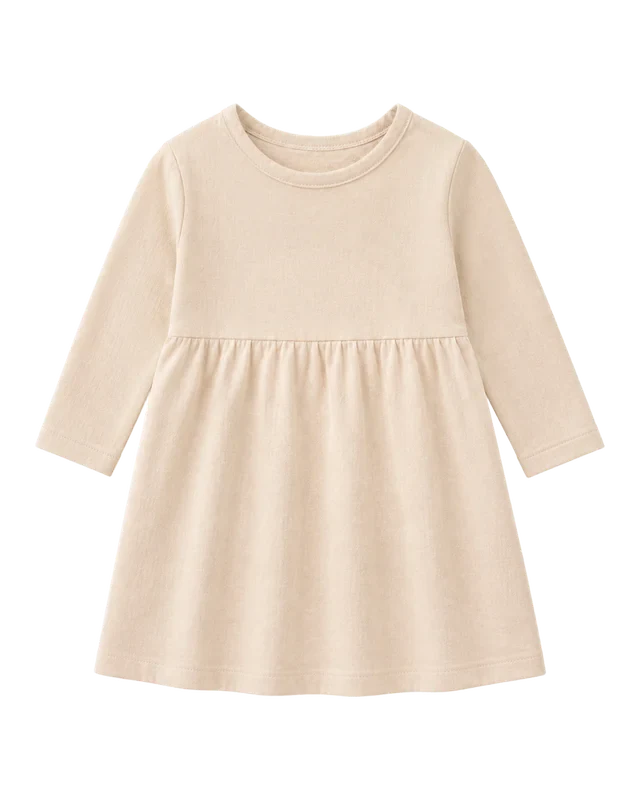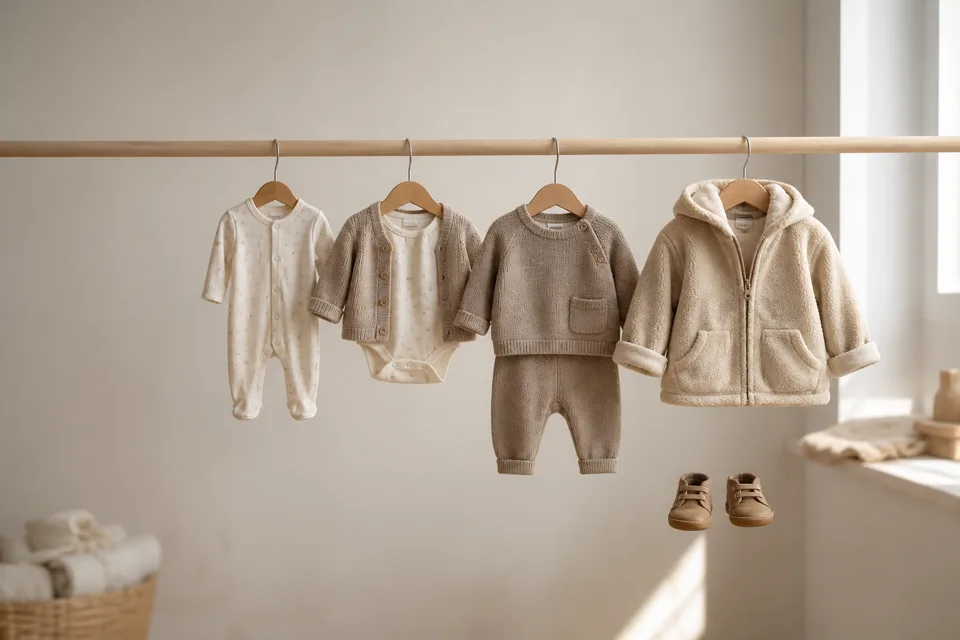
Cotton tights are knitted pants with feet. They pull up over the diaper to the waist.
They go under a short-sleeve dress, a long-sleeve dress or a romper on cool or mild days. In winter they are a warm layer under pants, and they stay on when socks will not.
You can skip them in the first weeks, when a one-piece sleepsuit is quicker to change, and on warm days, when bare legs are cooler.
- For ages0–3years
- You'll need3–4pairs per size
- Wear them below24°C75°F
Tights, or leggings and socks?
Both cover the legs and feet. The choice comes down to socks that get kicked off, or slower diaper changes.
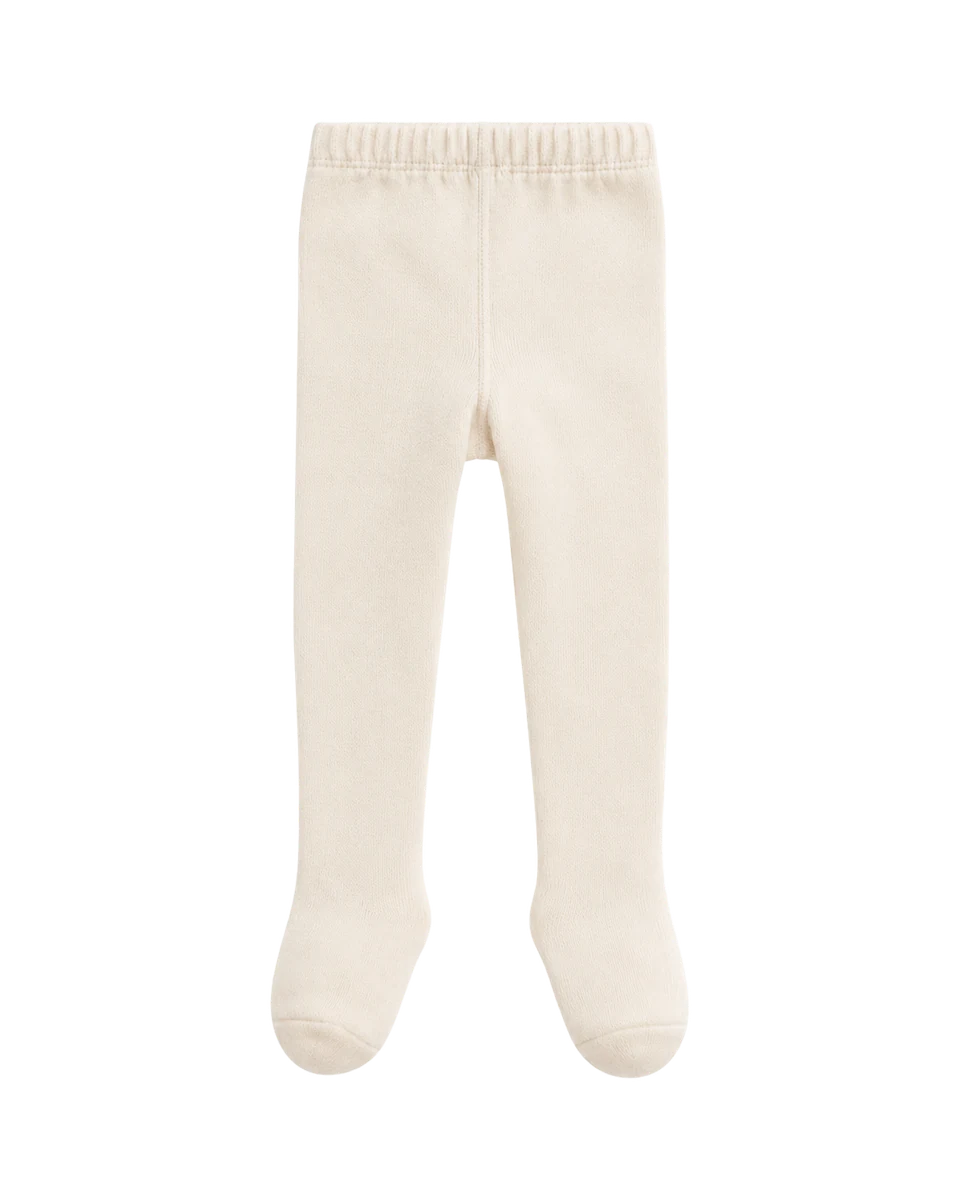
Cotton tights
Best for a baby who pulls off every sock, and for walks in the stroller or the carrier.
- Good: No socks to kick off
- Good: No gap at the ankle
- Not good: Slower diaper changes
- Not good: Whole pair off after a leak
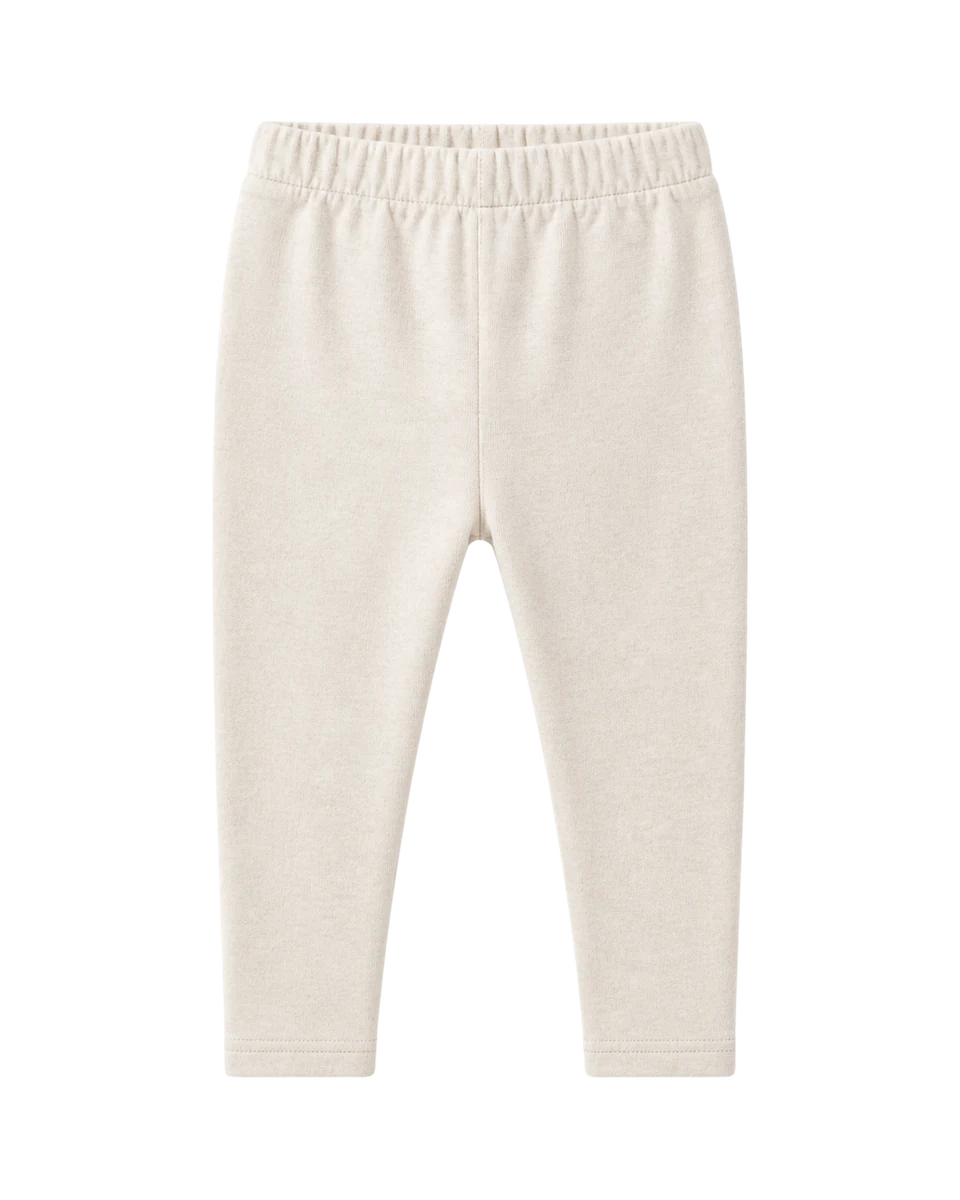
Leggings and socks
Best for a baby who is learning to stand, because bare feet grip the floor, and for days full of diaper changes.
- Good: Quick diaper changes
- Good: Swap wet socks, keep the pants
- Not good: Socks get kicked off
- Not good: Gap when the legs ride up
Types of baby tights
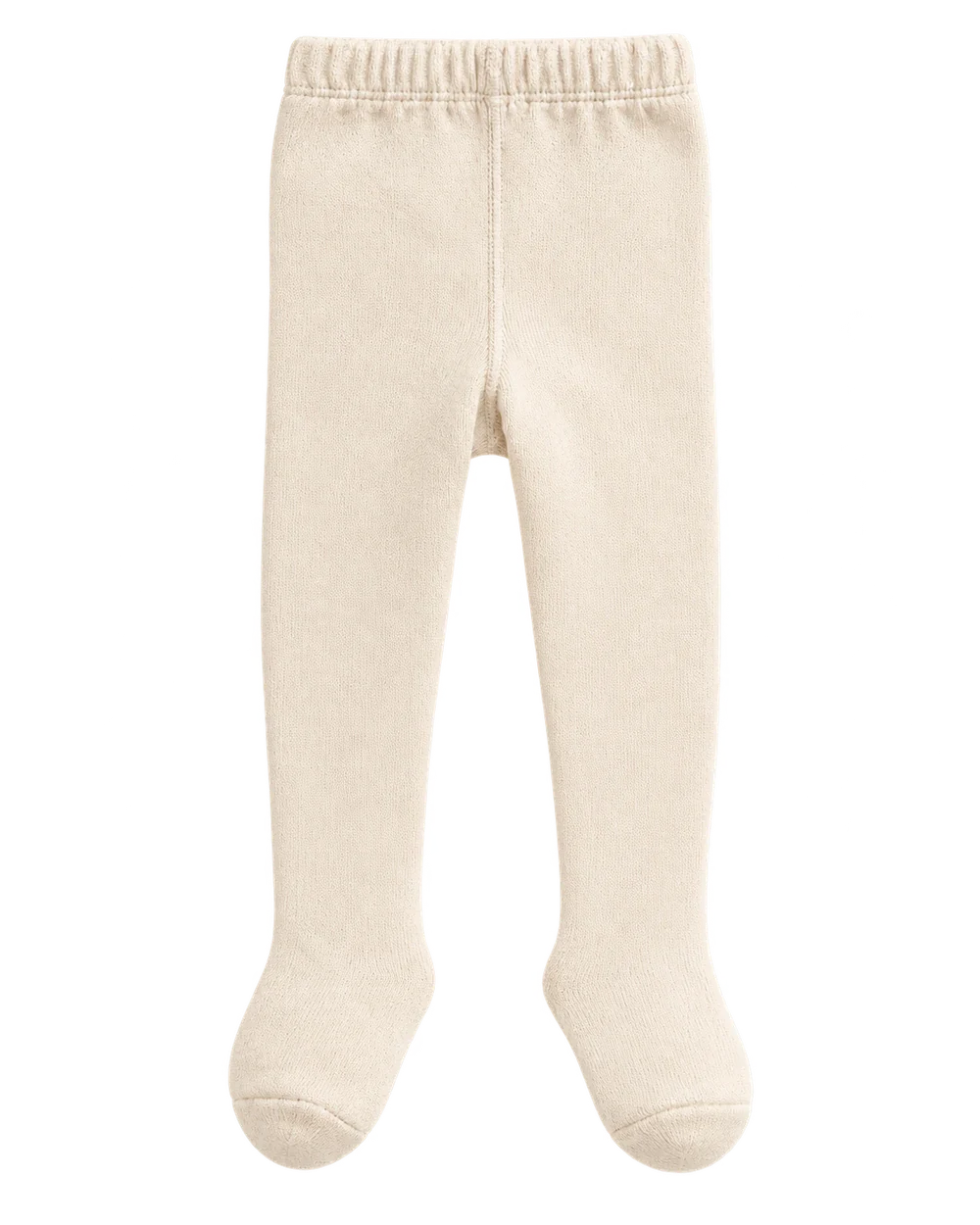
Everyday rib or smooth cotton
Fine ribs (rib knit) or smooth T-shirt knit. Both stretch over round thighs and lie flat under a dress, a romper or pants. The label usually reads 75 to 80 percent cotton, with a little nylon for strength and 2 to 4 percent elastane (spandex), so the knees spring back and the tights stay up.
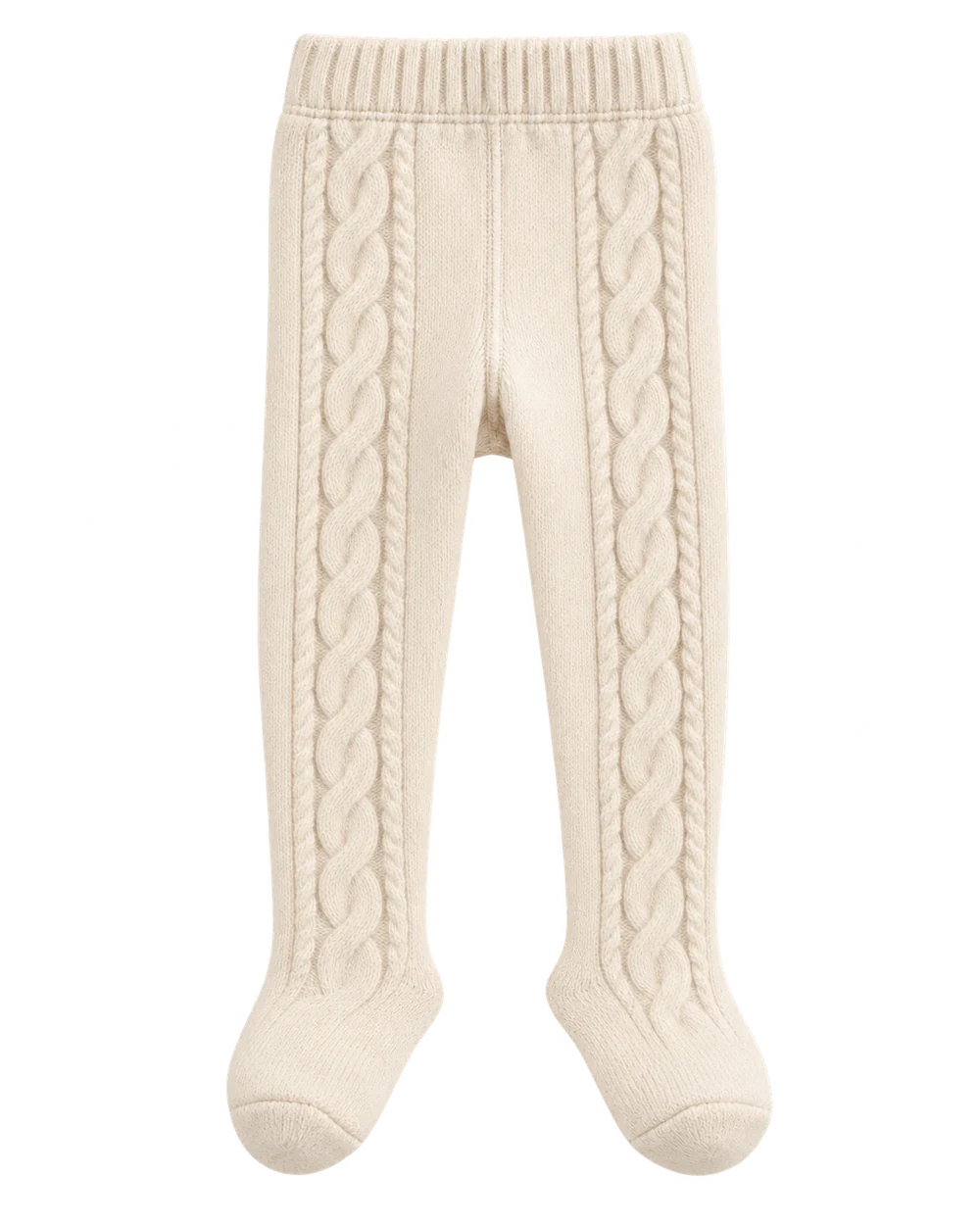
Cable-knit or merino wool
Thick cotton cable knit (raised braided columns) or a fine merino wool blend, for autumn and winter walks. Merino wool stays warm without bulk.
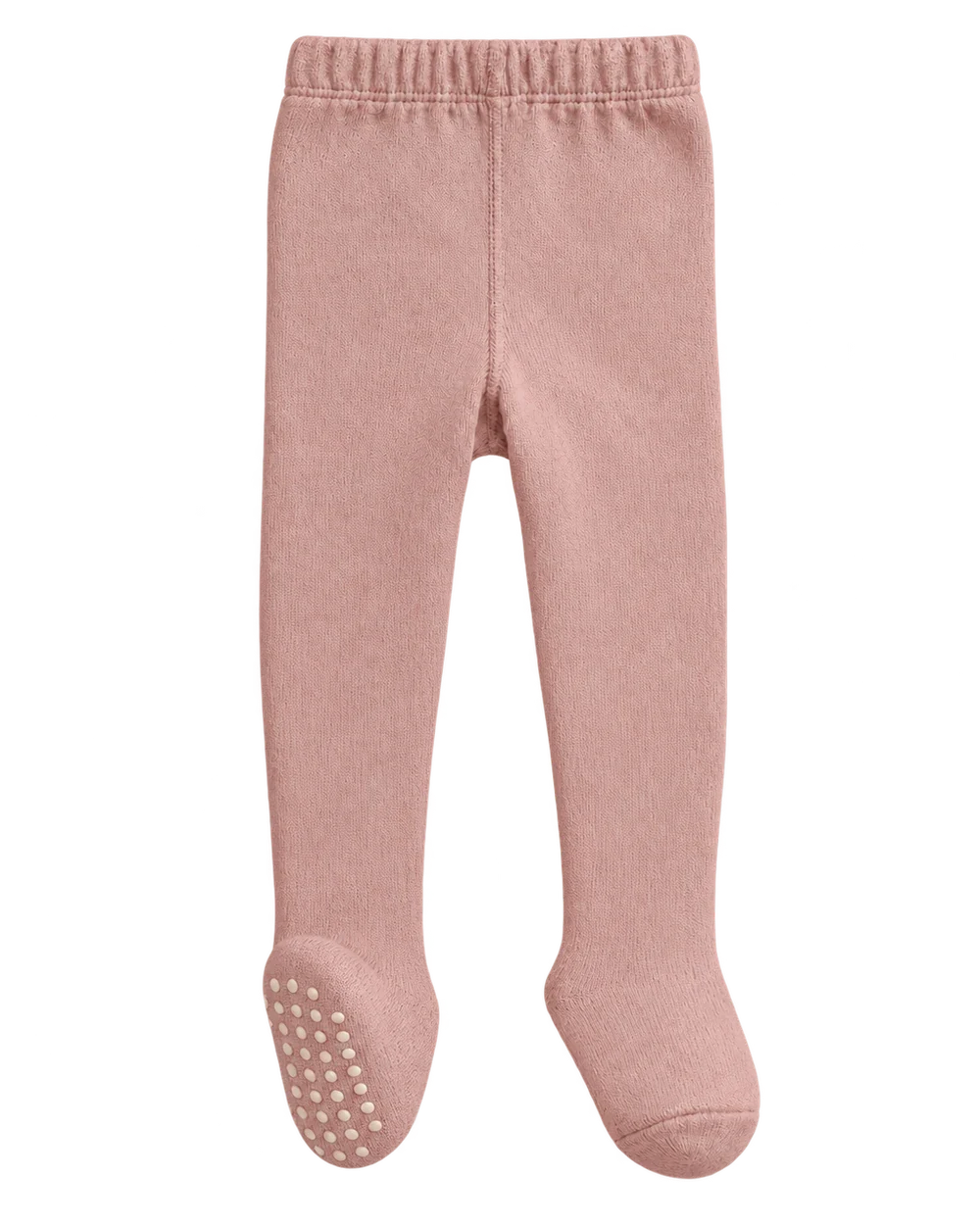
Grip-sole tights for standing and walking
Everyday cotton tights with small silicone or rubber dots under the soles, and sometimes on the knees, for crawling. The dots stop the feet sliding on wood or tile floors when your baby pulls up to stand.
How to choose tights
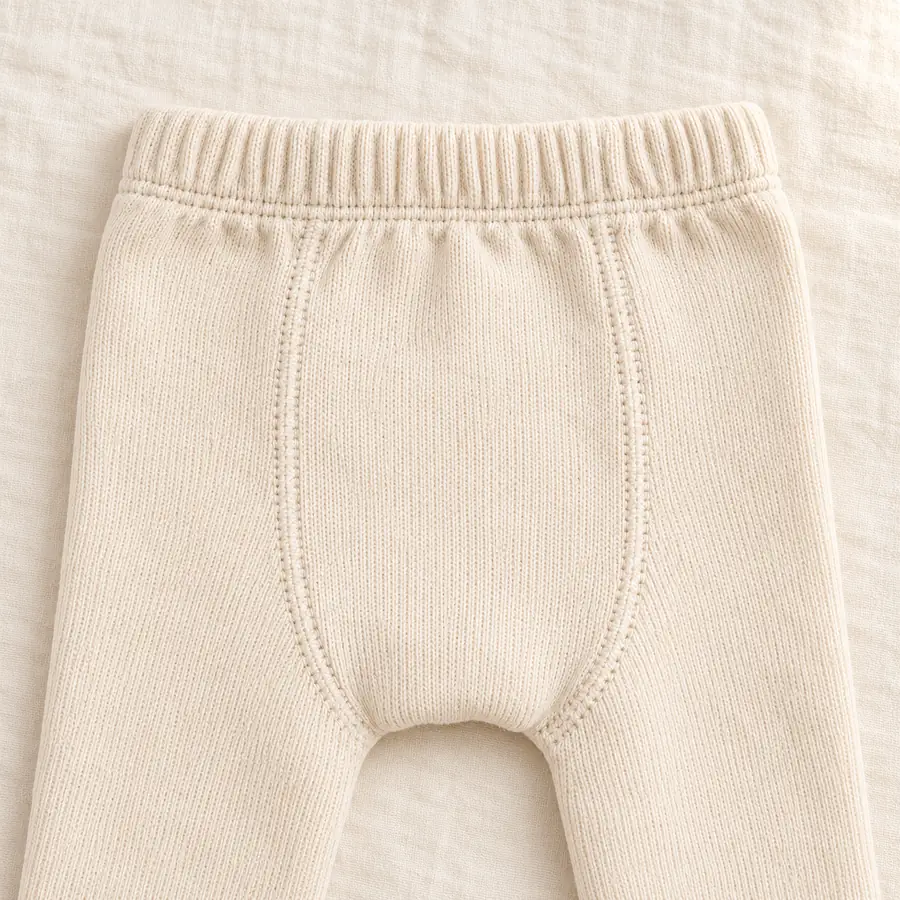
1. A wide waistband and back gusset
A wide band spreads the hold over the tummy. At the back, baby tights need a diaper gusset (an extra U-shaped panel), so the diaper has room and does not drag the waist down.
- Good: Wide ribbed band that lies flat
- Good: Two curved seams at the back
- Not good: Red marks at the waist
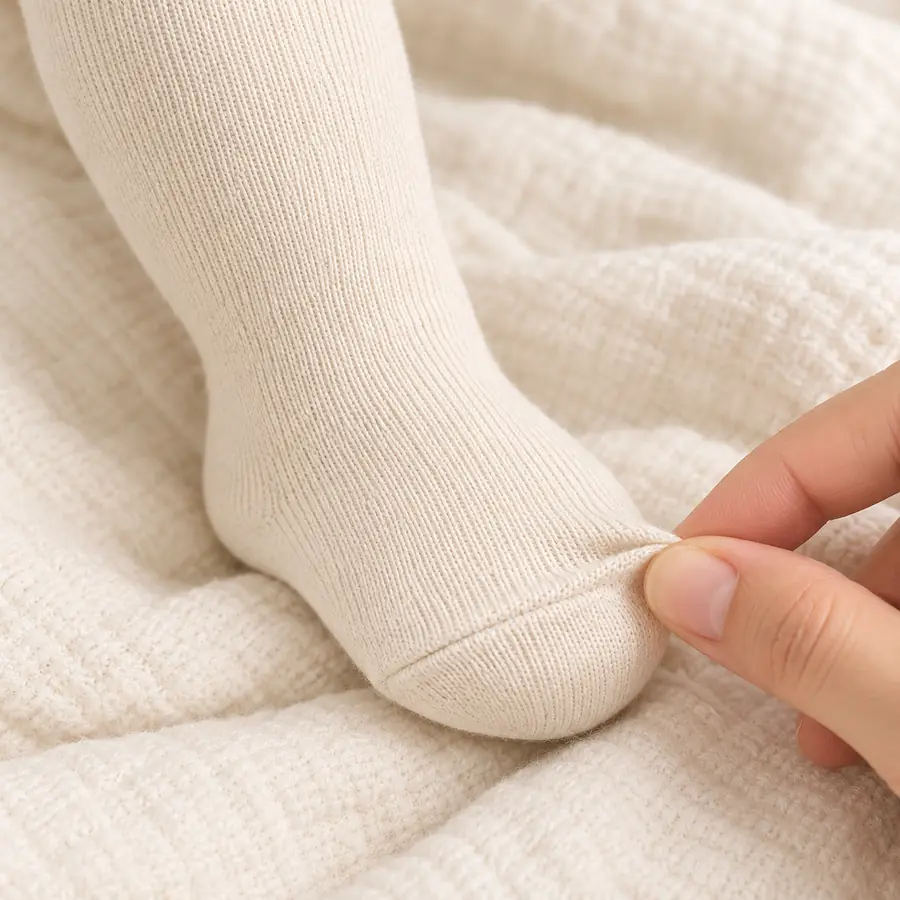
2. Wiggle room at the toes
A baby's toe bones are still soft cartilage, and tight socks or tights keep the toes from lying straight. Once they are on, pinch the tip of each foot. Tights that are too short pull tight over the toes and let the crotch hang below the diaper. Then go up a size.
- Good: Spare fabric at the toe tip
- Good: Crotch sits snug at the diaper
- Not good: Tip pulled tight over the toes
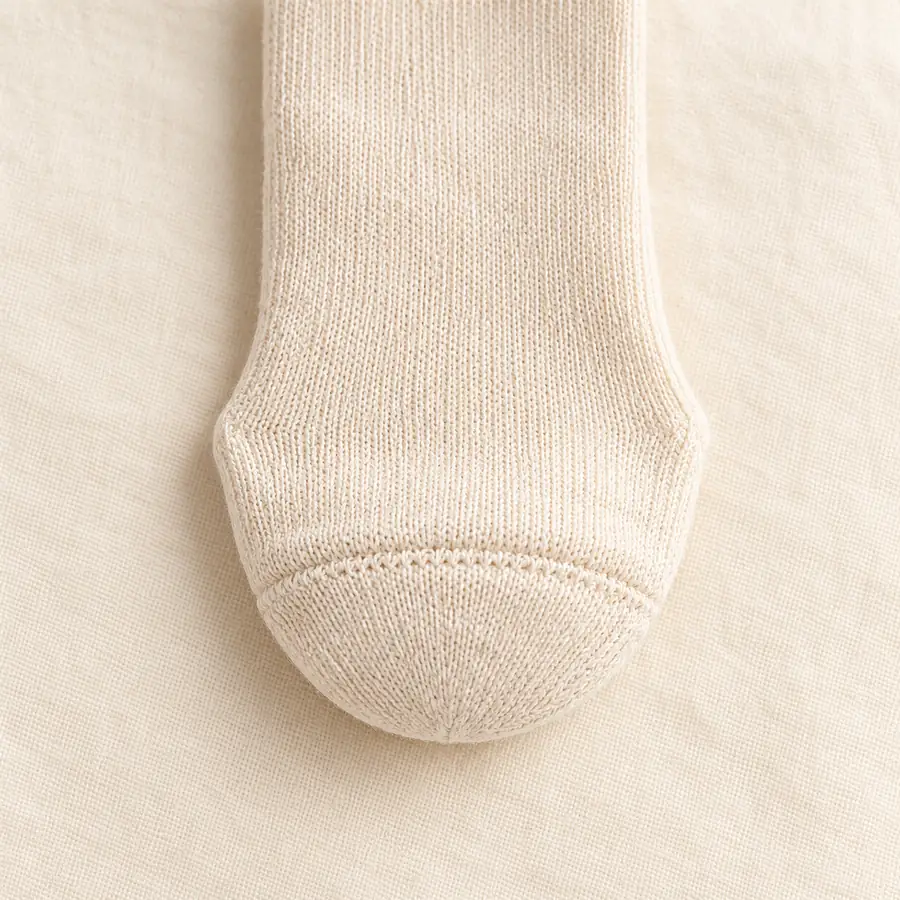
3. Smooth inside seams
Turn new tights inside out before the first wear. Snip loose threads inside the foot, and pull out any hair after a wash, so nothing can wrap around a kicking toe.
- Good: Flat seam across the toes
- Not good: Bulky ridge at the toe seam
- Not good: Loose thread ends in the foot
How to put tights on a baby
Pushing a kicking baby foot down a long, narrow fabric tube frustrates everyone. Gathering one leg at a time like a sock makes it quick.
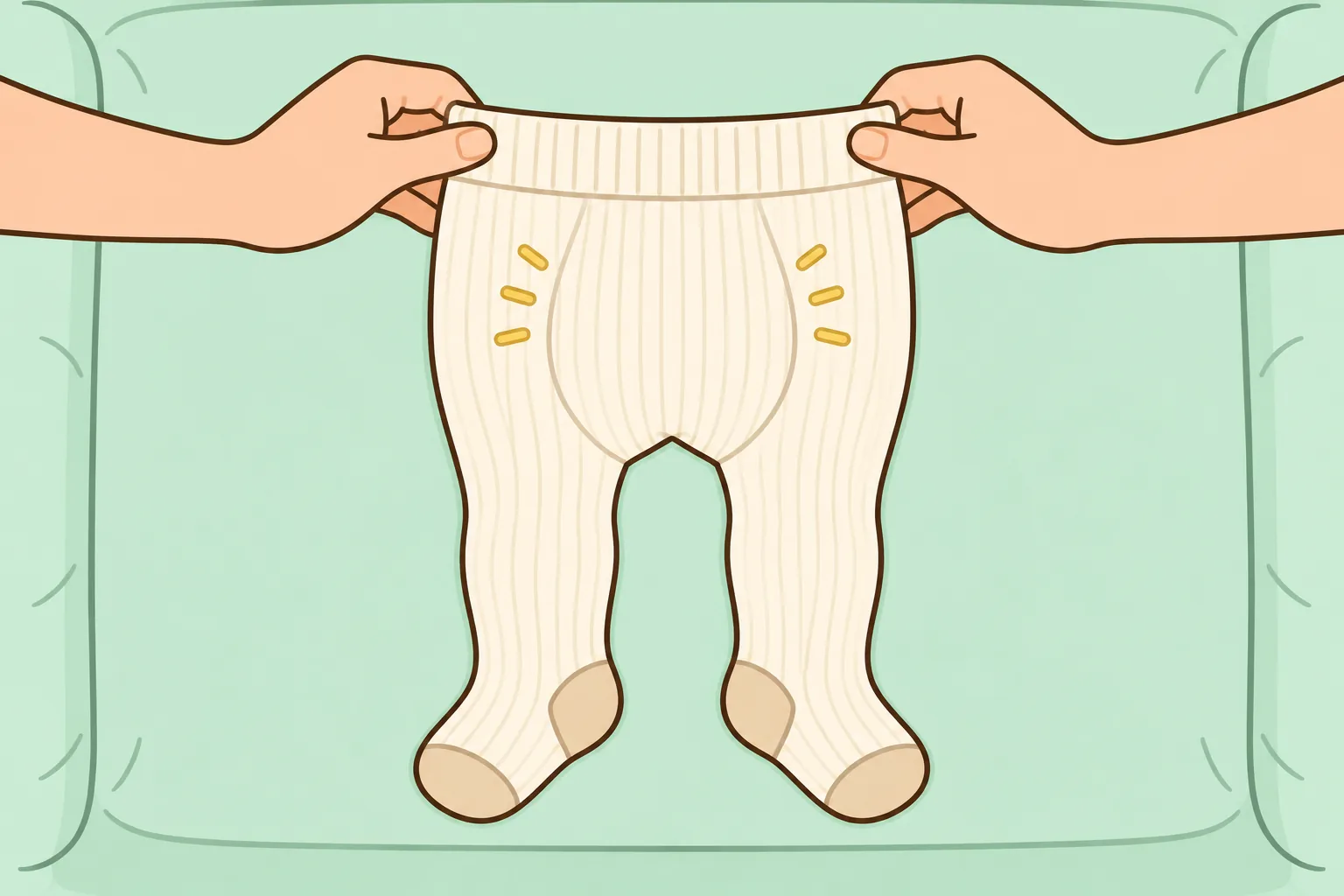
1. Check the back seams first
Hold the waistband open and find the two curved back seams so the roomy diaper side goes at the back.
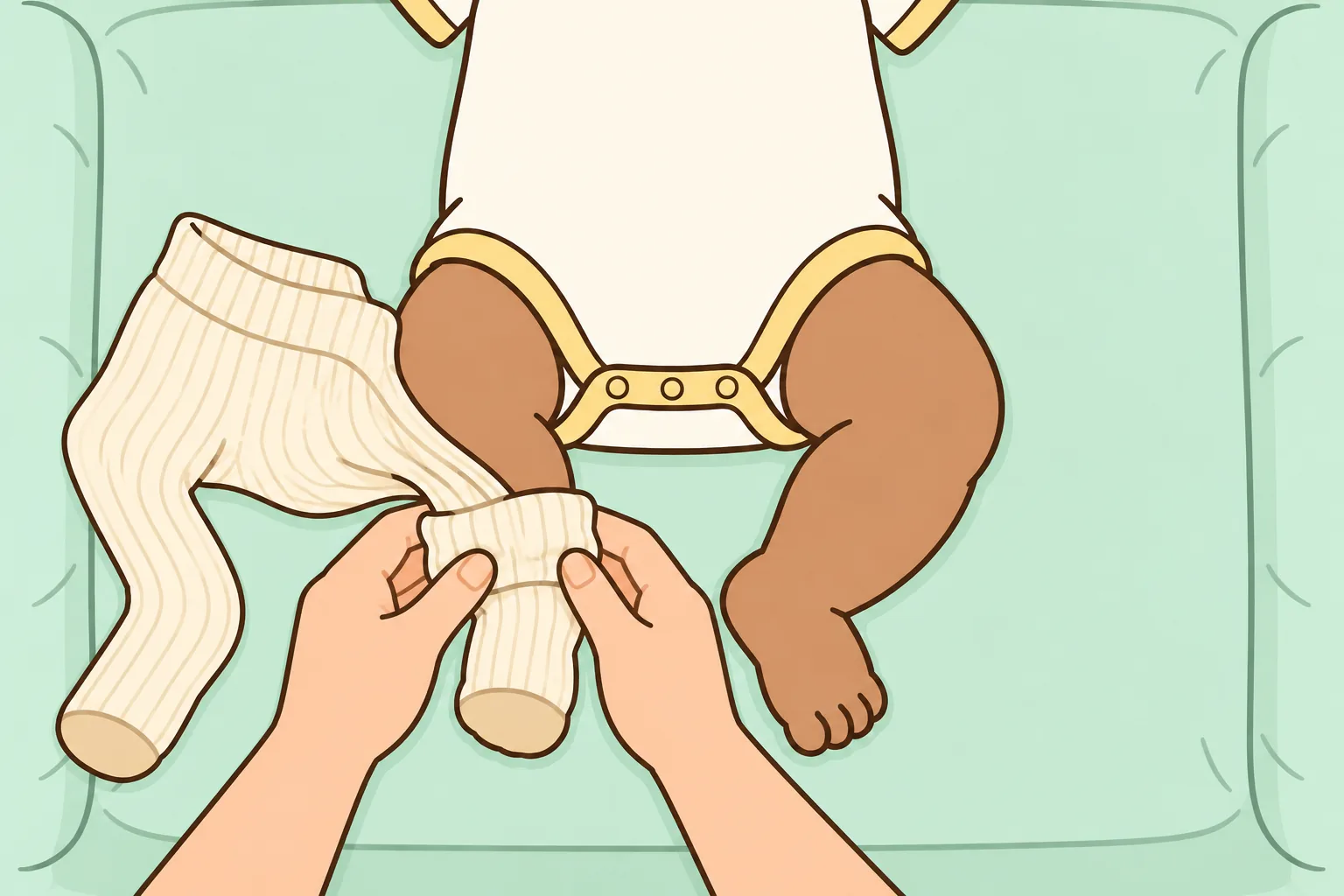
2. Scrunch one leg up like a sock
Gather one entire leg of the tights into your hands with your thumbs inside until you reach the toe pocket. Slip the pocket over your baby's toes and heel first, then unroll the knit smoothly up the calf to the knee. Repeat on the second leg.
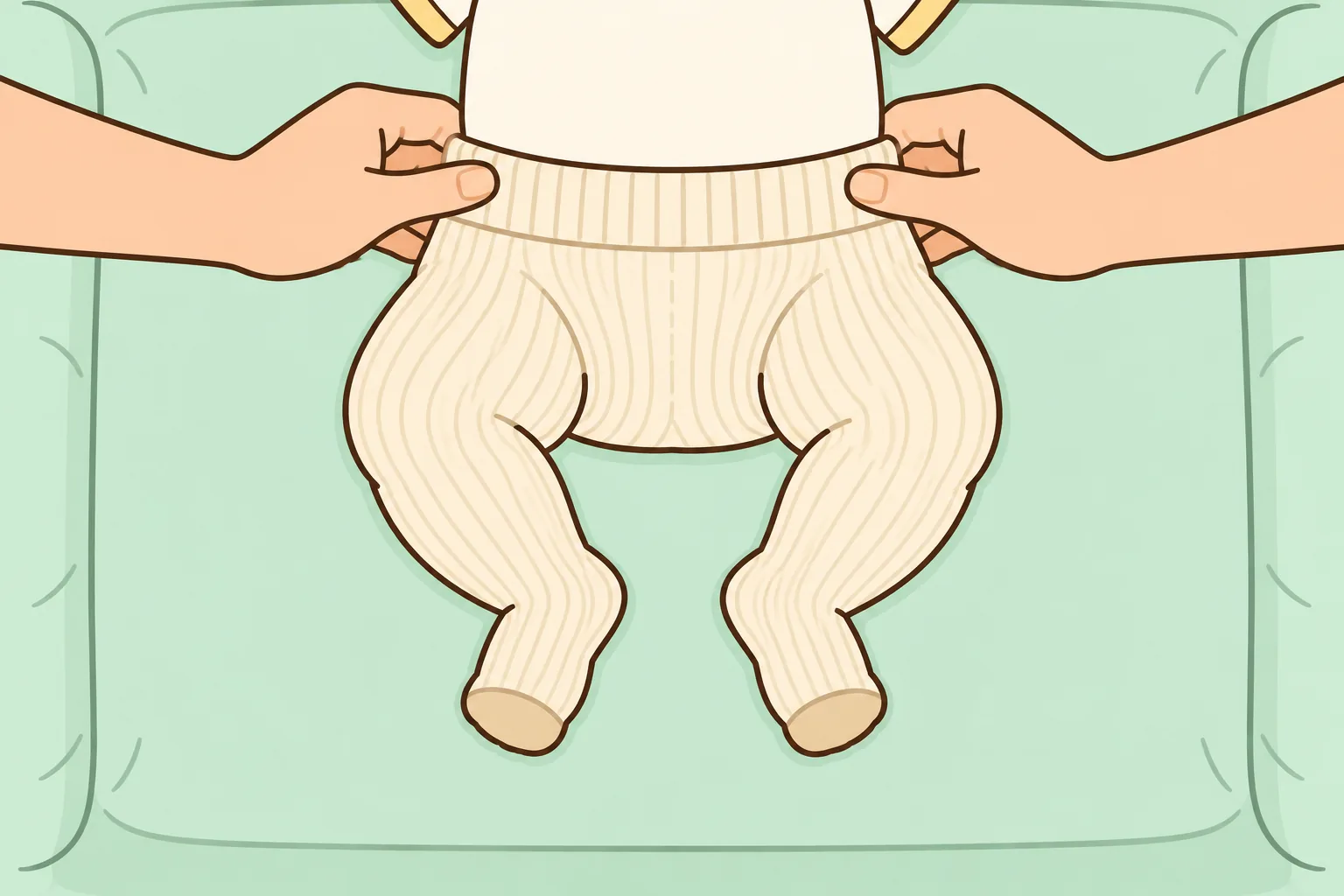
3. Ease the waist over the diaper
Gently lift your baby's hips and pull the seat all the way up over the diaper so no slack remains at the crotch, then smooth the waistband over the tummy.
Questions parents ask
Do baby tights go over or under a bodysuit?
Both work. Over the short-sleeve bodysuit (a onesie in the US, a vest in the UK) is the everyday way: at a change, you slide the tights down and unsnap the bodysuit. Under it, the bodysuit snaps over the tights and stops the waistband rolling down on a crawling baby.
Which way round do baby tights go?
One seam goes at the front, and two seams go at the back. The two back seams frame the wider panel for the diaper (the gusset).
Can a newborn wear tights?
Can babies wear shoes over tights?
Yes, once your baby walks outdoors. Smooth the toe of the tights first, so nothing bunches inside the first shoes or booties. Indoors, bare feet or grip-sole tights are better, so the toes can spread and grip.
Can babies wear tights in summer?
Yes, on a cool morning, a breezy beach walk or in strong air conditioning, under a light dress. From 24°C (75°F) outside, take them off so the legs can lose heat. The hot-weather guide has what to wear instead.
What do sizes like 62, 70 or 80 mean on baby tights?
European sizes are your baby's height in centimeters, not an age. Size 62 fits a baby up to 62 cm (24.5 in) tall, 70 up to 70 cm (27.5 in), and 80 up to 80 cm (31.5 in). Near the top of a size, or over cloth diapers, go one size up so the seat does not pull down.
Can baby boys wear tights?
Yes. In colder parts of Europe and North America, cotton and wool tights are an ordinary winter layer for any baby. Under pants or overalls they lie smooth at the ankles.
Are tights safe in a baby carrier?
Yes, if the tights are long enough in the leg. In a carrier the knees bend up, and that can pull the toe end tight. Once your baby is in, pinch the tip of each foot: the toes should wiggle freely, or it is time for the next size. The carrier guide has the whole outfit.
How do you wash baby tights?
Inside out, so the outside pills less (fewer tiny fuzz balls) and lint and hairs rinse out of the toes. Dry them on a rack: dryer heat wears out the elastane and shortens the legs, and short legs make the crotch sag. Wool pairs have their own care, in the fabrics guide.