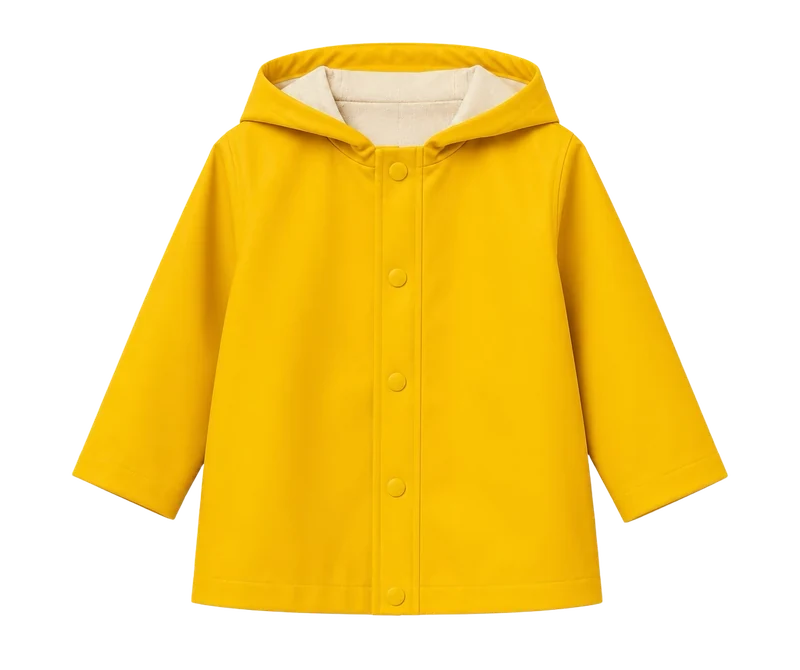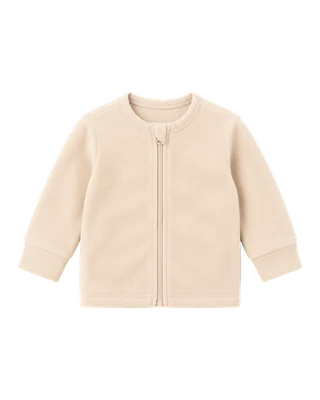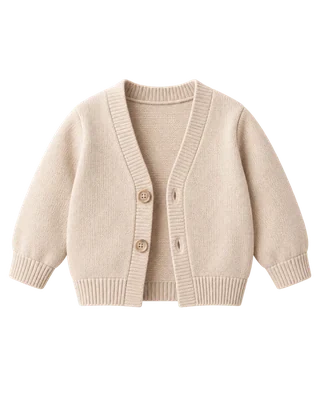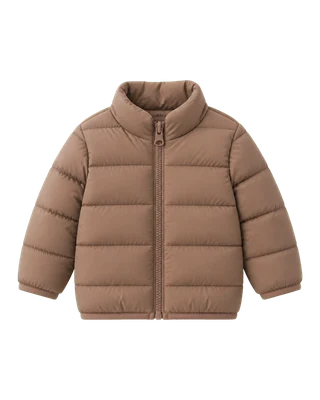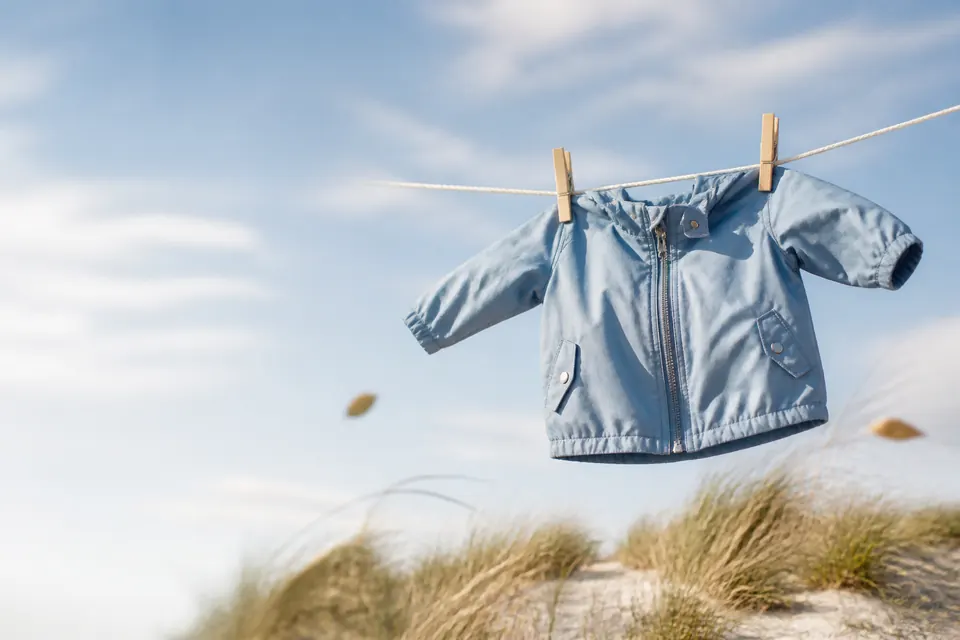
A light jacket is a thin jacket that stops the wind. It adds little warmth of its own. A light cardigan or a thin fleece underneath keeps your baby warm, and the jacket stops the breeze blowing that warmth away.
On a mild, breezy day of 16–20°C (61–68°F), it goes over everyday clothes. From 15°C (59°F) down to 12°C (54°F), a cardigan or a thin fleece goes under it. Below 12°C (54°F), your baby needs a padded warm jacket.
A baby lying flat in a bassinet is more comfortable without one. A stiff jacket bunches at the shoulders, and a fixed hood leaves a lump behind the head, so a cardigan or a fleece under a stroller blanket is the better pick. From around 6 months, your baby sits up in a stroller seat, and later crawls on damp grass and walks. Then a zipped jacket works better, because it stays on when blankets get kicked off.
- For ages6+months
- You'll need1per size
- Wear it at12–20°C54–68°F
Types of light baby jacket
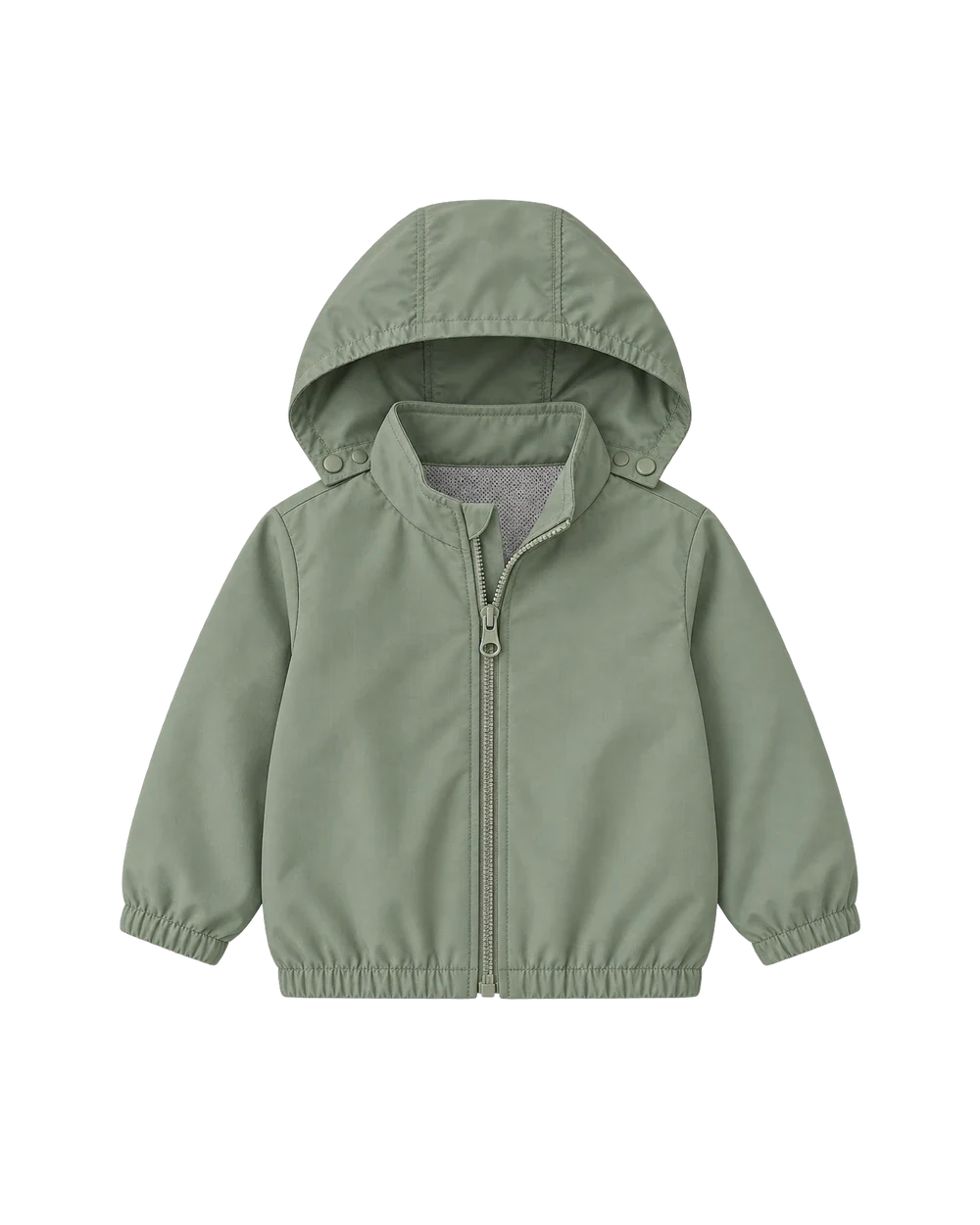
Unlined windbreaker
One thin layer of tightly woven nylon or polyester, often with a mesh or jersey lining so it does not cling to the skin. The pick for mild, breezy days, and for keeping in the bag.
- Good: Stops wind
- Good: Rolls up into a diaper bag pocket
- Not good: Warm only over a sweater or fleece
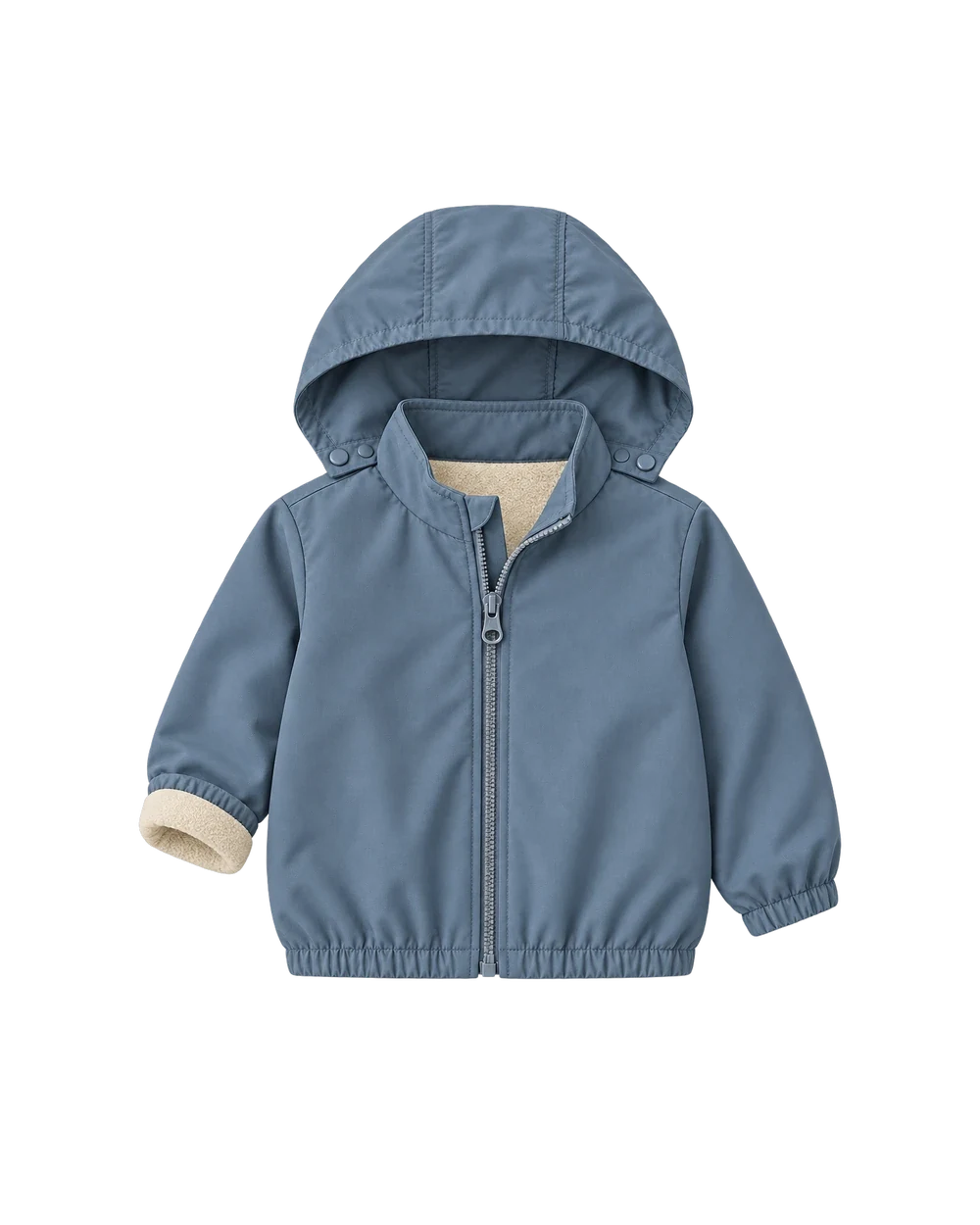
Softshell jacket
Stretchy outside and soft fleece inside, in one fabric. It is about as warm as a sweatshirt and shrugs off damp grass and a short shower, so it suits a toddler who runs and climbs.
- Good: Stretches and breathes when running
- Good: Brushed fleece inside for warmth
- Not good: Heavier than a windbreaker
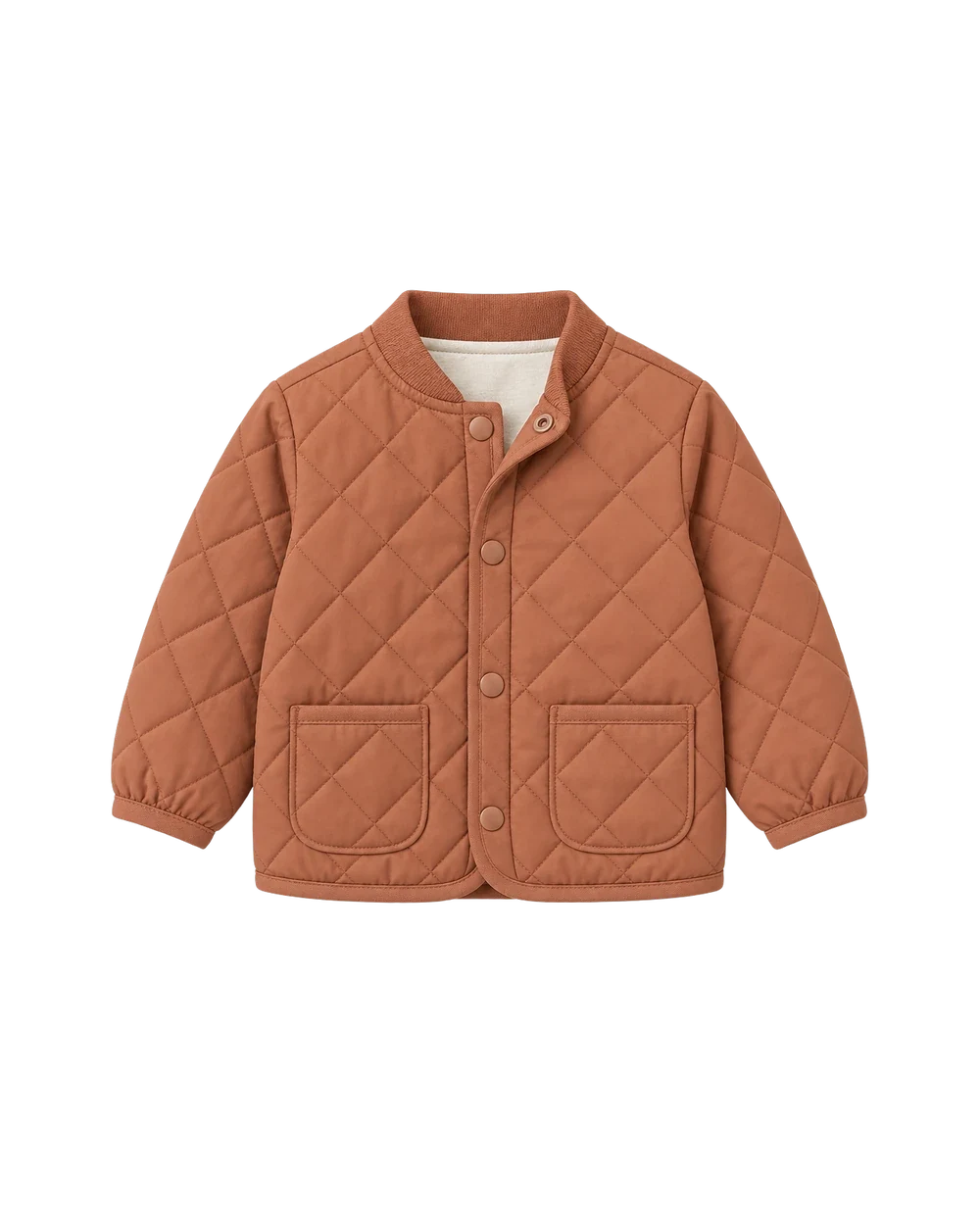
Light quilted jacket
A thin shell with a flat layer of cotton or synthetic padding stitched through it, often with snaps down the front. The coziest of the three on a crisp, dry morning.
- Good: Padded warmth for crisp, dry days
- Not good: Wind gets in at the stitching
- Not good: Bulkier to pack
Light jacket or light raincoat?
Both stop the wind. Only the raincoat keeps out steady rain.
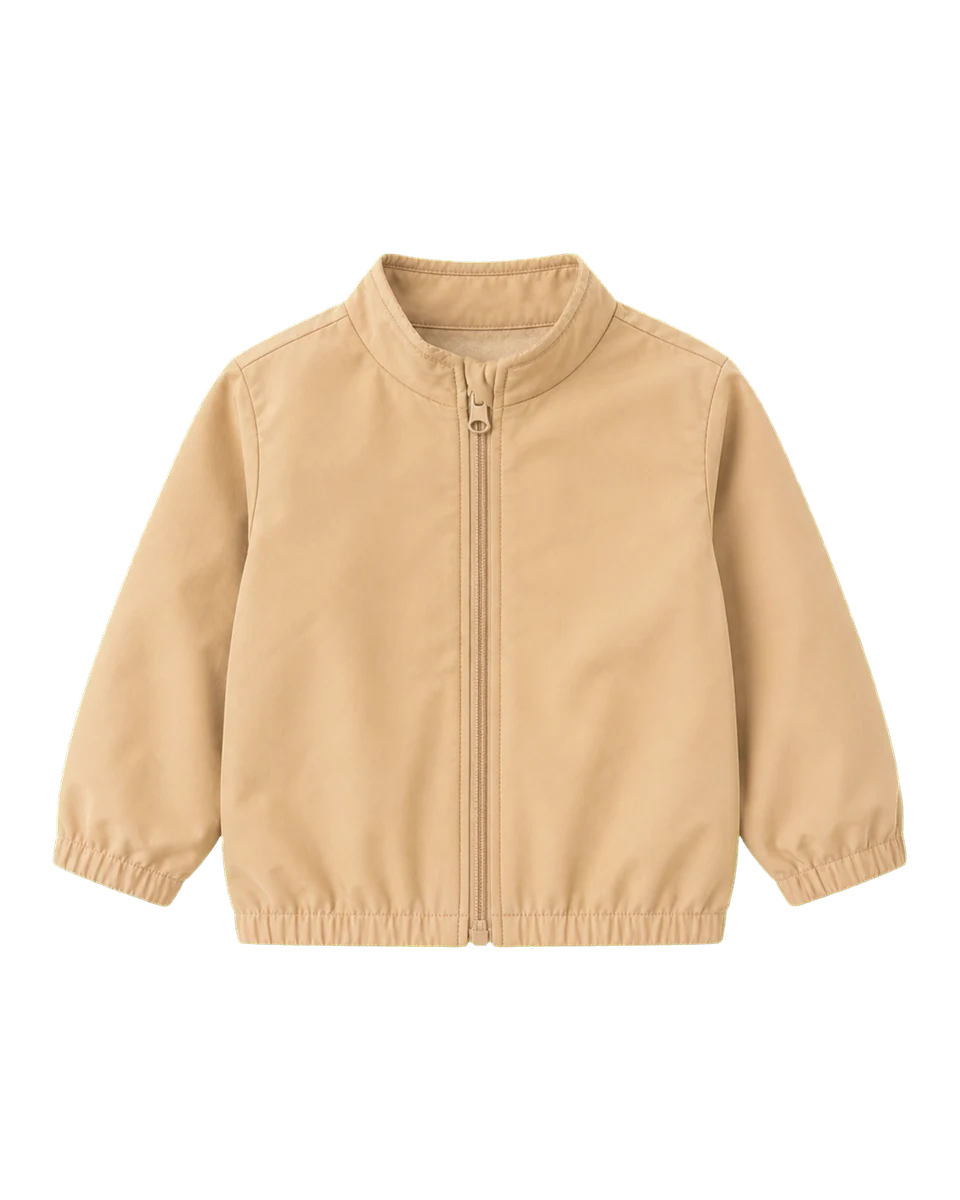
Light jacket
For dry, breezy days. It lets sweat out through the fabric, so your baby stays comfortable on walks and at the playground.
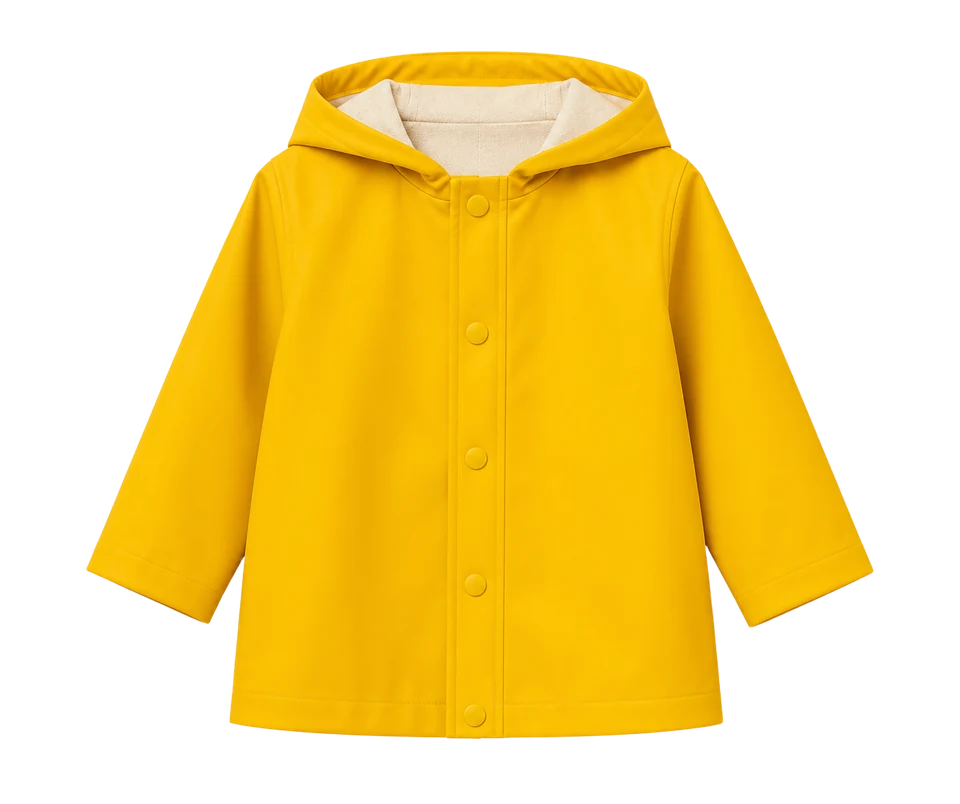
Light raincoat
For real rain. Waterproof fabric and sealed seams keep out steady rain and wet slides. On a dry day, it holds in more sweat.
How to choose a light jacket
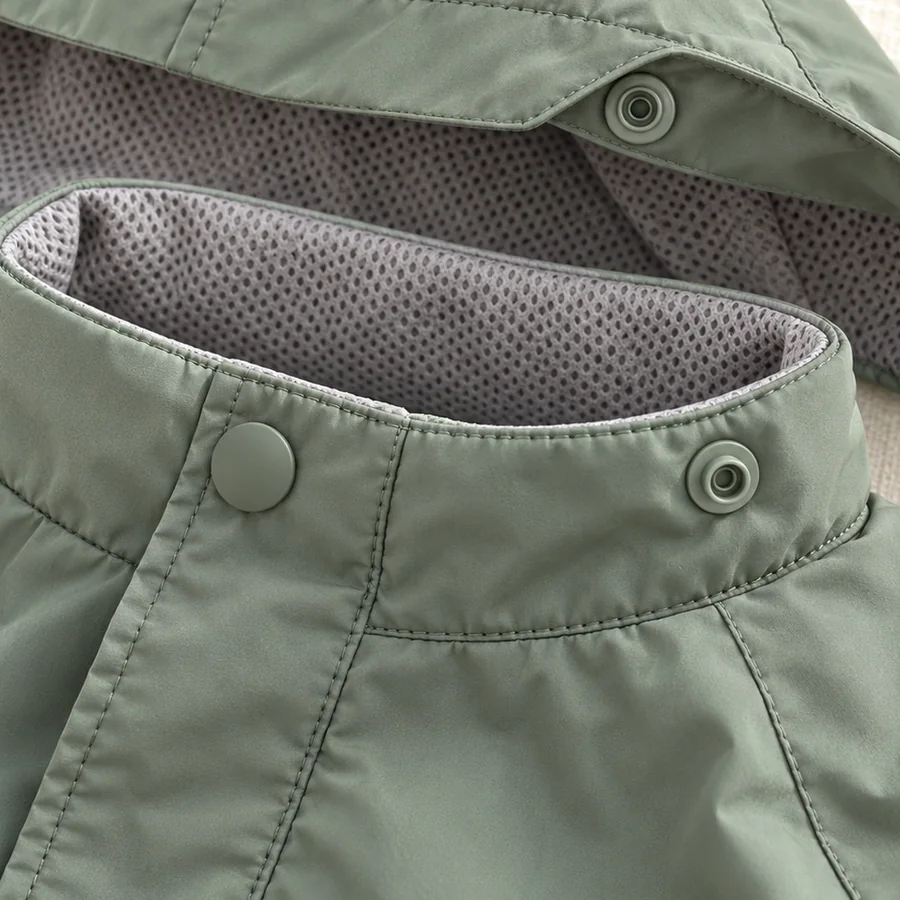
1. A snap-off hood, with no cords
You can unsnap the hood when your baby leans back in a stroller seat, so there is no lump behind the head, and it pulls free if it catches on play equipment. Hood and neck cords are banned on children's coats in the US, because they can catch on playground equipment or cribs. So skip a secondhand or handmade coat with a drawstring at the neck.
- Good: Hood pops off with a firm tug
- Good: Snaps along the collar seam
- Not good: Drawstring at the hood or neck
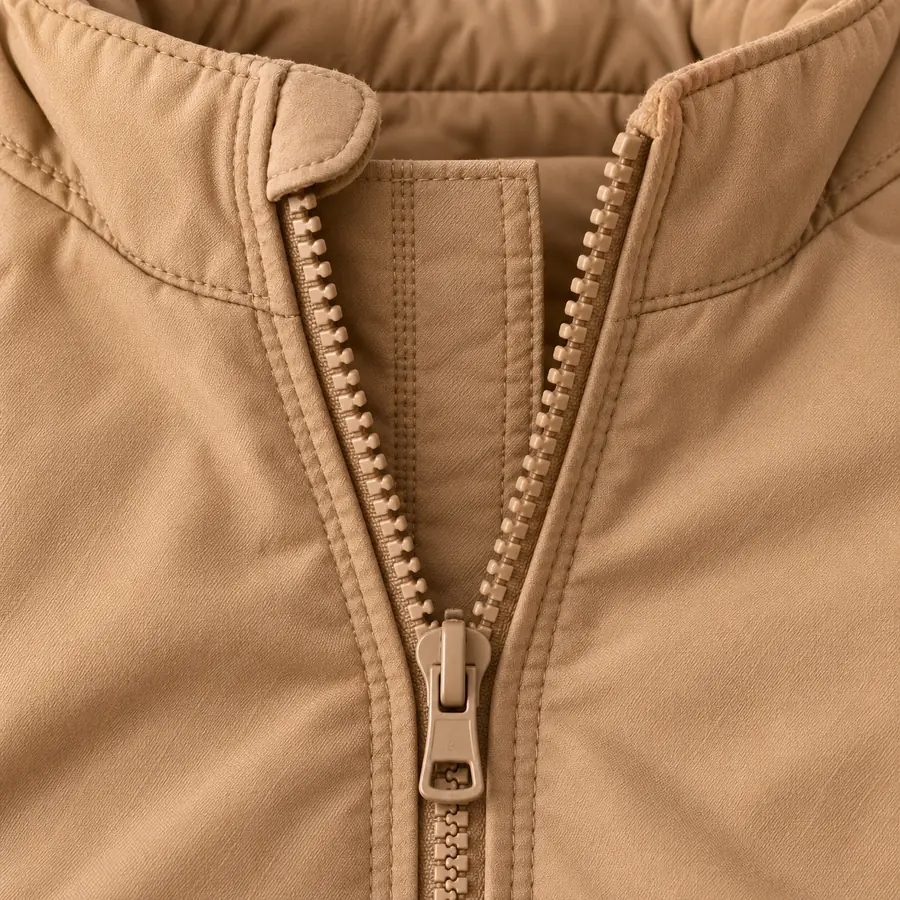
2. A chin guard and inner wind flap
A soft fold of fabric over the top of the zipper stops the slider pinching the skin at the neck. A narrow strip behind the zipper stops the wind whistling through it.
- Good: Soft fabric over the zipper top
- Good: Fabric backing behind the zipper
- Not good: Bare zipper slider at the chin
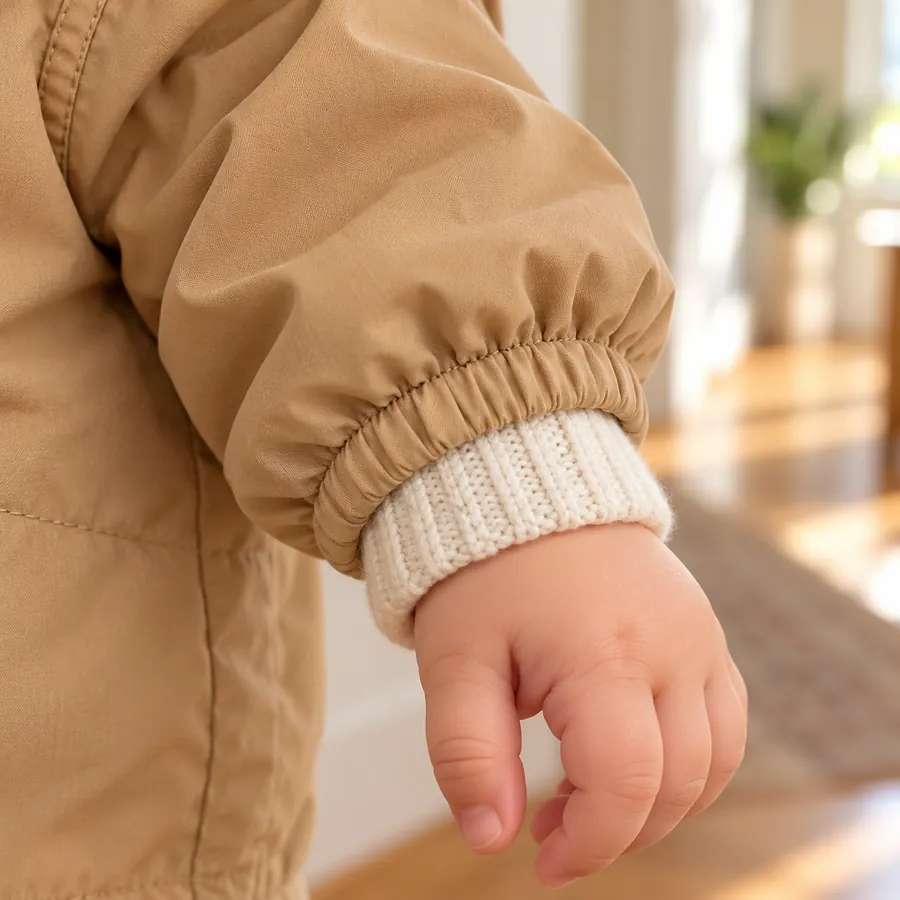
3. Soft elastic wrists
Buy it roomy enough to go over a sweater. Gently gathered cuffs then keep out gusts and hold the sleeve above the hand, even in a size with room to grow.
- Good: Cuff snug over a sweater sleeve
- Good: Sleeve stays above the hand
- Not good: Sleeve slides down over the hand
Getting it on, car seats, and baby carriers
To dress a sitting baby without catching fingers in the sleeve lining, unzip the jacket completely, bunch one sleeve short in your hand, and reach two fingers through the cuff from the outside to gently hold your baby's fist and pull it through. Ease the jacket behind the shoulders before threading the second arm.
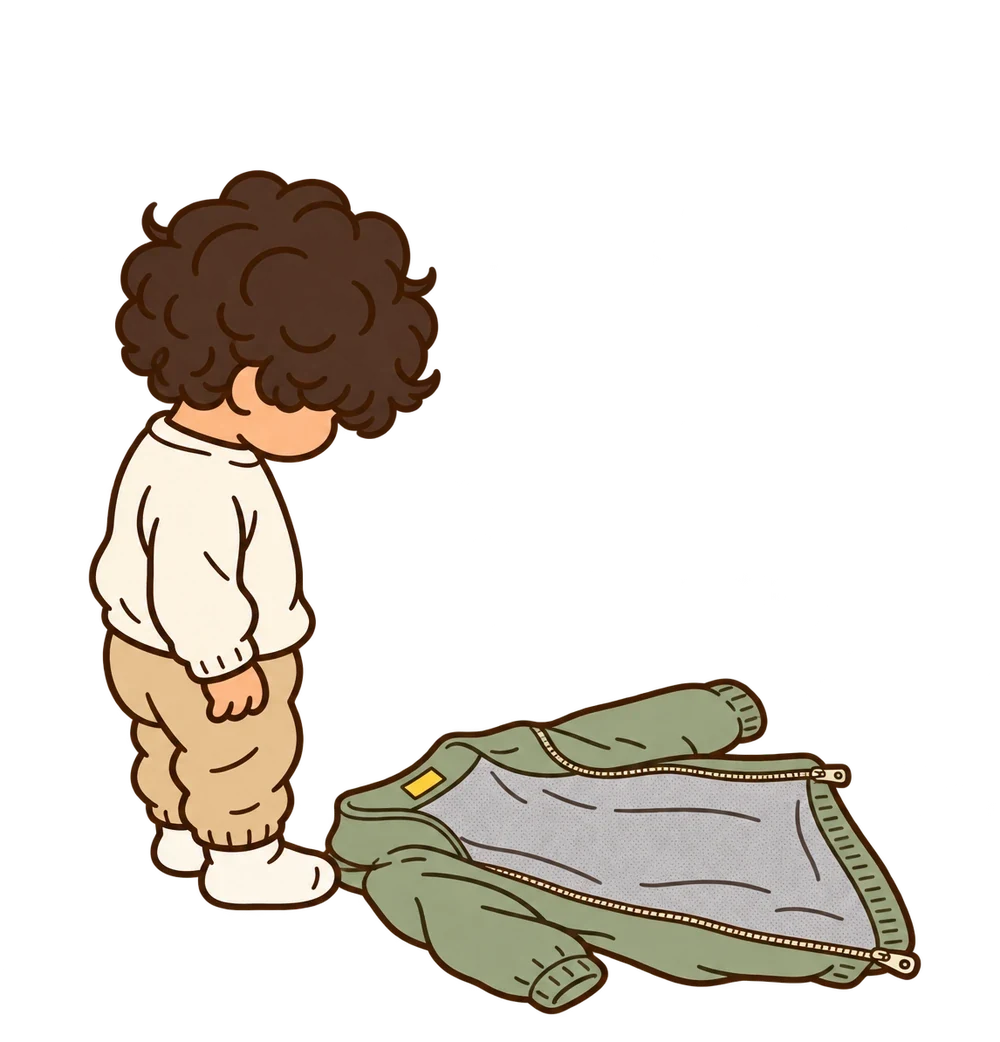
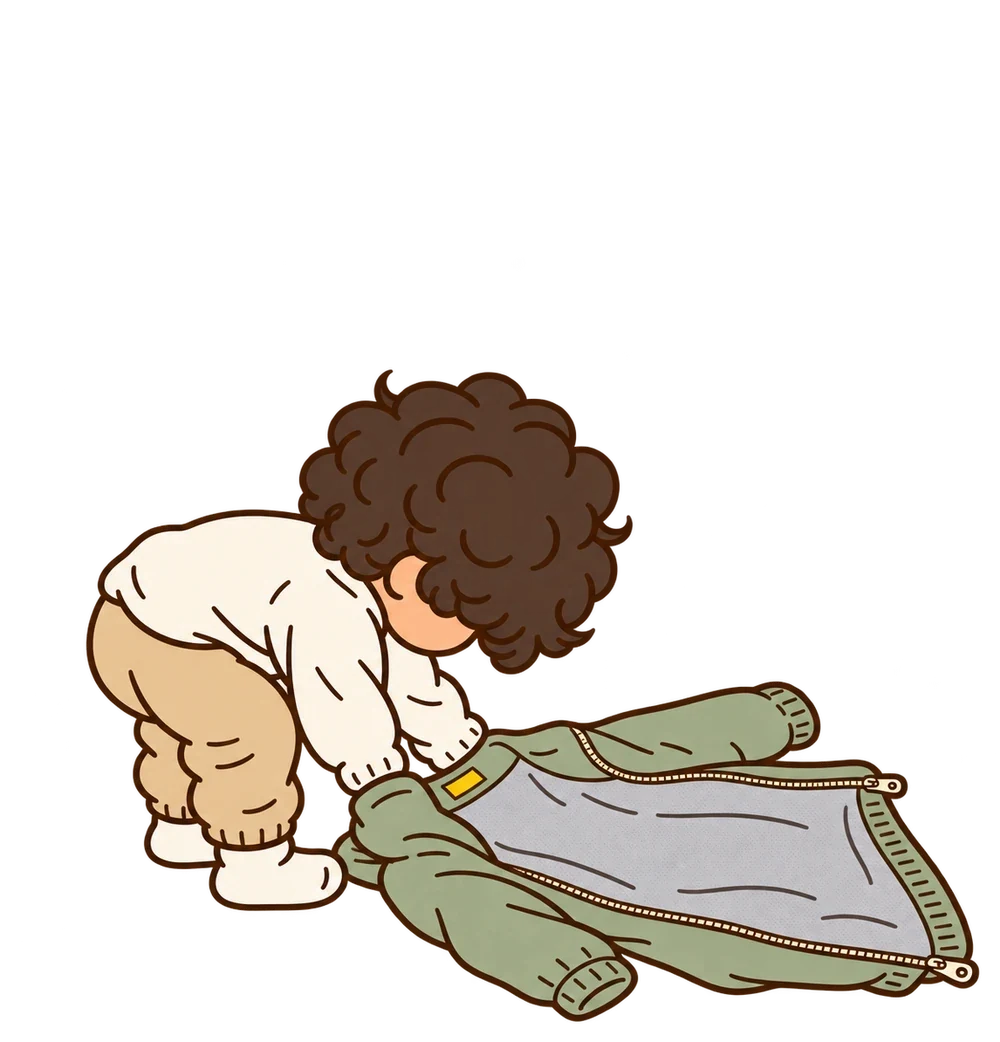
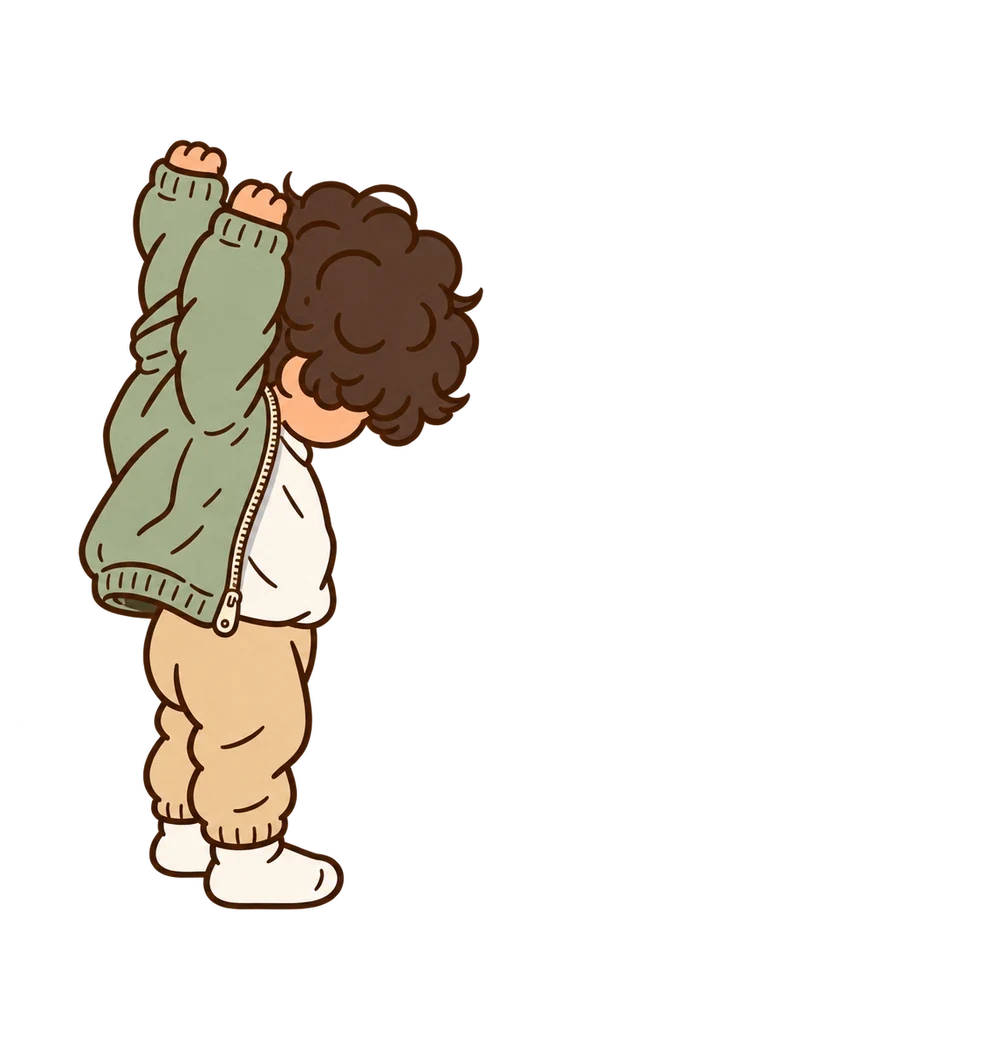
From about 18 months, daycare teachers use the coat flip (tag to the toes, hands in the holes, over it goes). Lay the open jacket flat on the floor with the lining facing up and the neck label right at your child's feet. Your toddler bends down, slides both hands into the armholes, and raises both arms up and over the head so the jacket swings onto the shoulders.
In the car, a padded quilted jacket comes off before you buckle up. A thin, unlined windbreaker can stay on, as long as you cannot pinch a fold of strap at the collarbone. Or buckle your baby in indoor clothes, slip the jacket on backward over the arms, on top of the straps, and pull it off once the car warms up. In a front or back carrier, a stiff jacket rides up around your baby's collar. Keep your baby in soft indoor layers and share a windproof carrier cover over you both, because you count as a layer.
How to teach your toddler to put on a coat alone
There is a simple trick daycares use: the coat flip. Three moves, and a rhyme to say along. Set the jacket out for your toddler the first few times.
How to teach your toddler to put on a coat alone
Tag to the toes
Lay the jacket open on the floor, lining up. The collar (or the hood) goes right at your toddler's toes, so the jacket looks upside down from where your toddler stands.
 Tip
Hands in the holes
Your toddler bends down and slides one hand into each armhole, just inside the sleeves.
Over it goes
Arms up and over the head. The jacket swings over and lands on the shoulders the right way up, arms already in the sleeves. Tug the sleeves straight and zip it up together.
Questions parents ask
Are windbreakers waterproof?
No. A windbreaker or a softshell has a finish that makes drizzle bead up, but in steady rain the water seeps in through the needle holes at the seams. For a rainy day, a light raincoat has waterproof fabric and sealed seams.
Does my baby need both a thin fleece and a light jacket?
On a chilly, windy day, yes: the thin fleece warms, and the jacket stops the wind that blows through it. The guides to windy days and changeable weather have full outfits.
Is a softshell jacket warm enough for winter?
Where winter days stay above 12°C (54°F), yes. A fleece-backed softshell, or a windbreaker over a sweater or a fleece, does the whole season without a heavy winter coat.
How do you wash a windbreaker or softshell without ruining water beading?
Wipe playground mud off with a damp cloth between washes. When it needs the machine, wash it cold on a gentle cycle and hang it to dry. Skip fabric softener and dryer sheets: they leave a waxy film on the fabric, and drizzle stops beading up.