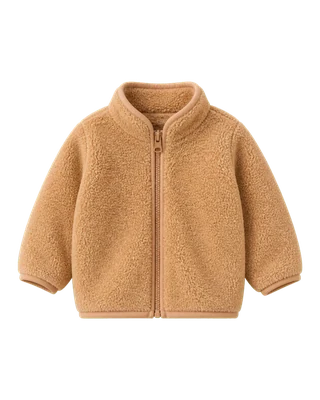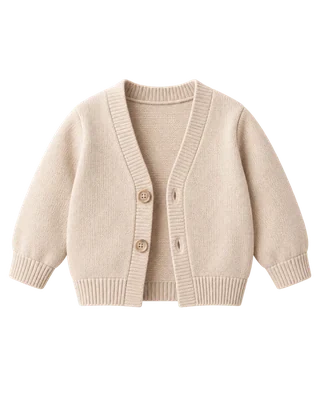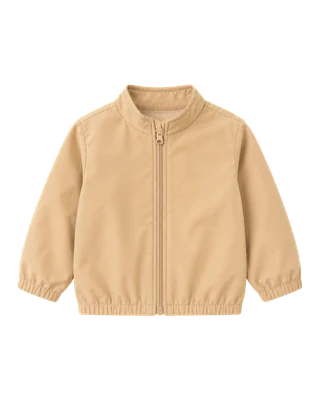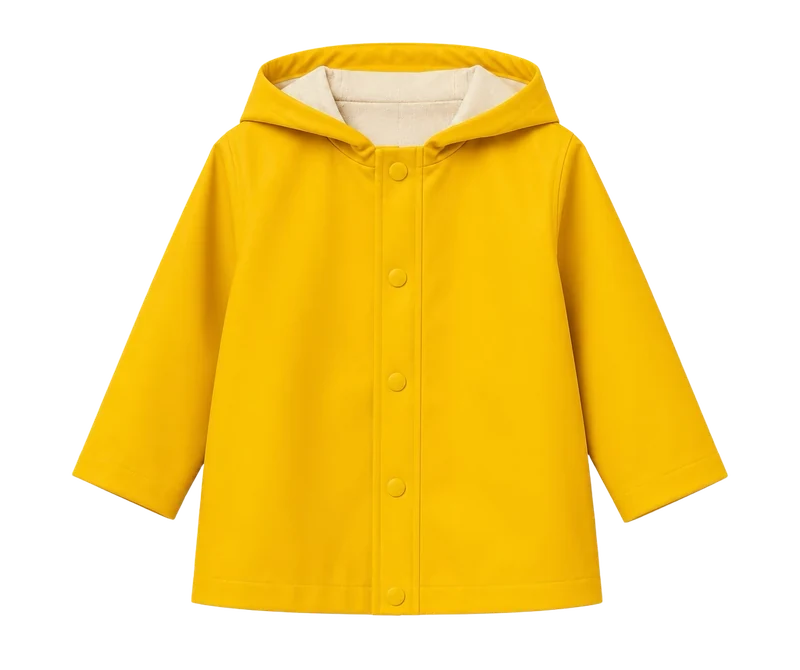
Shops often sell a thin fleece as microfleece. It is not wool: fleece is a soft polyester fabric with a brushed surface, made into zip-up jackets and pullovers.
It is light but warm, it stays warm when damp from drizzle or drool, and it dries fast. Its weak spot is the wind, which blows straight through it.
- For ages0–3years
- You'll need1per size
- Wear it below16°C61°F
When to use one, and when to skip it
On calm, cool days, a thin fleece over a cotton long-sleeve bodysuit and leggings is your baby's outer top. It is warm without the stiffness of a padded coat, and you can unzip it as the morning warms up.
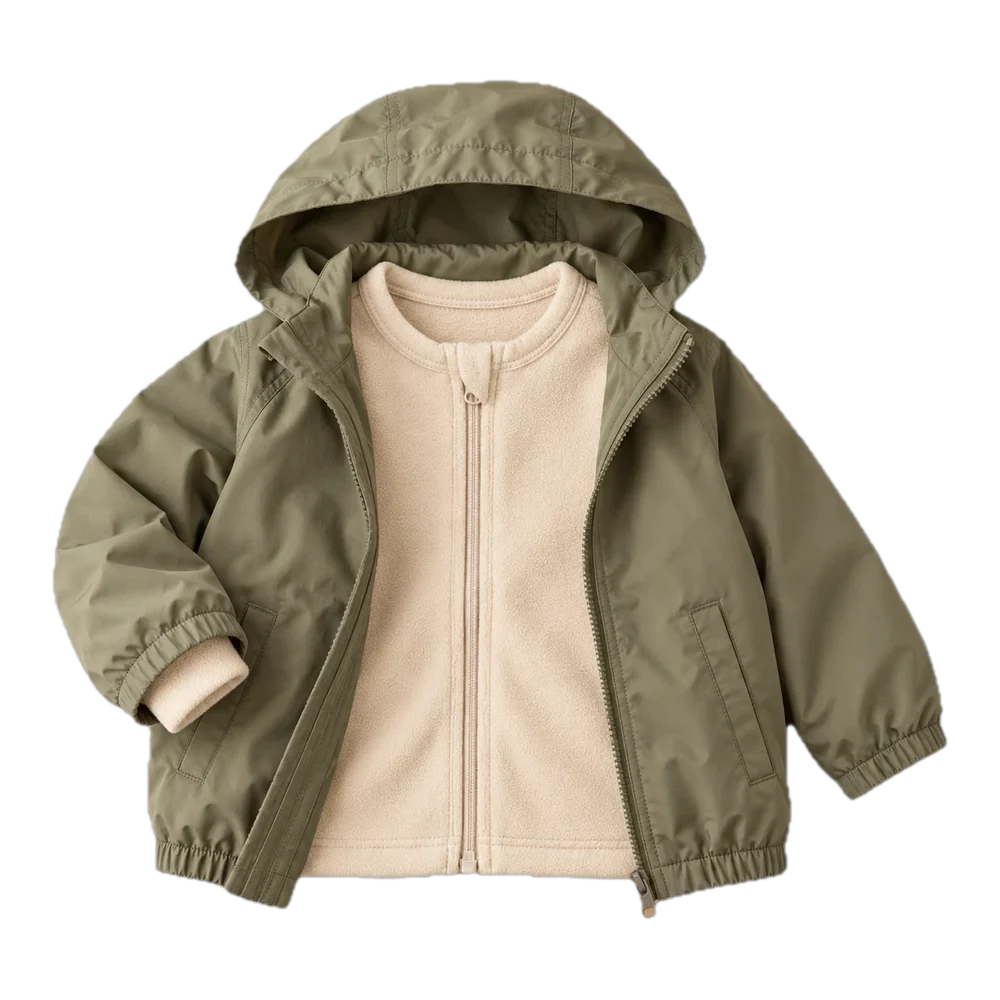
When the wind picks up or rain starts, the fleece becomes the middle layer. Fleece is an open knit, so the wind blows straight through the loops and carries the warmth away. A windproof light jacket or a light raincoat over it stops the wind, and the fleece underneath keeps the warmth.
Take it off indoors.
What the wind does to a fleece
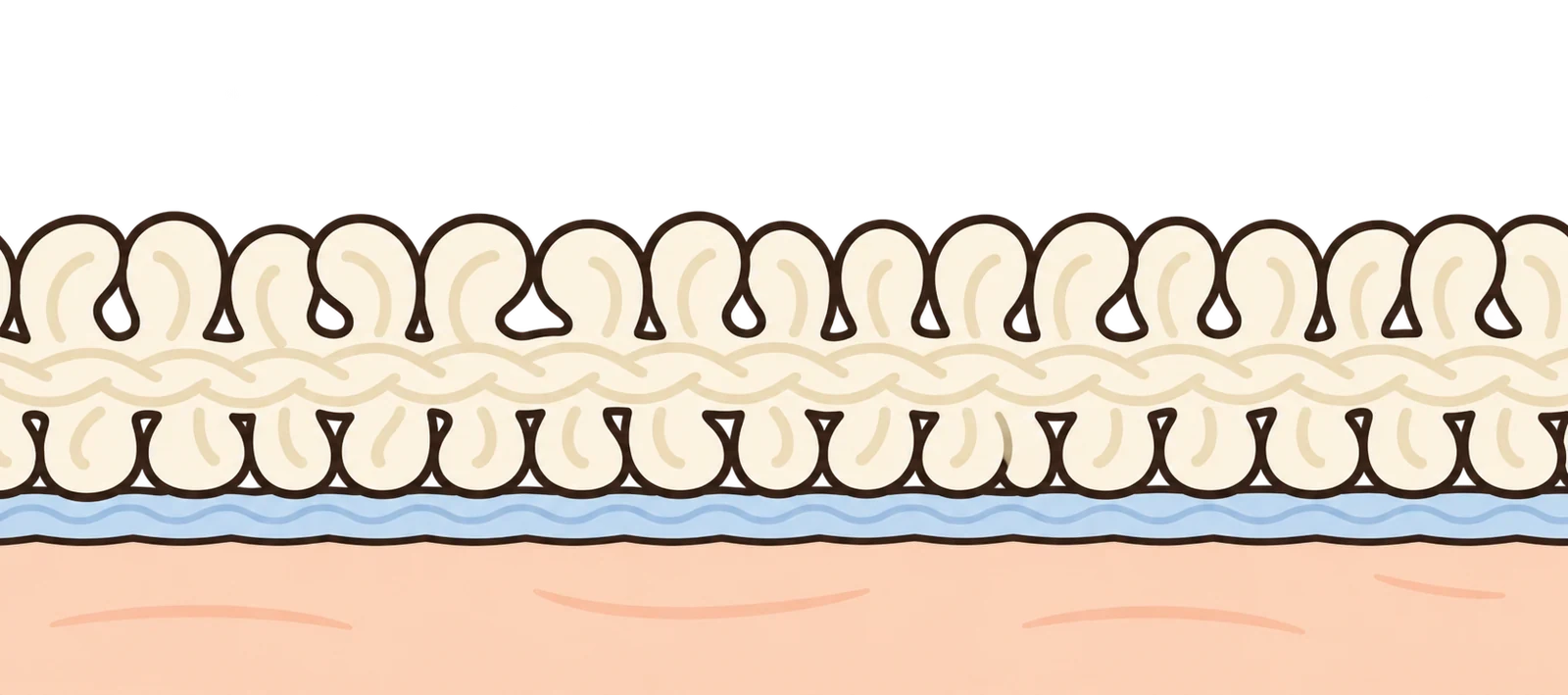
- Outside air
- Light jacket
- Thin fleece
- Warm air
- Cotton bodysuit
- Skin
On a calm day, the warm air stays trapped in the loops.
Wind blows straight through the loops and carries the warm air away.
A light jacket on top stops the wind at its smooth surface, so the fleece keeps the warm air.
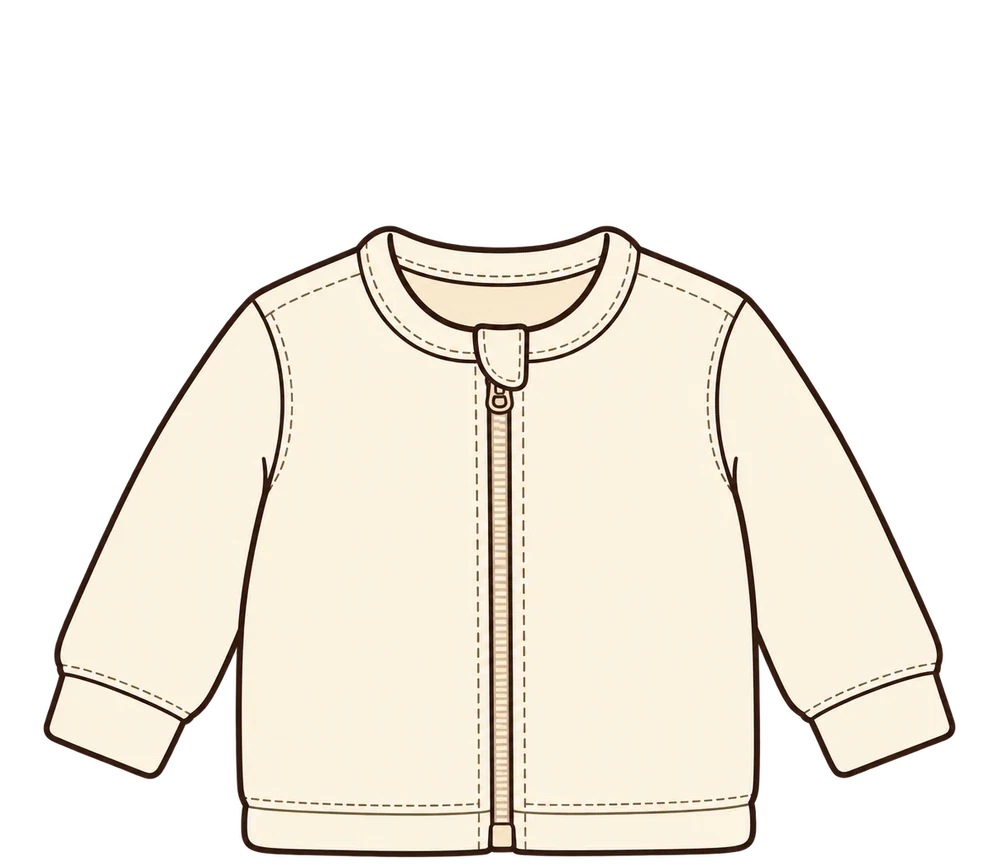
Calm, cool days
12–15°C 54–59°F
The fleece alone
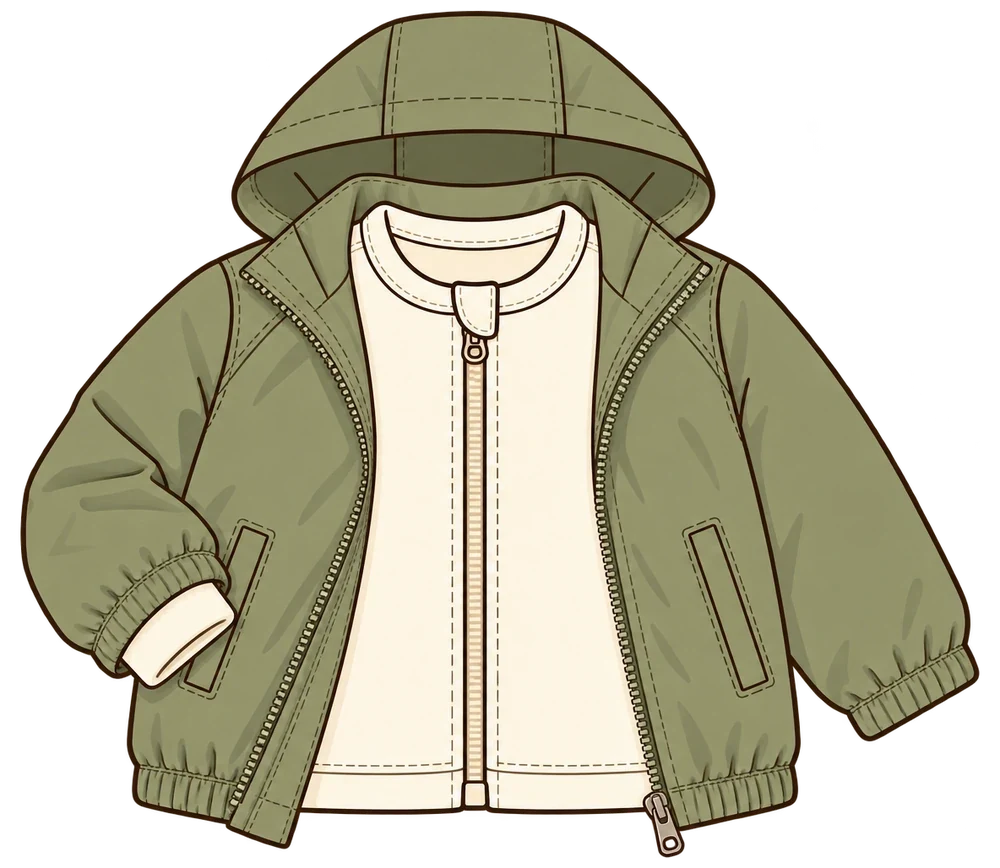
Cool, windy days
12–15°C 54–59°F
The jacket over the fleece
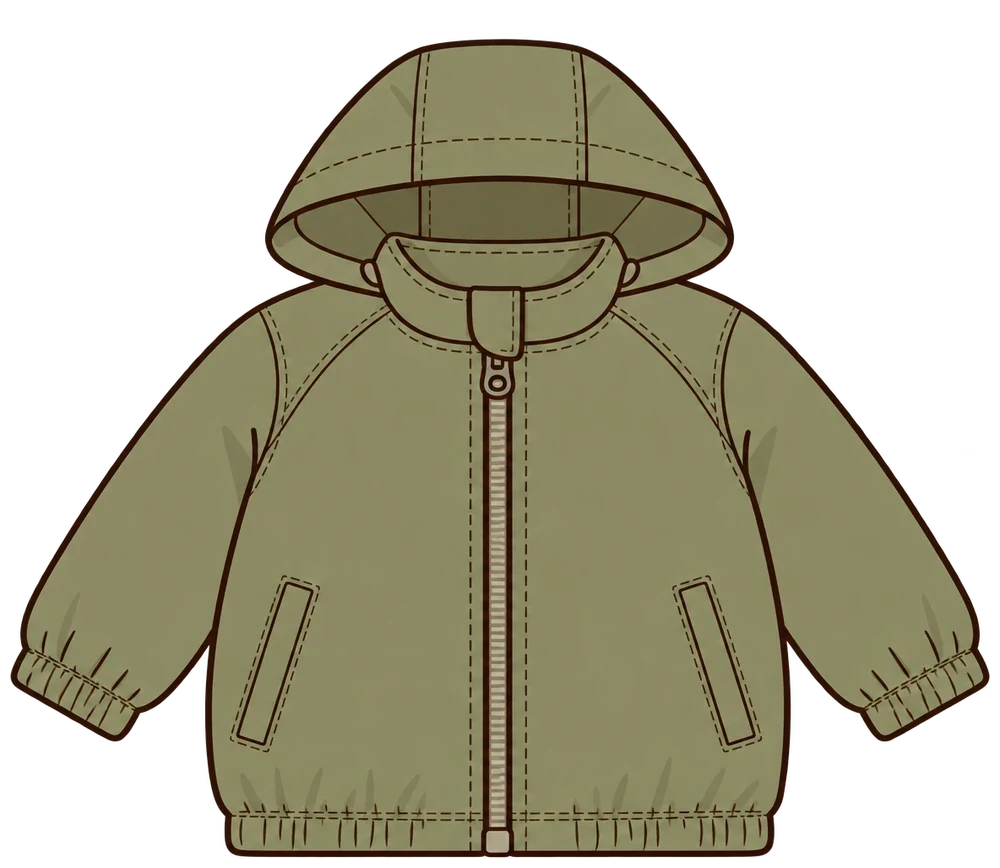
Mild, breezy days
16–20°C 61–68°F
The jacket alone
Below 12°C (54°F), your baby needs a padded warm jacket.
Thin fleece or warm fleece
Fleece comes in two weights. How deep the brushed surface is (the pile) decides where each one works.
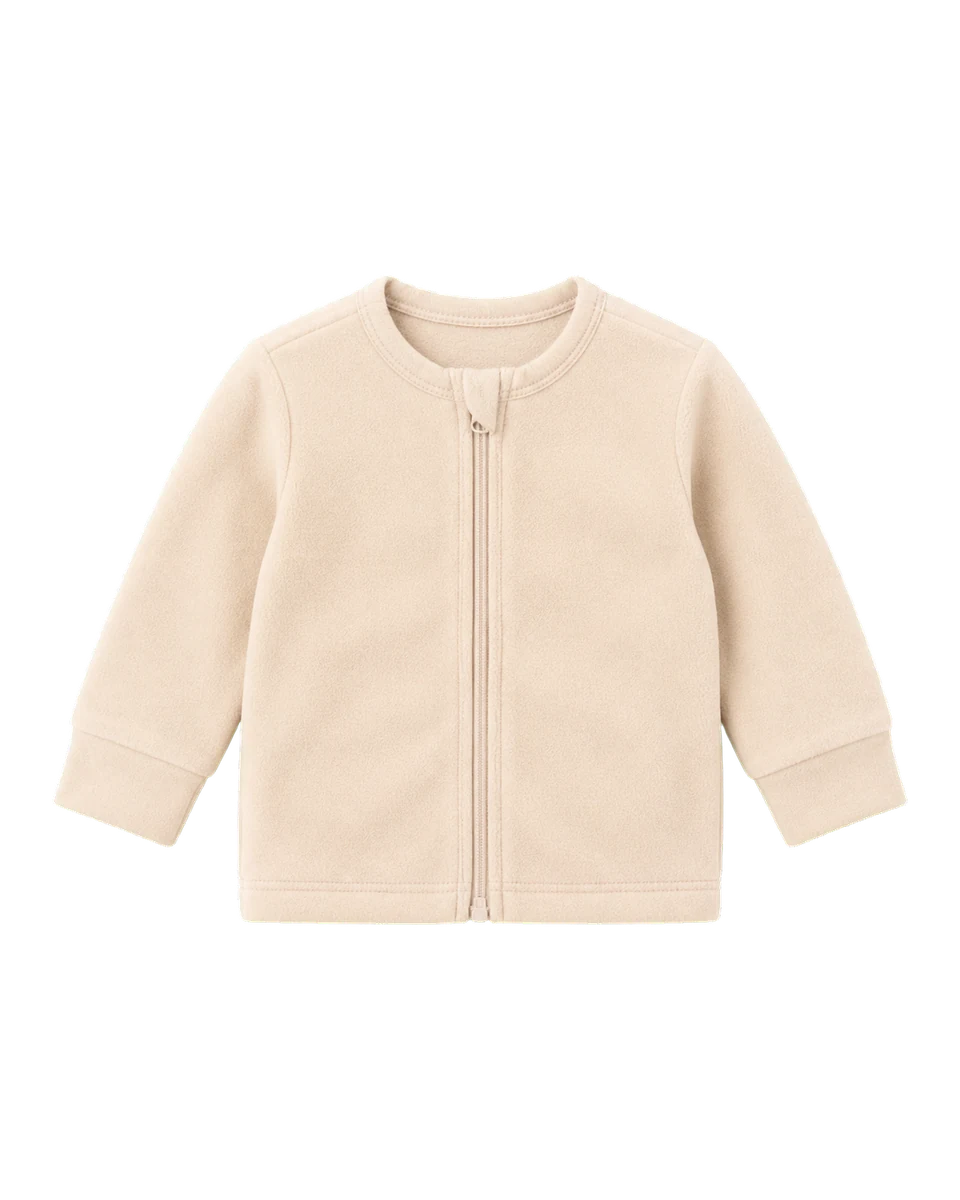
Thin fleece
Short and smooth, no thicker than a sweatshirt. It fits inside a jacket sleeve and a baby carrier, and it is thin enough to try under car seat straps.
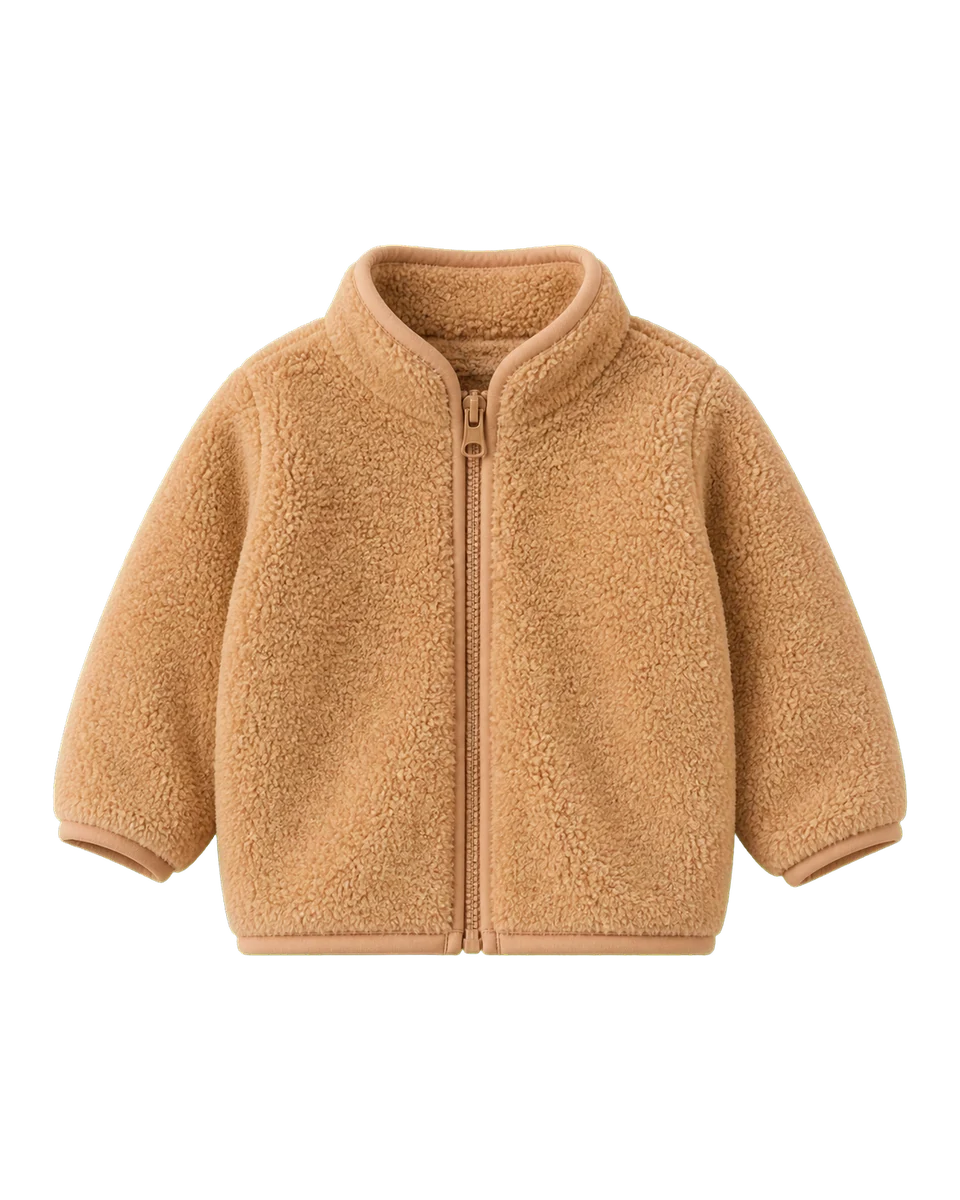
Warm fleece
Deep and fluffy, often sold as sherpa or teddy fleece. It is warm enough on its own for cold, dry walks, but too thick for a fitted jacket sleeve or for car seat straps.
Types of thin fleece
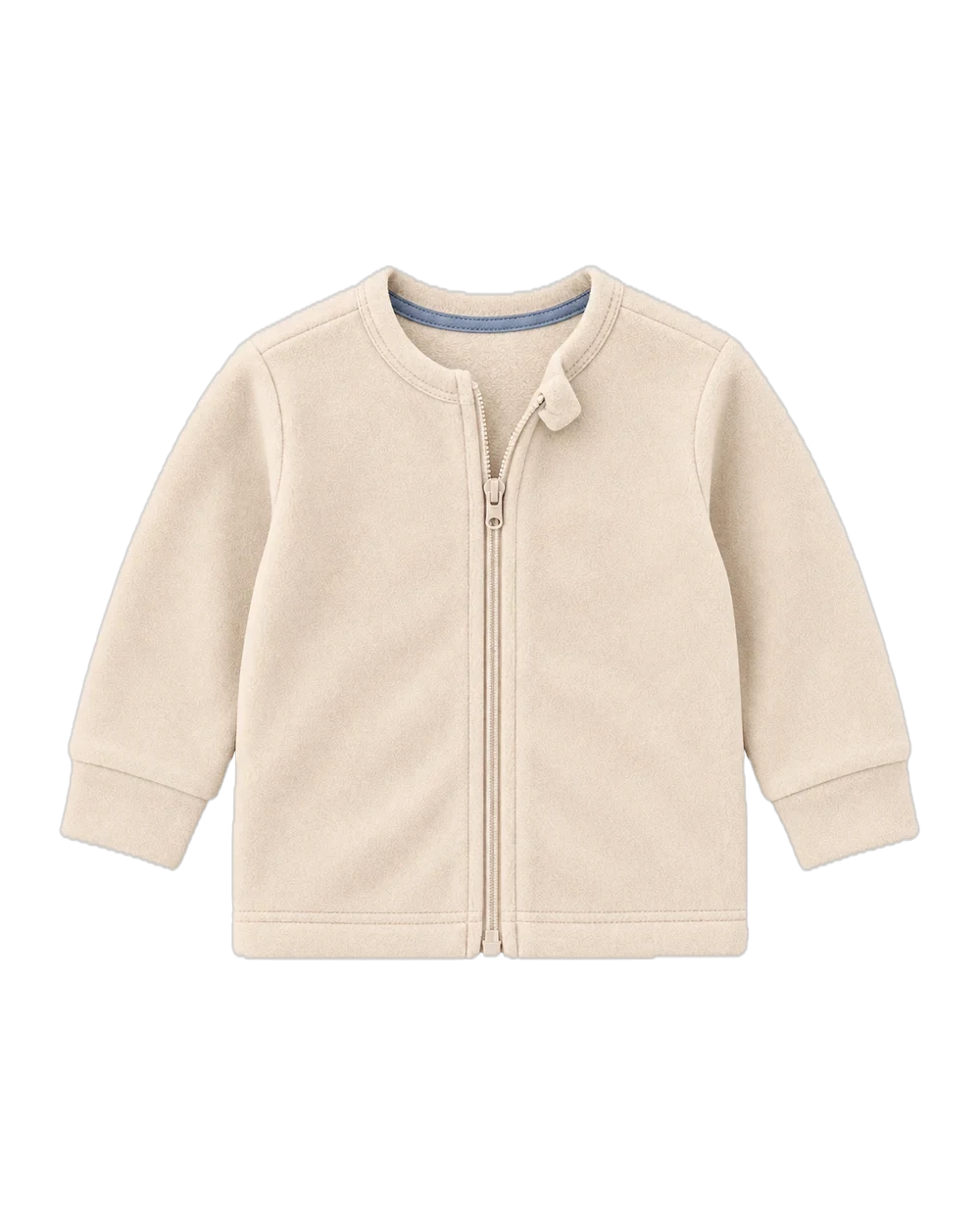
Full-zip jacket
It zips open all the way down the front. The easy one for a newborn, and for a baby who falls asleep while you are out.
- Good: On without going over the head
- Good: Unzips to let heat out
- Not good: Zip track down the tummy
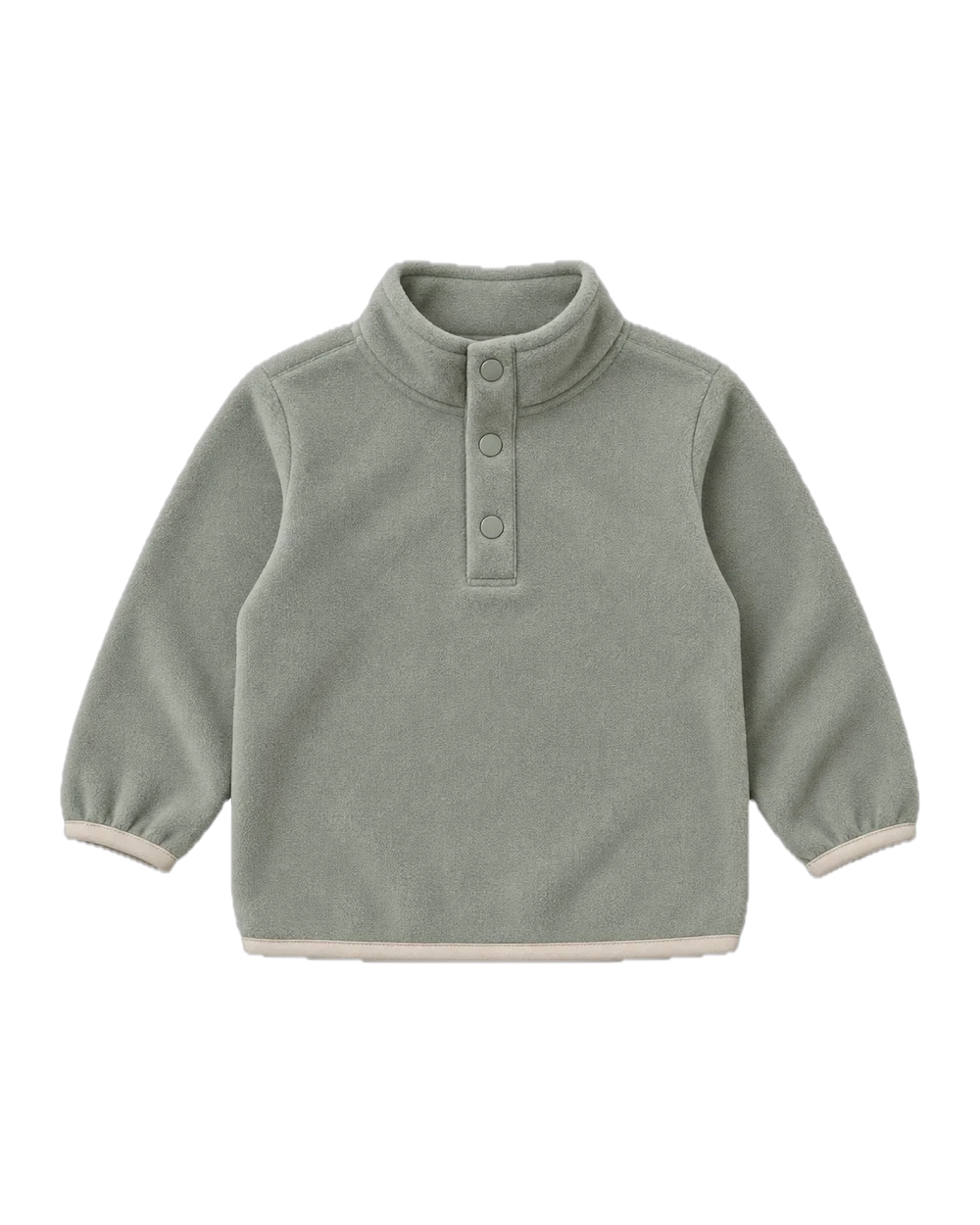
Half-zip or snap pullover
It opens only at the chest, with snaps or a short zipper. With no zipper down the front, it lies flat.
- Good: Flat for tummy time
- Good: Flat under carrier straps
- Not good: Goes on over the head
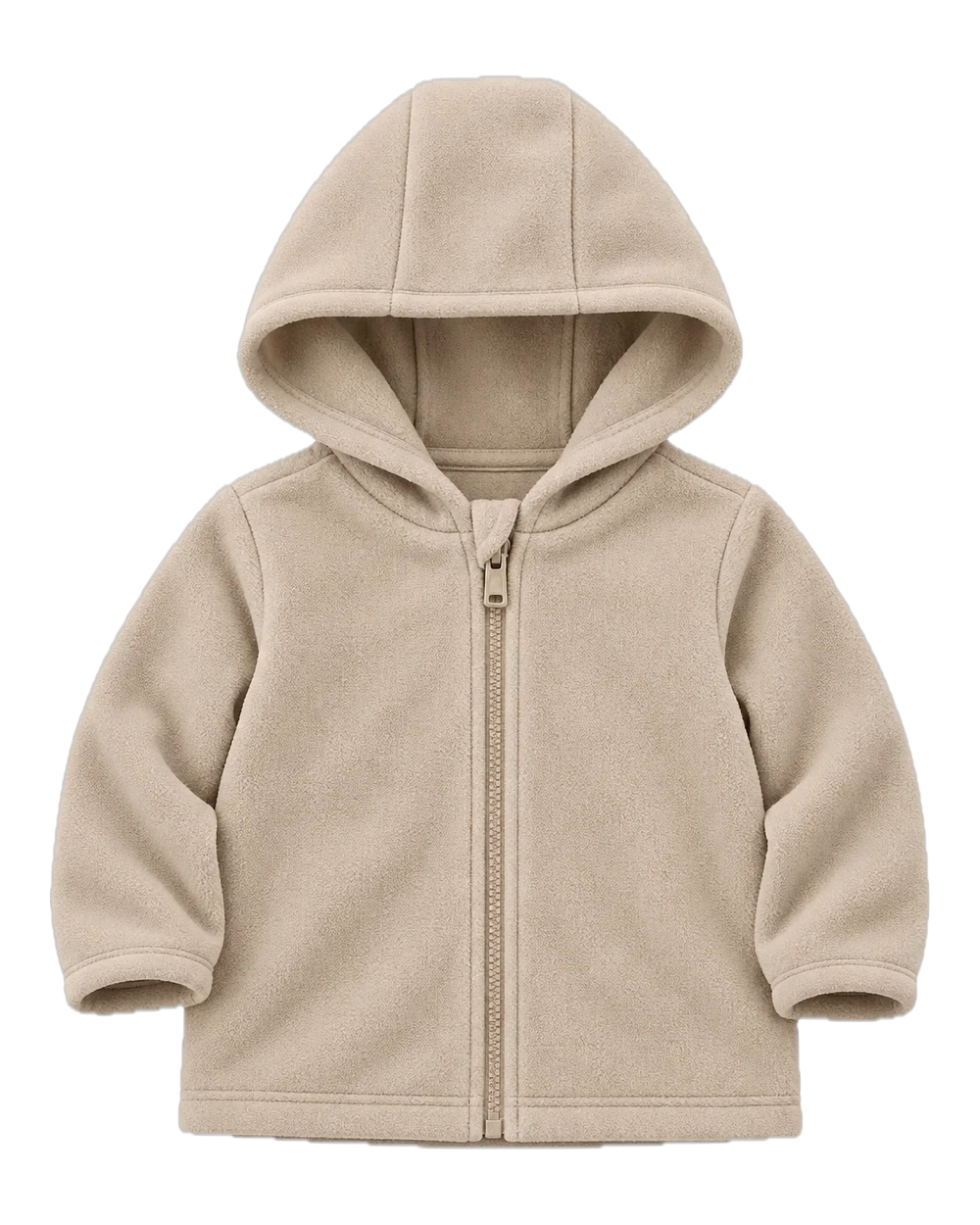
Hooded fleece
Handy for a baby who sits up in the stroller. For a baby who lies back in a bassinet or car seat, a jacket without a hood and a separate knit hat work better.
- Good: Keeps drafts off the neck
- Not good: Bunches behind the head lying back
How to choose a thin fleece
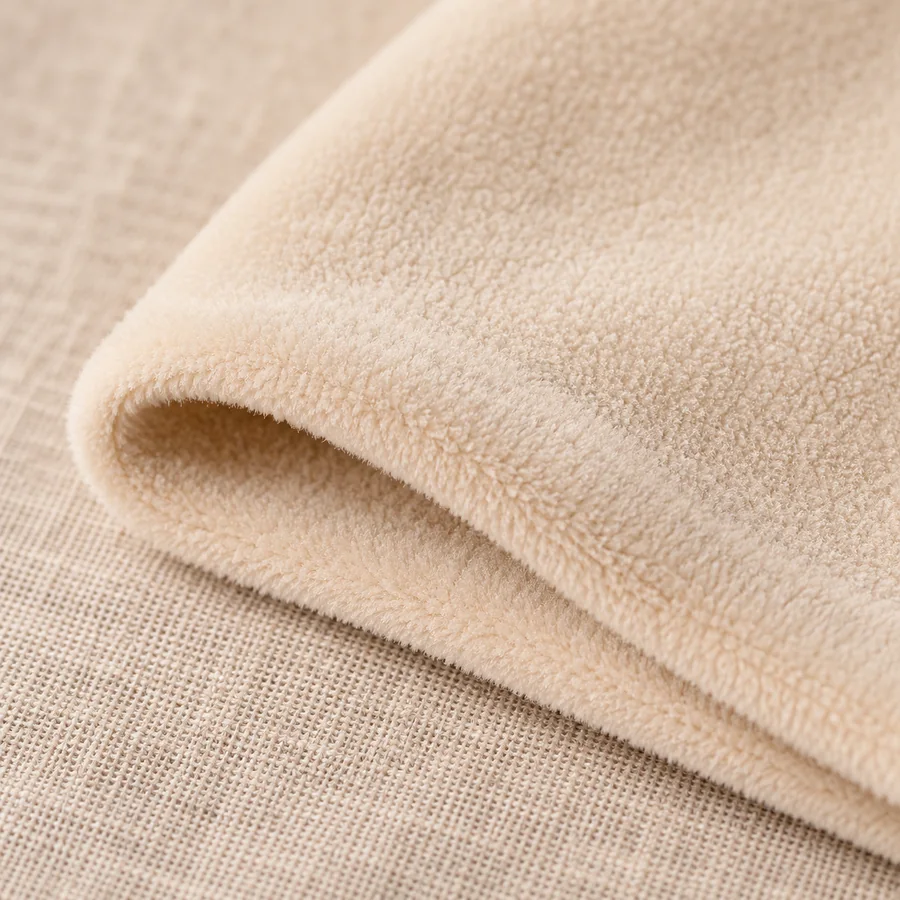
1. Short, smooth pile
Thin all over, so it slides into a coat sleeve and lies flat under straps.
- Good: Feels like suede in a pinch
- Not good: Fluffy, like a blanket
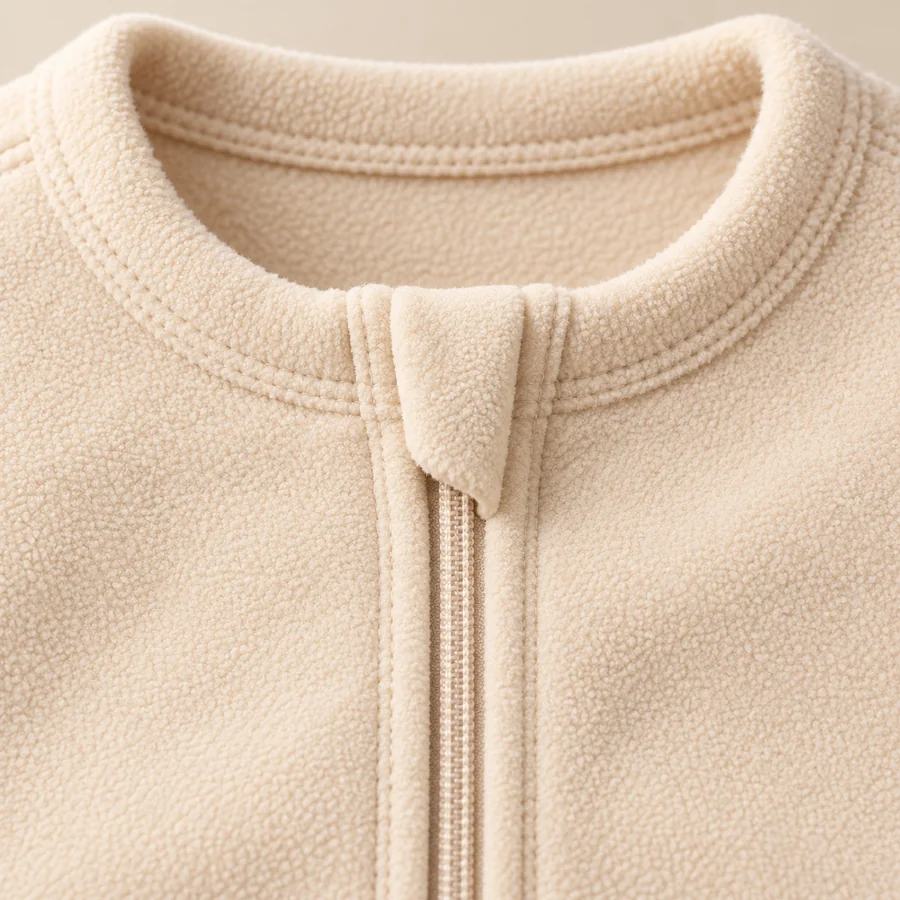
2. A fabric guard at the top of the zip
A small fold of fleece over the top of the zipper, called a chin guard or zipper garage. Zipped up, it keeps the teeth away from the folds of the neck.
- Good: Fleece flap over the zip top
- Not good: Bare zip teeth at the neck
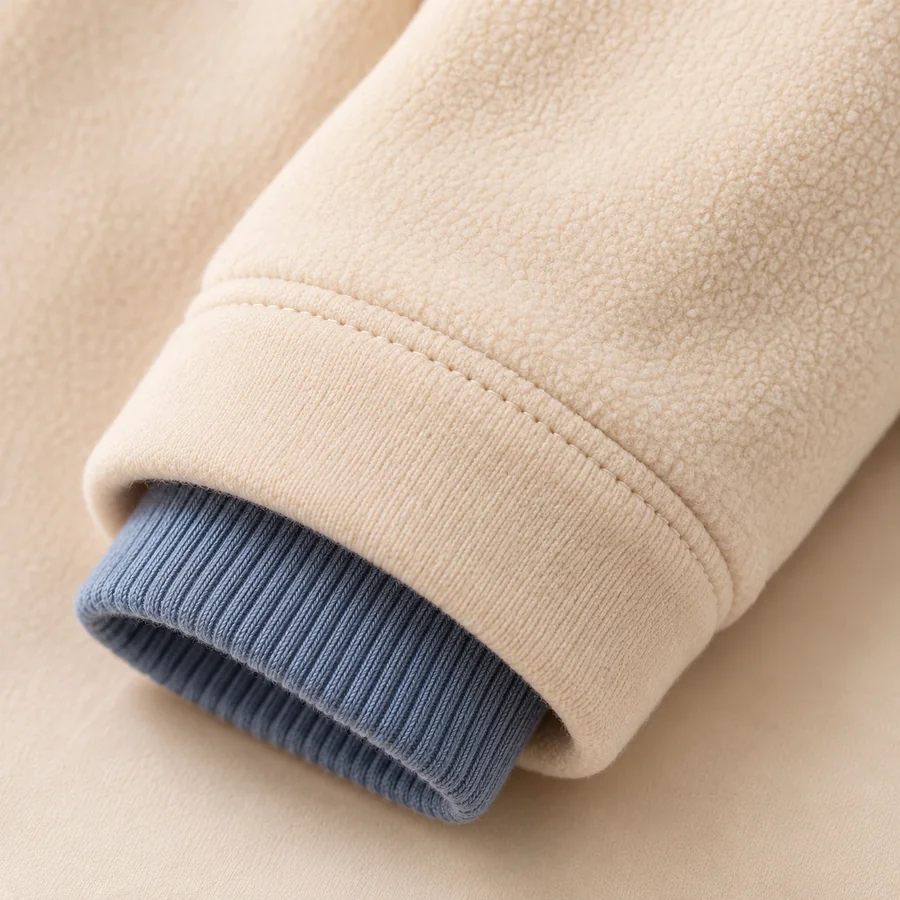
3. Soft, stretchy cuffs
The cuffs keep cold air out at the wrists, so they should fit close without pressing.
- Good: Cuff stretches over a sleeve
- Good: Soft, stretchy edge
- Not good: Red marks at the wrist
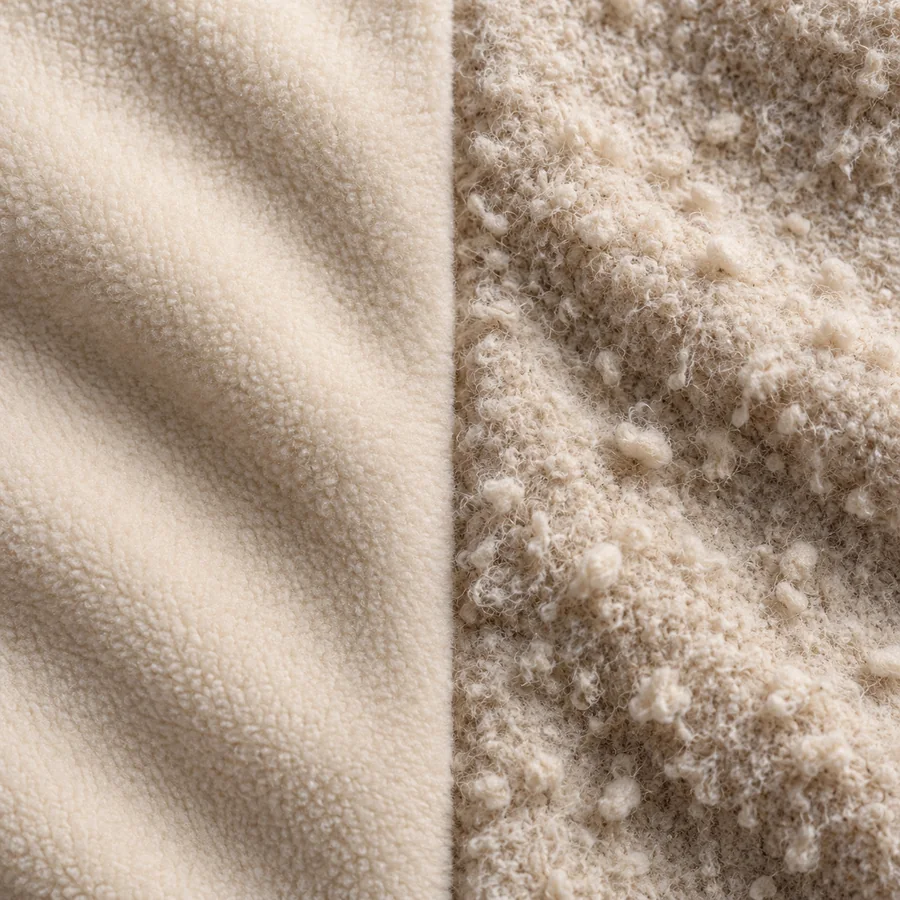
4. Dense, anti-pill brushing
Stroller straps rub a fleece all day, and a loosely knit one soon balls up into fuzz. Rub it hard with your thumb before you buy.
- Good: Smooth after a thumb rub
- Good: Sold as anti-pill fleece
- Not good: Fibers fuzz up when rubbed
Washing and care
Keep fleece away from towels and anything with Velcro, which pull the brushed fibers into little fuzz balls. Skip fabric softener and dryer sheets: they coat the fibers and flatten the pile.
Hang it to dry, which takes a couple of hours, or use the lowest dryer setting. High heat melts the tips of the fibers.
Questions parents ask
Can a baby wear a thin fleece jacket in a car seat?
Yes, if it is thin and the straps stay snug over it. Check it once: buckle your baby in wearing the fleece, and tighten the straps until you cannot pinch a fold of strap at the collarbone. Take the fleece off without touching the straps, and buckle up again. If they are still just as snug, the fleece can stay on. A puffy coat or snowsuit fails this test, because its padding squashes in a sudden stop and leaves the straps loose.
Is fleece breathable for babies?
Yes, much more than a waterproof coat: air passes through the open knit. It does not soak up sweat the way cotton or merino wool does, though. In a warm shop or car, feel the back of the neck, and unzip the fleece if the skin is hot or damp.
Is fleece windproof or waterproof?
Neither. The wind blows through it, and steady rain soaks through in a few minutes.
Fleece jacket or regular jacket: which does my baby need?
Often both, because they do different jobs. The fleece gives the warmth. An unlined light jacket stops the wind and light rain, and adds little warmth of its own. Together they cover more weather than one heavy coat.
Can a newborn wear a thin fleece?
Yes, on walks and trips to the car, over a cotton long-sleeve bodysuit. A full-zip one goes on without anything over the head. Feel the back of your baby's neck after ten minutes outside.
Can my baby sleep in a thin fleece jacket?
No. Take the fleece off once you are indoors or in a warm car, even if your baby has fallen asleep on the way. The same goes for hoods and all outdoor clothes, so a sleeping baby does not get too hot. For a cool bedroom (16–20°C, 61–68°F), cotton sleepwear in a warm sleep bag, or an indoor quilted sleepsuit, keeps your baby warm.
Is a thin fleece good for a baby carrier or wrap?
Yes, on cool days, and under a carrier cover when it is colder. It is thin and soft, so it does not push your baby away from your chest or bunch at the hips the way a padded jacket does. You and the carrier count as one layer, so your baby needs one layer less than in the stroller.