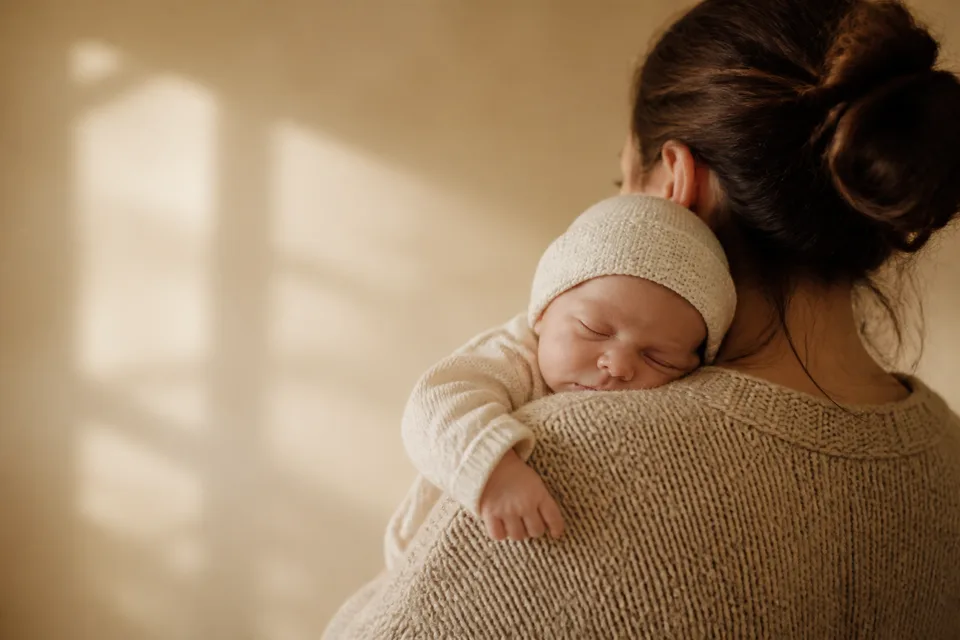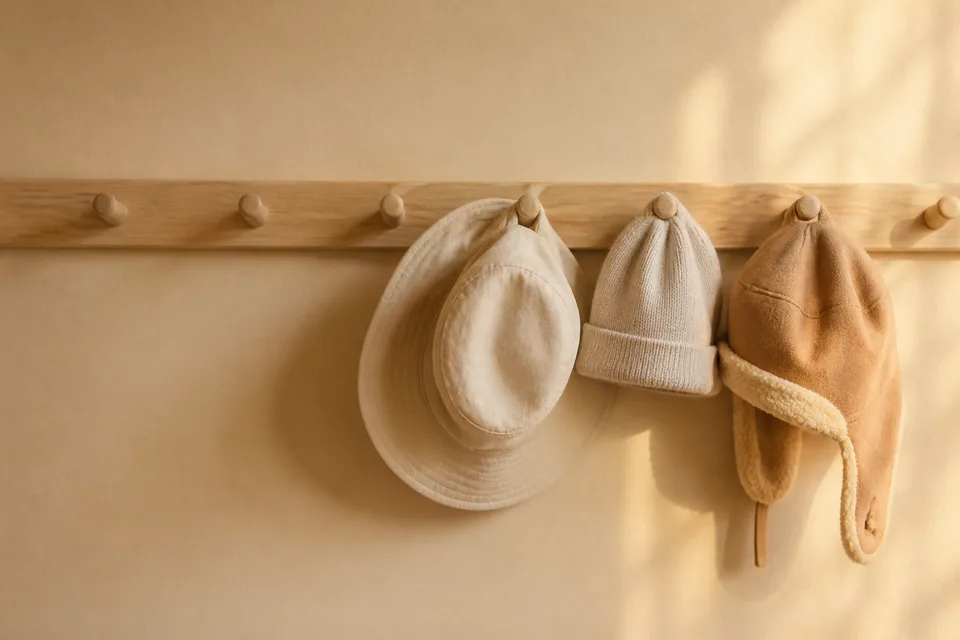
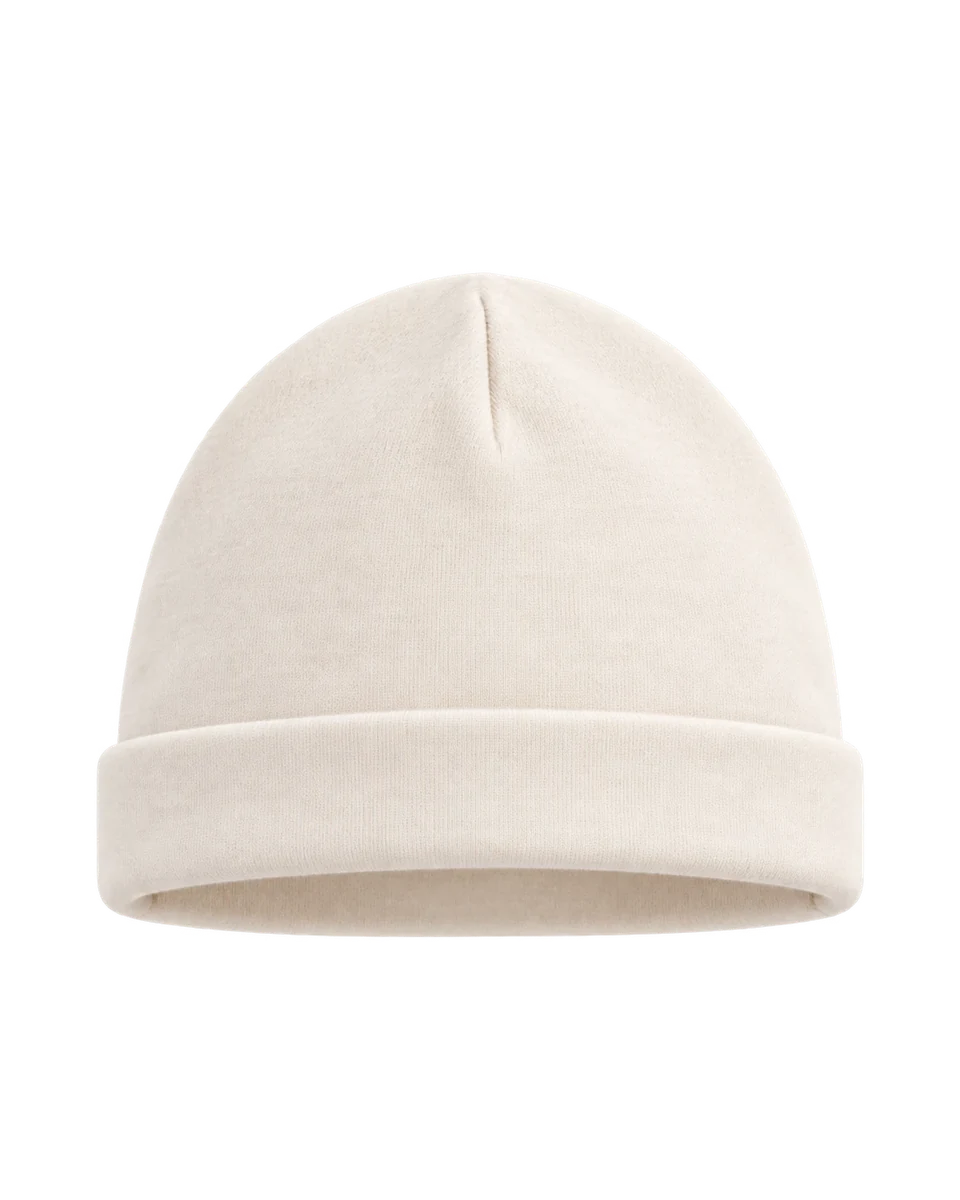
A newborn hat is the thin, stretchy cotton cap of a baby's first days. Most newborn gift sets come with a few, and many hospitals put one on a baby soon after the birth.
It is made for the first hours, when a wet newborn loses heat fast through the head. The cap helps hold a little of that warmth in. It is too thin to keep out cold air, so a chilly walk needs a warmer hat.
After the first days, take it off indoors and for every sleep. Outside, the thin cap can keep the wind off on a mild, breezy day.
- For ages0–3months
- You'll need1–2
- Wear it in theFirst days
What a newborn hat is for
A baby is born wet, into a room much cooler than the womb. The head is big for a newborn's body, and damp hair cools fast, so a bare wet head loses a lot of heat in the first minutes.
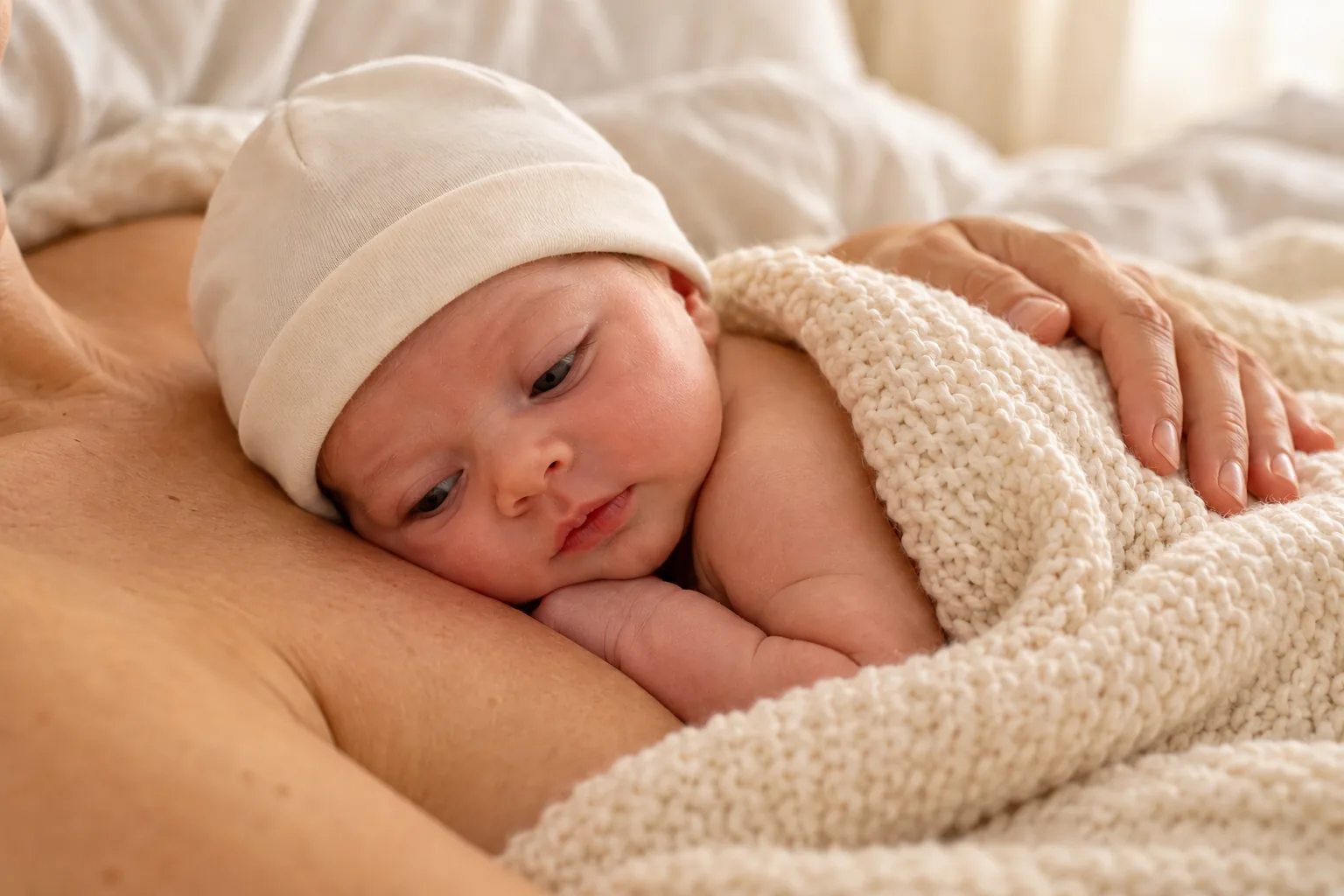
So right after the birth, the midwife or nurse dries your baby, lays your baby skin to skin on your chest with a warm blanket over you both, and puts a cap on the head.
A thin cotton cap holds in only a little heat. Drying your baby and skin to skin do most of the work.
Types of newborn hat
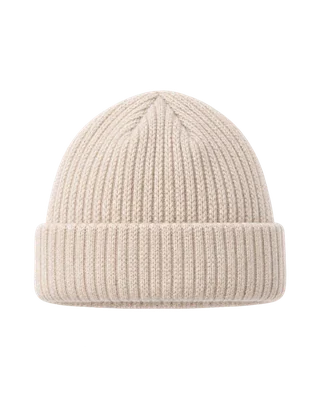
Any of these does the job in the first days. For the hospital bag, pick a cuffed cap or a knot hat: the cuff unfolds and the knot loosens as the head grows. For a winter baby, a wool and silk cap can go under the warm hat.
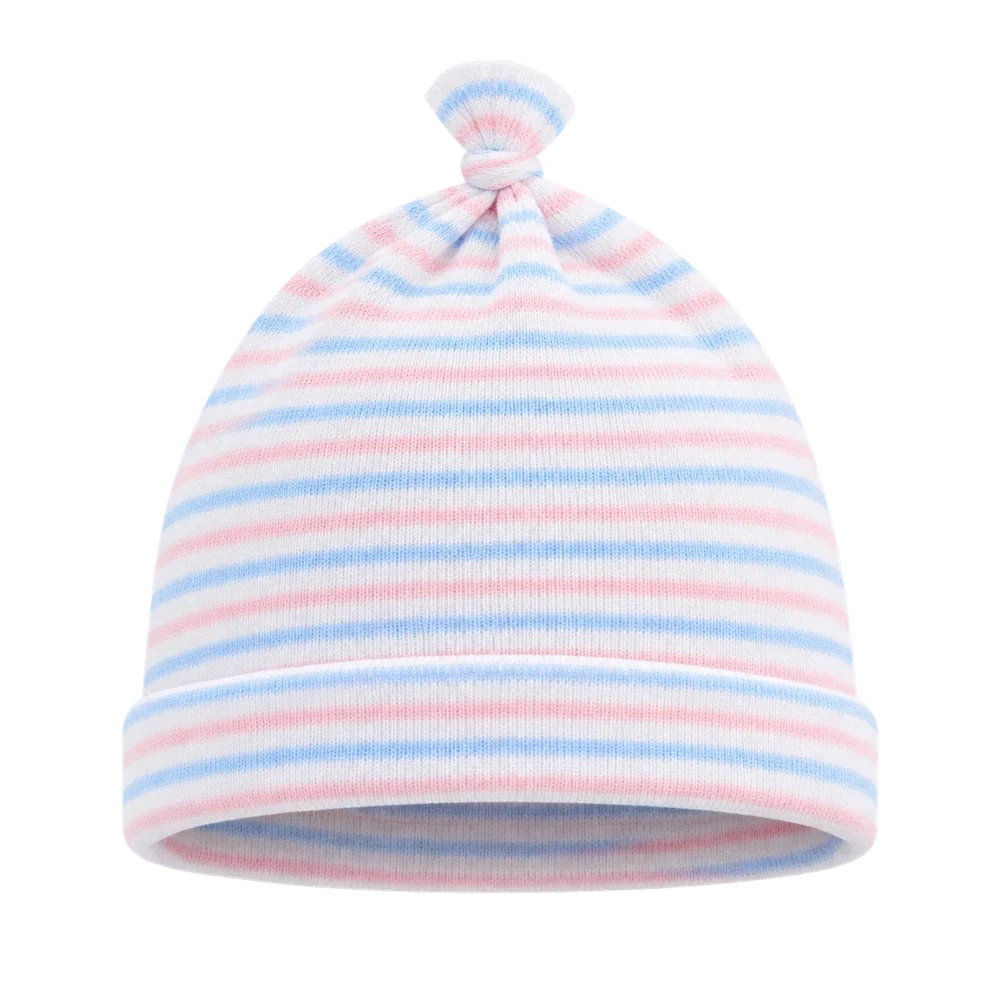
Hospital hat
The thin, stretchy cotton tube, often striped pink and blue, that many hospitals put on a baby after the birth. It is gathered or tied at the top. It is the thinnest kind, and many families keep it as a keepsake.
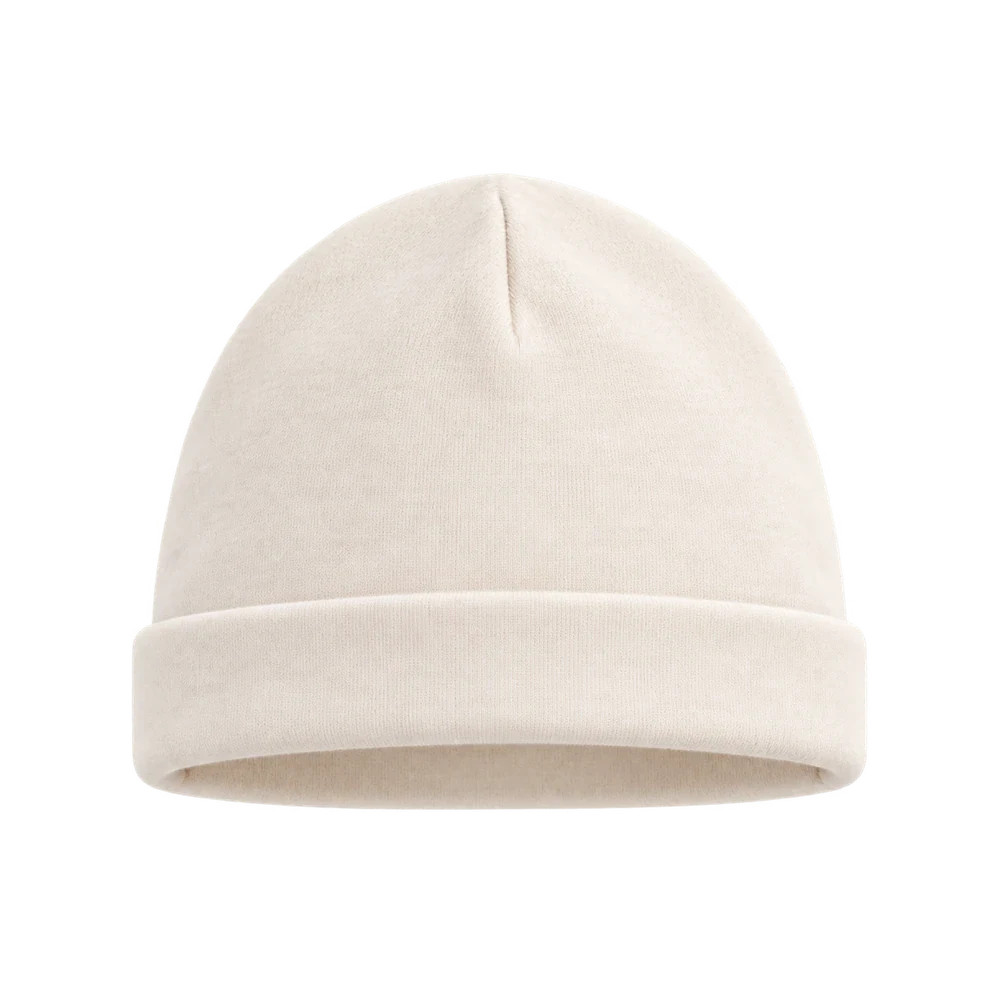
Cuffed cap
Soft cotton jersey (T‑shirt fabric) or rib (fine raised lines that stretch), often in two layers, with a cuff you fold up. Unfold the cuff as the head grows. Gift sets usually have this kind.
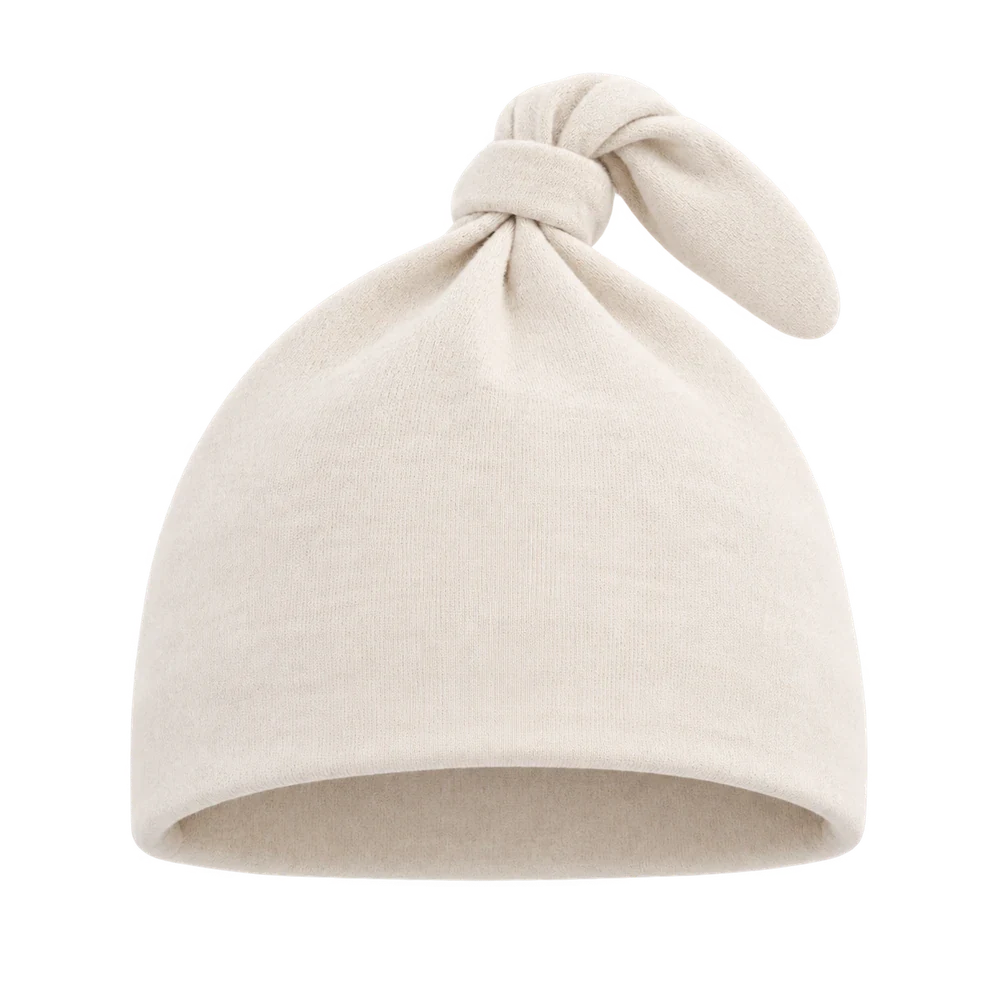
Knot hat
A long cotton jersey cap with the top tied in a knot. Tie the knot looser as the head grows, so one hat fits for longer. Many are sold for 0–4 months.
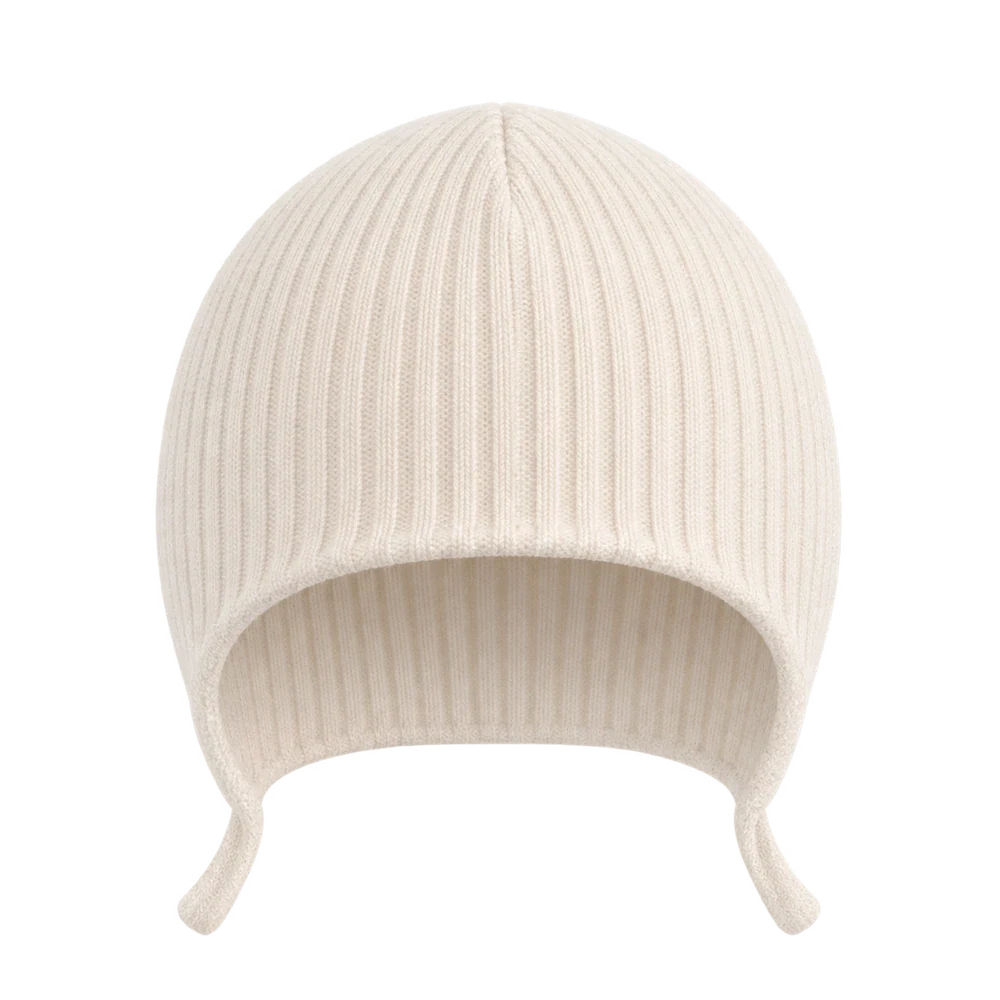
Wool and silk cap
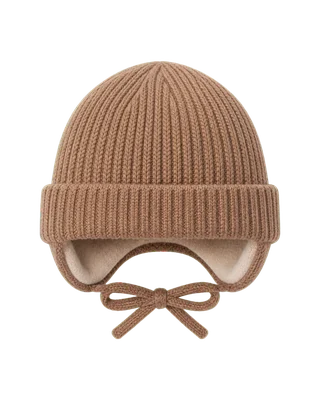
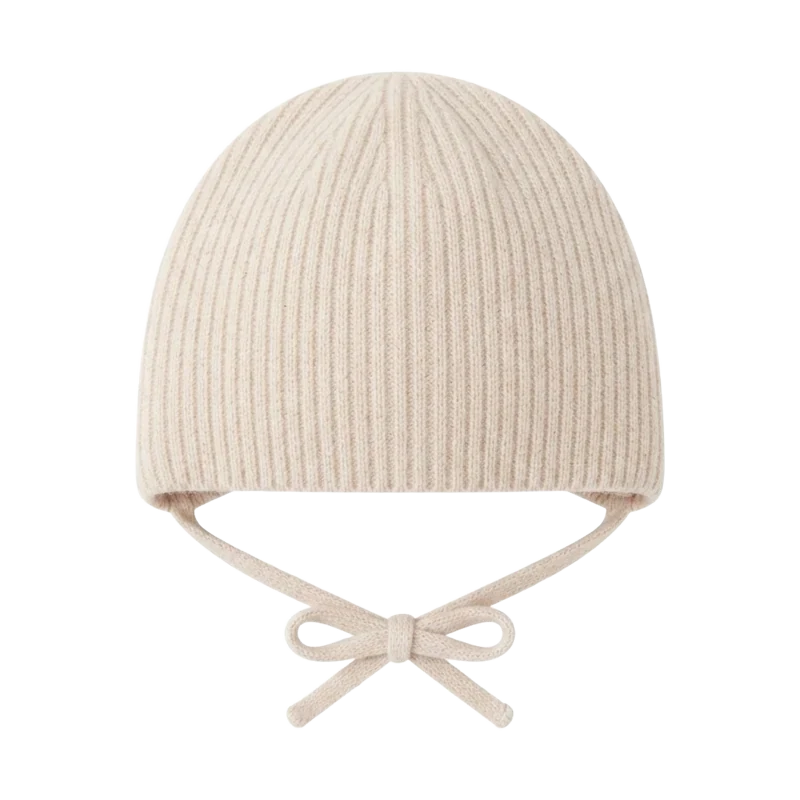
Fine rib knit of merino wool and silk, often a bonnet shape that ties under the chin. It is a little warmer than cotton. Wash it by hand, and keep any ties short so they cannot catch around the neck.
How to choose a newborn hat
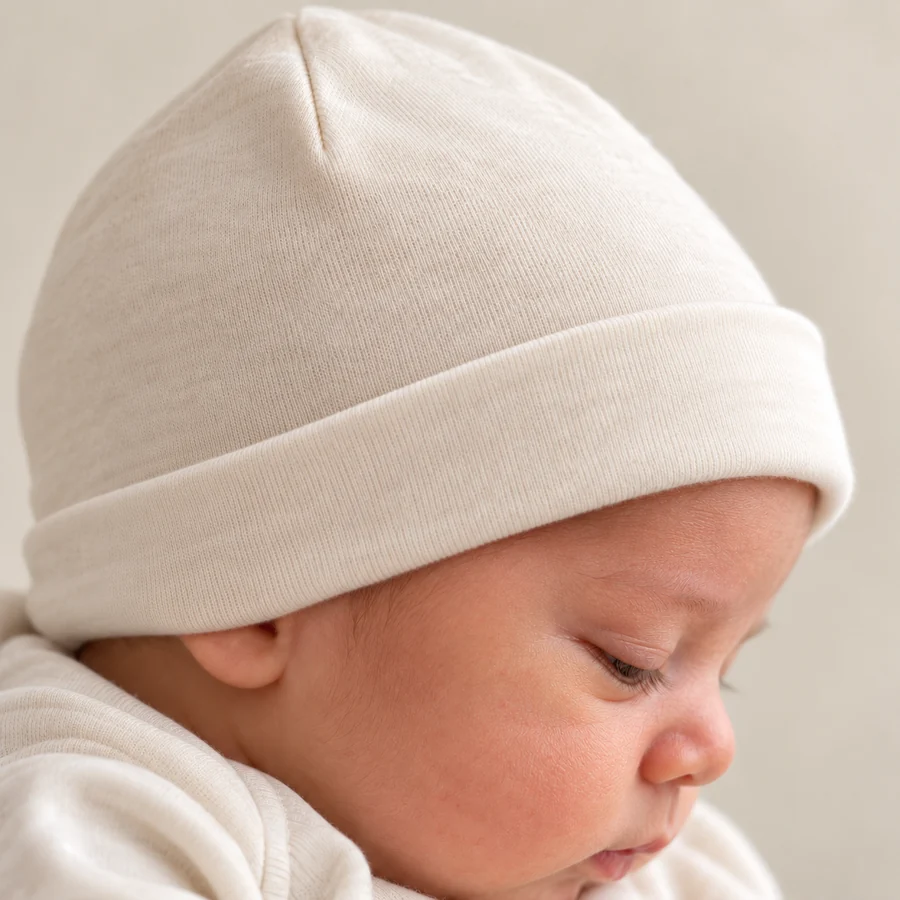
1. A size made for newborns
A full-term newborn's head measures about 34 cm (13.5 in) around, and newborn hats are often too big. Before the birth, the newborn size is enough, because the cap is mostly for the first days. If your baby is born small, measure the head and look for a preemie size, made for babies born early.
- Good: Edge rests above the eyebrows
- Good: No red line after wearing
- Not good: Slides down over the eyes
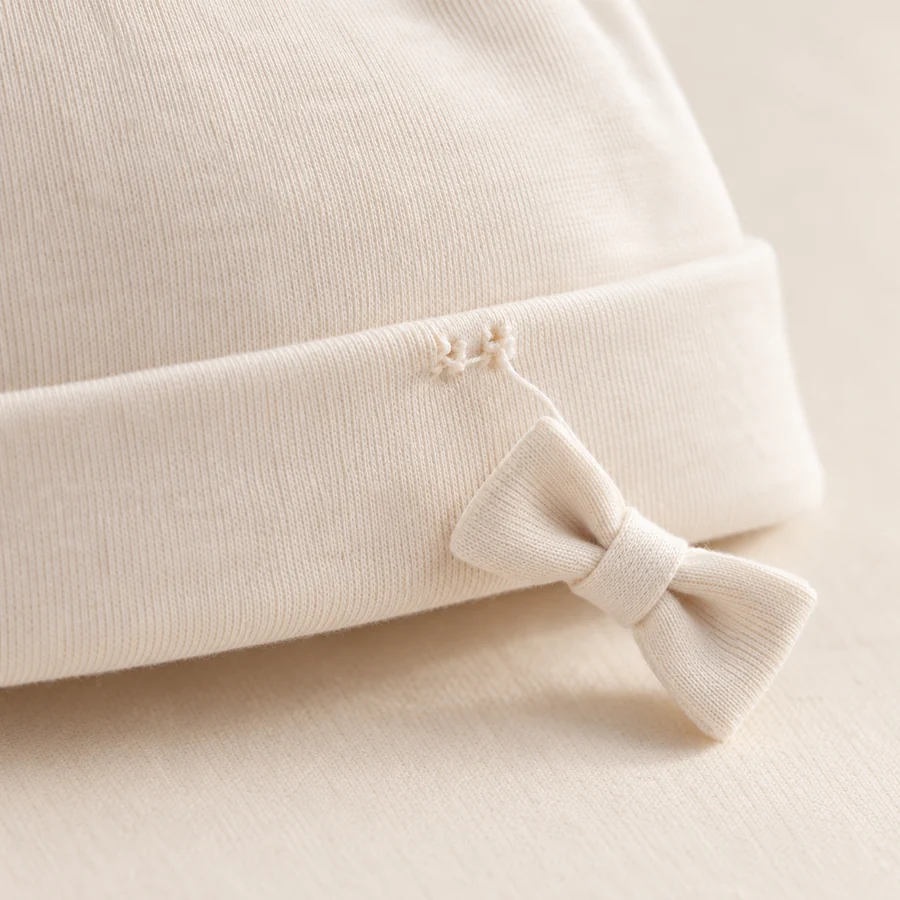
2. Nothing that can come off
Bows, buttons and glued‑on gems can come loose, and a small part can end up in your baby's mouth. A plain cap, or a knot made of the cap's own fabric, has nothing to come off.
- Good: Nothing sewn or glued on
- Good: Knot made of the fabric
- Not good: Glued‑on bow or gem
When it goes on, and when it comes off
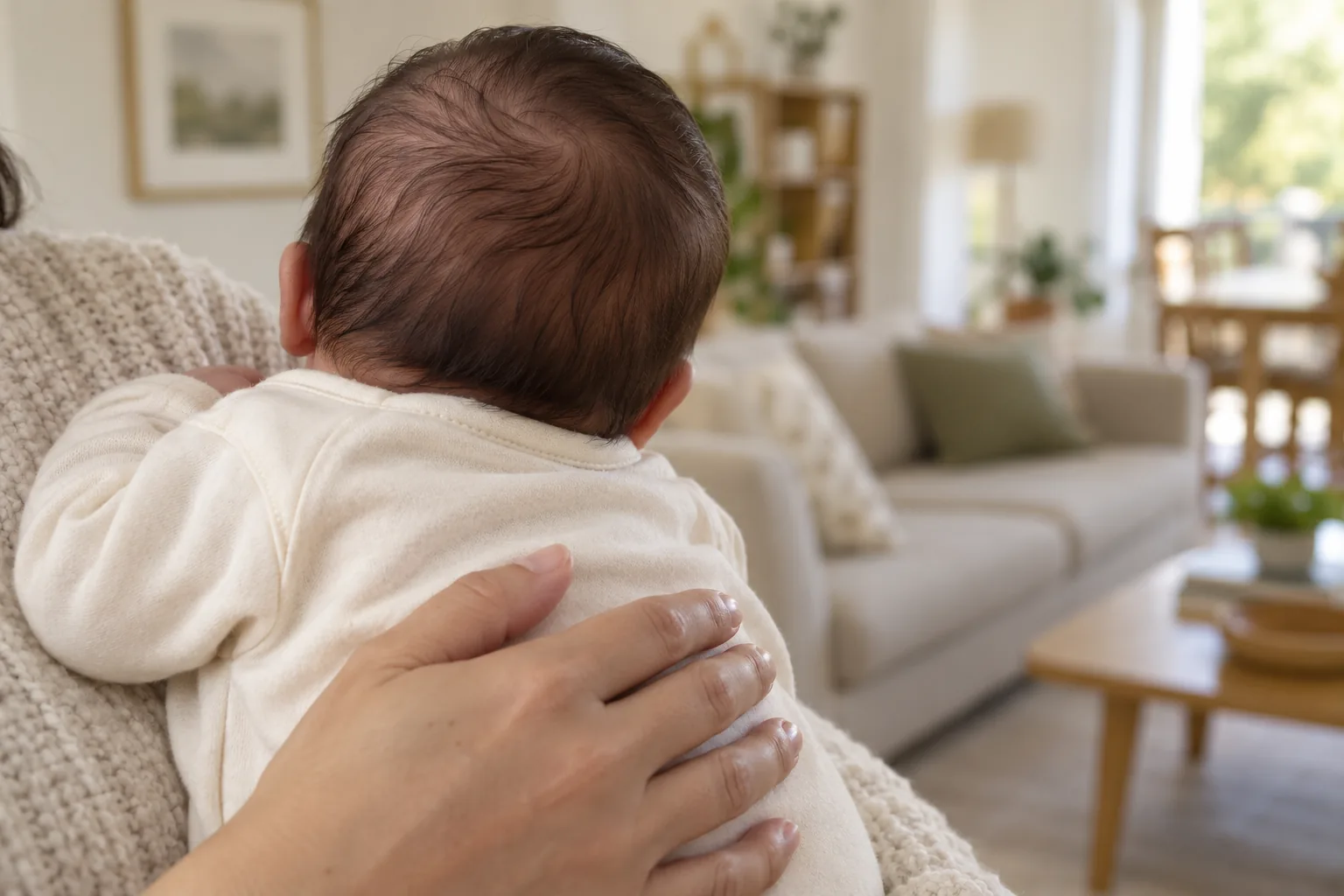
Indoors and in a warm car
Off once you are home, and as soon as a car, bus or shop is warm, even if it wakes your baby.
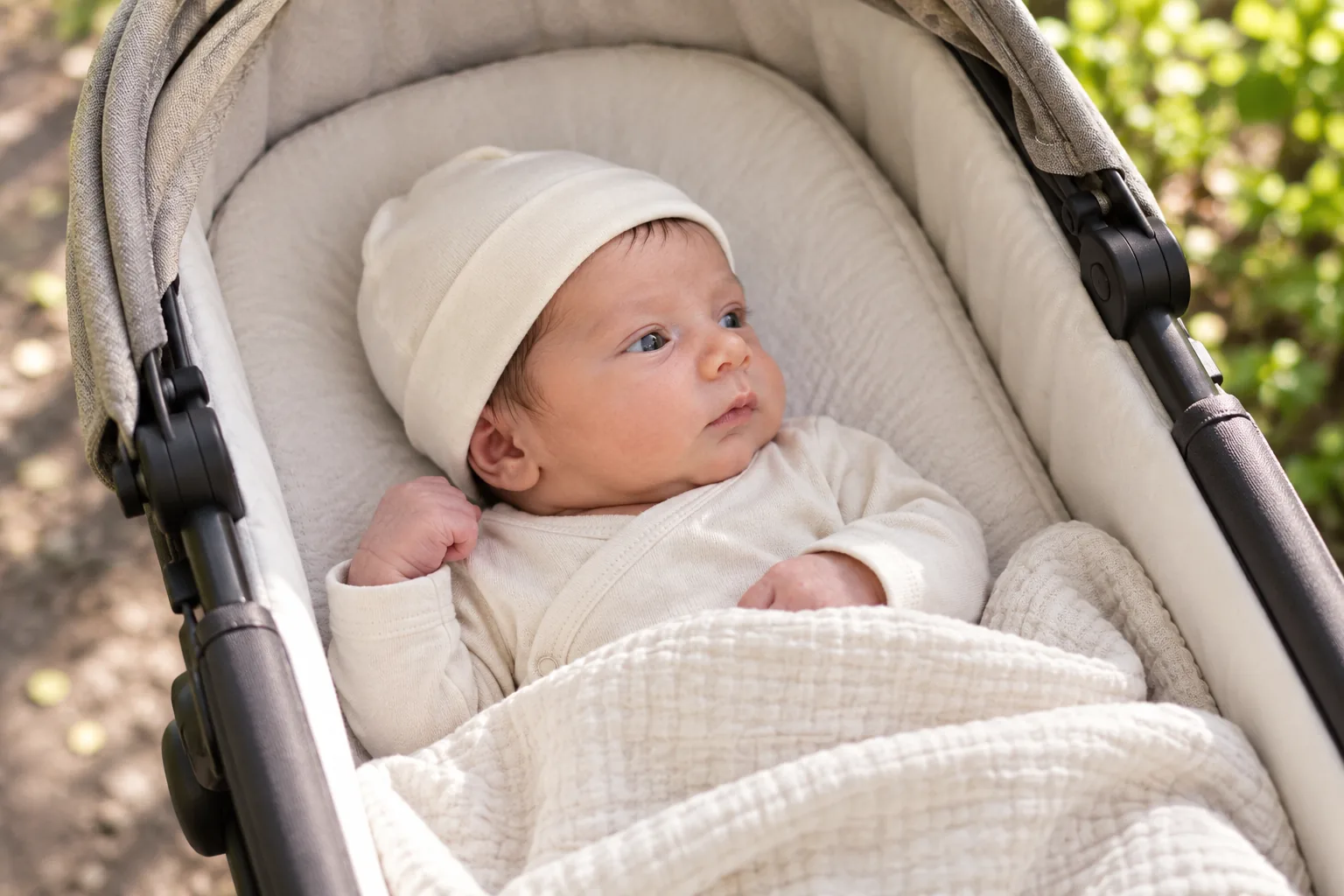
Outside
Go by the feels‑like temperature, the air with the wind counted in. From 16°C (61°F) up, a newborn's head can stay bare, and on a breezy day the thin cap keeps the wind off. Below 16°C (61°F) the cap is too thin: newborns need a knit hat at 12–15°C (54–59°F) and a warm winter hat below 12°C (54°F), sooner than older babies do.
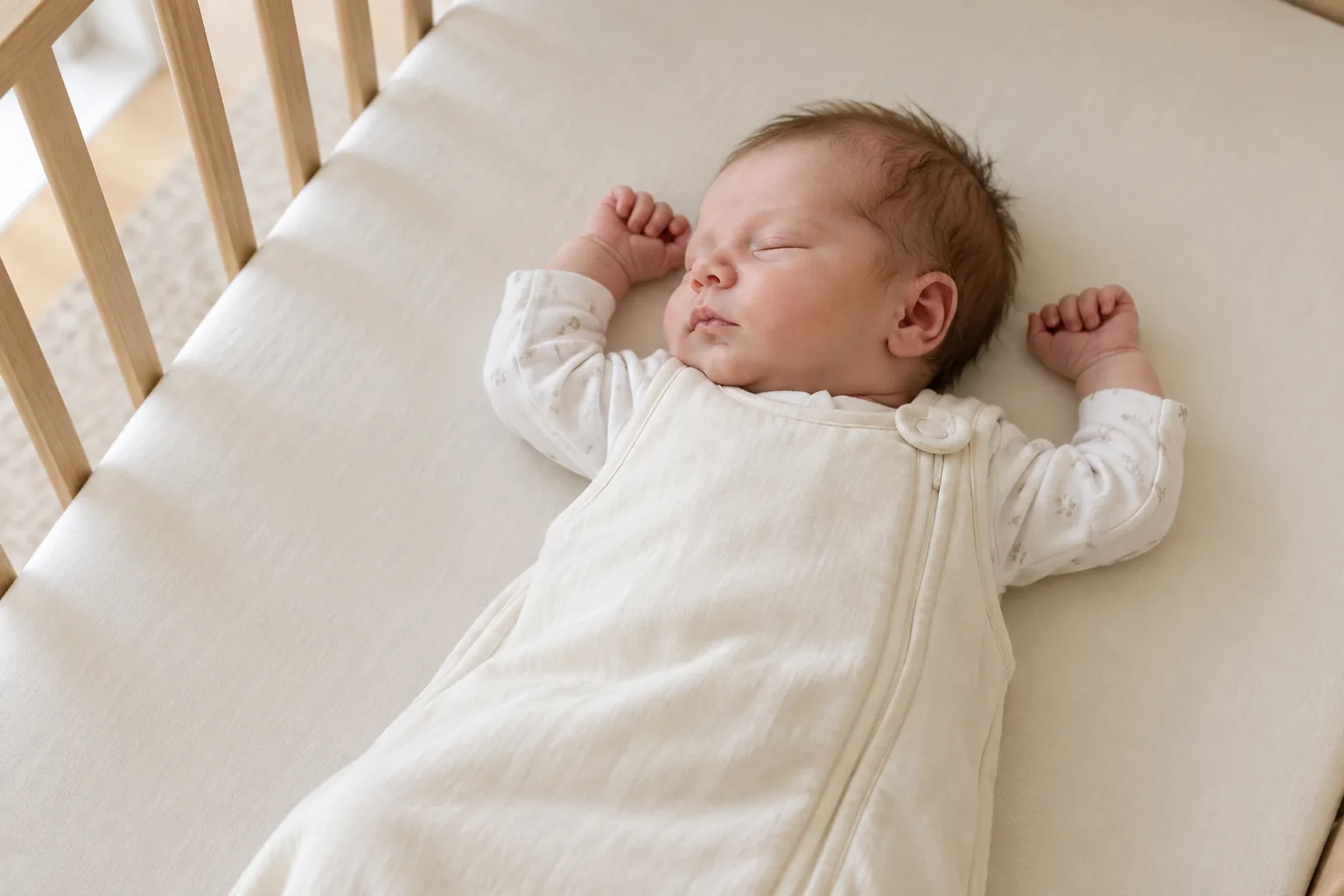
For sleep
Off, for every nap and every night.
Questions parents ask
Do newborns need hats?
Not all the time. A cap helps a little in the first hours after the birth. After that, a newborn needs a hat only outside, when it is cool.
How long should a newborn wear a hat?
In the hospital, for the first hours and days after the birth. After that there is no set number of weeks: at any age, a hat is for cool weather outside.
Should my newborn wear a hat in the house?
No, not once you are home and the room is comfortable. Babies let out extra heat through the head and face, so a hat indoors can make your baby too warm. To check if your baby is too warm or too cold, feel the back of the neck. If it feels cool, add a layer, not a hat.
Should my newborn sleep in a hat?
No, not once you are home. Take the cap off before every sleep, naps too. A baby who gets too warm has a higher risk of SIDS (sudden infant death syndrome), and a cap can slip down over the face.
Why do hospitals put hats on newborns?
To cut the heat a wet newborn loses through the head in the first hours. A thin cap helps only a little, though. When one hospital stopped putting hats on healthy full-term babies, about as many babies got cold as before.
Do babies lose heat through their heads?
Yes, more than adults do. A newborn's head is about a fifth of the skin, an adult's under a tenth, and a wet head after the birth loses heat fastest.
Do newborns need a hat in summer?
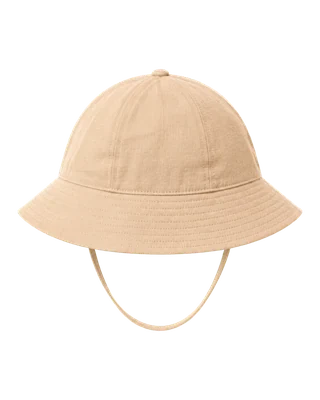
Not a cotton cap, apart from the first hours after the birth. On a warm day, a newborn's head can stay bare. In sunshine, keep a baby under 6 months in the shade, and a sun hat with a brim shades the face.
Do I need to bring a hat to the hospital?
Pack one or two. Many hospitals give out caps, but not all do. If it is cold out, add a knit hat for the way to the car.
How many newborn hats do I need?
One or two. The cap is mostly for the first days, and the newborn size is soon outgrown.
My baby was born early. Do the same rules apply?
Not always. Small and premature babies lose heat faster, and in intensive care they often wear hats while the nurses watch them. At home, follow what your baby's doctors and nurses advise.