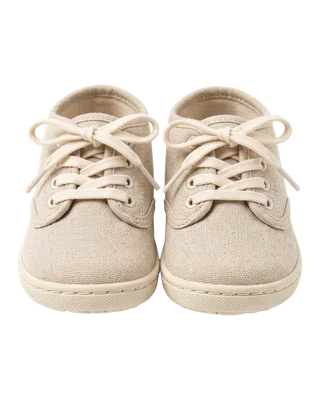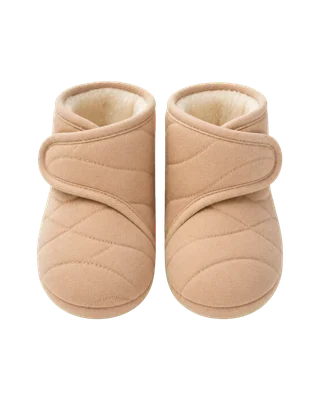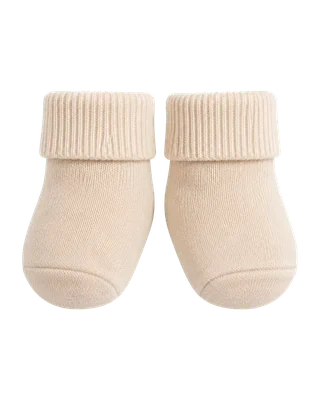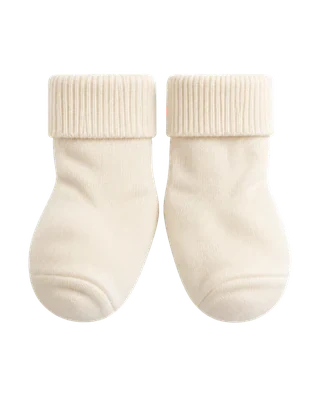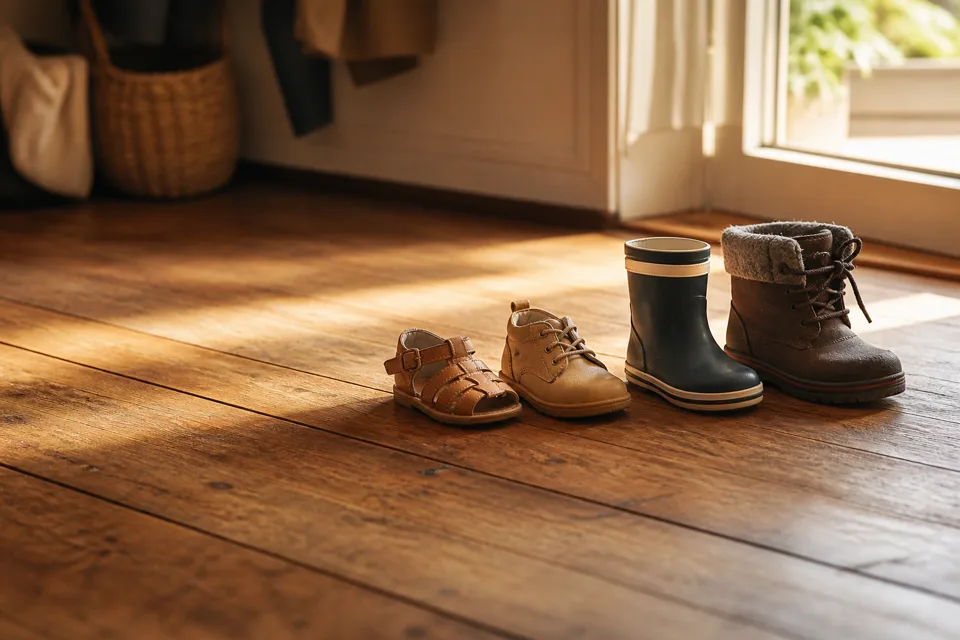
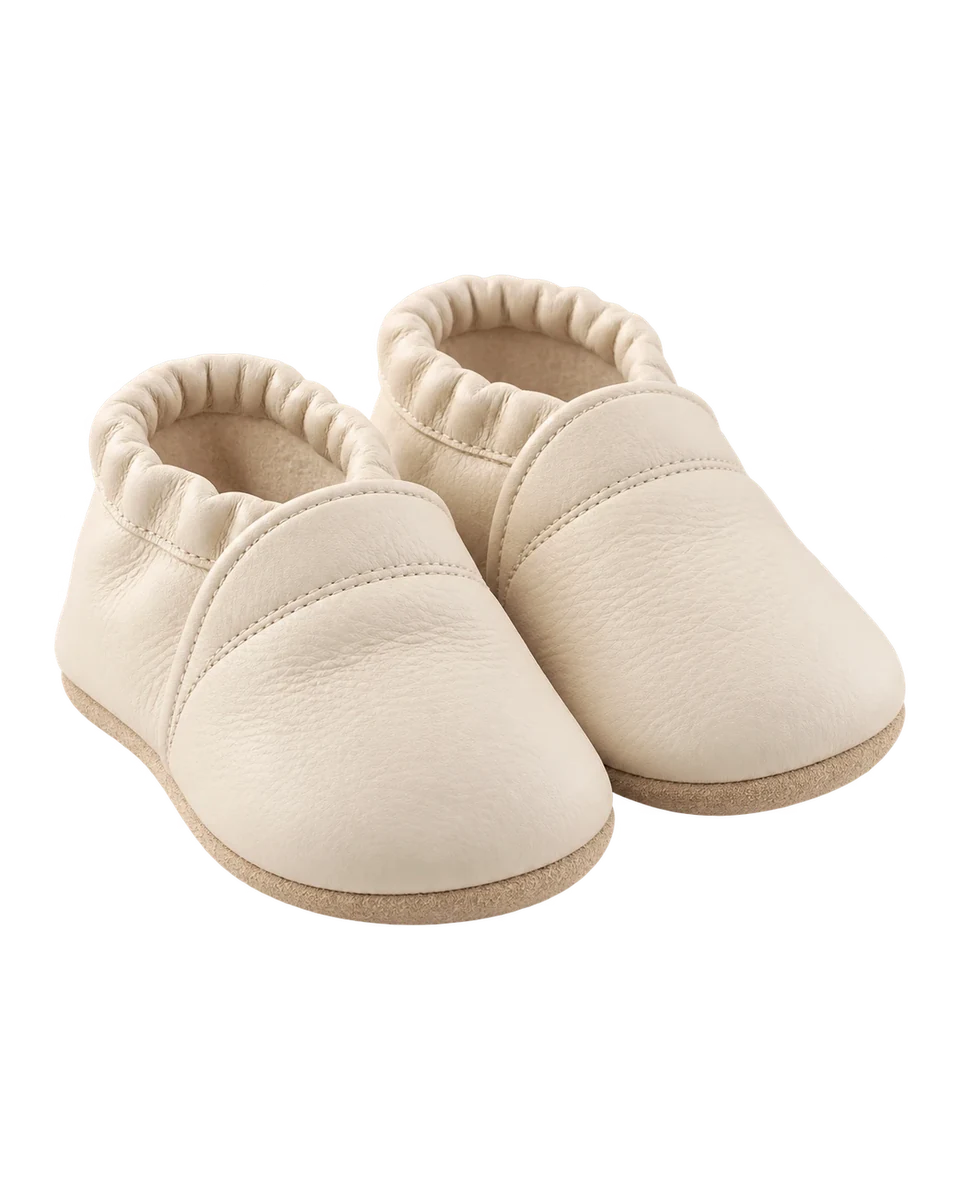
A good toddler slipper is closer to a soft first shoe than to a grown-up's fluffy slipper. It closes around the heel and sits on a thin sole of suede or rubber that bends in your hand. Slippers are for indoors only, so for the park your toddler still needs first shoes.
At home, a toddler is best off barefoot whenever the floor is warm enough. Bare toes spread and grip, and bare soles feel the floor, which is how balance is learned. So you only need slippers for a floor that's too cold for bare feet, or for a daycare that puts a pair on its list.
- FromFirst steps
- You'll need1–2pairs per size
- Wear them onCold floors
Bare feet or slippers at home?
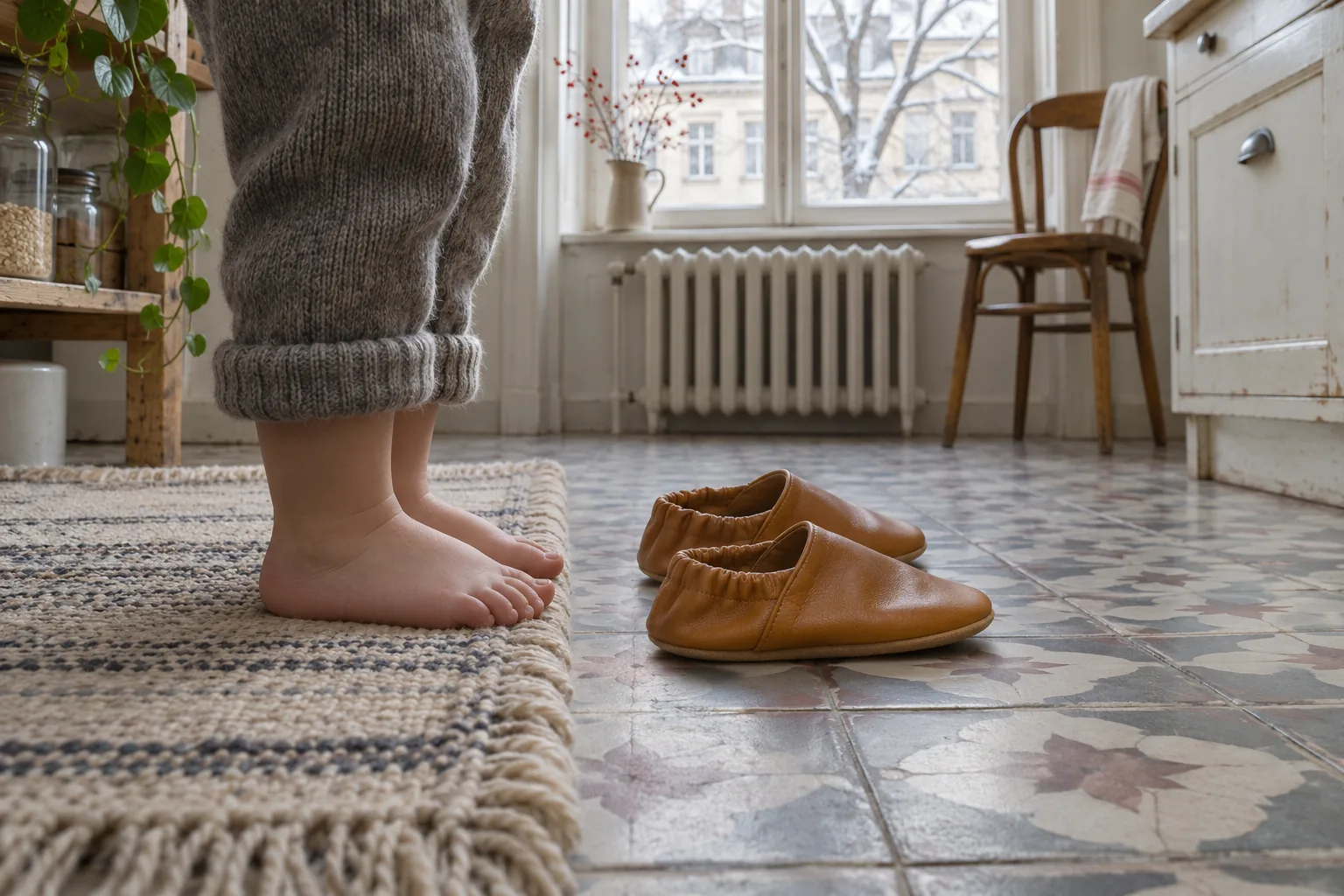
On a rug, carpet or wooden floor in a warm room, leave the feet bare. Tile, stone and old floorboards over an unheated cellar are different, because they stay cold all winter, even in a warm room. That's where slippers or thick grip socks go on.
Plain socks are the worst choice on those floors. They slide on polished wood, tile and laminate, where a rubber sole or grip dots hold. On the stairs, a backless slipper can come off halfway down, so pick a pair that closes around the heel.
Types of slippers
Soft leather slippers are lovely on rugs and carpet, but their suede soles slide on polished wood, tile and laminate. For smooth floors, pick a rubber sole.
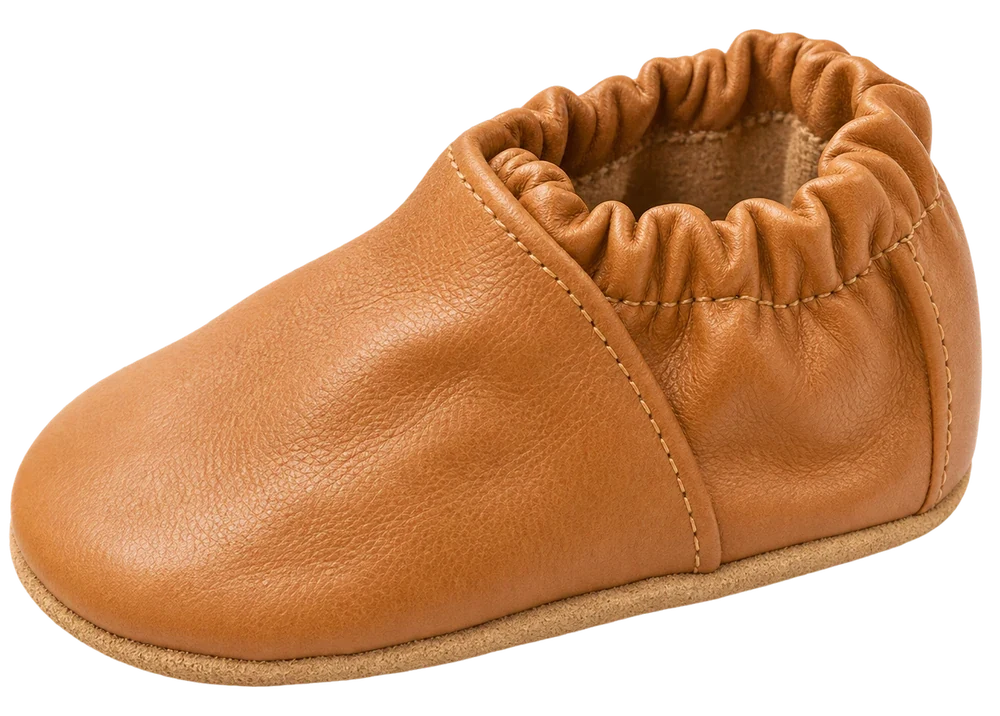
Soft leather slippers (moccasins)
Thin, soft leather with a suede sole and elastic around the ankle, so they go on easily, stay on and bend with every step. They suit a new walker on carpet and rugs best. Outside, the suede soaks through.
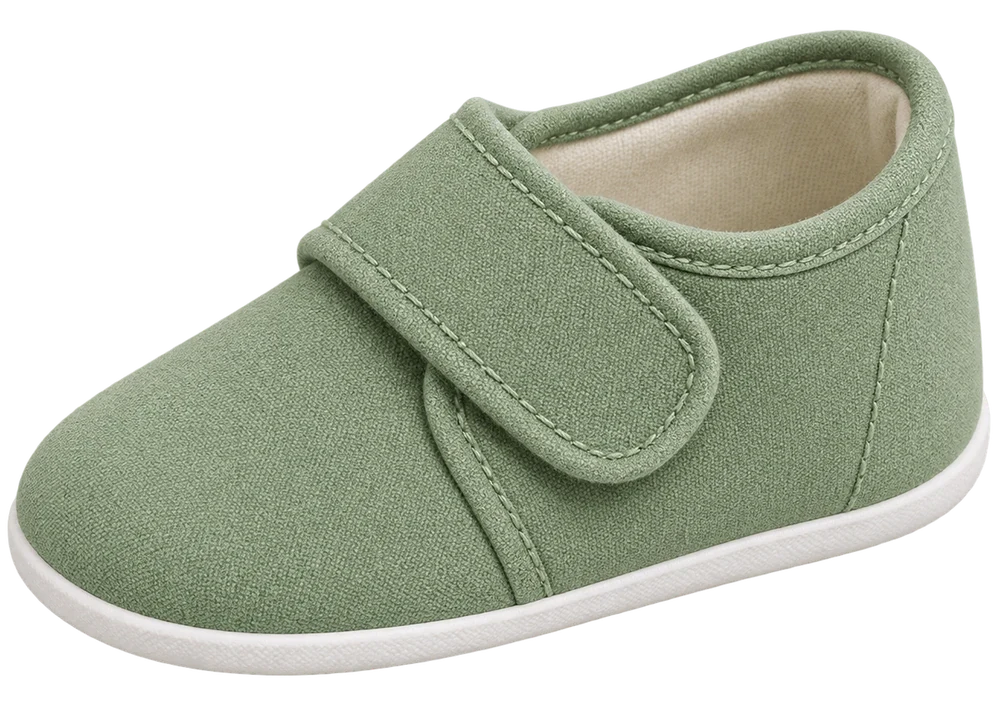
Rubber-soled slippers
A soft upper of cotton, felt or leather on a thin rubber sole, usually with a hook-and-loop strap (Velcro) over the top of the foot. Rubber grips polished wood, tile and laminate, and a toddler can open and close the strap alone, which makes it a good pair for daycare. Barefoot-style pairs are the same idea with a wider front and an even thinner sole.
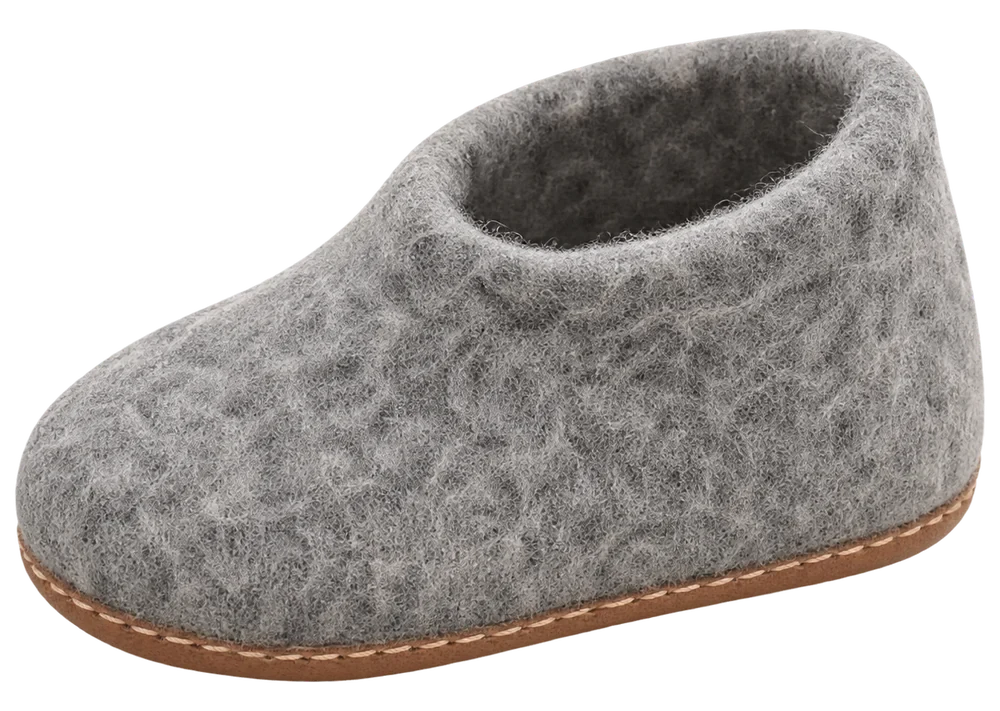
Felted wool slippers
Felted wool is wool washed hot until it shrinks into thick, firm felt. These slippers are closed all around the heel and sit on a leather or rubber sole. They're the warmest of the three, for tile and stone floors in deep winter.
How to choose slippers
Most of this you can check in the shop with one slipper in your hand: look at the back, bend the sole, turn it over. Only the fit needs your toddler standing in it.
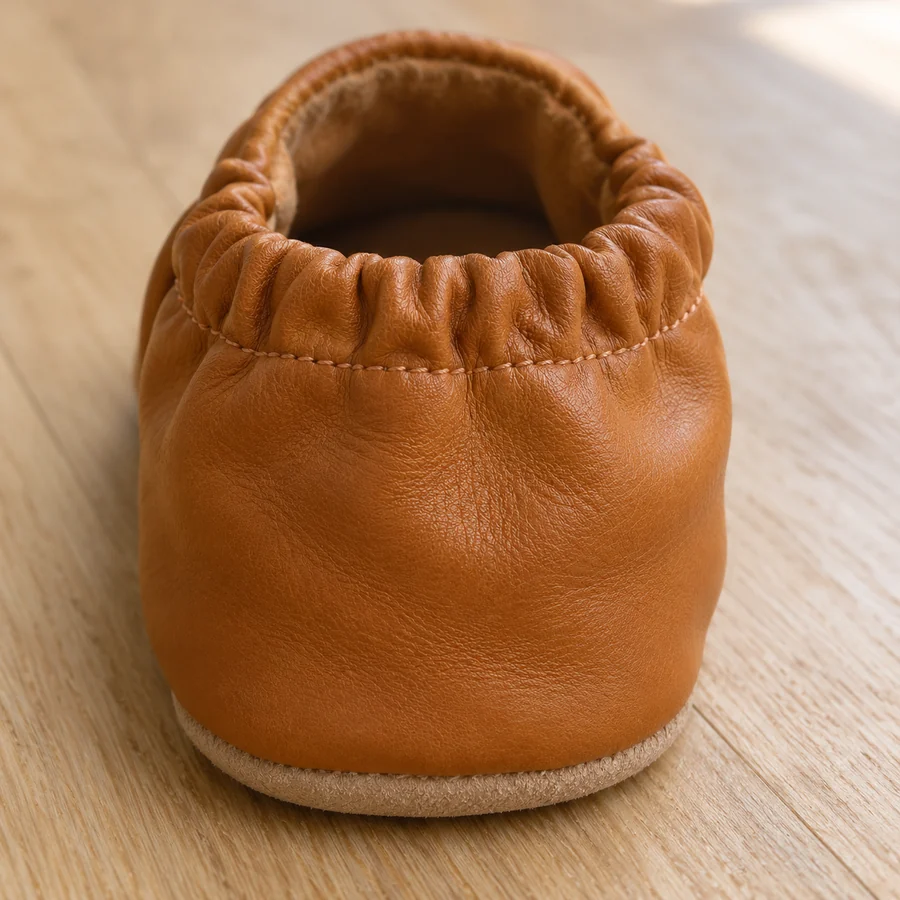
1. A closed heel that holds
The back wraps the heel, and elastic or a strap over the top of the foot holds it there, so the slipper stays on through a game of chase. In a backless slipper, the toes have to grip on every step to keep it on.
- Good: Back wraps the heel
- Good: Elastic or a strap on top
- Not good: Open back, no strap
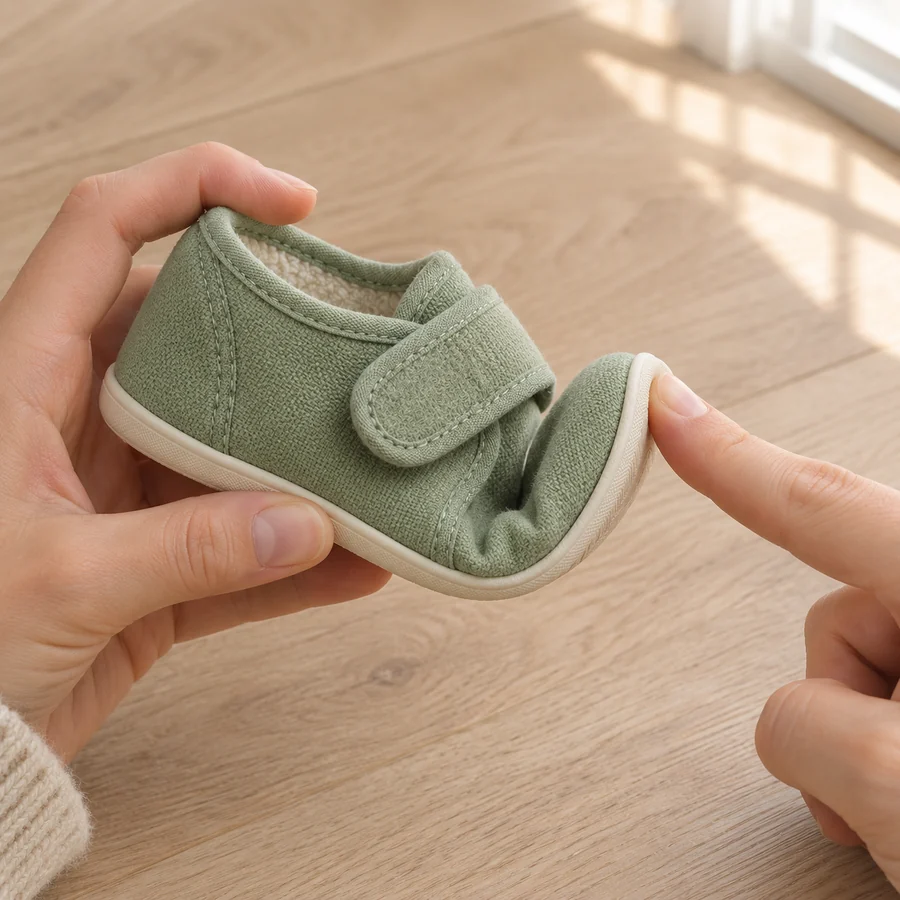
2. A thin sole that bends
Push the toe up with one finger: the sole should fold easily at the ball of the foot. A thin, flat sole lets your toddler feel the floor. A thick, cushioned or arched one takes that away, and a toddler's foot needs no arch support.
- Good: Folds under one finger
- Good: Flat inside, no arch bump
- Not good: Thick foam, stiff to bend
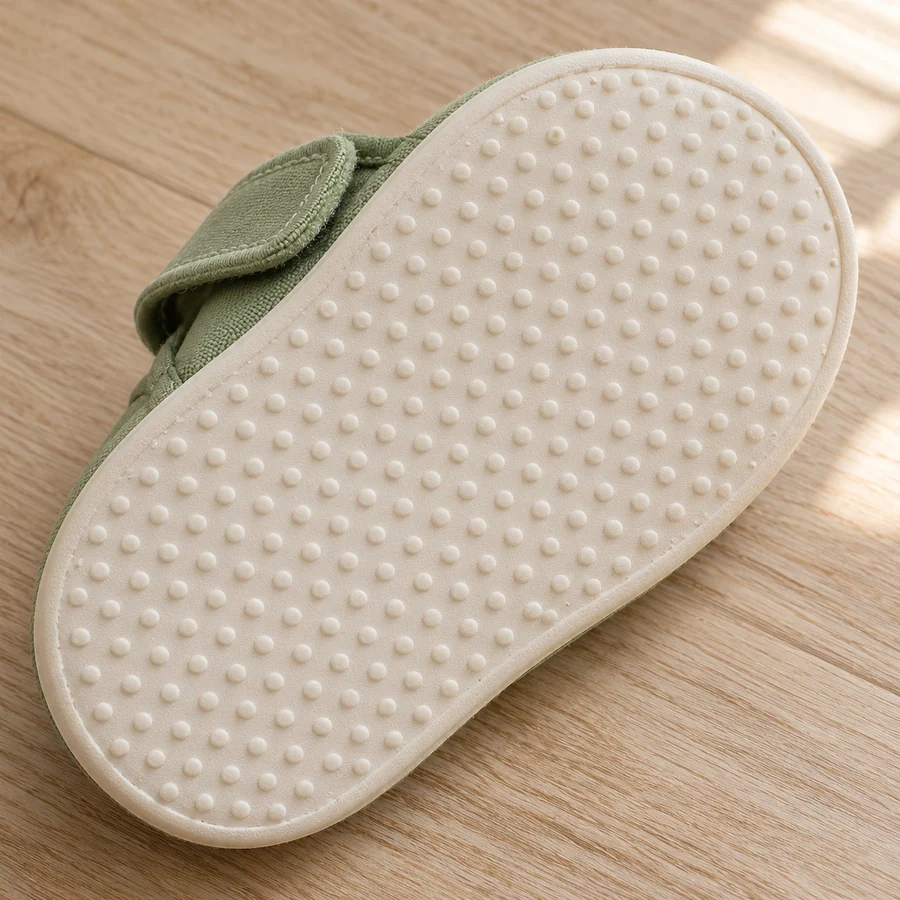
3. Rubber dots for smooth floors
Turn it over. A rubber sole covered in small dots or studs grips wood and tile best. Shallow stripes grip poorly even on a dry floor, and a fabric or plush sole slides like a sock. Go by the sole, not by a non-slip label.
- Good: Rubber dots or small studs
- Good: Dots across the whole sole
- Not good: Shallow stripes or fabric
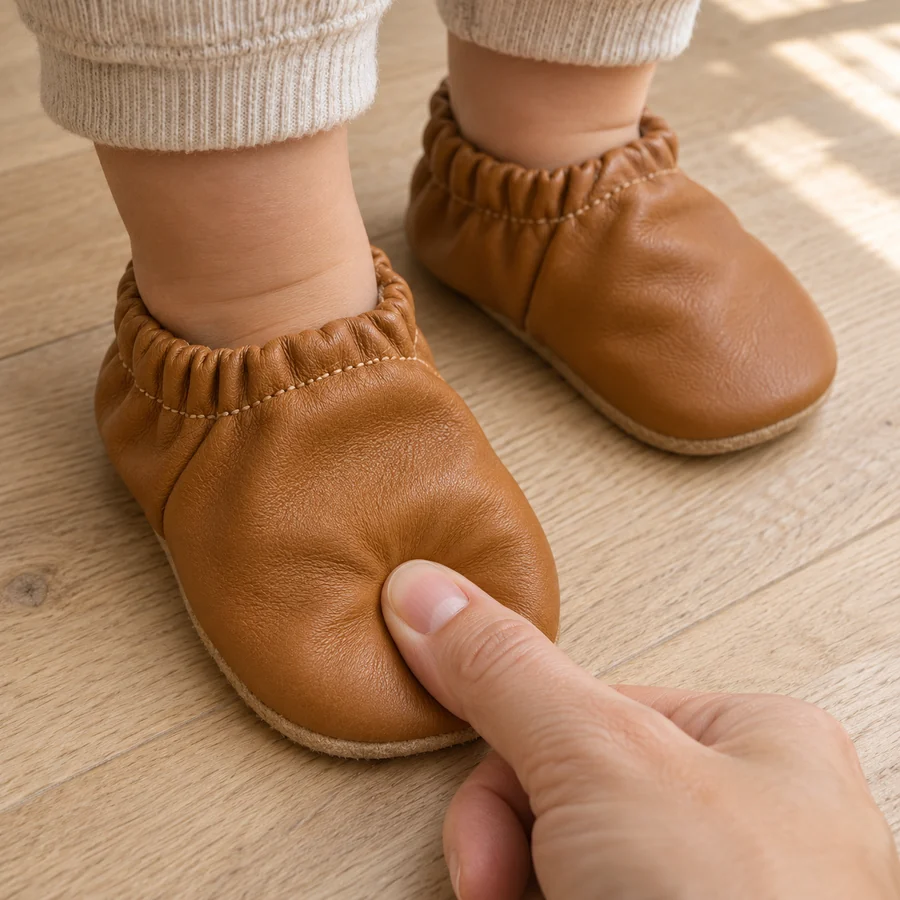
4. Room at the toes
With your toddler standing, leave 6–10 mm (0.25–0.4 in) between the longest toe and the front, as for first shoes. Slippers are often sold in double sizes, one slipper size for two shoe sizes (7–8), so check the maker's chart against the measured foot. Between two sizes, take the bigger one. A pair bought a whole size up to last slips off the heel on tiptoe.
- Good: 6–10 mm past the longest toe
- Good: Heel stays in on tiptoe
- Not good: A whole size up to last
Slippers or grip socks?
Both keep feet warm and grip a smooth floor. Grip socks suit a crawler, and slippers suit a toddler who runs.
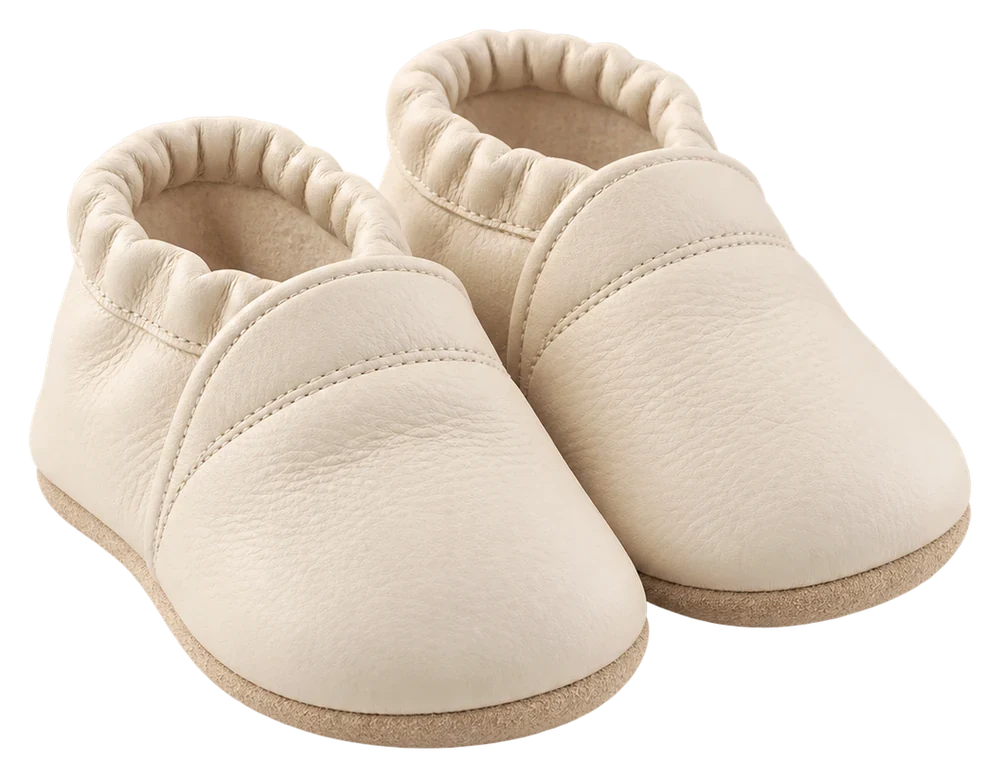
Slippers
With a real sole and a closed heel, they stay on while your toddler runs, climbs and takes the stairs, and they're the pair to buy when a daycare asks for indoor shoes.
- Good: Closed heel stays on
- Good: Fine on the stairs
- Not good: Cost more, often hand-wash
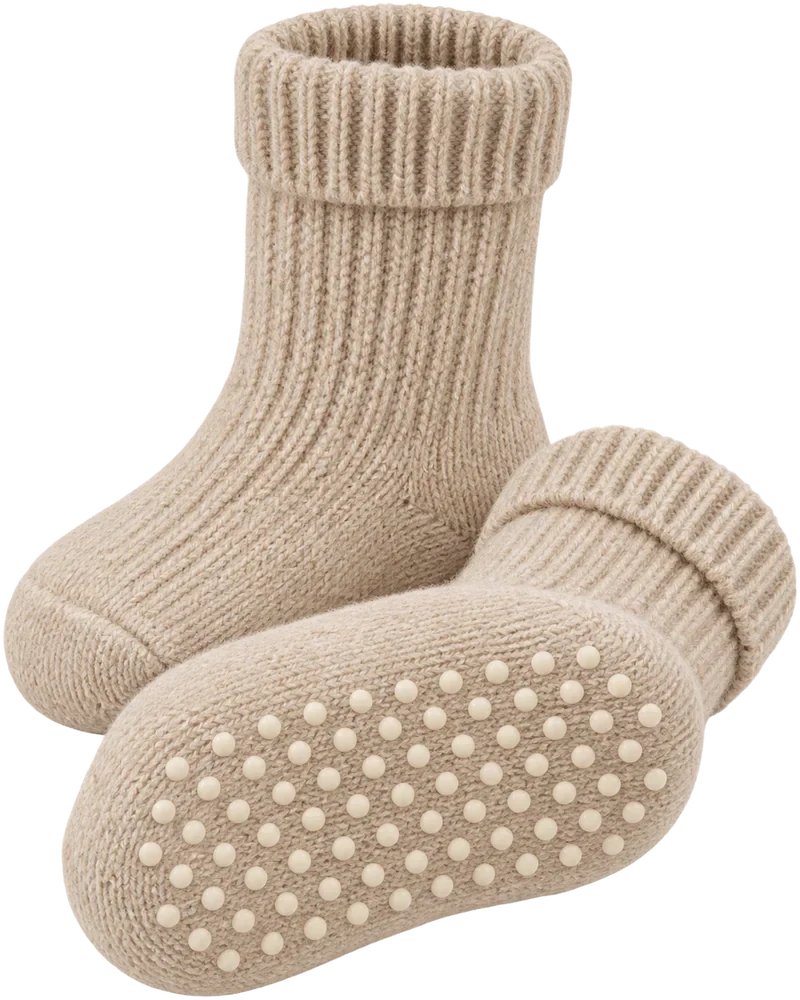
Grip socks
Thick socks with rubber dots under the sole, the closest thing to bare feet. The easy choice for a crawler or a baby who pulls up to stand, and they go in the wash with everything else. On a busy walker they twist around and come off.
- Good: Closest to bare feet
- Good: Into the wash with the rest
- Not good: Twist around and come off
Slippers for daycare and preschool
Ask the daycare before you buy, because every center has its own rule. One wants slippers or grip socks, so feet stay warm and don't slip on smooth floors. Another wants plain slippers without animal heads, and a third keeps everyone in outdoor shoes or barefoot. Some don't allow backless shoes or slides at all.
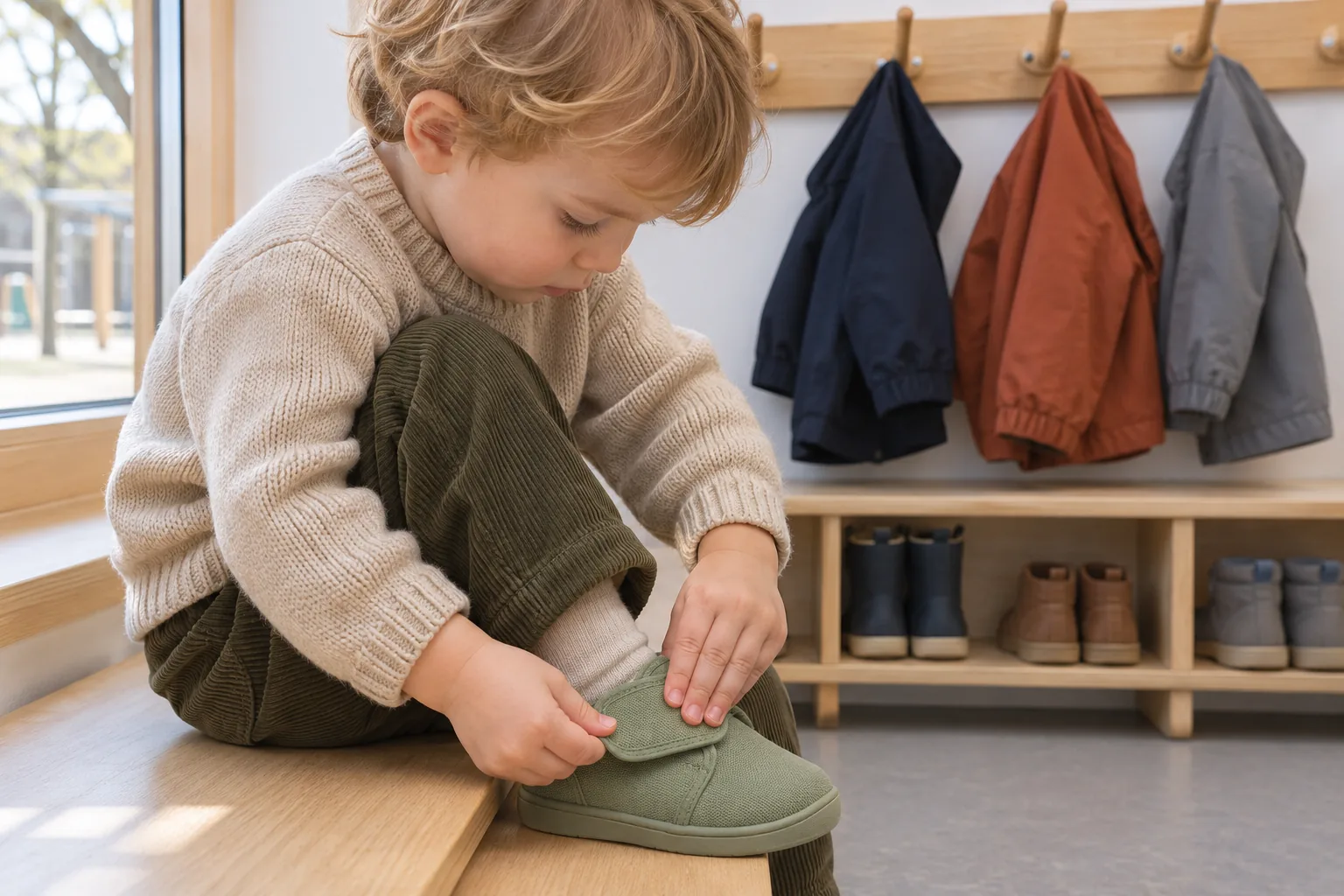
Whatever the list says, the pair that works there is one your child can put on alone: a strap that opens wide, or elastic around a wide opening, and a closed heel that stays on while running. Let your toddler practice putting it on at home for a few days. Then write the name inside the heel and leave the pair there.
Questions parents ask
Do toddlers need slippers, and from what age?
Only for a floor that is too cold for bare feet, or a daycare that asks for them, and only once your toddler walks alone. A soft leather pair suits a new walker, because its thin sole still lets the foot feel the floor. Before the first steps, a crawler on a cold floor wears close-fitting leather moccasins, or grip socks once pulling up to stand.
Are slippers bad for a toddler's feet?
Not a soft, flat pair that fits. What harms growing feet is tightness, because the bones in a young child's toes are still soft, and cramped toes cannot grow straight. A toddler needs no arch support either: almost every toddler looks flat-footed, because a pad of fat fills the arch, and the arch usually forms on its own by about age six.
What size slippers does a 2-year-old wear?
The same size as their shoes. At two, a foot is typically about 14 cm (5.5 in) long, a US toddler 7 or EU 23 on most charts, but feet of the same age differ, so measure your toddler's foot standing, as the baby and toddler shoe size chart shows.
Can toddlers wear slippers outside?
Only rubber-soled ones, and only for a few dry steps, to the car or across the yard. Suede soaks up water and wears smooth on pavement, and a soft slipper does little against stones. For walks, put on first shoes.
How do I stop slippers slipping on a wooden floor?
Brush a suede sole with a suede brush when it looks shiny, to lift the flattened fibers. A rubber sole stops gripping once its pattern has worn flat, and then the pair is done. On a floor that stays slippery, bare feet or a sole with rubber dots hold best.
Are fluffy or animal slippers OK for toddlers?
Yes, if they pass the same checks as any pair: a closed heel and a rubber sole. Many fluffy slippers are backless or have a fabric sole that slides like a sock, and leather, wool and cotton let warm feet breathe better than a plush synthetic lining.
Should my toddler wear socks with slippers?
Either is fine. Thin cotton socks soak up sweat and add a little warmth on a cold floor, and bare feet are fine in leather or wool. Check the fit in the socks your toddler will wear, because a thick sock takes up the room at the toes.
Are foam clogs OK as indoor shoes?
Not for everyday wear on a new walker. The back of a clog sits loose, so the toes grip on every step to hold it on, and some daycares don't allow backless shoes. Keep foam clogs for a few steps by the pool.
How many pairs of slippers does a toddler need?
One pair per size, plus a second pair that stays at daycare if yours asks for one. Feet grow fast at this age, so check the fit about once a month, the same way as for shoes.
How do you wash toddler slippers?
Wipe leather with a damp cloth, hand-wash felted wool in cool water, because heat and rubbing shrink it, and put cotton pairs in the machine inside a laundry bag. Dry them at room temperature, away from the radiator, and check the fit again, since a wash can shrink a pair.