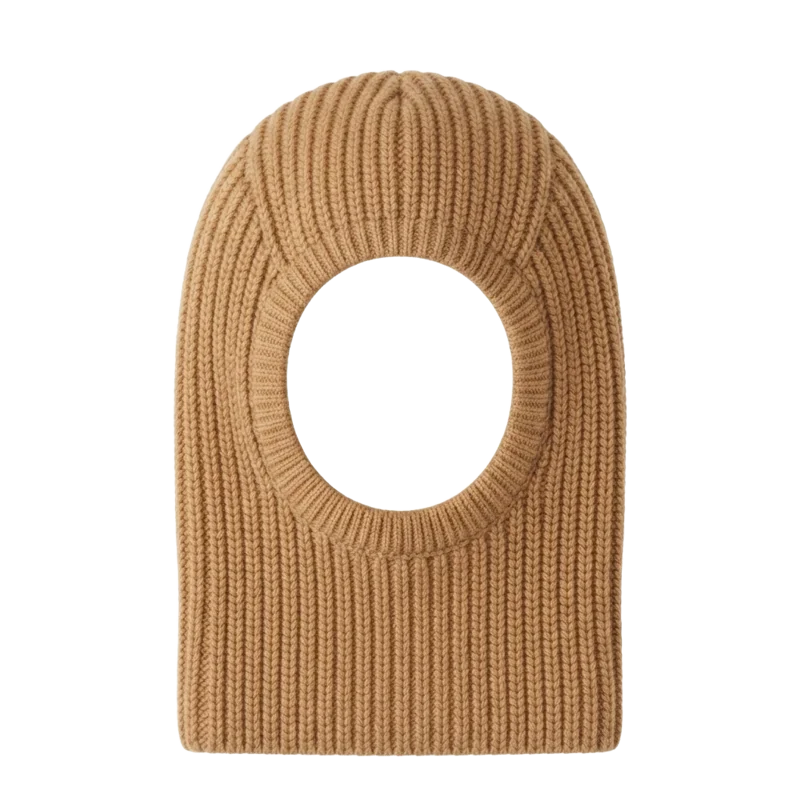
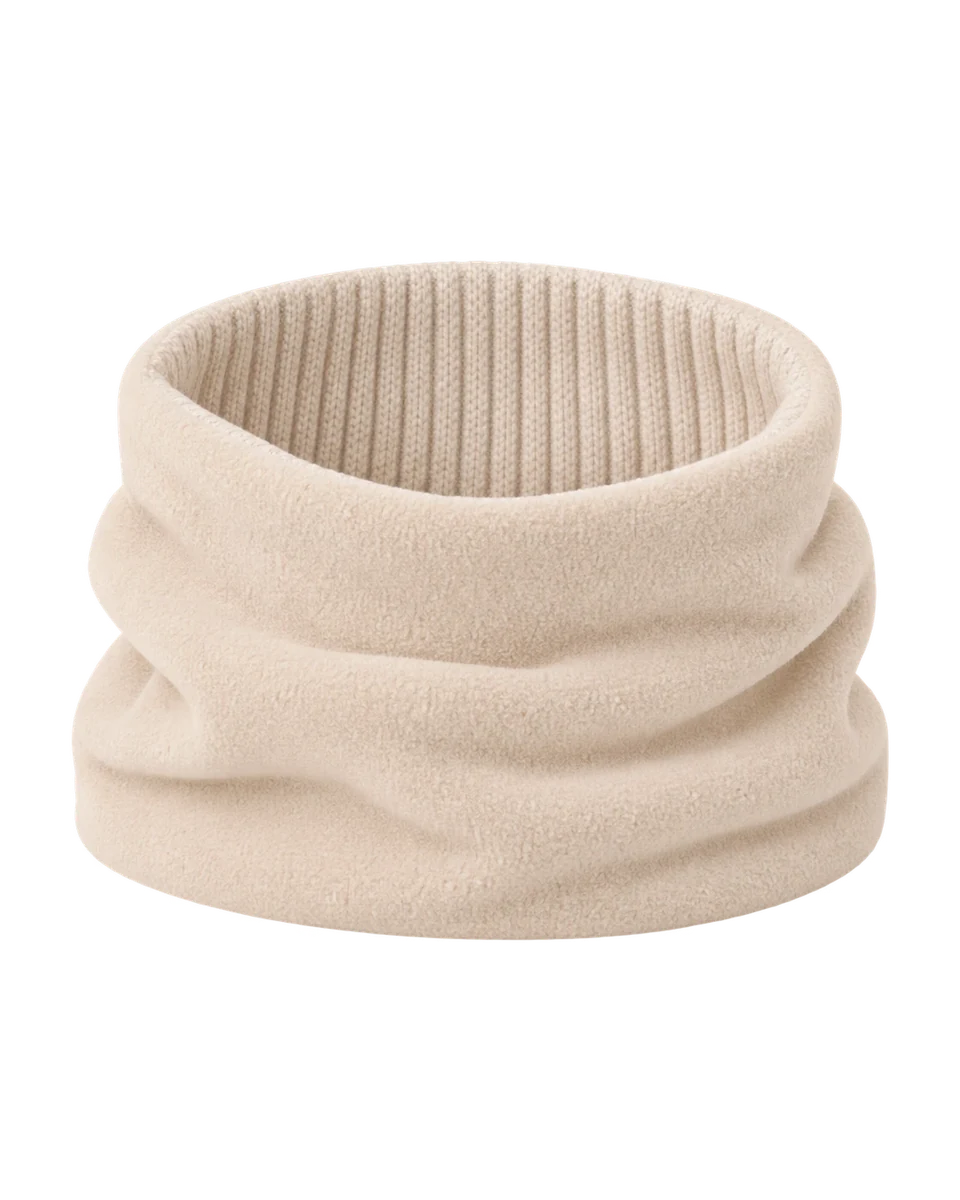
A neck warmer is a short tube of fleece or knit that you pull over your child's head before the jacket goes on. It covers the neck from the chin down into the collar and does a scarf's job, with no ends to hang loose.
Most babies can do without one. In a pram suit, or a jacket zipped up to the chin, the neck is already covered, and a balaclava takes care of windy days.
You'll want one once your child walks and plays outside in a jacket: on the playground, at daycare, in the snow.
- FromFirst steps
- You'll need1
- Wear it below8°C46°F
Why a neck warmer instead of a scarf
On a slide or a jungle gym, the end of a scarf can slip into a gap and pull tight around the neck as your child moves on. A neck warmer has no ends to catch.
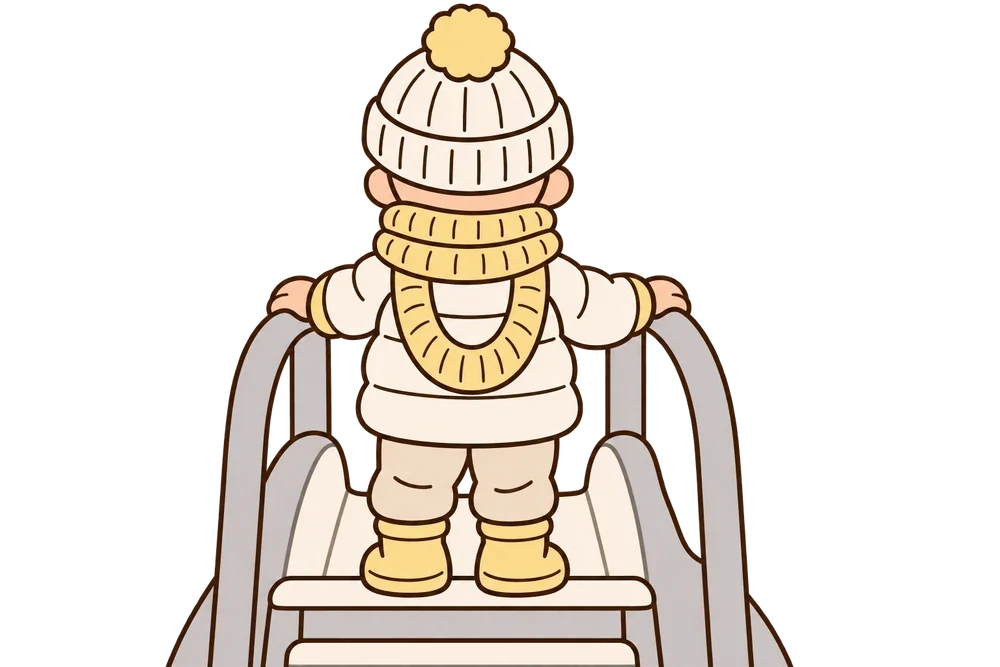
A tube only helps when it sits close. One that fits snugly around the neck has nothing to slip into a gap, while a long loop wrapped twice hangs loose, the way a scarf does.
What hangs when your child climbs
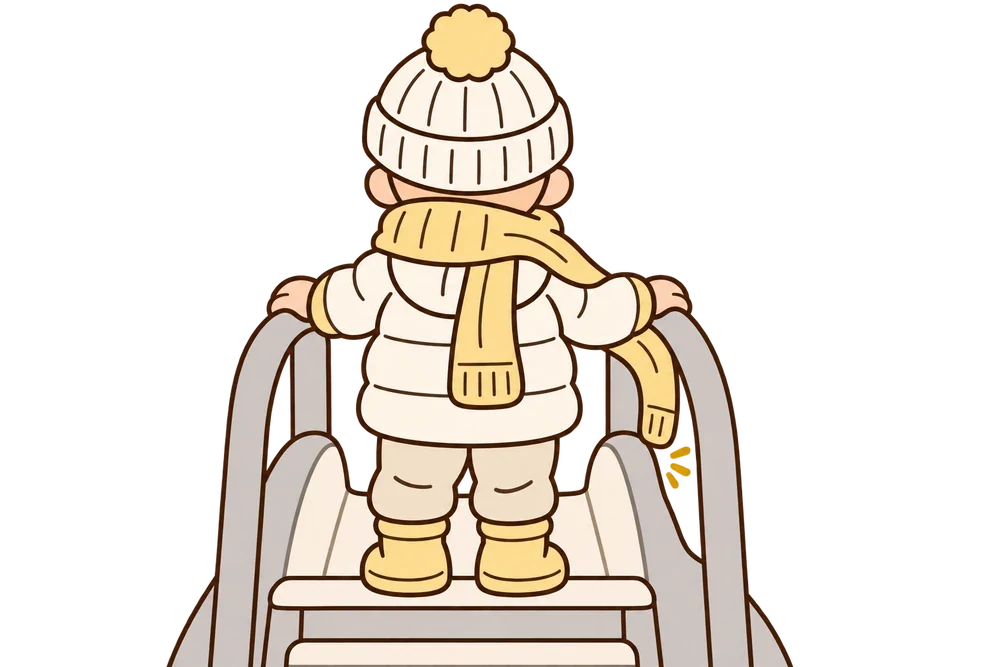
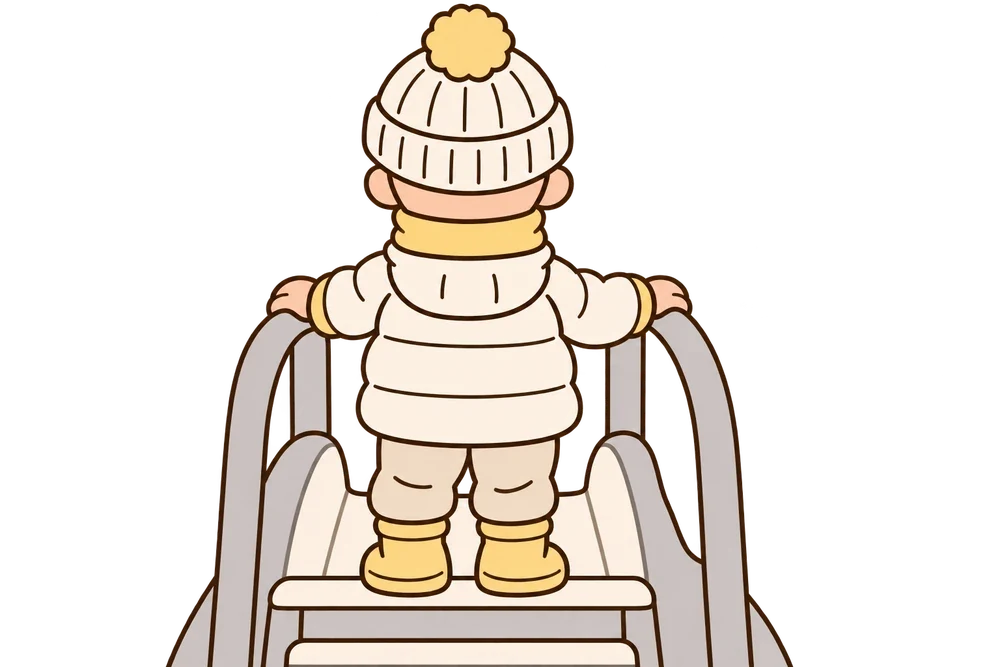
Not good: Two loose ends
One end has swung over the handrail into the gap beside the slide. That's where it can catch as your child sits down to slide.
Not good: A loop that hangs down
A loop scarf, sold as an infinity scarf, has no ends. Wrapped twice, its outer loop still hangs as loose as a scarf.
Good: Nothing hangs
A snug tube sits close around the neck and tucks into the collar.
Types of neck warmer
Every kind pulls on over the head. Pick by the weather and by what your child does outside.
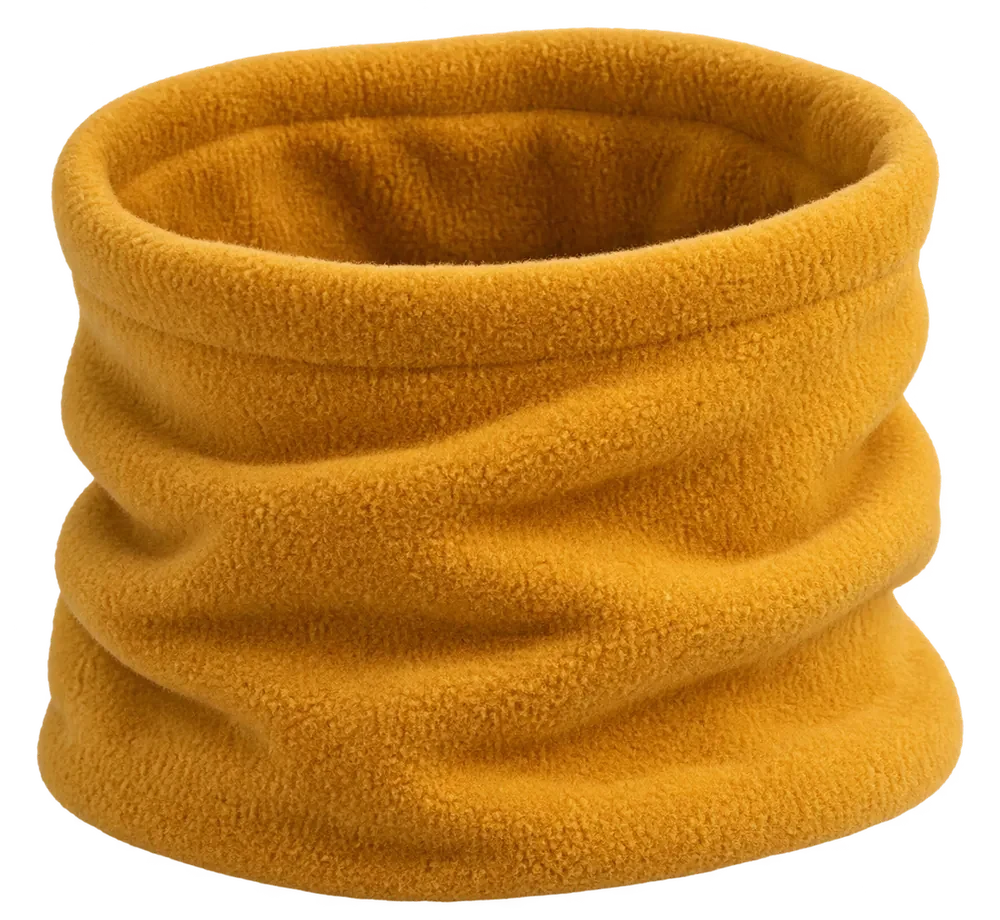
Fleece tube
Warm, and quick to dry after snow play, so it suits most cold days, at daycare and on the playground. Some have a second, fluffier layer inside for the coldest days.
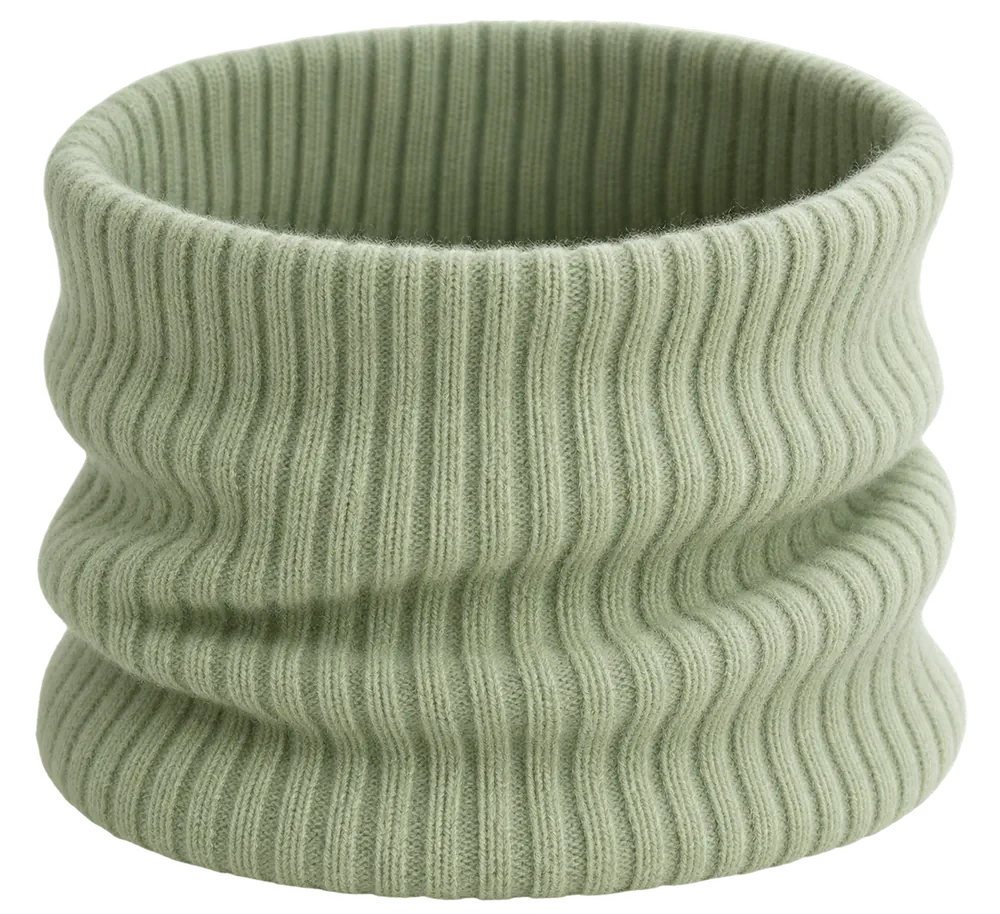
Knit tube
Merino wool (a fine, soft wool) or cotton knit, thinner than fleece. It suits cool days, and it's thin enough to go under a hood. Coarse wool can itch on the chin.
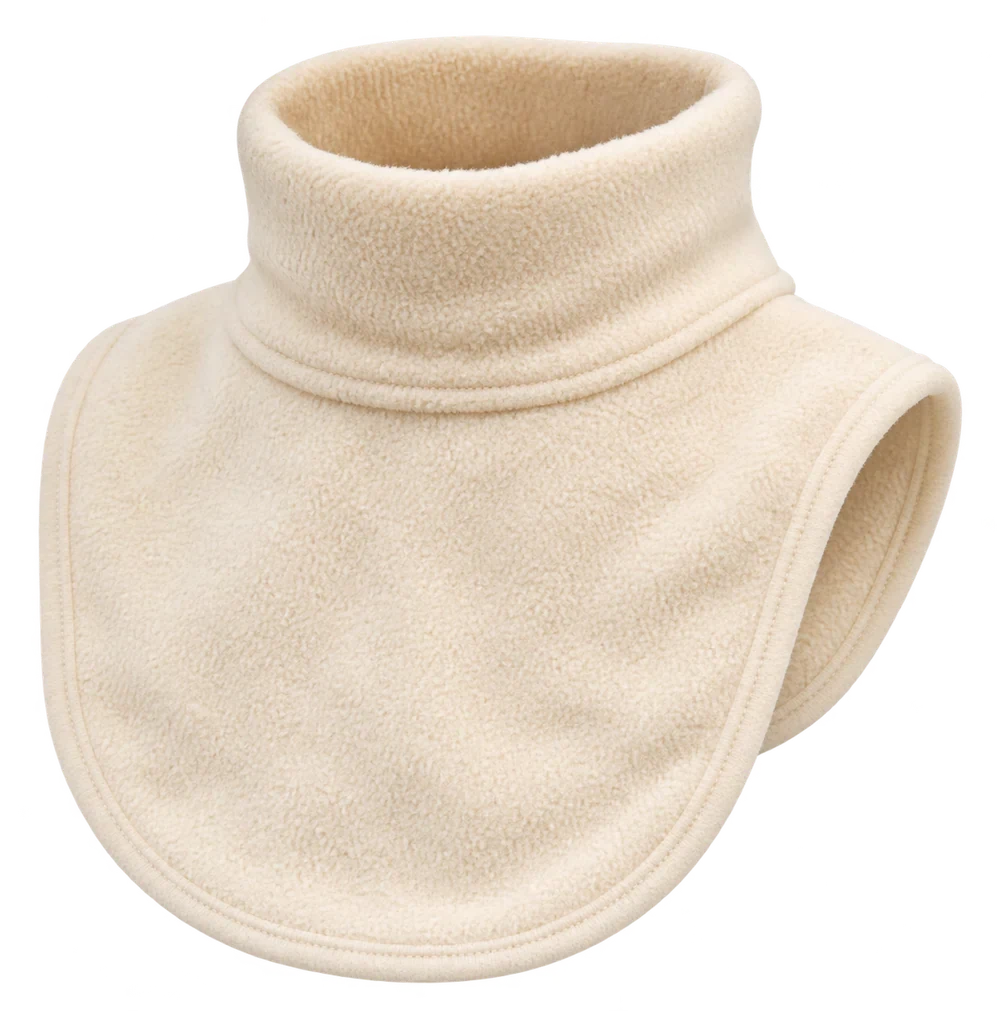
Bib-style neck warmer
A short turtleneck collar with a flap that covers the chest and the top of the back, also sold as a dickey. Tucked into the jacket, it can't ride up, and it covers the top of the chest under the zip.
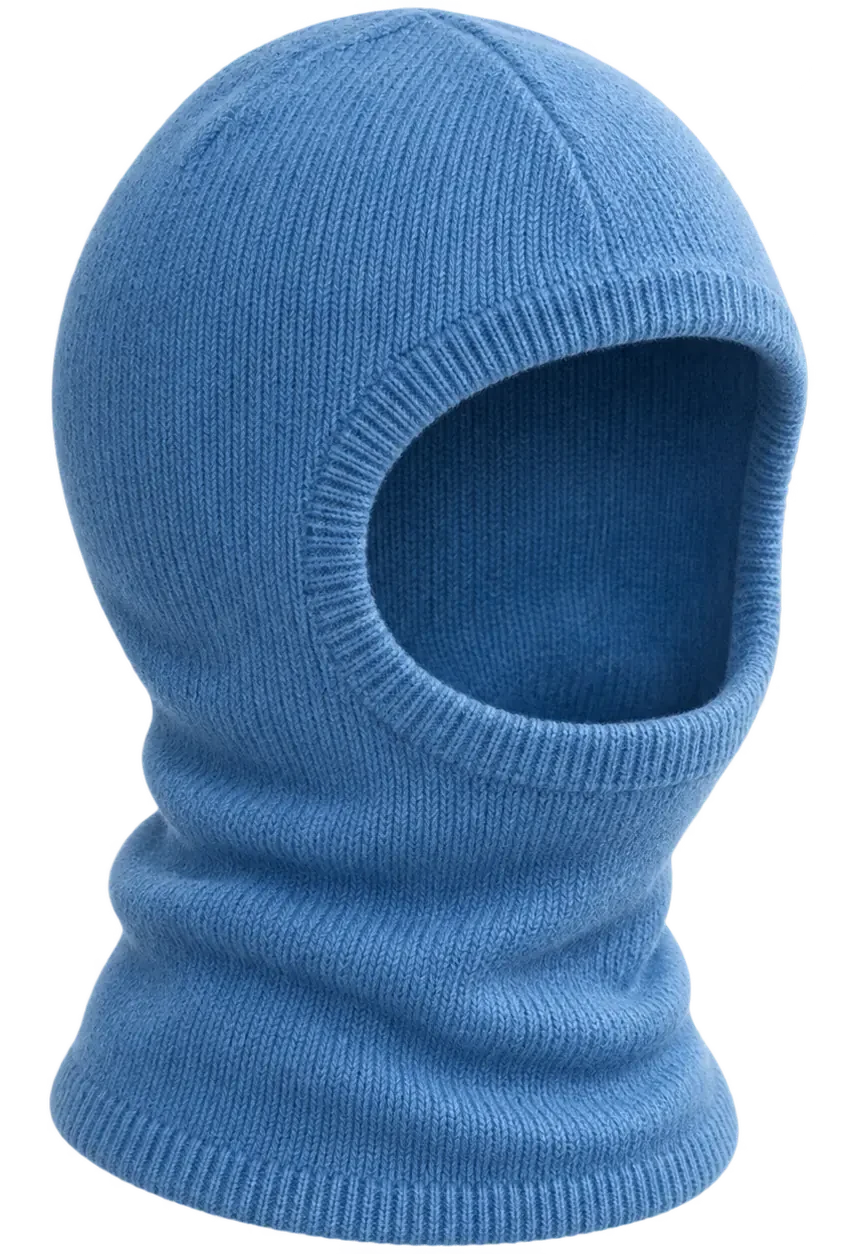
Balaclava
A warm hat and a neck warmer in one piece, with the face open. It suits windy days, and a child who pulls hats off.
How to choose a neck warmer
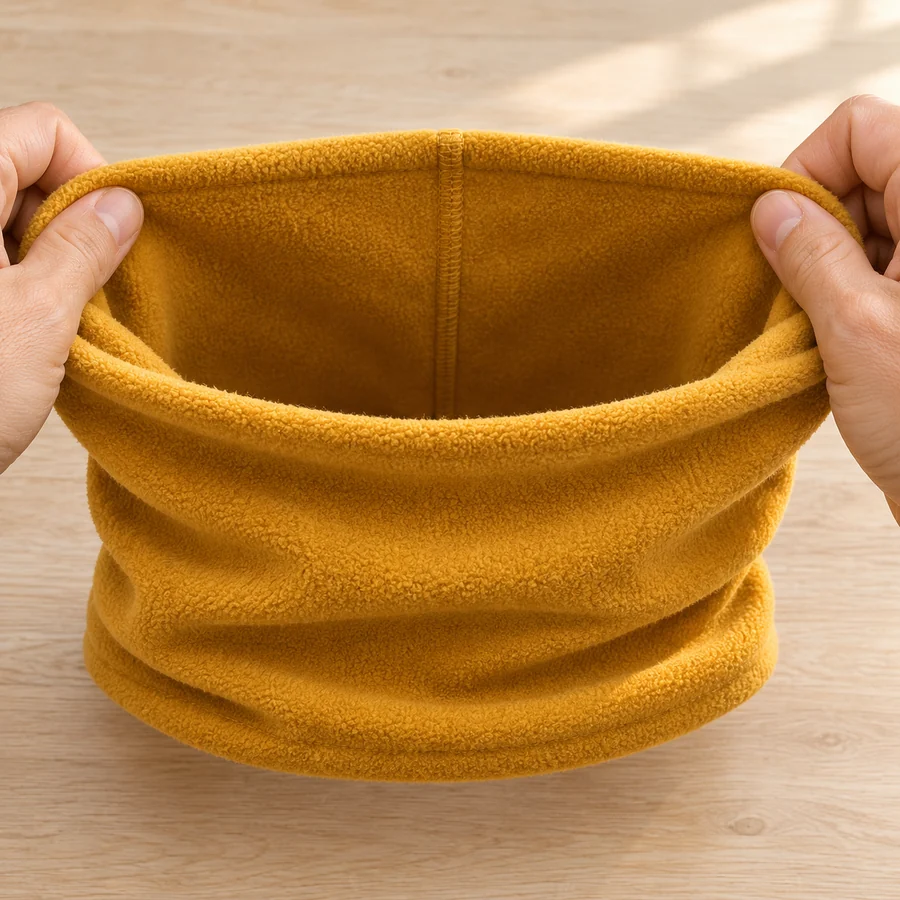
1. Snug around the neck
It should stretch wide enough to pull over the head, then spring back close around the neck. A loose tube slides down, folds over and hangs.
- Good: Springs back after a stretch
- Good: Sits close under the chin
- Not good: Hangs loose below the collar
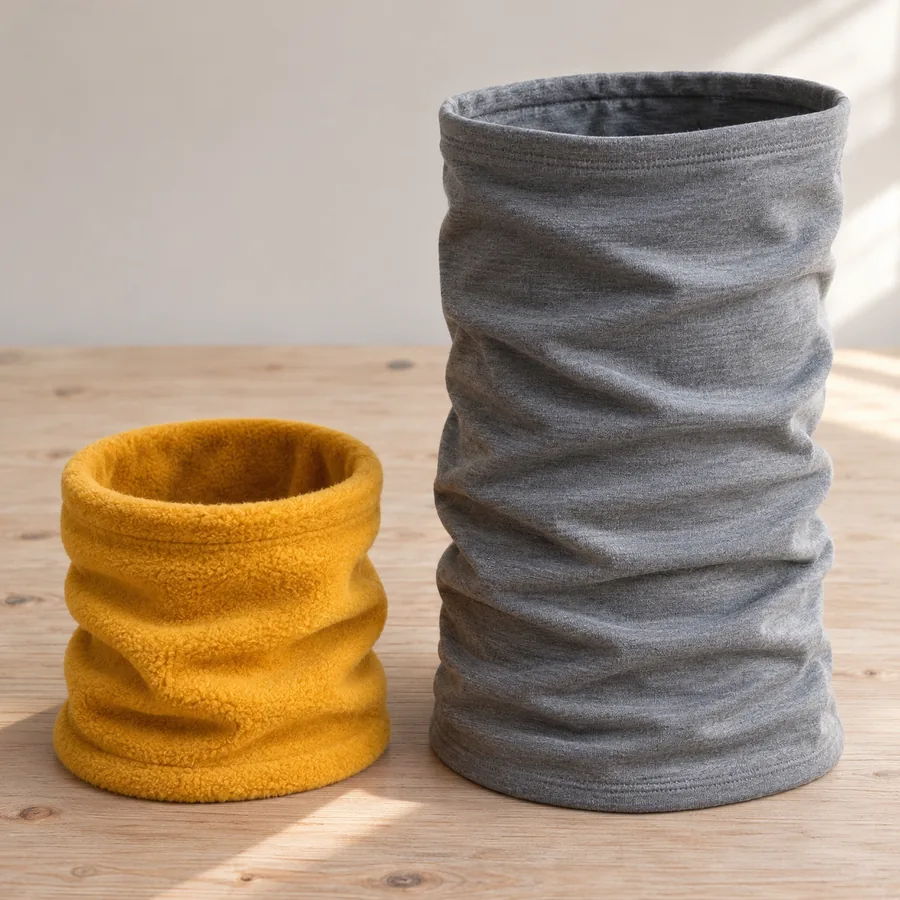
2. Short, and made for a child
Neck gaiters made for adults are tall enough to pull up over the nose. On a child under 2, the nose and mouth always stay clear, because breathing through fabric is harder for small airways.
- Good: Covers the chin, not the nose
- Good: Sized for children
- Not good: Tall adult gaiter
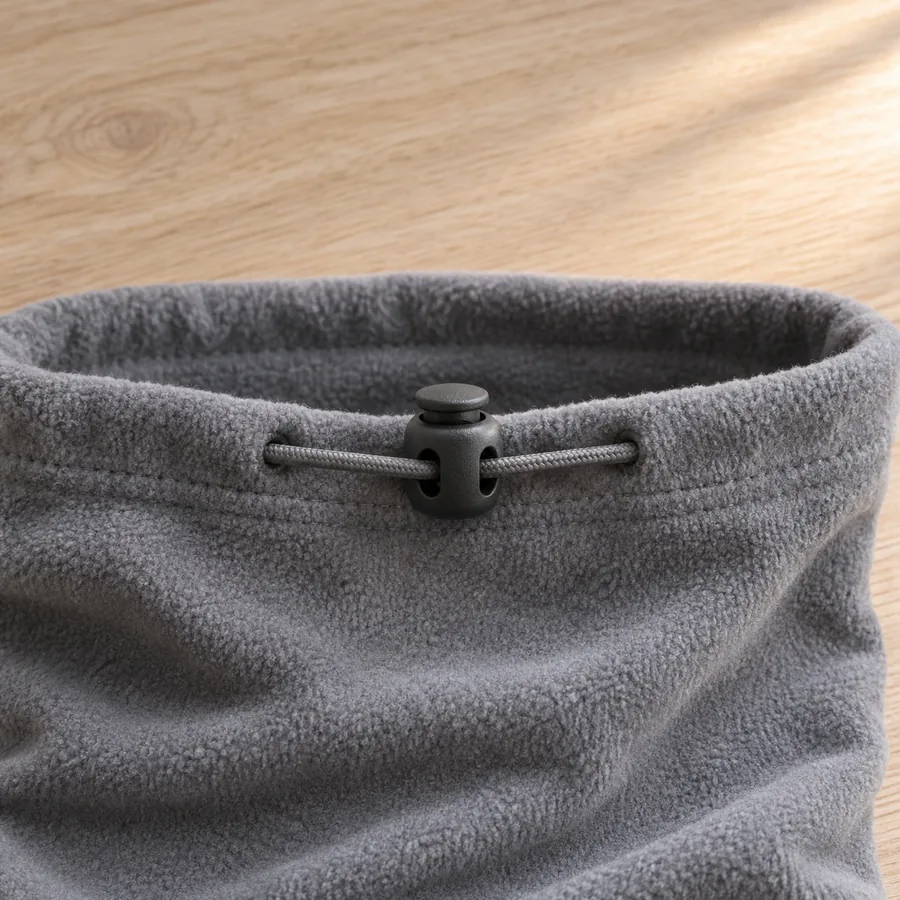
3. Skip ones with a drawcord
Some gaiters have a cord and a toggle to pull the top tighter. A cord at the neck is what safety rules took off children's jackets, so leave those for grown-ups.
- Good: Soft, smooth edge all round
- Good: Nothing to tie or pull
- Not good: Drawcord with a toggle
How to wear it
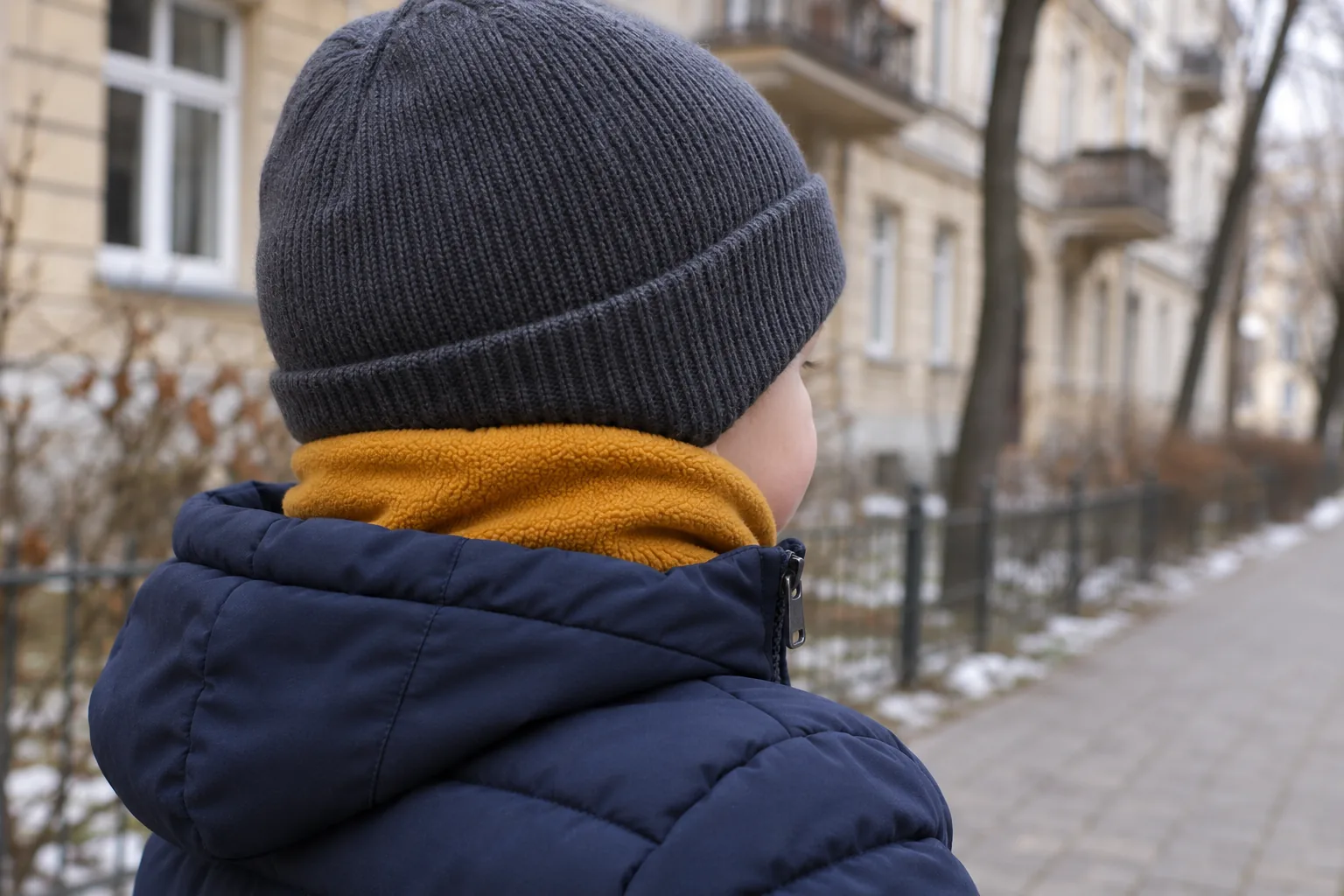
Put it on with the warm hat: when the feels-like temperature (the air temperature with the wind counted in) is below 8°C (46°F), both go on. Pull it over your child's head before the jacket, tuck the bottom edge inside the collar and zip up over it. Tucked in, it stays down, and no cold air gets in at the throat.
The top edge rests under the chin, with the mouth and nose clear. At the back it reaches up to the hat, so no strip of neck shows between them. Like the hat, it comes off as soon as you're indoors.
Questions parents ask
Should my baby wear a scarf?
No. A scarf's loose ends can catch and pull at the neck. When the jacket leaves the neck bare, a neck warmer or a balaclava covers it with no ends at all.
At what age can children wear scarves?
No age makes a scarf safe for play, because the risk comes from slides and jungle gyms, not from being little. For a child who plays outside, a neck warmer is the safer choice.
Can babies wear neck warmers?
Yes, if it stays below the mouth. The smallest sizes start at about 6 months, often bib-style ones that tuck into the jacket and can't ride up.
Is a neck gaiter the same as a neck warmer?
Yes. Neck gaiter is the outdoor shops' name for the same tube, and in the UK it's a snood. Gaiters made for adults are taller and often thinner, so look for one made for children.
Can my child sleep in a neck warmer?
No. Nothing goes around the neck for sleep, because fabric there can slide up and get in the way of breathing. Take it off before every nap and at night, and if your child dozes off in it on a walk, take it off once you're back inside.
Can my baby wear a neck warmer in a carrier?
Better not. In a carrier, your baby's face rests against your chest, and fabric at the neck can push up over the mouth and nose. A warm carrier cover, or your coat zipped to just under your baby's chin, keeps the neck warm instead.
Can my child wear a neck warmer in the car seat?
Take it off with the hat once the car is warm, because a buckled child can't take layers off. A thick fleece one is easiest to take off before you buckle up, so the straps lie snug at the collarbone. If the car is cold, a blanket goes over the buckled straps.
How long should a toddler scarf be?
If you're knitting for a toddler, make a cowl instead: a short tube that pulls over the head and fits close around the neck, with no length to spare.