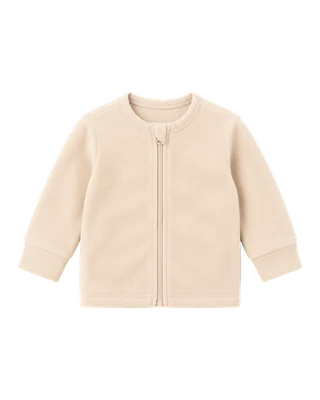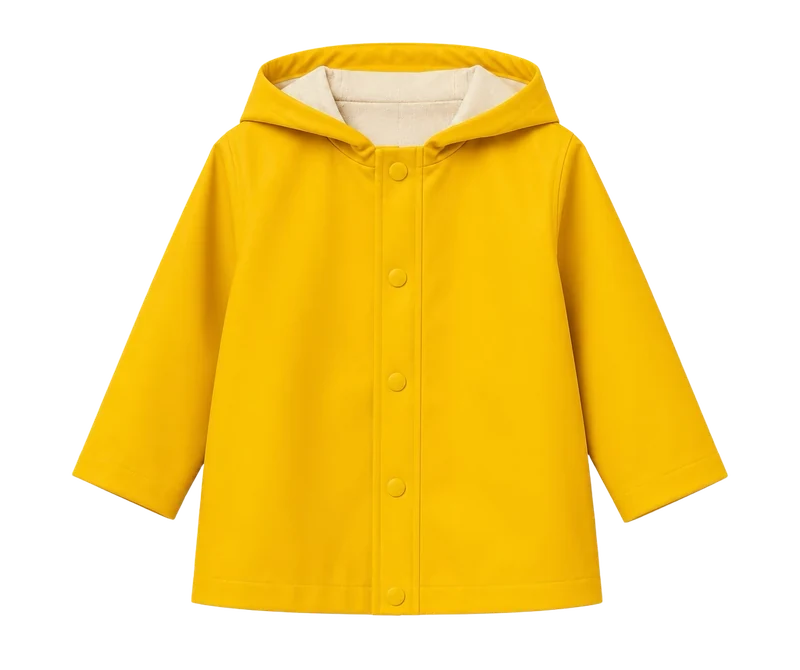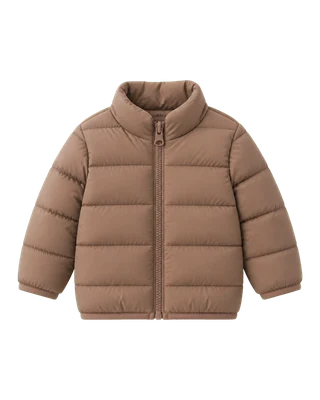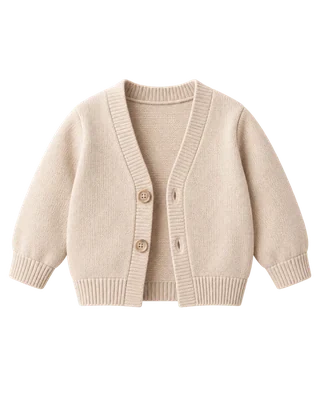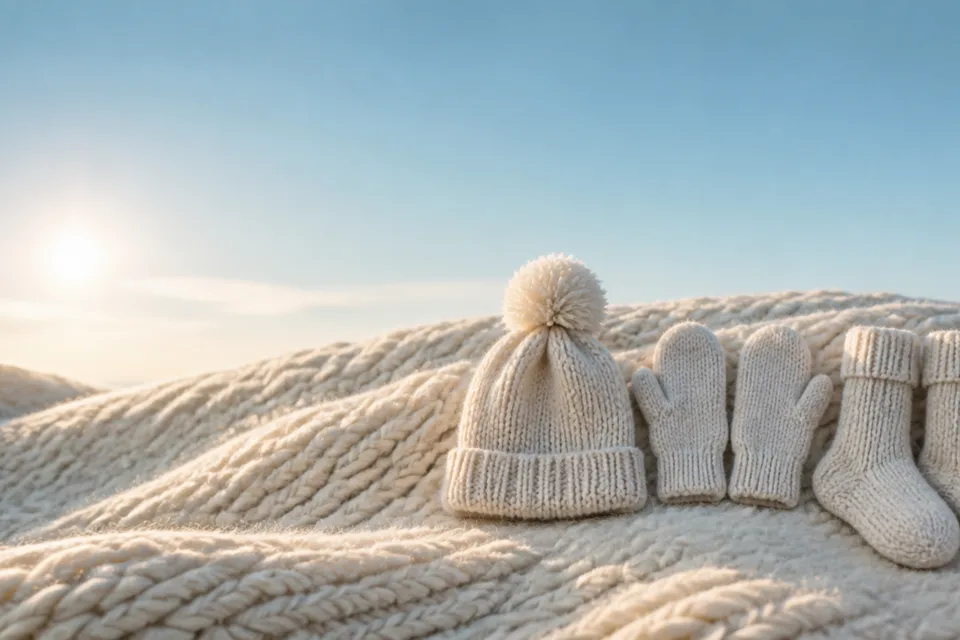
A warm fleece is a thick, fluffy jacket of polyester fleece with a deep pile (the raised fibers on the surface). Shops usually sell it as a sherpa jacket, a teddy coat or a high-pile fleece. It is much warmer than a smooth thin fleece, and still light.
On calm, dry days in autumn and a mild winter, it is the outer jacket. When wind or rain starts, it goes under a windproof light raincoat or warm jacket.
- For ages0–3years
- You'll need1per size
- Wear it below12°C54°F
Warm pile fleece or thin fleece?
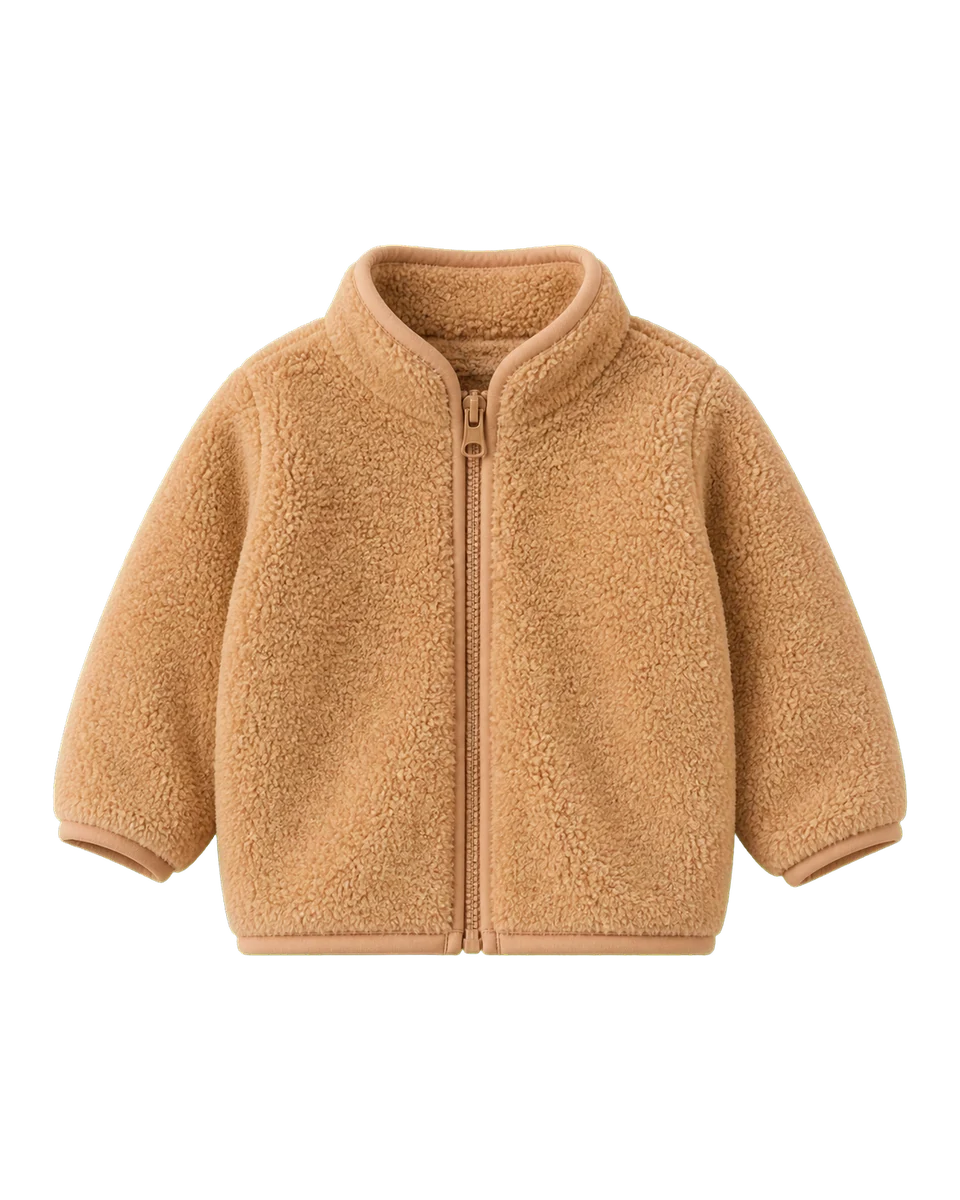
Warm fleece
The jacket for dry, cold walks, or under a roomy coat in deep winter. Too thick for car seat straps.
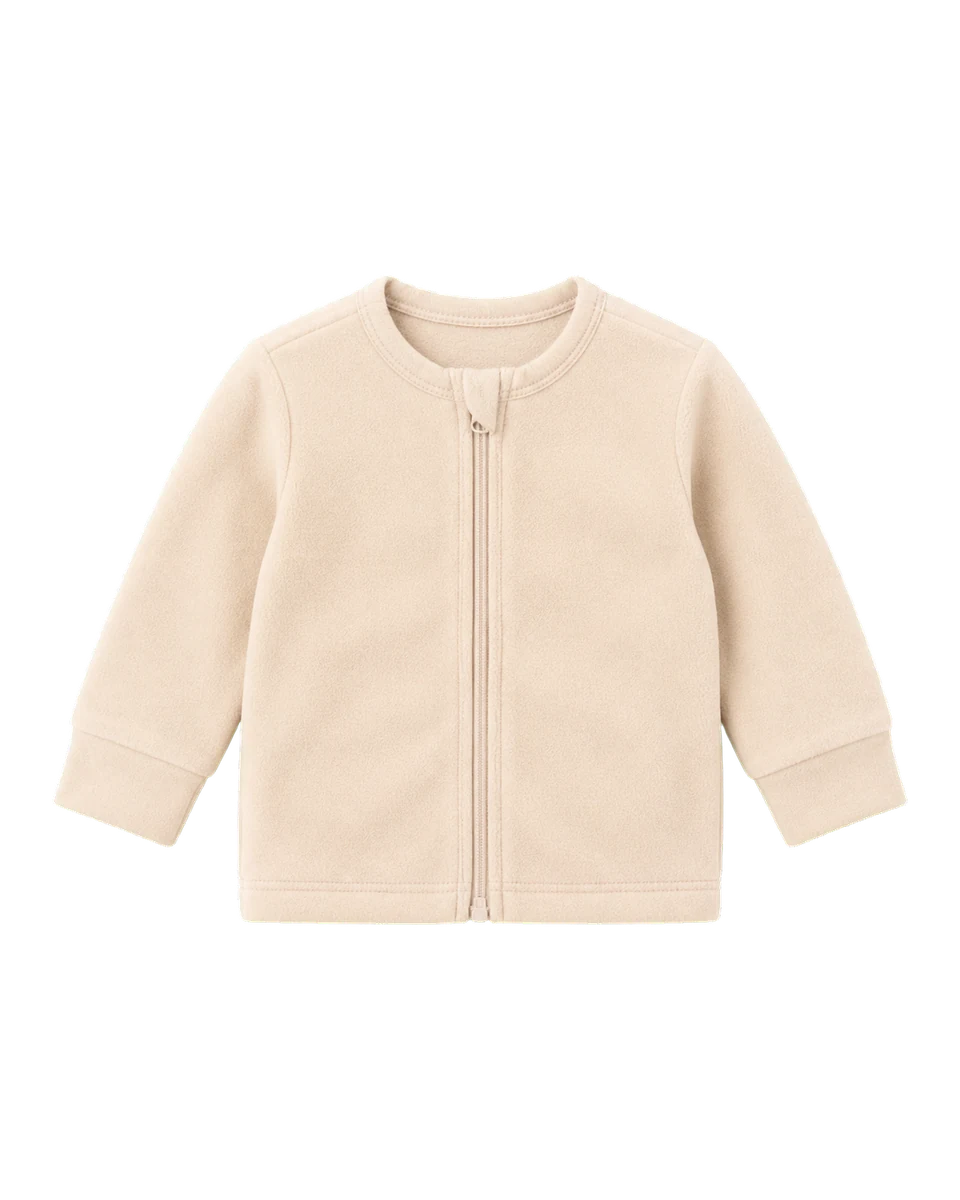
Thin fleece
The one for under another jacket and in a carrier. In the car seat, check that the straps stay snug over it.
Sherpa, teddy and brushed fleece
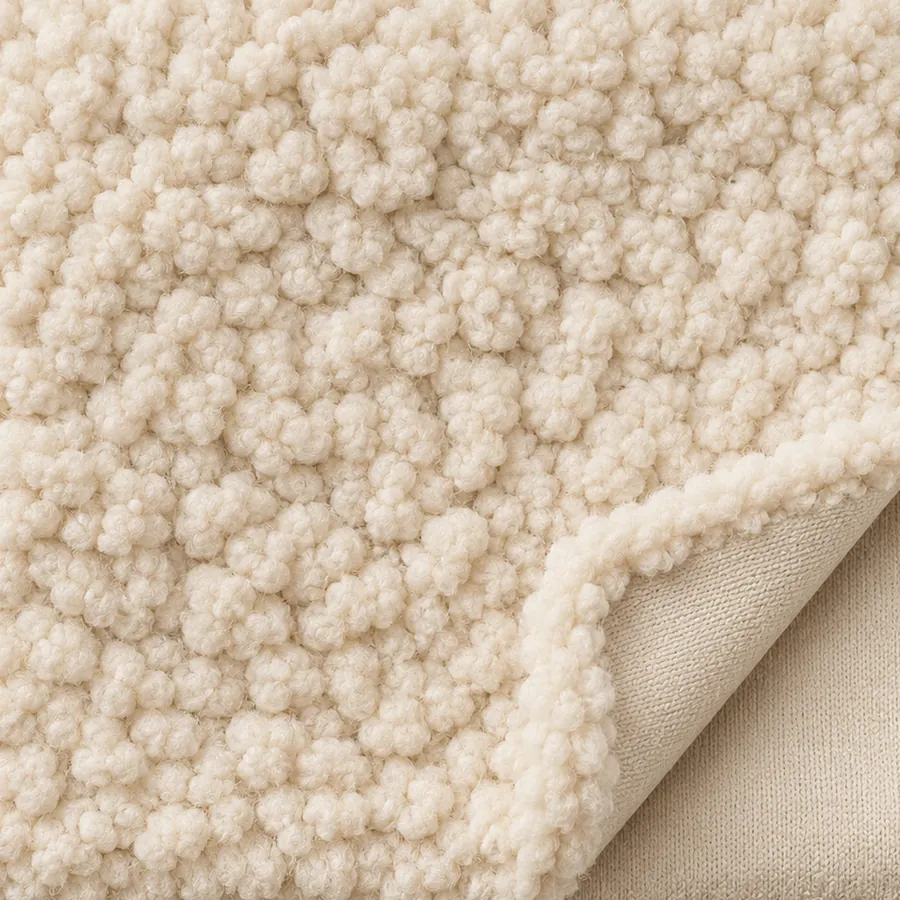
Sherpa fleece
Curly on the outside, like a sheep's coat, and smooth on the inside. Also sold as faux shearling.
- Good: Holds heat in still air
- Not good: Leaves and Velcro catch in it
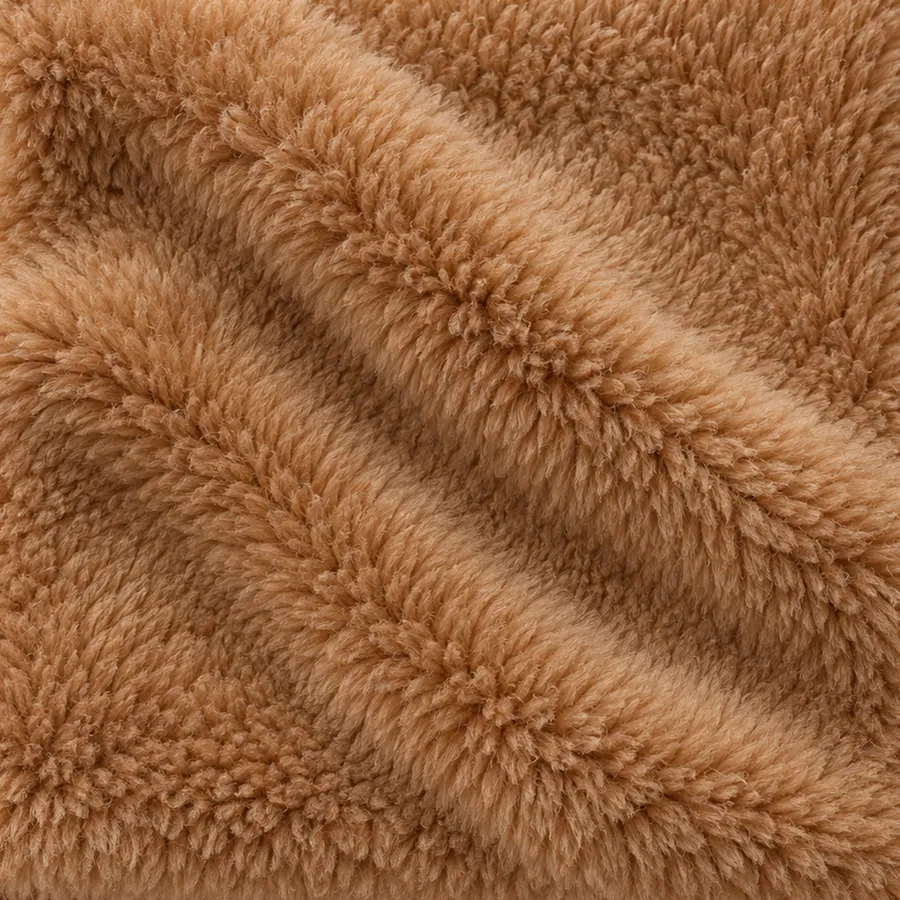
Teddy or high-pile fleece
Long, silky fibers that stand up like a teddy bear's fur. Sold as a teddy coat or plush fleece, and in the UK as a borg jacket. The softest of the three.
- Good: Warmest for its weight
- Not good: Bulkiest inside another coat
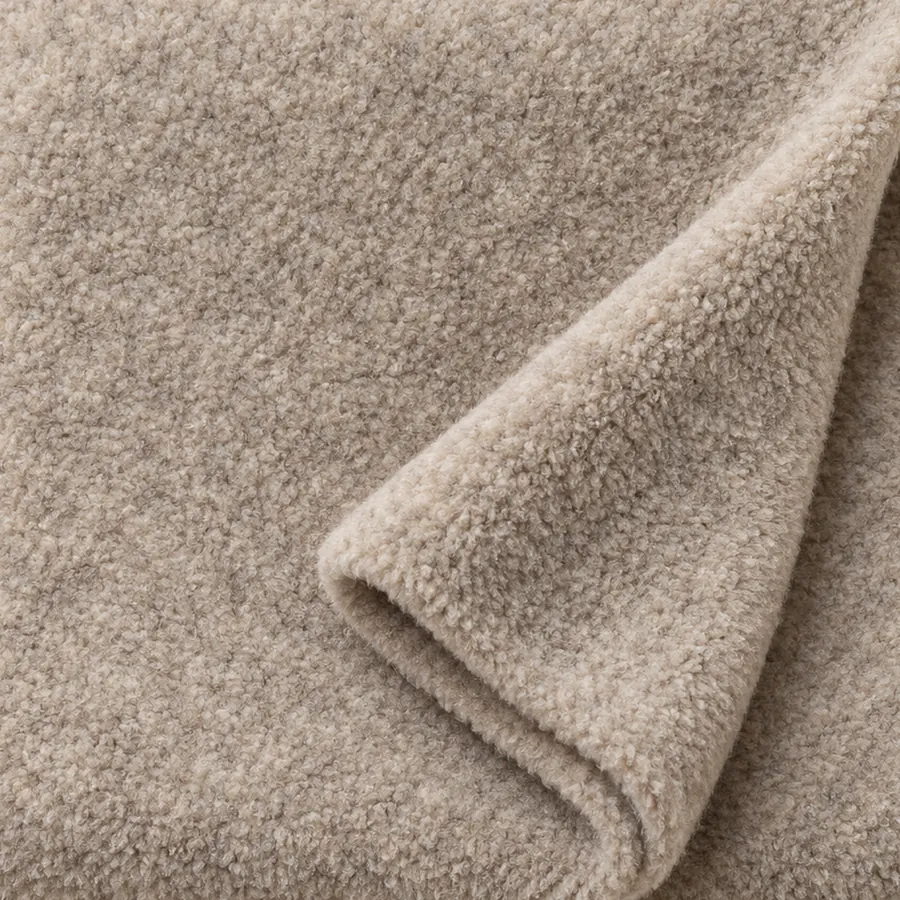
Thick brushed fleece
Heavy polar fleece, velvety on both sides, with no curls. The one that slides most easily under a raincoat.
- Good: Trim in the arms
- Good: Sheds less lint
- Not good: Less warm in calm cold
How to choose a warm fleece
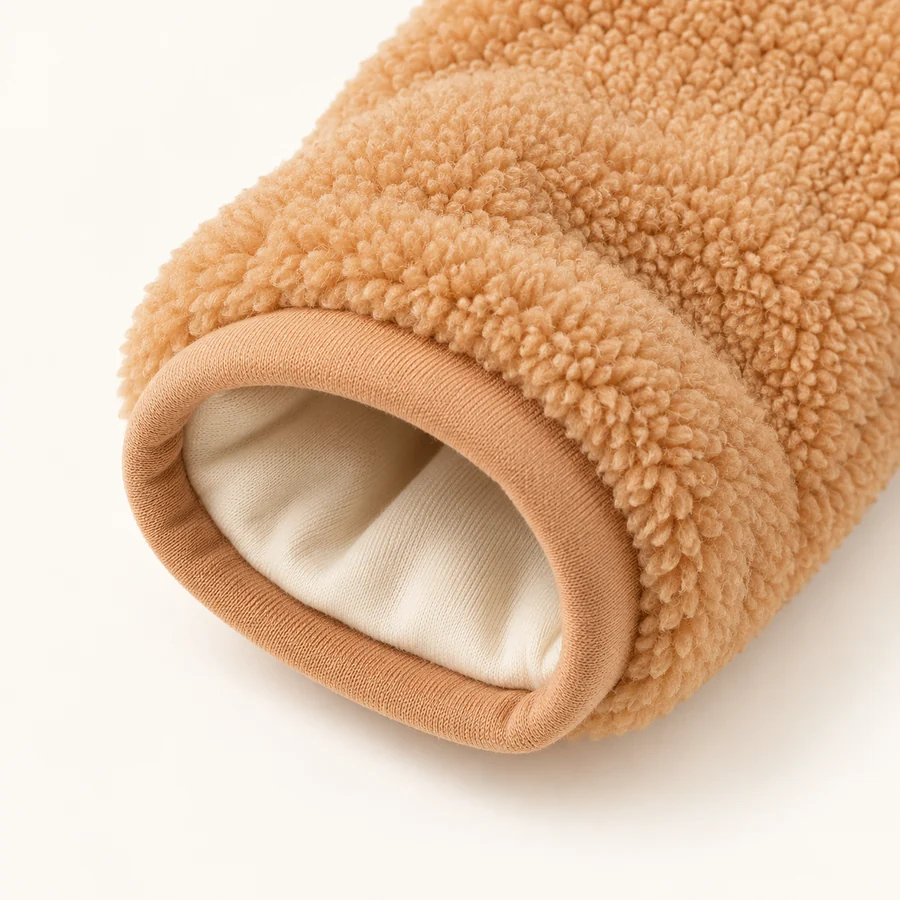
1. Smooth sleeve lining
Some sherpa jackets are fluffy inside the sleeves too. That pile grips the sleeve of a cotton long-sleeve bodysuit like Velcro and drags it up to the elbow. A smooth lining lets the arms slide straight through, and it blocks a light wind.
- Good: Smooth lining in the sleeves
- Not good: Raw sherpa inside the sleeves
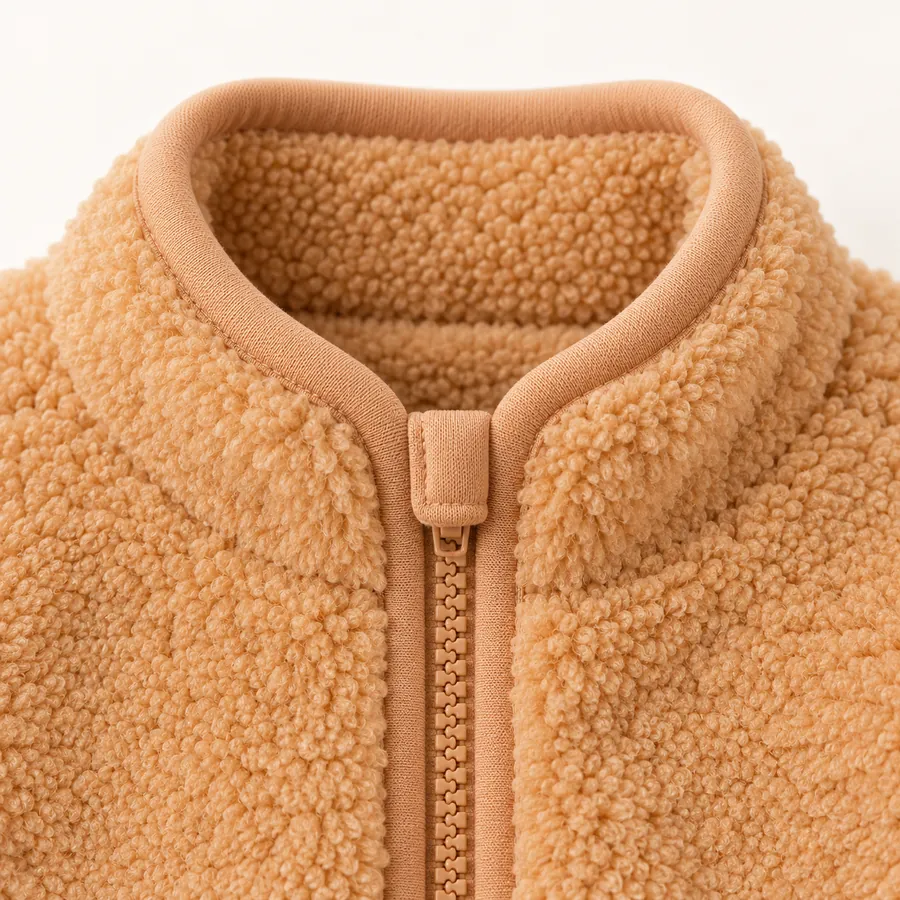
2. Zipper chin guard
A fluffy collar sits right under the chin, and loose pile jams a bare zipper. A soft tab over the top of the zipper keeps both away.
- Good: Soft tab over teeth and slider
- Not good: Pile caught in the zip teeth
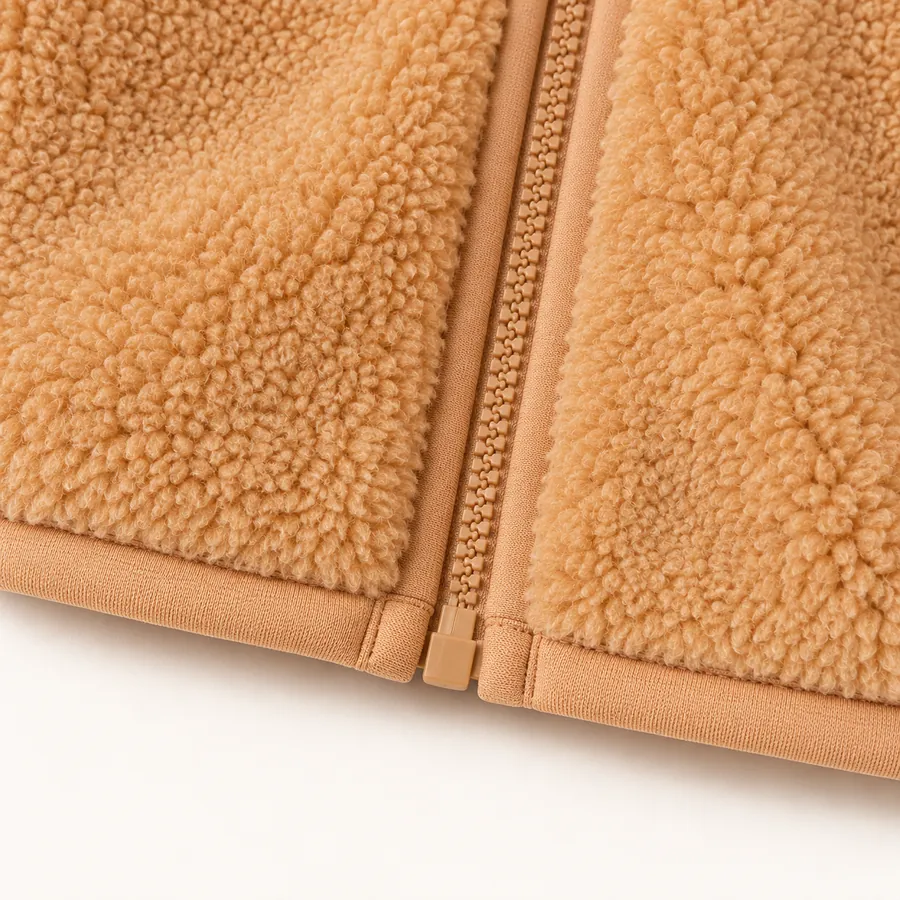
3. Flat bound cuffs and hem
The jacket is thick already, so the edges should be thin. A flat binding at the wrists and the hem lies smooth under mittens and a coat. A double rib (a thick, folded knit cuff) bunches up.
- Good: Thin elastic binding at the wrist
- Not good: Thick double rib at the cuff
Outer jacket or middle layer
On a dry, calm day, a sherpa or teddy jacket over a long-sleeve bodysuit and a light cardigan is your baby's outer coat. On walks, a stroller footmuff or a stroller blanket keeps the legs warm.
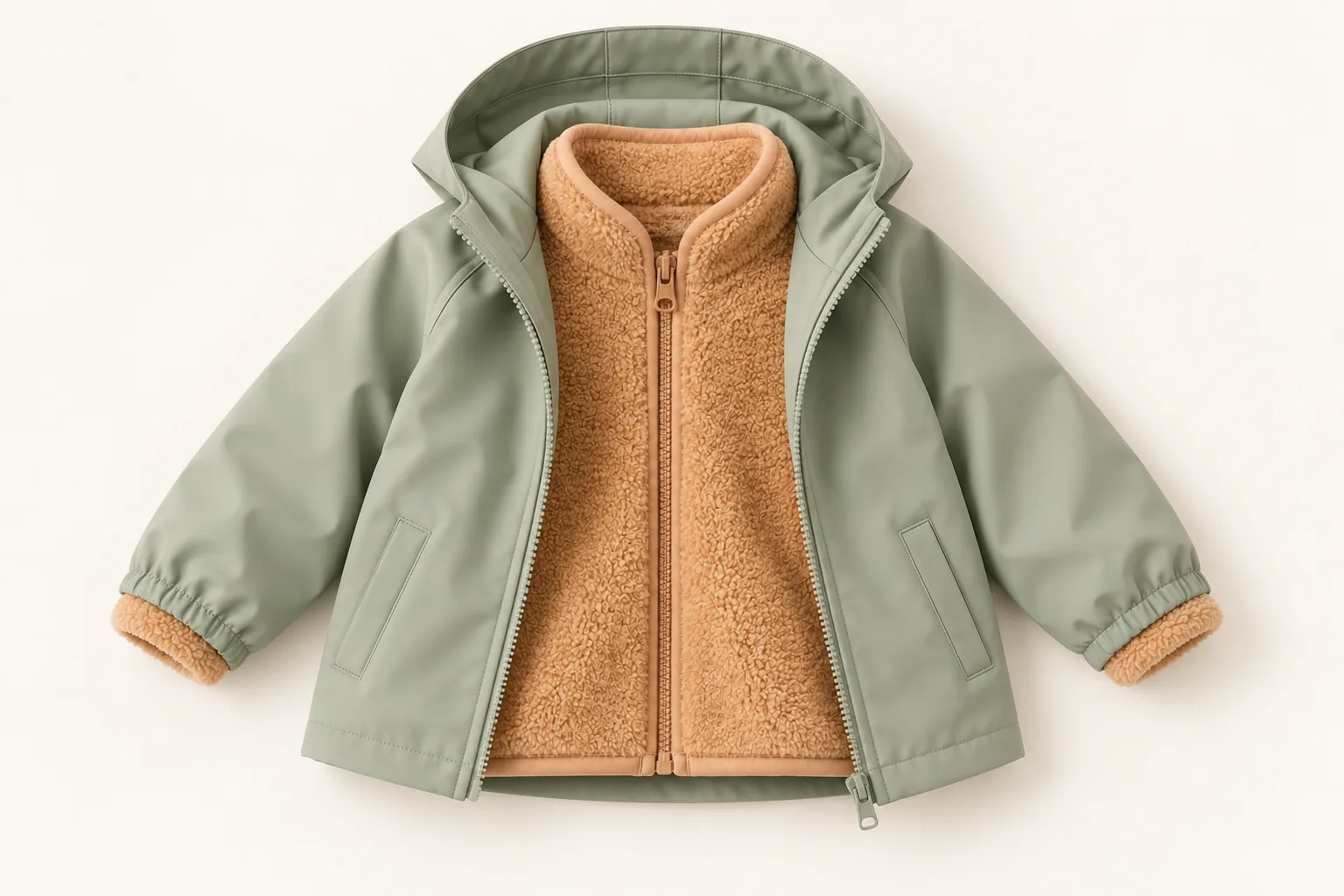
On a windy or wet day, it becomes the middle layer. The wind blows through any fleece, and rain or wet snow soaks the deep pile and flattens it. So it goes under a windproof light raincoat or warm raincoat, or under a warm jacket on cold days.
In a heated shop or cafe, unzip it or take it off, and feel the back of the neck.
Questions parents ask
What is the difference between sherpa and fleece, and which is warmer?
Sherpa and teddy, on a calm, cold day. All of them are polyester fleece, but a deep, curly or fluffy pile holds more warmth than flat polar fleece or a thin fleece. It also takes more room under a coat.
Can a baby wear a sherpa jacket or teddy coat in a car seat?
No, take it off before you buckle the harness. Nothing bulky goes under a harness, because fluffy padding flattens in a crash and leaves the straps loose. Dress your baby in close-fitting layers, such as a bodysuit and a thin fleece or a cardigan. Buckle the harness snugly, then lay the warm fleece over the straps like a blanket.
Are sherpa jackets warm enough for winter?
For short outings on dry, calm days in a mild winter, yes, with a winter hat, mittens and a stroller footmuff. In freezing wind, sleet or snow, no. Then your baby needs a padded warm jacket or a pram suit.
How do you wash sherpa or teddy fleece so it does not get matted?
Turn it inside out and wash it cold, with no fabric softener, which clumps the pile. Heat mats the pile too, so dry it on the line, or in the dryer with no heat at all. Shake it out when it is dry, to fluff the pile back up.
Is sherpa safe for babies, or is it itchy?
Most babies find it soft. The pile is fine polyester, so it does not prickle like coarse wool, and a cotton bodysuit goes under it. It is a jacket for outdoors and for an awake baby, so it comes off indoors and before any sleep.
When does a sherpa vest make sense for a baby or toddler?
A sleeveless sherpa vest (or gilet) warms the chest and leaves the arms free, which suits crawlers and new walkers on crisp, dry days. It also fits under a jacket whose sleeves are too narrow for a whole sherpa jacket.