
What this is about
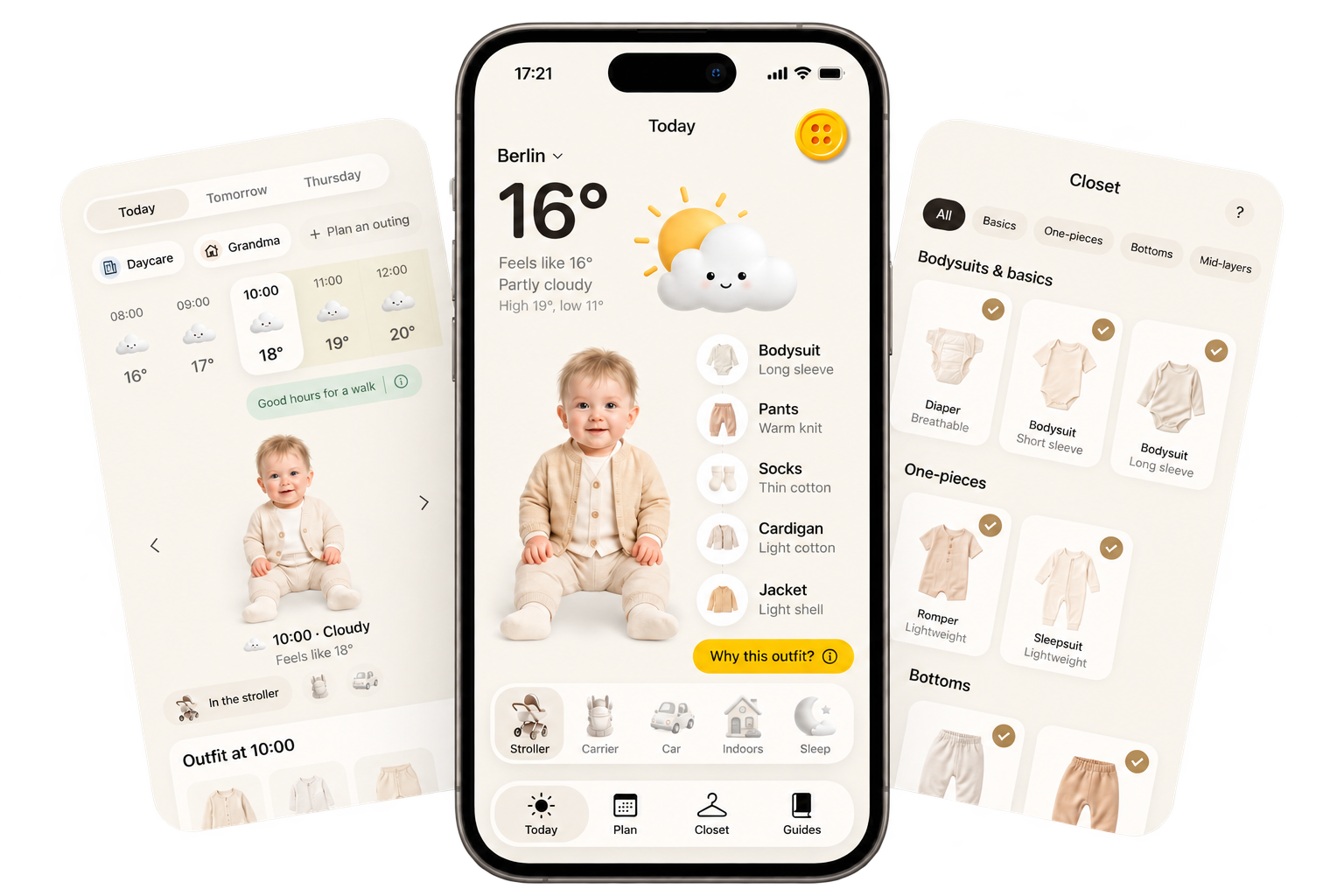
Parents often look for a fixed schedule: outside at ten in the morning, every single day. That routine works well until summer turns the sidewalk into an oven or winter drops the temperature by three in the afternoon. The easiest time changes with the season, the wind, and the ground under your wheels. An hourly forecast helps you spot the gentlest stretch of air, but your baby's daily rhythm still makes the final call.
Compare the hours instead of choosing a fixed time
Where you walk changes what the numbers feel like. A breezy 14° on an open waterfront path can feel harsh, while the same hour down a quiet, tree-lined street feels mild and sheltered. Wind matters most when it has open space to pick up speed. Above 25 km/h, keep a windproof layer handy so a gusty corner does not end the walk early.
On hot days, compare morning and evening
Morning and evening both look cooler on a chart, but they feel very different on the street. Early morning has the benefit of cooled ground. Sidewalks, asphalt, and brick walls had all night to release their heat, so the air at stroller height stays fresher. By six in the evening, the sun sits lower in the sky, but the pavement is still radiating heat straight up into the seat.
Around 32° feels-like, even the cooler hours become taxing for a baby. If you head out in high heat, stay on open grass, stick to deep tree shade, and keep the trip short. Check the back of your baby's neck to see how the body handles the warmth, and offer feeds frequently.
Winter midday often feels gentler
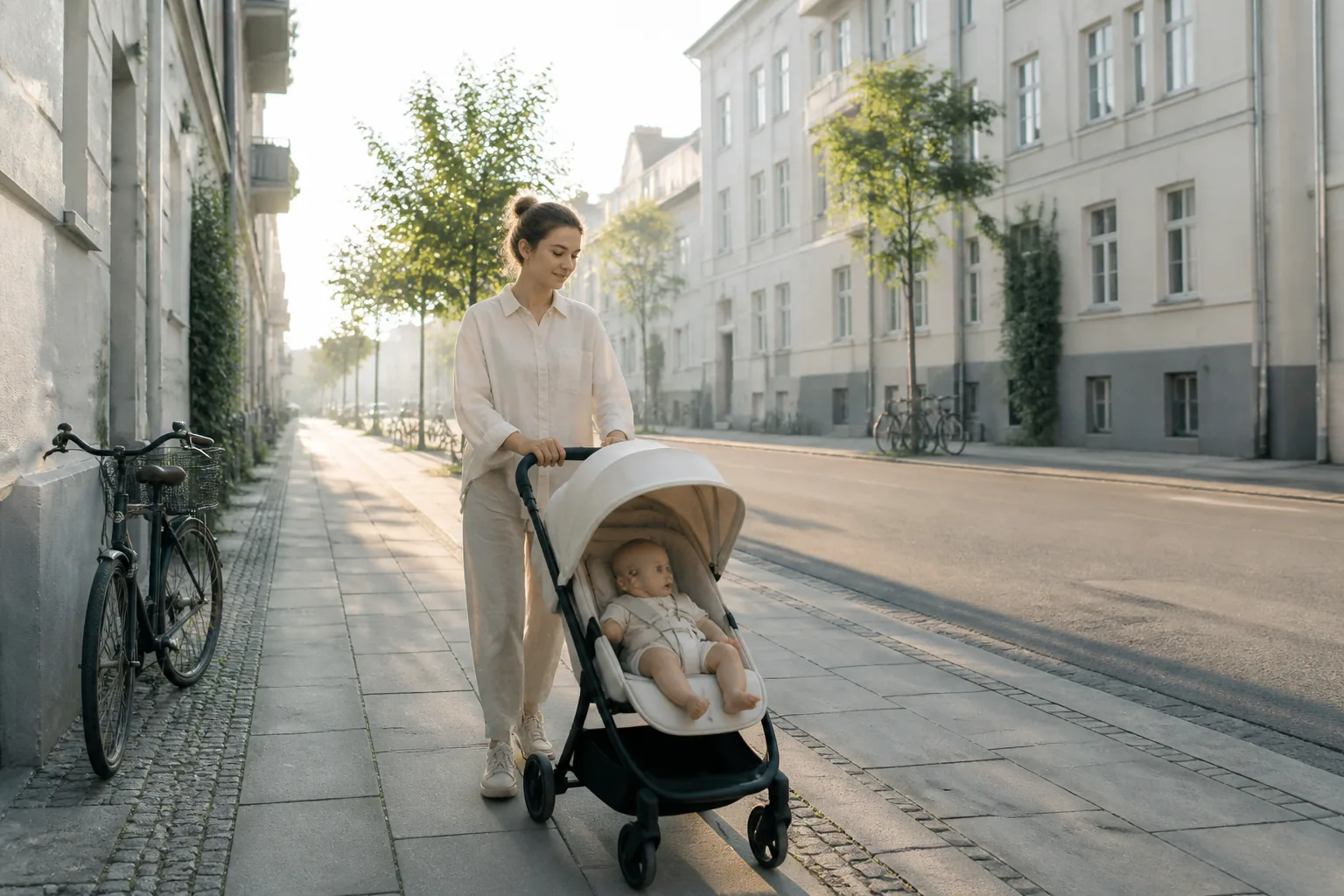
Winter flips the hot-day logic completely. Midday is usually the warmest window, but the real benefit is daylight and safety. Noon offers whatever gentle warmth the low winter sun can provide. Even more important, it gives you a daylight buffer. Below 0°, temperatures can drop rapidly the moment the sun slips behind rooftops in the afternoon.
Still cold is straightforward to manage with warm layers and a footmuff. Biting wind is what makes winter walks uncomfortable. A calm, gray midday will almost always feel gentler than a bright, sunny morning with freezing gusts.
Sun hours and walk hours are not the same
It is easy to overlook sun protection when the air feels crisp. In spring and early autumn, a brisk 16° morning can easily carry a UV index of 3 or higher. The breeze feels cool, but delicate skin still absorbs ultraviolet rays. The sun canopy is not just for hot days; it belongs on the stroller whenever the UV climbs.
Age changes how you protect bare skin. Under 6 months, rely on physical shade, wide-brim hats, and light covering clothes instead of sunscreen. If open shade is impossible, ask your pediatrician before applying lotion. From 6 months, use sunscreen on whatever skin stays exposed, and check the hourly UV number rather than guessing by cloud cover.
Some days do not offer an ideal time
There are days when every single hour looks uninviting: steady drizzle, raw wind, or sticky humidity that never lifts. First, let yourself off the hook. Staying inside on a miserable day is completely fine. Fresh air is valuable, but nobody awards prizes for pushing a soaked stroller through bad weather.
If you both have cabin fever and need a reset, aim for a twenty-minute sanity loop. You do not need an expedition across town. One quick lap around the block under a fitted rain cover can calm a fussy baby and clear your head. If the rain worsens or your baby starts crying, your front door is only two minutes away.
Knowing your neighborhood helps more than staring at the forecast. A sheltered block with tall hedges or a courtyard garden can offer an easy walking lane when open avenues are whipped by wind.
Feeds and naps break the tie
The weather only sets the stage; your baby's internal rhythm runs the show. Decide what kind of walk you need before you lace up your shoes. If you are walking to help your baby sleep, a cooler, quieter hour works in your favor. Bundle up, pick a smooth path, and let the motion do the work.
If your baby is wide awake, aim for gentler conditions. Trying to soothe a crying infant or feed on a cold, windy park bench is stressful for everyone. Feed before leaving the house, pack an extra layer in the basket in case the breeze stiffens, and trust your routine over minor forecast shifts.


A hot day
Aim for early morning before asphalt absorbs heat. If walking in the evening, stick to open grass and shaded park paths.

A cold day
Head out around midday for natural light and milder air. Heading home before mid-afternoon protects against sudden temperature drops.
A good walk is simply one where you both return feeling better than when you left. Pick the hour that feels kindest on your street, keep your plans flexible, and head inside whenever either of you has had enough.
Questions parents ask
Does a cloudy hour always have lower UV?
No. Cloud can soften direct sunlight while letting up to eighty percent of ultraviolet rays pass straight through. Check the hourly UV reading rather than relying on cloud cover, and use sun protection from UV 3.
Can I go out when every hour has difficult weather?
Yes, for a short loop close to home if conditions are safe. Never head out during official severe weather warnings, icy conditions, or extreme heat. If the weather looks truly unpleasant, choosing an indoor day is entirely sound.