What this is about
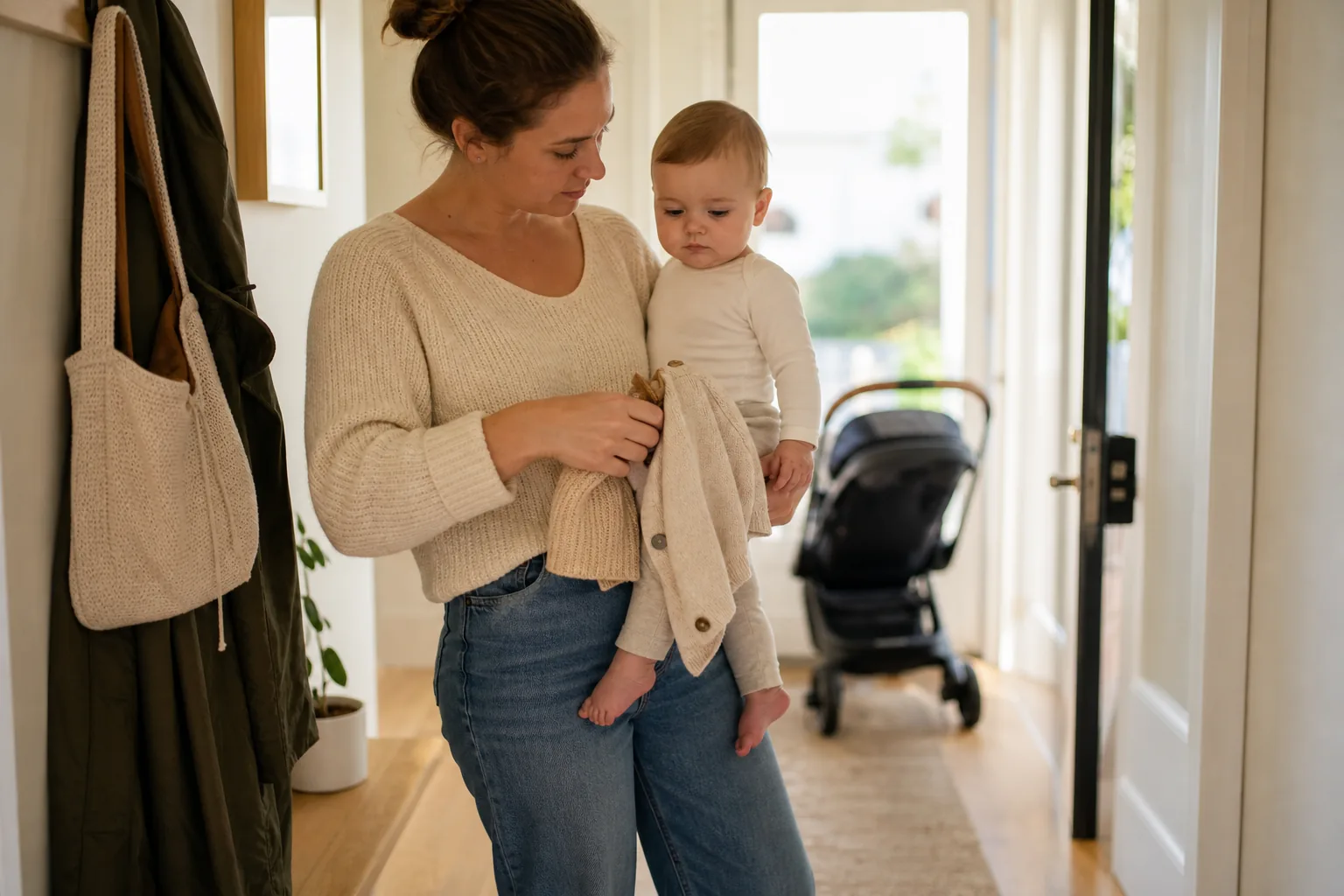
Walking through the front door from a cold walk can distort your sense of temperature. The hallway feels cozy, but your baby's cheeks and fingers are still cool from the wind. It is tempting to leave them bundled up, especially if they fell asleep on the way home. But those cold cheeks reflect the walk you just finished, not the outfit needed for the next hour on the rug.
Take outdoor layers off once you come in
Outdoor clothes are designed to trap body heat against cold air. Inside a heated house, that same insulation quickly becomes too warm. Even if your baby is asleep in the stroller or carrier, loosen the blankets and peel off the outer layers.
Start with the hat. Babies release excess heat through their head, so keeping a beanie on indoors can lead to accidental overheating. Once outdoor gear is off, give your baby ten minutes to settle into the room temperature before deciding whether they need another layer.
Measure the room where your baby spends time
The weather app on your phone only knows what is happening out on the street. Indoors, a simple room thermometer is the only number that counts. Keep it on a shelf near where your baby plays, away from direct sunlight, drafty windows, and radiators.
Use that room reading to find your starting outfit below. These combinations are designed for awake time: playing on the rug, tummy time, or being held.
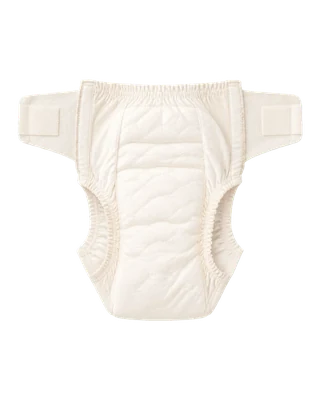
28° and warmer
diaper
24–27°
short-sleeve bodysuit
22–23°
short-sleeve bodysuit, light pants
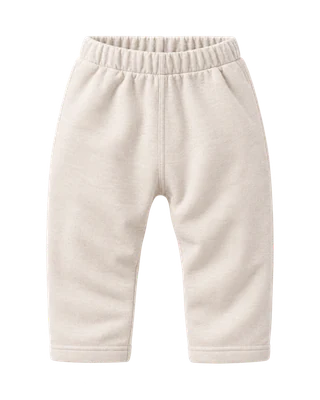
20–21°
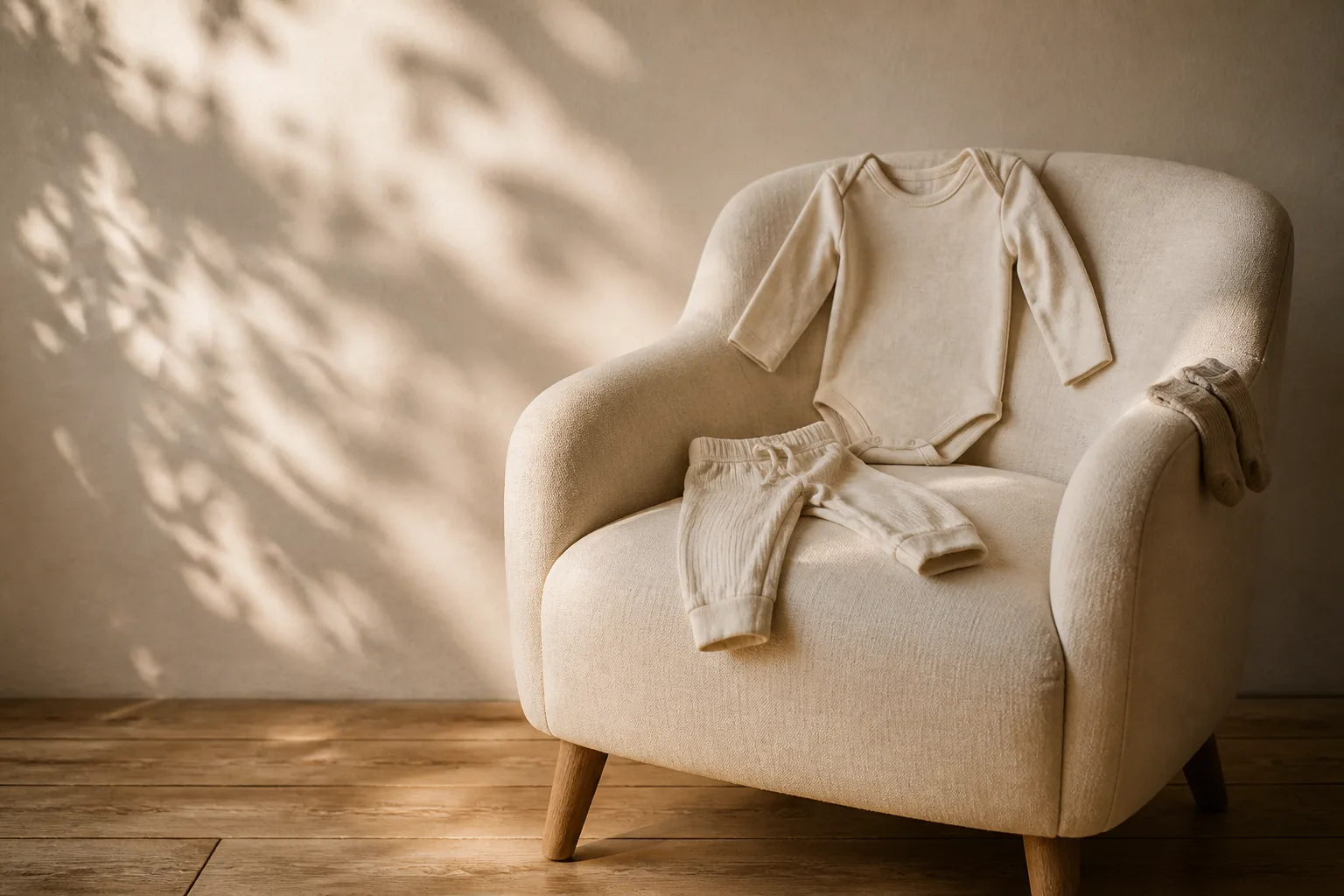
long-sleeve bodysuit, light pants
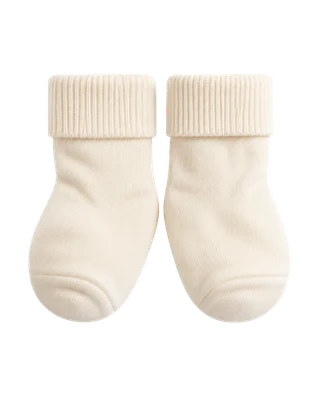
18–19°
long-sleeve bodysuit, light pants, thin socks
Below 18°
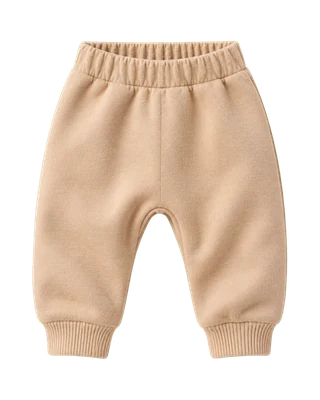
long-sleeve bodysuit, warm pants, thin socks, cardigan
When the room sits at the warmer end of the dial, that single bodysuit is the complete outfit. It is not an undershirt waiting for pants, socks, and a sweater. Putting extra clothes on out of habit is how babies end up hot and fussy.
When the room runs cooler, add one thin top layer like a cardigan or light knit. Front buttons or snaps make quick changes easy, so you do not have to pull clothes over a tired baby's head.
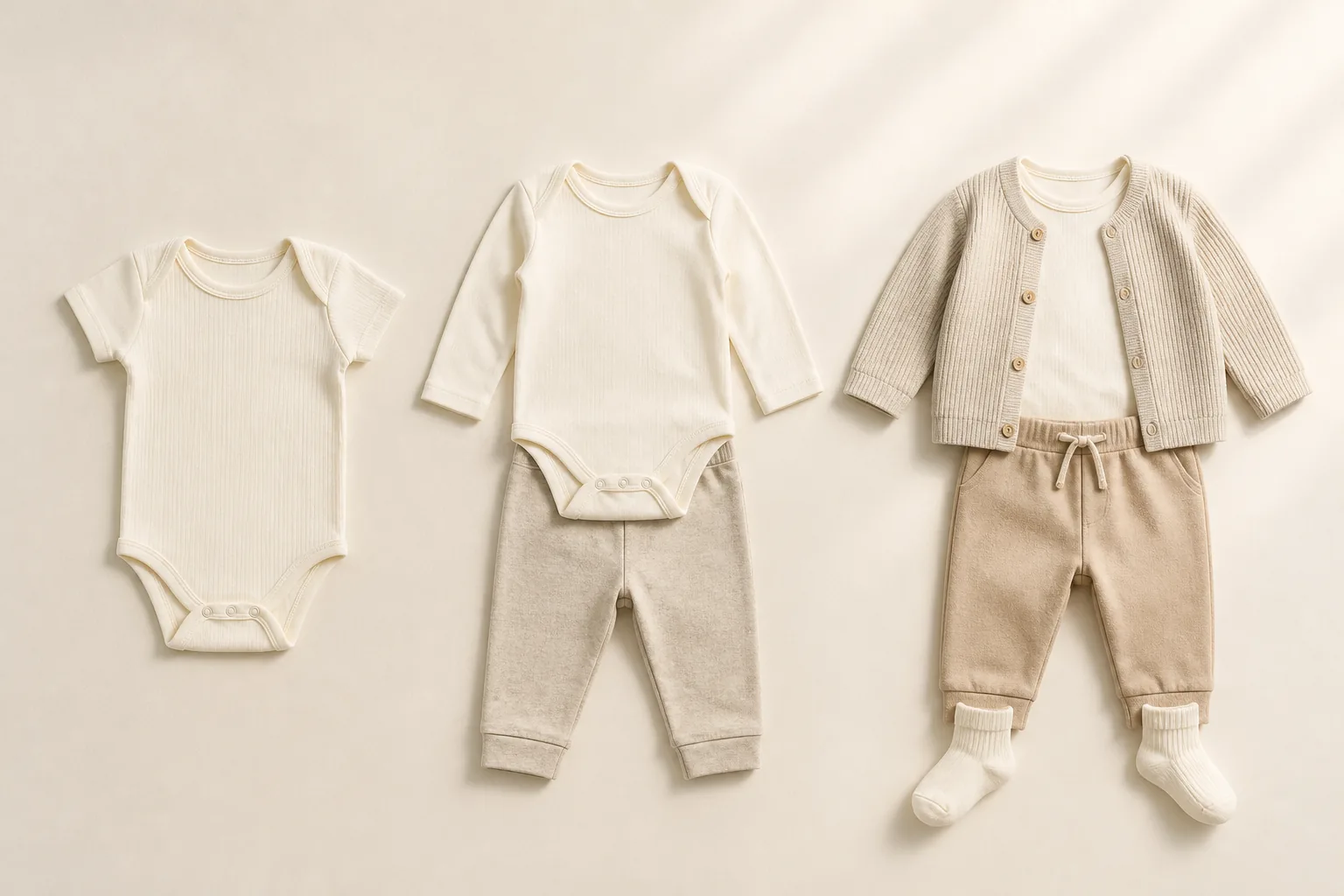
Three rooms, three starting points
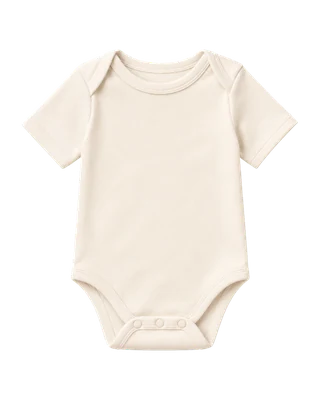
24–27°
A short-sleeve bodysuit is the entire outfit. Bare legs let your baby move freely.
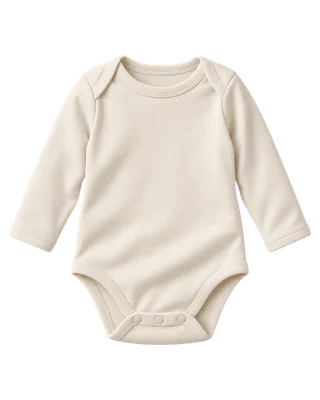
20–21°
A long-sleeve bodysuit paired with soft pants gives comfortable coverage without bulk.
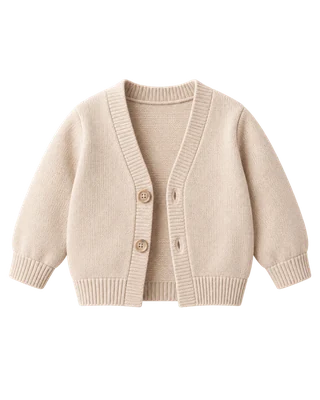
Below 18°
Add a soft cardigan or light knit over the bodysuit to keep the chest warm.
Cool hands do not mean another indoor layer
Almost every parent gets caught out by cold hands. You touch your baby's fingers, notice they feel like little ice cubes, and reach for a sweater or blanket. But in infants, the circulatory system is still maturing. Blood stays concentrated around the torso, so hands and feet run cool.
Hands lie, but the back of the neck tells the truth. Slide two fingers under the collar against bare skin. If the neck or upper chest feels warm and dry, your baby is comfortable. If the skin feels damp or sweaty, take a layer off. Only add clothes if the torso feels genuinely cool.
Use fewer clothes in a hot room
When indoor temperatures reach 28° or higher, strip down. A diaper alone is standard awake wear during a heatwave. Focus your energy on cooling the space: draw blinds early before the morning sun hits the windows, run a fan pointed away from the baby to circulate air, and spend time in whichever room stays coolest.
Remember that temperatures inside a home vary from corner to corner. A sunbeam landing on the rug or heat from cooking can warm a patch of floor by several degrees. Also keep your own body in mind: holding a baby close turns you into a gentle radiator, so check their neck again after long contact naps.
Crawling knees and cool floors
Warm air rises, which means the floorboards where your baby plays are often two or three degrees colder than the thermometer on the shelf. If you have hardwood or tile, that surface can feel chilly even when the air in the room is comfortable.
What your baby does on the floor matters just as much as the room reading. Once crawling starts, light cotton pants protect tender knees from carpet friction and cold floorboards, even in a warm room where bare legs seem tempting. Soft pants give that barrier without trapping excess heat on the torso.
For feet, balance warmth with traction. Thin socks take the chill off cold tile, but bare feet give far better grip when your baby is pushing up, crawling, or pulling to stand. As long as the back of the neck feels warm, cool toes on the floor are completely normal.
In a very cold room, warm the space too
If your home drops below 18°, pile warmth onto the living space rather than piling endless layers onto the baby. Use a safe heater placed well away from the play area, close doors to stop drafts, and dress your baby in a warm long-sleeve bodysuit, heavier pants, and a light knit layer.
Resist the urge to put a hat on indoors, even in a drafty room. Extra insulation belongs on the chest and legs, never on the head inside the house. A baby needs their head uncovered to regulate body temperature safely.
Our full comfort check guide walks through the skin check step by step. Activity counts too: an energetic baby kicking on a playmat generates their own heat, while a quiet newborn needs steady, gentle warmth.
Bedtime uses a different outfit
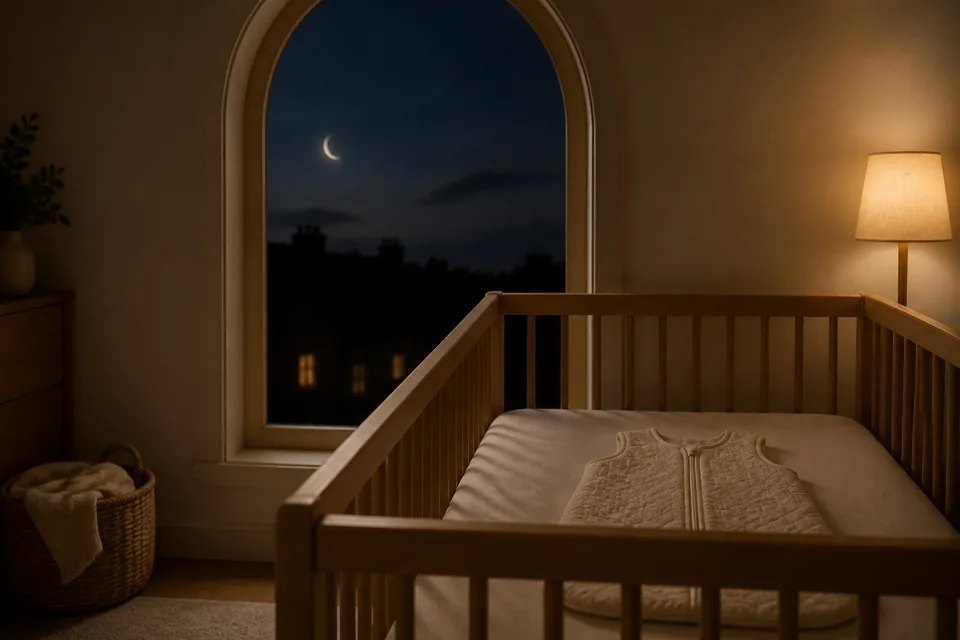
The daytime outfit stops when it is time to sleep. Sleep bags and swaddles trap warmth differently from day clothes, and safety guidelines for the crib are strict. When getting ready for bed, check the bedroom thermometer and switch to a fitted sleep bag with its own dedicated under-layers.
Questions parents ask
Should my baby wear a hat indoors?
No. Take the hat off as soon as you step inside, even if your baby is sleeping or their hands feel cool. Babies regulate their temperature through their heads, and indoor hats carry a risk of overheating.
Do I use the outdoor temperature at home?
No. The outdoor weather forecast is only for the stroller or the walk to the car. At home, dress your baby according to the indoor room thermometer.
Is this the sleep outfit too?
No. These outfits are strictly for awake indoor time. For sleep, use fitted sleepwear and a sleep bag matched to the bedroom temperature.