What this is about
The old rule says to dress your baby in one more layer than you are wearing. It sounds simple until you stand in the hallway holding a bodysuit and wondering what counts as a layer.
Does a cotton sleepsuit count as one layer or two? Do socks count? What if you run hot and your partner is always cold? The rule is a practical starting estimate for outdoor walks, not a math formula. It gives you a safe first guess for the torso so you can get out the door.
You warm up on the walk
A brisk walk warms you up quickly. You are moving your body and pushing weight, while your baby sits completely still in the stroller and catches the breeze. The fair comparison is how the weather feels to you before you start moving.
Not everything your baby wears is another warm layer
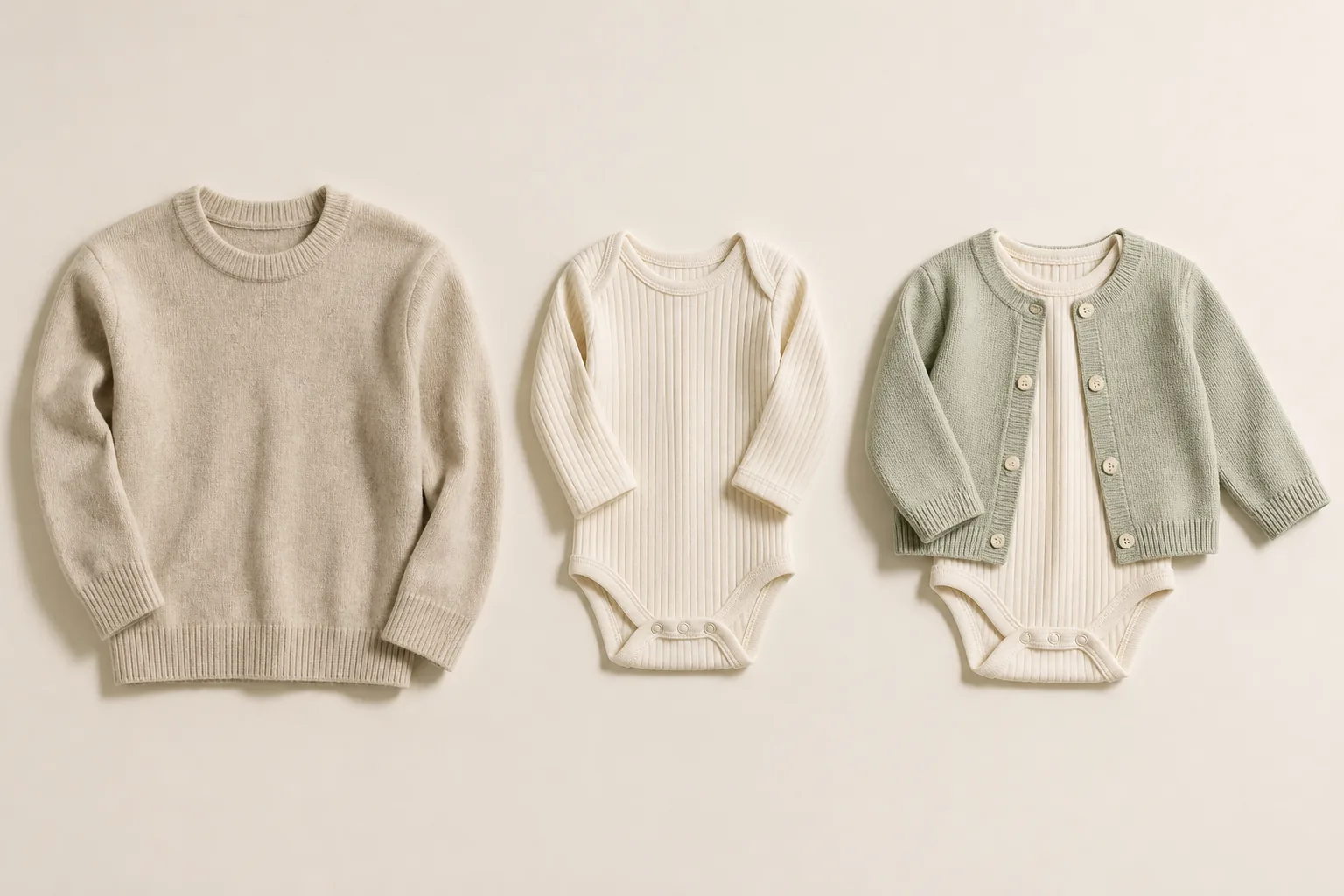
A layer in this rule means an insulating piece over the chest and torso. Pants cover the legs and socks protect bare feet, but they do not add core warmth. You do not count a pair of socks as the baby's extra layer.
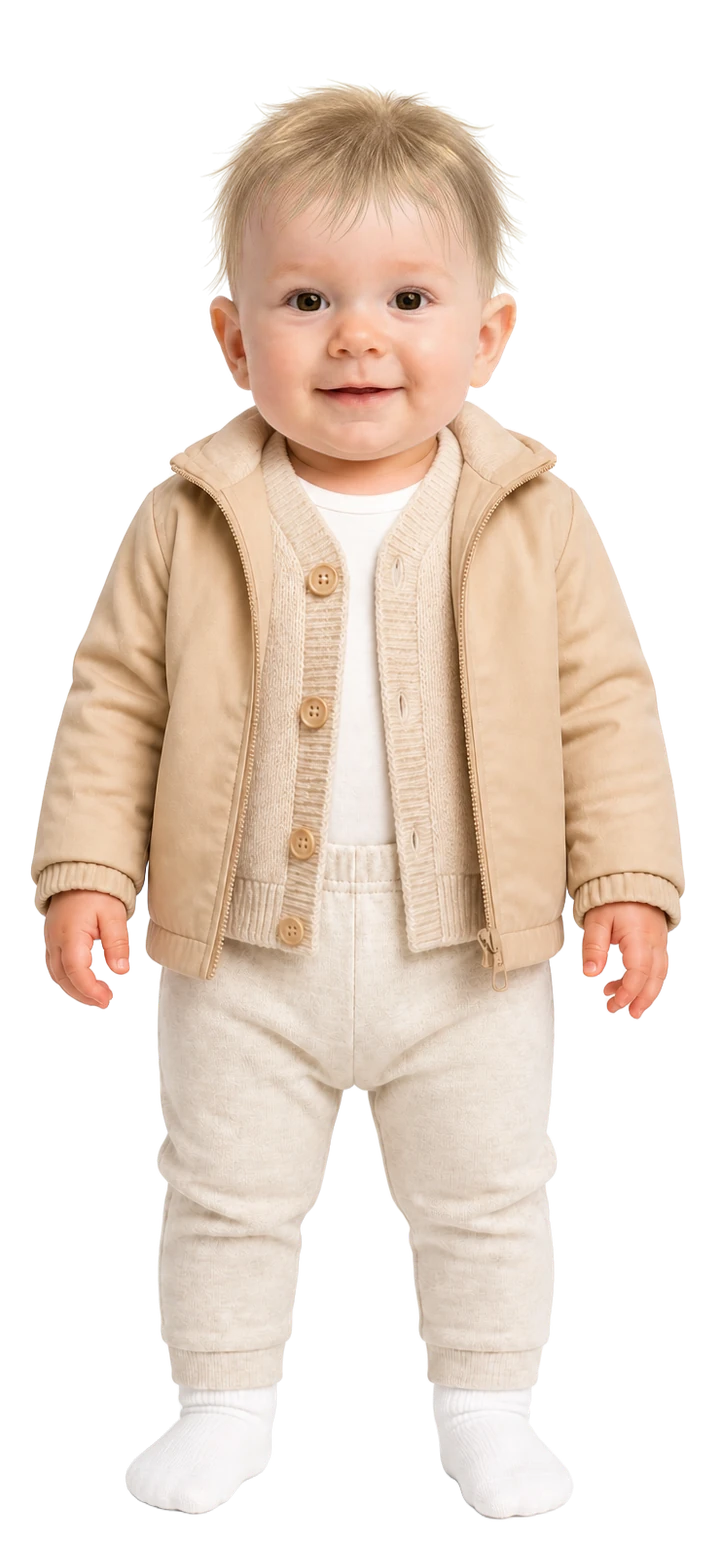
Stroller gear also counts. A folded fleece blanket or a padded footmuff adds significant warmth over the lower body and chest. If your baby is already tucked into a warm footmuff, that footmuff is the extra layer. Adding another heavy sweater on top easily turns the stroller into a sauna.
Thin layers leave room to change your mind
A single outing rarely stays at one temperature. You walk down a windy, shaded street, step into the sun at the park, and then push the stroller into a heated bakery or bus. Thick outerwear gives you no middle ground: your baby is either zipped into a furnace or stripped down to their vest.
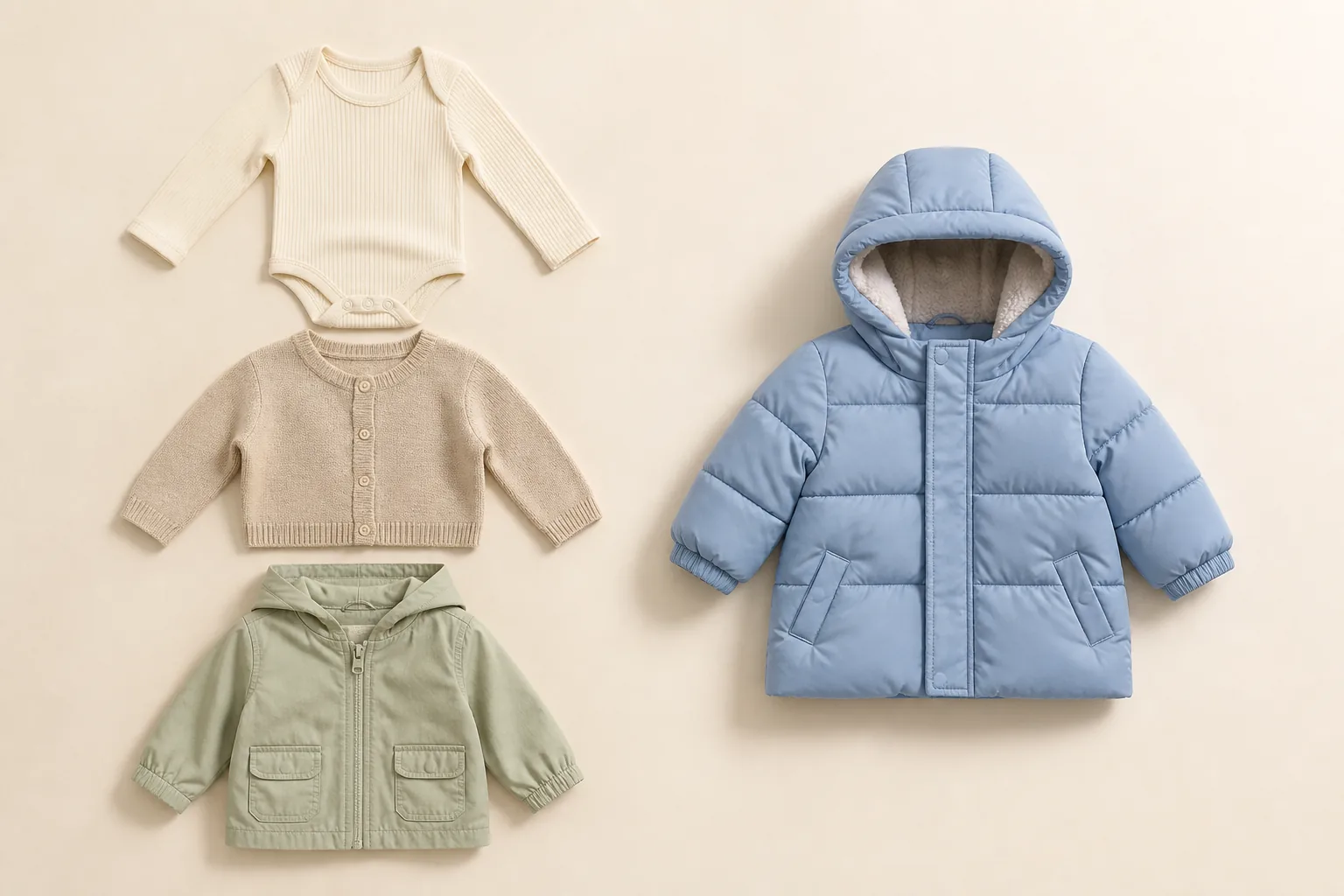
Two or three thin layers work like a volume dial. If the back of the neck feels damp or hot, unzip the light jacket. If the skin is still hot or sweaty a few minutes later, slip the cardigan off. The base bodysuit stays on, and your baby does not have to be completely undressed in public to cool down.
What this looks like at different temperatures
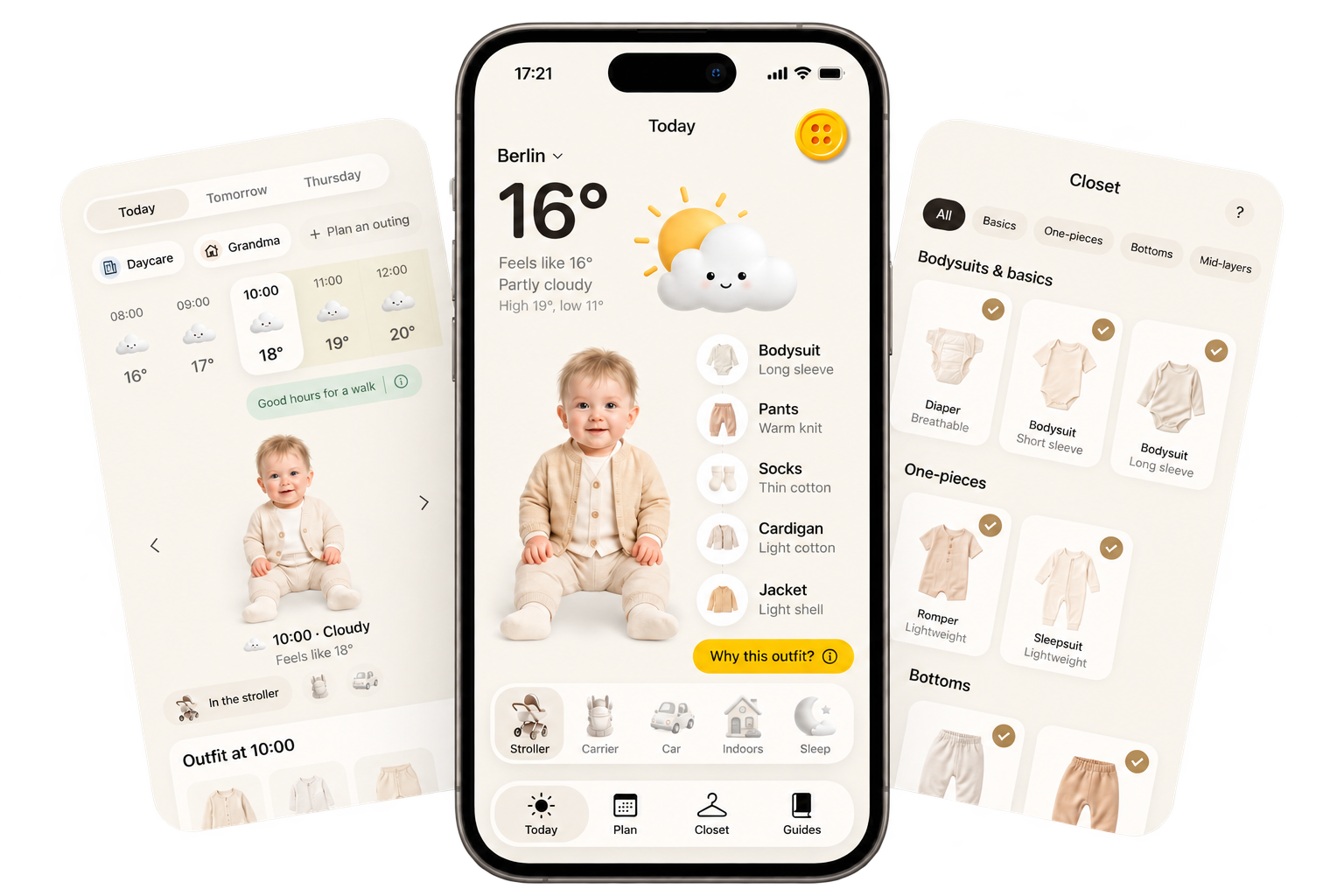
When you want to skip the mental math and see specific clothes, use today's feels-like temperature as your guide.
28° and warmer
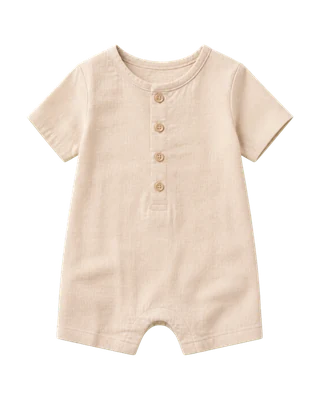
short-sleeve romper
24–27°
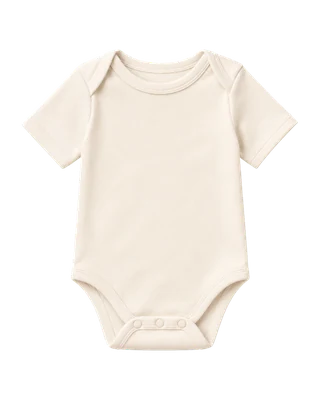
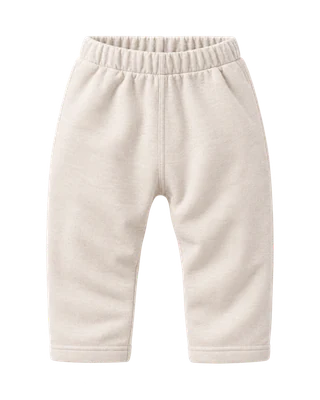
short-sleeve bodysuit, light pants
20–23°
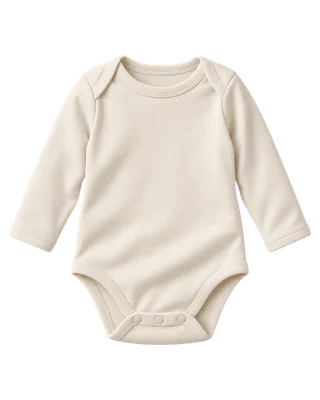
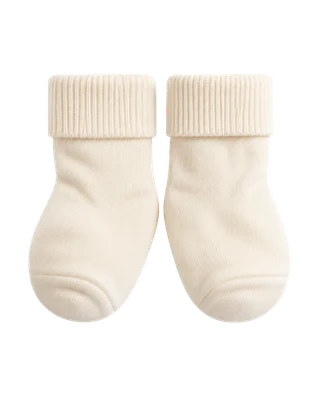
long-sleeve bodysuit, light pants, thin socks
16–19°
long-sleeve bodysuit, light pants, thin socks, cardigan
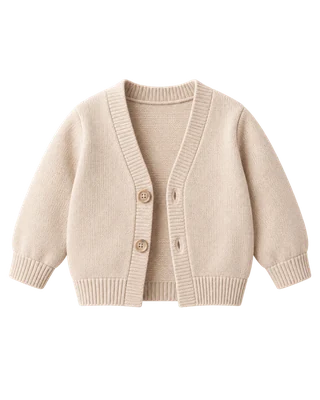
12–15°
long-sleeve bodysuit, warm pants, thin socks, cardigan, light jacket
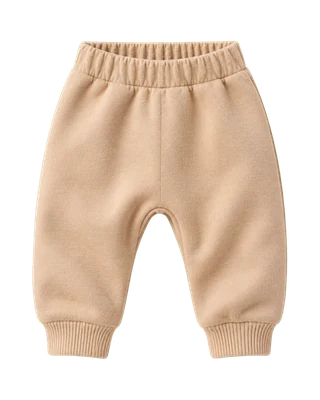
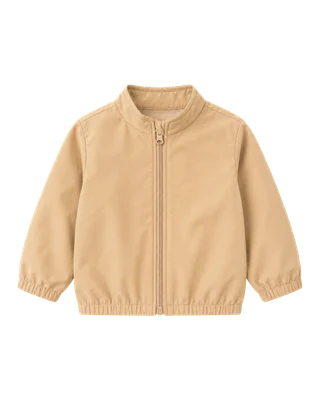
8–11°
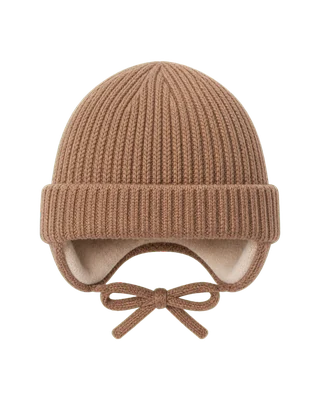
long-sleeve bodysuit, warm pants, warm socks, warm fleece, warm jacket, knit hat
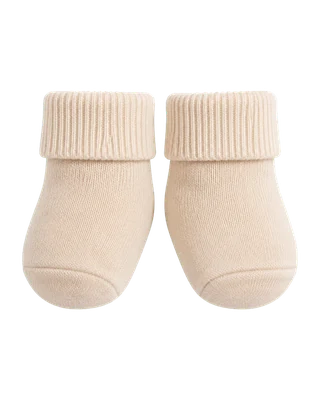
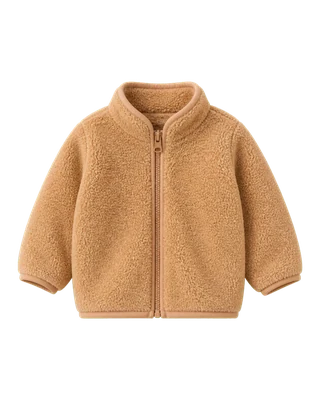
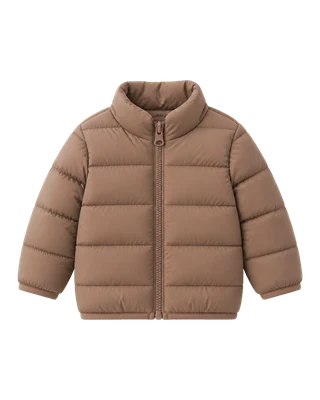
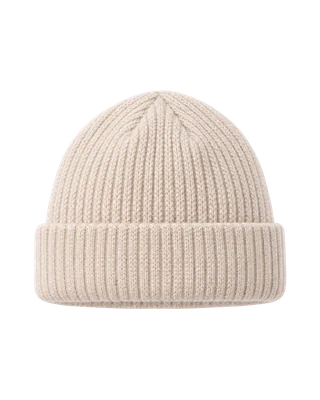
4–7°
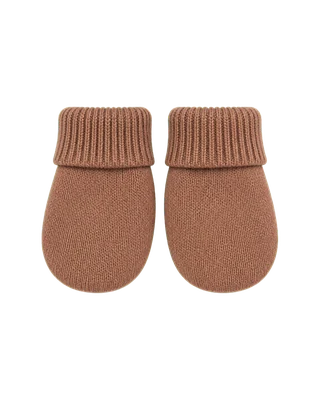
long-sleeve bodysuit, warm pants, warm socks, warm fleece, warm jacket, booties, mittens, warm hat
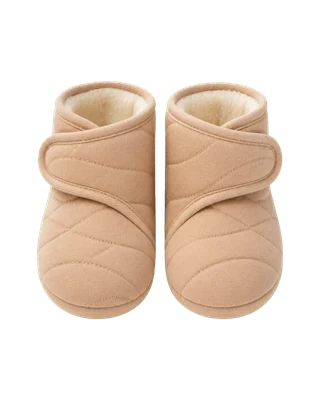
Below 4°
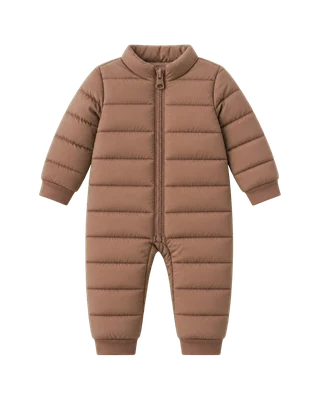
long-sleeve bodysuit, warm pants, warm socks, warm fleece, pram suit, mittens, warm hat
When one more layer does not apply
The one-more-layer rule is designed for stroller walks in mild to cool weather. In several common situations, following it directly can lead to overheating or unsafe gear.
In hot weather, extra warmth is the opposite of what your baby needs. At 24–27°, a baby under 3 months usually needs long sleeves, light pants, and thin socks to protect delicate skin. From 3 months, a short-sleeve bodysuit with light pants is plenty. Once it reaches 28°, a single loose romper is enough for any age. Never add an extra warm layer on hot days.
In a baby carrier, your torso is a 37°C radiator pressed directly against your baby. The fabric of the carrier wrap acts as another layer by itself. Dress your baby lighter than you would for a stroller, keep their face clear and visible, and check the neck often.
In a car seat, safety rules overrule warmth. Puffy jackets and snowsuits compress under pressure. In a sudden stop or crash, that flattened padding leaves the harness loose. Keep the clothes under the harness thin and snug. Fasten the straps securely against the body first, then tuck a coat or blanket over the buckled harness.
Indoors, room temperature replaces the weather outside. Take off outdoor hats and pram suits the moment you step into the house or a heated shop. For sleep, follow the room thermometer and your sleep bag's TOG rating. Never use the outdoor one-more-layer rule in the nursery.
Check the neck after choosing the layers
No rule can predict your baby's exact comfort before you walk out the door. Some babies run warm, and wind changes quickly between street corners. Treat the clothes you picked as an initial estimate. Ten minutes into the walk, check the back of their neck or upper chest.
Warm and dry skin means the outfit is doing its job. Hot or sweaty skin means a layer needs to come off right away. If the skin feels cool, add a light blanket or cardigan.
Do not judge temperature by the hands or feet. Newborn circulation is still developing, so hands and feet naturally feel cooler than the rest of the body. Feeling cool fingers while the torso is warm is normal, not a reason to add a winter coat. The full comfort check shows how to read these signals and adjust one piece at a time.
Questions parents ask
Does a stroller blanket count as a layer?
Yes. A folded blanket provides as much warmth as a sweater or jacket. If your baby's chest feels hot or sweaty, fold the blanket back before stripping off clothes underneath. Never drape a blanket over the stroller opening for shade, as that traps heat dangerously fast.
Does a footmuff count as a layer?
Yes. A footmuff wraps the lower body in heavy insulation. When using a warm footmuff, keep the layers across the torso lighter and easier to open.
Does a sleep bag count as the extra layer?
No. For sleep, put away the outdoor layering rule entirely. Check your nursery thermometer and dress your baby according to the sleep bag manufacturer's TOG chart.
Do newborn babies need more layers than older babies?
In their first 3 months, babies lose heat faster and benefit from that one extra light layer. Once babies reach 3 months, their temperature regulation improves and they can usually match what a comfortable adult wears. In weather above 28°, one loose layer is enough at any age.