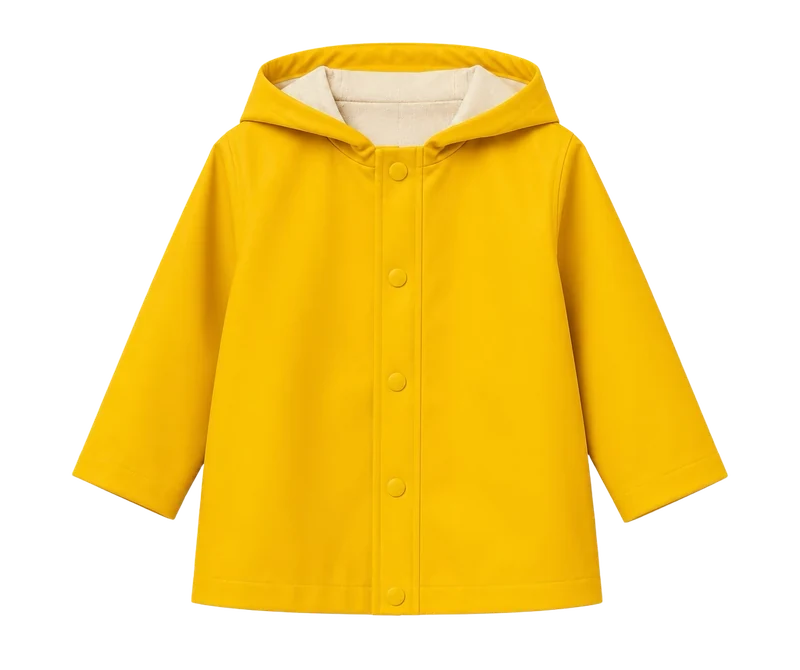
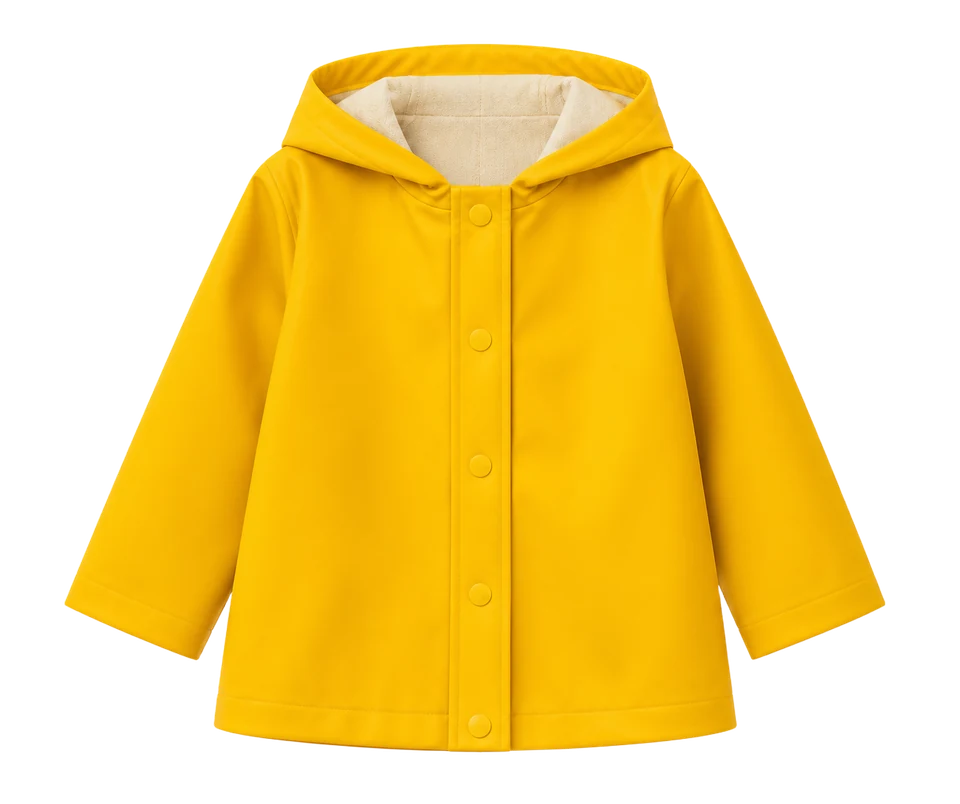
Inside its waterproof shell, a warm raincoat has soft fleece or thin quilted padding built in.
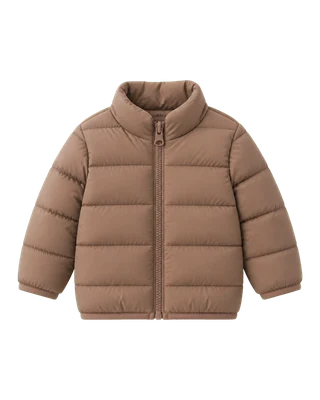
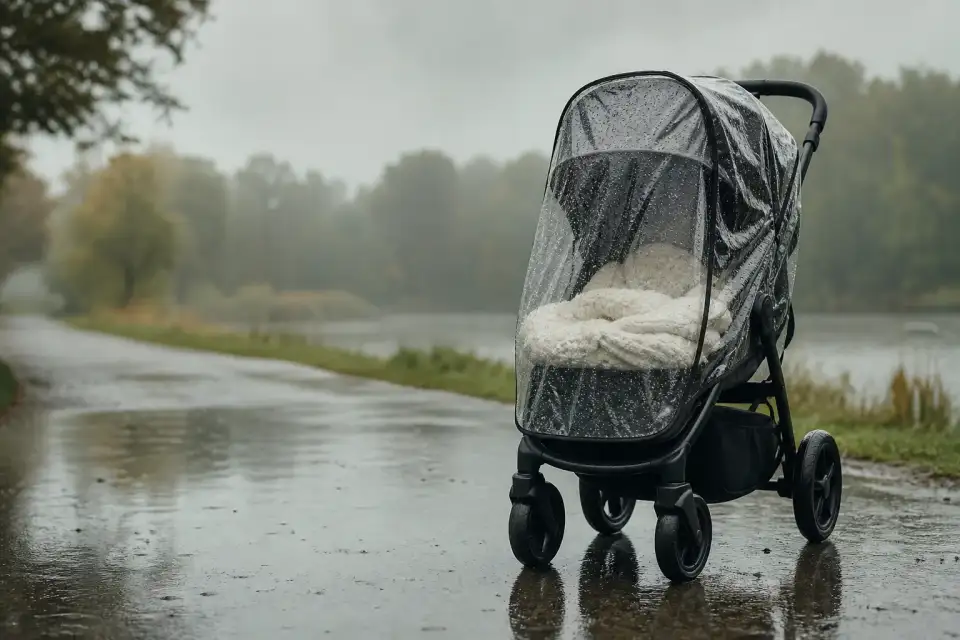
At 4–11°C (39–52°F), a walking toddler or a baby carried in your arms needs both a waterproof shell and warmth underneath. A baby who does not walk yet can skip the raincoat in the stroller, tucked into a stroller footmuff under a stroller rain cover. Below 4°C (39°F), switch to a padded warm jacket or a pram suit.
- For ages9+months
- You'll need1per size
- Wear it at4–11°C39–52°F
Lined raincoat, or a light shell over a fleece?
You can buy the waterproof shell and the warm fleece stitched together as one coat, or layer an unlined shell over a separate fleece.
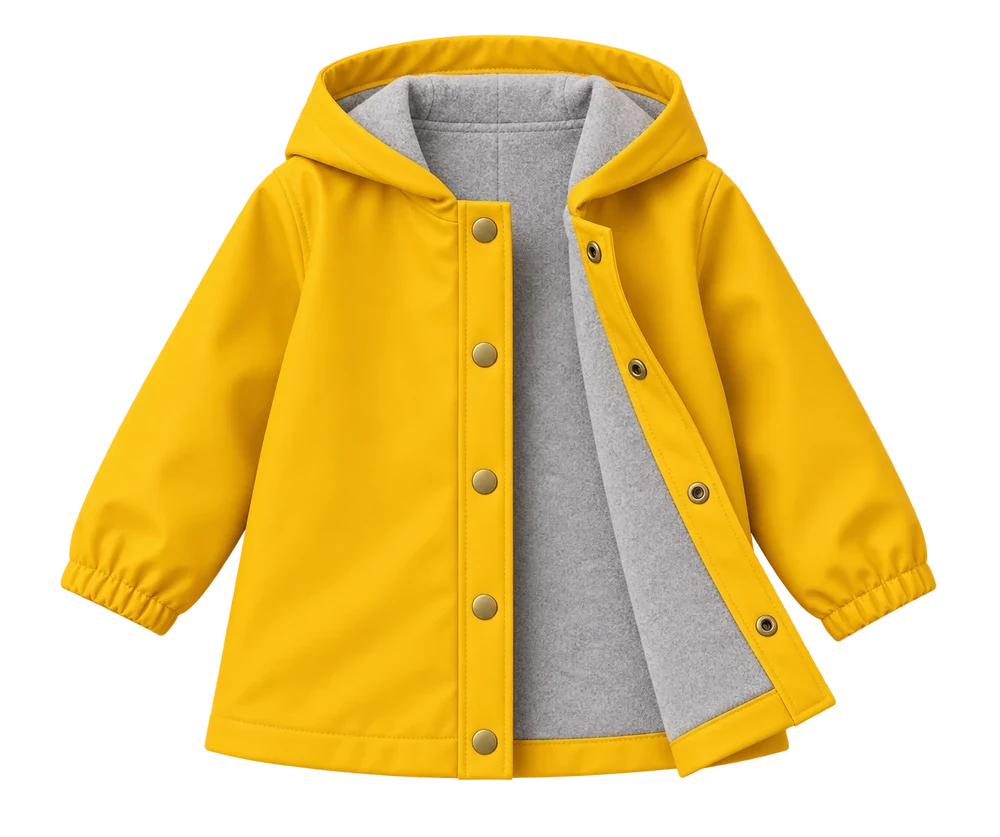
Warm lined raincoat
Soft fleece is sewn or glued (bonded) inside the waterproof shell, so both layers go on in one step. Best for cold, wet months and busy daycare mornings.
- Good: One coat, on in one step
- Not good: Too hot for a summer shower
- Not good: Fleece dries slowly inside
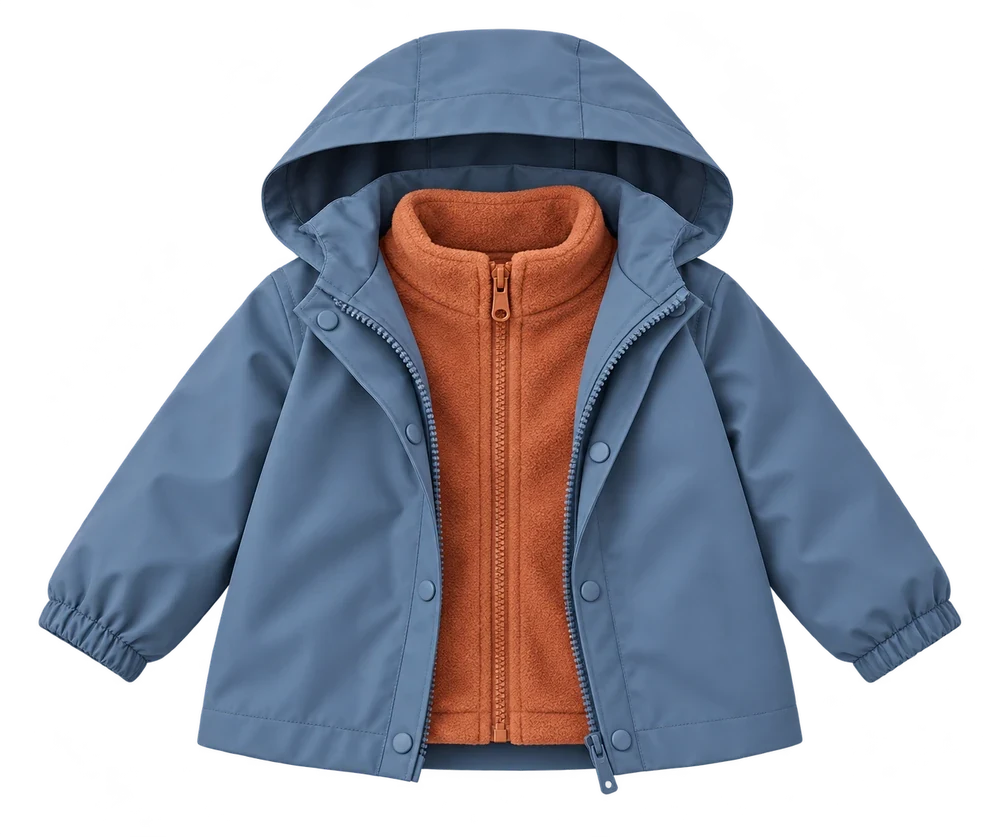
Light shell over a fleece
An unlined light raincoat over a separate thin fleece or warm fleece. Best if you want one rain shell all year: alone from 12°C (54°F), over a fleece on cold autumn rainy days.
- Good: Shell alone for summer showers
- Good: Dries faster in two pieces
- Not good: Two layers to get on a toddler
Three ways a warm raincoat is made
Most have a rubbery coated shell or a woven fabric shell with fleece inside, and a third kind zips apart. All should be fully waterproof, with sealed seams.
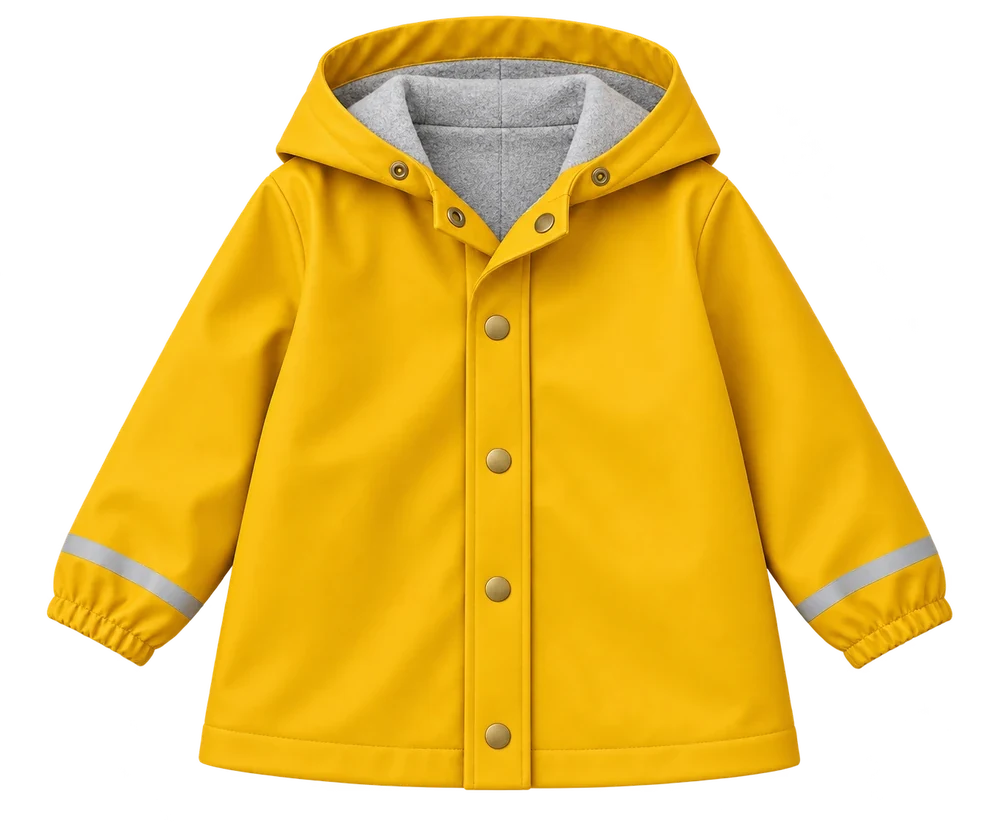
Fleece-lined PU raincoat
A flexible polyurethane (PU) rubber coating with heat-welded seams (melted shut so there are no stitch holes) and fleece inside. Best for toddlers who sit in puddles, play in wet sand, or attend outdoor daycare.
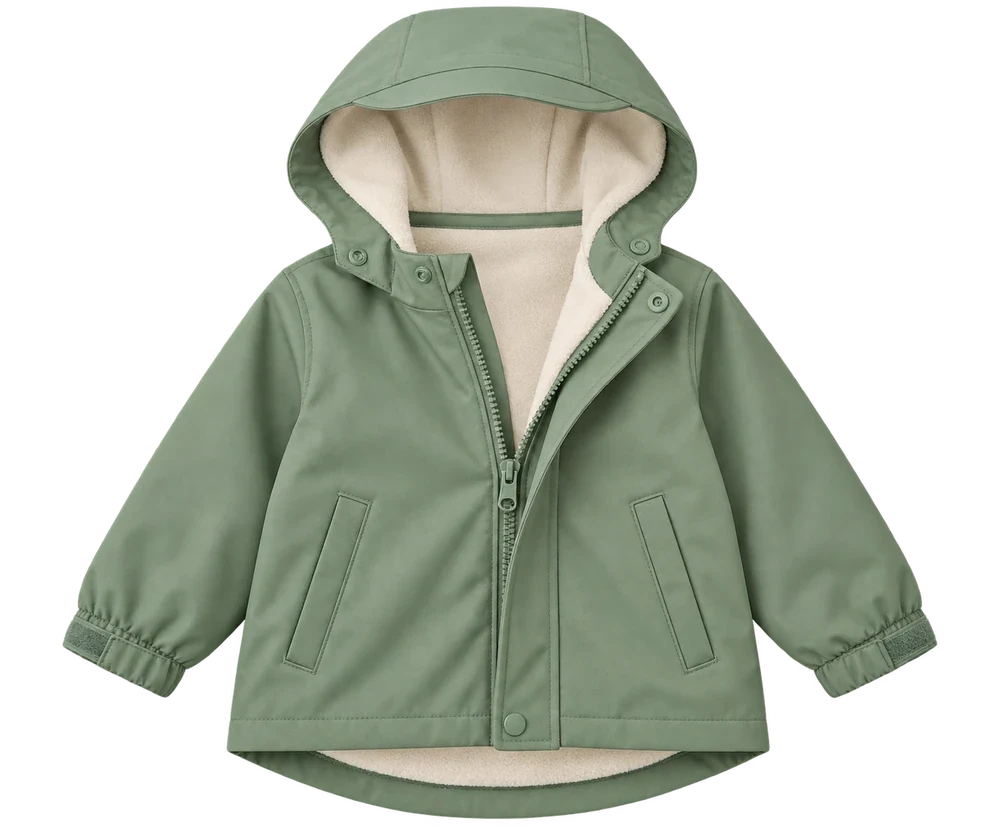
Fleece-lined breathable shell
A woven outer fabric with an inner waterproof membrane (a thin barrier layer), taped seams (sealed with waterproof tape inside), and a fleece body lining. It lets sweat vapor escape better than rubberized PU on active walks.
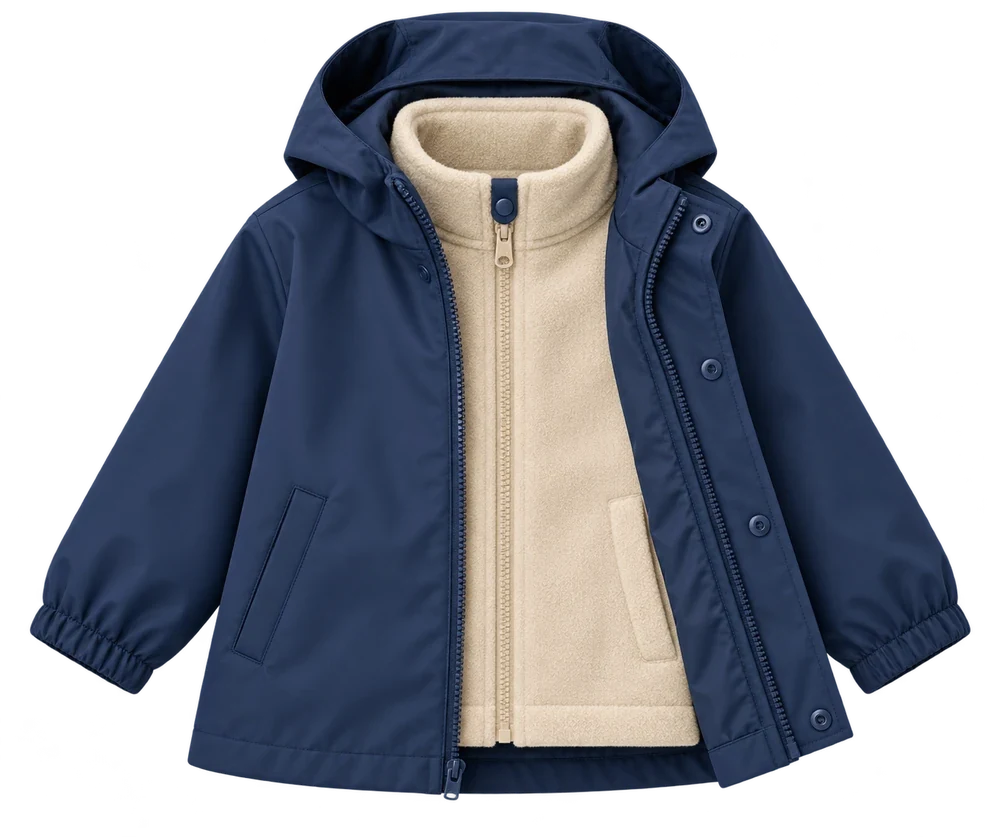
3-in-1 zip-out rain jacket
A waterproof outer shell with an inner fleece jacket that zips inside the front edges and buttons at the cuffs and neck. One coat splits into a standalone fleece and a spring rain shell.
How to choose a warm raincoat
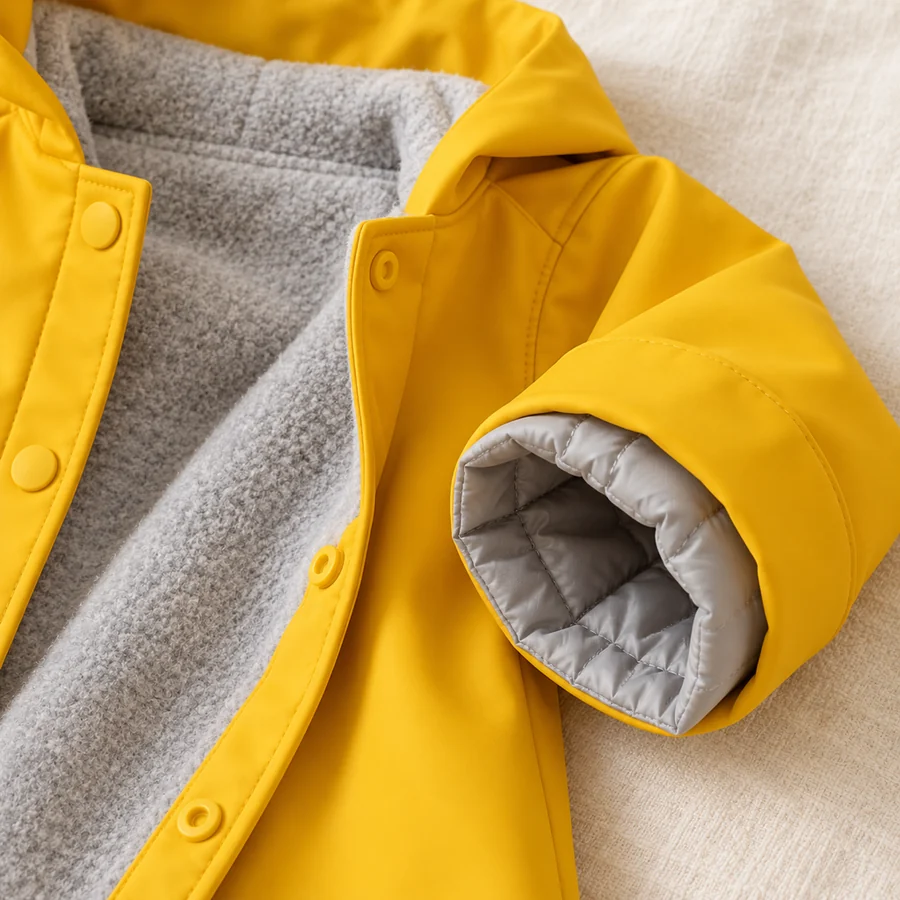
1. Smooth nylon inside the sleeves
Look for fleece on the chest, back, and hood, with smooth nylon inside the arms. Fleece inside the sleeves catches cotton shirt cuffs and pulls them up to the elbow when you put your baby's arm through.
- Good: Fleece on the body only
- Good: Shirt cuff stays put
- Not good: Shirt cuff ends at the elbow
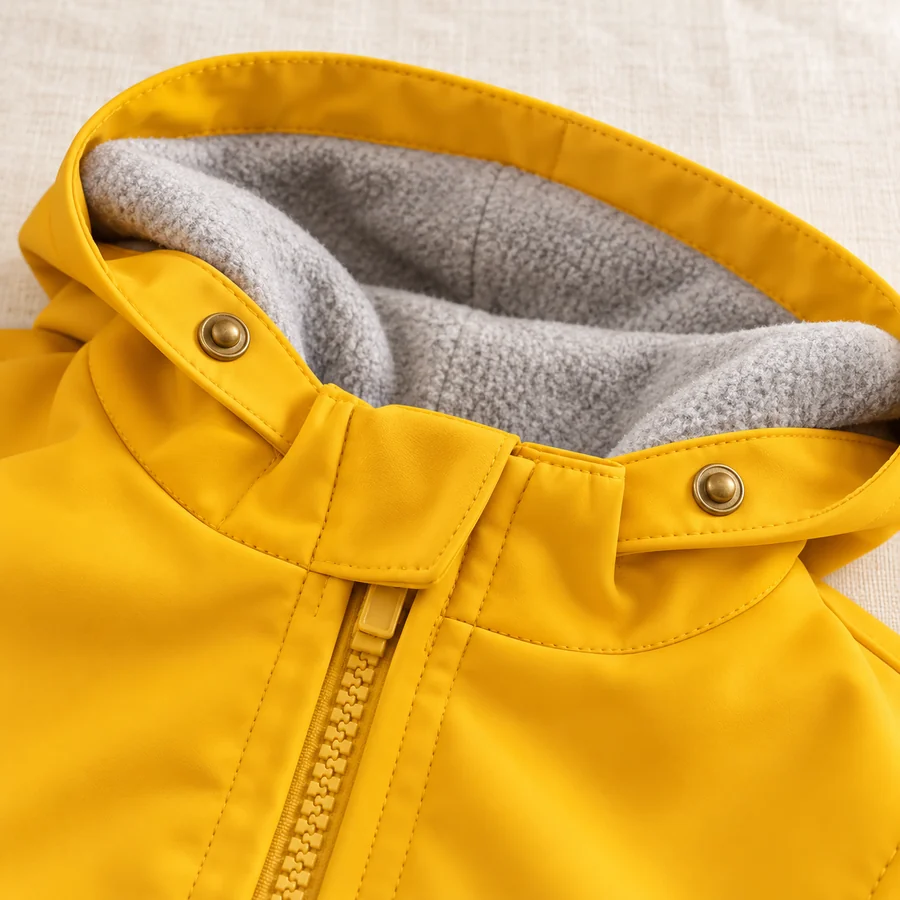
2. A snap-off hood and chin guard
A hood fastened with snaps pops free if it catches on play equipment. A soft fabric fold over the top of the zipper keeps metal teeth off a wet chin.
- Good: Row of snaps at the hood
- Good: Soft fold over the zipper
- Not good: Cold metal under the chin
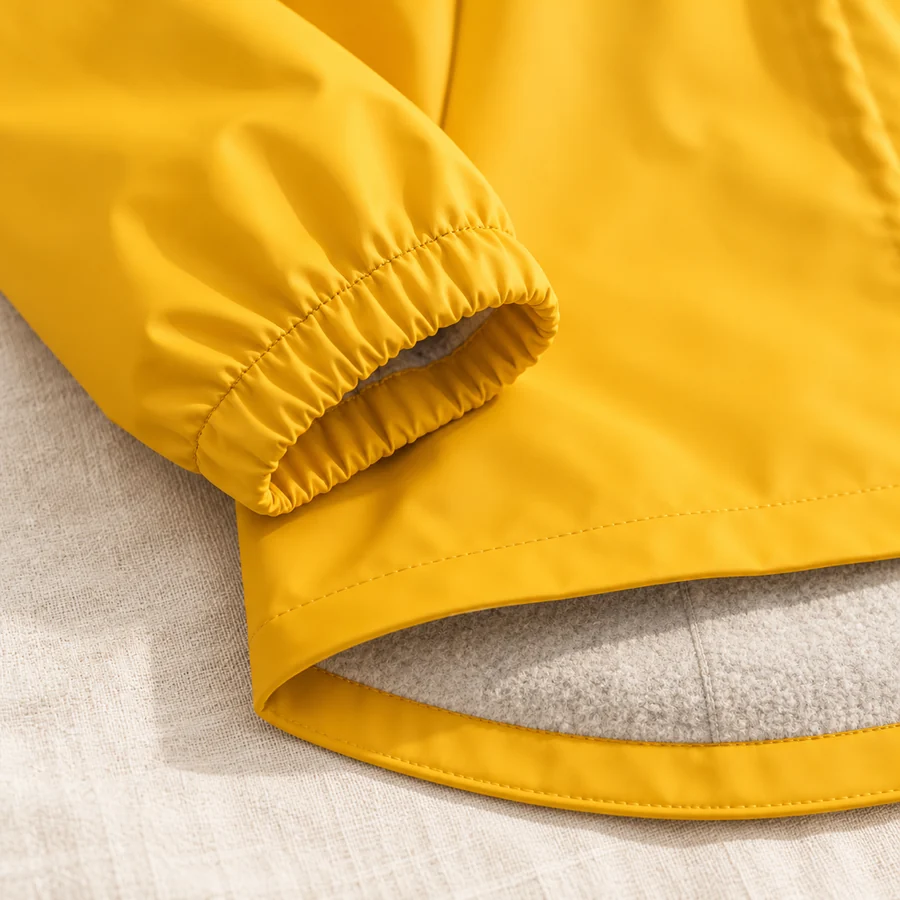
3. Elastic cuffs and a longer back hem
Elastic wrists seal out drips and hold the sleeves up if you buy a size with room to grow. A dropped back hem covers the waistband when a toddler squats.
- Good: Back hem longer than front
- Good: Elastic snug at each wrist
- Not good: Waistband shows in a squat
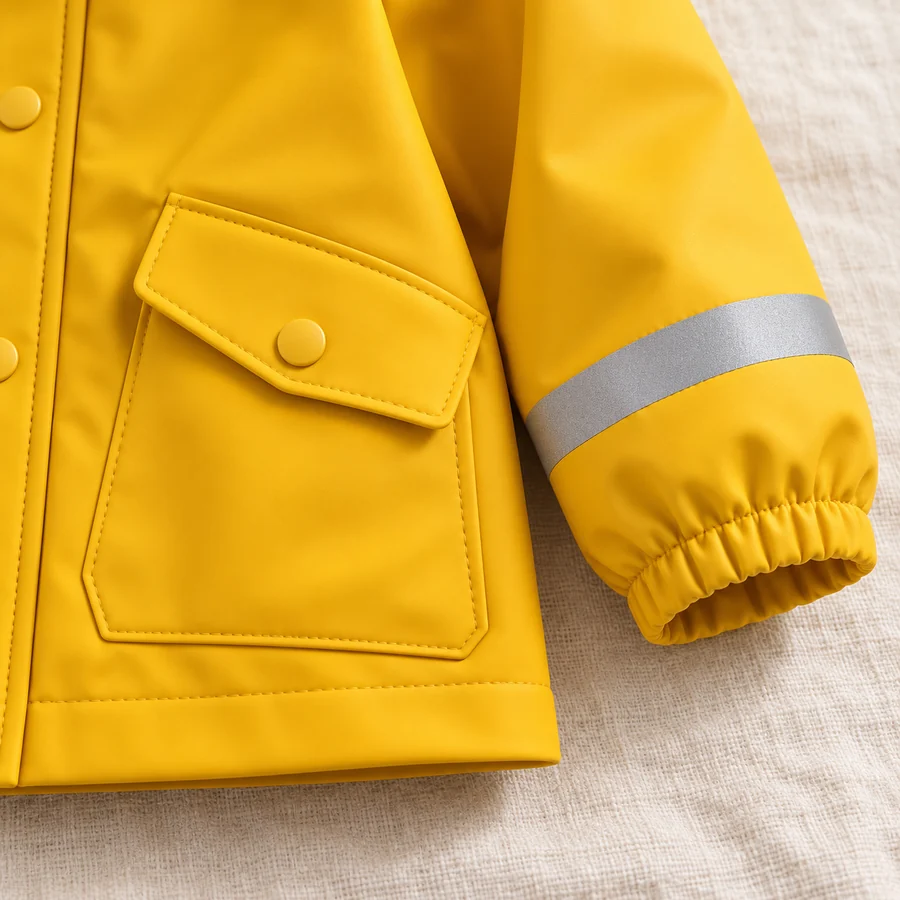
4. Pockets and reflective trim
Many rubber raincoats skip pockets, and toddlers want somewhere for the stones and sticks they collect. Reflective strips on the cuffs and back make your baby easier to spot on dark, rainy afternoons.
- Good: At least one front pocket
- Good: Reflective cuffs and back
- Not good: No pockets anywhere
Washing and drying a lined raincoat
Wipe mud off a polyurethane shell with a wet cloth after outings, so the coat only goes in the machine when the fleece lining or the cuffs get dirty. Then turn the coat and both sleeves inside out and wash it on a cold or warm gentle cycle. Skip bleach and fabric softener, which damage the waterproof coating and the seam tape.
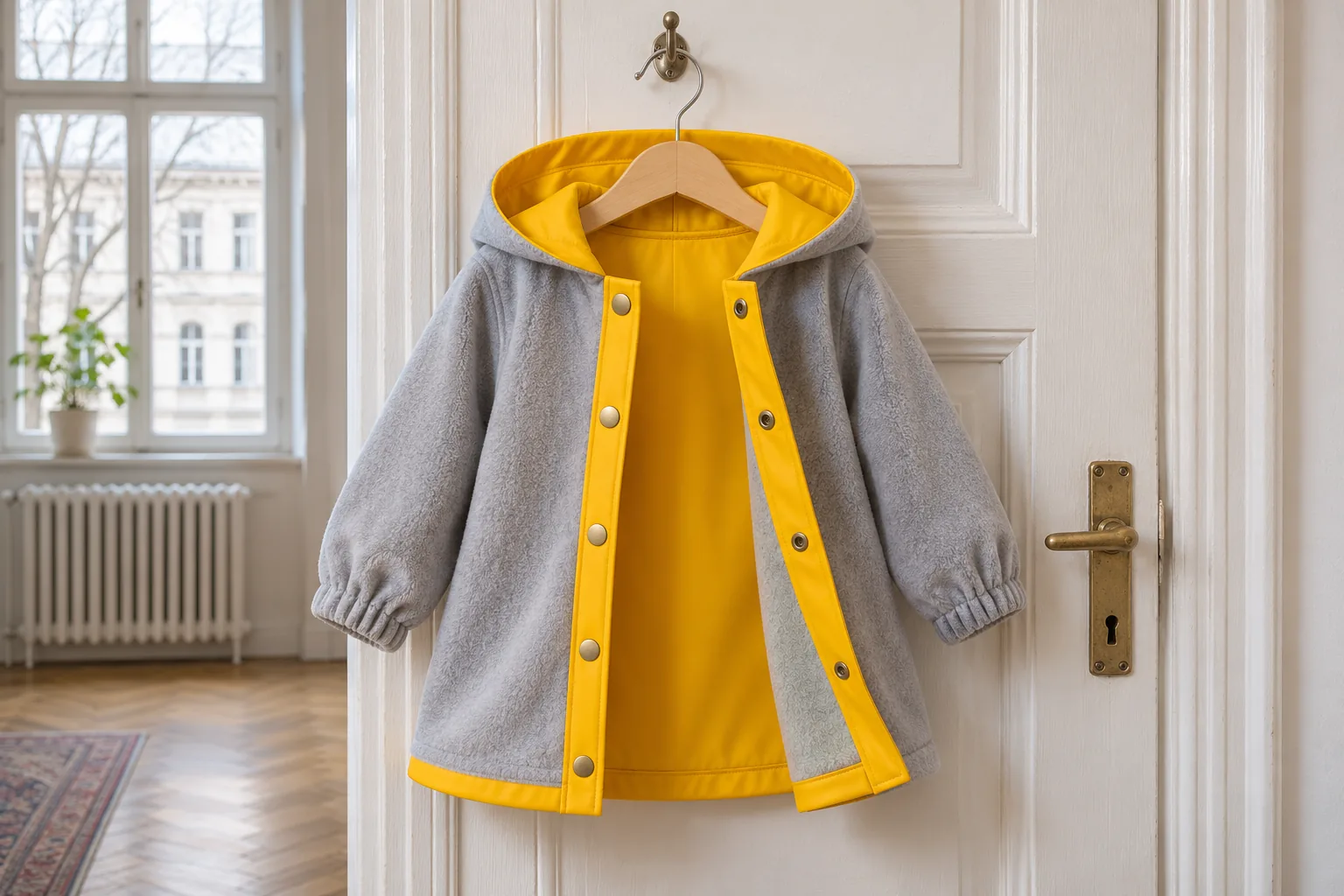
Because a waterproof shell blocks air as well as rain, hanging a lined raincoat the normal way traps water inside the sleeves until the next day. Hang the coat with the body and both sleeves turned inside out so room air reaches the wet fleece. Keep it away from radiators and tumble dryers, which can crack polyurethane.
Questions parents ask
Does a baby in a stroller need a warm raincoat?
Rarely. On a baby lying flat or sitting strapped into a stroller, stiff waterproof fabric bunches under the chin and leaves the legs bare. A warm indoor layer inside a stroller footmuff, with a stroller rain cover over the frame, keeps your baby warmer and drier.
Should I size up so a sweater fits underneath?
Usually not. The fleece is already built in, so your baby's current size goes over a long-sleeve bodysuit or an indoor shirt. Rain shells do not stretch like knitwear, so for a cardigan underneath on colder days, try the two together: the elbows should bend without pulling. If that takes one size up, the elastic cuffs hold the longer sleeves at the wrist.
Can my baby wear a warm raincoat in a car seat?
No. Bulky coats come off before buckling, and a lined raincoat is one: the waterproof shell and the thick fleece lining compress in a crash and leave the harness straps loose. Buckle your baby over indoor clothes or a close-fitting thin fleece, then lay the raincoat backwards over the fastened car seat straps like a blanket.
Should my baby wear rain pants with a warm raincoat, or a one-piece rain suit?
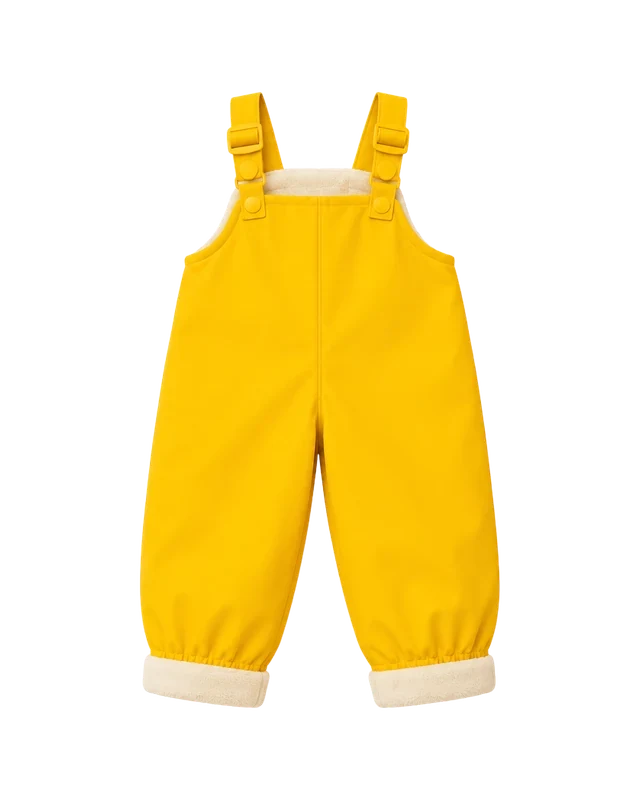
Babies who crawl on wet grass and young toddlers who sit in puddles stay drier in a one-piece puddle suit or bib rain pants that cover the waist. Once a toddler walks steadily and uses the toilet, a warm raincoat paired with pull-on rain pants is much faster to take on and off.