What this is about
A newborn's winter is rarely an Arctic expedition. It is ten minutes on a cold sidewalk, twenty minutes in a warm car, an hour in a heated shop, and sixteen hours in the bedroom. One thick marshmallow suit makes every indoor stop an emergency stripping session. A practical wardrobe works in separate, thin layers so you can adjust warmth without waking your baby.
Winter works better in separate layers
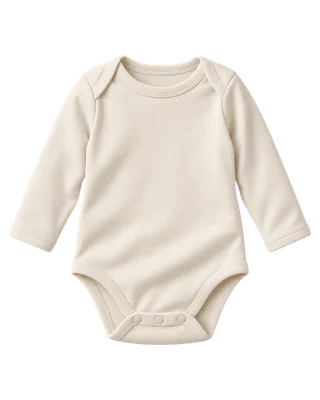
Start with an outfit that can stay on all day inside: a long-sleeve bodysuit, soft pants, and warm socks. When you head out, a fleece adds a middle layer of warmth without stiffening your baby's arms. The heavy coat or pram suit belongs strictly to the outdoor stretch. When you step back inside, shedding the outdoor shell leaves a complete, comfortable outfit underneath.
Tiny hands and feet often feel like ice, but hands lie. A newborn's circulatory system is still developing, sending blood to vital organs first. Cool fingers and toes are completely normal. The torso tells the real story. If the chest feels cool, add a layer. If the skin is damp or sweaty, take a layer off, even if the winter wind outside still feels freezing to you.
Timing the outerwear matters as much as owning it. Put on your own coat, boots, and hat first, and pack the bag. Only then should you zip your baby into their pram suit or jacket. If you bundle a newborn five minutes early while hunting for house keys, they will be drenched in sweat and crying before you even open the door.
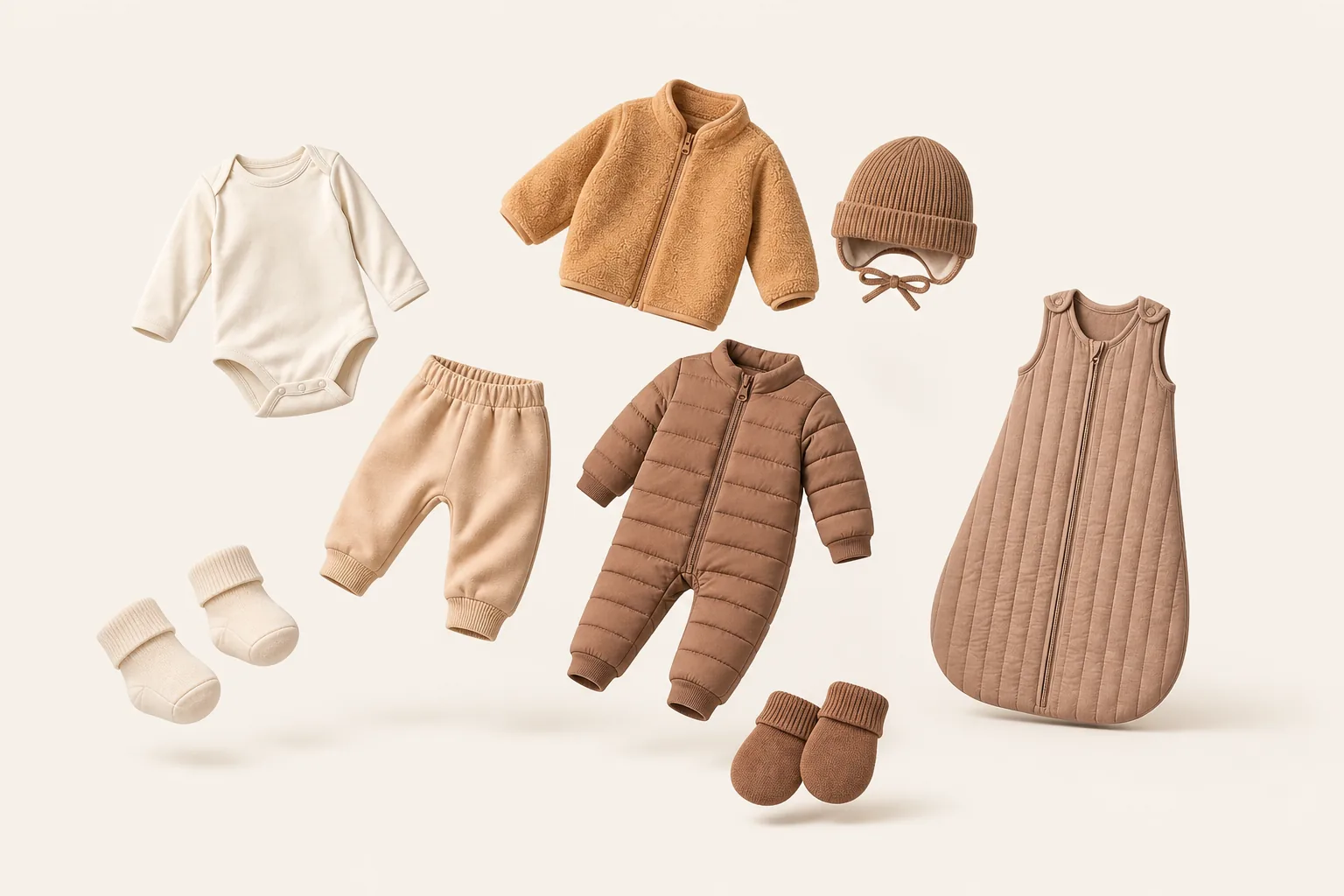
Against the skin
A long-sleeve bodysuit, warm pants and warm socks form the washable, breathable base for the whole day.
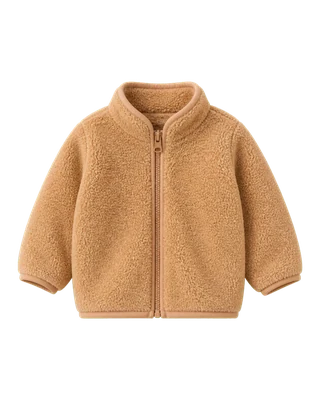
Warm middle
A warm fleece adds flexible insulation that is easy to peel off when you step into a warm room.
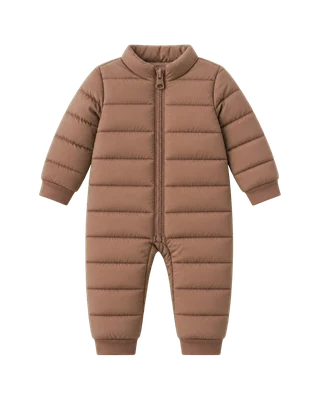
Cold outside
Below 4°, an insulated pram suit, mittens and a warm hat protect against winter wind on stroller walks.
Finish the stroller outfit at the front door
A baby in a stroller is the coldest person on a winter walk. You are moving and generating heat, while your baby lies completely still in the bassinet catching the chill. That does not mean you need an Arctic snowsuit for every outing. The stroller bassinet and its apron already block wind and trap warmth.
Between 8° and 11°, keep the indoor base and fleece on, then add a warm jacket and a knit hat at the door. When it drops to 4–7°, add soft booties, slip on mittens, and swap to a warm hat. Once the temperature plunges below 4°, switch the jacket and booties for a fully insulated pram suit. The fleece stays on underneath, so you can unzip the suit in a café without leaving your baby in bare sleeves.
Dress at the door, not in the warm car
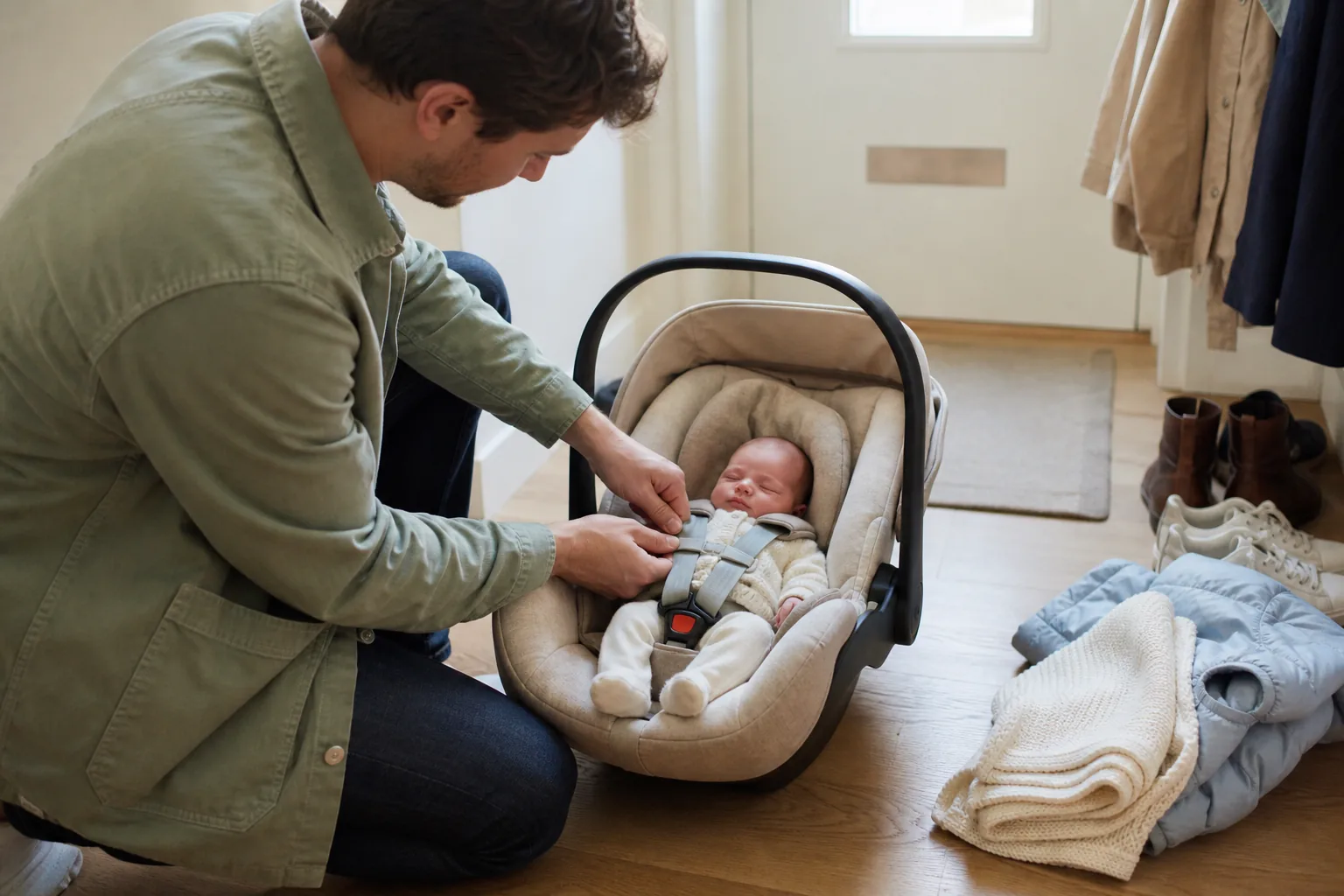
The car seat changes the rules entirely. Carrying your newborn out to a freezing car wearing only a thin fleece feels wrong, but a puffy coat or snowsuit is genuinely dangerous under a harness. Padded garments create fake tightness. In an impact, that thick padding compresses flat in an instant, leaving inches of slack in the straps.
Keep the clothes under the harness thin: a bodysuit, pants, socks, and a thin fleece. Pull the straps snug against the chest until you cannot pinch any webbing at the shoulder. Then tuck a blanket over the buckled harness to keep the cold air off during the walk to the car.
Between 8° and 15°, a light car blanket is plenty. Below 0°, switch to a warm blanket. Once the car cabin warms up, lift the blanket away and take off the hat so your baby does not roast. Never loosen the harness straps to cool a baby down while driving.
Warm buildings are part of winter dressing
Stepping inside from the cold is where many babies overheat. You push the stroller into a heated shop, library, or café, and your baby is sound asleep. Every parent hesitates to touch them. But an indoor space heated to 21° is still 21°, regardless of the snow outside.
Peel the hat off immediately because babies release excess body heat through their head. Unzip the pram suit or peel back the stroller blanket down to the waist. Waking a resting baby with a cool breeze is frustrating, but leaving them wrapped in heavy outdoor gear inside a warm room quickly leads to uncomfortable sweating and distress. Once settled, check their neck to see if the fleece needs to open too.
At night, winter stays outside the room
The outdoor temperature has nothing to do with bedtime. It might be -10° on the street, but your baby is sleeping in a heated bedroom. Aim for a room between 16° and 20°, and dress for the thermostat on the wall, not the frost on the glass.
The daytime rule of adding one extra layer stops at the crib. A safe sleep setup needs very little: between 20° and 21°, use a long-sleeve bodysuit inside a 1.0 TOG sleep bag. Between 18° and 19°, keep the bodysuit and switch to a 2.5 TOG bag. In colder rooms at 17° or below, swap the bodysuit for a soft footed sleepsuit under that 2.5 TOG bag.
Never put a hat on a baby for sleep, and never drape extra blankets over a sleep bag. A fitted sleep bag prevents wriggling under loose bedding and provides all the warmth a sleeping newborn needs.
The first winter checklist
You do not need a mountain of baby winter clothing. Newborns grow out of first-size pieces in weeks, and half of what shops sell is more decorative than useful. What you actually need depends on your laundry routine and whether you travel mostly on foot or by car.
- 6 to 8 long-sleeve bodysuits with envelope necks that pull down easily over messy diapers.
- 4 to 6 footed sleepsuits with two-way zippers, because wrestling metal snaps in a cold room at 3am is nobody's idea of fun.
- 3 or 4 pairs of stretchy pants and soft socks that actually stay on little heels.
- Two fleeces: one thin fleece for car seat rides, and one warm fleece for stroller walks.
- One warm jacket for mild outdoor days, and one insulated pram suit only if you take long stroller walks in freezing cold.
- A soft knit hat, warm winter hat, mittens, and fleece booties. Skip hard baby shoes completely until your baby can walk.
- One or two 2.5 TOG sleep bags sized for newborns with secure armholes.
- One warm car blanket, kept in the vehicle and used strictly over the fastened harness.
Questions parents ask
Do I need both a warm jacket and a pram suit?
Usually not both right away. A warm jacket over a fleece handles stroller walks down to 4°. A full pram suit is only necessary for freezing sub-zero stroller walks. If you mostly drive or wear your baby in a carrier under your own coat, you can skip the pram suit entirely.
How do I move my newborn from the car to the stroller?
Keep them in their thin indoor fleece while buckled in the car seat, with the blanket tucked over the harness. When you reach your destination, carry the seat inside or lift your baby into the stroller bassinet before putting on their heavy coat or pram suit.
What should I do if my baby's hands feel freezing?
Do not panic and do not immediately add another heavy layer. Touch the back of their neck or chest with warm fingers. If their skin feels warm and dry, their core is comfortable and the cool hands are just normal newborn circulation. Put on a pair of soft mittens if you are heading outside.